Search Result
Results for "
biochemical buffer
" in MedChemExpress (MCE) Product Catalog:
40
Biochemical Assay Reagents
2
Isotope-Labeled Compounds
| Cat. No. |
Product Name |
Target |
Research Areas |
Chemical Structure |
-
- HY-D0227
-
THAM
1 Publications Verification
Tris; Tris(hydroxymethyl)aminomethane
|
Biochemical Assay Reagents
|
Metabolic Disease
|
|
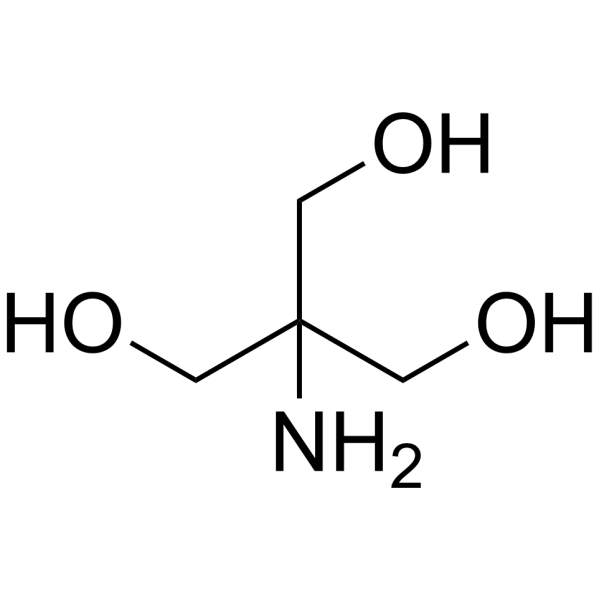
THAM (Tris) is a low-toxicity amino alcohol buffer, a specific CO2-consuming proton acceptor that buffers carbon dioxide and acid both in vitro and in vivo. THAM binds protons to form bicarbonate, reduces PaCO2, and induces intracellular alkalization, thereby ameliorating hypercapnia-induced elevation of pulmonary blood vessels and pulmonary arterial pressure. THAM may cause PaCO2 rebound, hypoglycemia, and respiratory depression. THAM removes amniotic epithelium and preserves the basement membrane, but depletes extracellular matrix and reduces the adhesion rate of limbal epithelial cells. THAM can act as a CO2 carrier to enhance the productivity and carbon utilization rate of Scenedesmus obliquus. THAM is a key component of buffer solutions used in various biological, cell culture, biochemical, and molecular biology applications .
|
-
-
- HY-113354
-
|
|
Endogenous Metabolite
|
Neurological Disease
|
|
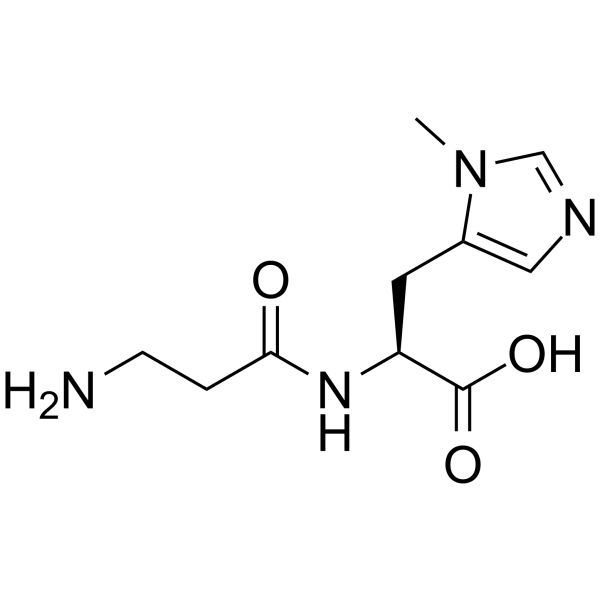
Anserine, a methylated form of Carnosine, is an orally active, natural Histidine-containing dipeptide found in skeletal muscle of vertebrates. Anserine is not cleaved by serum carnosinase and act as biochemical buffers, chelators, antioxidants, and anti-glycation agents. Anserine has blood-brain barrier permeability, and improves memory functions in Alzheimer's disease (AD)-model mice .
|
-
-
- HY-D0227F
-
|
Tris HCl (≥99%, reagent grade); Tris hydrochloride (≥99%, reagent grade)
|
Biochemical Assay Reagents
|
Others
|
|
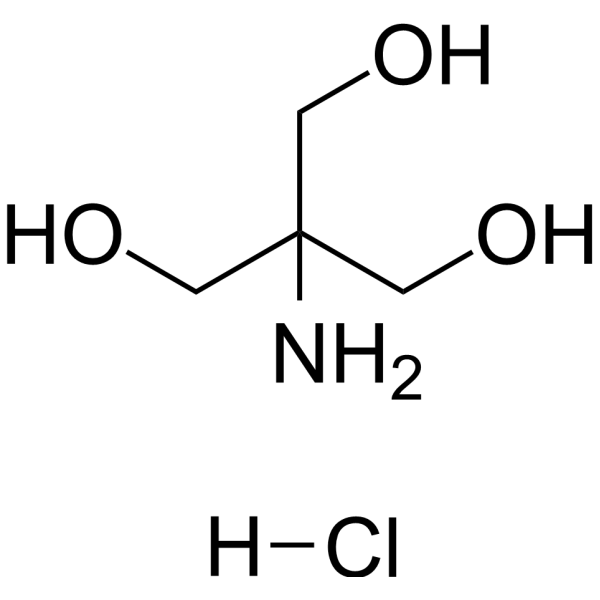
THAM hydrochloride (≥99%, reagent grade), also known as Tris-HCl, is a buffer commonly used in various biochemical and molecular biology applications to maintain a stable pH environment. Tris-HCl has unique chemical properties that allow it to resist changes in pH when acidic or basic substances are added, which makes it useful for stabilizing biological samples or reagents. It is commonly used in electrophoresis and protein purification procedures.
|
-
-
- HY-ER013C
-
-
-
- HY-W014837
-
|
3-(1-Pyridinio)-1-propanesulfonate
|
Biochemical Assay Reagents
|
Others
|
|
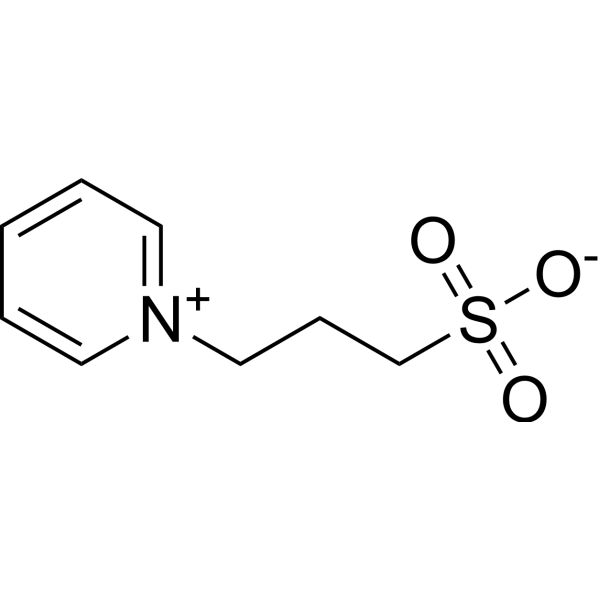
NDSB-201 consists of a pyridine group attached to a propane chain, which in turn is attached to a sulfonate group. This compound is commonly used as a buffer in biochemical and biological research, especially in electrophoretic applications. It maintains a stable pH in aqueous solutions and has low UV absorption, making it suitable for use in the UV spectrum. Furthermore, due to its ability to form stable complexes with DNA and other biomolecules, 3-(pyridin-1-ium-1-yl)propane-1-sulfonate has been investigated for its potential in drug delivery and genetic research.
|
-
-
- HY-W694629
-
|
|
Biochemical Assay Reagents
|
Others
|
|
Triethylammonium bicarbonate is a biochemical reagent that can be used to prepare buffer solutions that maintains the stable pH environment required for processes such as enzyme-catalyzed reactions .
|
-
-
- HY-Y1083H
-
|
Salt of lemery, 99%
|
Biochemical Assay Reagents
|
Others
|
|
Potassium sulfate, 99% (Salt of lemery, 99%) can be used in biochemical tests for serum proteins, the determination of blood potassium and other potassium salts, and the preparation of protein capillary electrophoresis buffers. Potassium sulfate, 99% is a kind of biological materials or organic compounds that are widely used in life science research .
|
-
-
- HY-D0867
-
|
|
Biochemical Assay Reagents
|
Others
|
|
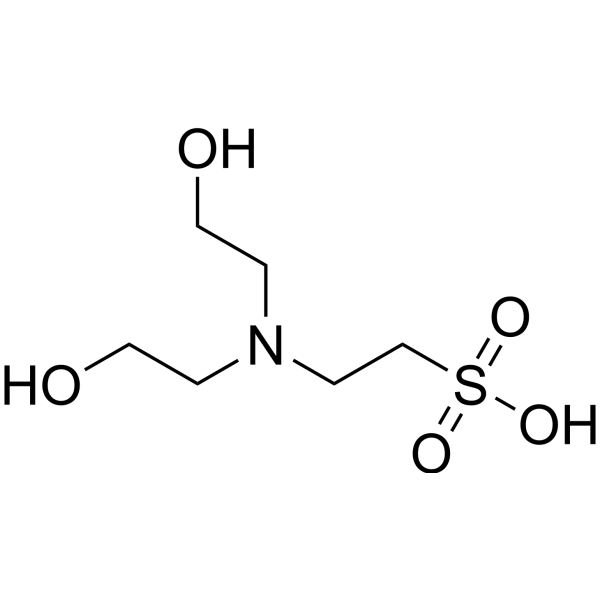
BES is a secondary standard biochemical buffer with effective pH range of 6.4 to 7.8 (pKa: 7.15 at 20 °C). BES is used in the diagnostic testing area.
|
-
-
- HY-Y0286A
-
-
-
- HY-W013105
-
|
N-Cholylglycine sodium salt, 98%
|
Biochemical Assay Reagents
|
Others
|
|
Sodium glycocholate hydrate, 98% is a buffer commonly used in molecular biology and biochemical research, providing precise pH control in various experimental settings.
|
-
-
- HY-113354S
-
|
|
Endogenous Metabolite
|
Neurological Disease
|
|
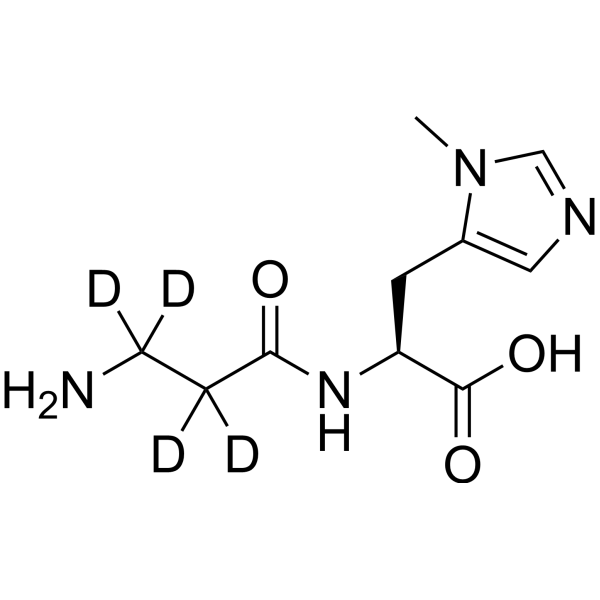
Anserine-d4 is the deuterium labeled Anserine. Anserine, a methylated form of Carnosine, is an orally active, natural Histidine-containing dipeptide found in skeletal muscle of vertebrates. Anserine is not cleaved by serum carnosinase and act as biochemical buffers, chelators, antioxidants, and anti-glycation agents. Anserine improves memory functions in Alzheimer's disease (AD)-model mice .
|
-
-
- HY-D0227J
-
|
Tris HCl (≥99%, for cell culture); Tris hydrochloride (≥99%, for cell culture)
|
Biochemical Assay Reagents
|
Metabolic Disease
|
|
THAM hydrochloride (≥99%, for cell culture) is a low-toxicity amino alcohol buffer, a specific CO2-consuming proton acceptor that buffers carbon dioxide and acid both in vitro and in vivo. THAM hydrochloride (≥99%, for cell culture) binds protons to form bicarbonate, reduces PaCO2, and induces intracellular alkalization, thereby ameliorating hypercapnia-induced elevation of pulmonary blood vessels and pulmonary arterial pressure. THAM hydrochloride (≥99%, for cell culture) may cause PaCO2 rebound, hypoglycemia, and respiratory depression. THAM hydrochloride (≥99%, for cell culture) removes amniotic epithelium and preserves the basement membrane, but depletes extracellular matrix and reduces the adhesion rate of limbal epithelial cells. THAM hydrochloride (≥99%, for cell culture) can act as a CO2 carrier to enhance the productivity and carbon utilization rate of Scenedesmus obliquus. THAM hydrochloride (≥99%, for cell culture) is a key component of buffer solutions used in various biological, cell culture, biochemical, and molecular biology applications .
|
-
-
- HY-W014792
-
-
-
- HY-179669I
-
|
|
Biochemical Assay Reagents
|
Others
|
|
1M Tris-HCl Buffer, pH 8.8 is a buffer solution commonly used in various biochemical and molecular biological applications to maintain a stable pH environment. The pH value of Tris-HCl changes with temperature; generally, the pH decreases by 0.03 units for every degree Celsius increase in temperature. The pH values indicated on the product are the pH values of the Tris-HCl buffer solution at 25°C.
|
-
-
- HY-179669C
-
|
|
Biochemical Assay Reagents
|
Others
|
|
1M Tris-HCl Buffer, pH 7.6 is a buffer solution commonly used in various biochemical and molecular biological applications to maintain a stable pH environment. The pH value of Tris-HCl changes with temperature; generally, the pH decreases by 0.03 units for every degree Celsius increase in temperature. The pH values indicated on the product are the pH values of the Tris-HCl buffer solution at 25°C.
|
-
-
- HY-179669
-
|
|
Biochemical Assay Reagents
|
Others
|
|
1M Tris-HCl Buffer, pH 6.8 is a buffer solution commonly used in various biochemical and molecular biological applications to maintain a stable pH environment. The pH value of Tris-HCl changes with temperature; generally, the pH decreases by 0.03 units for every degree Celsius increase in temperature. The pH values indicated on the product are the pH values of the Tris-HCl buffer solution at 25°C.
|
-
-
- HY-ER013J
-
|
|
Biochemical Assay Reagents
|
Others
|
|
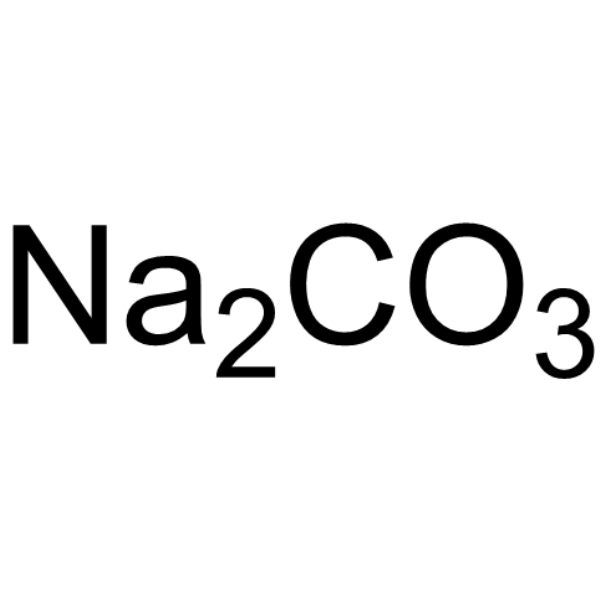
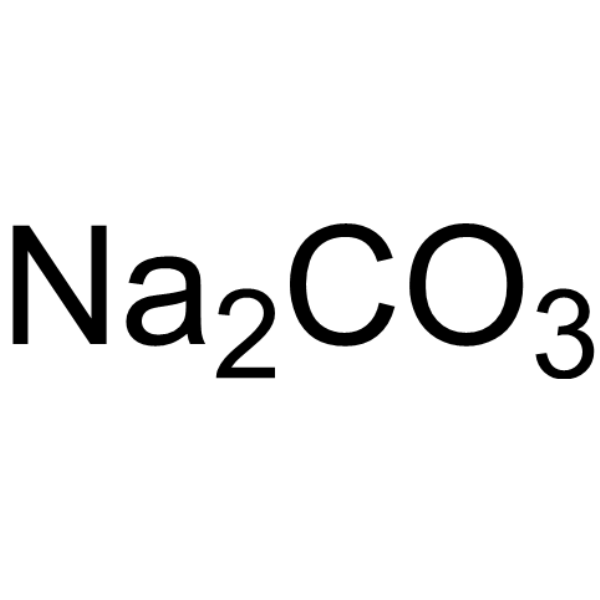
Sodium carbonate, anhydrous, meets analytical specification of Ep, BP, JP, NF is a biochemical reagent and a buffer component.
|
-
-
- HY-W008600
-
-
-
- HY-W016091
-
-
-
- HY-W127629
-
-
-
- HY-W040173
-
-
-
- HY-179669A
-
|
|
Biochemical Assay Reagents
|
Others
|
|
1M Tris-HCl Buffer, pH 7.0 is a buffer solution commonly used in various biochemical and molecular biological applications to maintain a stable pH environment. The pH value of Tris-HCl changes with temperature; generally, the pH decreases by 0.03 units for every degree Celsius increase in temperature. The pH values indicated on the product are the pH values of the Tris-HCl buffer solution at 25°C.
|
-
-
- HY-179669E
-
|
|
Biochemical Assay Reagents
|
Others
|
|
1M Tris-HCl Buffer, pH 8.0 is a buffer solution commonly used in various biochemical and molecular biological applications to maintain a stable pH environment. The pH value of Tris-HCl changes with temperature; generally, the pH decreases by 0.03 units for every degree Celsius increase in temperature. The pH values indicated on the product are the pH values of the Tris-HCl buffer solution at 25°C.
|
-
-
- HY-ER013I
-
|
Calcined soda meets analytical specification of Ph. Eur., BP, NF, FCC, E500
|
Biochemical Assay Reagents
|
Neurological Disease
|
|
Sodium carbonate anhydrous, meets analytical specification of Ph. Eur., BP, NF, FCC, E500 is a biochemical assay reagent suitable for buffer configuration .
|
-
-
- HY-W099337
-
|
|
Biochemical Assay Reagents
|
|
|
N-Ethyl-D-glucamine is a glucose derivative with biological activity as a buffer and chelating agent. Therefore, it is widely used in biochemical research to regulate pH and bind metal ions.
|
-
-
- HY-D0227B
-
|
Tris acetate; Tris(hydroxymethyl)aminomethane acetate
|
Biochemical Assay Reagents
|
Metabolic Disease
|
|
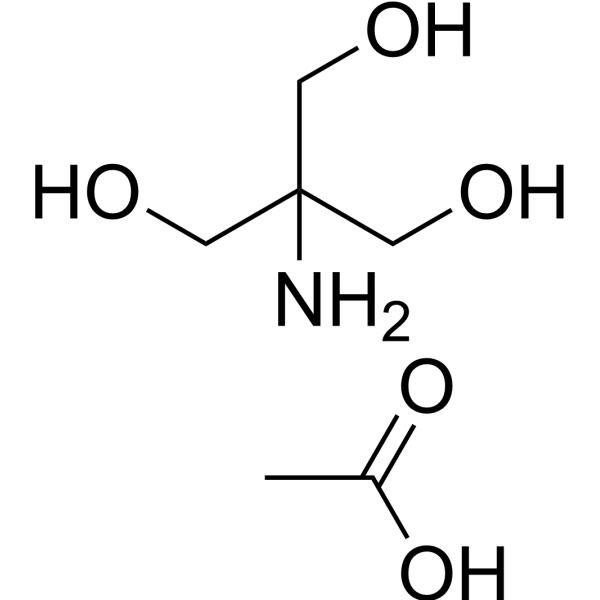
THAM acetate is a low-toxicity amino alcohol buffer, a CO2-consuming proton acceptor that buffers carbon dioxide and acid both in vitro and in vivo. THAM acetate binds protons to form bicarbonate, reduces PaCO2, and induces intracellular alkalization, thereby ameliorating hypercapnia-induced elevation of pulmonary blood vessels and pulmonary arterial pressure. THAM acetate may cause PaCO2 rebound, hypoglycemia, and respiratory depression. THAM acetate removes amniotic epithelium and preserves the basement membrane, but depletes extracellular matrix and reduces the adhesion rate of limbal epithelial cells. THAM acetate can act as a CO2 carrier to enhance the productivity and carbon utilization rate of Scenedesmus obliquus. THAM acetate is a key component of buffer solutions used in various biological, cell culture, biochemical, and molecular biology applications .
|
-
-
- HY-D0855A
-
|
|
Biochemical Assay Reagents
|
Others
|
|
ADA (disodium) is a buffer salt derived from ADA (adenosine deaminase) and is widely used in biochemical research, especially in the preparation of enzyme buffers.
|
-
-
- HY-179669J
-
|
|
Biochemical Assay Reagents
|
Others
|
|
1M Tris-HCl Buffer, pH 6.8 is a buffer solution commonly used in various biochemical and molecular biological applications to maintain a stable pH environment. The pH value of Tris-HCl changes with temperature; generally, the pH decreases by 0.03 units for every degree Celsius increase in temperature. The pH values ??indicated on the product are the pH values ??of the Tris-HCl buffer solution at 25°C.
|
-
-
- HY-179669H
-
|
|
Biochemical Assay Reagents
|
Others
|
|
1M Tris-HCl Buffer, pH 8.8 is a buffer solution commonly used in various biochemical and molecular biological applications to maintain a stable pH environment. The pH value of Tris-HCl changes with temperature; generally, the pH decreases by 0.03 units for every degree Celsius increase in temperature. The pH values indicated on the product are the pH values of the Tris-HCl buffer solution at 25°C.
|
-
-
- HY-Y1083C
-
|
Salt of lemery, for cell culture
|
Biochemical Assay Reagents
|
Others
|
|
Potassium sulfate, for cell culture (Salt of lemery, for cell culture) can be used in biochemical tests for serum proteins, the determination of blood potassium and other potassium salts, and the preparation of protein capillary electrophoresis buffers. Potassium sulfate, for cell culture is a kind of biological materials or organic compounds that are widely used in life science research .
|
-
-
- HY-W152363
-
|
1,2,3,4-Tetra-O-acetyl-α-L-fucopyranose
|
Biochemical Assay Reagents
|
Others
|
|
1,2,3,4-Tetra-O-acetyl-alpha-L-fucopyranoseIt is an organic compound commonly used as a substrate or reference standard in enzymology and sugar chemistry research. It can be used in the synthesis of polysaccharide analogs, drug development and biotechnology, and is widely used in the research of glycosyl chemistry and sugar metabolism pathways. In addition, this compound is used as a catalyst or buffer in certain biochemical reactions.
|
-
-
- HY-D0867A
-
|
|
Biochemical Assay Reagents
|
Others
|
|
BES sodium is a secondary standard biochemical buffer with effective pH range of 6.4 to 7.8 (pKa: 7.15 at 20 °C). BES sodium is used in the diagnostic testing area.
|
-
-
- HY-W105686
-
|
|
Biochemical Assay Reagents
|
Others
|
|
MOPS hemisodium salt, 98% is a buffer commonly used in molecular biology and biochemical research, providing precise pH control in various experimental settings.
|
-
-
- HY-W328408
-
-
-
- HY-W332454
-
-
-
- HY-W097000
-
|
|
Biochemical Assay Reagents
|
Others
|
|
1-Propanesulfonic acid (sodium hydrate) is a versatile biochemical reagent used in synthesis reagents, experimental buffer solutions, etc. 1-Propanesulfonic acid (sodium hydrate) is a kind of biological materials or organic compounds that are widely used in life science research .
|
-
-
- HY-W342700
-
|
|
Biochemical Assay Reagents
|
Others
|
|
PIPPS is a kind of buffer commonly used in biological and biochemical research to maintain the acidity and alkalinity (pH value) of solutions .
|
-
-
- HY-W803862
-
|
|
Biochemical Assay Reagents
|
|
|
Tripotassium citrate is a compound containing potassium and citrate ions that has activity as a buffer, able to maintain a stable pH required for many enzymatic reactions and biochemical processes. Tripotassium citrate can be used as a buffer in enzyme assays to ensure the validity of experimental conditions.
|
-
-
- HY-Z0290A
-
|
|
Biochemical Assay Reagents
|
Others
|
|
Sodium phenyl phosphate dihydrate can be used as a buffering agent in biochemical and pharmaceutical formulations. Sodium phenyl phosphate dehydrate also acts as a substrate for evaluating phosphataseactivity .
|
-
-
- HY-W102585
-
|
|
Biochemical Assay Reagents
|
Others
|
|
HEPPSO (sodium) is a biological buffer. HEPPSO (sodium) is a biomaterial or organic compound that can be used in life science research .
|
-
-
- HY-W579346
-
|
|
Biochemical Assay Reagents
|
Others
|
|
POPSO sesquisodium is a water-soluble zwitterionic buffer. POPSO sesquisodium is commonly used in biological and biochemical studies to maintain the acidity or alkalinity (pH value) of solutions, especially within the physiological pH range of 7.0 to 8.5 .
|
-
-
- HY-W008600R
-
|
|
Reference Standards
Biochemical Assay Reagents
|
Others
|
|
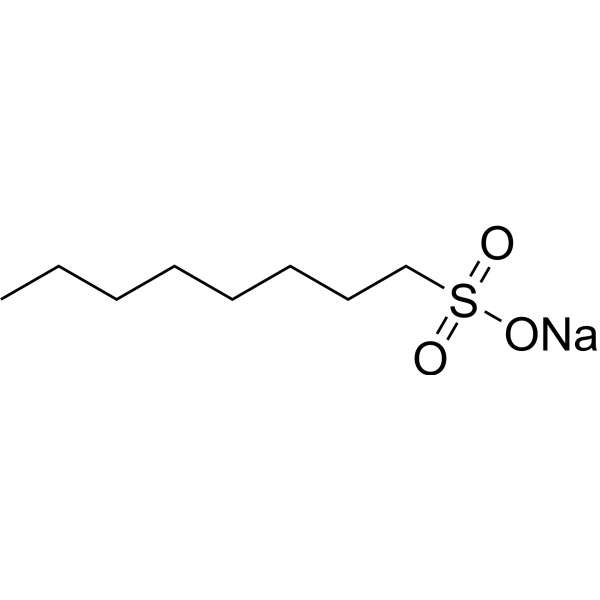
Sodium octane-1-sulfonate (Standard) is the analytical standard of Sodium octane-1-sulfonate. This product is intended for research and analytical applications. Sodium octane-1-sulfonate is an ion-pairing agent that can be used as a buffer in biochemical research and HPLC .
|
-
-
- HY-113354S1
-
|
|
Isotope-Labeled Compounds
|
Neurological Disease
|
|
Anserine-d4 hydrochloride is the deuterium labeled Anserine (HY-113354). Anserine, a methylated form of Carnosine, is an orally active, natural Histidine-containing dipeptide found in skeletal muscle of vertebrates. Anserine is not cleaved by serum carnosinase and act as biochemical buffers, chelators, antioxidants, and anti-glycation agents. Anserine improves memory functions in Alzheimer's disease (AD)-model mice .
|
-
-
- HY-113354R
-
|
|
Reference Standards
Endogenous Metabolite
|
Neurological Disease
|
|
Anserine (Standard) is the analytical standard of Anserine. This product is intended for research and analytical applications. Anserine, a methylated form of Carnosine, is an orally active, natural Histidine-containing dipeptide found in skeletal muscle of vertebrates. Anserine is not cleaved by serum carnosinase and act as biochemical buffers, chelators, antioxidants, and anti-glycation agents. Anserine improves memory functions in Alzheimer's disease (AD)-model mice[1][2].
|
-
-
- HY-179669D
-
|
|
Biochemical Assay Reagents
|
Others
|
|
1M Tris-HCl Buffer, pH 7.8 is a buffer solution commonly used in various biochemical and molecular biological applications to maintain a stable pH environment. The pH value of Tris-HCl changes with temperature; generally, the pH decreases by 0.03 units for every degree Celsius increase in temperature. The pH values indicated on the product are the pH values of the Tris-HCl buffer solution at 25°C.
|
-
-
- HY-179669B
-
|
|
Biochemical Assay Reagents
|
Others
|
|
1M Tris-HCl Buffer, pH 7.2 is a buffer solution commonly used in various biochemical and molecular biological applications to maintain a stable pH environment. The pH value of Tris-HCl changes with temperature; generally, the pH decreases by 0.03 units for every degree Celsius increase in temperature. The pH values indicated on the product are the pH values of the Tris-HCl buffer solution at 25°C.
|
-
-
- HY-179669K
-
|
|
Biochemical Assay Reagents
|
Others
|
|
0.5M Tris-HCl Buffer, pH 8.0 is a buffer solution commonly used in various biochemical and molecular biological applications to maintain a stable pH environment. The pH value of Tris-HCl changes with temperature; generally, the pH decreases by 0.03 units for every degree Celsius increase in temperature. The pH values indicated on the product are the pH values of the Tris-HCl buffer solution at 25°C.
|
-
| Cat. No. |
Product Name |
Type |
-
- HY-D0227F
-
|
Tris HCl (≥99%, reagent grade); Tris hydrochloride (≥99%, reagent grade)
|
Biochemical Assay Reagents
|
|
THAM hydrochloride (≥99%, reagent grade), also known as Tris-HCl, is a buffer commonly used in various biochemical and molecular biology applications to maintain a stable pH environment. Tris-HCl has unique chemical properties that allow it to resist changes in pH when acidic or basic substances are added, which makes it useful for stabilizing biological samples or reagents. It is commonly used in electrophoresis and protein purification procedures.
|
-
- HY-ER013C
-
|
Calcined soda, 99.8%
|
Biochemical Assay Reagents
|
|
Sodium carbonate, SP is a biochemical reagent and a buffer component that can be used to remove peripheral membrane proteins.
|
-
- HY-W014837
-
|
3-(1-Pyridinio)-1-propanesulfonate
|
Biochemical Assay Reagents
|
|
NDSB-201 consists of a pyridine group attached to a propane chain, which in turn is attached to a sulfonate group. This compound is commonly used as a buffer in biochemical and biological research, especially in electrophoretic applications. It maintains a stable pH in aqueous solutions and has low UV absorption, making it suitable for use in the UV spectrum. Furthermore, due to its ability to form stable complexes with DNA and other biomolecules, 3-(pyridin-1-ium-1-yl)propane-1-sulfonate has been investigated for its potential in drug delivery and genetic research.
|
-
- HY-W694629
-
|
|
Biochemical Assay Reagents
|
|
Triethylammonium bicarbonate is a biochemical reagent that can be used to prepare buffer solutions that maintains the stable pH environment required for processes such as enzyme-catalyzed reactions .
|
-
- HY-Y1083H
-
|
Salt of lemery, 99%
|
Biochemical Assay Reagents
|
|
Potassium sulfate, 99% (Salt of lemery, 99%) can be used in biochemical tests for serum proteins, the determination of blood potassium and other potassium salts, and the preparation of protein capillary electrophoresis buffers. Potassium sulfate, 99% is a kind of biological materials or organic compounds that are widely used in life science research .
|
-
- HY-D0867
-
|
|
Biochemical Assay Reagents
|
|
BES is a secondary standard biochemical buffer with effective pH range of 6.4 to 7.8 (pKa: 7.15 at 20 °C). BES is used in the diagnostic testing area.
|
-
- HY-Y0286A
-
|
Carbonic acid diammonium, 99.999% trace metals basis
|
Biochemical Assay Reagents
|
|
Diammonium carbonate, 99.999% trace metals basis is a biochemical reagent and a buffer component .
|
-
- HY-W013105
-
|
N-Cholylglycine sodium salt, 98%
|
Biochemical Assay Reagents
|
|
Sodium glycocholate hydrate, 98% is a buffer commonly used in molecular biology and biochemical research, providing precise pH control in various experimental settings.
|
-
- HY-D0227J
-
|
Tris HCl (≥99%, for cell culture); Tris hydrochloride (≥99%, for cell culture)
|
Biochemical Assay Reagents
|
|
THAM hydrochloride (≥99%, for cell culture) is a low-toxicity amino alcohol buffer, a specific CO2-consuming proton acceptor that buffers carbon dioxide and acid both in vitro and in vivo. THAM hydrochloride (≥99%, for cell culture) binds protons to form bicarbonate, reduces PaCO2, and induces intracellular alkalization, thereby ameliorating hypercapnia-induced elevation of pulmonary blood vessels and pulmonary arterial pressure. THAM hydrochloride (≥99%, for cell culture) may cause PaCO2 rebound, hypoglycemia, and respiratory depression. THAM hydrochloride (≥99%, for cell culture) removes amniotic epithelium and preserves the basement membrane, but depletes extracellular matrix and reduces the adhesion rate of limbal epithelial cells. THAM hydrochloride (≥99%, for cell culture) can act as a CO2 carrier to enhance the productivity and carbon utilization rate of Scenedesmus obliquus. THAM hydrochloride (≥99%, for cell culture) is a key component of buffer solutions used in various biological, cell culture, biochemical, and molecular biology applications .
|
-
- HY-W014792
-
|
|
Biochemical Assay Reagents
|
|
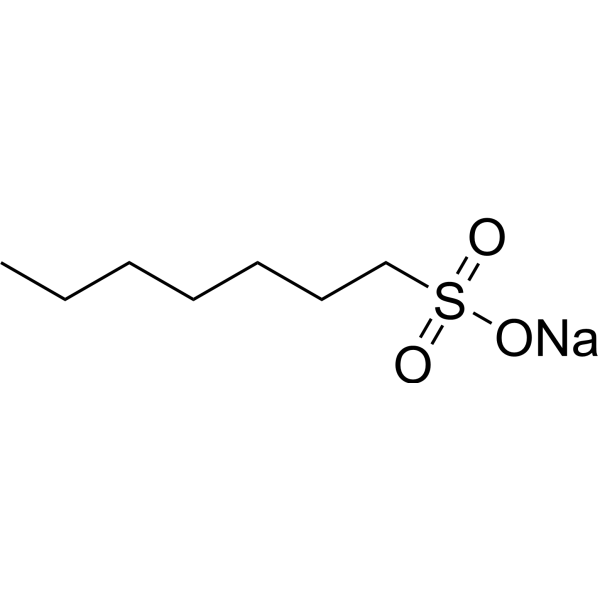
Sodium heptane-1-sulfonate is an ion-pairing agent that can be used as a buffer in biochemical research and HPLC .
|
-
- HY-179669I
-
|
|
Biochemical Assay Reagents
|
|
1M Tris-HCl Buffer, pH 8.8 is a buffer solution commonly used in various biochemical and molecular biological applications to maintain a stable pH environment. The pH value of Tris-HCl changes with temperature; generally, the pH decreases by 0.03 units for every degree Celsius increase in temperature. The pH values indicated on the product are the pH values of the Tris-HCl buffer solution at 25°C.
|
-
- HY-179669C
-
|
|
Biochemical Assay Reagents
|
|
1M Tris-HCl Buffer, pH 7.6 is a buffer solution commonly used in various biochemical and molecular biological applications to maintain a stable pH environment. The pH value of Tris-HCl changes with temperature; generally, the pH decreases by 0.03 units for every degree Celsius increase in temperature. The pH values indicated on the product are the pH values of the Tris-HCl buffer solution at 25°C.
|
-
- HY-179669
-
|
|
Biochemical Assay Reagents
|
|
1M Tris-HCl Buffer, pH 6.8 is a buffer solution commonly used in various biochemical and molecular biological applications to maintain a stable pH environment. The pH value of Tris-HCl changes with temperature; generally, the pH decreases by 0.03 units for every degree Celsius increase in temperature. The pH values indicated on the product are the pH values of the Tris-HCl buffer solution at 25°C.
|
-
- HY-ER013J
-
|
|
Biochemical Assay Reagents
|
|
Sodium carbonate, anhydrous, meets analytical specification of Ep, BP, JP, NF is a biochemical reagent and a buffer component.
|
-
- HY-W008600
-
|
|
Biochemical Assay Reagents
|
|
Sodium octane-1-sulfonate is an ion-pairing agent that can be used as a buffer in biochemical research and HPLC .
|
-
- HY-W016091
-
|
|
Biochemical Assay Reagents
|
|
Sodium heptane-1-sulfonate is an ion-pairing agent that can be used as a buffer in biochemical research and HPLC .
|
-
- HY-W127629
-
|
|
Biochemical Assay Reagents
|
|
MOBS is a zwitterionic compound and biological buffer. MOBS is compatible with common biological media .
|
-
- HY-W040173
-
|
|
Biochemical Assay Reagents
|
|
MOPSO sodium can be used for the preparation of buffer solution. MOPSO sodium is used as a biochemical reagent .
|
-
- HY-179669A
-
|
|
Biochemical Assay Reagents
|
|
1M Tris-HCl Buffer, pH 7.0 is a buffer solution commonly used in various biochemical and molecular biological applications to maintain a stable pH environment. The pH value of Tris-HCl changes with temperature; generally, the pH decreases by 0.03 units for every degree Celsius increase in temperature. The pH values indicated on the product are the pH values of the Tris-HCl buffer solution at 25°C.
|
-
- HY-179669E
-
|
|
Biochemical Assay Reagents
|
|
1M Tris-HCl Buffer, pH 8.0 is a buffer solution commonly used in various biochemical and molecular biological applications to maintain a stable pH environment. The pH value of Tris-HCl changes with temperature; generally, the pH decreases by 0.03 units for every degree Celsius increase in temperature. The pH values indicated on the product are the pH values of the Tris-HCl buffer solution at 25°C.
|
-
- HY-ER013I
-
|
Calcined soda meets analytical specification of Ph. Eur., BP, NF, FCC, E500
|
Biochemical Assay Reagents
|
|
Sodium carbonate anhydrous, meets analytical specification of Ph. Eur., BP, NF, FCC, E500 is a biochemical assay reagent suitable for buffer configuration .
|
-
- HY-W099337
-
|
|
Biochemical Assay Reagents
|
|
N-Ethyl-D-glucamine is a glucose derivative with biological activity as a buffer and chelating agent. Therefore, it is widely used in biochemical research to regulate pH and bind metal ions.
|
-
- HY-D0855A
-
|
|
Biochemical Assay Reagents
|
|
ADA (disodium) is a buffer salt derived from ADA (adenosine deaminase) and is widely used in biochemical research, especially in the preparation of enzyme buffers.
|
-
- HY-179669J
-
|
|
Biochemical Assay Reagents
|
|
1M Tris-HCl Buffer, pH 6.8 is a buffer solution commonly used in various biochemical and molecular biological applications to maintain a stable pH environment. The pH value of Tris-HCl changes with temperature; generally, the pH decreases by 0.03 units for every degree Celsius increase in temperature. The pH values ??indicated on the product are the pH values ??of the Tris-HCl buffer solution at 25°C.
|
-
- HY-179669H
-
|
|
Biochemical Assay Reagents
|
|
1M Tris-HCl Buffer, pH 8.8 is a buffer solution commonly used in various biochemical and molecular biological applications to maintain a stable pH environment. The pH value of Tris-HCl changes with temperature; generally, the pH decreases by 0.03 units for every degree Celsius increase in temperature. The pH values indicated on the product are the pH values of the Tris-HCl buffer solution at 25°C.
|
-
- HY-Y1083C
-
|
Salt of lemery, for cell culture
|
Biochemical Assay Reagents
|
|
Potassium sulfate, for cell culture (Salt of lemery, for cell culture) can be used in biochemical tests for serum proteins, the determination of blood potassium and other potassium salts, and the preparation of protein capillary electrophoresis buffers. Potassium sulfate, for cell culture is a kind of biological materials or organic compounds that are widely used in life science research .
|
-
- HY-W152363
-
|
1,2,3,4-Tetra-O-acetyl-α-L-fucopyranose
|
Biochemical Assay Reagents
|
|
1,2,3,4-Tetra-O-acetyl-alpha-L-fucopyranoseIt is an organic compound commonly used as a substrate or reference standard in enzymology and sugar chemistry research. It can be used in the synthesis of polysaccharide analogs, drug development and biotechnology, and is widely used in the research of glycosyl chemistry and sugar metabolism pathways. In addition, this compound is used as a catalyst or buffer in certain biochemical reactions.
|
-
- HY-D0867A
-
|
|
Biochemical Assay Reagents
|
|
BES sodium is a secondary standard biochemical buffer with effective pH range of 6.4 to 7.8 (pKa: 7.15 at 20 °C). BES sodium is used in the diagnostic testing area.
|
-
- HY-W105686
-
|
|
Biochemical Assay Reagents
|
|
MOPS hemisodium salt, 98% is a buffer commonly used in molecular biology and biochemical research, providing precise pH control in various experimental settings.
|
-
- HY-W328408
-
-
- HY-W332454
-
-
- HY-W097000
-
|
|
Biochemical Assay Reagents
|
|
1-Propanesulfonic acid (sodium hydrate) is a versatile biochemical reagent used in synthesis reagents, experimental buffer solutions, etc. 1-Propanesulfonic acid (sodium hydrate) is a kind of biological materials or organic compounds that are widely used in life science research .
|
-
- HY-W342700
-
|
|
Biochemical Assay Reagents
|
|
PIPPS is a kind of buffer commonly used in biological and biochemical research to maintain the acidity and alkalinity (pH value) of solutions .
|
-
- HY-W803862
-
|
|
Biochemical Assay Reagents
|
|
Tripotassium citrate is a compound containing potassium and citrate ions that has activity as a buffer, able to maintain a stable pH required for many enzymatic reactions and biochemical processes. Tripotassium citrate can be used as a buffer in enzyme assays to ensure the validity of experimental conditions.
|
-
- HY-W102585
-
|
|
Biochemical Assay Reagents
|
|
HEPPSO (sodium) is a biological buffer. HEPPSO (sodium) is a biomaterial or organic compound that can be used in life science research .
|
-
- HY-W579346
-
|
|
Biochemical Assay Reagents
|
|
POPSO sesquisodium is a water-soluble zwitterionic buffer. POPSO sesquisodium is commonly used in biological and biochemical studies to maintain the acidity or alkalinity (pH value) of solutions, especially within the physiological pH range of 7.0 to 8.5 .
|
-
- HY-W008600R
-
|
|
Biochemical Assay Reagents
|
|
Sodium octane-1-sulfonate (Standard) is the analytical standard of Sodium octane-1-sulfonate. This product is intended for research and analytical applications. Sodium octane-1-sulfonate is an ion-pairing agent that can be used as a buffer in biochemical research and HPLC .
|
-
- HY-179669D
-
|
|
Biochemical Assay Reagents
|
|
1M Tris-HCl Buffer, pH 7.8 is a buffer solution commonly used in various biochemical and molecular biological applications to maintain a stable pH environment. The pH value of Tris-HCl changes with temperature; generally, the pH decreases by 0.03 units for every degree Celsius increase in temperature. The pH values indicated on the product are the pH values of the Tris-HCl buffer solution at 25°C.
|
-
- HY-179669B
-
|
|
Biochemical Assay Reagents
|
|
1M Tris-HCl Buffer, pH 7.2 is a buffer solution commonly used in various biochemical and molecular biological applications to maintain a stable pH environment. The pH value of Tris-HCl changes with temperature; generally, the pH decreases by 0.03 units for every degree Celsius increase in temperature. The pH values indicated on the product are the pH values of the Tris-HCl buffer solution at 25°C.
|
-
- HY-179669K
-
|
|
Biochemical Assay Reagents
|
|
0.5M Tris-HCl Buffer, pH 8.0 is a buffer solution commonly used in various biochemical and molecular biological applications to maintain a stable pH environment. The pH value of Tris-HCl changes with temperature; generally, the pH decreases by 0.03 units for every degree Celsius increase in temperature. The pH values indicated on the product are the pH values of the Tris-HCl buffer solution at 25°C.
|
| Cat. No. |
Product Name |
Category |
Target |
Chemical Structure |
| Cat. No. |
Product Name |
Chemical Structure |
-
- HY-113354S
-
|
|
|
Anserine-d4 is the deuterium labeled Anserine. Anserine, a methylated form of Carnosine, is an orally active, natural Histidine-containing dipeptide found in skeletal muscle of vertebrates. Anserine is not cleaved by serum carnosinase and act as biochemical buffers, chelators, antioxidants, and anti-glycation agents. Anserine improves memory functions in Alzheimer's disease (AD)-model mice .
|
-
-
- HY-113354S1
-
|
|
|
Anserine-d4 hydrochloride is the deuterium labeled Anserine (HY-113354). Anserine, a methylated form of Carnosine, is an orally active, natural Histidine-containing dipeptide found in skeletal muscle of vertebrates. Anserine is not cleaved by serum carnosinase and act as biochemical buffers, chelators, antioxidants, and anti-glycation agents. Anserine improves memory functions in Alzheimer's disease (AD)-model mice .
|
-
Your information is safe with us. * Required Fields.
Inquiry Information
- Product Name:
- Cat. No.:
- Quantity:
- MCE Japan Authorized Agent:

