17 Results for "

cabbages

" in MedChemExpress (MCE) Product Catalog:
Products (17)

17 Results for "cabbages" in MCE Product Catalog:

1
1 Cited Publications
Cat. No.: HY-B1953
CAS No.: 111988-49-9
Research Areas:  

Infection

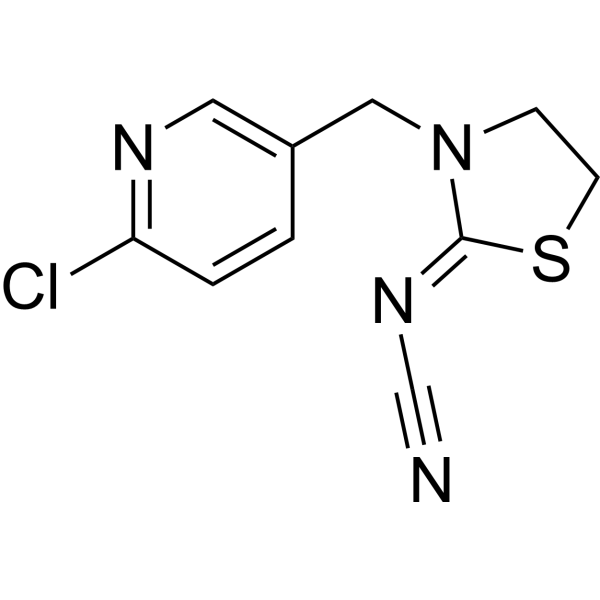
Thiacloprid is an orally active neurotoxic insecticide and also a nAChR agonist. Thiacloprid reduces the viability of healthy cells, depletes reduced glutathione, and increases MDA levels, thereby inducing cytotoxicity and oxidative stress damage. In practical applications, Thiacloprid has lower acute toxicity to honeybees than other compounds of the same class such as Imidacloprid (HY-B0838), but it still significantly impairs the learning and memory function, immune capacity and survival status of honeybees. Thiacloprid induces intestinal microbial dysbiosis and reduces survival rate in middle-aged honeybees, increases the risk of premature collapse in bumblebee colonies, and significantly decreases the final colony weight and reproductive output. Thiacloprid is used in broad-spectrum agricultural pest control, often alone or in combination with Deltamethrin (HY-B1971), and meets the pest management needs of various crops including potatoes, cabbages, various fruits and vegetables, and nuts .
loading...
    loading...
Cat. No.: HY-137884
CAS No.: 608-08-2
Purity:  99.26%
Synonyms: 3-Acetoxyindole
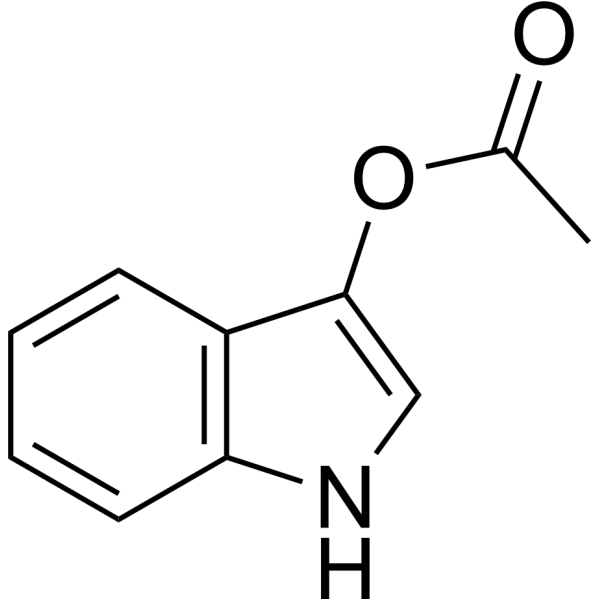
3-Indolyl acetate is an ester derivative of indole that is ubiquitous in various plant tissues, especially in certain cruciferous vegetables such as broccoli and cabbage. 3-Indolyl acetate has unique chemical properties that make it an important signaling molecule in plants, regulating various physiological processes such as growth and defense against pathogens. It also has potential applications in the pharmaceutical industry, as it has been shown to have antitumor and anti-inflammatory effects in some studies.
loading...
    loading...
Cat. No.: HY-P2812B
CAS No.: 9001-87-0
Target:  

Phospholipase

Research Areas:  

Cardiovascular Disease Cancer

Phospholipase D, cabbage is a phospholipase D of the PLD superfamily found in cabbage, acting as a phosphodiesterase and signaling enzyme with activity toward phosphatidylcholine. Phospholipase D hydrolyzes phosphatidylcholine to phosphatidic acid and choline, and catalyzes transphosphatidylation reactions. Phospholipase D can be used for the research of myocardial disease, ischemic heart disease, congestive heart failure, diabetic cardiomyopathy, cardiac hypertrophy, vascular abnormalities, breast cancer, gastric cancer, renal cancer, colorectal cancer .
loading...
    loading...
Cat. No.: HY-128421R
CAS No.: 505-52-2
Synonyms: Brassylic Acid (Standard)
Tridecanedioic acid (Standard) is the analytical standard of Tridecanedioic acid (HY-128421). This product is intended for research and analytical applications. Tridecanedioic acid is an endogenous metabolite. Tridecanedioic acid is an endogenous metabolite. Tridecanedioic acid is related to the metabolic regulation of non-alcoholic fatty liver disease (NASH) and may be an important node molecule in the intestinal microbiota-host metabolism interaction network. Tridecanedioic acid is significantly accumulated in tolerant cabbage-type rapeseed varieties and has a lower content in sensitive varieties. It plays an important role in the defense response against the infection of the small cabbage moth (Plutella xylostella). Tridecanedioic acid can be used as a biomarker for plant insect resistance or a diagnostic marker for metabolic diseases.
loading...
    loading...
Cat. No.: HY-W540861
CAS No.: 6590-94-9
Research Areas:  

Others

3,4-Dichlorophenyl Isothiocyanate is an intermediate in organic synthesis and is used to make other isothiocyanate-containing compounds. 3,4-Dichlorophenyl Isothiocyanate and its derivatives can be used to induce cabbage root flies and test their behavioral responses and trap bait effects .
loading...
    loading...
Cat. No.: HY-B1953R
CAS No.: 111988-49-9
Research Areas:  

Infection

Thiacloprid (Standard) is the analytical standard of Thiacloprid. This product is intended for research and analytical applications. Thiacloprid is an orally active neurotoxic insecticide and also a nAChR agonist. Thiacloprid reduces the viability of healthy cells, depletes reduced glutathione, and increases MDA levels, thereby inducing cytotoxicity and oxidative stress damage. In practical applications, Thiacloprid has lower acute toxicity to honeybees than other compounds of the same class such as Imidacloprid (HY-B0838), but it still significantly impairs the learning and memory function, immune capacity and survival status of honeybees. Thiacloprid induces intestinal microbial dysbiosis and reduces survival rate in middle-aged honeybees, increases the risk of premature collapse in bumblebee colonies, and significantly decreases the final colony weight and reproductive output. Thiacloprid is used in broad-spectrum agricultural pest control, often alone or in combination with Deltamethrin (HY-B1971), and meets the pest management needs of various crops including potatoes, cabbages, various fruits and vegetables, and nuts .
loading...
    loading...
Cat. No.: HY-N19998
Category:  

Extract

Target:  

Others

Red cabbages extract is an extract of purple cabbage (Brassica oleracea L.) that is helpful in the research of dyslipidemia and oxidative stress-related diseases.
loading...
    loading...
Cat. No.: HY-N14363
CAS No.: 315193-05-6
Fistupyrone, an antibiotic, is a microbial metabolite found in Streptomyces sp. TP-A0569. Fistupyrone inhibits Alternaria brassicicola infected Chinese cabbage .
loading...
    loading...
Cat. No.: HY-B1953S
CAS No.: 1793071-39-2
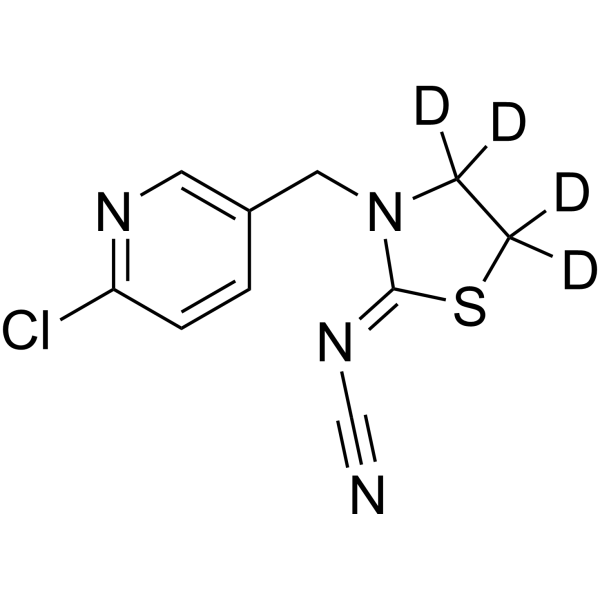
Thiacloprid-d4 is the deuterium labeled Thiacloprid. Thiacloprid is an orally active neurotoxic insecticide and also a nAChR agonist. Thiacloprid reduces the viability of healthy cells, depletes reduced glutathione, and increases MDA levels, thereby inducing cytotoxicity and oxidative stress damage. In practical applications, Thiacloprid has lower acute toxicity to honeybees than other compounds of the same class such as Imidacloprid (HY-B0838), but it still significantly impairs the learning and memory function, immune capacity and survival status of honeybees. Thiacloprid induces intestinal microbial dysbiosis and reduces survival rate in middle-aged honeybees, increases the risk of premature collapse in bumblebee colonies, and significantly decreases the final colony weight and reproductive output. Thiacloprid is used in broad-spectrum agricultural pest control, often alone or in combination with Deltamethrin (HY-B1971), and meets the pest management needs of various crops including potatoes, cabbages, various fruits and vegetables, and nuts .
loading...
    loading...
Cat. No.: HY-N20289
Category:  

Extract

Target:  

Others

Chinese cabbage extract is an extract of Chinese cabbage (Brassica rapa var. glabra Regel) containing a variety of bioactive components.
loading...
    loading...
Cat. No.: HY-N18721
CAS No.: 89958-13-4
Category:  

Extract

Target:  

Others

Cabbage, ext. is a cabbage-derived product with versatility spaning across the research of multifarious ailments, encompassing inflammation-induced disorders, cardiovascular afflictions and even specific cancers.
loading...
    loading...
Cat. No.: HY-W714178
CAS No.: 4658-28-0
Target:  

Herbicide

Research Areas:  

Others

Aziprotryne is a post-emergence selective herbicide active against broadleaf weeds. When tank-mixed with Alachlor (HY-B2014), Aziprotryne provides longer-term weed control in field-grown cabbage plots .
loading...
    loading...
Cat. No.: HY-208558
CAS No.: 183992-51-0
Target:  

Insecticide

Research Areas:  

Infection

Insecticidal agent 35 is an insecticide that inhibits the growth of tobacco budworms. When applied via foliar spray, Insecticidal agent 35 controls tobacco budworms, cabbage loopers and beet armyworms. Insecticidal agent 35 can be used in studies related to tobacco budworm infestation .
loading...
    loading...
Cat. No.: HY-W707148
CAS No.: 26730-12-1
4-Methyltridecane is a volatile substance specifically released by cabbage root flies (Delia radicum) after feeding. 4-Methyltridecane might be a key signal for the parasitoid bee Trybliographa rapae (Delia radicum’s specific parasitic predator) to locate the host. 4-Methyltridecane can serve as a specific marker for root damage in turnips (Brassica rapa subsp. Rapa) .
loading...
    loading...
Cat. No.: HY-Y1002
CAS No.: 505-10-2
Synonyms: 3-Hydroxypropyl methyl sulfide; 3-Methylmercapto-1-propanol; 4-Thiapentan-1-ol; gamma-Hydroxypropyl methyl sulfide
Research Areas:  

Infection

Methionol is a sulfur-containing flavor compound and also a component of aggregation pheromones produced by males. Methionol exists in fermented coconut milk and wine. Methionol has an odor similar to boiled cabbage, and imparts cauliflower-like off-flavors to wine when its content exceeds the perception threshold. Methionol attracts both male and female adults of Knulliana cincta cincta, and mainly attracts female adults of Elaphidion mucronatum .
loading...
    loading...
Cat. No.: HY-N19220
CAS No.: 49620-14-6
Radiclonic acid acts as an Antibacterial agent, anticancer agent, and root growth promoter. Radiclonic acid is isolable from fungi of the genus Penicillium. Radiclonic acid exhibits antibacterial activity against MRSA with a MIC of 3.13 μg/mL. Radiclonic acid shows anticancer activity against esophageal cancer, bladder cancer, and liver cancer. Radiclonic acid promotes root growth in Chinese cabbage seedlings. Radiclonic acid is inactive against pancreatic cancer and cervical cancer. Radiclonic acid can be used in research related to Staphylococcus aureus infection, bladder cancer, esophageal cancer, and liver cancer .
loading...
    loading...
Cat. No.: HY-N20639
CAS No.: 464-71-1
Synonyms: 3-Deoxycaryoptinol
Clerodin (3-Deoxycaryoptinol) is a natural diterpenoid compound that can be isolated from traditional Chinese medicinal plants such as Clerodendrum infortunatum. Clerodin exhibits caspase-3 regulation, apoptosis induction, cell cycle arrest, ROS induction and glutathione depletion effects, along with anti-cancer and antifeedant activities. It shows selective cytotoxicity against leukemia cells and breast cancer cells, but has no obvious toxicity to normal human blood cells and lymphocytes. Clerodin also reduces the feeding behavior of Helicoverpa armigera larvae on cabbage leaf discs, but has no significant contact toxicity to these larvae. Clerodin can be used in research related to acute monocytic leukemia and human breast cancer .
loading...
    loading...
  • 1

