51 Results for "

disease angina

" in MedChemExpress (MCE) Product Catalog:
Products (51)

51 Results for "disease angina" in MCE Product Catalog:

17
17 Publications Verification
Cat. No.: HY-17503
CAS No.: 51384-51-1
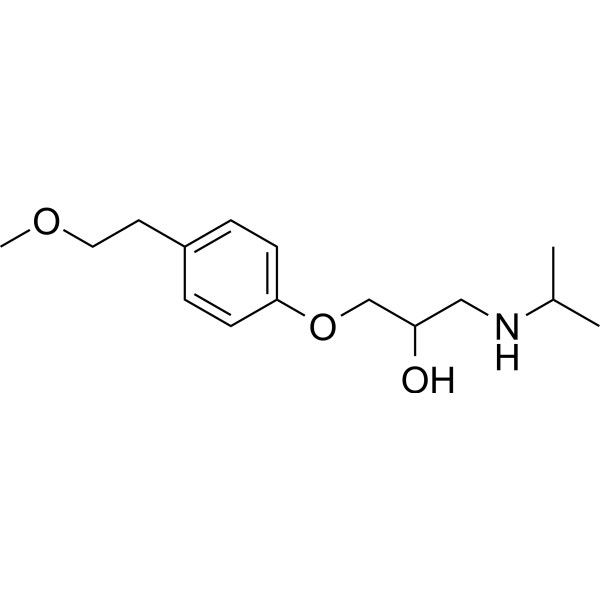
Metoprolol is an orally active, selective β1-adrenoceptor antagonist. Metoprolol shows anti-inflammation, antitumor and anti-angiogenic properties .
loading...
    loading...
17
17 Publications Verification
Cat. No.: HY-17503B
CAS No.: 56392-17-7
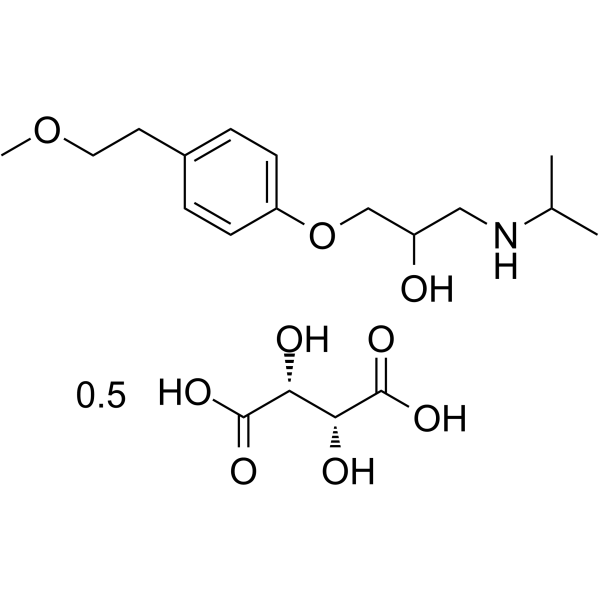
Metoprolol tartrate is an orally active, selective β1-adrenoceptor antagonist. Metoprolol tartrate shows anti-inflammation, antitumor and anti-angiogenic properties .
loading...
    loading...
17
17 Publications Verification
Cat. No.: HY-17503A
CAS No.: 98418-47-4
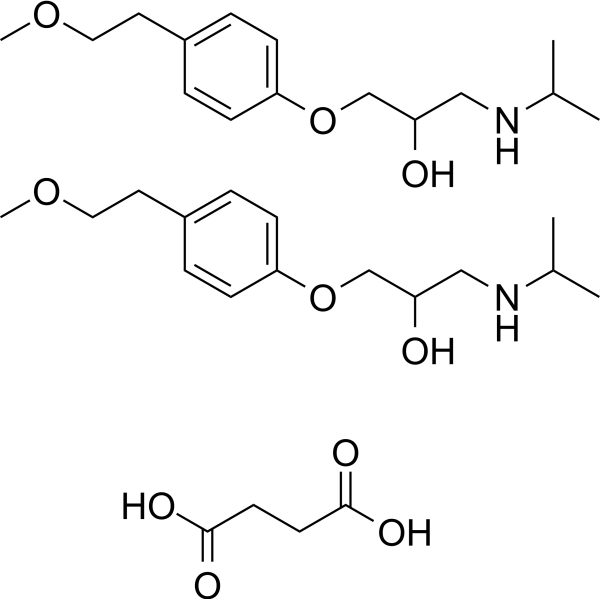
Metoprolol succinate is an orally active, selective β1-adrenoceptor antagonist. Metoprolol succinate shows anti-inflammation, antitumor and anti-angiogenic properties .
loading...
    loading...
9
9 Cited Publications
Cat. No.: HY-103315
CAS No.: 68099-86-5
Purity:  99.98%
Synonyms: CERM 1978; Org 5730 hydrochloride
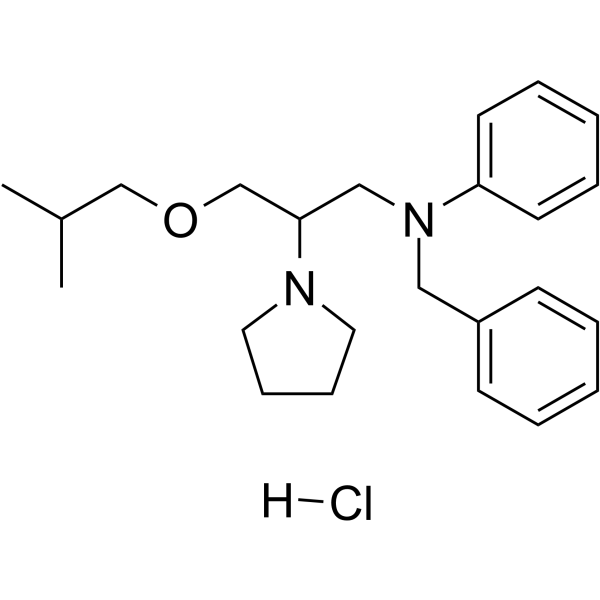
Bepridil hydrochloride (CERM 1978; Org 5730 hydrochloride) is an orally active non-selective calcium channel antagonist with multi-ion channel blocking activity. Bepridil hydrochloride modulates Calmodulin, the 20S proteasome, T-type/L-type calcium channels, cardiac sodium channels, multiple potassium channels, γ-secretase, β-secretase, and mitoKATP/sarcKATP channels. Bepridil hydrochloride acts as a hydroxyl radical scavenger, regulates mitochondrial and intracellular calcium handling, and exerts antiarrhythmic, antianginal, and cardioprotective effects. Bepridil hydrochloride alters amyloid precursor protein processing, reduces β-amyloid and thalamic calcium levels, restores seladin-1/DHCR24 expression, and improves sensorimotor recovery after cerebral ischemia. Bepridil hydrochloride also exhibits potent inhibitory effects on SARS-CoV-2 replication. Bepridil hydrochloride is used in studies related to stable angina, arrhythmias, cerebral ischemia, Alzheimer's disease, and SARS-CoV-2 infection .
loading...
    loading...
9
9 Cited Publications
Cat. No.: HY-16952
CAS No.: 64706-54-3
Synonyms: CERM 1978 free base; Org 5730
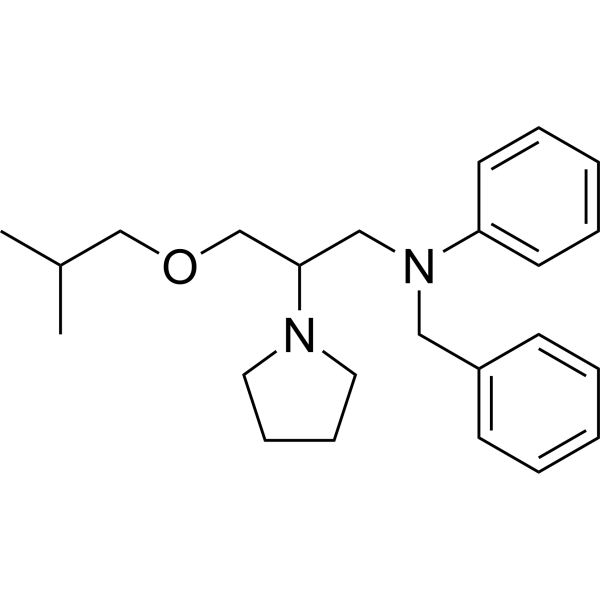
Bepridil (CERM 1978 (free base); Org 5730) is an orally active non-selective calcium channel antagonist with multi-ion channel blocking activity. Bepridil modulates Calmodulin, the 20S proteasome, T-type/L-type calcium channels, cardiac sodium channels, multiple potassium channels, γ-secretase, β-secretase, and mitoKATP/sarcKATP channels. Bepridil acts as a hydroxyl radical scavenger, regulates mitochondrial and intracellular calcium handling, and exerts antiarrhythmic, antianginal, and cardioprotective effects. Bepridil alters amyloid precursor protein processing, reduces β-amyloid and thalamic calcium levels, restores seladin-1/DHCR24 expression, and improves sensorimotor recovery after cerebral ischemia. Bepridil also exhibits potent inhibitory effects on SARS-CoV-2 replication. Bepridil is used in studies related to stable angina, arrhythmias, cerebral ischemia, Alzheimer's disease, and SARS-CoV-2 infection .
loading...
    loading...
9
9 Cited Publications
Cat. No.: HY-16952A
CAS No.: 74764-40-2
Synonyms: CERM 1978 hydrate; Org 5730 hydrochloride hydrate
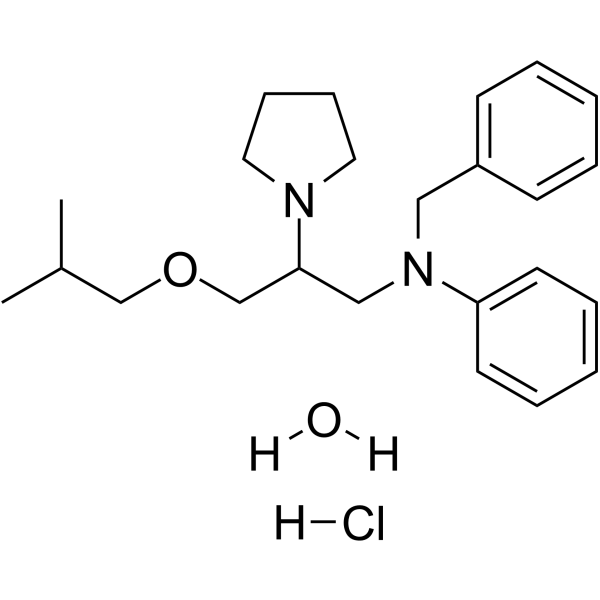
Bepridil hydrochloride hydrate (CERM 1978 hydrate; Org 5730 hydrochloride hydrate) is an orally active non-selective calcium channel antagonist with multi-ion channel blocking activity. Bepridil hydrochloride hydrate modulates Calmodulin, the 20S proteasome, T-type/L-type calcium channels, cardiac sodium channels, multiple potassium channels, γ-secretase, β-secretase, and mitoKATP/sarcKATP channels. Bepridil hydrochloride hydrate acts as a hydroxyl radical scavenger, regulates mitochondrial and intracellular calcium handling, and exerts antiarrhythmic, antianginal, and cardioprotective effects. Bepridil hydrochloride hydrate alters amyloid precursor protein processing, reduces β-amyloid and thalamic calcium levels, restores seladin-1/DHCR24 expression, and improves sensorimotor recovery after cerebral ischemia. Bepridil hydrochloride hydrate also exhibits potent inhibitory effects on SARS-CoV-2 replication. Bepridil hydrochloride hydrate is used in studies related to stable angina, arrhythmias, cerebral ischemia, Alzheimer's disease, and SARS-CoV-2 infection .
loading...
    loading...
7
7 Cited Publications
Cat. No.: HY-B1334A
CAS No.: 6724-53-4
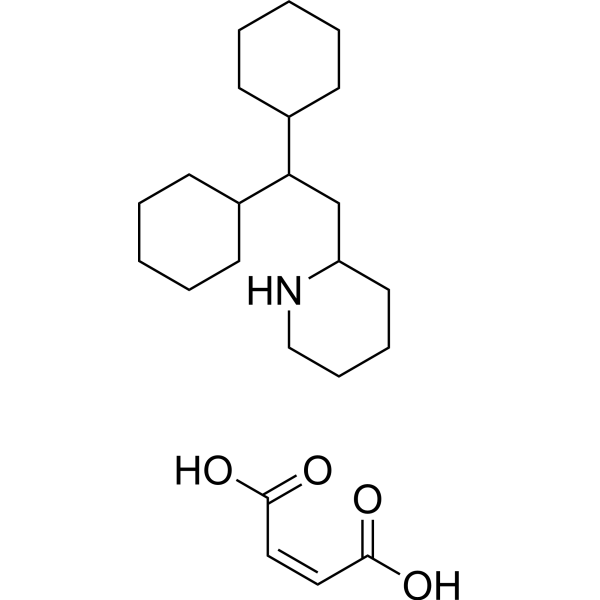
Perhexiline maleate is an orally active CPT1 and CPT2 inhibitor that reduces fatty acid metabolism. Perhexiline maleate induces mitochondrial dysfunction and apoptosis in hepatic cells. Perhexiline maleate can cross the blood brain barrier (BBB) and shows anti-tumor activity. Perhexiline maleate can be used in the research of cancers, and cardiovascular disease like angina .
loading...
    loading...
7
7 Cited Publications
Cat. No.: HY-B1334
CAS No.: 6621-47-2
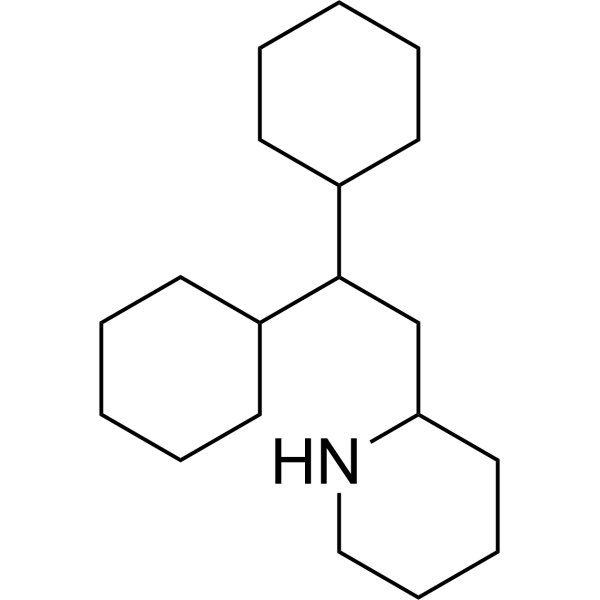
Perhexiline is an orally active CPT1 and CPT2 inhibitor that reduces fatty acid metabolism. Perhexiline induces mitochondrial dysfunction and apoptosis in hepatic cells. Perhexiline can cross the blood brain barrier (BBB) and shows anti-tumor activity. Perhexiline can be used in the research of cancers, and cardiovascular disease like angina .
loading...
    loading...
5
5 Cited Publications
Cat. No.: HY-B0642
CAS No.: 16051-77-7
Synonyms: Isosorbide-5-mononitrate
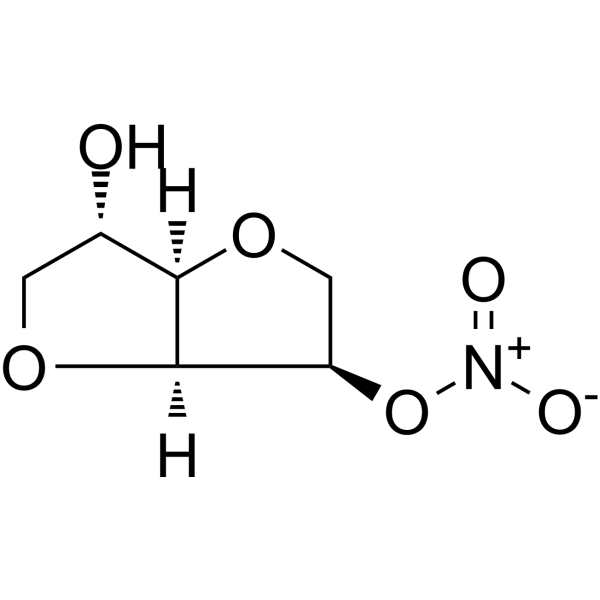
Isosorbide mononitrate (Isosorbide-5-mononitrate) is an orally active nitric acid compound used for angina pectoris by dilating blood vessels and lowering blood pressure. Isosorbide mononitrate increases the viability and proliferation of HUVECs by decreasing Apoptosis and elevated the expressions of vedf, kdrl, pdgfr in zebrafish embryos. Isosorbide mononitrate is promising for research of heart failure and coronary heart disease .
loading...
    loading...
3
3 Cited Publications
Cat. No.: HY-N6065
CAS No.: 73069-27-9
Synonyms: (+)-Praeruptorin A
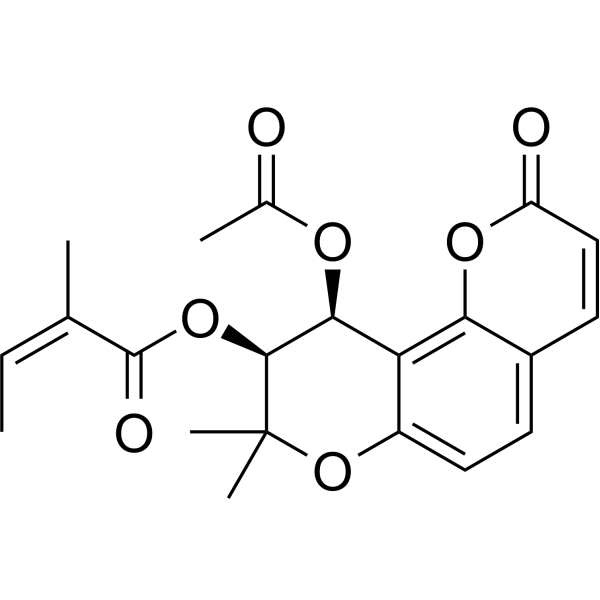
Praeruptorin A ((+)-Praeruptorin A) is an orally active isomer of (±)-Praeruptorin A (HY-N0081). Praeruptorin A also acts as a Calcium channel blocker. Praeruptorin A can be isolated from Peucedanum. Praeruptorin A serves as a substrate for CYP3A4. Praeruptorin A downregulates NMDA receptors containing GluN2B and inhibits neuronal Apoptosis. Praeruptorin A mediates vasodilation, inhibits vascular hypertrophy and reduces blood pressure. Praeruptorin A can be used in research related to neurological diseases, myocardial ischemia, heart failure, exertional angina, renovascular hypertension and spontaneous hypertension .
loading...
    loading...
2
2 Cited Publications
Cat. No.: HY-17583
CAS No.: 126-07-8
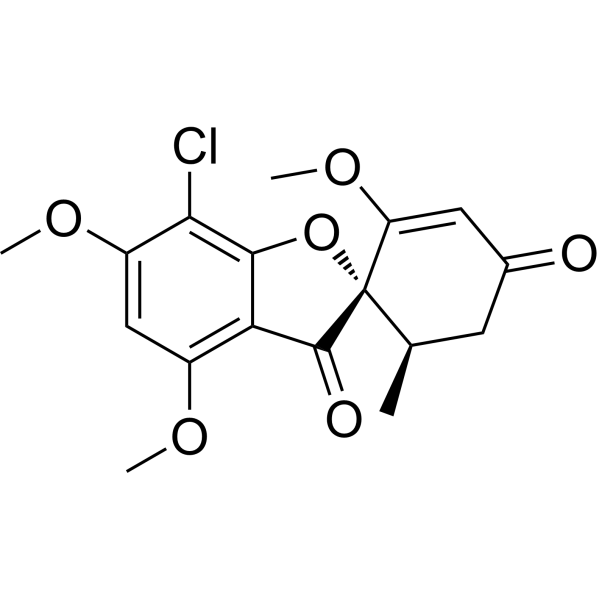
Griseofulvin is an orally active antifungal antibiotic with antitumor activity. Griseofulvin induces apoptosis and G2/M cell cycle arrest in cancer cells. Griseofulvin also has cardiovascular modulatory activity, reducing angina pectoris, relieving hand artery spasm associated with onychomycosis, and peripheral vascular diseases such as shoulder-hand syndrome .
loading...
    loading...
1
1 Cited Publications
Cat. No.: HY-B0341
CAS No.: 65141-46-0
Synonyms: SG-75
Target:  

Potassium Channel

Research Areas:  

Cardiovascular Disease

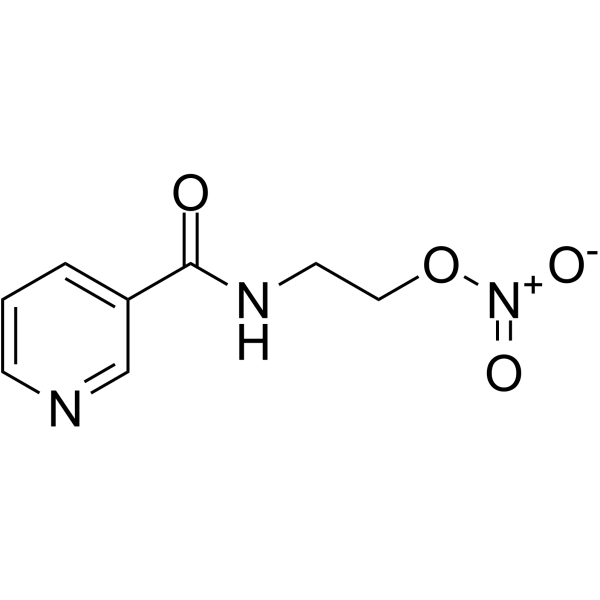
Nicorandil (SG-75) is a potent potassium channel activator and targets vascular nucleoside diphosphate-dependent K + channels and cardiac ATP-sensitive K + channels (KATP). Nicorandil is a nicotinamide ester with vasodilatory and cardioprotective effects and has the potential for angina and forischemic heart diseases .
loading...
    loading...
1
1 Cited Publications
Cat. No.: HY-B1486
CAS No.: 6452-73-9
Synonyms: Ba 39089
Target:  

Adrenergic Receptor

Research Areas:  

Cardiovascular Disease

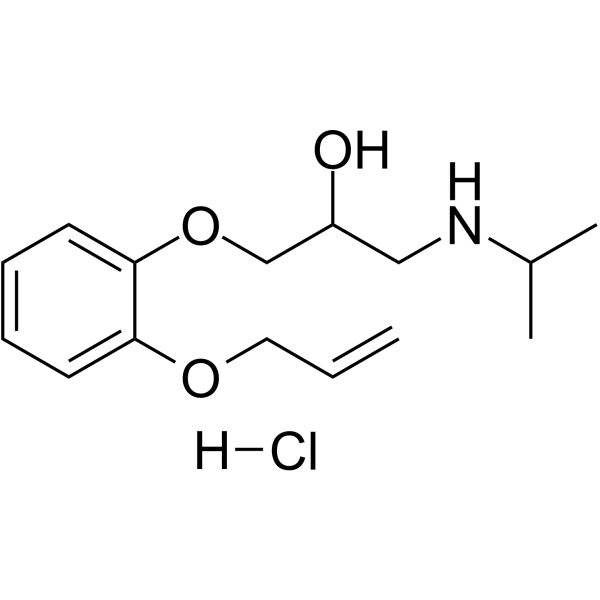
Oxprenolol hydrochloride (Ba 39089) is an orally bioavailable β-adrenergic receptor (β-AR) antagonist with a Ki of 7.10 nM in a radioligand binding assay using rat heart muscle .
loading...
    loading...
Cat. No.: HY-121186
CAS No.: 42864-78-8
Purity:  98.98%
Synonyms: SOM3355
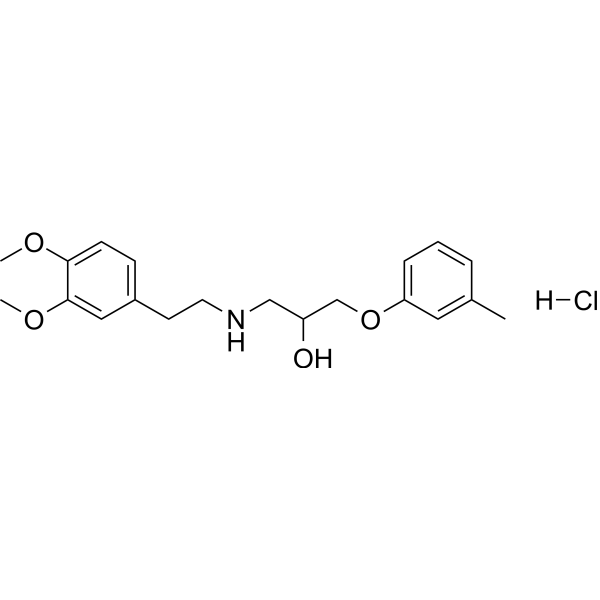
Bevantolol hydrochloride (SOM3355) is a selective β1-adrenergic receptor antagonist, with an IC50 of 35 nM for β1-adrenergic receptor and an IC50 of 60 nM for VMAT2. Bevantolol hydrochloride blocks β1-adrenergic receptors, exerts partial agonistic effects on α-adrenoceptor, inhibits calcium currents in the sinoatrial and atrioventricular nodes as well as sodium currents in cardiomyocytes, delays repolarization, and shortens the action potential duration of Purkinje cells. Bevantolol hydrochloride reduces peripheral vascular resistance, increases subendocardial blood flow, inhibits VMAT2, elevates the serum HDL/LDL ratio, and does not affect glomerular filtration rate or cause cold extremities. Bevantolol hydrochloride is applicable to research related to angina pectoris, hypertension, arrhythmia, and Huntington's disease .
loading...
    loading...
Cat. No.: HY-17503AR
CAS No.: 98418-47-4
Metoprolol (succinate) (Standard) is the analytical standard of Metoprolol (succinate). This product is intended for research and analytical applications. Metoprolol succinate is an orally active, selective β1-adrenoceptor antagonist. Metoprolol succinate shows anti-inflammation, antitumor and anti-angiogenic properties .
loading...
    loading...
Cat. No.: HY-17503R
CAS No.: 51384-51-1
Metoprolol (Standard) is the analytical standard of Metoprolol. This product is intended for research and analytical applications. Metoprolol is an orally active, selective β1-adrenoceptor antagonist. Metoprolol shows anti-inflammation, antitumor and anti-angiogenic properties .
loading...
    loading...
Cat. No.: HY-A0249
CAS No.: 59170-23-9
Synonyms: SOM3355 free base
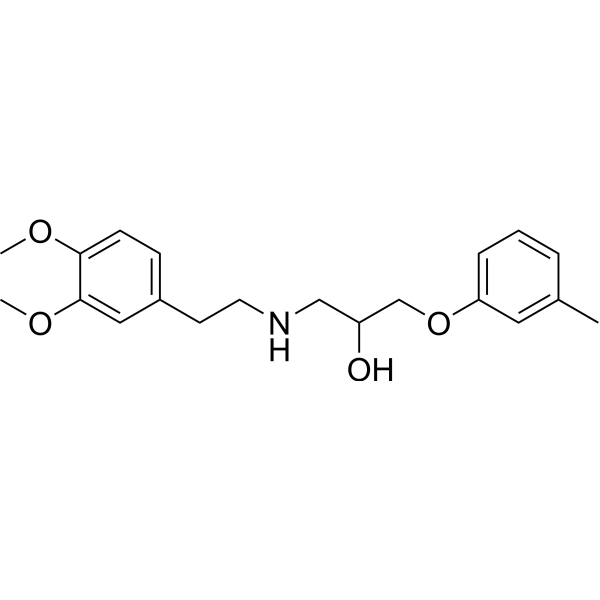
Bevantolol (SOM3355 (free base)) is a selective β1-adrenergic receptor antagonist, with an IC50 of 35 nM for β1-adrenergic receptor and an IC50 of 60 nM for VMAT2. Bevantolol blocks β1-adrenergic receptors, exerts partial agonistic effects on α-adrenoceptor, inhibits calcium currents in the sinoatrial and atrioventricular nodes as well as sodium currents in cardiomyocytes, delays repolarization, and shortens the action potential duration of Purkinje cells. Bevantolol reduces peripheral vascular resistance, increases subendocardial blood flow, inhibits VMAT2, elevates the serum HDL/LDL ratio, and does not affect glomerular filtration rate or cause cold extremities. Bevantolol is applicable to research related to angina pectoris, hypertension, arrhythmia, and Huntington's disease .
loading...
    loading...
Cat. No.: HY-B0341S
CAS No.: 1132681-23-2
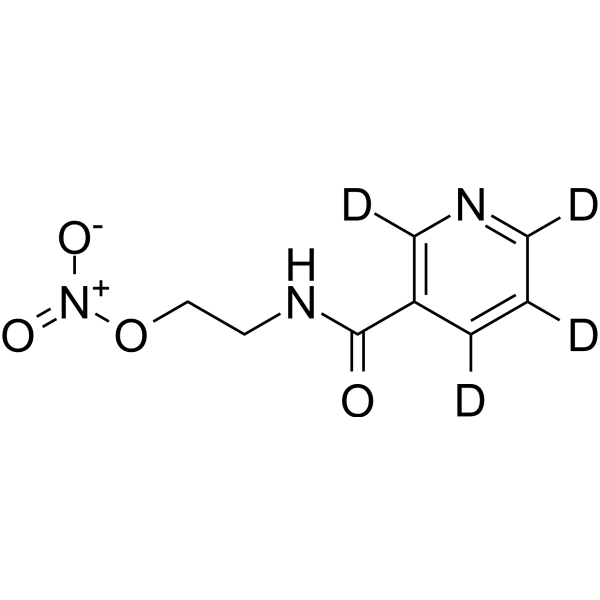
Nicorandil-d4 (SG-75-d4) is the deuterium labeled Nicorandil. Nicorandil (SG-75) is a potent potassium channel activator and targets vascular nucleoside diphosphate-dependent K+ channels and cardiac ATP-sensitive K+ channels (KATP). Nicorandil is a nicotinamide ester with vasodilatory and cardioprotective effects and has the potential for angina and forischemic heart diseases .
loading...
    loading...
Cat. No.: HY-172424
CAS No.: 2417411-02-8
Target:  

Myosin

Research Areas:  

Cardiovascular Disease

Delocamten is an orally active, selective Cardiac Myosin inhibitor with an IC50 of approximately 1.11 μM. Delocamten directly modulates myosin complexes, inhibits excessive myocardial contraction, and improves diastolic function. Delocamten can be used in studies of hypertrophic cardiomyopathy (HCM), left ventricular hypertrophy, and diastolic dysfunction .
loading...
    loading...
Cat. No.: HY-121045
CAS No.: 34915-68-9
Synonyms: KO 1366
Target:  

Adrenergic Receptor

Research Areas:  

Cardiovascular Disease

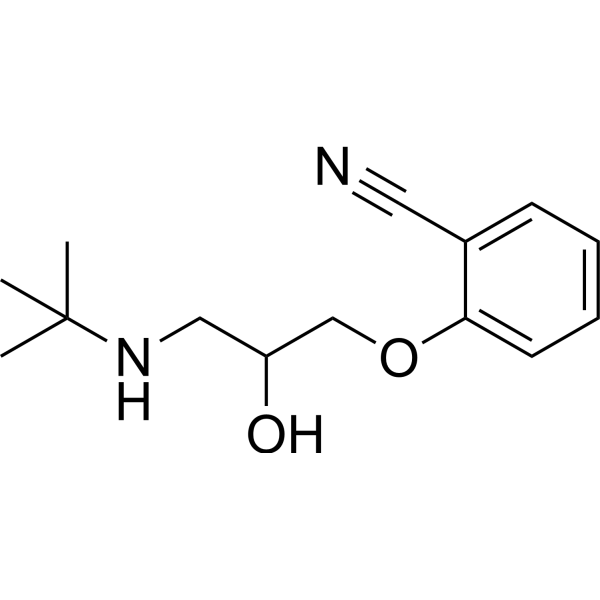
Bunitrolol hydrochloride is an orally active β-adrenergic blocker that has a high affinity for β-adrenergic receptors. Bunitrolol hydrochloride exerts significant β-receptor antagonist activity and has weak α1-blocking activity. Bunitrolol hydrochloride is mainly used in the study of cardiovascular diseases such as hypertension and angina pectoris, and is also used in placental transport research .
loading...
    loading...

