1. Search Result
Search Result
Results for "

doxorubicin-induced cardiotoxicity

" in MedChemExpress (MCE) Product Catalog:

8

Inhibitors & Agonists

4

Natural
Products

Cat. No. Product Name Target Research Areas Chemical Structure
  • HY-N6712
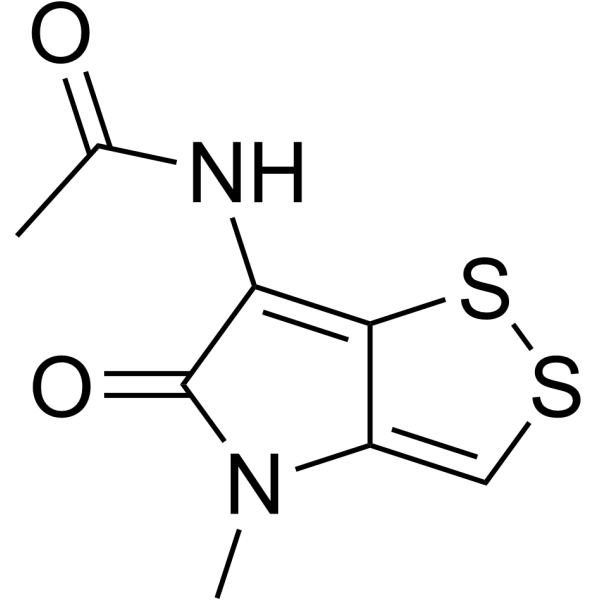
    Thiolutin
    4 Publications Verification

    Acetopyrrothin

    Antibiotic Bacterial Deubiquitinase NOD-like Receptor (NLR) DNA/RNA Synthesis Pyroptosis HMG-CoA Reductase (HMGCR) Infection Cardiovascular Disease Cancer
    Thiolutin (Acetopyrrothin) is a sulfur-containing antibiotic, which is a potent inhibitor of bacterial and yeast RNA polymerases. Thiolutin can be produced by Streptomyces. Thiolutin inhibits AMSH (IC50 = 4 μM) and Rpn11 (IC50 = 0.53 μM). Thiolutin is a dual inhibitor of BRCC36 and the NLRP3 inflammasome, exhibiting anti-inflammatory effects. Thiolutin effectively suppresses the interaction between BRCC36 and HMGCR, leading to the inhibition of HCC growth. Thiolutin attenuates pyroptosis and NLRP3 inflammasome activation. Thiolutin markedly alleviates renal injury and inflammatory process in IgAN. Thiolutin is an anti-angiogenic compound which can ease Doxorubicin-induced cardiotoxicity (DOXIC) [1][2][3][4][5].
    Thiolutin
  • HY-117071

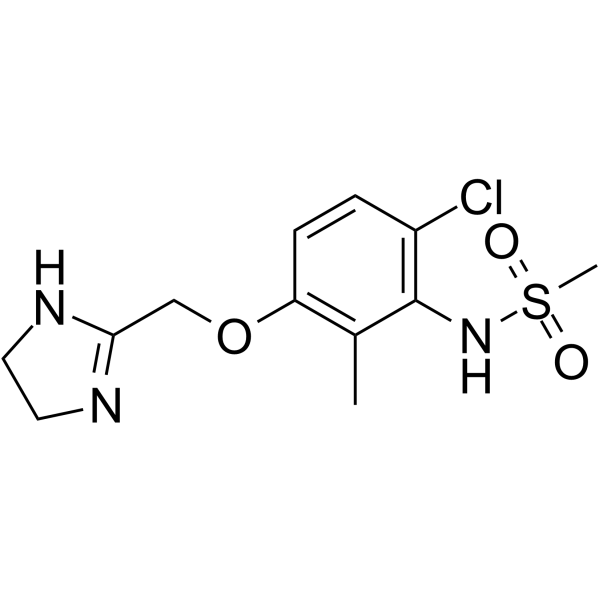
    Ro 115-1240

    Adrenergic Receptor Apoptosis Cardiovascular Disease Endocrinology
    Dabuzalgron (Ro 115-1240) is an orally active and selective α-1A adrenergic receptor agonist for the treatment of urinary incontinence. Dabuzalgron protects against Doxorubicin-induced cardiotoxicity by preserving mitochondrial function .
    Dabuzalgron
  • HY-N0566

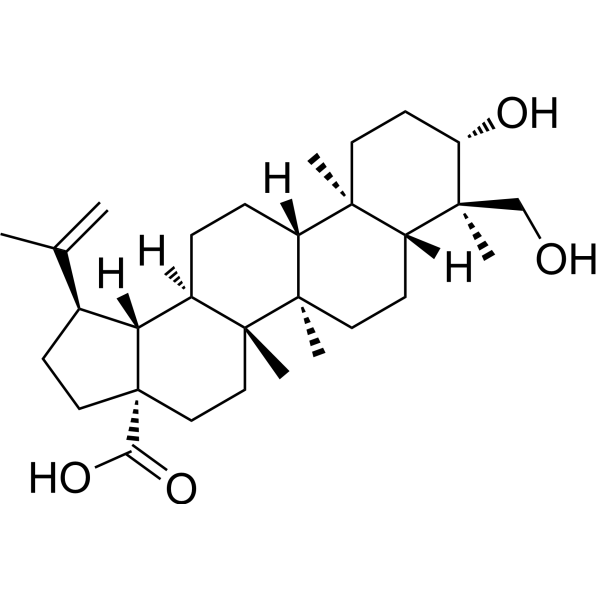
    Anemosapogenin

    Apoptosis Autophagy Bcl-2 Family Caspase Survivin p38 MAPK MMP Cancer
    23-Hydroxybetulinic acid (Anemosapogenin) is an orally active triterpenoid with broad-spectrum anticancer activity. 23-Hydroxybetulinic acid reduces the levels of Bcl-2 and survivin, elevates the level of Bax, promotes the cleavage/activation of caspase-3 and caspase-9, and induces apoptosis via the endogenous mitochondrial pathway involving cytochrome C release and mitochondrial membrane potential disruption. 23-Hydroxybetulinic acid arrests the cell cycle at S and G1 phases, inhibits cancer cell proliferation, blocks the MAPK signaling pathway, regulates MMP2, and induces autophagic apoptosis by upregulating beclin-1. 23-Hydroxybetulinic acid inhibits the activity and efflux function of P-gp, increases the intracellular accumulation of chemotherapeutic drugs, and synergistically enhances cytotoxicity with Doxorubicin (HY-15142). 23-Hydroxybetulinic acid inhibits the phosphorylation and nuclear translocation of STAT6, blocks M2 macrophage polarization, and reduces M2 macrophage-mediated apoptosis resistance of colon cancer cells. 23-Hydroxybetulinic acid can be used in related studies on chronic myeloid leukemia, hepatocellular carcinoma, sarcoma 180, multidrug-resistant breast cancer, leukemia, Doxorubicin-induced cardiotoxicity, and colorectal cancer .
    23-Hydroxybetulinic acid
  • HY-N4309

    Amylases Glycosidase Neurological Disease Metabolic Disease Cancer
    Lotusine is an orally active signaling pathway modulator and enzyme inhibitor, with an IC50 of 30.60 μg/mL against α-amylase and an IC50 of 36.15 μg/mL against α-glucosidase. Lotusine inhibits the EGFR-Akt-ERK signaling pathway by reducing the levels of phosphorylated EGFR, Akt and ERK. Lotusine induces apoptosis, triggers G0/G1 cell cycle arrest and inhibits cancer cell proliferation. Lotusine reduces lipid peroxidation and increases the activities of SOD, CAT and GPx. Lotusine is applicable to researches related to non-small cell lung cancer, type 2 diabetes and autism spectrum disorder .
    Lotusine
  • HY-117071A

    Ro 115-1240 hydrochloride

    Adrenergic Receptor Apoptosis Cardiovascular Disease Endocrinology
    Dabuzalgron (Ro 115-1240) hydrochloride is an orally active and selective α-1A adrenergic receptor agonist for the treatment of urinary incontinence. Dabuzalgron hydrochloride protects against Doxorubicin-induced cardiotoxicity by preserving mitochondrial function .
    Dabuzalgron hydrochloride
  • HY-N0566R

    Anemosapogenin (Standard)

    Reference Standards Apoptosis Autophagy Bcl-2 Family Caspase Survivin p38 MAPK MMP Cancer
    23-Hydroxybetulinic acid (Standard) is the analytical standard of 23-Hydroxybetulinic acid (HY-N0566). This product is intended for research and analytical applications. 23-Hydroxybetulinic acid (Anemosapogenin) is an orally active triterpenoid with broad-spectrum anticancer activity. 23-Hydroxybetulinic acid reduces the levels of Bcl-2 and survivin, elevates the level of Bax, promotes the cleavage/activation of caspase-3 and caspase-9, and induces apoptosis via the endogenous mitochondrial pathway involving cytochrome C release and mitochondrial membrane potential disruption. 23-Hydroxybetulinic acid arrests the cell cycle at S and G1 phases, inhibits cancer cell proliferation, blocks the MAPK signaling pathway, regulates MMP2, and induces autophagic apoptosis by upregulating beclin-1. 23-Hydroxybetulinic acid inhibits the activity and efflux function of P-gp, increases the intracellular accumulation of chemotherapeutic drugs, and synergistically enhances cytotoxicity with Doxorubicin (HY-15142). 23-Hydroxybetulinic acid inhibits the phosphorylation and nuclear translocation of STAT6, blocks M2 macrophage polarization, and reduces M2 macrophage-mediated apoptosis resistance of colon cancer cells. 23-Hydroxybetulinic acid can be used in related studies on chronic myeloid leukemia, hepatocellular carcinoma, sarcoma 180, multidrug-resistant breast cancer, leukemia, Doxorubicin-induced cardiotoxicity, and colorectal cancer.
    23-Hydroxybetulinic acid (Standard)
  • HY-183567

    Ferroptosis Glutathione Peroxidase Reactive Oxygen Species (ROS) Cardiovascular Disease
    Ferroptosis-IN-27 is a glutathione peroxidase (GPx) mimetic. Ferroptosis-IN-27 inhibits oxidative stress, reduces intracellular ROS levels, decreases lipid peroxidation and alleviates ferrous ion overload, thereby inhibiting ferroptosis and protecting cardiomyocytes from Doxorubicin (HY-15142A)-induced injury. Ferroptosis-IN-27 can be used in studies related to Doxorubicin-induced cardiotoxicity .
    Ferroptosis-IN-27
  • HY-W207224

    MAP4K Cardiovascular Disease Inflammation/Immunology
    F1386-0303 is a highly selective MAP4K4 inhibitor with an IC50 of 34 nM against human targets. F1386-0303 exerts cardiomyocyte protective and function-preserving effects through mechanisms such as alleviating oxidative stress, inhibiting caspases, and maintaining mitochondrial membrane potential, while it does not interfere with the activity of Doxorubicin (HY-15142A) in cancer cells. F1386-0303 is rapidly cleared and has no bioavailability in mice, but it is well-suited as a tool compound for target validation. F1386-0303 can be applied to studies related to cardiac ischemia-reperfusion injury, Doxorubicin-induced cardiotoxicity, myocardial infarction and other related conditions .
    F1386-0303

Inquiry Online

Your information is safe with us. * Required Fields.

Salutation


Country or Region *

Applicant Name *


Organization Name *

Department *


Email Address *


Product Name *

Cat. No.


Requested quantity *

Phone Number *


Remarks

Inquiry Online

Inquiry Information

Product Name:
Cat. No.:
Quantity:
MCE Japan Authorized Agent:

