



1. Search Result
Search Result
Results for "

ganglioside

" in MedChemExpress (MCE) Product Catalog:

95

Inhibitors & Agonists

2

Fluorescent Dyes

4

Biochemical Assay Reagents

3

Peptides

9

Inhibitory Antibodies

15

Natural
Products

3

Recombinant Proteins

10

Isotope-Labeled Compounds

1

Antibodies

1

Oligonucleotides

Cat. No. Product Name Target Research Areas Chemical Structure
  • HY-P9914
    Eculizumab
    4 Publications Verification

    Anti-Human C5, Humanized Antibody; h5G1.1

    Complement System Cardiovascular Disease Neurological Disease
    Eculizumab (Anti-Human C5, Humanized Antibody) is a long-acting humanized monoclonal antibody targeted against complement C5. Eculizumab inhibits the cleavage of C5 into C5a and C5b and inhibits deployment of the terminal complement system including the formation of membrane attack complex (MAC). Eculizumab prevents anti-ganglioside antibody-mediated neuropathy in mice. Eculizumab can be used in hemolysis studies .
    Eculizumab
  • HY-N10546

    iGluR Trk Receptor ERK Apoptosis Autophagy Neurological Disease
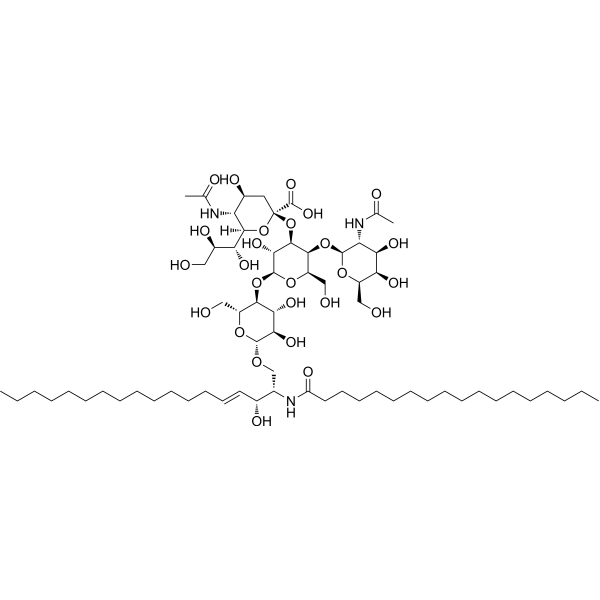
    Ganglioside GM1 is a type of glycosphingolipid, mainly found on the cell membranes of the central nervous system of vertebrates. Ganglioside GM1 exerts neuroprotective effects by reducing excessive activation of NMDAR, activating TrkA and ERK1/2, and inhibiting oxidative stress and cell apoptosis and autophagy. Ganglioside GM1 can be used in the research of diseases such as traumatic brain injury, Parkinson's disease, Alzheimer's disease, and Huntington's disease .
    Ganglioside GM1
  • HY-114456
    Ganglioside GM3
    2 Publications Verification

    Insulin Receptor Metabolic Disease
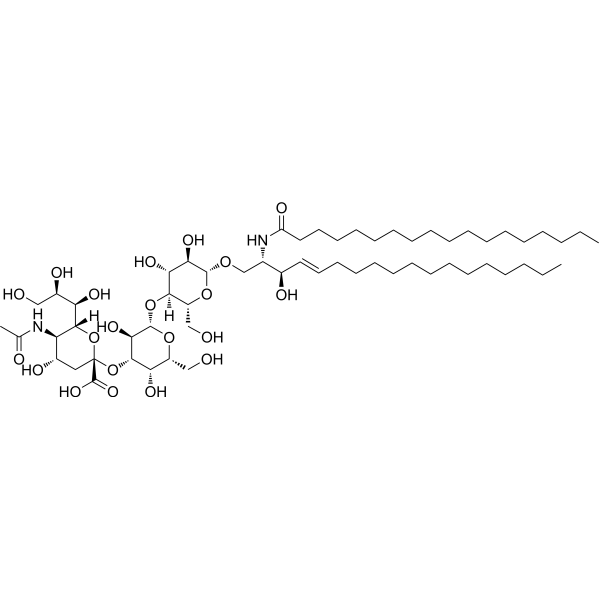
    Ganglioside GM3 is a precursor of a-, b-, and c-series gangliosides, interacts with transmembrane receptors such as the epidermal growth factor and insulin receptors, and regulates receptor functions by creating a specialized lipid environment. Ganglioside GM3 is synthesized by GM3 synthase and can be used for the research of hypercholesterolemia .
    Ganglioside GM3
  • HY-131686

    Akt mTOR EGFR ERK Infection Neurological Disease Metabolic Disease Inflammation/Immunology Cancer
    Ganglioside GT1b (bovine) ammonium is a member of the ganglioside family. Ganglioside GT1b (bovine) ammonium acts as a protective signal against nerve injury-induced spinal synapse elimination. Ganglioside GT1b (bovine) ammonium induces HA synthesis and the phosphorylation of Akt/mTOR in orbital fibroblasts. Ganglioside GT1b (bovine) ammonium enhances porcine oocyte maturation and induce activation of EGFR and ERK1/2 signaling. Ganglioside GT1b (bovine) ammonium is a putative host cell receptor for the Merkel cell polyomavirus. Ganglioside GT1b (bovine) ammonium can be used for the researches of cancer, infection, immunology, endocrinology and neurological disease, such as Thyroid eye disease .
    Ganglioside GT1b (bovine) ammonium
  • HY-165740

    Disialoganglioside GD2

    Apoptosis Cancer
    Ganglioside GD2 (Disialoganglioside GD2) is a tumor-associated antigen. Ganglioside GD2 shows limited expression in normal tissues but is overexpressed in multiple tumor types, and thus can serve as a target in cancer. Ganglioside GD2 is associated with tumor development and malignant phenotypes, and its mechanism of action relies on enhancing cell proliferation, motility, migration, adhesion and invasion, with specific effects depending on the tumor type .
    Ganglioside GD2
  • HY-N7575

    LNFP II

    Endogenous Metabolite Metabolic Disease Cancer
    Lacto-N-fucopentaose II (LNFP II) is a sialyl-Lewis, hapten of human Lewis bloodgroup determinant. Lacto-N-fucopentaose II monosialo-ganglioside/glycolipid and sialyl derivative, CA 19-9, is a molecular tumour markers (TM) for biliopancreatic malignancy .
    Lacto-N-fucopentaose II
  • HY-P3394

    CTB, from vibrio cholerae

    Biochemical Assay Reagents Others
    Cholera toxin B subunit, from vibrio cholerae (CTB, from vibrio cholerae) is non-toxic to cells and possesses no intrinsic adenylate cyclase activity. Cholera toxin B subunit, from vibrio cholerae attaches to cells by binding to ganglioside GM1.8 CTB has been shown to be a good label for microglial cells (due to the enrichment of ganglioside GM1 on their cell surface), but not for oligodendrocytes or astrocytes. Cholera toxin B subunit, from vibrio cholerae has been reported to be an excellent tracer for the study of axonal transport using immunohistochemical methods. Cholera toxin B subunit, from vibrio cholerae has been widely used as a marker of membrane lipid rafts .
    Cholera toxin B subunit, from vibrio cholerae
  • HY-148385

    Endogenous Metabolite Integrin FAK Src ERK p38 MAPK Neurological Disease Cancer
    Ganglioside GM2 is a human tumor antigen predominantly found in human tumor cells and fetal brain tissue. As a sialylated glycosphingolipid, Ganglioside GM2 is involved in processes such as cell signaling, adhesion, and motility. Ganglioside GM2 abnormal expression and accumulation are associated with tumors and neurodegenerative disorders. Ganglioside GM2 promotes tumor cell migration and invasion by directly binding to the integrin β1 receptor, activating the FAK/Src/Erk-MAPK signaling pathway, and inducing actin cytoskeleton remodeling .
    Ganglioside GM2
  • HY-P11094

    TET Protein Neurological Disease
    Tet1-Cys peptide is a peptide with the sequence HLNILSTLWKYRC. Tet1 (HLNILSTLWKYR) (HY-P10998) can specifically bind to the neuronal ganglioside receptor GT1b, possessing neuronal targeting capabilities. The Tet1-Cys peptide sequence has an added Cys, which can be used for drug conjugation for research on drug delivery .
    Tet1-Cys peptide
  • HY-W747597

    Disialoganglioside GD1b; ganglioside C1; ganglioside G2

    Endogenous Metabolite Cancer
    Ganglioside GD1b Disodium Salt (Bovine Brain) (Disialoganglioside GD1b; Ganglioside C1) is an acidic glycosphingolipid containing two sialic acid residues linked to an internal galactose unit. Ganglioside GD1b Disodium Salt tightly packs with cholesterol to form lipid microdomains that modulate intracellular and intercellular signaling events. Concentrations of Ganglioside GD1b Disodium Salt (Bovine Brain) in the human brain increase with age and are positively correlated with pilocytic astrocytoma tumor grade. Ganglioside GD1b Disodium Salt has been detected in various other gliomas, including primitive neuroectodermal tumors, glioblastomas, and anaplastic astrocytomas.
    Ganglioside GD1b Disodium Salt (Bovine Brain)
  • HY-N7390

    Endogenous Metabolite Metabolic Disease
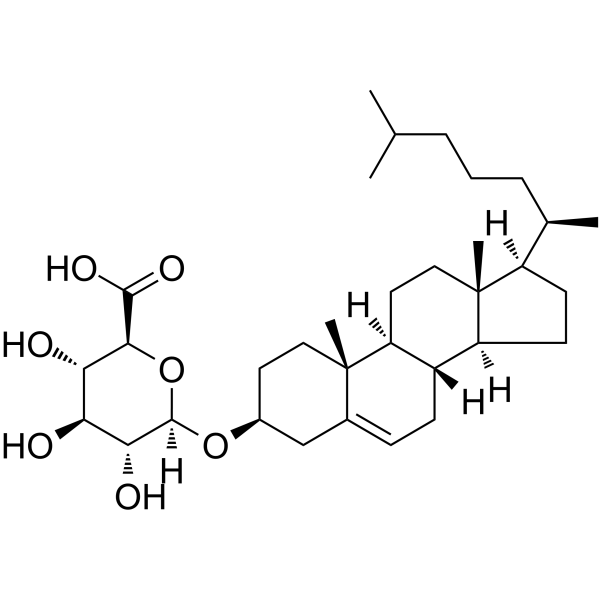
    Cholesterol glucuronide is an endogenous metabolite of lipid generated in the liver by UDP glucuonyltransferase .
    Cholesterol glucuronide
  • HY-N10534

    Lewis X

    Parasite Infection Inflammation/Immunology Cancer
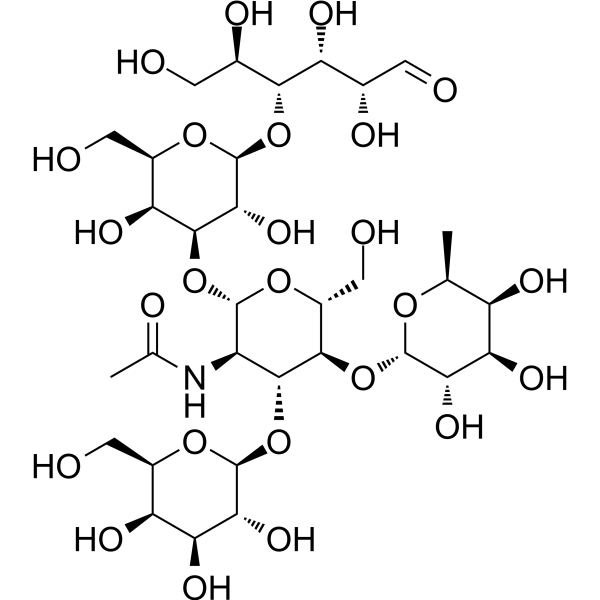
    Lewis X trisaccharide (Lewis X, Le x) is a potent TH2 regulator, antagonizes LPS-induced IL-12 immune expression. Lewis X trisaccharide is a human histo-blood group antigen, plays an key role in cell-cell adhesion, and servers as a tumor marker. Lewis X trisaccharide is highly expressed in the outer membrane of the parasite, can be used for the immunology research of schistosomiasis .
    Lewis X trisaccharide
  • HY-E70043

    Sialidase isoenzyme S; AuSialidase S

    Endogenous Metabolite Metabolic Disease
    Ganglioside sialidase (AuSialidase S) is an endogenous metabolite. Ganglioside sialidases have been implicated in neuronal differentiation processes, including neurite outgrowth .
    Ganglioside sialidase (AuSialidase S)
  • HY-W747599

    ​Tetrasialoganglioside GQ1b sodium

    Pyk2 Endogenous Metabolite Neurological Disease
    Ganglioside GQ1b (bovine) sodium promotes neurite outgrowth during early neuronal differentiation. Ganglioside GQ1b (bovine) sodium controls the neuronal differentiation process in mESCs .
    Ganglioside GQ1b (bovine) sodium
  • HY-P10998

    TET Protein Neurological Disease
    Tet1 peptide is a peptide that specifically binds to neurons. Tet1 peptide binds to GT1B ganglioside and trisialoganglioside clostridial toxin receptor on the surface of neuronal cells, and can be used in peptide conjugation and drug delivery research .
    Tet1 peptide
  • HY-P10529

    Trk Receptor Infection
    Ganglioside GM1-binding peptide p3 is a synthetic peptide that can specifically bind to the pentasaccharide part of GM1 ganglioside. The dynamic transformation of Ganglioside GM1-binding peptide p3 may play an important role in the function of GM1 as a multiple receptor, such as in the classical pathway of cholera toxin infection. Ganglioside GM1-binding peptide p3 can be used to study the interaction between GM1 and its ligands .
    Ganglioside GM1-binding peptide p3
  • HY-116392F

    Glucosylceramide Synthase (GCS) Neurological Disease Metabolic Disease Cancer
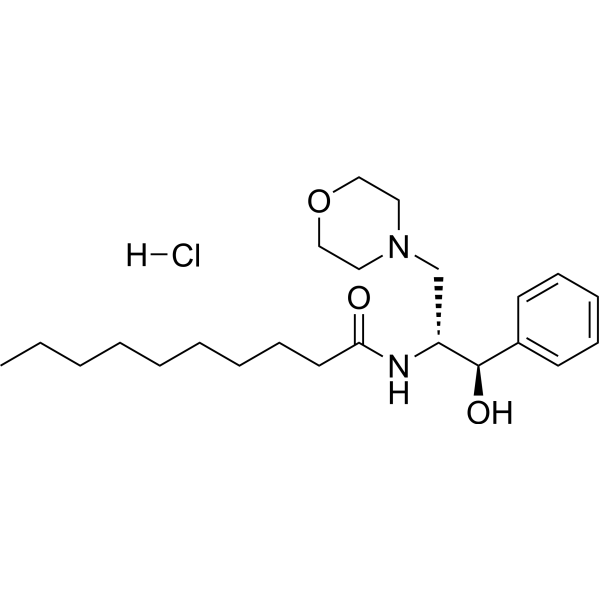
    D-threo-PDMP hydrochloride is a potent glucoceramide synthase (GCS) inhibitor, which reduces the glycosphingolipids (such as GM3 and GD3) on the cell surface by inhibiting glycosylation, reduces the total length of the axon plexus and the number of axon branch points, and inhibits neurite growth. D-threo-PDMP hydrochloride inhibits the synthesis of GM3, thereby reducing the adhesion ability of B16 melanoma cells and mimicking the pathological effects of hyperglycemia/TGF-β1. D-threo-PDMP hydrochloride inhibits the synthesis of GD3, thereby protecting liver cells from apoptosis induced by TNF-α. D-threo-PDMP hydrochloride can be used to study diseases related to targeted glycosphingolipid metabolism .
    D-threo-PDMP hydrochloride
  • HY-131139A

    Apoptosis Neurological Disease Cancer
    Ganglioside GD3 diammonium is an acidic glycosphingolipid. Ganglioside GD3 diammonium inhibits the proliferation of cancer cells, affects the opening of the mitochondrial permeability transition pore (PTPC), induces apoptosis and activates caspase family. Ganglioside GD3 diammonium can be used in research about cancer and neurodegenerative diseases .
    Ganglioside GD3 diammonium
  • HY-141569

    Toll-like Receptor (TLR) Inflammation/Immunology
    Ganglioside GD1a modulates toxic and inflammatory effects of E. coli lipopolysaccharide by preventing TLR4 translocation into lipid rafts. Ganglioside GD1a significantly reduces the effect of LPS on the decrease of cell survival and on stimulation of reactive oxygen species production .
    Ganglioside GD1a
  • HY-N10546A

    iGluR Trk Receptor ERK Apoptosis Autophagy Neurological Disease
    Ganglioside GM1 (bovine) ammonium is a type of glycosphingolipid, mainly found on the cell membranes of the central nervous system of vertebrates. Ganglioside GM1 (bovine) ammonium exerts neuroprotective effects by reducing excessive activation of NMDAR, activating TrkA and ERK1/2, and inhibiting oxidative stress and cell apoptosis and autophagy. Ganglioside GM1 (bovine) ammonium can be used in the research of diseases such as traumatic brain injury, Parkinson's disease, Alzheimer's disease, and Huntington's disease .
    Ganglioside GM1 (bovine) ammonium
  • HY-157343A

    Apoptosis Mitochondrial Metabolism Caspase Neurological Disease Cancer
    GD3 Ganglioside sodium is an Apoptosis inducer and biomarker for mouse neural stem cells. GD3 Ganglioside sodium expresses in neural stem cells and the subventricular zone of the adult mouse brain. GD3 Ganglioside sodium targets the mitochondrial permeability transition pore complex, induces pore opening, dissipates mitochondrial transmembrane potential, triggers Mitochondrial swelling, releases pro-apoptotic factors, and activates Caspase-9. GD3 Ganglioside sodium is applicable to research related to glioblastoma .
    GD3 Ganglioside sodium
  • HY-157343B

    Apoptosis Mitochondrial Metabolism Caspase Neurological Disease Cancer
    GD3 Ganglioside ammonium is an Apoptosis inducer and biomarker for mouse neural stem cells. GD3 Ganglioside ammonium expresses in neural stem cells and the subventricular zone of the adult mouse brain. GD3 Ganglioside ammonium targets the mitochondrial permeability transition pore complex, induces pore opening, dissipates mitochondrial transmembrane potential, triggers Mitochondrial swelling, releases pro-apoptotic factors, and activates Caspase-9. GD3 Ganglioside ammonium is applicable to research related to glioblastoma .
    GD3 Ganglioside ammonium
  • HY-157343

    Apoptosis Mitochondrial Metabolism Caspase Neurological Disease Cancer
    GD3 Ganglioside is an Apoptosis inducer and a biomarker for mouse neural stem cells. GD3 Ganglioside expresses in neural stem cells and the subventricular zone of the adult mouse brain. GD3 Ganglioside targets the mitochondrial permeability transition pore complex, induces pore opening, dissipates mitochondrial transmembrane potential, triggers Mitochondrial swelling, releases pro-apoptotic factors, and activates Caspase-9. GD3 Ganglioside is applicable to research related to glioblastoma .
    GD3 Ganglioside
  • HY-E70073

    Sialidase isoenzyme M2; AuSialidase M2

    Biochemical Assay Reagents Others
    Ganglioside sialidase (AuSialidase M2) from Arthrobacter ureafaciens. Ganglioside sialidase is a highly specific N-acetylneuraminidase. Ganglioside sialidase can hydrolyze the internal sialic acid of GM1 under optimal condition with sodium cholate .
    Ganglioside sialidase (AuSialidase M2)
  • HY-N10511

    Others Inflammation/Immunology
    GM1a Ganglioside oligosaccharide is a semisynthetic form of ganglioside GM1. Ganglioside GM1 is the natural receptor for cholera toxin and plays an important role not only in general growth regulation but also in the coupling of hormone-induced responses .
    GM1a Ganglioside oligosaccharide
  • HY-N10526

    Gala-3Galb-4Glc

    Others Others
    Isoglobotriaose (Gala-3Galb-4Glc) is a glycosphingolipid found in mammalian tissues. Isoglobotriaose is an analogue of Globotriaose, the ganglioside derivatives of them locate in difference position of small intestine, isoglobotriaosylceramide is restricted to the nonepithelial residue, while globotriaosylceramide is in both compartments .
    Isoglobotriaose
  • HY-131686A

    Akt mTOR EGFR ERK Infection Neurological Disease Metabolic Disease Inflammation/Immunology Cancer
    Ganglioside GT1b (porcine) ammonium is a member of the ganglioside family. Ganglioside GT1b (porcine) ammonium acts as a protective signal against nerve injury-induced spinal synapse elimination. Ganglioside GT1b (porcine) ammonium induces HA synthesis and the phosphorylation of Akt/mTOR in orbital fibroblasts. Ganglioside GT1b (porcine) ammonium enhances porcine oocyte maturation and induces activation of EGFR and ERK1/2 signaling. Ganglioside GT1b (porcine) ammonium is a putative host cell receptor for the Merkel cell polyomavirus. Ganglioside GT1b (porcine) ammonium can be used for the researches of cancer, infection, immunology, endocrinology and neurological disease, such as Thyroid eye disease .
    Ganglioside GT1b (porcine) ammonium
  • HY-W854385

    SLeA

    Biochemical Assay Reagents E-Selectin Cancer
    Sialyl Lewis A (SLeA) is a tumor-associated carbohydrate antigen, also known as carbohydrate antigen 19-9 (CA19-9), that binds to E-selectin (ELAM-1) and selectins to mediate cell-endothelium adhesion. Sialyl Lewis A promotes cancer cell-vascular endothelium adhesion, and its surface presence correlates with increased tumorigenicity and invasiveness in cancer cells. Sialyl Lewis A shows elevated expression in human adenocarcinomas of the colon, pancreas, and stomach, with expression levels linked to tumor progression and poor prognosis in colorectal and gastric carcinomas. Sialyl Lewis A can be used for the research of cancers, such as colon, pancreas, stomach, and squamous lung cancer .
    Sialyl Lewis A
  • HY-131139

    Apoptosis Neurological Disease Cancer
    Ganglioside GD3 disodium salt is an acidic glycosphingolipid. Ganglioside GD3 disodium salt inhibits the proliferation of cancer cells, affects the opening of the mitochondrial permeability transition pore (PTPC), induces apoptosis and activates caspase family. Ganglioside GD3 disodium salt can be used in research about cancer and neurodegenerative diseases .
    Ganglioside GD3 disodium salt
  • HY-W714151

    Gg4cer; Asialoganglioside gm1; Asialo gm1, Gangliotetraosylceramide; Asialo ganglioside gm1a [...]; Ganglio-n-tetraosylceramide; Asialo gm1 ganglioside; Asialoganglioside gt1b

    Biochemical Assay Reagents Metabolic Disease
    Ganglioside ga1 (Gg4cer; Asialoganglioside gm1; Asialo gm1, Gangliotetraosylceramide; Asialo ganglioside gm1a [...]; Ganglio-n-tetraosylceramide; Asialo gm1 ganglioside; Asialoganglioside gt1b) is an ester product.
    Ganglioside ga1
  • HY-114456AS

    Isotope-Labeled Compounds Others
    Ganglioside GM3-d5 (Bovine Milk ammonium salt) is deuterium labeled Ganglioside GM3 (Bovine Milk ammonium salt).
    Ganglioside GM3-d5 Bovine Milk ammonium salt
  • HY-N16333

    Biochemical Assay Reagents Others
    C18:0 GD2 Ceramide (d18:1/18:0) is a ganglioside .
    C18:0 GD2 Ceramide (d18:1/18:0)
  • HY-N15820

    Biochemical Assay Reagents Others
    C18:0 GM1(Neu5Gc) Ceramide (d18:1/18:0) is a ganglioside.
    C18:0 GM1(Neu5Gc) Ceramide (d18:1/18:0)
  • HY-114456S

    Isotope-Labeled Compounds Others Metabolic Disease
    Ganglioside GM3-d7 is deuterium labeled Ganglioside GM3. Ganglioside GM3 is a precursor of a-, b-, and c-series gangliosides, interacts with transmembrane receptors such as the epidermal growth factor and insulin receptors, and regulates receptor functions by creating a specialized lipid environment. Ganglioside GM3 is synthesized by GM3 synthase and can be used for the research of hypercholesterolemia .
    Ganglioside GM3-d7
  • HY-166325A

    Biochemical Assay Reagents Metabolic Disease
    Ganglioside GD3-d3 ammonium is the deuterium labeled Ganglioside GD3 ammonium. Ganglioside GD3 ammonium is an ester product.
    Ganglioside GD3-d3 ammonium
  • HY-152002S

    Isotope-Labeled Compounds Others
    Ganglioside GM3-d3 ammonium is a deuterated labeled Ganglioside GM3 ammonium .
    Ganglioside GM3-d3 ammonium
  • HY-171936

    GM1 (d18:1/C18:0) ammonium; C18 ganglioside GM1 (d18:1/18:0) ammonium

    Endogenous Metabolite Neurological Disease
    Ganglioside GM1 (ammonium) is a monosialylated ganglioside and the prototypic ganglioside for those containing one sialic acid residue. Ganglioside GM1 (ammonium) is one of the most abundant gangliosides in the brain which provides neuroprotection. Ganglioside GM1 (ammonium) exhibits anti-inflammatory property. Ganglioside GM1 (ammonium) has a well-balanced amphiphilic behavior. Ganglioside GM1 (ammonium) can reduce the fluidity of the plasma membrane that implies a retention and enrichment of the ganglioside in specific membrane domains that are called lipid rafts. Ganglioside GM1 (ammonium) can modify the process of differentiation, amplifies responses to neurotrophic factors, protects against excitatory amino acid-related neurotoxicity. Ganglioside GM1 (ammonium) can alleviate acute nerve cell damage through blocking cytotoxicity and potentiating neurotophic factors. Ganglioside GM1 (ammonium) can be studied in neurodegenerative diseases such as Alzheimer’s disease .
    Ganglioside GM1 ammonium
  • HY-152003S

    Isotope-Labeled Compounds Others
    Ganglioside GM2-d3 (ammonium) is the deuterium labeled Ganglioside GM2 (HY-148385). Ganglioside GM2 is a human tumor antigen predominantly found in human tumor cells and fetal brain tissue. As a sialylated glycosphingolipid, Ganglioside GM2 is involved in processes such as cell signaling, adhesion, and motility. Ganglioside GM2 abnormal expression and accumulation are associated with tumors and neurodegenerative disorders. Ganglioside GM2 promotes tumor cell migration and invasion by directly binding to the integrin β1 receptor, activating the FAK/Src/Erk-MAPK signaling pathway, and inducing actin cytoskeleton remodeling .
    Ganglioside GM2-d3 ammonium
  • HY-146876S

    Isotope-Labeled Compounds Others
    C18:0 GM1 Ganglioside-d5 (ammonium) is deuterium labeled C18:0 GM1 Ganglioside (ammonium).
    C18:0 GM1 Ganglioside-d5 ammonium
  • HY-165665S

    Isotope-Labeled Compounds Others
    C16 Ganglioside GM3-d9 (ammonium salt) is deuterium labeled C16 Ganglioside GM3 (ammonium salt) .
    C16 Ganglioside GM3-d9 ammonium salt
  • HY-W127461

    Gangliotriosylceramide

    Biochemical Assay Reagents Others
    Ganglioside GM2 asialo (asialo-GM2) is a glycosphingolipid containing three monosaccharide residues and one fatty acid of variable chain length, but lacks the sialic acid residue present on ganglioside M2. Asialo-GM2 is found at low or undetectable levels in normal human brains, but it accumulates in the brains of patients with Tay-Sachs disease and Sandhoff disease, which are expressed as lysosomal β- A neurodegenerative disorder characterized by hexosaminidase A and B deficiency. It also binds to various bacteria, including Pseudomonas isolated from cystic fibrosis patients. The Asialo-GM2 mixture contains ganglioside GM2 asialo molecular species with fatty acyl chains of variable length.
    Ganglioside GM2, Asialo
  • HY-165160

    GM3-Neugc ammonium; NeuGc-GM3 ammonium

    Biochemical Assay Reagents Others
    N-Glycolyl-ganglioside GM3 ammonium is a biochemical reagent.
    N-Glycolyl-ganglioside GM3 ammonium
  • HY-171942A

    C24:1-GM2 ammonium

    Endogenous Metabolite Neurological Disease
    C24:1 Ganglioside GM2 (d18:1/24:1) (ammonium) is an endogenous monosialylated ganglioside. C24:1 Ganglioside GM2 (d18:1/24:1) (ammonium) is a self-lipid that can bind to CD1d in HEK293T cells .
    C24:1 Ganglioside GM2 (d18:1/24:1) ammonium
  • HY-P99743

    Biochemical Assay Reagents Cancer
    Mitumomab is an anti-idiotypic mouse IgG2b monoclonal antibody that mimics the ganglioside GD3. Mitumomab can be used for the research of small-cell lung carcinoma .
    Mitumomab
  • HY-W127324

    NeuAcα(2-3)Galβ(1-4)Glc-ceramide (phyto-type)

    Biochemical Assay Reagents Others
    Ganglioside GM3 (phyto-type) is a biochemical reagent that can be used as a biological material or organic compound for life science related research.
    Ganglioside GM3 (phyto-type)
  • HY-171443

    Lyso-GM3

    EGFR Drug Derivative Cancer
    Lyso-Monosialoganglioside GM3 (Lyso-GM3) is an analogue of Ganglioside GM3 (HY-114456) with antitumor activities. Lyso-Monosialoganglioside inhibits EGF-induced increases in EGFR kinase activity in A431 epithelial cancer cells .
    Lyso-Monosialoganglioside GM3
  • HY-165676AS

    C16 GM2-dN; N-CDN-Palmitoyl-GM2, N-Hexadecaoyl-dN (13,13,14,14,15,15,16,16,16)-Moosialogaglioside GM2; N-Palmitoyl Moosialogaglioside GM2-d9

    Isotope-Labeled Compounds Others
    C16 Ganglioside GM2-d9 (d18:1/16:0-d9) (C16 GM2-d9) ammonium saltis deuterium labeled C16 Ganglioside GM2 (d18:1/16:0) (ammonium salt) .
    C16 Ganglioside GM2-d9 (d18:1/16:0-d9) ammonium salt
  • HY-N16004

    Biochemical Assay Reagents Others
    C18:0 B Antigen ceramide (d18:1/18:0) is a ganglioside.
    C18:0 B Antigen ceramide (d18:1/18:0)
  • HY-N15798

    Biochemical Assay Reagents Others
    C18:0 Lc3 Ceramide (d18:1/18:0) is a ganglioside.
    C18:0 Lc3 Ceramide (d18:1/18:0)
  • HY-N16029

    Biochemical Assay Reagents Cancer
    C18:0 Fuc-GM1 Ceramide (d18:1/18:0) is a ganglioside that can be used to synthesize lipid nanoparticles for drug delivery .
    C18:0 Fuc-GM1 Ceramide (d18:1/18:0)

Inquiry Online

Your information is safe with us. * Required Fields.

Salutation


Country or Region *

Applicant Name *


Organization Name *

Department *


Email Address *


Product Name *

Cat. No.


Requested quantity *

Phone Number *


Remarks

Inquiry Online

Inquiry Information

Product Name:
Cat. No.:
Quantity:
MCE Japan Authorized Agent:

