
1. Search Result
Search Result
Results for "

glycosyl donor

" in MedChemExpress (MCE) Product Catalog:

16

Inhibitors & Agonists

4

Biochemical Assay Reagents

1

Peptides

5

Natural
Products

1

Isotope-Labeled Compounds

1

Oligonucleotides

Cat. No. Product Name Target Research Areas Chemical Structure
  • HY-N11287A
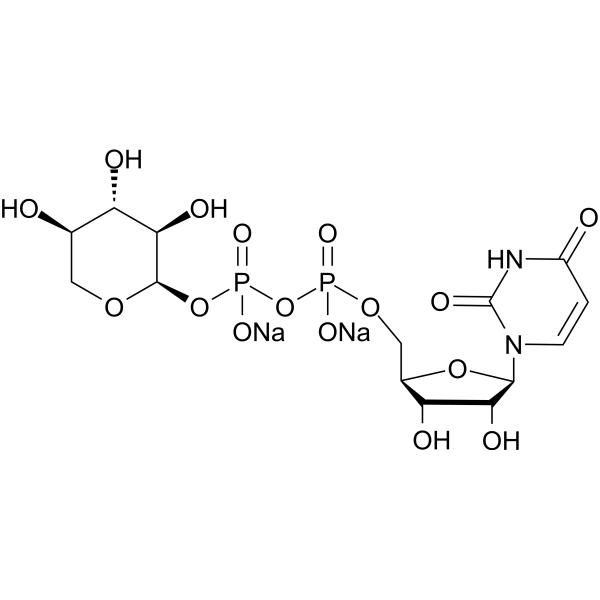
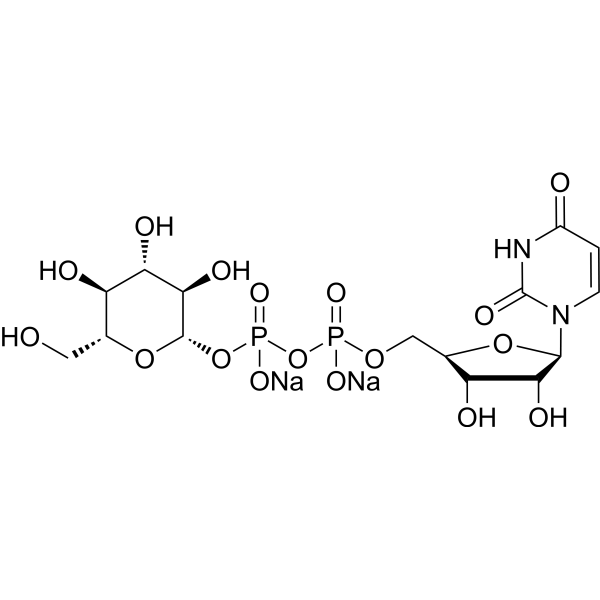
    UDP-xylose disodium
    2 Publications Verification

    Endogenous Metabolite Others
    UDP-xylose disodium is an endogenous sugar nucleotide and a catalytic substrate of UDP-xylose disodium synthase (UXS). UDP-xylose disodium is a sugar donor for the synthesis of glycoproteins, polysaccharides, various metabolites and oligosaccharides in plants, vertebrates and fungi, and participates in the synthesis of proteoglycans as a glycosyl donor. UDP-xylose disodium participates in the regulation of the synthesis of extracellular matrix components and can be used to study the mechanism of proteoglycan biosynthesis in glycobiology and related diseases (such as connective tissue diseases)[1][2].
    UDP-xylose disodium
  • HY-114364
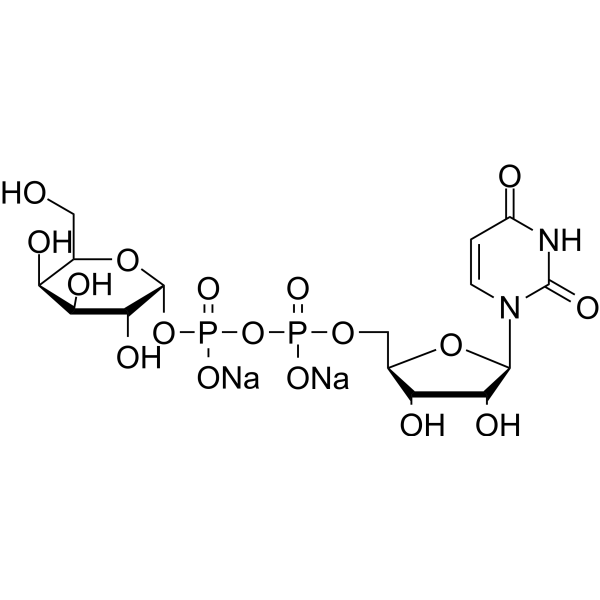
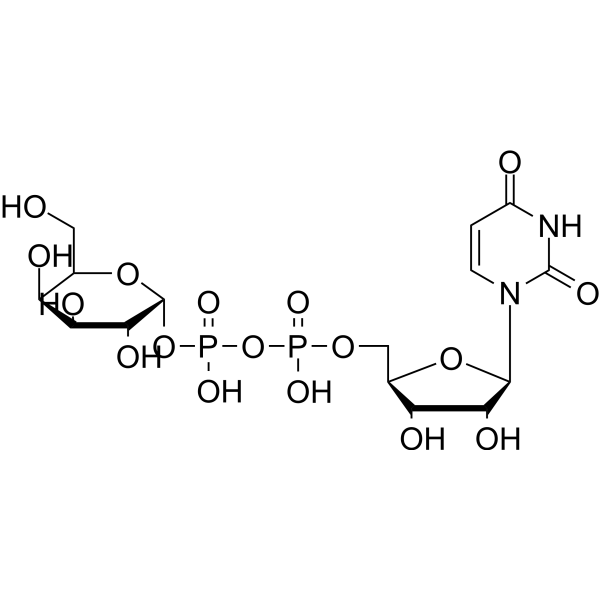
    UDP-Galactose disodium
    4 Publications Verification

    Endogenous Metabolite P2Y Receptor Metabolic Disease
    UDP-Galactose disodium is a monosaccharide and a key glycosyl donor molecule in cells that participates in nucleotide sugar metabolism. UDP-Galactose disodium is the natural agonist of the P2Y14 receptor coupled to Gi proteins in the immune system (IC50 = 0.67 μM, hP2Y14). UDP-Galactose disodium can be used to study cell signal transduction and substance metabolism .
    UDP-Galactose disodium
  • HY-43747

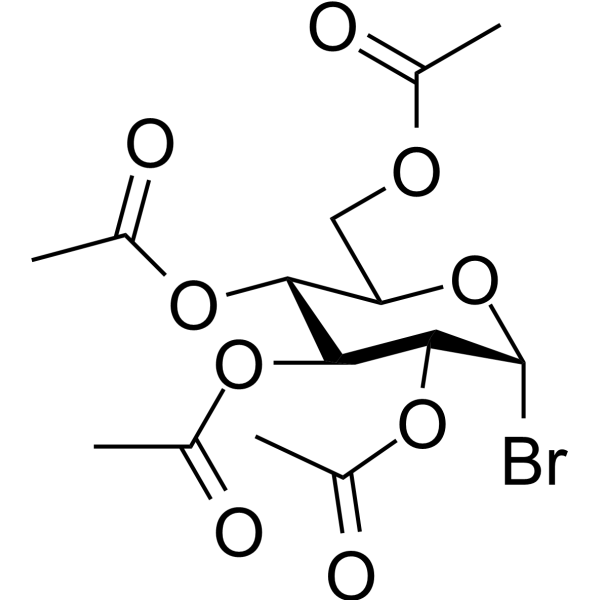
    Acetobromo-α-D-glucose, contains 1% CaCO3 as stabilizer; Acetobromo-alpha-D-glucose, contains 1% CaCO3 as stabilizer

    Biochemical Assay Reagents Drug Intermediate Others
    α-Acetobromoglucose, contains 1% CaCO3 as stabilizer (Acetobromo-α-D-glucose, contains 1% CaCO3 as stabilizer) is a glycosyl donor that can be used for the synthesis of other active compounds .
    α-Acetobromoglucose, contains 1% CaCO3 as stabilizer
  • HY-N11287

    Endogenous Metabolite Others
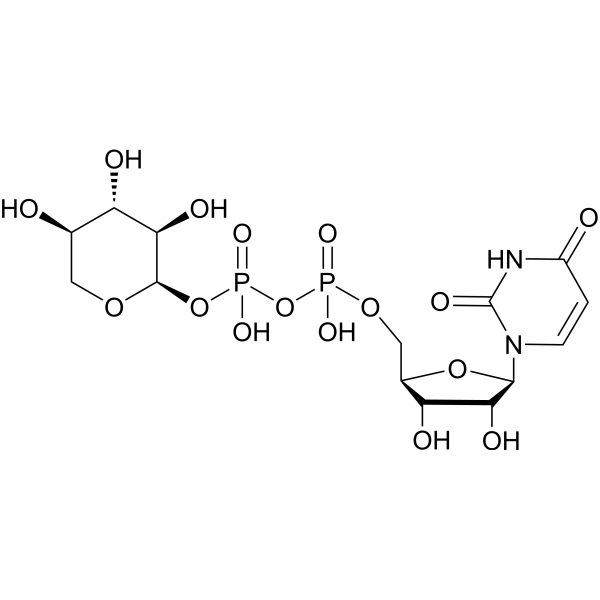
    UDP-xylose is an endogenous sugar nucleotide and a catalytic substrate of UDP-xylose synthase (UXS). UDP-xylose is a sugar donor for the synthesis of glycoproteins, polysaccharides, various metabolites and oligosaccharides in plants, vertebrates and fungi, and participates in the synthesis of proteoglycans as a glycosyl donor. UDP-xylose participates in the regulation of the synthesis of extracellular matrix components and can be used to study the mechanism of proteoglycan biosynthesis in glycobiology and related diseases (such as connective tissue diseases)[1][2].
    UDP-xylose
  • HY-137261

    Endogenous Metabolite Metabolic Disease
    UDP-β-D-glucose disodium acts as a glycosyl donor and biosynthetic intermediate, and is also a stereoisomer of UDP-α-D-glucose .
    UDP-β-D-glucose disodium
  • HY-150524

    Endogenous Metabolite P2Y Receptor Metabolic Disease
    UDP-Galactose is a monosaccharide and a key glycosyl donor molecule in cells that participates in nucleotide sugar metabolism. UDP-Galactose is the natural agonist of the P2Y14 receptor coupled to Gi proteins in the immune system (IC50 = 0.67 μM, hP2Y14). UDP-Galactose can be used to study cell signal transduction and substance metabolism .
    UDP-Galactose
  • HY-116284

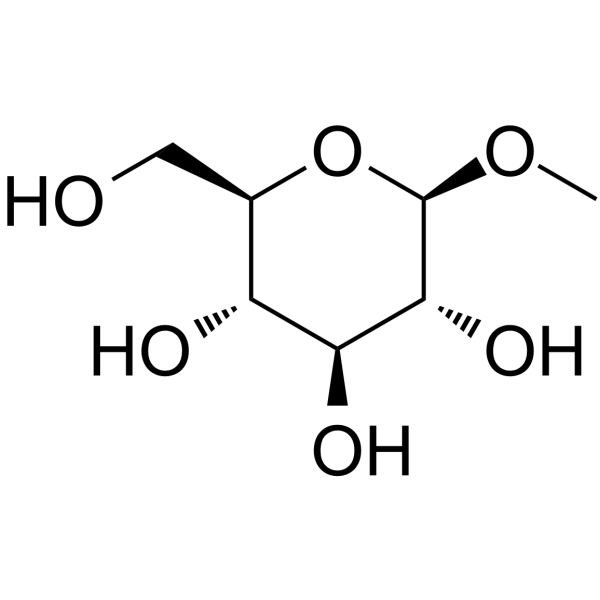
    Methyl β-D-glucoside

    Drug Intermediate Others
    Methyl β-D-glucopyranoside (Methyl β-D-glucoside) is a model glycosyl acceptor for enzymatic glycosylation reactions. Methyl β-D-glucopyranoside participates in glycoside synthesis and can react with acyl donors such as caffeic acid esters under the catalysis of specific enzymes (such as Lipozyme TL IM) to achieve acylation modification. Methyl β-D-glucopyranoside can generate biologically active derivatives (such as 6-O-caffeoyl glucoside). Methyl β-D-glucopyranoside can be used in organic synthesis and biocatalysis research, especially the efficient enzymatic preparation of medicinal glycosides (such as Robustaside B (HY-N2720), 6-O-caffeoyl salidroside) .
    Methyl β-D-glucopyranoside
  • HY-E70064A

    Hp3FT

    Glycosyltransferase Others
    Helicobacter pylori alpha-1,3-fucosyltransferase (Hp3FT) catalyzes the glycosyl addition of fucose from the donor GDP-fucose to the acceptor N-acetyllactosamine .
    Helicobacter pylori alpha-1,3-fucosyltransferase
  • HY-W688732

    Biochemical Assay Reagents Others
    2-Chloro-4,4,5,5-tetramethyl-1,3,2-dioxaphospholane is a biochemical reagent. 2-Chloro-4,4,5,5-tetramethyl-1,3,2-dioxaphospholane serves as a phosphorylation reagent for alcohols and heteroatoms, which is used in the synthesis of glycosyl donors and ligands, and also applied in the analytical research of derivatized lignin samples. 2-Chloro-4,4,5,5-tetramethyl-1,3,2-dioxaphospholane acts as a catalyst in copper oxide/titanium dioxide-catalyzed lignin oxidation studies .
    2-Chloro-4,4,5,5-tetramethyl-1,3,2-dioxaphospholane
  • HY-W400427

    Biochemical Assay Reagents Others
    α-D-Glucose-1-phosphate is an important intermediate in sugar metabolism, functioning as a glycosyl donor in glycosyl transfer reactions and participating in glycogen synthesis and degradation through the action of phosphorylases .
    α-D-Glucose-1-phosphate
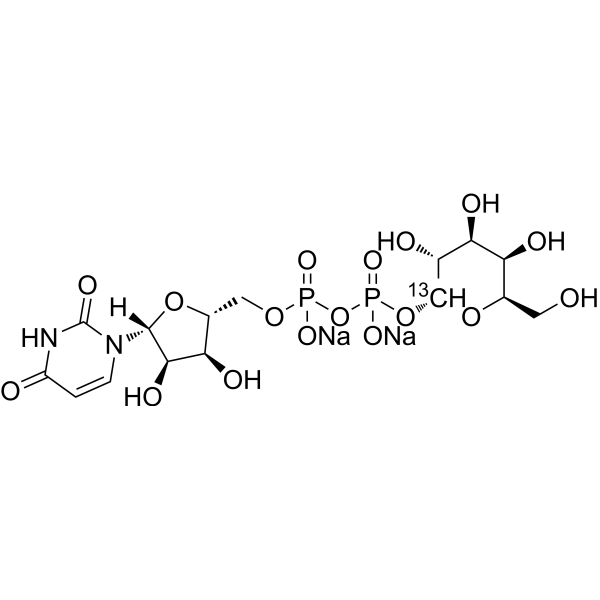
  • HY-114364S

    Isotope-Labeled Compounds Others
    UDP-α-D-Galactose- 13C disodium is the 13C labeled UDP-α-D-Galactose disodium. UDP-Galactose disodium is a monosaccharide and a key glycosyl donor molecule in cells that participates in nucleotide sugar metabolism. UDP-Galactose disodium is the natural agonist of the P2Y14 receptor coupled to Gi proteins in the immune system (IC50 = 0.67 μM, hP2Y14). UDP-Galactose disodium can be used to study cell signal transduction and substance metabolism .
    UDP-α-D-Galactose-13C disodium
  • HY-177787A

    Nucleoside Antimetabolite/Analog Others
    2'-Deoxy-N-methyl-AMP ammonium is an N6-substituted adenine nucleotide derivative and a glycosyl donor. On one hand, 2'-Deoxy-N-methyl-AMP ammonium acts as a specific substrate for N6-methyl-AMP aminohydrolase, and it is catalytically converted to dIMP to participate in the nucleotide metabolic cycle. On the other hand, 2'-Deoxy-N-methyl-AMP ammonium also serves as a guanosine diphosphate (GDP)-linked fucose derivative donor, driving site-specific glycoconjugation of proteins under the mediation of α-1,3-fucosyltransferase. 2'-Deoxy-N-methyl-AMP ammonium is an important molecular tool for investigating the mechanisms of nucleotide modification and protein glycosylation .
    2'-Deoxy-N-methyl-AMP ammonium
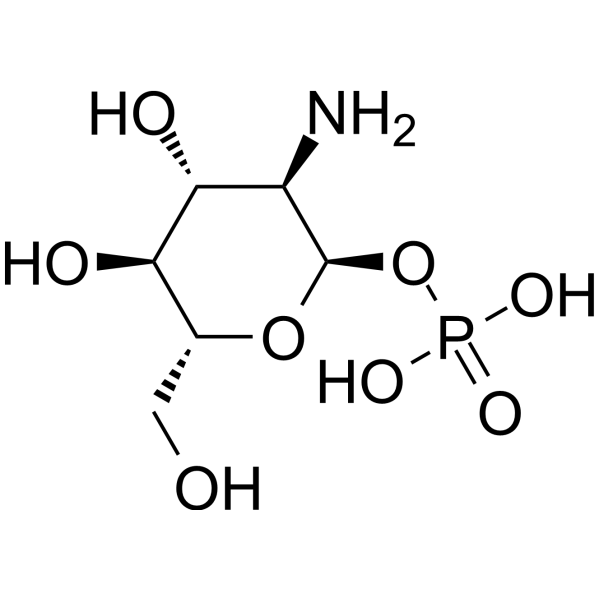
  • HY-154871

    Drug Derivative Biochemical Assay Reagents Others
    α-D-Glucosamine 1-phosphate is a glycosyl donor analog of Glc-1-P. α-D-Glucosamine 1-phosphate acts as a glycosyl donor to produce α(1→4)-linked glucosamine chains in the enzyme-catalyzed polymerization reaction mediated by thermostable α-glucan phosphorylase. α-D-Glucosamine 1-phosphate serves as a glycosyl donor analog to generate a pentasaccharide with a glucosamine residue at the non-reducing end in the maltotetraose glucosamination reaction catalyzed by potato α-glucan phosphorylase. α-D-Glucosamine 1-phosphate is used for the synthesis of amphiphilic block polysaccharides with pH-responsive assembly/disassembly properties .
    α-D-Glucosamine 1-phosphate
  • HY-W039849

    Ethyl α-thioglucopyranoside

    Biochemical Assay Reagents Others
    Ethyl-α-D-thioglucopyranoside (Ethyl α-Thioglucopyranoside) is a glycoside present in sake, Japanese rice wine. Ethyl-α-D-thioglucopyranoside is a glycosyl donor .
    Ethyl-α-D-thioglucopyranoside
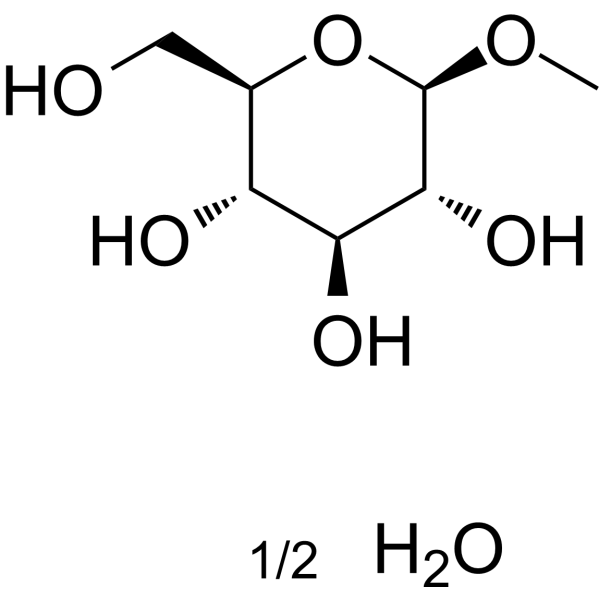
  • HY-116284A

    Methyl β-D-glucoside hemihydrate

    Drug Intermediate Others
    Methyl β-D-glucopyranoside (Methyl β-D-glucoside) hemihydrate is a model glycosyl acceptor for enzymatic glycosylation reactions. Methyl β-D-glucopyranoside hemihydrate participates in glycoside synthesis and can react with acyl donors such as caffeic acid esters under the catalysis of specific enzymes (such as Lipozyme TL IM) to achieve acylation modification. Methyl β-D-glucopyranoside hemihydrate can be used in organic synthesis and biocatalysis research, especially the efficient enzymatic preparation of medicinal glycosides (such as Robustaside B (HY-N2720), 6-O-caffeoyl salidroside) .
    Methyl β-D-glucopyranoside hemihydrate
  • HY-116284R

    Methyl β-D-glucoside (Standard)

    Reference Standards Drug Intermediate Others
    Methyl β-D-glucopyranoside (Methyl β-D-glucoside) (Standard) is the analytical standard of Methyl β-D-glucopyranoside. This product is intended for research and analytical applications. Methyl β-D-glucopyranoside is a model glycosyl acceptor for enzymatic glycosylation reactions. Methyl β-D-glucopyranoside participates in glycoside synthesis and can react with acyl donors such as caffeic acid esters under the catalysis of specific enzymes (such as Lipozyme TL IM) to achieve acylation modification. Methyl β-D-glucopyranoside can be used in organic synthesis and biocatalysis research, especially the efficient enzymatic preparation of medicinal glycosides (such as Robustaside B (HY-N2720), 6-O-caffeoyl salidroside).
    Methyl β-D-glucopyranoside (Standard)

Inquiry Online

Your information is safe with us. * Required Fields.

Salutation


Country or Region *

Applicant Name *


Organization Name *

Department *


Email Address *


Product Name *

Cat. No.


Requested quantity *

Phone Number *


Remarks

Inquiry Online

Inquiry Information

Product Name:
Cat. No.:
Quantity:
MCE Japan Authorized Agent:

