


37 Results for "

human blood mononuclear cells

" in MedChemExpress (MCE) Product Catalog:
Products (37)

37 Results for "human blood mononuclear cells" in MCE Product Catalog:

1
1 Cited Publications
Cat. No.: HY-K0304

MCE Human CD3+ T Cells Negative Selection Kit is designed for the isolation of CD3+ T cells from human peripheral blood mononuclear cells (PBMC).

loading...
    loading...
1
1 Cited Publications
Cat. No.: HY-K0351

MCE Human CD8+ T Cells Negative Selection Kit is designed to isolate CD8+ T cells from human peripheral blood mononuclear cells (PBMCs).

loading...
    loading...
1
1 Cited Publications
Cat. No.: HY-K0352

MCE Human CD4+ T Cells Negative Selection Kit is designed to isolate CD4+ T cells from human peripheral blood mononuclear cells (PBMCs).

loading...
    loading...
Cat. No.: HY-138568
CAS No.: 2739844-34-7
Purity:  98.61%
Target:  

MAP4K

Research Areas:  

Inflammation/Immunology

HPK1-IN-3 is a potent and selective ATP-competitive hematopoietic progenitor kinase 1 (HPK1; MAP4K1) inhibitor with an IC50 of 0.25 nM. HPK1-IN-3 has IL-2 cellular potency with an EC50 of 108 nM in human peripheral blood mononuclear cells (PBMCs) .
loading...
    loading...
Cat. No.: HY-177338
CAS No.: 2361424-97-5
STING agonist-45 is a selective STING agonist (EC50 = 0.28 μM). STING agonist-45 activates the innate immune response through the cGAS-STING pathway, upregulating key markers such as p-TBK1 and IRF3. STING agonist-45 exhibits robust STING activation in human peripheral blood mononuclear cells (PBMCs), inducing the production of type I interferons (such as IFN-β) and downstream cytokines (such as TNF-α and IL-6). STING agonist-45 enhances anti-tumor immunity, inhibits tumor growth, and increases CD8 + T cell infiltration in mouse models. STING agonist-45 is promising for the study of STING-related diseases .
loading...
    loading...
Cat. No.: HY-156961
CAS No.: 2308520-97-8
Purity:  99.81%
Synonyms: GLPG3667
Target:  

JAK

Research Areas:  

Inflammation/Immunology

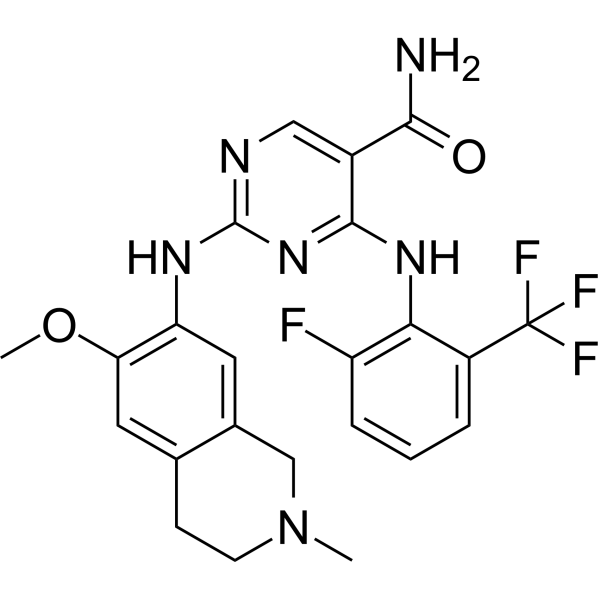
Cadefrecitinib (GLPG3667) is a reversible, ATP-competitive and orally active TYK2 inhibitor with an IC50 of 2.3 nM. Cadefrecitinib inhibits IFNα/pSTAT1, and the IC50 values ​​in human peripheral blood mononuclear cell (PBMC) and whole blood assays are 70 nM and 623 nM, respectively. Cadefrecitinib has the potential for the study of inflammatory and autoimmune diseases .
loading...
    loading...
Cat. No.: HY-P99292
CAS No.: 326859-36-3
Synonyms: HuZAF; Anti-human IFNG Recombinant Antibody

Target:  

IFNAR

Research Areas:  

Inflammation/Immunology

Fontolizumab (HuZAF) is a human monoclonal antibody targeting interferon γ (IFN-γ). Fontolizumab binds specifically and with high affinity to secreted IFN-γ, neutralizes its activity, blocks receptor binding, and inhibits downstream signal transduction and the expression of IFNγ-responsive genes. Fontolizumab reduces serum C-reactive protein levels, inhibits the expression of IL-1α, IL-1β and IL-12Rβ2, and decreases the number of IFNγ-producing T cells in activated peripheral blood mononuclear cells. Fontolizumab can be used in research related to Crohn's disease .
loading...
    loading...
Cat. No.: HY-142989
CAS No.: 99296-81-8
Purity:  97.3%
Target:  

Liposome HIV HCV HBV

Research Areas:  

Infection Cancer

1,2-Didocosahexaenoyl-sn-glycero-3-phosphocholine is a polyunsaturated phospholipid that serves as a component of lipid monolayers and small unilamellar vesicles. 1,2-Didocosahexaenoyl-sn-glycero-3-phosphocholine can be used to prepare endoplasmic reticulum-targeted liposomes (PERLs), which are composed of 1,2-didocosahexaenoyl-sn-glycero-3-phosphoethanolamine, l-α-phosphatidylinositol and l-α-phosphatidylserine at a molar ratio of 1.5:1.5:1:1. PERLs reduce cholesterol levels in human peripheral blood mononuclear cells (PBMCs) and decrease HIV-1 particle secretion from HIV-1-infected PBMCs. Liposomes formed from 1,2-Didocosahexaenoyl-sn-glycero-3-phosphocholine exhibit cytotoxicity against leukemia cells. 1,2-Didocosahexaenoyl-sn-glycero-3-phosphocholine is applicable to studies related to hepatitis C virus infection, HIV infection, hepatitis B virus infection and leukemia .
loading...
    loading...
Cat. No.: HY-106850
CAS No.: 84472-85-5
Purity:  99.11%
Synonyms: AzdU; AzddU; CS-87
Target:  

HIV

Research Areas:  

Infection

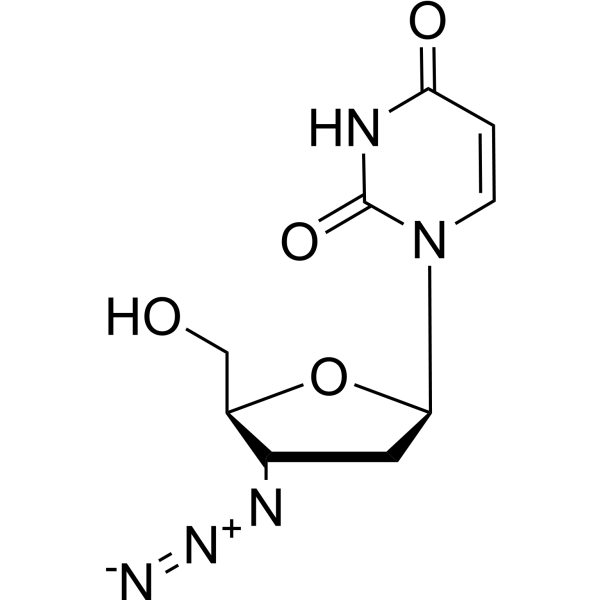
3′-Azido-2′,3′-dideoxyuridine (AzdU) is a nucleoside analog of Zidovudine (HY-17413). 3′-Azido-2′,3′-dideoxyuridine is a potent inhibitor of human immunodeficiency virus (HIV) replication in human peripheral blood mononuclear cells (PBMC) with limited toxicity for human bone marrow cells (BMC) . 3′-Azido-2′,3′-dideoxyuridine is a click chemistry reagent, it contains an Azide group and can undergo copper-catalyzed azide-alkyne cycloaddition reaction (CuAAc) with molecules containing Alkyne groups. It can also undergo strain-promoted alkyne-azide cycloaddition (SPAAC) reactions with molecules containing DBCO or BCN groups.
loading...
    loading...
Cat. No.: HY-148511
CAS No.: 147063-80-7
Synonyms: CMP-001
Vidutolimod (CMP-001) is a virus-like particle containing a TLR9 activator . Vidutolimod induces human peripheral blood mononuclear cells to secrete IFNα, and upregulates the gene expression of CXCL10, PDL1, IDO and CD80. Vidutolimod activates TLR9, which in turn triggers plasmacytoid dendritic cell activation, production of IFNγ and TNFα, induction of CXCL10, and recruitment of antitumor T cells. Vidutolimod causes influenza-like symptoms, hypotension and tumor regression, and its activity depends on the presence of anti-Qβ antibodies. Vidutolimod modulates monocyte function, promotes CD4 T cell proliferation, and activates multiple immune cell types in an environment with anti-Qβ antibodies. Vidutolimod prolongs the survival of tumor-bearing mice. Vidutolimod is used in research related to advanced melanoma, head and neck squamous cell carcinoma, and advanced non-small cell lung cancer .
loading...
    loading...
Cat. No.: HY-159884
CAS No.: 328540-44-9
Target:  

Tim3 TNF Receptor IFNAR

Research Areas:  

Cancer

MG-T-19 is a potent small-molecule inhibitor targeting human TIM-3. MG-T-19 blocks the interactions between TIM-3 and its ligands such as phosphatidylserine, CEACAM1 and Galectin-9. MG-T-19 promotes the secretion of TNF-α and IFN-γ by peripheral blood mononuclear cells, and significantly enhances their ability to inhibit cancer cell proliferation. MG-T-19 can be used in studies related to acute myeloid leukemia .
loading...
    loading...
Cat. No.: HY-179047
CAS No.: 3040320-18-8
SMU-L11-R is a selective TLR7 agonist with an EC50 of 0.012 μM for human TLR7. SMU-L11-R specifically activates TLR7, recruits  MyD88, and triggers MAPK/NF-κB pathways, leading to TNF-α/IL-1β/IL-6 secretion in both mouse and human peripheral blood mononuclear cells. SMU-L11-R promotes M1-like macrophage polarization. SMU-L11-R exhibits excellent synergistic anti-tumor effects with PD-L1 inhibitors by upregulating CD8 +T cells. SMU-L11-R shows potential in colorectal cancer studies .
loading...
    loading...
Cat. No.: HY-118917
CAS No.: 297730-05-3
Target:  

IMPDH

Research Areas:  

Inflammation/Immunology

VX-148 is an orally active immunosuppressant, which is a non-competitive inosine-5'-monophosphate dehydrogenase (IMPDH) inhibitor with Ki values for IMPDH Ⅱ and IMPDH Ⅰ of 6 and 14 nM respectively. VX-148 can significantly inhibit the proliferation of human peripheral blood mononuclear cells (PBMC) stimulated by T-cell mitogen (PHA) or B-cell mitogen (SPAS). VX-148 has high selectivity for lymphocytes (such as L1210, Jurkat T cells, and Raji B cells), but has no significant toxicity to non-lymphoid cells. VX-148 can inhibit antibody responses in mouse models and significantly prolong the survival time of transplanted skin in allogeneic skin transplantation models. VX-148 can be used in the research of autoimmune diseases (such as rheumatoid arthritis, psoriasis) and organ transplantation anti-rejection .
loading...
    loading...
Cat. No.: HY-127023
CAS No.: 199875-71-3
Purity:  ≥99.0%
Synonyms: EPA-5-HT
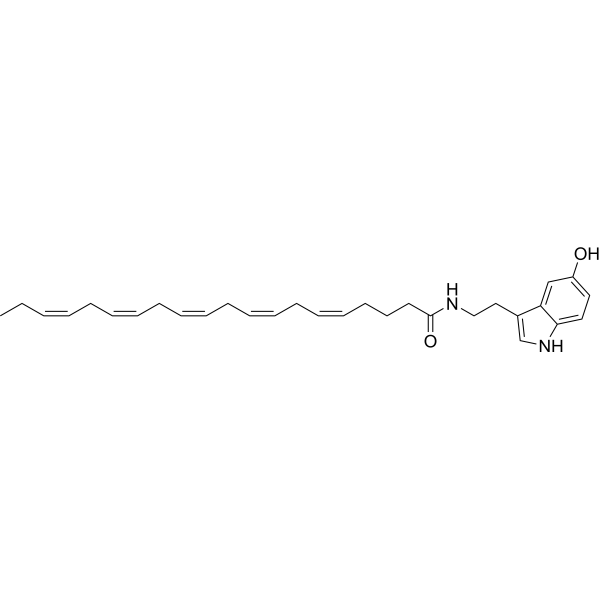
Eicosapentaenoyl serotonin (EPA-5-HT) is an endogenous fatty acid-serotonin conjugate lipid mediator. Eicosapentaenoyl serotonin acts as an inhibitor of fatty acid amide hydrolase (FAAH). Eicosapentaenoyl serotonin suppresses IL-17 release in Concanavalin A (HY-P2149)-stimulated human peripheral blood mononuclear cells. Eicosapentaenoyl serotonin is regulated by polyunsaturated fatty acids and modulates intestinal immunity and Th17 signaling. Eicosapentaenoyl serotonin can be used for the study of inflammatory bowel disease-related mechanisms .
loading...
    loading...
Cat. No.: HY-177300
CAS No.: 1402802-45-2
TLR7/8 agonist 13 is an orally active dual agonist of TLR7 (lowest effective concentrations (LEC) [hTLR7] = 1.6 μM) and TLR8 (LEC [hTLR8] = 1.6 μM). TLR7/8 agonist 13 exhibits agonistic activity against human peripheral blood mononuclear cells (hPBMCs) (LEC [hPBMC] = 0.5 μM). TLR7/8 agonist 13 induces endogenous IFNα, activating myeloid dendritic cells and monocytes toward a TH1 phenotype in mice and cynomolgus monkeys. TLR7/8 agonist 13 reduces viral load and HBV surface antigen expression in a mouse model of chronic AAV-HBV infection. TLR7/8 agonist 13 has the potential to indirectly induce IFNγ, which may promote HBV antigen-specific CD8 T cell-mediated responses. TLR7/8 agonist 13 can be used to study hepatitis B virus .
loading...
    loading...
Cat. No.: HY-153952
CAS No.: 2757469-20-6
Immuno modulator-1 (compound 22) inhibits TNFα and IL-2 secretion in human peripheral blood mononuclear cells (hPBMC), with IC50 values of 4.7 and 26 nM, respectively. Immuno modulator-1 shows hERG potassium channel blocking effect, with Inhibitory percentage of 20% at 3 μM .
loading...
    loading...
Cat. No.: HY-N6857R
CAS No.: 524-20-9
Armepavine (Standard) is the analytical standard of Armepavine. This product is intended for research and analytical applications. Armepavine, an active compound from Nelumbo nucifera, exerts not only anti-inflammatory effects on human peripheral blood mononuclear cells, but also immunosuppressive effects on T lymphocytes and on lupus nephritic mice. Armepavine inhibits TNF-α-induced MAPK and NF-κB signaling cascades .
loading...
    loading...
Cat. No.: HY-N15307
CAS No.: 38070-97-2
Trigraecum is a flavonoid compound found in Dracaena steudneri and Dalbergia cochinchinensis, exhibiting anti-inflammatory activity. It can inhibit the LPS (HY-D1056)-induced production of IL-1β, IL-2, GM-CSF, and TNF-α in human peripheral blood mononuclear cells. Trigraecum holds promise for research on inflammatory diseases .
loading...
    loading...
Cat. No.: HY-124954
CAS No.: 501926-82-5
MN-25 (compound 4a) is an orally active indolpyridone that serves as a novel cannabinoid ligand. MN-25 has Ki of 245 nM and 11 nM for CB1 and CB2. MN-25 has CB2 agonist activity and inhibits TNF-R release in human peripheral blood mononuclear cells in vitro with an IC50 of 33 μM. MN-25 shows efficacy in a mouse acute inflammation model at oral doses up to 50 mg/kg >[1].
loading...
    loading...
Cat. No.: HY-122566
CAS No.: 903864-87-9
Synonyms: ZINC666243
Research Areas:  

Cancer

SMU127 is an agonist of the toll-like receptor 1/2 (TLR1/2) heterodimer. It induces NF-κB signaling in cells expressing human TLR2 (EC50=0.55 μM) but not cells expressing human TLR3, -4, -5, -7, or -8 when used at concentrations ranging from 0.1 to 100 μM. SMU127 induces the production of TNF-α in isolated human peripheral blood mononuclear cells (PBMCs) when used at concentrations ranging from 0.01 to 1 μM. In vivo, SMU127 (0.1 mg/animal) reduces tumor volume in a 4T1 murine mammary carcinoma model.
loading...
    loading...

