
14 Results for "

in vitro enzyme assays

" in MedChemExpress (MCE) Product Catalog:
Products (14)

14 Results for "in vitro enzyme assays" in MCE Product Catalog:

3
3 Cited Publications
Cat. No.: HY-111551
CAS No.: 1630808-89-7
Purity:  99.39%
Research Areas:  

Cancer

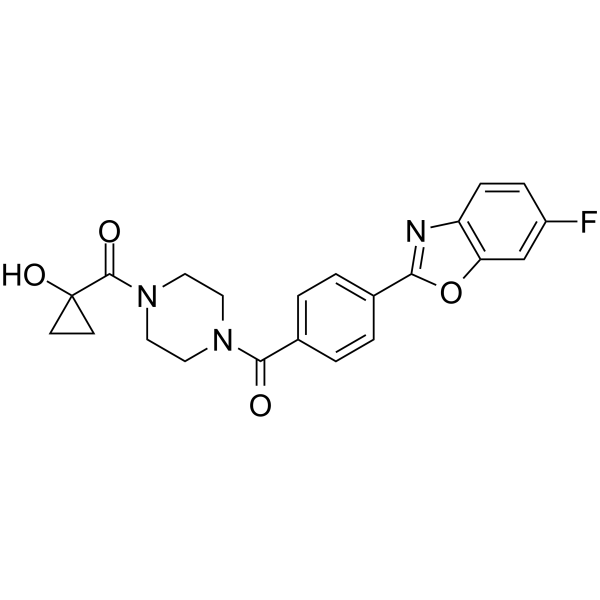
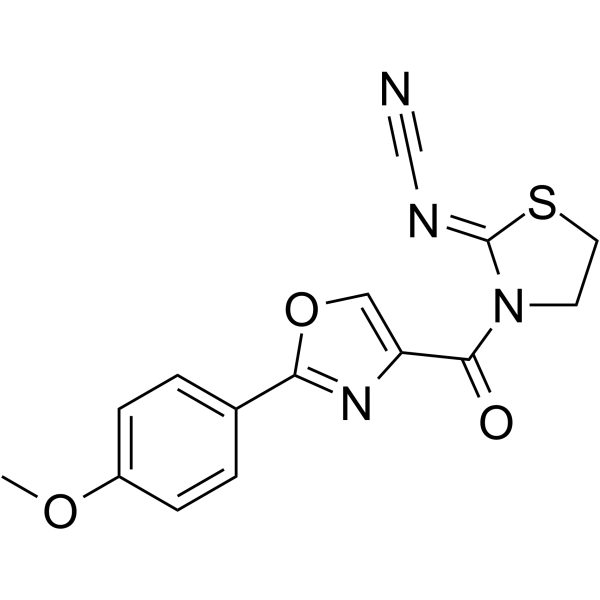
FT113 is a potent and orally active fatty acid synthase (FASN) inhibitor, with an IC50 of 213 nM for full-length recombinant human FASN enzyme. In cell-based assay, FT113 blocks FASN activity in BT474 cells (IC50, 90 nM). FT113 shows anti-proliferative activity, and exhibits anti-cancer activity both in vitro and in vivo .
loading...
    loading...
Cat. No.: HY-146248B
Purity:  98.02%
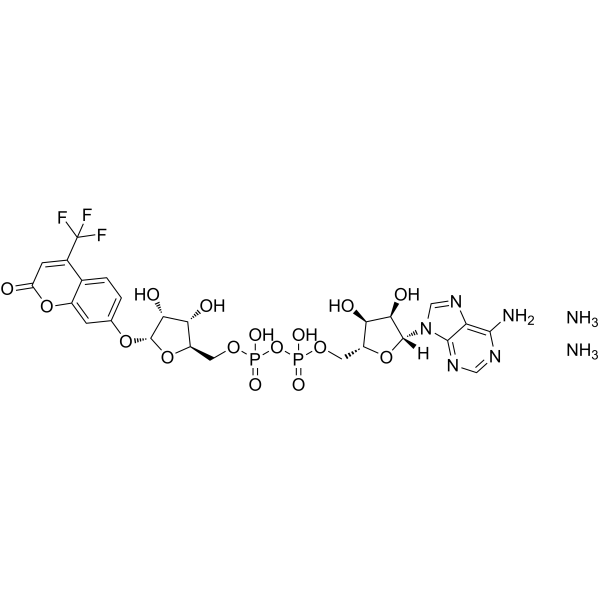
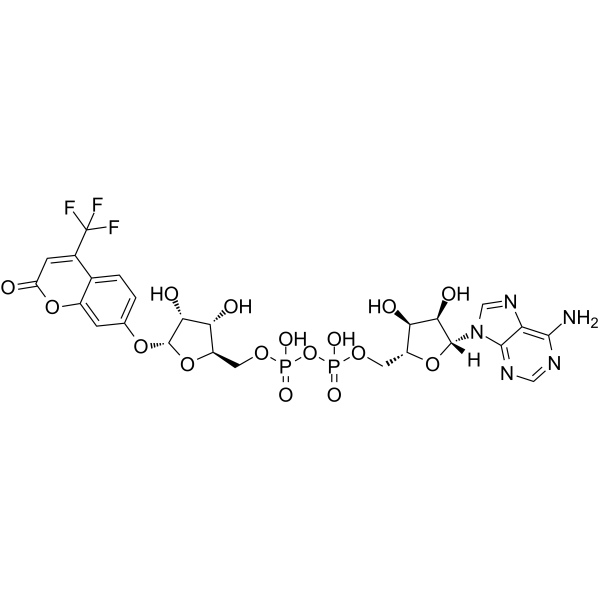
TFMU-ADPr diammonium is a selective reporter substrate of SARS-CoV-2 Macro1 (IC50=0.59 μM), with an excitation wavelength (λEx) of 385 nm, and an emission wavelength (λEm) of 502 nm (or 495 nm). TFMU-ADPr diammonium can also undergo enzymatic hydrolysis with Poly(ADP-ribose) Glycohydrolase (PARG) sourced from human, Tetrahymena thermophila and ADP-ribosylhydrolase 3 from human to release fluorophores, thereby directly reporting total poly (ADP-ribose) hydrolase activity. TFMU-ADPr diammonium binds to the ADPr-binding site of SARS-CoV-2 Macro1, and its TFMU moiety inserts into the narrow hydrophobic groove of this protein. TFMU-ADPr diammonium can thus be used to evaluate small-molecule inhibitors targeting PAR hydrolases under in vitro conditions, to investigate the regulatory mechanisms of ADP-ribosyl catabolic enzymes, or to detect PAR hydrolase activity in whole-cell lysate assays. TFMU-ADPr diammonium is also applicable to COVID-19-related research .
loading...
    loading...
Cat. No.: HY-P4344
CAS No.: 1926163-52-1
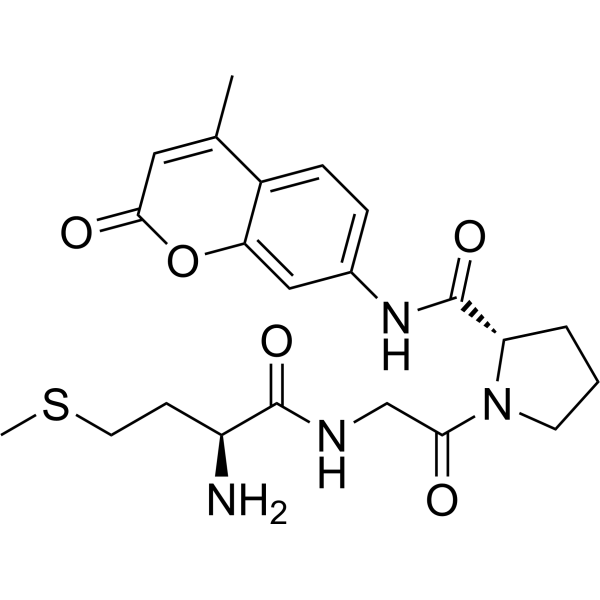
Met-Gly-Pro-AMC is a fluorescent peptide substrate active against *Caenorhabditis elegans* DPF-3, hDPP4, and methionyl aminopeptidase 2 (MetAP2). Met-Gly-Pro-AMC undergoes cleavage via tripeptidyl peptidase activity to release a fluorescent product. Met-Gly-Pro-AMC is used to detect the activities of tripeptidyl peptidases and MetAP2 peptidases in in vitro enzyme activity assays .
loading...
    loading...
Cat. No.: HY-45609
CAS No.: 150465-29-5
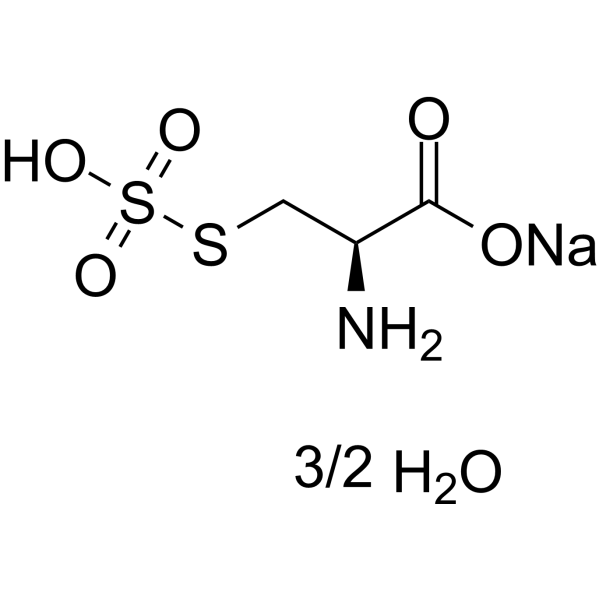
L-Cysteine S-sulfate sodium hydrate is an S-sulfated derivative of L-cysteine (HY-Y0337). L-Cysteine S-sulfate sodium hydrate is the substrate for cystine lyase, it can be used in mass spectrometry and chromatography analyses .
loading...
    loading...
Cat. No.: HY-146248
CAS No.: 2412923-11-4
TFMU-ADPr is a selective reporter substrate of SARS-CoV-2 Macro1 (IC50=0.59 μM), with an excitation wavelength (λEx) of 385 nm, and an emission wavelength (λEm) of 502 nm (or 495 nm). TFMU-ADPr can also undergo enzymatic hydrolysis with Poly(ADP-ribose) Glycohydrolase (PARG) sourced from human, Tetrahymena thermophila and ADP-ribosylhydrolase 3 from human to release fluorophores, thereby directly reporting total poly (ADP-ribose) hydrolase activity. TFMU-ADPr binds to the ADPr-binding site of SARS-CoV-2 Macro1, and its TFMU moiety inserts into the narrow hydrophobic groove of this protein. TFMU-ADPr can thus be used to evaluate small-molecule inhibitors targeting PAR hydrolases under in vitro conditions, to investigate the regulatory mechanisms of ADP-ribosyl catabolic enzymes, or to detect PAR hydrolase activity in whole-cell lysate assays. TFMU-ADPr is also applicable to COVID-19-related research .
loading...
    loading...
Cat. No.: HY-137337
CAS No.: 71973-79-0
Purity:  99.89%
Target:  

Fluorescent Dye

Research Areas:  

Others

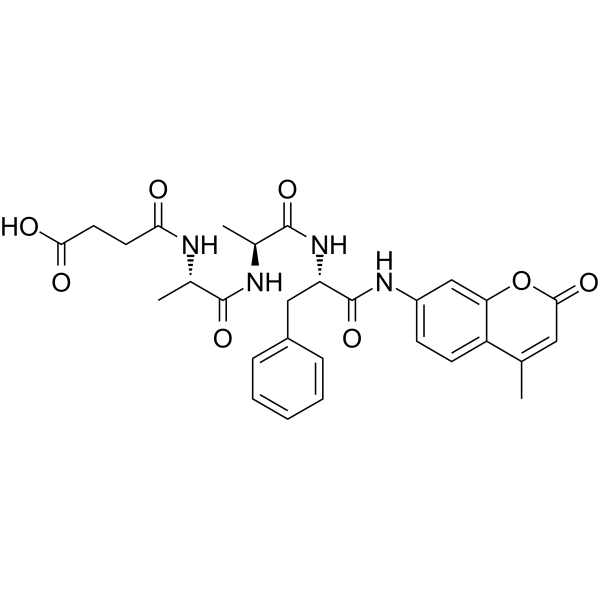
Suc-Ala-Ala-Phe-AMC is a fluorogenic chymotrypsin substrate, can be hydrolyzed by endopeptidase. Suc-Ala-Ala-Phe-AMC has been used in both in vivo assays of the acrosome reaction and in vitro enzyme assays .
loading...
    loading...
Cat. No.: HY-B1638
CAS No.: 124-22-1
Synonyms: Laurylamine
Dodecylamine (Laurylamine) is a compound that strongly destabilizes and inactivates L-(+)-pantoyl lactone dehydrogenase in vitro, can be used for assessing the enzyme's stability in biochemical assays .
loading...
    loading...
Cat. No.: HY-120766
CAS No.: 1239468-48-4
Purity:  ≥97.0%
Target:  

Histone Demethylase

Research Areas:  

Cancer

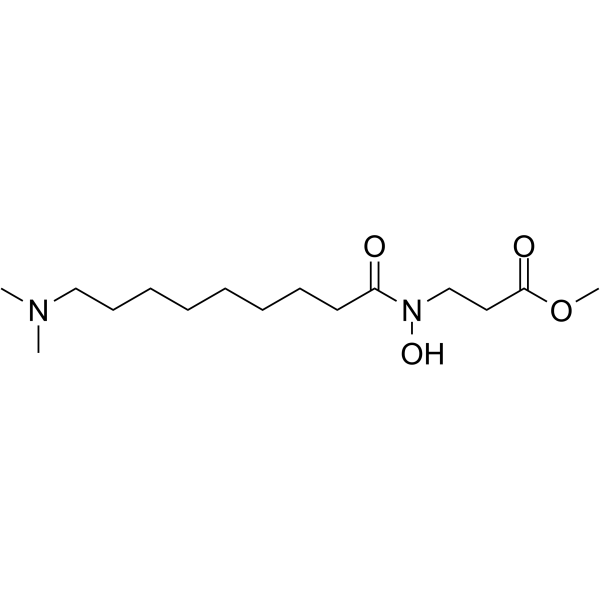
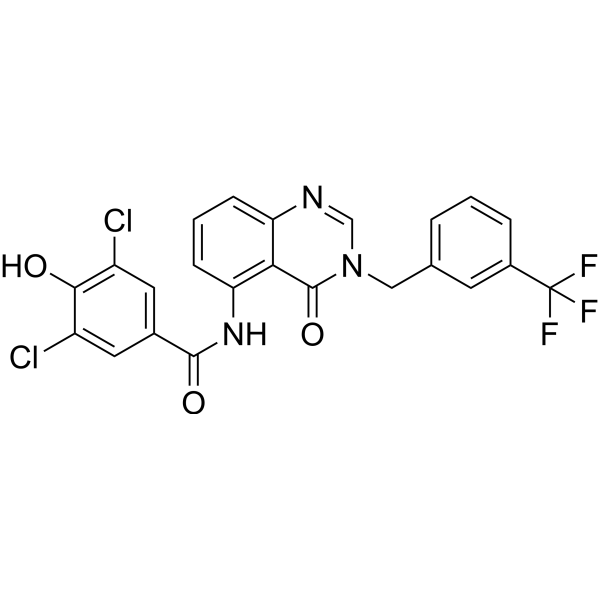
NCDM-32B is a potent and selective KDM4 inhibitor, with IC50 values of 3.0 μM for KDM4A and 1.0 μM for KDM4C in in vitro enzyme assays. NCDM-32B specifically increases global H3K9me3/me2 levels in basal breast cancer cells. NCDM-32B impairs the viability of KDM4C-amplified basal breast cancer cell lines (HCC1954 and Colo824). NCDM-32B can be used for the study of breast cancer .
loading...
    loading...
Cat. No.: HY-146248A
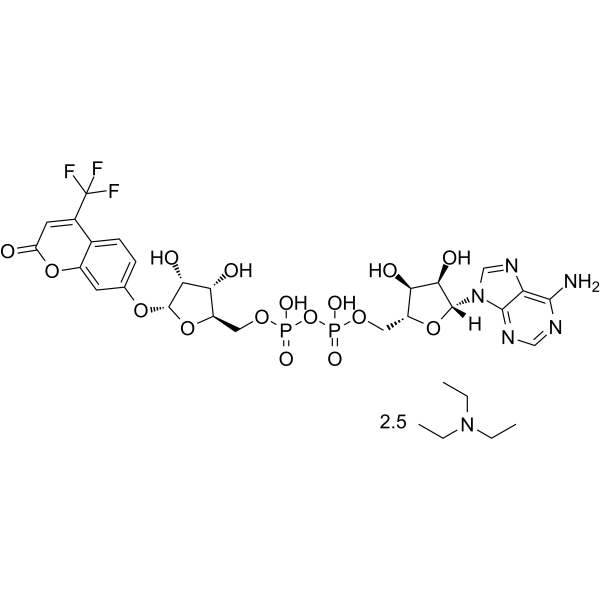
TFMU-ADPr triethylamine is a selective reporter substrate of SARS-CoV-2 Macro1 (IC50=0.59 μM), with an excitation wavelength (λEx) of 385 nm, and an emission wavelength (λEm) of 502 nm (or 495 nm). TFMU-ADPr triethylamine can also undergo enzymatic hydrolysis with Poly(ADP-ribose) Glycohydrolase (PARG) sourced from human, Tetrahymena thermophila and ADP-ribosylhydrolase 3 from human to release fluorophores, thereby directly reporting total poly (ADP-ribose) hydrolase activity. TFMU-ADPr triethylamine binds to the ADPr-binding site of SARS-CoV-2 Macro1, and its TFMU moiety inserts into the narrow hydrophobic groove of this protein. TFMU-ADPr triethylamine can thus be used to evaluate small-molecule inhibitors targeting PAR hydrolases under in vitro conditions, to investigate the regulatory mechanisms of ADP-ribosyl catabolic enzymes, or to detect PAR hydrolase activity in whole-cell lysate assays. TFMU-ADPr triethylamine is also applicable to COVID-19-related research .
loading...
    loading...
Cat. No.: HY-P3904
CAS No.: 135546-44-0
Research Areas:  

Others

P34cdc2 Kinase Substrate Peptide is a synthetic peptide substrates for P34 cdc2 kinase, with a Km of 74 μM for the purified human enzyme. P34cdc2 Kinase Substrate Peptide can be used in a rapid assay of P34 cdc2 phosphorylation in vitro. P34 cdc2, a protein serinehhreonine kinase, is a cell division cycle-regulated protein kinase .
loading...
    loading...
Cat. No.: HY-146974
CAS No.: 2519450-32-7
Research Areas:  

Inflammation/Immunology

PDE4-IN-9 (Compound 5j) is a potent inhibitor of PDE4. PDE4-IN-9 exhibits lower IC50 value (1.4 μM) against PDE4 than parent rolipram (2.0 μM) in in vitro enzyme assay. PDE4-IN-9 also displays good in vivo activity in animal models of asthma/COPD and sepsis induced by LPS .
loading...
    loading...
Cat. No.: HY-161227
CAS No.: 2770246-11-0
Target:  

17β-HSD

HSD17B13-IN-43 is a selective inhibitor of HSD17B13 that competitively blocks the activity of this enzyme. HSD17B13-IN-43 exhibits an IC50 ≤ 0.1 µM in in vitro assays. HSD17B13-IN-43 can be used in studies of non-alcoholic steatohepatitis, fatty liver disease and hepatic fibrosis .
loading...
    loading...
Cat. No.: HY-111551R
CAS No.: 1630808-89-7
Research Areas:  

Cancer

FT113 (Standard) is the analytical standard of FT113 (HY-111551). This product is intended for research and analytical applications. FT113 is a potent and orally active fatty acid synthase (FASN) inhibitor, with an IC50 of 213 nM for full-length recombinant human FASN enzyme. In cell-based assay, FT113 blocks FASN activity in BT474 cells (IC50, 90 nM). FT113 shows anti-proliferative activity, and exhibits anti-cancer activity both in vitro and in vivo .
loading...
    loading...
Cat. No.: HY-N19612
CAS No.: 9074-07-1
Proteasefrom aspergillus oryzae is a serine protease identified in the non-transgenic Aspergillus ochraceus strain AE-P. Proteasefrom aspergillus oryzae functions as a food enzyme and catalyzes protein hydrolysis with broad-spectrum specificity .
loading...
    loading...
  • 1

