Delivery of temperature sensitive items including proteins and kits will be paused on 6/19 for the Juneteenth holiday. For urgent orders please contact customer service.
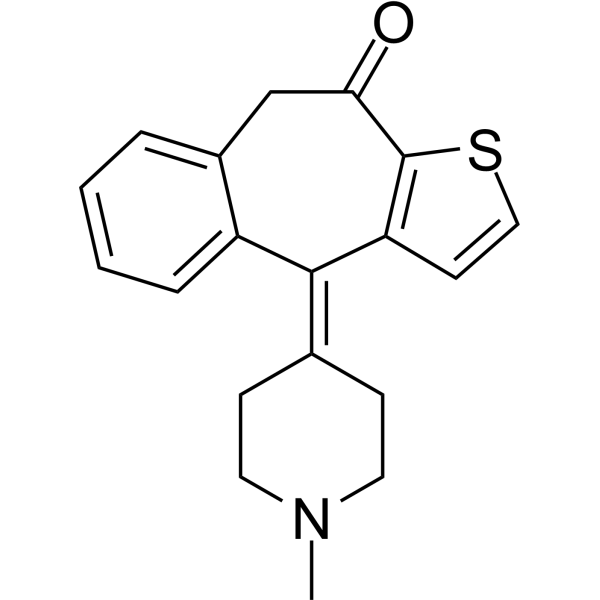
Ketotifen (HC 20-511) is an orally active second-generation noncompetitive histamine 1 (H1)receptor blocker and mast cell stabilizer. Ketotifen can block 6-phosphogluconate dehydrogenase (PGD) in vitro. Ketotifen also has antiviral activity against SARS-CoV-2 and Influenzavirus. Ketotifen can be used to the research of autoimmune encephalomyelitis (EAE) and asthma attack prevention .
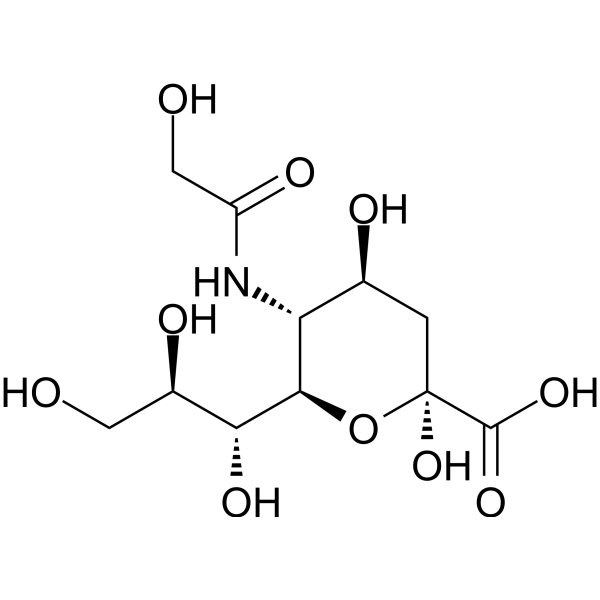
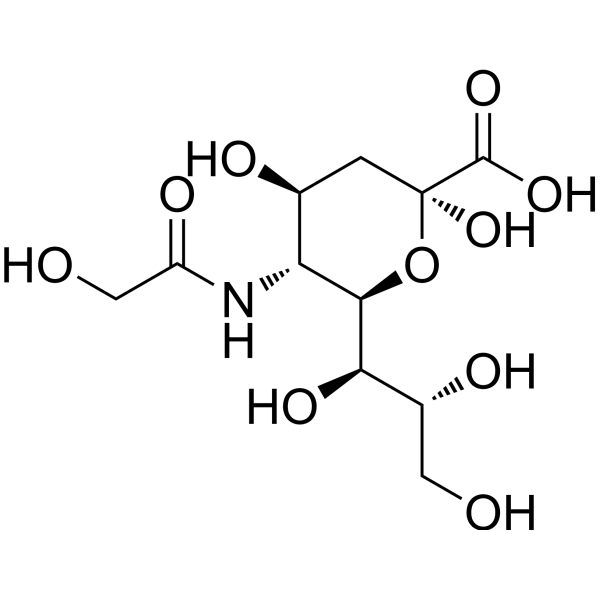
N-Glycolylneuraminic acid is a nonhuman sialic acid molecule synthesized in pigs but not in humans. N-Glycolylneuraminic acid works as a decoy receptor of N-Glycolylneuraminic acid-binding influenza A viruses (IAVs) .
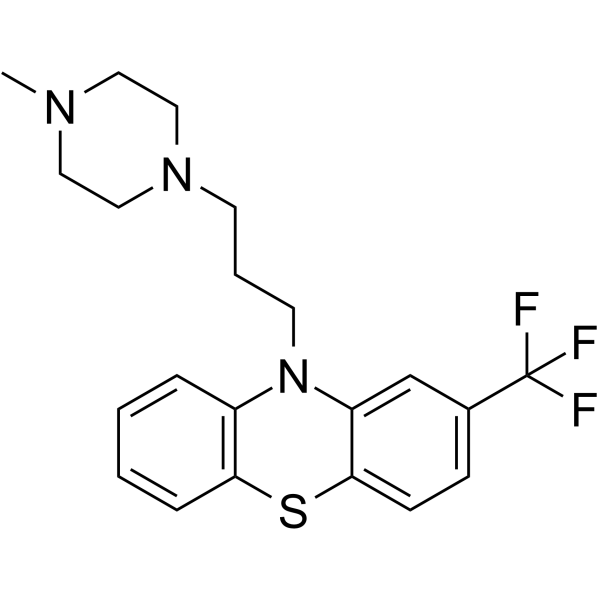
Trifluoperazine, an antipsychotic agent, acts by blocking central dopamine receptors. Trifluoperazine is a potent α1-adrenergic receptor antagonist. Trifluoperazine is a potent NUPR1 inhibitor exerting anticancer activity. Trifluoperazine is a calmodulin inhibitor, and also inhibits P-glycoprotein. Trifluoperazine can be used for the research of schizophrenia. Trifluoperazine acts as a reversible inhibitor of influenzavirus morphogenesis .
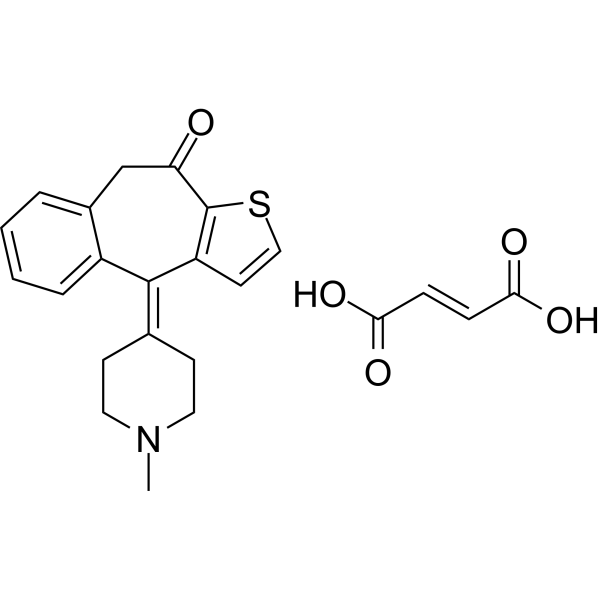
Ketotifen (HC 20-511) fumarate is an orally active second-generation noncompetitive histamine 1 (H1)receptor blocker and mast cell stabilizer. Ketotifen fumarate can block 6-phosphogluconate dehydrogenase (PGD) in vitro. Ketotifen fumarate also has antiviral activity against SARS-CoV-2 and Influenzavirus. Ketotifen fumarate can be used to the research of autoimmune encephalomyelitis (EAE) and asthma attack prevention .
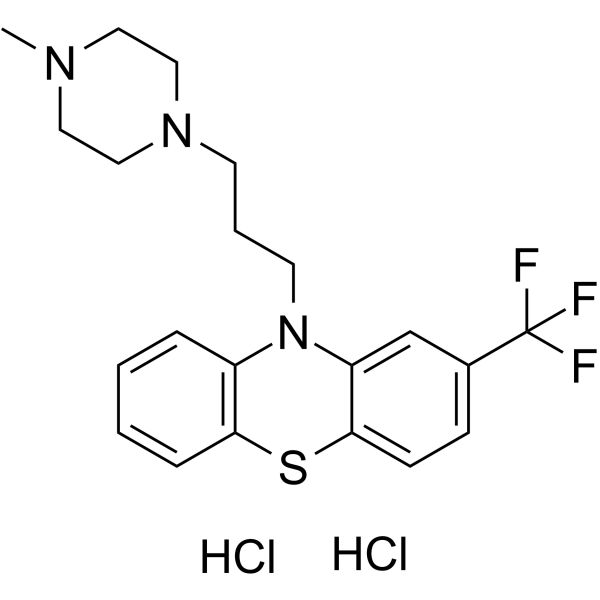
Trifluoperazine dihydrochloride, an antipsychotic agent, acts by blocking central dopamine receptors. Trifluoperazine dihydrochloride is a potent α1-adrenergic receptor antagonist. Trifluoperazine dihydrochloride is a potent NUPR1 inhibitor exerting anticancer activity. Trifluoperazine dihydrochloride is a calmodulin inhibitor, and also inhibits P-glycoprotein. Trifluoperazine dihydrochloride can be used for the research of schizophrenia. Trifluoperazine dihydrochloride acts as a reversible inhibitor of influenzavirus morphogenesis .
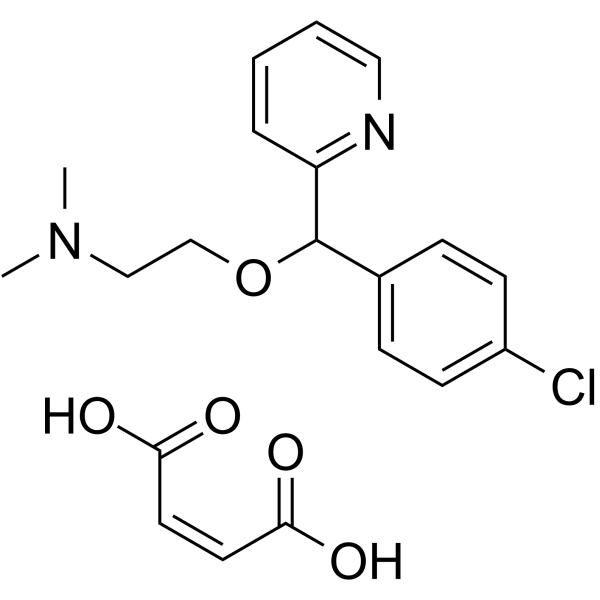
Carbinoxamine maleate salt is a blood-brain barrier-permeable histamine H1 receptor antagonist. Carbinoxamine maleate salt blocks the action of histamine on H1 receptors, reducing symptoms such as sneezing, rhinitis, rhinorrhea, erythema, pruritus and urticaria. Carbinoxamine maleate salt inhibits influenzavirus entry into cells via endocytosis, targets the early stage of the viral life cycle, and simultaneously reduces viral replication levels in the lungs, alleviating pathological damage and inflammatory responses in lung tissues. Carbinoxamine maleate salt can be used in research on allergic rhinitis, influenza, etc.
Eritoran tetrasodium (E5564) is a Toll-like receptor 4 (TLR4) antagonist. Eritoran tetrasodium protects mice against lethal influenzavirus infection, such as Ebola virus (EBOV), Marburg virus (MARV). Eritoran tetrasodium decreases the level of granulocytosis, may alleviate the severity of the "cytokine storm". Eritoran tetrasodium inhibits pathogenesis of filovirus infection. Eritoran tetrasodium has anti-inflammatory activity .
KIN1408 is an agonist of the RIG-1-like receptor (RLR) pathway and exhibits a broad-spectrum antiviral activity. KIN1408 exhibits activity against HCV, influenza A, dengue virus 2, Ebola, Nipah, and Lassa viruses .
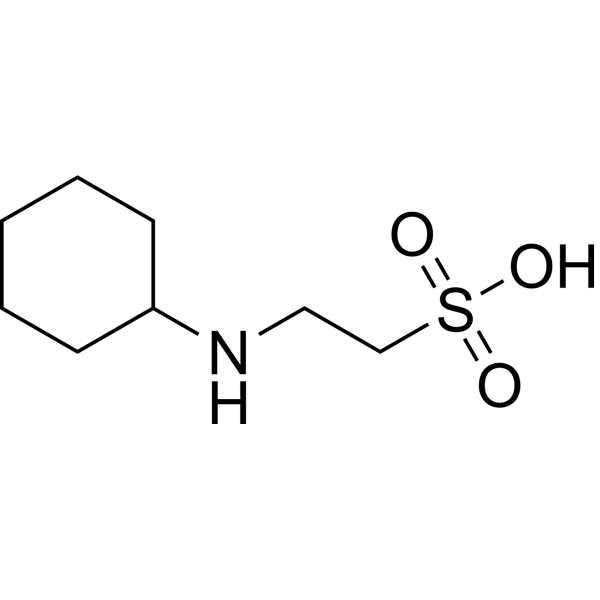
CHES (N-Cyclohexyltaurine) is a biological buffer reagent that binds to influenzavirus hemagglutinin (HA). CHES mimics the binding mode of sialic acid to the HAreceptor-binding site .
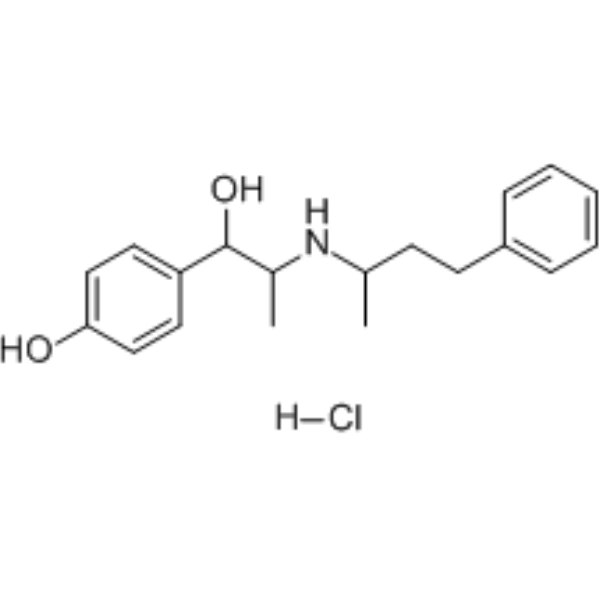
Nylidrin hydrochloride (Buphenine hydrochloride) is an orally active β-adrenergic agonist. Nylidrin hydrochloride antagonizes NR1A/2B NMDAreceptors (IC50 = 0.18 μM in Xenopus oocytes). Nylidrin hydrochloride reduces the levels of NP, HA, and M1. Nylidrin hydrochloride has antiviral activity against multiple H1N1 subtype influenza A viruses. Nylidrin hydrochloride improves hemorrhagic shock and anti-allergic effects .
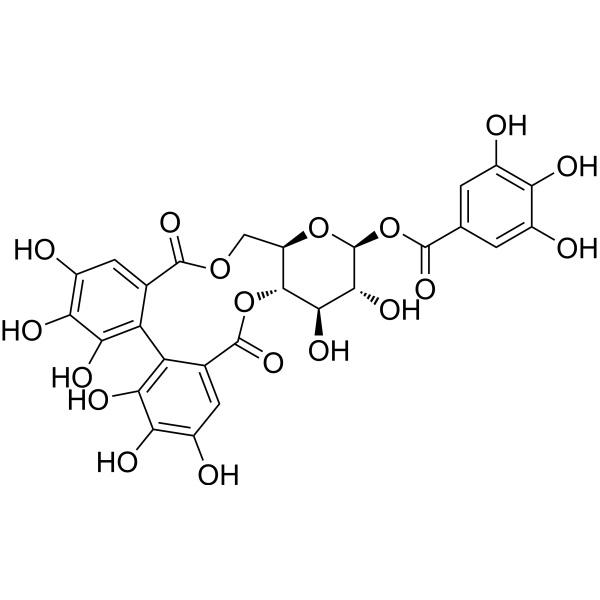
Strictinin is an orally active phenolic compound. Strictinin reduces xanthine oxidase activity, uric acid production, and the activation of ERK1/2, JNK, NF-κB, and NLRP3 inflammasome components in hepatocytes treated with Xanthine (HY-W017389). Strictinin decreases elevated serum uric acid levels and enhanced xanthine oxidase activity in mice treated with potassium oxonate. Strictinin acts as a ROR1 inhibitor and exhibits anticancer activity against highly aggressive non-androgen-dependent prostate cancer. Strictinin induces cancer cell apoptosis (apoptosis), arrests cell cycle, and inhibits cancer cell migration, invasion, and epithelial-mesenchymal transition. Strictinin modulates gut microbiota, inhibits bacterial growth and biofilm formation, accelerates small intestinal transit, and blocks viral entry and replication. Strictinin can be used in research related to hyperuricemia, androgen receptor-negative non-androgen-dependent prostate cancer, triple-negative breast cancer, bacterial infections, constipation, coronavirus infections, dental caries, and infections caused by influenza A, influenza B, and human parainfluenza virus type 1 .
MI-1904 is the inhibitor for matriptase/TMPRSS2, that exhibits antiviral activity against influenzavirus H1N1 and H9N2. MI-1904 blocks the cleavage of glycoproteins on the viral surface, prevents the virus from binding to host cell receptors, and thus inhibits the entry and replication of the virus .
Ketotifen (fumarate) (Standard) is the analytical standard of Ketotifen (fumarate). This product is intended for research and analytical applications. Ketotifen (HC 20-511) fumarate is an orally active second-generation noncompetitive histamine 1 (H1)receptor blocker and mast cell stabilizer. Ketotifen fumarate can block 6-phosphogluconate dehydrogenase (PGD) in vitro. Ketotifen fumarate also has antiviral activity against SARS-CoV-2 and Influenzavirus. Ketotifen fumarate can be used to the research of autoimmune encephalomyelitis (EAE) and asthma attack prevention .
CMP-SiaNAz (CMP-NeuNAz) sodium is a sialic acid nucleotide sugar derivative. CMP-SiaNAz sodium is integrated into the glycosidic chain through the action of STs in the Golgi apparatus, forming SiaNAz substances. CMP-SiaNAz sodium can serve as a substrate for bacterial-derived sialic acid transferases and is used for chemical enzymatic labeling and imaging of cell surface glycosides .
(±)-Carbinoxamine is a blood-brain barrier-permeable histamine H1 receptor antagonist. (±)-Carbinoxamine blocks the action of histamine on H1 receptors, reducing symptoms such as sneezing, rhinitis, rhinorrhea, erythema, pruritus and urticaria. (±)-Carbinoxamine inhibits influenzavirus entry into cells via endocytosis, targets the early stage of the viral life cycle, and simultaneously reduces viral replication levels in the lungs, alleviating pathological damage and inflammatory responses in lung tissues. (±)-Carbinoxamine can be used in research on allergic rhinitis, influenza, etc.
LY53857 free base is a selective 5-HT2receptor antagonist with the ED50 of 17.5 nM. LY53857 free base shows antiviral activity against influenza A virus .
N-Glycolylneuraminic acid (Standard) is the analytical standard of N-Glycolylneuraminic acid. This product is intended for research and analytical applications. N-Glycolylneuraminic acid is a nonhuman sialic acid molecule synthesized in pigs but not in humans. N-Glycolylneuraminic acid works as a decoy receptor of N-Glycolylneuraminic acid-binding influenza A viruses (IAVs) .
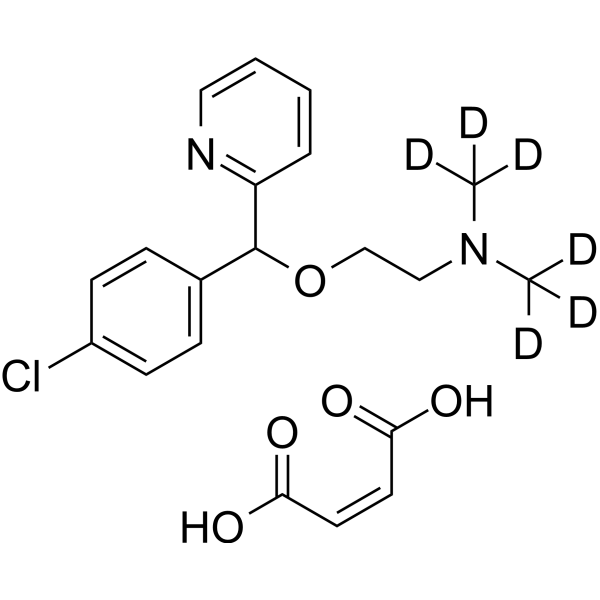
Carbinoxamine-d6 (maleate) is the deuterium labeled Carbinoxamine maleate salt. Carbinoxamine maleate salt is a blood-brain barrier-permeable histamine H1 receptor antagonist. Carbinoxamine maleate salt blocks the action of histamine on H1 receptors, reducing symptoms such as sneezing, rhinitis, rhinorrhea, erythema, pruritus and urticaria. Carbinoxamine maleate salt inhibits influenzavirus entry into cells via endocytosis, targets the early stage of the viral life cycle, and simultaneously reduces viral replication levels in the lungs, alleviating pathological damage and inflammatory responses in lung tissues. Carbinoxamine maleate salt can be used in research on allergic rhinitis, influenza, etc.
Carbinoxamine maleate salt (Standard) is the analytical standard of Carbinoxamine maleate salt (HY-B1589A). This product is intended for research and analytical applications. Carbinoxamine maleate salt is a blood-brain barrier-permeable histamine H1 receptor antagonist. Carbinoxamine maleate salt blocks the action of histamine on H1 receptors, reducing symptoms such as sneezing, rhinitis, rhinorrhea, erythema, pruritus and urticaria. Carbinoxamine maleate salt inhibits influenzavirus entry into cells via endocytosis, targets the early stage of the viral life cycle, and simultaneously reduces viral replication levels in the lungs, alleviating pathological damage and inflammatory responses in lung tissues. Carbinoxamine maleate salt can be used in research on allergic rhinitis, influenza, etc.
Trifluoperazine dimaleate, an antipsychotic agent, acts by blocking central dopamine receptors. Trifluoperazine dimaleate is a potent α1-adrenergic receptor antagonist. Trifluoperazine dimaleate is a potent NUPR1 inhibitor exerting anticancer activity. Trifluoperazine dimaleate is a calmodulin inhibitor, and also inhibits P-glycoprotein. Trifluoperazine dimaleate can be used for the research of schizophrenia. Trifluoperazine dimaleate acts as a reversible inhibitor of influenzavirus morphogenesis .
Trifluoperazine-d3 (dihydrochloride) is deuterium labeled Trifluoperazine (dihydrochloride). Trifluoperazine dihydrochloride, an antipsychotic agent, acts by blocking central dopamine receptors. Trifluoperazine dihydrochloride is a potent α1-adrenergic receptor antagonist. Trifluoperazine dihydrochloride is a potent NUPR1 inhibitor exerting anticancer activity. Trifluoperazine dihydrochloride is a calmodulin inhibitor, and also inhibits P-glycoprotein. Trifluoperazine dihydrochloride can be used for the research of schizophrenia. Trifluoperazine dihydrochloride acts as a reversible inhibitor of influenzavirus morphogenesis .
Trifluoperazine (dihydrochloride) (Standard) is the analytical standard of Trifluoperazine (dihydrochloride). This product is intended for research and analytical applications. Trifluoperazine dihydrochloride, an antipsychotic agent, acts by blocking central dopamine receptors. Trifluoperazine dihydrochloride is a potent α1-adrenergic receptor antagonist. Trifluoperazine dihydrochloride is a potent NUPR1 inhibitor exerting anticancer activity. Trifluoperazine dihydrochloride is a calmodulin inhibitor, and also inhibits P-glycoprotein. Trifluoperazine dihydrochloride can be used for the research of schizophrenia. Trifluoperazine dihydrochloride acts as a reversible inhibitor of influenzavirus morphogenesis .
Ketotifen (Standard) is the analytical standard of Ketotifen. This product is intended for research and analytical applications. Ketotifen (HC 20-511) is an orally active second-generation noncompetitive histamine 1 (H1) receptor blocker and mast cell stabilizer. Ketotifen can block 6-phosphogluconate dehydrogenase (PGD) in vitro. Ketotifen also has antiviral activity against SARS-CoV-2 and Influenzavirus. Ketotifen can be used to the research of autoimmune encephalomyelitis (EAE) and asthma attack prevention .
Isoferulic acid (Standard) is the analytical standard of Isoferulic acid. This product is intended for research and analytical applications. Isoferulic acid (3-Hydroxy-4-methoxycinnamic acid) is a cinnamic acid derivative that has antidiabetic activity. Isoferulic acid binds to and activates α1-adrenergic receptors (IC50=1.4 µM) to enhance secretion of β-endorphin (EC50=52.2 nM) and increase glucose use. Isoferulic acid also has anti-influenzavirus activities.
Ketotifen-d3 (HC 20-511-d3) is deuterium labeled Ketotifen. Ketotifen (HC 20-511) is an orally active second-generation noncompetitive histamine 1 (H1)receptor blocker and mast cell stabilizer. Ketotifen can block 6-phosphogluconate dehydrogenase (PGD) in vitro. Ketotifen also has antiviral activity against SARS-CoV-2 and Influenzavirus. Ketotifen can be used to the research of autoimmune encephalomyelitis (EAE) and asthma attack prevention .
Nylidrin (hydrochloride) (Standard) is the analytical standard of Nylidrin hydrochloride (HY-B1404). This product is intended for research and analytical applications. Nylidrin hydrochloride (Buphenine hydrochloride) is an orally active β-adrenergic agonist. Nylidrin hydrochloride antagonizes NR1A/2B NMDAreceptors (IC50 = 0.18 μM in Xenopus oocytes). Nylidrin hydrochloride reduces the levels of NP, HA, and M1. Nylidrin hydrochloride has antiviral activity against multiple H1N1 subtype influenza A viruses. Nylidrin hydrochloride improves hemorrhagic shock and anti-allergic effects .
TLR7 agonist 21 (Compound 27B) is a selective agonist for Toll-like receptor 7(TLR7), with an EC50 of 17.53 nM (for human TLR7) and 41.7 nM (for mouse TLR7). TLR7 agonist 21 stimulates the secretion of pro-inflammatory cytokines, such as IL-6, TNF-α, IFN-α1, and IL-4. TLR7 agonist 21 acts as a vaccine adjuvant, increases levels of IgG and IgA, and protects the mouse from influenzavirus infections .
(±)-Carbinoxamine-d6 is the deuterium labeled (±)-Carbinoxamine (HY-B1589) . (±)-Carbinoxamine is a blood-brain barrier-permeable histamine H1 receptor antagonist. (±)-Carbinoxamine blocks the action of histamine on H1 receptors, reducing symptoms such as sneezing, rhinitis, rhinorrhea, erythema, pruritus and urticaria. (±)-Carbinoxamine inhibits influenzavirus entry into cells via endocytosis, targets the early stage of the viral life cycle, and simultaneously reduces viral replication levels in the lungs, alleviating pathological damage and inflammatory responses in lung tissues. (±)-Carbinoxamine can be used in research on allergic rhinitis, influenza, etc.
CHES (N-Cyclohexyltaurine) is a biological buffer reagent that binds to influenzavirus hemagglutinin (HA). CHES mimics the binding mode of sialic acid to the HAreceptor-binding site .
Ketotifen (HC 20-511) is an orally active second-generation noncompetitive histamine 1 (H1)receptor blocker and mast cell stabilizer. Ketotifen can block 6-phosphogluconate dehydrogenase (PGD) in vitro. Ketotifen also has antiviral activity against SARS-CoV-2 and Influenzavirus. Ketotifen can be used to the research of autoimmune encephalomyelitis (EAE) and asthma attack prevention .
N-Glycolylneuraminic acid is a nonhuman sialic acid molecule synthesized in pigs but not in humans. N-Glycolylneuraminic acid works as a decoy receptor of N-Glycolylneuraminic acid-binding influenza A viruses (IAVs) .
Ketotifen (HC 20-511) fumarate is an orally active second-generation noncompetitive histamine 1 (H1)receptor blocker and mast cell stabilizer. Ketotifen fumarate can block 6-phosphogluconate dehydrogenase (PGD) in vitro. Ketotifen fumarate also has antiviral activity against SARS-CoV-2 and Influenzavirus. Ketotifen fumarate can be used to the research of autoimmune encephalomyelitis (EAE) and asthma attack prevention .
Strictinin is an orally active phenolic compound. Strictinin reduces xanthine oxidase activity, uric acid production, and the activation of ERK1/2, JNK, NF-κB, and NLRP3 inflammasome components in hepatocytes treated with Xanthine (HY-W017389). Strictinin decreases elevated serum uric acid levels and enhanced xanthine oxidase activity in mice treated with potassium oxonate. Strictinin acts as a ROR1 inhibitor and exhibits anticancer activity against highly aggressive non-androgen-dependent prostate cancer. Strictinin induces cancer cell apoptosis (apoptosis), arrests cell cycle, and inhibits cancer cell migration, invasion, and epithelial-mesenchymal transition. Strictinin modulates gut microbiota, inhibits bacterial growth and biofilm formation, accelerates small intestinal transit, and blocks viral entry and replication. Strictinin can be used in research related to hyperuricemia, androgen receptor-negative non-androgen-dependent prostate cancer, triple-negative breast cancer, bacterial infections, constipation, coronavirus infections, dental caries, and infections caused by influenza A, influenza B, and human parainfluenza virus type 1 .
Ketotifen (fumarate) (Standard) is the analytical standard of Ketotifen (fumarate). This product is intended for research and analytical applications. Ketotifen (HC 20-511) fumarate is an orally active second-generation noncompetitive histamine 1 (H1)receptor blocker and mast cell stabilizer. Ketotifen fumarate can block 6-phosphogluconate dehydrogenase (PGD) in vitro. Ketotifen fumarate also has antiviral activity against SARS-CoV-2 and Influenzavirus. Ketotifen fumarate can be used to the research of autoimmune encephalomyelitis (EAE) and asthma attack prevention .
N-Glycolylneuraminic acid (Standard) is the analytical standard of N-Glycolylneuraminic acid. This product is intended for research and analytical applications. N-Glycolylneuraminic acid is a nonhuman sialic acid molecule synthesized in pigs but not in humans. N-Glycolylneuraminic acid works as a decoy receptor of N-Glycolylneuraminic acid-binding influenza A viruses (IAVs) .
Ketotifen (Standard) is the analytical standard of Ketotifen. This product is intended for research and analytical applications. Ketotifen (HC 20-511) is an orally active second-generation noncompetitive histamine 1 (H1) receptor blocker and mast cell stabilizer. Ketotifen can block 6-phosphogluconate dehydrogenase (PGD) in vitro. Ketotifen also has antiviral activity against SARS-CoV-2 and Influenzavirus. Ketotifen can be used to the research of autoimmune encephalomyelitis (EAE) and asthma attack prevention .
Isoferulic acid (Standard) is the analytical standard of Isoferulic acid. This product is intended for research and analytical applications. Isoferulic acid (3-Hydroxy-4-methoxycinnamic acid) is a cinnamic acid derivative that has antidiabetic activity. Isoferulic acid binds to and activates α1-adrenergic receptors (IC50=1.4 µM) to enhance secretion of β-endorphin (EC50=52.2 nM) and increase glucose use. Isoferulic acid also has anti-influenzavirus activities.
The IVNS1ABP protein is intricately involved in multiple cellular functions, including pre-mRNA splicing, aryl hydrocarbon receptor (AHR) pathway, F-actin organization, and protein ubiquitination. It binds to F-actin through Kelch repeats, thereby stabilizing actin filaments and thereby protecting cells from actin instability-induced cell death. IVNS1ABP Protein, Human (sf9) is the recombinant human-derived IVNS1ABP protein, expressed by sf9 insect cells , with tag free.
The IVNS1ABP protein is intricately involved in multiple cellular functions, including pre-mRNA splicing, aryl hydrocarbon receptor (AHR) pathway, F-actin organization, and protein ubiquitination. It binds to F-actin through Kelch repeats, thereby stabilizing actin filaments and thereby protecting cells from actin instability-induced cell death. IVNS1ABP Protein, Human (sf9, His, Strep) is the recombinant human-derived IVNS1ABP protein, expressed by sf9 insect cells , with N-Strep, N-8*His labeled tag.
Carbinoxamine-d6 (maleate) is the deuterium labeled Carbinoxamine maleate salt. Carbinoxamine maleate salt is a blood-brain barrier-permeable histamine H1 receptor antagonist. Carbinoxamine maleate salt blocks the action of histamine on H1 receptors, reducing symptoms such as sneezing, rhinitis, rhinorrhea, erythema, pruritus and urticaria. Carbinoxamine maleate salt inhibits influenzavirus entry into cells via endocytosis, targets the early stage of the viral life cycle, and simultaneously reduces viral replication levels in the lungs, alleviating pathological damage and inflammatory responses in lung tissues. Carbinoxamine maleate salt can be used in research on allergic rhinitis, influenza, etc.
Trifluoperazine-d3 (dihydrochloride) is deuterium labeled Trifluoperazine (dihydrochloride). Trifluoperazine dihydrochloride, an antipsychotic agent, acts by blocking central dopamine receptors. Trifluoperazine dihydrochloride is a potent α1-adrenergic receptor antagonist. Trifluoperazine dihydrochloride is a potent NUPR1 inhibitor exerting anticancer activity. Trifluoperazine dihydrochloride is a calmodulin inhibitor, and also inhibits P-glycoprotein. Trifluoperazine dihydrochloride can be used for the research of schizophrenia. Trifluoperazine dihydrochloride acts as a reversible inhibitor of influenzavirus morphogenesis .
Ketotifen-d3 (HC 20-511-d3) is deuterium labeled Ketotifen. Ketotifen (HC 20-511) is an orally active second-generation noncompetitive histamine 1 (H1)receptor blocker and mast cell stabilizer. Ketotifen can block 6-phosphogluconate dehydrogenase (PGD) in vitro. Ketotifen also has antiviral activity against SARS-CoV-2 and Influenzavirus. Ketotifen can be used to the research of autoimmune encephalomyelitis (EAE) and asthma attack prevention .
(±)-Carbinoxamine-d6 is the deuterium labeled (±)-Carbinoxamine (HY-B1589) . (±)-Carbinoxamine is a blood-brain barrier-permeable histamine H1 receptor antagonist. (±)-Carbinoxamine blocks the action of histamine on H1 receptors, reducing symptoms such as sneezing, rhinitis, rhinorrhea, erythema, pruritus and urticaria. (±)-Carbinoxamine inhibits influenzavirus entry into cells via endocytosis, targets the early stage of the viral life cycle, and simultaneously reduces viral replication levels in the lungs, alleviating pathological damage and inflammatory responses in lung tissues. (±)-Carbinoxamine can be used in research on allergic rhinitis, influenza, etc.
Inquiry Online
Your information is safe with us. * Required Fields.
Western blot analysis of extracts from THP-1(lane 2(20μg), Jurkat (lane 3(20μg) and NIH3T3(lane 4(20μg) using FOXO1A (HY-P80132) Rabbit mAb. Proteins were transferred
to a PVDF membrane and blocked with 5% non-fat milk in TBST for 2 hour at room temperature. The primary antibody (1/1000) and Loading control antibody (Beta Actin, HY-P80438, 1/10000) was
used in 5% non-fat milk in TBST at 4°C overnight. Goat Anti-Mouse/Rabbit IgG-HRP Secondary Antibody (1/10000) was used for 1 hour at room temperature.
Western blot analysis of extracts from THP-1(lane 2(20μg), Jurkat (lane 3(20μg) and NIH3T3(lane 4(20μg) using FOXO1A (HY-P80132) Rabbit mAb. Proteins were transferred
to a PVDF membrane and blocked with 5% non-fat milk in TBST for 2 hour at room temperature. The primary antibody (1/1000) and Loading control antibody (Beta Actin, HY-P80438, 1/10000) was
used in 5% non-fat milk in TBST at 4°C overnight. Goat Anti-Mouse/Rabbit IgG-HRP Secondary Antibody (1/10000) was used for 1 hour at room temperature.
Western blot analysis of extracts from THP-1(lane 2(20μg), Jurkat (lane 3(20μg) and NIH3T3(lane 4(20μg) using FOXO1A (HY-P80132) Rabbit mAb. Proteins were transferred
to a PVDF membrane and blocked with 5% non-fat milk in TBST for 2 hour at room temperature. The primary antibody (1/1000) and Loading control antibody (Beta Actin, HY-P80438, 1/10000) was
used in 5% non-fat milk in TBST at 4°C overnight. Goat Anti-Mouse/Rabbit IgG-HRP Secondary Antibody (1/10000) was used for 1 hour at room temperature.
Western blot analysis of extracts from THP-1(lane 2(20μg), Jurkat (lane 3(20μg) and NIH3T3(lane 4(20μg) using FOXO1A (HY-P80132) Rabbit mAb. Proteins were transferred
to a PVDF membrane and blocked with 5% non-fat milk in TBST for 2 hour at room temperature. The primary antibody (1/1000) and Loading control antibody (Beta Actin, HY-P80438, 1/10000) was
MedchemExpress Validation 03
Western blot analysis of extracts from THP-1(lane 2(20μg), Jurkat (lane 3(20μg) and NIH3T3(lane 4(20μg) using FOXO1A (HY-P80132) Rabbit mAb. Proteins were transferred
MedchemExpress Validation 04
Western blot analysis of extracts from THP-1(lane 2(20μg), Jurkat (lane 3(20μg) and NIH3T3(lane 4(20μg) using FOXO1A (HY-P80132) Rabbit mAb. Proteins were transferred
to a PVDF membrane and blocked with 5% non-fat milk in TBST for 2 hour at room temperature. The primary antibody (1/1000) and Loading control antibody (Beta Actin, HY-P80438, 1/10000) was
used in 5% non-fat milk in TBST at 4°C overnight. Goat Anti-Mouse/Rabbit IgG-HRP Secondary Antibody (1/10000) was used for 1 hour at room temperature.
MedchemExpress Validation
Western blot analysis of extracts from THP-1(lane 2(20μg), Jurkat (lane 3(20μg) and NIH3T3(lane 4(20μg) using FOXO1A (HY-P80132) Rabbit mAb. Proteins were transferred
to a PVDF membrane and blocked with 5% non-fat milk in TBST for 2 hour at room temperature. The primary antibody (1/1000) and Loading control antibody (Beta Actin, HY-P80438, 1/10000) was
used in 5% non-fat milk in TBST at 4°C overnight. Goat Anti-Mouse/Rabbit IgG-HRP Secondary Antibody (1/10000) was used for 1 hour at room temperature.
Western blot analysis of extracts from THP-1(lane 2(20μg), Jurkat (lane 3(20μg) and NIH3T3(lane 4(20μg) using FOXO1A (HY-P80132) Rabbit mAb. Proteins were transferred
to a PVDF membrane and blocked with 5% non-fat milk in TBST for 2 hour at room temperature. The primary antibody (1/1000) and Loading control antibody (Beta Actin, HY-P80438, 1/10000) was
used in 5% non-fat milk in TBST at 4°C overnight. Goat Anti-Mouse/Rabbit IgG-HRP Secondary Antibody (1/10000) was used for 1 hour at room temperature.
MedchemExpress Validation
Western blot analysis of extracts from THP-1(lane 2(20μg), Jurkat (lane 3(20μg) and NIH3T3(lane 4(20μg) using FOXO1A (HY-P80132) Rabbit mAb. Proteins were transferred
to a PVDF membrane and blocked with 5% non-fat milk in TBST for 2 hour at room temperature. The primary antibody (1/1000) and Loading control antibody (Beta Actin, HY-P80438, 1/10000) was
used in 5% non-fat milk in TBST at 4°C overnight. Goat Anti-Mouse/Rabbit IgG-HRP Secondary Antibody (1/10000) was used for 1 hour at room temperature.
MedchemExpress Validation
Western blot analysis of extracts from THP-1(lane 2(20μg), Jurkat (lane 3(20μg) and NIH3T3(lane 4(20μg) using FOXO1A (HY-P80132) Rabbit mAb. Proteins were transferred
to a PVDF membrane and blocked with 5% non-fat milk in TBST for 2 hour at room temperature. The primary antibody (1/1000) and Loading control antibody (Beta Actin, HY-P80438, 1/10000) was
used in 5% non-fat milk in TBST at 4°C overnight. Goat Anti-Mouse/Rabbit IgG-HRP Secondary Antibody (1/10000) was used for 1 hour at room temperature.
MedchemExpress Validation
Western blot analysis of extracts from THP-1(lane 2(20μg), Jurkat (lane 3(20μg) and NIH3T3(lane 4(20μg) using FOXO1A (HY-P80132) Rabbit mAb. Proteins were transferred
to a PVDF membrane and blocked with 5% non-fat milk in TBST for 2 hour at room temperature. The primary antibody (1/1000) and Loading control antibody (Beta Actin, HY-P80438, 1/10000) was
used in 5% non-fat milk in TBST at 4°C overnight. Goat Anti-Mouse/Rabbit IgG-HRP Secondary Antibody (1/10000) was used for 1 hour at room temperature.
MedchemExpress Validation
Western blot analysis of extracts from THP-1(lane 2(20μg), Jurkat (lane 3(20μg) and NIH3T3(lane 4(20μg) using FOXO1A (HY-P80132) Rabbit mAb. Proteins were transferred
to a PVDF membrane and blocked with 5% non-fat milk in TBST for 2 hour at room temperature. The primary antibody (1/1000) and Loading control antibody (Beta Actin, HY-P80438, 1/10000) was
used in 5% non-fat milk in TBST at 4°C overnight. Goat Anti-Mouse/Rabbit IgG-HRP Secondary Antibody (1/10000) was used for 1 hour at room temperature.
MedchemExpress Validation
Western blot analysis of extracts from THP-1(lane 2(20μg), Jurkat (lane 3(20μg) and NIH3T3(lane 4(20μg) using FOXO1A (HY-P80132) Rabbit mAb. Proteins were transferred
to a PVDF membrane and blocked with 5% non-fat milk in TBST for 2 hour at room temperature. The primary antibody (1/1000) and Loading control antibody (Beta Actin, HY-P80438, 1/10000) was
used in 5% non-fat milk in TBST at 4°C overnight. Goat Anti-Mouse/Rabbit IgG-HRP Secondary Antibody (1/10000) was used for 1 hour at room temperature.
MedchemExpress Validation
Western blot analysis of extracts from THP-1(lane 2(20μg), Jurkat (lane 3(20μg) and NIH3T3(lane 4(20μg) using FOXO1A (HY-P80132) Rabbit mAb. Proteins were transferred
to a PVDF membrane and blocked with 5% non-fat milk in TBST for 2 hour at room temperature. The primary antibody (1/1000) and Loading control antibody (Beta Actin, HY-P80438, 1/10000) was
used in 5% non-fat milk in TBST at 4°C overnight. Goat Anti-Mouse/Rabbit IgG-HRP Secondary Antibody (1/10000) was used for 1 hour at room temperature.
MedChemExpress values your privacy and your trust is important to us. We use cookies to enhance your website experience. Some cookies are necessary to run the website.
Privacy and Cookie Policy

