18 Results for "

intracellular Ca2+ influx

" in MedChemExpress (MCE) Product Catalog:
Products (18)

18 Results for "intracellular Ca2+ influx" in MCE Product Catalog:

40
40 Publications Verification
Cat. No.: HY-19608
CAS No.: 942206-85-1
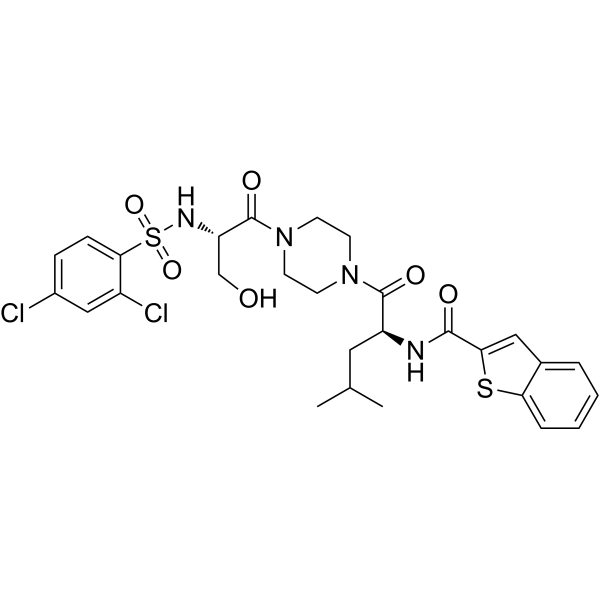
GSK1016790A is a potent and selective transient receptor potential vanilloid 4 (TRPV4) channel agonist. GSK1016790A can elicit Ca 2+ influx and elevate intracellular Ca 2+ in HEK cells .
loading...
    loading...
2
2 Cited Publications
Cat. No.: HY-N0724
CAS No.: 2752-64-9
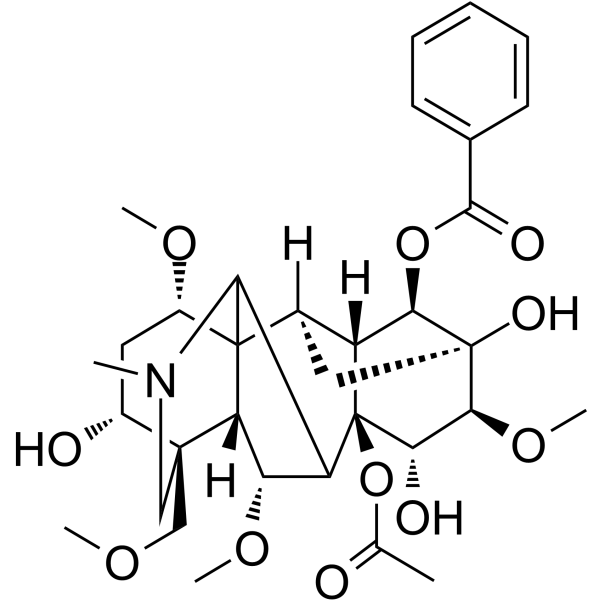
Mesaconitine is a nitric oxide synthase activator. Mesaconitine drives extracellular Na + and Ca 2+ influx into endothelial cells, increases intracellular Na + and Ca 2+ concentrations, and triggers nitric oxide release. Mesaconitine is applicable for pain-related research .
loading...
    loading...
1
1 Cited Publications
Cat. No.: HY-N11077
CAS No.: 89886-30-6
Synonyms: 4,5-di-O-CQA
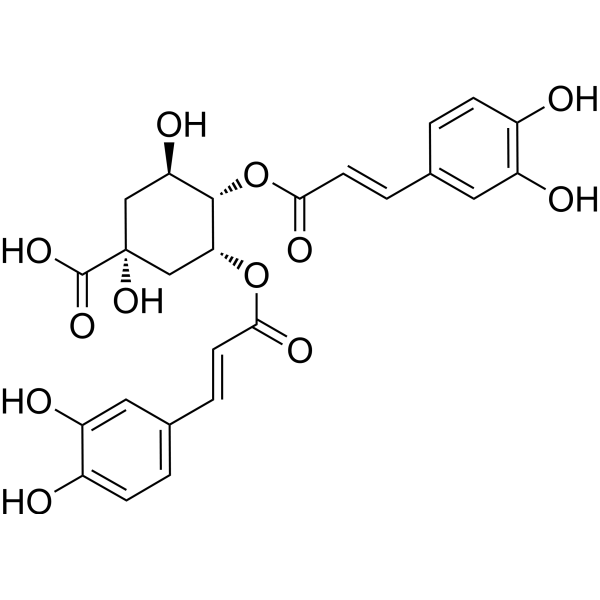
4,5-Di-O-caffeoylquinic acid (4,5-di-O-CQA) is a natural product with multiple activities including anti-inflammatory, antioxidant, and antibacterial properties. 4,5-Di-O-caffeoylquinic acid induces intracellular Ca 2+ influx, and inhibits hypoxia-induced COX-2 expression and cell migration via the TRPV1-mediated pathway. 4,5-Di-O-caffeoylquinic acid scavenges DPPH free radicals, inhibits Cu 2+-mediated LDL oxidation, and reduces the production of TBARS. 4,5-Di-O-caffeoylquinic acid promotes intracellular ATP production, inhibits Aβ42 aggregation and β-sheet conversion, and protects neuroblastoma cells. 4,5-Di-O-caffeoylquinic acid inhibits the growth of Bacillus shigae. 4,5-Di-O-caffeoylquinic acid can be used in studies related to atherosclerosis, Alzheimer's disease, and bacterial infections .
loading...
    loading...
Cat. No.: HY-101064
CAS No.: 35661-60-0
Purity:  99.89%
Synonyms: N-FMOC-leucine; NPC 15199; NSC 334290
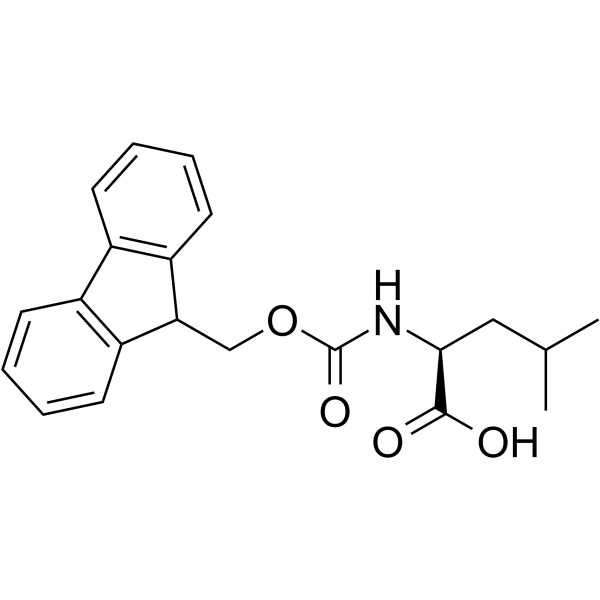
Fmoc-Leucine (N-FMOC-leucine) is an anti-inflammatory agent that not only promotes extracellular Ca 2+ influx but also facilitates intracellular Ca 2+ release. Fmoc-Leucine is a selective ligand for PPARγ (Ki = 15 μM), exhibiting insulin-sensitizing effects but with weak fatogenic activity. Fmoc-Leucine exhibits unique self-assembly properties and can form transient gels, stable gels, or crystals/2D sheets through different pathways. Fmoc-Leucine can be used in the research of diabetes, colitis, and bladder cancer .
loading...
    loading...
Cat. No.: HY-N7875
CAS No.: 116159-73-0
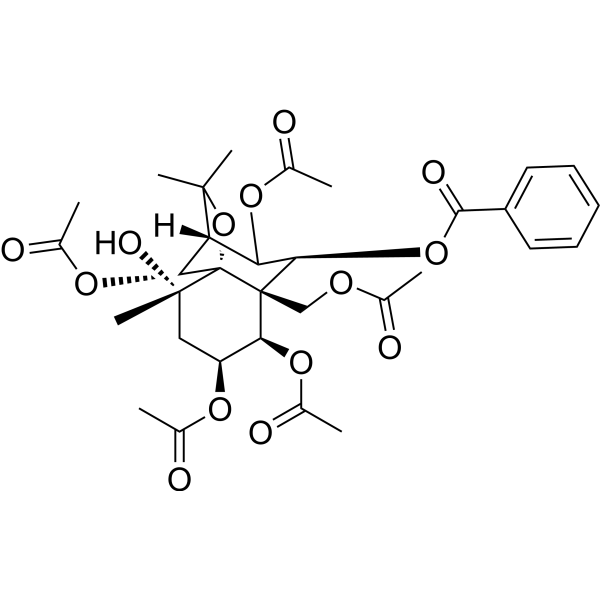
Celangulin is an insecticidal component isolated from Celastrus angulatus. Celangulin activates the calcium channel on the plasma membrane with increasing the intracellular Ca 2+ after influx from the external. Celangulin activates the calcium channel in the ER .
loading...
    loading...
Cat. No.: HY-111198
CAS No.: 887647-69-0
Target:  

Endogenous Metabolite

Research Areas:  

Inflammation/Immunology

YM-355179 fumarate is a newly synthesized selective CCR3 antagonist with the potential to inhibit eosinophil-related allergic inflammatory diseases. YM-355179 can effectively inhibit the binding of CCL11 and CCL5 to CCR3-expressing cells, with IC50 values of 7.6 nM and 24 nM respectively. In functional experiments, YM-355179 can inhibit CCL11-induced intracellular Ca(2+) influx, chemotaxis and eosinophil degranulation, IC50 The values are 8.0 nM, 24 nM and 29 nM respectively .
loading...
    loading...
Cat. No.: HY-121966
CAS No.: 112356-54-4
Purity:  98.00%
Synonyms: Riparin III
Target:  

Calcium Channel

Research Areas:  

Neurological Disease

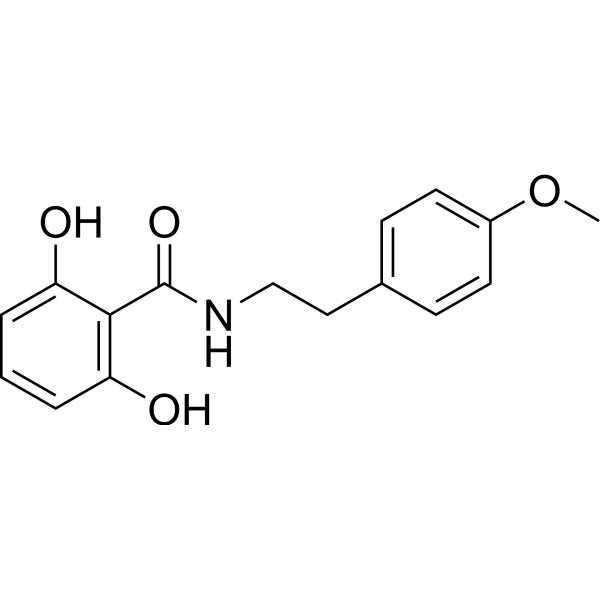
Riparin is a nonspecific smooth muscle relaxant. Riparin exerts spasmolytic effect by inhibiting Ca 2+ influx and inhibiting the release of intracellular calcium ion stores .
loading...
    loading...
Cat. No.: HY-100168R
CAS No.: 85233-19-8
BAPTA (Standard) is the analytical standard of BAPTA. This product is intended for research and analytical applications. BBAPTA is a selective and cell-impermeant chelator for calcium. BAPTA, as calcium indicator, has high selectivity against magnesium and calcium. BAPTA is widely used as an intracellular buffer for investigating the effects of Ca 2+ release from intracellular stores or influx via Ca 2+-permeable channels in the plasma membrane. BAPTA can also inhibit phospholipase C activity independently of their role as Ca 2+ chelators .
loading...
    loading...
Cat. No.: HY-105521A
CAS No.: 94096-42-1
Synonyms: (S)-Nafenodone; LU-43706
Research Areas:  

Neurological Disease

Dexnafenodone hydrochloride ((S)-Nafenodone; LU-43706) is a novel antidepressant candidate molecule that selectively inhibits the norepinephrine synaptosomal uptake transporter. Dexnafenodone hydrochloride inhibits the fast inward Na + current and slow inward Ca 2+ current in cardiomyocytes. Dexnafenodone hydrochloride inhibits voltage-gated and receptor-activated Ca 2+ influx in vascular smooth muscle, depletes norepinephrine-sensitive intracellular Ca 2+ stores, suppresses agonist-stimulated Ca 2+ influx, relaxes precontracted vascular smooth muscle, inhibits spontaneous myogenic activity, and modulates cardiac electrophysiology, exerting negative chronotropic and negative inotropic effects. Dexnafenodone hydrochloride can be used in the research of depression .
loading...
    loading...
Cat. No.: HY-N0724R
CAS No.: 2752-64-9
Mesaconitine (Standard) is the analytical standard of Mesaconitine. This product is intended for research and analytical applications. Mesaconitine is a nitric oxide synthase activator. Mesaconitine drives extracellular Na + and Ca 2+ influx into endothelial cells, increases intracellular Na + and Ca 2+ concentrations, and triggers nitric oxide release. Mesaconitine is applicable for pain-related research .
loading...
    loading...
Cat. No.: HY-100168AR
CAS No.: 126824-24-6
Research Areas:  

Others

BAPTA tetrasodium (Standard) is the analytical standard of BAPTA tetrasodium. This product is intended for research and analytical applications. BAPTA tetrasodium is a selective and cell-impermeant chelator for calcium. BAPTA tetrasodium, as calcium indicator, has high selectivity against magnesium and calcium. BAPTA tetrasodium is widely used as an intracellular buffer for investigating the effects of Ca 2+ release from intracellular stores or influx via Ca 2+-permeable channels in the plasma membrane. BAPTA tetrasodium can also inhibit phospholipase C activity independently of their role as Ca 2+ chelators .
loading...
    loading...
Cat. No.: HY-106837
CAS No.: 117279-73-9
Synonyms: Y 24180
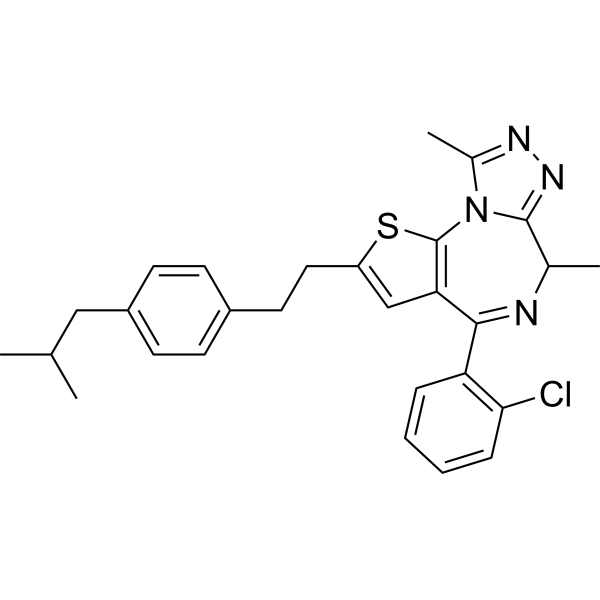
Israpafant (Y-24180) is a potent, selective and long-acting platelet activation factor (PAF) receptor antagonist with IC50s of 0.84 nM and 3.84 nM against PAF-induced human and rabbit platelet aggregation, respectively. Israpafant stimulates both extracellular Ca 2+ influx and intracellular Ca 2+ release in prostate cancer cells. Israpafant suppresses the allergic cutaneous reactions including eosinophilia, cytokine production, edema and erythema in mice .
loading...
    loading...
Cat. No.: HY-13764A
CAS No.: 23495-89-8
dl-Tetrandrine is an orally active and brain-penetrant calcium channel blocker that inhibits voltage-dependent calcium channels. dl-Tetrandrine selectively blocks Ca 2+ influx with an IC50 value of approximately 1-10 μM. dl-Tetrandrine exerts anti-inflammatory, immunosuppressive, and anti-arrhythmic activities by inhibiting intracellular calcium overload, and can reverse multidrug resistance in tumor cells. dl-Tetrandrine is promising for research of autoimmune diseases (such as rheumatoid arthritis), cardiovascular diseases, and tumor drug resistance reversal .
loading...
    loading...
Cat. No.: HY-E71616
Research Areas:  

Others

2'-Phospho-ADP-ribosyl cyclase/2'-phospho-cyclic-ADP-ribose transferase (EC 2.4.99.20) catalyses both the removal of nicotinamide from NADP+, forming 2'-phospho-cyclic ADP-ribose, and the addition of nicotinate to the cyclic product, forming NAADP+, a calcium messenger that can mobilize intracellular Ca2+ stores and activate Ca2+ influx to regulate a wide range of physiological processes.
loading...
    loading...
Cat. No.: HY-19608R
CAS No.: 942206-85-1
GSK1016790A (Standard) is the analytical standard of GSK1016790A (HY-19608). This product is intended for research and analytical applications. GSK1016790A is a potent and selective transient receptor potential vanilloid 4 (TRPV4) channel agonist. GSK1016790A can elicit Ca 2+ influx and elevate intracellular Ca 2+ in HEK cells .
loading...
    loading...
Cat. No.: HY-105521
CAS No.: 92629-87-3
Synonyms: (S)-Nafenodone free base; LU-43706 free base
Research Areas:  

Neurological Disease

Dexnafenodone ((S)-Nafenodone free base; LU-43706 free base) is a novel antidepressant candidate molecule that selectively inhibits the norepinephrine synaptosomal uptake transporter. Dexnafenodone inhibits the fast inward Na + current and slow inward Ca 2+ current in cardiomyocytes. Dexnafenodone inhibits voltage-gated and receptor-activated Ca 2+ influx in vascular smooth muscle, depletes norepinephrine-sensitive intracellular Ca 2+ stores, suppresses agonist-stimulated Ca 2+ influx, relaxes precontracted vascular smooth muscle, inhibits spontaneous myogenic activity, and modulates cardiac electrophysiology, exerting negative chronotropic and negative inotropic effects. Dexnafenodone can be used in the research of depression .
loading...
    loading...
Cat. No.: HY-100168BR
CAS No.: 73630-08-7
BAPTA tetrapotassium (Standard) is the analytical standard of BAPTA tetrapotassium (HY-100168B). This product is intended for research and analytical applications. BAPTA tetrapotassium is a selective and cell-impermeant chelator for calcium. BAPTA tetrapotassium, as calcium indicator, has high selectivity against magnesium and calcium. BAPTA tetrapotassium is widely used as an intracellular buffer for investigating the effects of Ca 2+ release from intracellular stores or influx via Ca 2+-permeable channels in the plasma membrane. BAPTA tetrapotassium can also inhibit phospholipase C activity independently of their role as Ca 2+ chelators .
loading...
    loading...
Cat. No.: HY-184055
CAS No.: 2643356-08-3
Target:  

iGluR

Research Areas:  

Neurological Disease

NMDA receptor antagonist-12 (Example 17) is an antagonist of NMDA receptors containing the NR2B subunit. NMDA receptor antagonist-12 exerts antagonistic effects on NMDA receptors containing the NR2B subunit and blocks the intracellular Ca 2+ influx mediated by these receptors. NMDA receptor antagonist-12 can be used in research related to diseases such as depression, bipolar disorder, migraine, and pain .
loading...
    loading...
  • 1

