13 Results for "

leaf tissue

" in MedChemExpress (MCE) Product Catalog:
Products (13)

13 Results for "leaf tissue" in MCE Product Catalog:

Cat. No.: HY-Y0332B
CAS No.: 7778-77-0
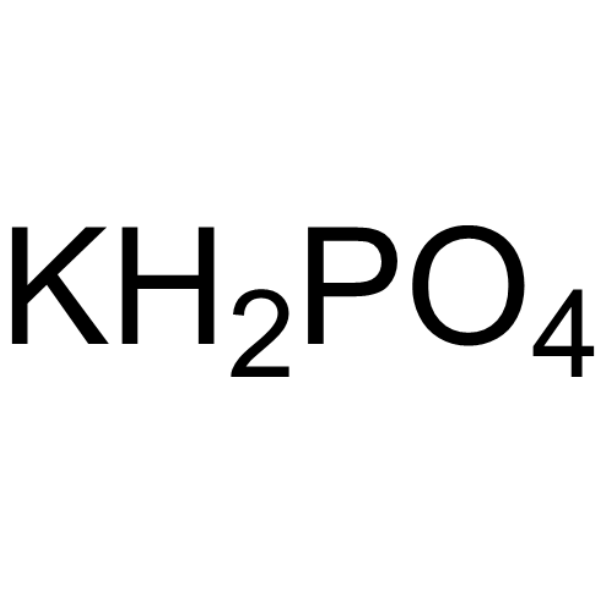
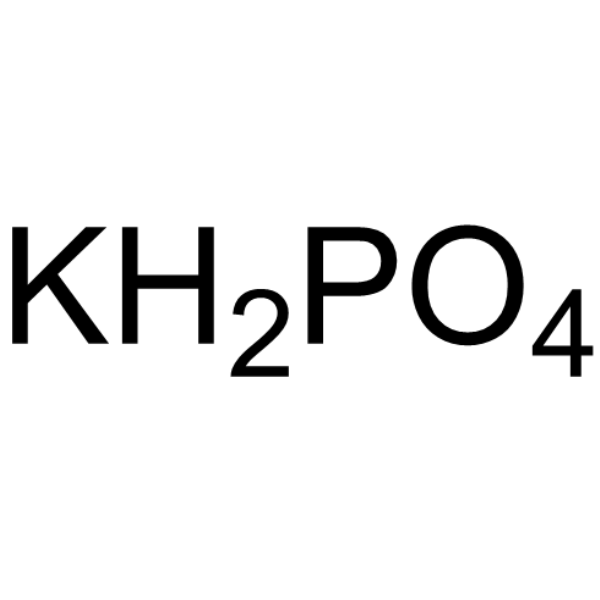
Potassium dihydrogen phosphate, AR,99.5% is a potassium salt. Potassium dihydrogen phosphate, AR,99.5% activates NF-κB. Potassium dihydrogen phosphate, AR,99.5% upregulates the expression of dental/osteogenic markers (OCN, DSP/DSPP, OSX, RUNX2, ALP) and enhances the mineralization capacity of human periodontal ligament stem cells. Potassium dihydrogen phosphate, AR,99.5% promotes the proliferation of human periodontal ligament stem cells in logarithmic growth phase. Potassium dihydrogen phosphate, AR,99.5% promotes the growth of somatic embryos of Dendrobium Sonia, increases leaf number, leaf length and fresh weight of tissue-cultured seedlings. Potassium dihydrogen phosphate, AR,99.5% is applicable to periodontal disease-related research .
loading...
    loading...
Cat. No.: HY-Y0332K
CAS No.: 7778-77-0
Synonyms: Potassium phosphate monobasic, for cell culture
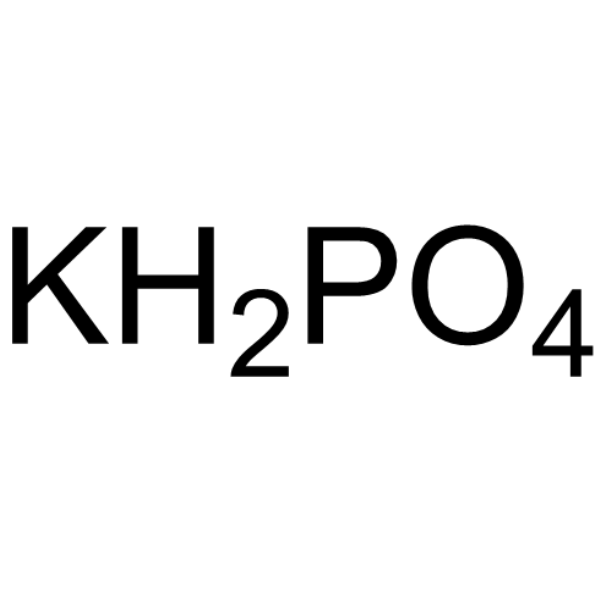
Potassium dihydrogen phosphate, for cell culture (Potassium phosphate monobasic, for cell culture) is a cell culture reagent. Potassium dihydrogen phosphate, for cell culture activates NF-κB. Potassium dihydrogen phosphate, for cell culture upregulates the expression of dental/osteogenic markers (OCN, DSP/DSPP, OSX, RUNX2, ALP) and enhances the mineralization capacity of human periodontal ligament stem cells. Potassium dihydrogen phosphate, for cell culture promotes the proliferation of human periodontal ligament stem cells in logarithmic growth phase. Potassium dihydrogen phosphate, for cell culture promotes the growth of somatic embryos of Dendrobium Sonia, increases leaf number, leaf length and fresh weight of tissue-cultured seedlings. Potassium dihydrogen phosphate, for cell culture is applicable to periodontal disease-related research .
loading...
    loading...
Cat. No.: HY-Y0332G
CAS No.: 7778-77-0
Synonyms: Potassium phosphate monobasic, for molecular biology
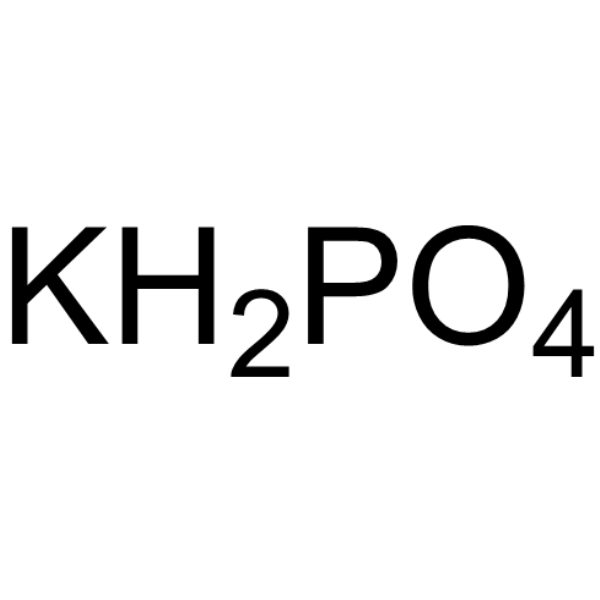
Potassium dihydrogen phosphate, for molecular biology (Potassium phosphate monobasic, for molecular biology) is a potassium salt. Potassium dihydrogen phosphate, for molecular biology activates NF-κB. Potassium dihydrogen phosphate, for molecular biology upregulates the expression of dental/osteogenic markers (OCN, DSP/DSPP, OSX, RUNX2, ALP) and enhances the mineralization capacity of human periodontal ligament stem cells. Potassium dihydrogen phosphate, for molecular biology promotes the proliferation of human periodontal ligament stem cells in logarithmic growth phase. Potassium dihydrogen phosphate, for molecular biology promotes the growth of somatic embryos of Dendrobium Sonia, increases leaf number, leaf length and fresh weight of tissue-cultured seedlings. Potassium dihydrogen phosphate, for molecular biology is applicable to periodontal disease-related research .
loading...
    loading...
Cat. No.: HY-Y0332L
CAS No.: 7778-77-0
Synonyms: Potassium phosphate monobasic, meets analytical specification of Ph. Eur., NF, E340
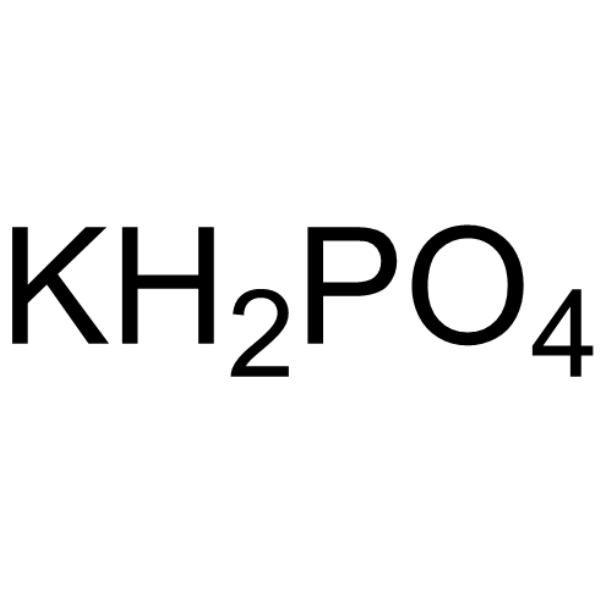
Potassium dihydrogen phosphate, meets analytical specification of Ph. Eur., NF, E340 (Potassium phosphate monobasic, meets analytical specification of Ph. Eur., NF, E340) is a potassium salt. Potassium dihydrogen phosphate, meets analytical specification of Ph. Eur., NF, E340 activates NF-κB. Potassium dihydrogen phosphate, meets analytical specification of Ph. Eur., NF, E340 upregulates the expression of dental/osteogenic markers (OCN, DSP/DSPP, OSX, RUNX2, ALP) and enhances the mineralization capacity of human periodontal ligament stem cells. Potassium dihydrogen phosphate, meets analytical specification of Ph. Eur., NF, E340 promotes the proliferation of human periodontal ligament stem cells in logarithmic growth phase. Potassium dihydrogen phosphate, meets analytical specification of Ph. Eur., NF, E340 promotes the growth of somatic embryos of Dendrobium Sonia, increases leaf number, leaf length and fresh weight of tissue-cultured seedlings. Potassium dihydrogen phosphate, meets analytical specification of Ph. Eur., NF, E340 is applicable to periodontal disease-related research .
loading...
    loading...
Cat. No.: HY-E70425
CAS No.: 9030-05-1
Target:  

Glycosyltransferase

Research Areas:  

Metabolic Disease

Sucrose synthase belongs to glycosyltransferases and is a reversible catalyst present in plants, which catalyzes the conversion of sucrose into fructose and UDP-G or ADP-G. Sucrose synthase localizes to the cytoplasm, plasma membrane, cell wall, vacuole and mitochondria of plants. Sucrose synthase regulates sugar metabolism, supports the development of taproots, fruits, seeds and vascular tissues, drives the synthesis of starch, cellulose and callose, and enhances nitrogen fixation capacity. Sucrose synthase mediates signal transduction in plant meristems. Sucrose synthase is associated with plant growth, anaerobic stress tolerance, as well as shoot apical meristem and leaf morphology; overexpression of this enzyme promotes plant growth, increases xylem size, and elevates cellulose and starch contents .
loading...
    loading...
Cat. No.: HY-129529
CAS No.: 54300-65-1
Purity:  99.25%
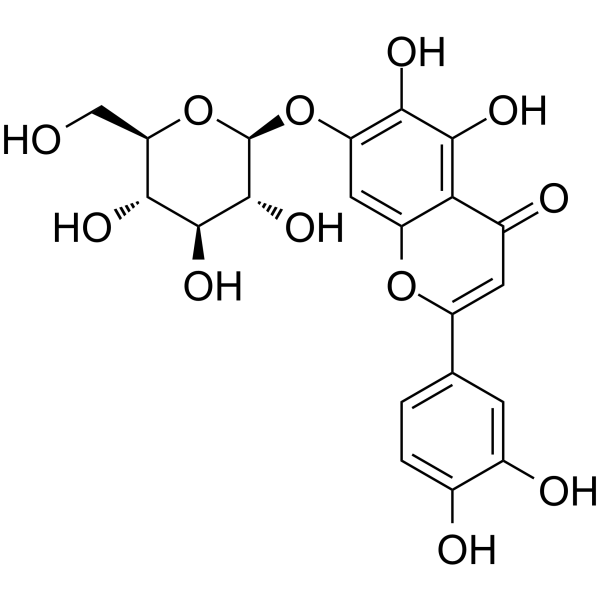
6-Hydroxyluteolin 7-glucoside is a flavone glycoside that can be found in the disc flowers of Tanacetum vulgare .
loading...
    loading...
Cat. No.: HY-Y0332J
CAS No.: 7778-77-0
Synonyms: Potassium phosphate monobasic (Pharmaceutical primary standard, USP)
Potassium dihydrogen phosphate, United States Pharmacopeia (USP) Reference Standard (Potassium phosphate monobasic (Pharmaceutical primary standard, USP)) is a potassium salt. Potassium dihydrogen phosphate, United States Pharmacopeia (USP) Reference Standard activates NF-κB. Potassium dihydrogen phosphate, United States Pharmacopeia (USP) Reference Standard upregulates the expression of dental/osteogenic markers (OCN, DSP/DSPP, OSX, RUNX2, ALP) and enhances the mineralization capacity of human periodontal ligament stem cells. Potassium dihydrogen phosphate, United States Pharmacopeia (USP) Reference Standard promotes the proliferation of human periodontal ligament stem cells in logarithmic growth phase. Potassium dihydrogen phosphate, United States Pharmacopeia (USP) Reference Standard promotes the growth of somatic embryos of Dendrobium Sonia, increases leaf number, leaf length and fresh weight of tissue-cultured seedlings. Potassium dihydrogen phosphate, United States Pharmacopeia (USP) Reference Standard is applicable to periodontal disease-related research .
loading...
    loading...
Cat. No.: HY-K0539

MCE Plant Tissue Direct PCR Kit (with Dye) is specifically designed for direct amplification from various plant leaf samples. The kit enables rapid release of genomic DNA from plant tissues (such as rice, maize, tobacco, rapeseed, etc.) in a single step. The resulting lysate can be directly used for downstream PCR amplification without the need for conventional DNA extraction and purification, thereby significantly simplifying the experimental workflow.

loading...
    loading...
Cat. No.: HY-N17531
CAS No.: 165395-34-6
4-(β-D-Glucopyranosyloxy) benzenepropanoic acid is a phenolic acid glycoside natural product, which has an O-β-D-glucoside structure formed by a phenylpropanoic acid derivative and glucose .
loading...
    loading...
Cat. No.: HY-N19952
CAS No.: 33049-17-1
Glucohesperin is a glucosinolate compound that can be isolated from cruciferous plants. Hydrolysis products of Glucohesperin in plants, such as isothiocyanates, exhibit potent insecticidal, anthelmintic and antibacterial activities .
loading...
    loading...
Cat. No.: HY-N18435
CAS No.: 6649-76-9
Komaroidine is a bactericidal agent. Komaroidine induces reactive oxygen species (ROS) bursts in bacterial cells, disrupts antioxidant enzyme function and redox homeostasis, increases membrane permeability, and triggers bacterial apoptosis. Komaroidine suppresses bacterial burden within infected plant tissues.Komaroidine exhibits broad-spectrum antibacterial activity against phytopathogenic bacteria including Xanthomonas oryzae pv. oryzae, Xanthomonas axonopodis pv. citri, and Pseudomonas syringae pv. actinidiae. Komaroidine can be used for the research of rice bacterial leaf blight .
loading...
    loading...
Cat. No.: HY-N17580
CAS No.: 150415-40-0
Lyciumin D acts as an angiotensin-converting enzyme inhibitor and renin inhibitor. Lyciumin D can be used for the research of hypertension .
loading...
    loading...
Cat. No.: HY-DY2041
Target:  

Fluorescent Dye

Research Areas:  

Infection

Callose Staining Solution (Aniline Blue, Bright-Field Method) is a fluorescent dye used for detecting callose in plant tissues, green algal cell walls, plant cells, and protoplasts. Callose Staining Solution (Aniline Blue, Bright-Field Method) specifically binds to callose, a β-(1,3)-D-glucan polymer, and exhibits blue-green fluorescence under alkaline conditions with reduced background staining and non-toxicity to living cells. Callose Staining Solution (Aniline Blue, Bright-Field Method) is suitable for observation under UV or epifluorescence microscopy (Ex/Em = 365-370/397-509 nm). Callose Staining Solution (Aniline Blue, Bright-Field Method) can be used in studies related to the visualization of callose deposition in plants .
loading...
    loading...
  • 1

