
1. Search Result
Search Result
Results for "

lipid composition

" in MedChemExpress (MCE) Product Catalog:

24

Inhibitors & Agonists

1

Screening Libraries

4

Biochemical Assay Reagents

3

Peptides

1

MCE Kits

4

Natural
Products

4

Isotope-Labeled Compounds

6

Oligonucleotides

Cat. No. Product Name Target Research Areas Chemical Structure
  • HY-W591381

    DSG-PEG2000 2000

    Liposome Others
    DSG-PEG2000 (DSG-PEG2000 2000) is a type of polyethylene glycol grease. DSG-PEG2000 can be used to prepare liposomes [2].
    DSG-PEG2000
  • HY-143712
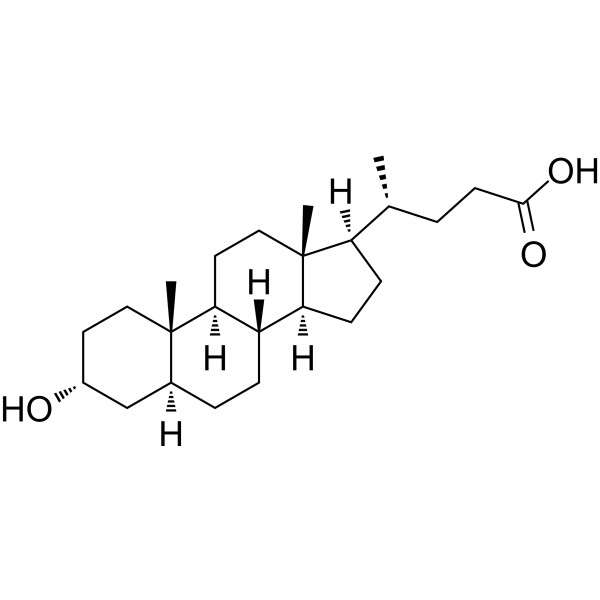
    Allolithocholic acid
    1 Publications Verification

    Drug Metabolite G protein-coupled Bile Acid Receptor 1 ROR Metabolic Disease Inflammation/Immunology Cancer
    Allolithocholic acid is an orally active metabolite of Lithocholic acid (HY-B0172). Allolithocholic acid is a dual GPBAR1 agonist (EC50 = 2.7 μM) and RORγt inverse agonist (IC50 = 3.4 μM). Allolithocholic acid modulates immune and metabolic pathways, regulates immune cell polarization, prevents M1 macrophage and Th17 CD4 cell polarization. Allolithocholic acid improves insulin sensitivity, reduces liver lipid accumulation, reverses liver immunological, inflammatory and metabolic signaling dysregulation, restores bile acid homeostasis, adipose tissue histopathology/function, and intestinal microbiota composition, modulates intestinal immunity. Allolithocholic acid can be used for the researches of cancer, inflammayion, immunology and metabolic disease .
    Allolithocholic acid
  • HY-W127499

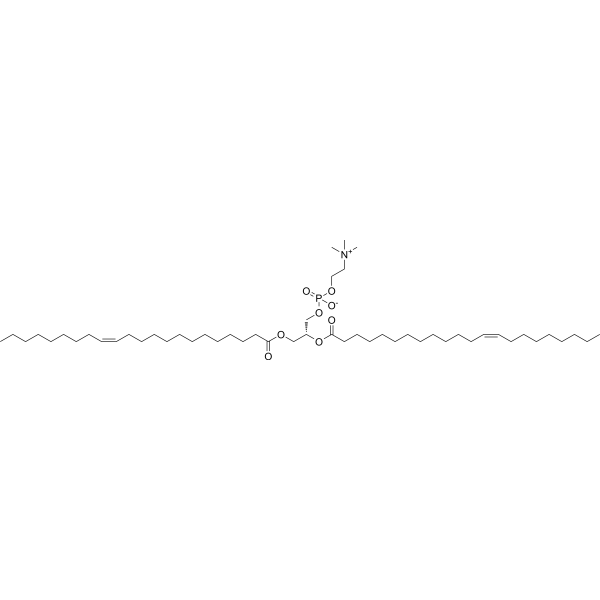
    DEPC; L-Dierucoyl lecithin; Dierucoyllecithin

    Liposome Others
    1,2-Dierucoyl-sn-glycero-3-phosphocholine (DEPC) is the composition of liposome membrane. 1,2-Dierucoyl-sn-glycero-3-phosphocholine is used for the preparation of liposomes and studying the properties of lipid bilayers. The GO (glucose oxidase) in the 1,2-Dierucoyl-sn-glycero-3-phosphocholine liposome shows the high activity .
    1,2-Dierucoyl-sn-glycero-3-phosphocholine
  • HY-B1018A
    Phenelzine sulfate
    5+ Cited Publications

    Monoamine Oxidase GABA Receptor Histone Demethylase Cardiovascular Disease Neurological Disease Metabolic Disease Inflammation/Immunology Cancer
    Phenelzine sulfate, an antidepressant agent, is an irreversible and orally active monoamine oxidase (MAO-A and MAO-B) inhibitor. Phenelzine sulfate inhibits GABA transaminase and primary amine oxidase (PrAO), and sequester reactive aldehydes. Phenelzine sulfate also inhibits LSD1 (Ki: 5.6 μM) and suppresses oxidative stress and lipogenesis. Phenelzine sulfate elevates neurotransmitters (serotonin, norepinephrine, dopamine). Phenelzine sulfate is studied in neurological, metabolic and cancer diseases for depression and anxiety disorders, stroke, spinal cord injury, traumatic brain injury, multiple sclerosis, Parkinson’s disease, Alzheimer’s disease, inflammatory pain, obesity and prostate cancer .
    Phenelzine sulfate
  • HY-N3686

    AMPK PGC-1α Metabolic Disease
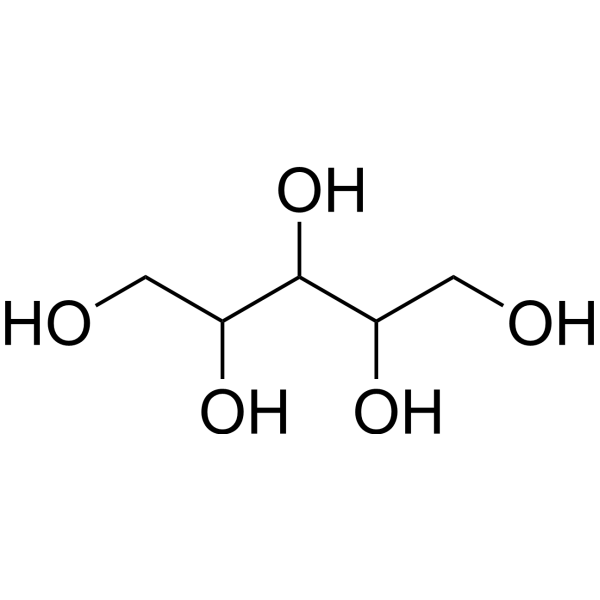
    D-Arabitol is an orally active D-enantiomer of arabitol. D-Arabitol modulates the composition of gut microbiota, increases short-chain fatty acids, and promotes AMPK-PGC-1α-related browning of white adipose tissue. D-Arabitol improves weight gain, fat accumulation, insulin resistance, lipid deposition and inflammatory responses. D-Arabitol serves as the sole carbon/energy source for Bacillus methanolicus MGA3, a strain that can co-utilize it with mannitol. D-Arabitol is applicable to obesity-related research .
    D-Arabitol
  • HY-160912

    ELOVL Metabolic Disease
    ELOVL6-IN-5 is an orally active and selective elongase enzyme of long-chain fatty acid family 6 (ELOVL6) inhibitor with IC50 values of 85 nM and 38 nM for human and mouse ELOVL6, respectively. ELOVL6-IN-5 shows >60-fold selectivity over other ELOVL family enzymes (ELOVL1, 2, 3, 5) and no effect on other lipid synthesis enzymes like ACC1, ACC2. ELOVL6-IN-5 reduces hepatic fatty acid composition ratio of C18 to C16 in diet-induced obesity (DIO) and KKAy mice. ELOVL6 inhibition by ELOVL6-IN-5 does not improve insulin resistance. ELOVL6-IN-5 can be used for the research of metabolic disease .
    ELOVL6-IN-5
  • HY-D1056E

    LPS, from Pseudomonas aeruginosa (10)

    Toll-like Receptor (TLR) Inflammation/Immunology
    Lipopolysaccharides from P. aeruginosa (Pseudomonas aeruginosa) 10 are lipopolysaccharide endotoxins and TLR4 activators derived from Pseudomonas aeruginosa 10, and are classified as S-type LPS. Lipopolysaccharides from P. aeruginosa 10 exhibit a typical three-part structure: O-antigen, core oligosaccharide, and lipid A. The lipopolysaccharides of P. aeruginosa 10 have a fatty acid composition distinct from common enterobacteria, an exceptionally high degree of phosphorylation (triphosphate residues have been detected), and a unique outer region of the core oligosaccharide. Additionally, their O-specific side chains are typically rich in novel aminosugars. Lipopolysaccharides from P. aeruginosa 10 demonstrate susceptibility to viruses, with the level of susceptibility determined by the content of high molecular weight polysaccharides in their composition. The absence of high molecular weight polysaccharides increases their sensitivity to bacteriophages .
    It is recommended to prepare a solution with concentration ≥2 mg/mL. Vortex thoroughly for more than 10 minutes. Due to the adsorption characteristics of LPS, silanized container or low adsorption centrifuge tubes should be used for aliquoting and storage, and mix thoroughly before use.
    Lipopolysaccharides, from P. aeruginosa 10
  • HY-P10471A

    MARCKS-ED TFA

    MARCKS PKC Others
    MPSD TFA (MARCKS-ED TFA) is the TFA salt form of MPSD (HY-P10471). MPSD TFA is a 25-amino acid peptide based on the effector domain sequence of the intracellular membrane protein myristoylated alanine-rich C-kinase substrate (MARCKS). MPSD TFA can sense membrane curvature and recognize phosphatidylserine. MPSD TFA can be utilized as biological probe to study membrane shape and lipid composition .
    MPSD TFA
  • HY-N3686R

    Reference Standards AMPK PGC-1α Metabolic Disease
    D-Arabitol (Standard) is the analytical standard of D-Arabitol. This product is intended for research and analytical applications. D-Arabitol is an orally active D-enantiomer of arabitol. D-Arabitol modulates the composition of gut microbiota, increases short-chain fatty acids, and promotes AMPK-PGC-1α-related browning of white adipose tissue. D-Arabitol improves weight gain, fat accumulation, insulin resistance, lipid deposition and inflammatory responses. D-Arabitol serves as the sole carbon/energy source for Bacillus methanolicus MGA3, a strain that can co-utilize it with mannitol. D-Arabitol is applicable to obesity-related research.
    D-Arabitol (Standard)
  • HY-153187

    Liposome Others
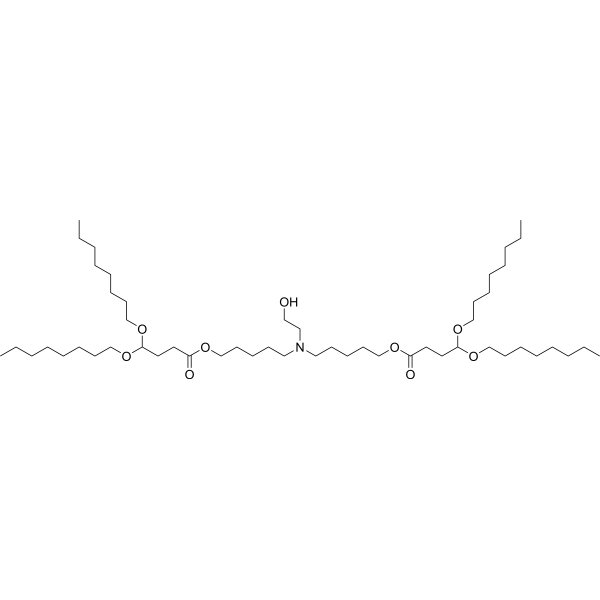
    LNP Lipid-4 (Compound 8-8) is a lipid compound. LNP Lipid-4 is involved in the synthesis of lipid nanoparticles compositions. LNP Lipid-4 has potential applications in the transportation of biologically active substances .
    LNP Lipid-4
  • HY-153136

    Liposome Others
    LNP Lipid-1 (Method B) is a lipid compound. LNP Lipid-1 is involved in the synthesis of lipid nanoparticles compositions. LNP Lipid-1 has potential applications in the transport of biologically active substances such as small molecule agents, proteins, and nucleic acids .
    LNP Lipid-1
  • HY-171905

    Liposome Others
    N-Sterol is a sterol lipid that has been used to generate lipid nanoparticles (LNPs) for delivery of mRNA in vitro and in vivo. N-Sterol LNPs are taken up in J774A.1 macrophages in a lipid composition-dependent manner via clathrin caveolae, caveolin-mediated endocytosis, micropinocytosis, or phagocytosis at different frequencies .
    N-Sterol
  • HY-165104

    GuCGp; Gulopyranosyl-(β1-1)-caldarchaetidylglycerol

    Bacterial Others
    β-L-Gulopyranosyl-caldarchaetidyl-glycerol (GuCGp) is a compound that is studied in the polar lipid composition of thermoacidophilic bacteria. Its content varies under different culture conditions, which may be related to the adaptation of bacteria to the environment.
    β-L-Gulopyranosyl-caldarchaetidyl-glycerol
  • HY-P10471

    MARCKS-ED

    MARCKS PKC Others
    MPSD (MARCKS-ED) is a 25-amino acid peptide based on the effector domain sequence of the intracellular membrane protein myristoylated alanine-rich C-kinase substrate (MARCKS). MPSD can sense membrane curvature and recognize phosphatidylserine. MPSD can be utilized as biological probe to study membrane shape and lipid composition .
    MPSD
  • HY-B2078

    Neurokinin Receptor Inflammation/Immunology
    Eprazinone can enhance lung function and arterial oxygen levels and can be used in the study of chronic bronchitis. Higher doses of eprazinone increased phospholipid levels and decreased neutral lipid content in bronchoalveolar lavage (BAL) fluid, but had no effect on protein and cell levels in BAL. Eprazinone dose-dependently reduced short-circuit current (Isc), primarily by reducing chloride secretion at lower concentrations and affecting sodium and chloride transport at higher doses. Eprazinone may exert its anti-inflammatory effects by regulating BAL lipid composition and airway ion transport .
    Eprazinone
  • HY-P10471D

    MARCKS-ED control peptide

    MARCKS PKC Others
    MPSD control peptide (MARCKS-ED control peptide) is a control peptide for MPSD peptide (HY-P10471). MPSD (MARCKS-ED) is a 25-amino acid peptide based on the effector domain sequence of the intracellular membrane protein myristoylated alanine-rich C-kinase substrate (MARCKS). MPSD can sense membrane curvature and recognize phosphatidylserine. MPSD can be utilized as biological probe to study membrane shape and lipid composition .
    MPSD control peptide
  • HY-143712S1

    3α-hydoxy-5α-Cholaoic Acid-d4, allo-LCA-d4

    Isotope-Labeled Compounds Drug Metabolite G protein-coupled Bile Acid Receptor 1 ROR Metabolic Disease Inflammation/Immunology Cancer
    Allolithocholic Acid-d4 (3α-hydoxy-5α-Cholaoic Acid-d4, allo-LCA-d4) is deuterium labeled Allolithocholic acid (HY-143712). Allolithocholic acid is an orally active metabolite of Lithocholic acid (HY-B0172). Allolithocholic acid is a dual GPBAR1 agonist (EC50 = 2.7 μM) and RORγt inverse agonist (IC50 = 3.4 μM). Allolithocholic acid modulates immune and metabolic pathways, regulates immune cell polarization, prevents M1 macrophage and Th17 CD4 cell polarization. Allolithocholic acid improves insulin sensitivity, reduces liver lipid accumulation, reverses liver immunological, inflammatory and metabolic signaling dysregulation, restores bile acid homeostasis, adipose tissue histopathology/function, and intestinal microbiota composition, modulates intestinal immunity. Allolithocholic acid can be used for the researches of cancer, inflammayion, immunology and metabolic disease .
    Allolithocholic Acid-d4
  • HY-139784

    (R)-2-Hydroxyoleic acid; (R)-2-OHOA; (R)-LAM561

    Endogenous Metabolite Cancer
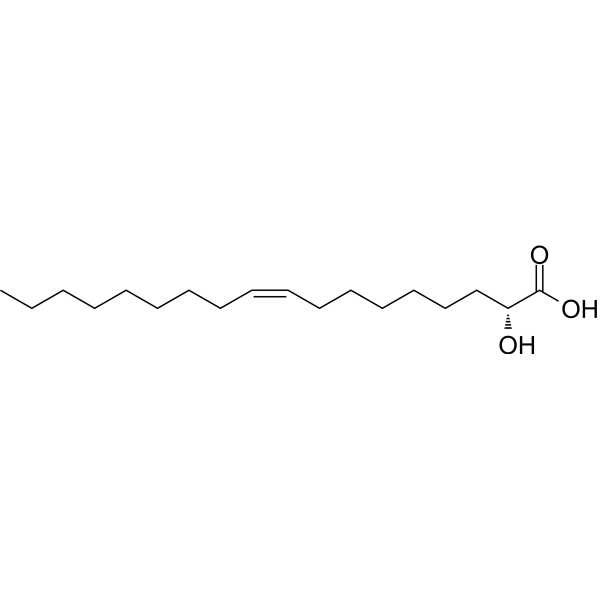
    Idroxioleic acid ((R)-2-Hydroxyoleic acid; (R)-2-OHOA), the R enantiomer of (Rac)-Idroxioleic acid, is an orally active fatty acid that modulates the lipid composition and structure of the membranes. Idroxioleic acid has antitumor activities .
    Idroxioleic acid
  • HY-118146

    Others Metabolic Disease
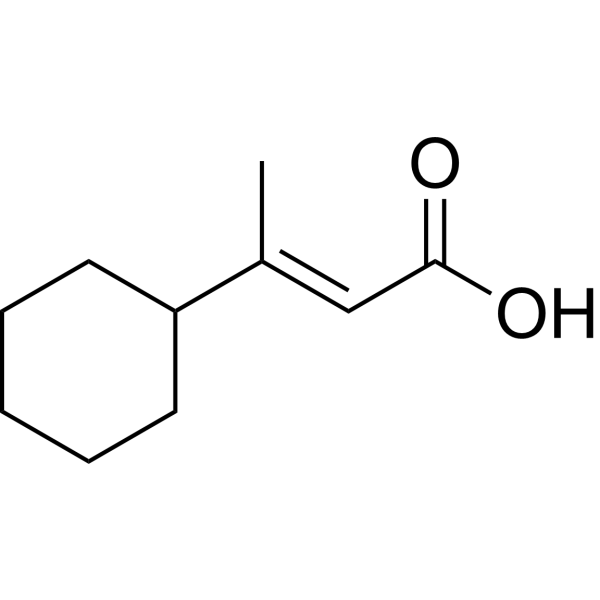
    Cicrotoic acid is an unsaturated fatty acid that increases bile flow and changes lipid composition .
    Cicrotoic acid
  • HY-145502

    Biochemical Assay Reagents Others
    1,2-Dipalmitoyl-sn-glycero-3-PE-N-(cap biotin) sodium is used in the composition of lipid vesicles for supported lipid bilayer (SLB) formation. 1,2-Dipalmitoyl-sn-glycero-3-PE-N-(cap biotin) sodium can be used as a probe for understanding the interactions between proteins and lipid-tethered ligands .
    1,2-Dipalmitoyl-sn-glycero-3-PE-N-(cap biotin) sodium
  • HY-N3686S

    Isotope-Labeled Compounds AMPK PGC-1α Metabolic Disease
    D-Arabitol- 13C is the 13C labeled D-Arabitol. D-Arabitol is an orally active D-enantiomer of arabitol. D-Arabitol modulates the composition of gut microbiota, increases short-chain fatty acids, and promotes AMPK-PGC-1α-related browning of white adipose tissue. D-Arabitol improves weight gain, fat accumulation, insulin resistance, lipid deposition and inflammatory responses. D-Arabitol serves as the sole carbon/energy source for Bacillus methanolicus MGA3, a strain that can co-utilize it with mannitol. D-Arabitol is applicable to obesity-related research.
    D-Arabitol-13C
  • HY-N3686S1

    Isotope-Labeled Compounds AMPK PGC-1α Metabolic Disease
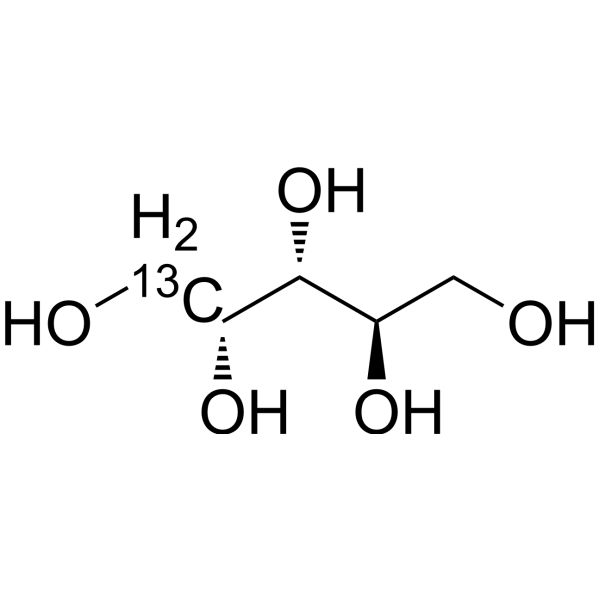
    D-Arabitol- 13C-1 is the 13C labeled D-Arabitol. D-Arabitol is an orally active D-enantiomer of arabitol. D-Arabitol modulates the composition of gut microbiota, increases short-chain fatty acids, and promotes AMPK-PGC-1α-related browning of white adipose tissue. D-Arabitol improves weight gain, fat accumulation, insulin resistance, lipid deposition and inflammatory responses. D-Arabitol serves as the sole carbon/energy source for Bacillus methanolicus MGA3, a strain that can co-utilize it with mannitol. D-Arabitol is applicable to obesity-related research.
    D-Arabitol-13C-1
  • HY-N3686S2

    Isotope-Labeled Compounds AMPK PGC-1α Metabolic Disease
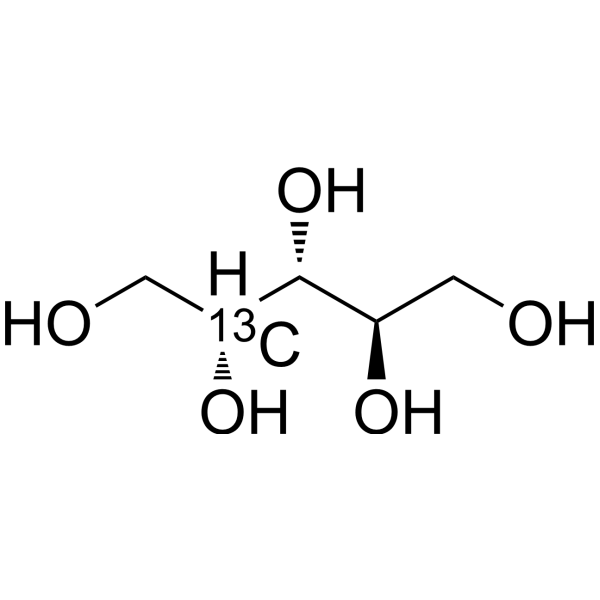
    D-Arabitol- 13C-2 is the 13C labeled D-Arabitol. D-Arabitol is an orally active D-enantiomer of arabitol. D-Arabitol modulates the composition of gut microbiota, increases short-chain fatty acids, and promotes AMPK-PGC-1α-related browning of white adipose tissue. D-Arabitol improves weight gain, fat accumulation, insulin resistance, lipid deposition and inflammatory responses. D-Arabitol serves as the sole carbon/energy source for Bacillus methanolicus MGA3, a strain that can co-utilize it with mannitol. D-Arabitol is applicable to obesity-related research.
    D-Arabitol-13C-2
  • HY-143712R

    Reference Standards Drug Metabolite G protein-coupled Bile Acid Receptor 1 ROR Metabolic Disease Inflammation/Immunology Cancer
    Allolithocholic acid (Standard) is the analytical standard of Allolithocholic acid (HY-143712). This product is intended for research and analytical applications. Allolithocholic acid is an orally active metabolite of Lithocholic acid (HY-B0172). Allolithocholic acid is a dual GPBAR1 agonist (EC50 = 2.7 μM) and RORγt inverse agonist (IC50 = 3.4 μM). Allolithocholic acid modulates immune and metabolic pathways, regulates immune cell polarization, prevents M1 macrophage and Th17 CD4 cell polarization. Allolithocholic acid improves insulin sensitivity, reduces liver lipid accumulation, reverses liver immunological, inflammatory and metabolic signaling dysregulation, restores bile acid homeostasis, adipose tissue histopathology/function, and intestinal microbiota composition, modulates intestinal immunity. Allolithocholic acid can be used for the researches of cancer, inflammayion, immunology and metabolic disease .
    Allolithocholic acid (Standard)

Inquiry Online

Your information is safe with us. * Required Fields.

Salutation


Country or Region *

Applicant Name *


Organization Name *

Department *


Email Address *


Product Name *

Cat. No.


Requested quantity *

Phone Number *


Remarks

Inquiry Online

Inquiry Information

Product Name:
Cat. No.:
Quantity:
MCE Japan Authorized Agent:

