19 Results for "

liver fibrosis mouse models

" in MedChemExpress (MCE) Product Catalog:
Products (19)

19 Results for "liver fibrosis mouse models" in MCE Product Catalog:

  • Categories Recommended:
    More
Cat. No.: HY-47888
CAS No.: 2408065-32-5
Target:  

Integrin

Research Areas:  

Inflammation/Immunology

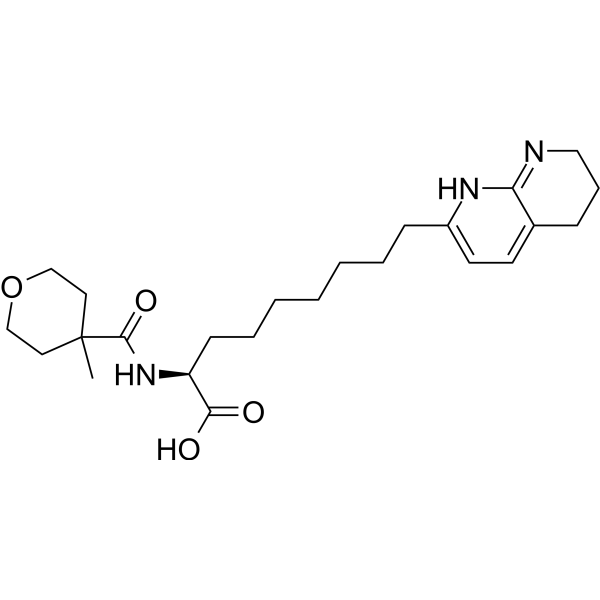
PLN-1474 (compound 1) is an orally active and selective ανβ1 integrin inhibitor with an IC50 value of <50 nM. PLN-1474 reduces levels of pSMAD3/SMAD3 in liver, hepatic collagen gene expression and hepatic OHP concentration in liver fibrosis mouse model. PLN-1474 can be used for the research of preventing, delaying or researching a fibrotic or cirrhotic disease or disorder.
loading...
    loading...
Cat. No.: HY-P11208C
Target:  

GABA Receptor

Research Areas:  

Inflammation/Immunology

mNLS-CPP-WSTF TFA is the trifluoroacetate salt of mNLS-CPP-WSTF (HY-P11208). mNLS-CPP-WSTF is a nuclear localization signal (NLS)-cell-penetrating peptide based on the mouse WSTF sequence. mNLS-CPP-WSTF significantly inhibits the GABARAP-WSTF interaction, WSTF degradation and inflammatory gene expression. mNLS-CPP-WSTF effectively attenuates chronic inflammation, liver fibrosis and cartilage damage in metabolic-dysfunction-associated steatohepatitis (MASH) and osteoarthritis (OA) mice model. mNLS-CPP-WSTF is promising for research of chronic inflammatory diseases such as MASH and OA .
loading...
    loading...
Cat. No.: HY-141439
CAS No.: 936475-62-6
TBE 31 is an orally active Keap1/Nrf2 pathway activator and NQO1 inducer with a Dm value of 1.1 nM for NQO1. TBE 31 binds to cysteine residues of Keap1, inhibits ubiquitination and degradation of Nrf2, thereby activating the expression of ARE-dependent genes. TBE 31 induces cytoprotective enzymes including NQO1 and GST isoforms, promotes Nrf2 accumulation, and upregulates Nrf2-regulated genes related to antioxidation and lipid metabolism. TBE 31 inhibits pro-inflammatory responses, formation of AFB1-DNA adducts, endoplasmic reticulum stress, cell apoptosis (apoptosis), hepatic fibrosis, oxidative stress, and the expression of ChREBP. TBE 31 reduces the number of tumors in a mouse model of ultraviolet-induced skin carcinogenesis. TBE 31 enhances nerve growth factor-induced neurite outgrowth. TBE 31 attenuates LPS-induced serum TNF-α levels and immobility time in mice. TBE 31 can be used in research related to liver cancer, skin cancer, inflammation-related depression, and non-alcoholic steatohepatitis .
loading...
    loading...
Cat. No.: HY-173235
CAS No.: 2604662-64-6
Galectin-3-IN-6 is a human and murine galectin-3 (Gal-3) inhibitor, with an IC50 of 12 nM against human galectin-3, an IC50 of 12.6 nM against mutant murine galectin-3 (V160A), and a Kd of 13 nM for human galectin-3, as well as oral bioavailability. Galectin-3-IN-6 reduces the levels of liver fibrosis markers type I collagen and α-smooth muscle actin in mouse models of acute liver injury and fibrosis. Galectin-3-IN-6 can be used for the research of acute liver injury and fibrosis .
loading...
    loading...
Cat. No.: HY-164799
CAS No.: 1831862-88-4
Target:  

FXR

Research Areas:  

Inflammation/Immunology

FXR agonist 12 (Compound C7) is the orally active agonist for FXR. FXR agonist 12 down-regulates bile acid synthesis-related genes, and up-regulates bile acid transport-related genes in HepG2 cells. FXR agonist 12 improves ANIT-induced cholestasis, ameliorates the liver damage and fibrosis in mouse NASH models .
loading...
    loading...
Cat. No.: HY-176274
CAS No.: 3063509-61-2
FASN/SCD-IN-1 is a Silybin (HY-N0779A) derivative, an orally active inhibitor of Fatty Acid Synthase (FASN)/Stearoyl-CoA Desaturase (SCD). FASN/SCD-IN-1 has shown in vitro activity in inhibiting lipid deposition, reducing FASN and SCD transcriptional levels, and exhibiting antioxidant, anti-inflammatory, and anti-fibrotic activities. FASN/SCD-IN-1 has demonstrated significant hepatoprotective effects in a rat model of acute liver injury. FASN/SCD-IN-1 ameliorates the pathological features of MASH liver, including steatosis, inflammation, and fibrosis in a mouse model of myeloproliferative steatohepatitis (MASH). FASN/SCD-IN-1 can be used to study MASH .
loading...
    loading...
Cat. No.: HY-P11208
Target:  

GABA Receptor

Research Areas:  

Inflammation/Immunology

mNLS-CPP-WSTF is a nuclear localization signal (NLS)-cell-penetrating peptide based on the mouse WSTF sequence. mNLS-CPP-WSTF significantly inhibits the GABARAP-WSTF interaction, WSTF degradation and inflammatory gene expression. mNLS-CPP-WSTF effectively attenuates chronic inflammation, liver fibrosis and cartilage damage in metabolic-dysfunction-associated steatohepatitis (MASH) and osteoarthritis (OA) mice model. mNLS-CPP-WSTF is promising for research of chronic inflammatory diseases such as MASH and OA .
loading...
    loading...
Cat. No.: HY-P11223
Target:  

TGF-beta/Smad

Research Areas:  

Inflammation/Immunology

CMF9, a cyclic peptide molecule, is an inhibitor of the SMAD2-SMAD4 interaction. CMF9 effectively blocks the formation of the heterodimeric complex of SMAD2 and SMAD4 by inhibiting the phosphorylation of SMAD2. CMF9 has no effect on the phosphorylation of SMAD3 or SMAD1/5/8. CMF9 downregulates the expression of fibrotic markers α-SMA and COL1A1. CMF9 exhibits potent anti-fibrotic effects in mouse models by promoting the degradation of pathological extracellular matrix (ECM) and inhibiting inflammation. CMF9 can be used for the study of liver fibrosis .
loading...
    loading...
Cat. No.: HY-172087
CAS No.: 3110217-32-5
Target:  

VD/VDR

Research Areas:  

Inflammation/Immunology

VDR agonist 3 (Compound E15) is a potent vitamin D receptor (VDR) agonist. VDR agonist 3 can effectively inhibit HSC activation through VDR. VDR agonist 3 significantly reduces liver fibrosis without causing hypercalcemia in a CCl4-induced mouse liver fibrosis model .
loading...
    loading...
Cat. No.: HY-172105
CAS No.: 3028778-28-8
Target:  

PPAR

Anti-NASH agent 2 (compound 21) is an inhibitor of de novo adipogenesis activity and α-SMA gene expression. Anti-NASH agent 2 improves hepatic steatosis, edema, inflammatory infiltrates, and liver fibrosis in NASH mouse models .
loading...
    loading...
Cat. No.: HY-B0149S3
CAS No.: 1292837-95-6
Synonyms: Cyclocapron-13C2,15N
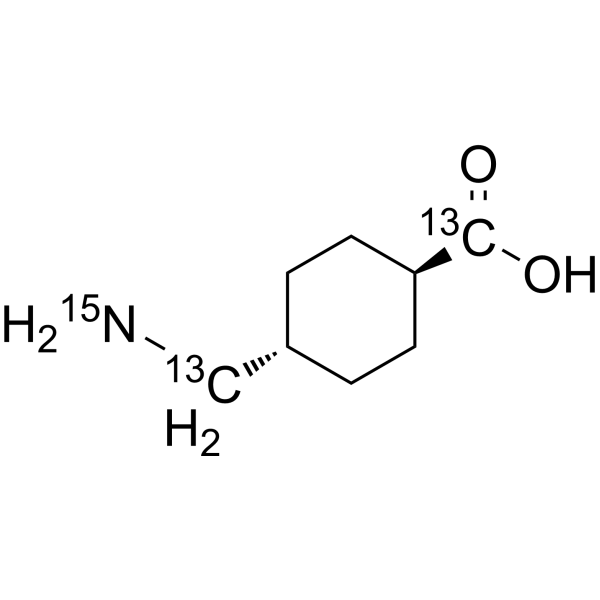
Tranexamic acid- 13C2, 15N (Cyclocapron- 13C2, 15N) is the 13C2 and 15N labeled Tranexamic acid. Tranexamic acid is an antifibrinolytic agent that alleviates liver damage and fibrosis in mouse models of chronic bile duct injury .
loading...
    loading...
Cat. No.: HY-139562
CAS No.: 2314378-09-9
Target:  

FXR

Research Areas:  

Metabolic Disease

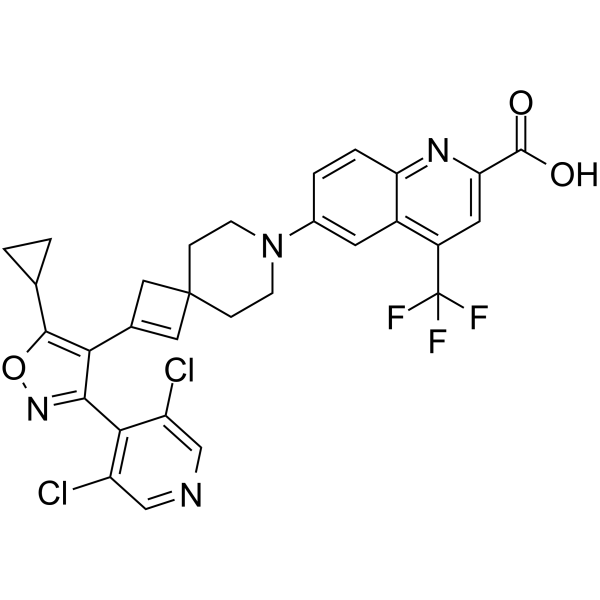
BMS-986318 is a potent nonbile acid FXR agonist with EC50s of 53 and 350 nM in the FXR Gal4 and SRC-1 recruitment assays, respectively. BMS-986318 has a suitable ADME profile, and demonstrates efficacy in the mouse bile duct ligation model of liver cholestasis and fibrosis.BMS-986318 can be used for the research of nonalcoholic steatohepatitis .
loading...
    loading...
Cat. No.: HY-172258
Target:  

5-HT Receptor

Research Areas:  

Cancer

5-HT2B antagonist-2 (Compound 19c) is a 5HT2B receptor antagonist with an IC50 of 1.09 nM. 5-HT2B antagonist-2 can downregulate the expression of fibrosis-related genes α-SMA, Timp1, Col1a1, and Col3a1, and significantly reduce the deposition of fibrosis, thereby reducing the fibrotic area and inhibiting the fibrotic process in CCl4-induced liver fibrosis mouse models. 5-HT2B antagonist-2 can be used in the study of immune inflammatory-related diseases, particularly in the research of pulmonary fibrosis diseases .
loading...
    loading...
Cat. No.: HY-W753806
CAS No.: 70918-01-3
Synonyms: UK 33274 hydrochloride
Target:  

Akt

Research Areas:  

Cardiovascular Disease

Doxazosin hydrochloride (UK 33274 hydrochloride) is a compound used to inhibit hypertension and prostate hyperplasia, with activity that inhibits postsynaptic α1-adrenoceptors on vascular smooth muscle. Doxazosin hydrochloride can cause vasodilation, thereby reducing peripheral vascular resistance. Doxazosin hydrochloride was found to inhibit the proliferation and migration of hepatic stellate cells in a mouse liver fibrosis model. Doxazosin hydrochloride regulates fibrosis, autophagy, and apoptosis of hepatic stellate cells by activating the PI3K/Akt/mTOR signaling pathway. Doxazosin hydrochloride also blocks autophagic flux and induces apoptosis of hepatic stellate cells .
loading...
    loading...
Cat. No.: HY-170846
Research Areas:  

Inflammation/Immunology

FGFRs-IN-1 (Compound A16) is the orally active inhibitor for FGFR, that inhibits FGFR1/2/3/4 with IC50s of 2.3, 7, 11, and 163 nM, respectively. FGFRs-IN-1 also inhibits VEGFR1/2/3, Abl, and Flt3 with IC50s of 61, 176, 112, 26, and 353 nM, respectively. FGFRs-IN-1 exhibits weak inhibitory efficacy against CYP enzymes. FGFRs-IN-1 reduces the expression of α-SMA and collagen I, and inhibits epithelial-mesenchymal transition (EMT) in TGF-β1 stimulated A549 cell. FGFRs-IN-1 exhibits anti-inflammatory activity in Bleomycin (HY-17565)-induced mouse pulmonary fibrosis model and CCl4 (HY-Y0298)-induced mouse liver fibrosis model .
loading...
    loading...
Cat. No.: HY-187994
Research Areas:  

Metabolic Disease

Antifibrotic agent 4 is an antifibrotic agent. Antifibrotic agent 4 inhibits the expression of the fibrotic markers α-SMA and COL1A1 in hepatic stellate cells by binding to FGFR4 and reducing its autophosphorylation, ameliorates liver injury and collagen deposition in mouse models of liver fibrosis, and does not inhibit the hERG potassium channel. Antifibrotic agent 4 can be used in the research of liver fibrosis .
loading...
    loading...
Cat. No.: HY-P2032
CAS No.: 12663-46-6
Cyclochlorotine is a mycotoxin that can be extracted from the yellow rice infectant Penicillium islandicum Sopp. Cyclochlorotine promotes glycogenolysis, inhibits glycogen synthesis, affects fat synthesis and protein synthesis in liver cells. Cyclochlorotine exhibits chronic toxicity in liver that induces liver fibrosis and cirrhosis in mouse models. Cyclochlorotine exhibits carcinogenicity .
loading...
    loading...
Cat. No.: HY-182038
Research Areas:  

Metabolic Disease

TGF-β1/Smad3-IN-2 is an orally active antifibrotic agent. TGF-β1/Smad3-IN-2 has high affinity for VDR and can inhibit the TGFβ/SMAD3 signaling pathway. TGF-β1/Smad3-IN-2 inhibits hepatic stellate cell activation, reduces extracellular matrix deposition, and alleviates liver fibrosis in a bile duct ligation mouse model. TGF-β1/Smad3-IN-2 can be used for the research of liver fibrosis .
loading...
    loading...
Cat. No.: HY-180765
Target:  

MMP

Research Areas:  

Metabolic Disease

Colchicine-O-CO-Enyl(Me)-Enyl-Enyl(Me)-Enyl-1,3,3-trimethylcyclohex-1-ene (compound L2) is a lipophilic colchicinoid formulation targeting hepatic stellate cells (HSC). Colchicine-O-CO-Enyl(Me)-Enyl-Enyl(Me)-Enyl-1,3,3-trimethylcyclohex-1-ene increases the levels of MMP2, MMP8 and MMP9, demonstrating the protective effect in tissue remodeling. Colchicine-O-CO-Enyl(Me)-Enyl-Enyl(Me)-Enyl-1,3,3-trimethylcyclohex-1-ene exhibits anti-fibrotic activity in CCL4-induced liver fibrosis (LF) mouse model. Colchicine-O-CO-Enyl(Me)-Enyl-Enyl(Me)-Enyl-1,3,3-trimethylcyclohex-1-ene can be used for LF research .
loading...
    loading...
  • 1

