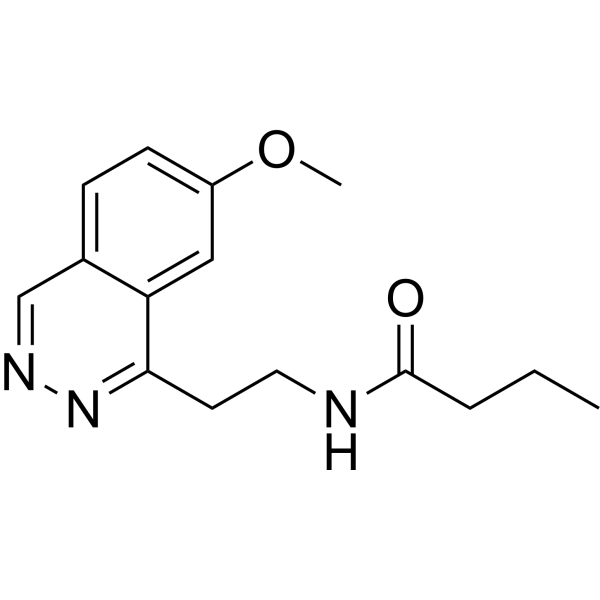
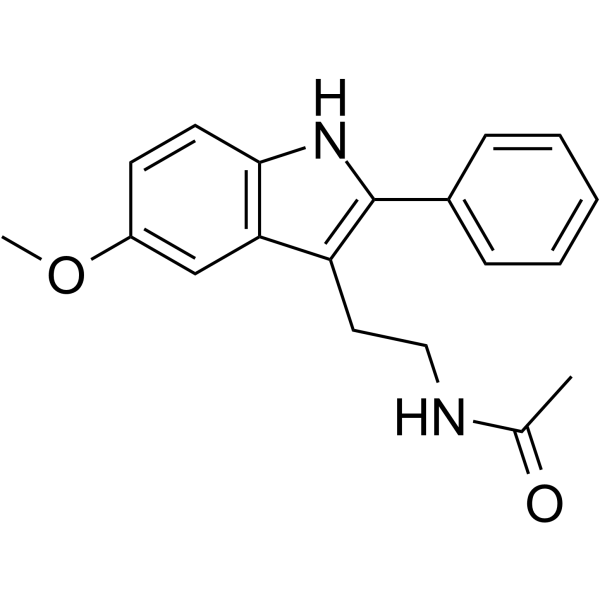
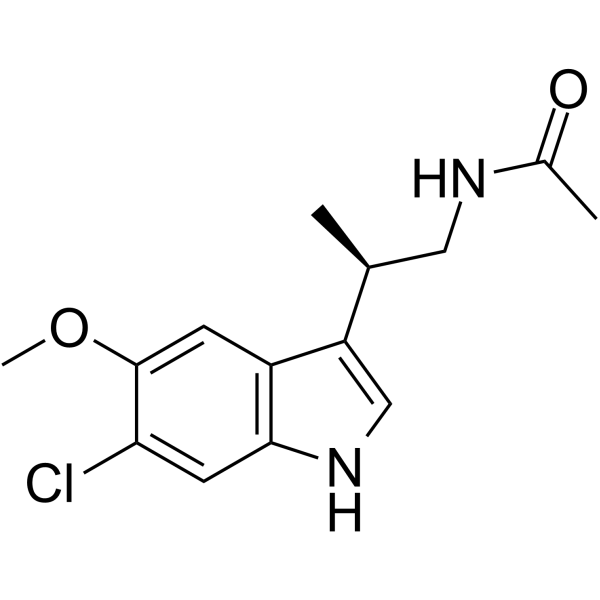
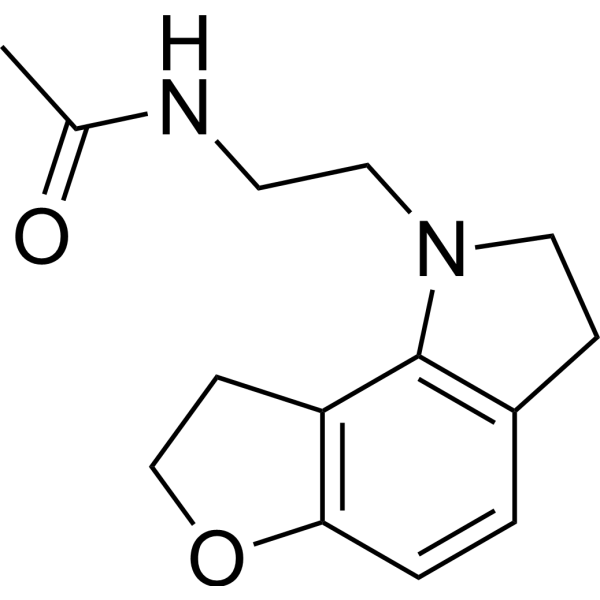
1. Search Result
Search Result
Results for "

melatonin receptor (MT)

" in MedChemExpress (MCE) Product Catalog:

30

Inhibitors & Agonists

3

Isotope-Labeled Compounds

1

Antibodies

Targets Recommended:
Cat. No. Nombre del producto Target Áreas de investigación Chemical Structure
  • HY-101254
    Luzindole
    Maximum Cited Publications
    18 Publications Verification

    N-0774

    Melatonin Receptor Neurological Disease
    Luzindole (N-0774) is a selective melatonin receptor antagonist. Luzindole preferentially targets MT2 (Mel1b) over MT1 (Mel1a) with Ki values of 10.2 and 158 nM for human MT2 and MT1, respectively. Luzindole suppresses experimental autoimmune encephalomyelitis (EAE), and exerts antidepressant-like activity .
    Luzindole
  • HY-14803
    Tasimelteon
    1 Publications Verification

    BMS-214778; VEC-162

    Melatonin Receptor Neurological Disease Endocrinology
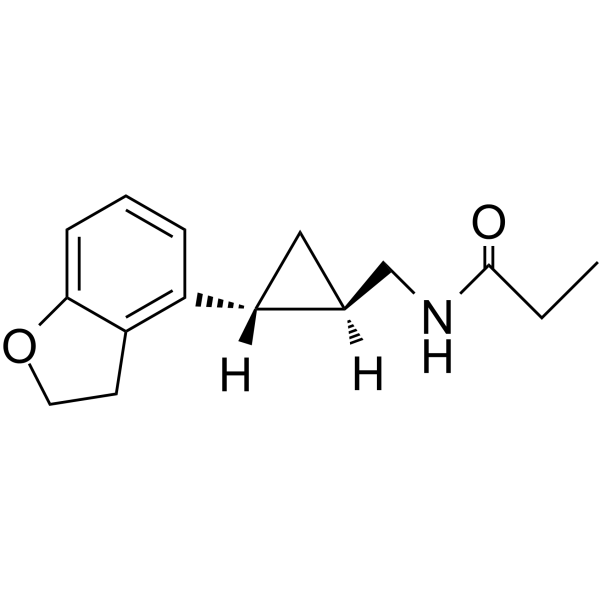
    Tasimelteon (BMS-214778) is an orally active and selective dual melatonin receptor agonist (DMRA). Tasimelteon has 2.1-4.4 times greater affinity for the MT2 receptor than for the MT1 receptor. Tasimelteon is a circadian regulator and has the potential for Non-24-Hour Sleep-Wake Disorder (Non-24) .
    Tasimelteon
  • HY-100609
    4-P-PDOT
    5+ Cited Publications

    Melatonin Receptor Neurological Disease
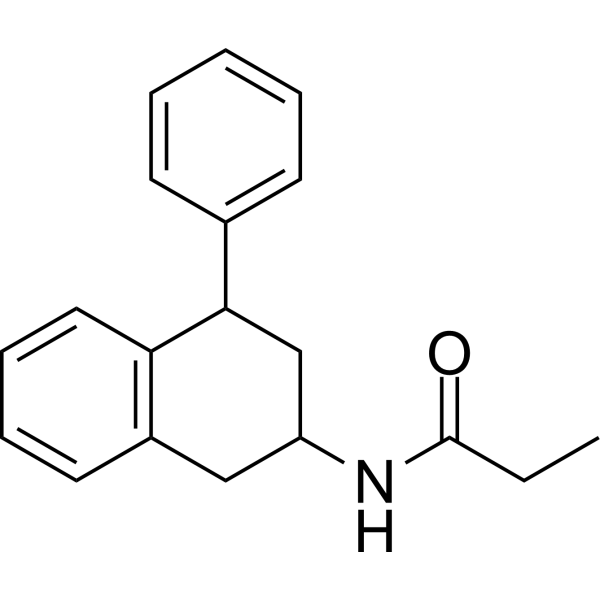
    4-P-PDOT is a potent, selective and affinity Melatonin receptor (MT2) antagonist. 4-P-PDOT is >300-fold more selective for MT2 than MT1. 4-P-PDOT significantly counteracts Melatonin-mediated antioxidant effects (GSH/GSSG ratio, phospho-ERK, Nrf2 nuclear translocation, Nrf2 DNA-binding activity) .
    4-P-PDOT
  • HY-101176
    2-Iodomelatonin
    2 Publications Verification

    Melatonin Receptor Cancer
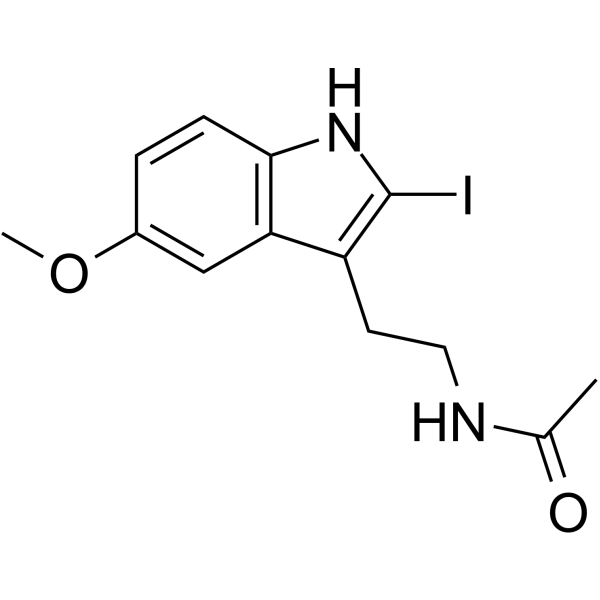
    2-Iodomelatonin is a potent agonist of melatonin receptor 1 (MT1) with a Ki value of 28 pM, it is more 5-fold selective for MT1 over MT2 . 2-iodomelatonin can be used to identify, characterize and localize melatonin binding sites in the brain and peripheral tissues .
    2-Iodomelatonin
  • HY-103005S

    Melatonin Receptor Drug Metabolite Neurological Disease Endocrinology
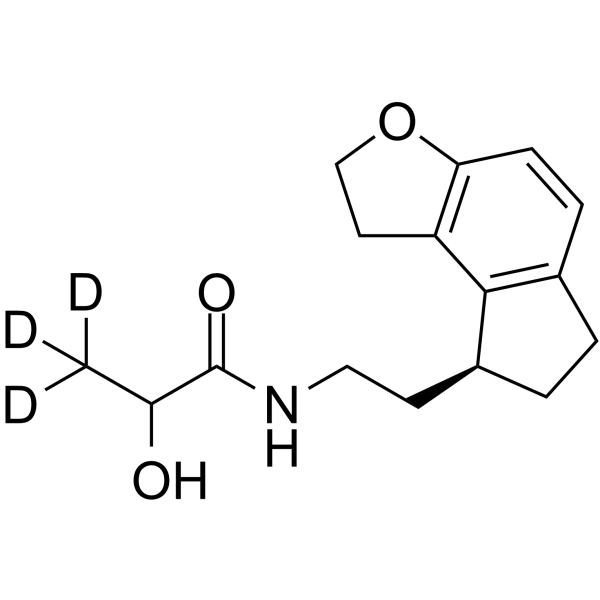
    Ramelteon metabolite M-II-d3 is the deuterium labeled Ramelteon metabolite M-II. Ramelteon metabolite M-II is the major metabolite of Ramelteon, with IC50s of 208 pM, 1470 pM for human melatonin receptors (MT1 or MT2). Ramelteon is a selective melatonin agonist .
    Ramelteon metabolite M-II-d3
  • HY-103005

    Melatonin Receptor Drug Metabolite Neurological Disease Endocrinology
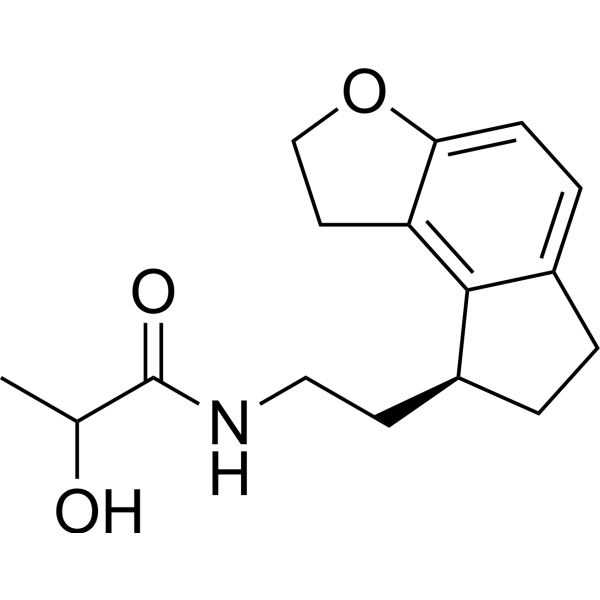
    Ramelteon metabolite M-II is the major metabolite of Ramelteon, with IC50s of 208 pM, 1470 pM for human melatonin receptors (MT1 or MT2). Ramelteon is a selective melatonin agonist.
    Ramelteon metabolite M-II
  • HY-101358

    AH-002

    Melatonin Receptor Neurological Disease
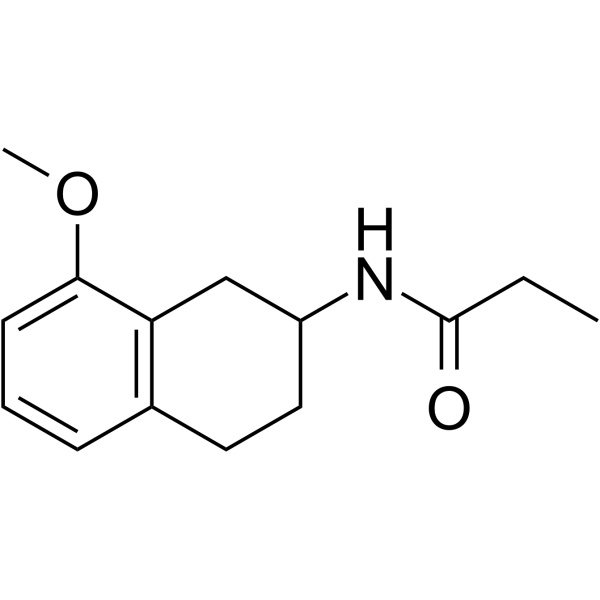
    8-M-PDOT (AH-002) is a selective melatonin MT2 receptor agonist. 8-M-PDOT is 5.2-fold selective for MT2 over MT1 receptors. 8-M-PDOT binds human recombinant MT2 and MT2 receptors with pKi values of 8.23 and 8.95 respectively. 8-M-PDOT has anxiolytic-like activity .
    8-M-PDOT
  • HY-138626

    Melatonin Receptor Metabolic Disease
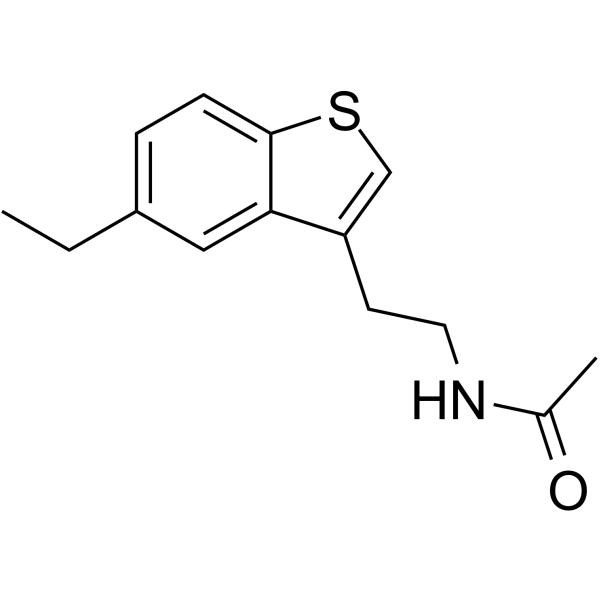
    ACH-000143 is a potent and orally active melatonin receptor agonist, with EC50 values of 0.06 nM and 0.32 nM for MT1 and MT2, respectively .
    ACH-000143
  • HY-133113
    7-Desmethyl-agomelatine
    1 Publications Verification

    5-HT Receptor Neurological Disease
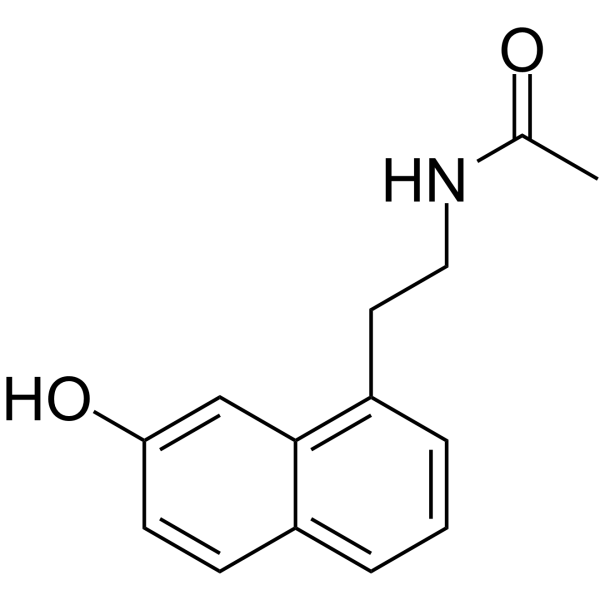
    7-Desmethyl-agomelatine is a metabolite of Agomelatine. Agomelatineis a potent agonist at melatonin receptors (MT1 and MT2), and also is an antagonist of 5-HT2C .
    7-Desmethyl-agomelatine
  • HY-105285
    Piromelatine
    2 Publications Verification

    Neu-P11

    Melatonin Receptor 5-HT Receptor P2X Receptor TRP Channel Sodium Channel Neurological Disease
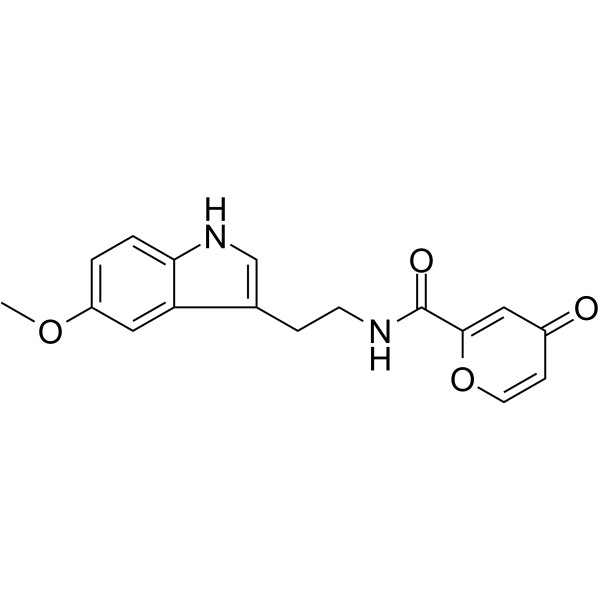
    Piromelatine (Neu-P11) is a melatonin MT1/MT2 receptor agonist, serotonin 5-HT1A/5-HT1D agonist, and serotonin 5-HT2B antagonist. Piromelatine (Neu-P11) possesses sleep promoting, analgesic, anti-neurodegenerative, anxiolytic and antidepressant potentials. Piromelatine (Neu-P11) also possesses pain-related P2X3, TRPV1, and Nav1.7 channel-inhibition capacities .
    Piromelatine
  • HY-107628

    Melatonin Receptor Neurological Disease
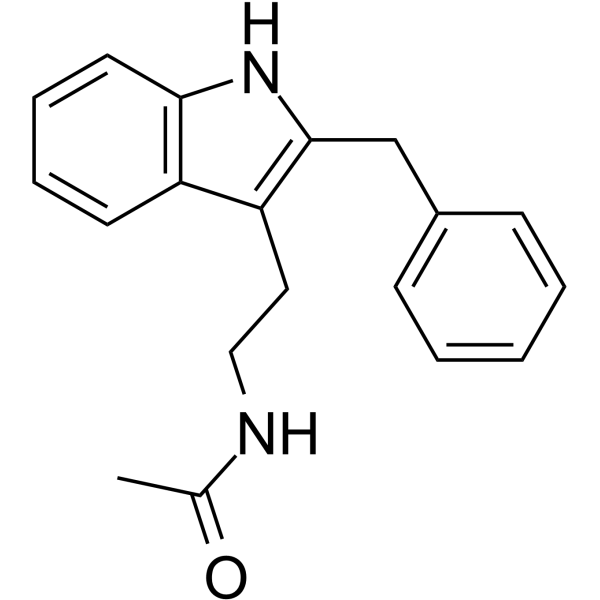
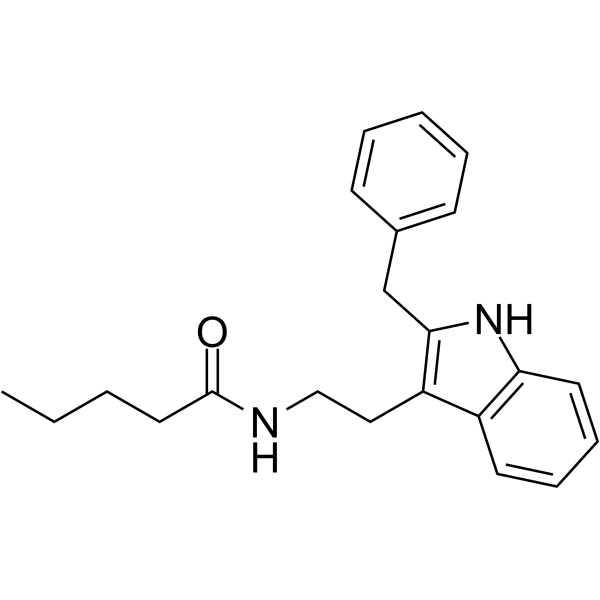
    N-Pentanoyl 2-benzyltryptamine is a potent and selective antagonist of MT2 melatonin receptor, with a pKi of 8.03 for human MT2. N-Pentanoyl 2-benzyltryptamine shows 89- and 229-fold selectivity for human MT2 over human mt1 and Xenopus mel1c receptor subtypes. N-Pentanoyl 2-benzyltryptamine can inhibit melatonin-induced enhancement of electrically-evoked responses .
    N-Pentanoyl 2-benzyltryptamine
  • HY-114962

    Melatonin Receptor Neurological Disease
    S-22153 is a potent melatonin receptor antagonist with EC50 values of 19 nM, 4.6 nM for hMT1 and hMT2 melatonin receptor, respectively. S-22153 has Ki values of 8.6 nM (CHO cells) and 16.3 nM (HEK cells) for hMT1, and 6.0 nM (CHO cells) and 8.2 nM (HEK cells) for hMT2. S-22153 is a specific ligand of MT1 and MT2 melatonin receptors subtypes .
    S-22153
  • HY-147542

    Melatonin Receptor Neurological Disease
    Melatonin receptor agonist 1 (compound 20c) is a potent melatonin receptor (MT) agonist, with Ki values of 108 nM (MT2) and 1140 nM (MT1) .
    Melatonin receptor agonist 1
  • HY-101074

    2-Phenylmelatonin

    Melatonin Receptor Neurological Disease Inflammation/Immunology Cancer
    UCM 608 is a high affinity melatonin (MT) membrane receptor agonist. The pKi values for MT1 and MT2 are 10.7 and 10.4 .
    UCM 608
  • HY-106136

    PD-6735; LY-156735

    Melatonin Receptor 5-HT Receptor Neurological Disease
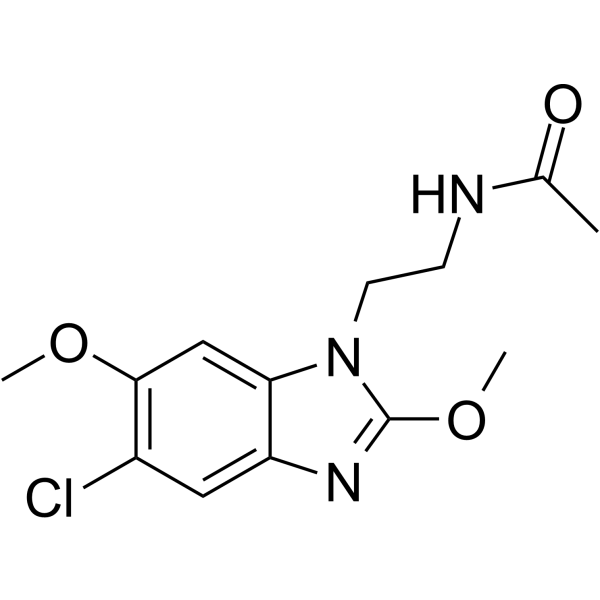
    TIK-301 (PD-6735) is a chlorinated melatonin derivative and a potent, high-affinity and orally active melatonin MT1 and MT2 receptors agonist with Kis of 0.081 nM and 0.042 nM, respectively. TIK-301 is also a 5-HT2B/5-HT2C receptors antagonist with antidepressant action. TIK-301 has the potential for sleep disorders and other circadian rhythm disorders treatment .
    TIK-301
  • HY-116046

    Melatonin Receptor Others
    GR 196429 is a melatonin receptor agonist with some selectivity for the MT1 subtype. GR 196429 produces both sleep-promoting effects and alterations of circadian rhythm, as well as stimulating melatonin release in mice .
    GR 196429
  • HY-119010

    Melatonin Receptor Neurological Disease
    UCM 549 is a melatonin MT2 receptor inverse agonist and a MT1 receptor antagonist .
    UCM 549
  • HY-131947

    Melatonin Receptor Neurological Disease
    DH97 is a potent melatonin receptor 2 (MT2) antagonist with Ki values of 252 nM and 1100 nM for MT2 and MT1, respectively .
    DH97-7
  • HY-100940

    Melatonin Receptor Endocrinology
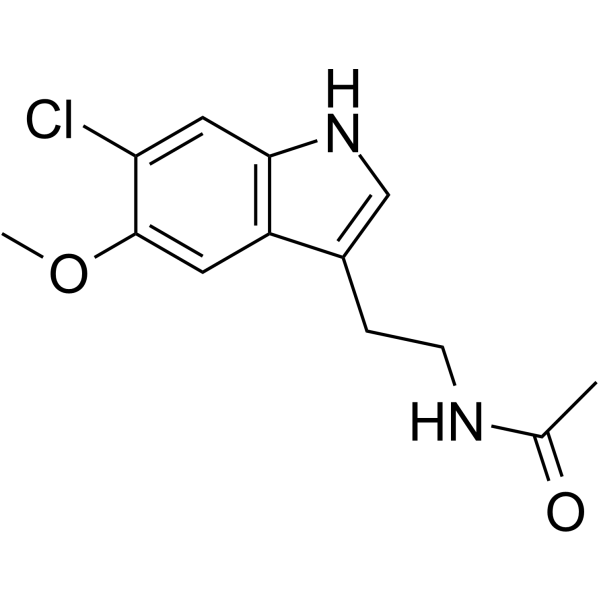
    6-Chloromelatonin is a potent melatonin receptor agonist with greater metabolic stability than melatonin. 6-Chloromelatonin compete for [ 3H]-melatonin and 2-[ 125I]-iodomelatonin binding to MT1 receptors (pKi=8.9 and 9.1, respectively). 6-Chloromelatonin compete for [ 3H]-melatonin binding to MT2 receptors (pKi=9.77) .
    6-Chloromelatonin
  • HY-176436S

    Isotope-Labeled Compounds 5-HT Receptor Melatonin Receptor Neurological Disease
    GW-117 is a 5-HT2C receptor antagonist and a melatonin (MT1/MT2) receptor agonist. GW-117 shows antidepressant-like and anxiolytic-like effects .
    GW-117
  • HY-101176R

    Reference Standards Melatonin Receptor Cancer
    2-Iodomelatonin (Standard) is the analytical standard of 2-Iodomelatonin. This product is intended for research and analytical applications. 2-Iodomelatonin is a potent agonist of melatonin receptor 1 (MT1) with a Ki value of 28 pM, it is more 5-fold selective for MT1 ?over MT2 . 2-iodomelatonin can be used to identify, characterize and localize melatonin binding sites in the brain and peripheral tissues .
    2-Iodomelatonin (Standard)
  • HY-100609R

    Reference Standards Melatonin Receptor Neurological Disease
    4-P-PDOT (Standard) is the analytical standard of 4-P-PDOT. This product is intended for research and analytical applications. 4-P-PDOT is a potent, selective and affinity Melatonin receptor (MT2) antagonist. 4-P-PDOT is >300-fold more selective for MT2 than MT1. 4-P-PDOT significantly counteracts Melatonin-mediated antioxidant effects (GSH/GSSG ratio, phospho-ERK, Nrf2 nuclear translocation, Nrf2 DNA-binding activity) .
    4-P-PDOT (Standard)
  • HY-101254R

    N-0774 (Standard)

    Reference Standards Melatonin Receptor Neurological Disease
    Luzindole (Standard) is the analytical standard of Luzindole. This product is intended for research and analytical applications. Luzindole (N-0774) is a selective melatonin receptor antagonist. Luzindole preferentially targets MT2 (Mel1b) over MT1 (Mel1a) with Ki values of 10.2 and 158 nM for human MT2 and MT1, respectively. Luzindole suppresses experimental autoimmune encephalomyelitis (EAE), and exerts antidepressant-like activity .
    Luzindole (Standard)
  • HY-14803S

    BMS-214778-d5; VEC-162-d5

    Isotope-Labeled Compounds Melatonin Receptor Neurological Disease Endocrinology
    Tasimelteon-d5 is the deuterium labeled Tasimelteon. Tasimelteon (BMS-214778) is an orally active and selective dual melatonin receptor agonist (DMRA). Tasimelteon has 2.1-4.4 times greater affinity for the MT2 receptor than for the MT1 receptor. Tasimelteon is a circadian regulator and has the potential for Non-24-Hour Sleep-Wake Disorder (Non-24) .
    Tasimelteon-d5
  • HY-14803R

    BMS-214778 (Standard); VEC-162 (Standard)

    Reference Standards Melatonin Receptor Neurological Disease Endocrinology
    Tasimelteon (Standard) is the analytical standard of Tasimelteon. This product is intended for research and analytical applications. Tasimelteon (BMS-214778) is an orally active and selective dual melatonin receptor agonist (DMRA). Tasimelteon has 2.1-4.4 times greater affinity for the MT2 receptor than for the MT1 receptor. Tasimelteon is a circadian regulator and has the potential for Non-24-Hour Sleep-Wake Disorder (Non-24) .
    Tasimelteon (Standard)
  • HY-115861

    Endogenous Metabolite Neurological Disease
    UCM765 is a selective MT2-type melatonin receptor ligand with hypnotic, analgesic and anxiolytic activities. The partial agonist effect of UCM765 has attracted attention in pharmacological studies. By structurally modifying UCM765, its water solubility and metabolic stability can be improved, thereby increasing its bioavailability. The biological activity of UCM765 has been verified in a rat model, supporting its potential for further pharmacological studies .
    UCM765
  • HY-105285R

    Neu-P11 (Standard)

    Reference Standards Melatonin Receptor 5-HT Receptor P2X Receptor TRP Channel Sodium Channel Neurological Disease
    Piromelatine (Standard) is the analytical standard of Piromelatine. This product is intended for research and analytical applications. Piromelatine (Neu-P11) is a melatonin MT1/MT2 receptor agonist, serotonin 5-HT1A/5-HT1D agonist, and serotonin 5-HT2B antagonist. Piromelatine (Neu-P11) possesses sleep promoting, analgesic, anti-neurodegenerative, anxiolytic and antidepressant potentials. Piromelatine (Neu-P11) also possesses pain-related P2X3, TRPV1, and Nav1.7 channel-inhibition capacities .
    Piromelatine (Standard)
  • HY-101074R

    2-Phenylmelatonin (Standard)

    Melatonin Receptor Reference Standards Neurological Disease Inflammation/Immunology Cancer
    UCM 608 (Standard) is the analytical standard of UCM 608 (HY-101074). This product is intended for research and analytical applications. UCM 608 is a high affinity melatonin (MT) membrane receptor agonist. The pKi values for MT1 and MT2 are 10.7 and 10.4 .
    UCM 608 (Standard)
  • HY-180198

    Melatonin Receptor Cancer
    UCM1400 is a melatonin receptor (MT) subtype-selective modulator. UCM1400 shows agonistic effect for MT1 and antagonistic effect for MT2 with pKi values of 7.94 and 8.11. UCM1400 can inhibit the decrease in cAMP mediated by the MT2 receptor with a pIC50 of 7.87. UCM1400 exhibits anti-proliferative activity against human glioma cells and inhibit tumor growth. UCM1400 can be used for the research of cancer, such as glioma .
    UCM1400
  • HY-101358R

    AH-002 (Standard)

    Melatonin Receptor Reference Standards Neurological Disease
    8-M-PDOT (Standard) is the analytical standard of 8-M-PDOT (HY-101358). This product is intended for research and analytical applications. 8-M-PDOT (AH-002) is a selective melatonin MT2 receptor agonist. 8-M-PDOT is 5.2-fold selective for MT2 over MT1 receptors. 8-M-PDOT binds human recombinant MT2 and MT2 receptors with pKi values of 8.23 and 8.95 respectively. 8-M-PDOT has anxiolytic-like activity .
    8-M-PDOT (Standard)

Consulta en línea

Your information is safe with us. * Required Fields.

Saludo


Country or Region *

Nombre del solicitante *


Nombre de la Organizaciòn *

Department *


Direcciòn del E-mail *


Nombre del producto *

Cat. No.


Requested quantity *

Número de teléfono *


Observaciones

Consulta en línea

Inquiry Information

Nombre del producto:
Cat. No.:
Cantidad:
MCE Japan Authorized Agent:

