1. Search Result
Search Result
Results for "

micronuclei

" in MedChemExpress (MCE) Product Catalog:

12

Inhibitors & Agonists

1

Fluorescent Dye

1

Peptides

1

Natural
Products

2

Isotope-Labeled Compounds

Cat. No. Product Name Target Research Areas Chemical Structure
  • HY-N6739

    Bacterial Apoptosis Fungal PI3K Akt TNF Receptor Interleukin Related Infection Cancer
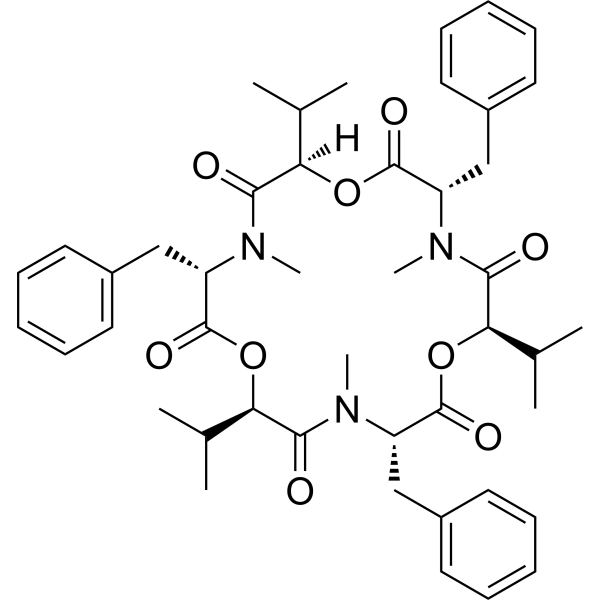
    Beauvericin is a cyclohexapeptide Fusarium toxin with insecticidal, antibacterial, anticancer, antiviral and cytotoxic activities. Beauvericin causes cellular genotoxicity by producing DNA breaks, chromosomal aberrations and micronuclei, and inhibits the PI3K/AKT pathway to induce apoptosis, thereby inhibiting the growth of HCC. In addition, Beauvericin affects immune function by inhibiting lymphocyte proliferation and interfering with the differentiation process of human monocytes into macrophages .
    Beauvericin
  • HY-121267

    Environmental Pollutants DNA/RNA Synthesis Herbicide Others
    Dicamba is a herbicide. Dicamba is currently used in agriculture and gardening to control the growth of different unwanted vegetable species, mainly in cereal grain crops, but also on sugar cane and soybeans, among others. Dicambais induces significant DNA damage. Dicambais induces genotoxicity and cytotoxicity.
    Dicamba
  • HY-W683760

    (2S)-N'-Nitrosonornicotine

    DNA/RNA Synthesis Cancer
    N-Nitrosonornicotine is a tobacco-specific nitrosamine that has carcinogenic and mutagenic activity, and it can induce micronuclei in C3A cells. N-Nitrosonornicotine can form DNA adducts .
    N-Nitrosonornicotine
  • HY-N6739S

    Acyltransferase Isotope-Labeled Compounds Infection
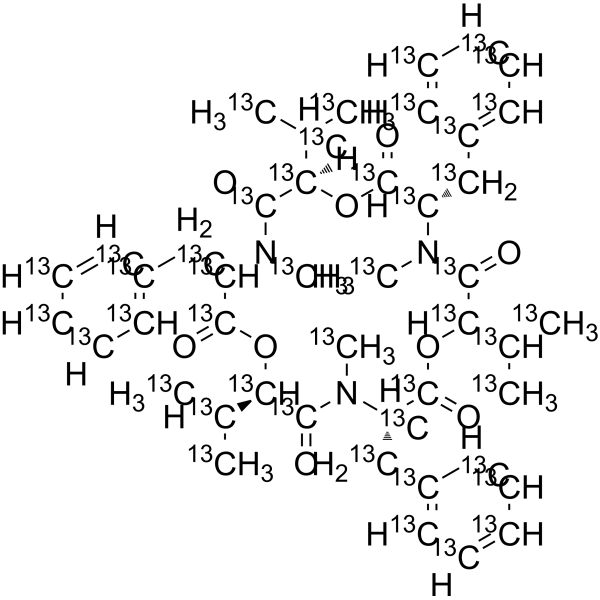
    Beauvericin- 13C45 is 13C labeled Beauvericin (HY-N6739). Beauvericin is a cyclohexapeptide Fusarium toxin with insecticidal, antibacterial, anticancer, antiviral and cytotoxic activities. Beauvericin causes cellular genotoxicity by producing DNA breaks, chromosomal aberrations and micronuclei, and inhibits the PI3K/AKT pathway to induce apoptosis, thereby inhibiting the growth of HCC. In addition, Beauvericin affects immune function by inhibiting lymphocyte proliferation and interfering with the differentiation process of human monocytes into macrophages .
    Beauvericin-13C45
  • HY-W726392

    Adrenergic Receptor Endocrinology
    N-Nitrosometoprolol is an N-nitroso derivative formed by the in vitro reaction of β-adrenergic blockers with sodium nitrite. N-Nitrosometoprolol can induce micronuclei in rat liver, bone marrow and spleen .
    N-Nitrosometoprolol
  • HY-119983

    DBC

    Environmental Pollutants Cytochrome P450 Cancer
    7H-Dibenzo[c,g]carbazole (DBC) is an azaarene with high lipophilicity. 7H-Dibenzo[c,g]carbazole has carcinogenic activity and induce DNA adducts in fish, DNA adducts, mutations in diploid human fibroblasts and micronuclei in human blood lymphocytes. 7H-Dibenzo[c,g]carbazole is activated by cytochrome P450 enzymes resulting mainly in the generation of phenolic metabolites .
    7H-Dibenzo[c,g]carbazole
  • HY-W271064

    Environmental Pollutants Fluorescent Dye Others
    1-Methylpyrene is a ubiquitous environmental pollutant and rodent carcinogen. Its mutagenic activity depends on sequential activation by various CYP and sulfotransferase (SULT) enzymes. 1-Methylpyrene induces chromosome loss and mitotic disturbance, proba
    1-Methylpyrene
  • HY-118379

    Topoisomerase Inflammation/Immunology
    NU/ICRF 500 is a topo II catalytic inhibitor which increases CREST negative micronuclei in human lymphocytes .
    NU/ICRF 500
  • HY-W743781

    (2S)-N'-Nitrosonornicotine-d4

    Isotope-Labeled Compounds DNA/RNA Synthesis Cancer
    N-Nitrosonornicotine-d4 ((2S)-N'-Nitrosonornicotine-d4) is deuterium labeled N-Nitrosonornicotine. N-Nitrosonornicotine is a tobacco-specific nitrosamine that has carcinogenic and mutagenic activity, and it can induce micronuclei in C3A cells. N-Nitrosonornicotine can form DNA adducts .
    N-Nitrosonornicotine-d4
  • HY-P5834A

    Caspase Apoptosis Inflammation/Immunology
    Boc-AEVD-CHO TFA is a Caspase 8 inhibitor. Boc-AEVD-CHO TFA significantly increases the frequencies of Nocodazole (HY-13520) or methyl methane sulfonate (MMS) induced micronuclei (MN) and micronucleated binucleates (MNCB) in PBMC by inhibiting cell apoptosis. Boc-AEVD-CHO TFA can be used for immune and inflammatory diseases research .
    Boc-AEVD-CHO TFA
  • HY-181840

    Endonuclease Cancer
    MU262 is a MUS81 inhibitor with an IC50 value of 0.87 μM. MU262 directly inhibits the catalytic activity of MUS81 without interfering with DNA binding, induces genomic instability in tumor cells, and specifically inhibits the HR/BIR repair pathway. The combination of MU262 with Cisplatin (HY-17394) significantly enhances the chemotherapeutic killing effect. MU262 serves as a chemical biology tool for studying MUS81 function, and also acts as a lead compound for the development of anticancer therapies that exploit DNA repair defects in cancer cells .
    MU262
  • HY-W721611

    Herbicide Others
    Terbucarb is a phenylcarbamate herbicide. Terbucarb disrupts the mitotic microtubule organizing centers in plant cells, leading to the formation of multipolar spindles and branched phragmoplasts, thereby inhibiting plant growth. An "anaphase star" pattern induced by Terbucarb is observed in onion root tips. Terbucarb is cytotoxic to isolated rat hepatocytes, inducing cell death accompanied by depletion of intracellular ATP, protein thiols and glutathione .
    Terbucarb

Inquiry Online

Your information is safe with us. * Required Fields.

Salutation


Country or Region *

Applicant Name *


Organization Name *

Department *


Email Address *


Product Name *

Cat. No.


Requested quantity *

Phone Number *


Remarks

Inquiry Online

Inquiry Information

Product Name:
Cat. No.:
Quantity:
MCE Japan Authorized Agent:

