



1. Search Result
Search Result
Results for "

myo-inositol

" in MedChemExpress (MCE) Product Catalog:

80

Inhibitors & Agonists

28

Biochemical Assay Reagents

8

Natural
Products

2

Recombinant Proteins

8

Isotope-Labeled Compounds

2

Antibodies

14

Oligonucleotides

Cat. No. Product Name Target Research Areas Chemical Structure
  • HY-B1411
    i-Inositol
    Maximum Cited Publications
    6 Publications Verification

    myo-inositol; meso-inositol

    Endogenous Metabolite Others
    i-Inositol (myo-Inositol) is a compound of sugar alcohols. i-Inositol is involved in a series of biological processes such as insulin signal transduction and cytoskeletal transduction. i-Inositol mainly exists in glial cells and plays an osmotic role .
    i-Inositol
  • HY-N2581
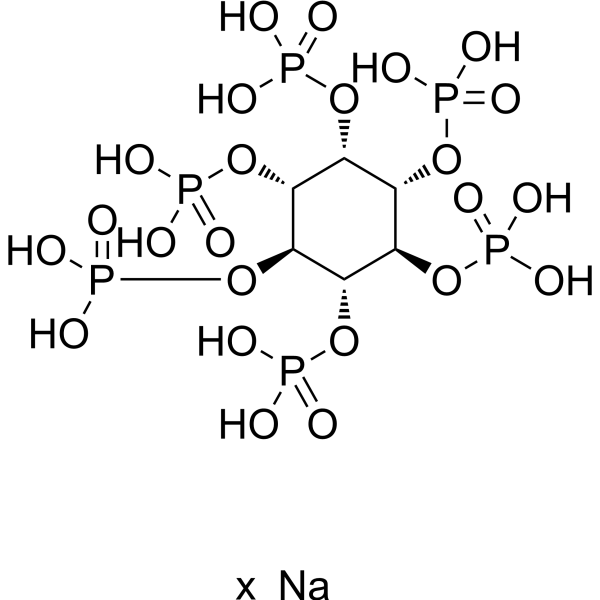
    Phytic acid sodium salt
    1 Publications Verification

    myo-inositol, hexakisdihydrogen phosphate sodium salt; inositol hexaphosphate sodium salt

    MOFs Endogenous Metabolite Amyloid-β Autophagy Cardiovascular Disease Neurological Disease Metabolic Disease Cancer
    Phytic acid (myo-Inositol; hexakis dihydrogen phosphate; Inositol hexaphosphate) sodium salt is an orally active compound. Phytic acid sodium salt can be derived from the seeds of legumes. Phytic acid sodium salt is a [PO4] 3- storage depot and precursor for other inositol phosphates and pyrophosphates. Phytic acid sodium salt attenuates oligomers and upregulates autophagy protein. Phytic acid sodium salt can be used in cardiovascular disease, metabolic disease, nervous system disease and cancer research .
    Phytic acid sodium salt
  • HY-103642A

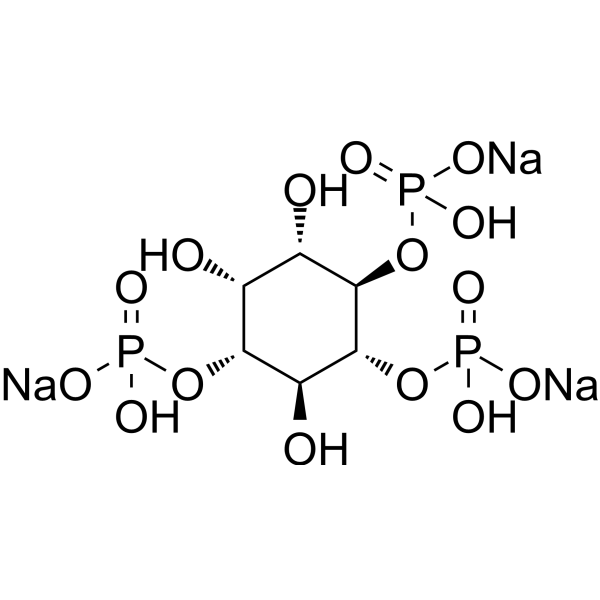
    inositol 1,4,5-trisphosphate trisodium; Ins(1,4,5)-P3 trisodium

    Calcium Channel Metabolic Disease
    D-myo-Inositol-1,4,5-triphosphate sodium salt is the trisodium salt of D-myo-Inositol 1,4,5-trisphosphate (1,4,5-IP3), which is a second messenger that stimulates the discharge of calcium from the endoplasmic reticulum.
    D-myo-Inositol-1,4,5-triphosphate trisodium
  • HY-141510

    ITPP hexasodium

    HIF/HIF Prolyl-Hydroxylase Cardiovascular Disease Cancer
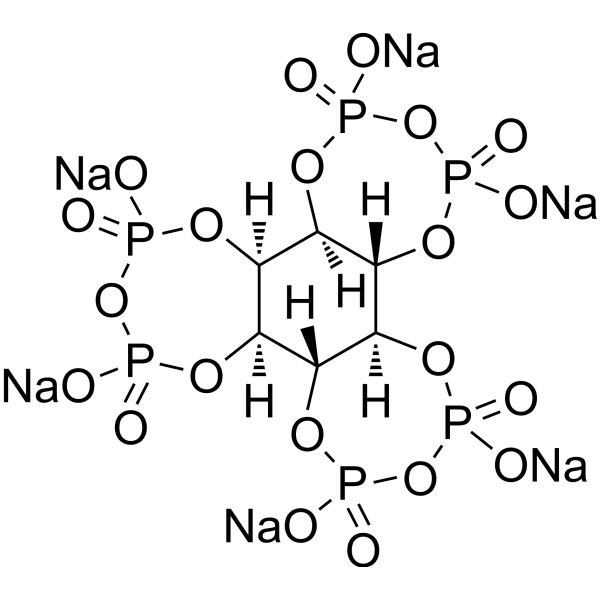
    myo-Inositol trispyrophosphate (ITPP) hexasodium is a salt form of inositol triphosphate (ITPP). myo-Inositol trispyrophosphate (ITPP) hexasodium is a membrane-permeant hemoglobin allosteric regulator. myo-Inositol trispyrophosphate (ITPP) hexasodium enhances the oxygen release capacity of red blood cells by reducing the affinity of hemoglobin to oxygen. myo-Inositol trispyrophosphate (ITPP) hexasodium can be used in the study of cardiovascular disease and cancer .
    myo-Inositol trispyrophosphate hexasodium
  • HY-N0814
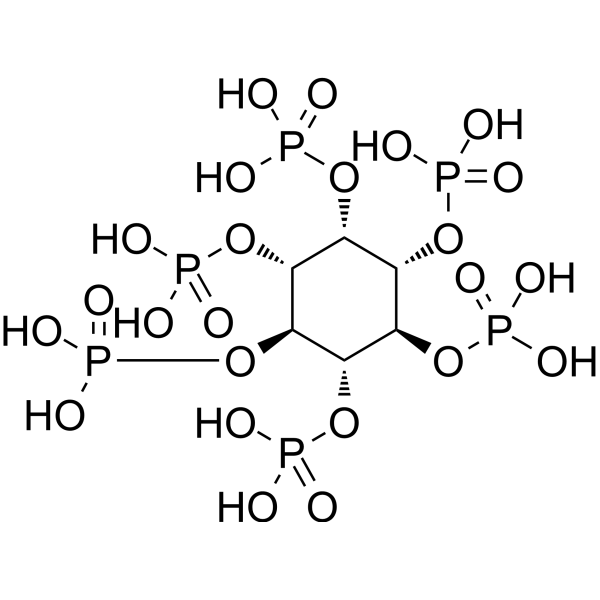
    Phytic acid (50% w/w in water)
    1 Publications Verification

    inositol hexaphosphate; SNF472 free acid

    Endogenous Metabolite Amyloid-β Autophagy Cardiovascular Disease Neurological Disease Metabolic Disease Cancer
    Phytic acid (myo-Inositol; hexakis dihydrogen phosphate; Inositol hexaphosphate) is an orally active compound. Phytic acid can be derived from the seeds of legumes. Phytic acid is a [PO4] 3- storage depot and precursor for other inositol phosphates and pyrophosphates. Phytic acid attenuates oligomers and upregulates autophagy protein. Phytic acid can be used in cardiovascular disease, metabolic disease, nervous system disease and cancer research .
    Phytic acid (50% w/w in water)
  • HY-141510A

    ITPP hexa-triethylamine

    Biochemical Assay Reagents HIF/HIF Prolyl-Hydroxylase Cardiovascular Disease Cancer
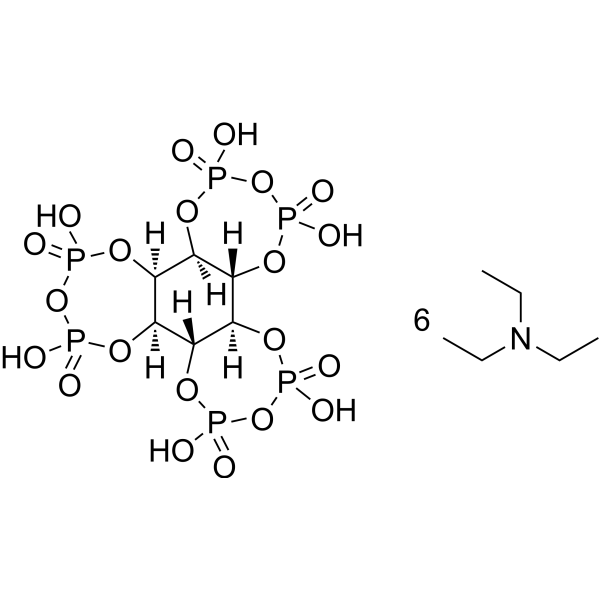
    myo-Inositol trispyrophosphate (ITPP) hexa-triethylamine is a salt form of inositol triphosphate (ITPP). myo-Inositol trispyrophosphate hexa-triethylamine is a membrane-permeant hemoglobin allosteric regulator. myo-Inositol trispyrophosphate hexa-triethylamine enhances the oxygen release capacity of red blood cells by reducing the affinity of hemoglobin to oxygen. myo-Inositol trispyrophosphate hexa-triethylamine can be used in the study of cardiovascular disease and cancer .
    myo-Inositol trispyrophosphate hexa-triethylamine
  • HY-B1411R

    myo-inositol (Standard); meso-inositol (Standard)

    Reference Standards Endogenous Metabolite Others
    i-Inositol (Standard) is the analytical standard of i-Inositol. This product is intended for research and analytical applications. i-Inositol (myo-Inositol) is a compound of sugar alcohols. i-Inositol is involved in a series of biological processes such as insulin signal transduction and cytoskeletal transduction. i-Inositol mainly exists in glial cells and plays an osmotic role .
    i-Inositol (Standard)
  • HY-N2580
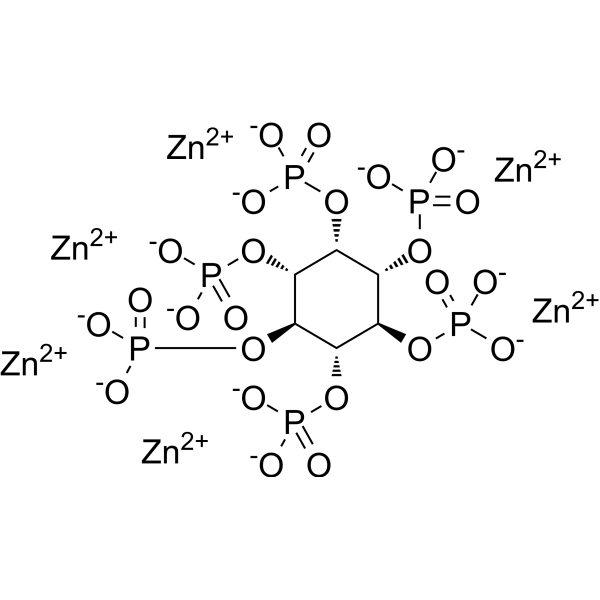
    Zinc Phytate
    1 Publications Verification

    Endogenous Metabolite Amyloid-β Autophagy Cardiovascular Disease Neurological Disease Metabolic Disease Cancer
    Zinc Phytate (myo-Inositol; hexakis dihydrogen phosphate; Inositol hexaphosphate) is an orally active compound. Zinc Phytate can be derived from the seeds of legumes. Zinc Phytate is a [PO4] 3- storage depot and precursor for other inositol phosphates and pyrophosphates. Zinc Phytate attenuates oligomers and upregulates autophagy protein. Zinc Phytate can be used in cardiovascular disease, metabolic disease, nervous system disease and cancer research .
    Zinc Phytate
  • HY-B1411S

    myo-inositol-d6; meso-inositol-d6

    Endogenous Metabolite Others
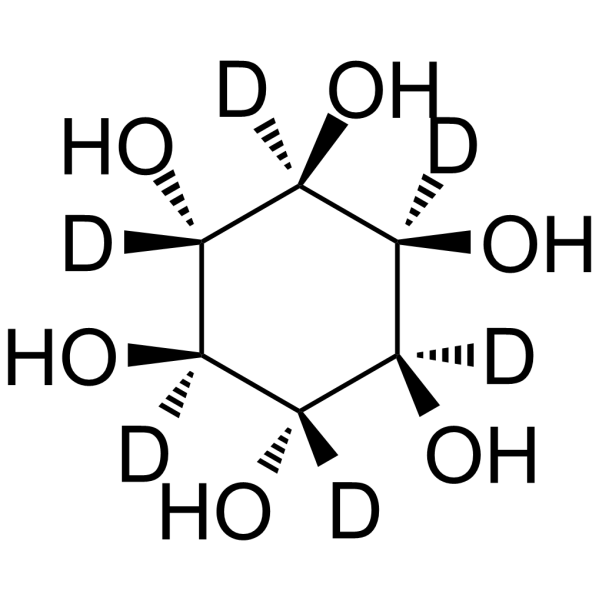
    i-Inositol-d6 is the deuterium labeled i-Inositol. i-Inositol is a chemical compound, associated lipids are found in many foods, in particular fruit, especially cantaloupe and oranges.
    i-Inositol-d6
  • HY-133690

    Calcium Channel Metabolic Disease
    D-myo-Inositol-1,3,4,5-tetraphosphate sodium is formed by the phosphorylation of Ins(1,4,5)P3 by inositol 1,4,5-triphosphate 3-kinase.
    D-myo-Inositol-1,3,4,5-tetraphosphate sodium
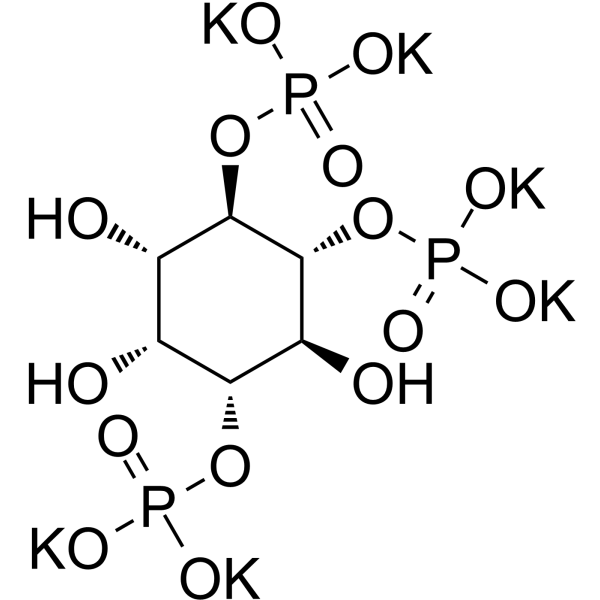
  • HY-103642

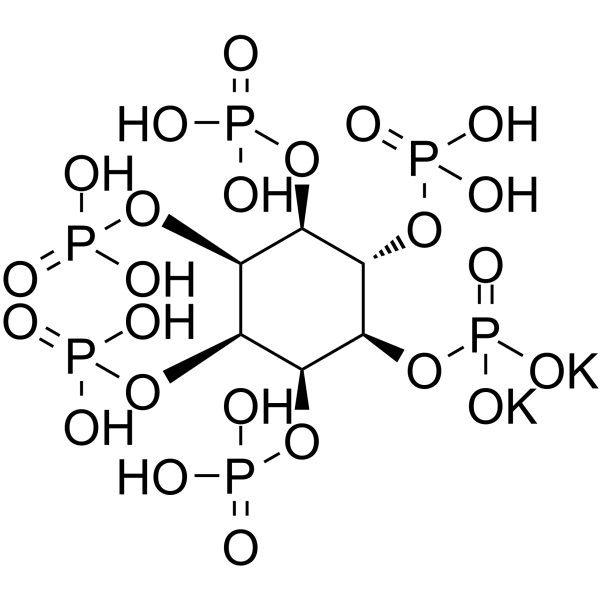
    inositol 1,4,5-trisphosphate hexapotassium salt; Ins(1,4,5)-P3 hexapotassium salt

    Calcium Channel Metabolic Disease
    D-myo-Inositol 1,4,5-trisphosphate hexapotassium salt is the hexapotassium salt of D-myo-Inositol 1,4,5-trisphosphate (1,4,5-IP3), which is a second messenger that stimulates the discharge of calcium from the endoplasmic reticulum.
    D-myo-Inositol 1,4,5-trisphosphate hexapotassium salt
  • HY-N2421
    Sequoyitol
    1 Publications Verification

    5-O-Methyl-myo-inositol

    NF-κB TGF-β Receptor Reactive Oxygen Species (ROS) Insulin Receptor Akt Parasite Infection Metabolic Disease Endocrinology
    Sequoyitol (5-O-Methyl-myo-inositol) is an orally active hypoglycemic agent and antioxidant. Sequoyitol can be isolated from herbaceous plants. Sequoyitol downregulates the expression of NF-κB and TGF-β1, reduces ROS production and malondialdehyde levels, and enhances total antioxidant capacity. Sequoyitol activates the insulin signaling pathway, including the phosphorylation of IR, IRS1 and Akt. Sequoyitol increases serum insulin levels, inhibits hepatic glucose production, and promotes cellular glucose uptake. Sequoyitol antagonizes TNFα-induced inhibition of the insulin signaling pathway, and decreases blood urea nitrogen and serum creatinine levels. Sequoyitol elicits potential peaks in the chemosensors of adult and larval Atrophaneura alcinous, and acts as an oviposition stimulant for female Atrophaneura alcinous. Sequoyitol can be used in research related to type 2 diabetes, insulin resistance, hyperglycemia, impaired glucose tolerance and diabetic nephropathy .
    Sequoyitol
  • HY-W795960

    Biochemical Assay Reagents Calcium Channel Phospholipase Neurological Disease Metabolic Disease
    D-myo-inositol 1,4,5-trisphosphate sodium salt is a widely distributed intracellular second messenger. D-myo-inositol 1,4,5-trisphosphate sodium salt acts as a potent agonist of the Ins (1,4,5) P3 receptor with an EC50 of 0.12 μM and inhibits bovine PLC-δ1, with an IC50 of 5.4 μM for binding and an IC50 of 12.4 μM for hydrolysis. D-myo-inositol 1,4,5-trisphosphate sodium saltis metabolized into Ins (1,4) P2 and Ins (1,3,4,5) P4. D-myo-inositol 1,4,5-trisphosphate sodium salt mediates various cellular processes, including growth, development, fertilization, secretion, contraction and neuromodulation. D-myo-inositol 1,4,5-trisphosphate sodium salt inhibits PIP2 hydrolysis and Ca 2+-ATPase activity. D-myo-inositol 1,4,5-trisphosphate sodium salt is used for cardiac preconditioning, exerts cardioprotective effects and mimics ischemic preconditioning. D-myo-inositol 1,4,5-trisphosphate sodium salt is applied in studies related to intracellular calcium and phosphoinositol signaling pathways .
    D-myo-Inositol 1,4,5-trisphosphate sodium salt
  • HY-173537

    Ins(1,2,4,5)P4 tetrasodium salt; 1,2,4,5-IP4 tetrasodium salt

    Calcium Channel Neurological Disease
    D-myo-Inositol-1,2,4,5-tetraphosphate (DL-Ins-(1,2,4,5)P4) tetrasodium is raracemic regioisomer of myo-inositol tetrakisphosphates (IP4s). D-myo-Inositol-1,2,4,5-tetraphosphate tetrasodium is an Ins(1,4,5)P3 receptor agonist with a Ki of 11 nM. D-myo-Inositol-1,2,4,5-tetraphosphate tetrasodium induces Ca 2+ mobilization with an EC50 value of 0.22 μM in CHO cells .
    D-myo-Inositol-1,2,4,5-tetraphosphate tetrasodium salt
  • HY-175087

    Ins(1,2,4,5,6)P5 sodium salt; 1,2,4,5,6-IP5 sodium salt

    Calcium Channel Others
    D-myo-Inositol-1,2,4,5,6-pentaphosphate (Ins(1,2,4,5,6)P5) sodium salt is one of several different inositol oligophosphate isomers involved in signal transduction. In human Jurkat T lymphocytes, Ins(1,2,4,5,6)P5 (sodium salt) is phosphorylated to InsP6 by 1/3 kinase. D-myo-Inositol-1,2,4,5,6-pentaphosphate sodium salt is involved in calcium signaling .
    D-myo-Inositol-1,2,4,5,6-pentaphosphate sodium salt
  • HY-W145699

    Biochemical Assay Reagents Endogenous Metabolite Others
    D-myo-Inositol 4-mono-phosphate, also known as IMP, is a phosphorylated form of inositol that is commonly found in various metabolic pathways, especially in the biosynthesis of phospholipids and cell signaling molecules. D-myo-Inositol 4-mono-phosphate has unique chemical properties that make it an important intermediate in the production of second messengers, such as inositol triphosphate (IP3) and diacylglycerol (DAG), which signal in cells plays a key role in. D-myo-Inositol 4-mono-phosphate is also used in dietary supplements and pharmaceuticals because of its potential health benefits, including improved insulin sensitivity and cognitive function.
    D-myo-Inositol 4-monophosphate
  • HY-12613

    NSC 45109

    Drug Derivative Fungal Others
    2-C-methylene-myo-inositol oxide (NSC 45109), an inositol derivative, induces pseudohyphae formation in Saccharomyces spp .
    2-C-methylene-myo-inositol oxide
  • HY-167815

    Biochemical Assay Reagents
    Myo-Inositol hexasulfate hexapotassium is a sulfated derivative of inositol that has the activity of mimicking highly sulfated polysaccharides such as heparin, affecting many cell signaling pathways.
    myo-Inositol hexasulfate hexapotassium
  • HY-175042

    Ins(1,3,4,5,6)P5 ammonium salt; 1,3,4,5,6-IP5 ammonium salt

    Akt Cancer
    D-myo-Inositol-1,3,4,5,6-pentaphosphate (ammonium salt) (Ins(1,3,4,5,6)P5 (ammonium salt)) is an isomer of inositol phosphate that acts as a small and soluble second messenger in the transmission of cellular signals. D-myo-Inositol-1,3,4,5,6-pentaphosphate (ammonium salt) can bind to the PH domain of Grp1 with a Kd of 590 nM. D-myo-Inositol-1,3,4,5,6-pentaphosphate (ammonium salt) can inhibit the phosphorylation and kinase activity of Akt/PKB, inducing apoptosis in ovarian, lung, and breast cancer cells. D-myo-Inositol-1,3,4,5,6-pentaphosphate (ammonium salt) exhibits antiangiogenic activity in vitro and blocks capillary tube formation of HUVEC. D-myo-Inositol-1,3,4,5,6-pentaphosphate (ammonium salt) exerts antitumor effects against cancer xenografts in nude mice .
    D-myo-Inositol-1,3,4,5,6-pentaphosphate ammonium salt
  • HY-W706729

    Biochemical Assay Reagents Others
    myo-Inositol 1,3,5-orthoformate is a biochemical reagent that can be used as a biological material or organic compound for life science related research .
    myo-Inositol 1,3,5-orthoformate
  • HY-W703190

    inositol 1,4,5,6-tetraphosphate; D-Ins(1,4,5,6)P4

    Endogenous Metabolite Metabolic Disease
    D-myo-Inositol-1,4,5,6-tetraphosphate (D-Ins(1,4,5,6)P4) is one of several different inositol oligophosphate isomers implicated in signal transduction. It almost completely inhibits calcium-activated chloride channels at a concentration of 8-10 μM .
    D-myo-Inositol-1,4,5,6-tetraphosphate
  • HY-W788039

    Ins(1,3,5)P3 ammonium; 1,3,5-IP3 ammonium

    Biochemical Assay Reagents Others
    D-myo-Inositol-1,3,5-triphosphate (ammonium) is a class of biochemical reagents used in glycobiology research. Glycobiology studies the structure, synthesis, biology, and evolution of sugars. It involves carbohydrate chemistry, enzymology of glycan formation and degradation, protein-glycan recognition, and the role of glycans in biological systems. This field is closely related to basic research, biomedicine, and biotechnology .
    D-myo-Inositol-1,3,5-triphosphate ammonium
  • HY-P3000B

    Biochemical Assay Reagents Metabolic Disease
    Myo-Inositol Dehydrogenase, Enterobacter aerogenes (EC 1.1.1.18) is an oxidoreductase that acts on the donor CH-OH group and uses NAD+ or NADP+ as the acceptor. Myo-Inositol Dehydrogenase, Enterobacter aerogenes (EC 1.1.1.18) is involved in inositol metabolism and inositol phosphate metabolism.
    Myo-Inositol Dehydrogenase, Enterobacter aerogenes
  • HY-P3000A

    Biochemical Assay Reagents Metabolic Disease
    Myo-Inositol Dehydrogenase, Bacillus subtilis (EC 1.1.1.18) is an oxidoreductase that acts on the donor CH-OH group and uses NAD+ or NADP+ as the acceptor. Myo-Inositol Dehydrogenase, Bacillus subtilis (EC 1.1.1.18) is involved in inositol metabolism and inositol phosphate metabolism.
    Myo-Inositol Dehydrogenase, Bacillus subtilis
  • HY-B1411S1

    myo-inositol-d1; meso-inositol-d1

    Isotope-Labeled Compounds Endogenous Metabolite Others
    i-Inositol-d is the deuterium labeled i-Inositol .
    i-Inositol-d1
  • HY-170424

    Biochemical Assay Reagents Others
    D-myo-Inositol-1,3,4,5-tetrakisphosphate potassium increases the extracellular Ca 2+ entry through upregulation of voltage-gated calcium channels .
    D-myo-Inositol-1,3,4,5-tetrakisphosphate potassium
  • HY-157699

    Liposome Biochemical Assay Reagents
    1,2-Dioleoyl-sn-glycero-3-phospho-(1'-myo-inositol-5'-phosphate) ammonium is a membrane-bound signaling molecule with intracellular activity in regulating membrane trafficking and signal transduction. 1,2-Dioleoyl-sn-glycero-3-phospho-(1'-myo-inositol-5'-phosphate) ammonium can be used in the preparation of liposomes to enhance the efficiency of compound delivery. 1,2-Dioleoyl-sn-glycero-3-phospho-(1'-myo-inositol-5'-phosphate) ammonium can also act as a coordinator of the actin cytoskeleton and participate in the regulation of cell morphology and motility.
    1,2-Dioleoyl-sn-glycero-3-phospho-(1'-myo-inositol-5'-phosphate) ammonium
  • HY-167287

    Biochemical Assay Reagents Others
    myo-Inositol,tetraphosphate,pentaammonium salt is a biochemical reagent.
    myo-Inositol,tetraphosphate,pentaammonium salt
  • HY-W403046A

    Drug Metabolite Calcium Channel Neurological Disease
    D-myo-Inositol-4-phosphate monoammonium is a metabolite of D-myo-Inositol 1,4,5-trisphosphate. D-myo-Inositol 1,4,5-trisphosphate, a second messenger, elicits Ca 2+ mobilization. D-myo-Inositol 1,4,5-trisphosphate inhibits the binding of phosphoinositide-specific phospholipase C-delta 1 (PLC-delta 1) to bilayer membranes composed of phosphatidylcholine (PC) and phosphatidylinositol 4,5-bisphosphate (PIP2) .
    D-myo-Inositol-4-phosphate monoammonium
  • HY-W403046

    Biochemical Assay Reagents Others
    D-myo-Inositol-4-phosphate (ammonium) is a biochemical reagent.
    D-myo-Inositol-4-phosphate ammonium
  • HY-157651

    Biochemical Assay Reagents Others
    1-Stearoyl-2-arachidonoyl-sn-glycero-3-phospho-(1'-myo-inositol-3',4'-bisphosphate) ammonium regulates the activity of the actin network associated with endocytic structures .
    1-Stearoyl-2-arachidonoyl-sn-glycero-3-phospho-1'-myo-inositol-3',4'-bisphosphate ammonium
  • HY-139406

    PtdIns-(4)-P1 (1,2-dioctanoyl) ammonium; 08:0 PI(4)P ammonium

    Biochemical Assay Reagents Neurological Disease
    1,2-Dioctanoyl-sn-glycero-3-phospho-(1'-myo-inositol-4'-phosphate) (PtdIns-(4)-P1 (1,2-dioctanoyl)) ammonium is a synthetic phosphatidylinositol. 1,2-Dioctanoyl-sn-glycero-3-phospho-(1'-myo-inositol-4'-phosphate) ammonium can be used for the research of signal transduction research .
    1,2-Dioctanoyl-sn-glycero-3-phospho-1'-myo-inositol-4'-phosphate ammonium
  • HY-175384

    Ins(3)P1 sodium salt; 3-IP1 sodium

    Endogenous Metabolite Others
    D-myo-Inositol-3-phosphate (sodium) is one of the members in inositol phosphate family of second messengers that play an important role in transmitting cellular signals. D-myo-Inositol-3-phosphate (sodium) can be formed by the dephosphorylation of polyphosphate inositols .
    D-myo-Inositol-3-phosphate sodium
  • HY-175385

    Ins(1)P1 sodium; 1-IP1 sodium salt

    Endogenous Metabolite Others
    D-myo-Inositol-1-phosphate (sodium salt) is one of the members in inositol phosphate family of second messengers that play an important role in transmitting cellular signals. D-myo-Inositol-1-phosphate (sodium salt) can be formed by the dephosphorylation of polyphosphate inositols .
    D-myo-Inositol-1-phosphate sodium salt
  • HY-W331816

    Biochemical Assay Reagents Others
    myo-Inositol,hexaacetate is a class of biochemical reagents used in glycobiology research. Glycobiology studies the structure, synthesis, biology, and evolution of sugars. It involves carbohydrate chemistry, enzymology of glycan formation and degradation, protein-glycan recognition, and the role of glycans in biological systems. This field is closely related to basic research, biomedicine, and biotechnology .
    myo-Inositol,hexaacetate
  • HY-167241

    Biochemical Assay Reagents Others
    D-myo-Inositol,1,5,6-tris(dihydrogen phosphate),ammonium salt is a biochemical reagent.
    D-myo-Inositol,1,5,6-trisdihydrogen phosphate,ammonium salt
  • HY-157703

    1,2-Dioleoyl-sn-glycero-3-phospho-1′-myo-inositol-4′,5′-bisphosphate ammonium

    Biochemical Assay Reagents
    18:1 PI(4,5)P2 (1,2-Dioleoyl-sn-glycero-3-phospho-(1′-myo-inositol-4′,5′-bisphosphate) (ammonium)) is a kind of biochemical reagent.
    18:1 PI(4,5)P2
  • HY-W794363

    Calcium Channel Metabolic Disease
    D-myo-Inositol-1,4,5,6-tetraphosphate sodium is one of several different inositol oligophosphate isomers implicated in signal transduction .
    D-myo-Inositol-1,4,5,6-tetraphosphate sodium
  • HY-163966

    Biochemical Assay Reagents Others
    (±)-myo-Inositol-1-phosphate is a biochemical assay reagent.
    Decarboxyl ofloxacin
  • HY-W151168

    Biochemical Assay Reagents Others
    1,2-O-Cyclohexylidene-myo-inositol is a class of biochemical reagents used in glycobiology research. Glycobiology studies the structure, synthesis, biology, and evolution of sugars. It involves carbohydrate chemistry, enzymology of glycan formation and degradation, protein-glycan recognition, and the role of glycans in biological systems. This field is closely related to basic research, biomedicine, and biotechnology .
    1,2-O-Cyclohexylidene-myo-inositol
  • HY-175386

    Ins(4,5)-P2 sodium; 4,5-IP2 sodium

    Endogenous Metabolite Others
    D-myo-Inositol-4,5-diphosphate (sodium) is one of the members in inositol phosphate family of second messengers that play an important role in transmitting cellular signals. D-myo-Inositol-4,5-diphosphate (sodium) can open calcium channels and increase intracellular calcium upon binding to its receptor on the endoplasmic reticulum .
    D-myo-Inositol-4,5-diphosphate sodium
  • HY-157652

    1-Stearoyl-2-arachidonoyl-sn-glycero-3-phospho-1′-myo-inositol-3′,4′,5′-trisphosphate ammonium

    Biochemical Assay Reagents
    18:0-20:4 PI(3,4,5)P3 (1-Stearoyl-2-arachidonoyl-sn-glycero-3-phospho-(1′-myo-inositol-3′,4′,5′-trisphosphate) (ammonium)) is a kind of biochemical reagent.
    18:0-20:4 PI(3,4,5)P3
  • HY-175070

    Ins(2,4,5)P3 sodium salt; 2,4,5-IP3 sodium salt

    Calcium Channel Metabolic Disease
    D-myo-Inositol-2,4,5-triphosphate (Ins(2,4,5)P3) (sodium salt) is a second messenger produced in cells by phospholipase C-mediated hydrolysis of phosphatidylinositol-4,5-biphosphate. D-myo-Inositol-2,4,5-triphosphate (sodium salt) can open calcium channels and increase intracellular calcium upon binding to its receptors on the endoplasmic reticulum. D-myo-Inositol-2,4,5-triphosphate (sodium salt) also acts as a partial agonist at rat hepatic IP3 receptors. D-myo-Inositol-2,4,5-triphosphate (sodium salt) can be studied in research on calcium ions signaling pathway .
    D-myo-Inositol-2,4,5-triphosphate sodium salt
  • HY-175387

    Ins(1,3,4)-P3 sodium; 1,3,4-IP3 sodium

    Endogenous Metabolite Others
    D-myo-Inositol-1,3,4-triphosphate (sodium) is one of the inositol oligophosphate isomers implicated in signal transduction. D-myo-Inositol-1,3,4-triphosphate (sodium) acts through the inhibition of Ins(3,4,5,6)-P4 kinase activity to increase cellular level of Ins(3,4,5,6)-P4, thereby inhibiting calcium-activated chloride channels. D-myo-Inositol-1,3,4-triphosphate (sodium) can be regulated by the levels of cytosolic free calcium .
    D-myo-Inositol-1,3,4-triphosphate sodium
  • HY-175383

    Ins(1,2,6)-P3; 1,2,6-IP3

    Calcium Channel Others
    D-myo-Inositol-1,2,6-triphosphate (sodium) is one of the members in inositol phosphate family of second messengers that play an important role in transmitting cellular signals. D-myo-Inositol-1,2,6-triphosphate (sodium) can open calcium channels and increase intracellular calcium upon binding to its receptor on the endoplasmic reticulum .
    D-myo-Inositol-1,2,6-triphosphate sodium
  • HY-W787880

    Ins(1,2)P2 sodium

    Calcium Channel Metabolic Disease
    D-myo-Inositol-1,2-diphosphate (Ins(1,2)P2) sodium is one of the many inositol phosphate (InsP) isomers that could act as small, soluble second messengers in the transmission of cellular signals .
    D-myo-Inositol-1,2-diphosphate sodium
  • HY-172573

    2,3,5,6-IP4 tetrasodium; Ins(2,3,5,6)-P4 tetrasodium

    Calcium Channel Others
    D-myo-Inositol-2,3,5,6-tetraphosphate (2,3,5,6-IP4) tetrasodium is a inositol phosphate. D-myo-Inositol-2,3,5,6-tetraphosphate tetrasodium can be used for the study of calcium channels .
    D-myo-Inositol-2,3,5,6-tetraphosphate tetrasodium
  • HY-W739692

    Biochemical Assay Reagents Others
    1,2:4,5-Di-O-cyclohexylidene-myo-inositol is a class of biochemical reagents used in glycobiology research. Glycobiology studies the structure, synthesis, biology, and evolution of sugars. It involves carbohydrate chemistry, enzymology of glycan formation and degradation, protein-glycan recognition, and the role of glycans in biological systems. This field is closely related to basic research, biomedicine, and biotechnology .
    1,2:4,5-Di-O-cyclohexylidene-myo-inositol
  • HY-150135B

    inositol 1,4,5-trisphosphate tripotassium; Ins(1,4,5)-P3 tripotassium

    Calcium Channel Neurological Disease
    D-myo-Inositol 1,4,5-trisphosphate tripotassium, a second messenger, elicits Ca 2+ mobilization. D-myo-Inositol 1,4,5-trisphosphate tripotassium inhibits the binding of phosphoinositide-specific phospholipase C-delta 1 (PLC-delta 1) to bilayer membranes composed of phosphatidylcholine (PC) and phosphatidylinositol 4,5-bisphosphate (PIP2) .
    D-myo-Inositol 1,4,5-trisphosphate tripotassium
  • HY-W567260

    Biochemical Assay Reagents Others
    1,2:4,5-Bis-O-(1-methylethylidene)-myo-inositol is a class of biochemical reagents used in glycobiology research. Glycobiology studies the structure, synthesis, biology, and evolution of sugars. It involves carbohydrate chemistry, enzymology of glycan formation and degradation, protein-glycan recognition, and the role of glycans in biological systems. This field is closely related to basic research, biomedicine, and biotechnology .
    1,2:4,5-Bis-O-(1-methylethylidene)-myo-inositol

Inquiry Online

Your information is safe with us. * Required Fields.

Salutation


Country or Region *

Applicant Name *


Organization Name *

Department *


Email Address *


Product Name *

Cat. No.


Requested quantity *

Phone Number *


Remarks

Inquiry Online

Inquiry Information

Product Name:
Cat. No.:
Quantity:
MCE Japan Authorized Agent:

