
7 Results for "

neonatal levels

" in MedChemExpress (MCE) Product Catalog:
Products (7)

7 Results for "neonatal levels" in MCE Product Catalog:

14
14 Cited Publications
Cat. No.: HY-112005
CAS No.: 4004-05-1
Purity:  98.80%
Synonyms: Dioleoylphosphatidylethanolamine; 1,2-Dioleoyl-sn-glycero-3-phosphoethanolamine
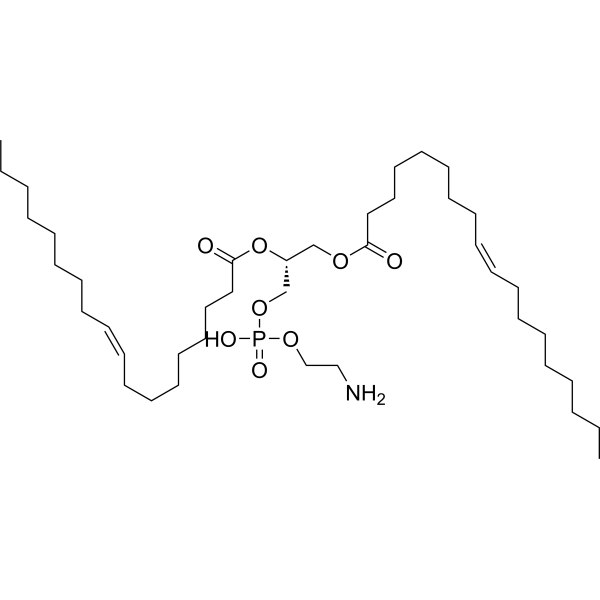
DOPE (Dioleoylphosphatidylethanolamine; 1,2-Dioleoyl-sn-glycero-3-phosphoethanolamine) is an orally active inhibitor of ferroptosis with anti-inflammatory and intestinal barrier maintenance activities. DOPE regulates the expression of ACSL4, SLC7A11 and GPX4 to restore the redox system balance, thereby reducing the levels of lipid peroxides, iron ions and intestinal inflammatory factors (IL-1β and IL-6). DOPE promotes the migration and proliferation of intestinal epithelial cells and increases the level of tight junction proteins; it also destabilizes endosomal membranes, mediates the conjugation of RVG peptides with mesenchymal stem cell-derived exosomes to enhance brain targeting. DOPE can be applied to research related to neonatal necrotizing enterocolitis and Alzheimer's disease .
loading...
    loading...
3
3 Cited Publications
Cat. No.: HY-W013375
CAS No.: 76721-89-6
Target:  

Neprilysin

Research Areas:  

Neurological Disease

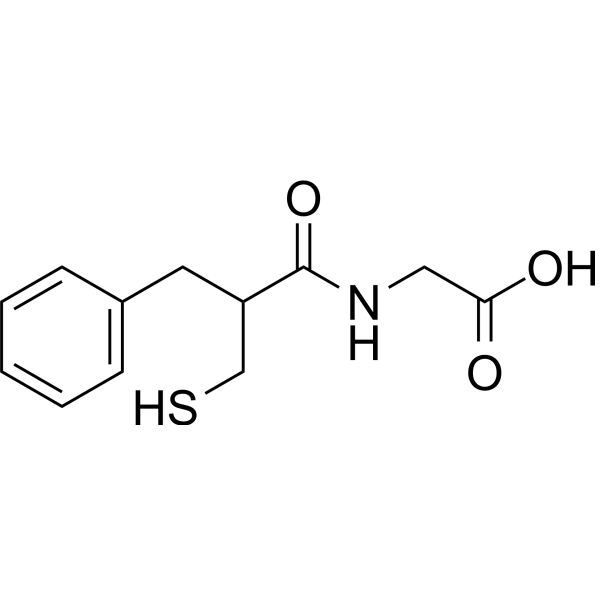
Thiorphan is a selective neprilysin (NEP) inhibitor with an IC50 of 6.9 nM. Thiorphan competitively binds to NEP and blocks its activity, preventing the degradation of neuropeptides such as substance P (SP) and neurokinin NKA. In the field of neonatal brain injury research, Thiorphan can increase the levels of SP and NKA, activate NK1 and NK2 receptors and downstream transduction pathways, and inhibit excessive activation of NMDA receptors. Thus, Thiorphan can protect neocortical neurons from excitotoxic cell death. Thiorphan may also inhibit NEP from enhancing bronchoconstriction and can be used in the study of respiratory diseases .
loading...
    loading...
Cat. No.: HY-113073
CAS No.: 1518-62-3
Target:  

Endogenous Metabolite

Research Areas:  

Others

2,4-Dihydroxybutanoic acid is typically absent in normal human urine extracts and is found only in trace amounts in neonates, while cases of succinic semialdehyde dehydrogenase deficiency consistently exhibit elevated levels of this metabolite.
loading...
    loading...
Cat. No.: HY-W127357
CAS No.: 126-53-4
Glyceryl trinonanoate is a triacylglycerol containing nonanoic acid at the sn-1, sn-2 and sn-3 positions. It has been found in Schizochytrium biomass. 1 1,2,3-Trinonanoyl-rac-glycerol increases blood levels of the ketone body D-(-)-3-hydroxybutyrate in neonatal rhesus monkeys. 2|1. Mioso, R., Toledo Marante, FJ, González, JE, et al. Schizochytrium sp. metabolite analysis. Oleaginous microbial sources of biodiesel by GC-MS. braz. J. Microbiology. 45(2), 403-409 (2014).|2. Tetrick, MA, Greer, FR and Benevenga, NJ Blood D- ( )-3-Hydroxybutyric acid concentration. Compare. medicine. 60(6), 486-490 (2010).
loading...
    loading...
Cat. No.: HY-A0114
CAS No.: 103775-14-0
Synonyms: RS 10029
Moexiprilat is an inhibitor of angiotensin-converting enzyme (ACE; IC50=2.1 nM) and an active metabolite of the prodrug Moexipril (HY-117281). It is formed from moexipril in vivo by side chain ester hydrolysis. Moexiprilat (10 nM) prevents the estrone- or angiotensin II-stimulated proliferation of primary neonatal rat cardiac fibroblasts. It reduces mean arterial blood pressure and increases the levels of atrial natriuretic peptide, a marker of hypertension, in ovariectomized mice when administered at a dose of 50 mg/kg per day.
loading...
    loading...
Cat. No.: HY-W402074
CAS No.: 16275-44-8
Synonyms: Butenolide
5-Acetamide-Butenolide (Butenolide) is a mycotoxin with pro-oxidant activity, which is found in Fusarium. 5-Acetamide-Butenolide disrupts the mitochondrial membrane potential in primary neonatal rat cardiomyocytes. 5-Acetamide-Butenolide also induces the production of thiobarbituric acid reactive substances (TBARS) in isolated rat myocardial mitochondria. 5-Acetamide-Butenolide increases the production of reactive oxygen species (ROS), decreases the levels of GSH and reduces the viability of HepG2 cells .
loading...
    loading...
Cat. No.: HY-112005G
CAS No.: 4004-05-1
Synonyms: Dioleoylphosphatidylethanolamine (GMP); 1,2-Dioleoyl-sn-glycero-3-phosphoethanolamine (GMP)
DOPE GMP is DOPE (HY-112005) produced by using GMP guidelines. GMP small molecules works appropriately as an auxiliary reagent for cell therapy manufacture. DOPE (Dioleoylphosphatidylethanolamine; 1,2-Dioleoyl-sn-glycero-3-phosphoethanolamine) is an orally active inhibitor of ferroptosis with anti-inflammatory and intestinal barrier maintenance activities. DOPE regulates the expression of ACSL4, SLC7A11 and GPX4 to restore the redox system balance, thereby reducing the levels of lipid peroxides, iron ions and intestinal inflammatory factors (IL-1β and IL-6). DOPE promotes the migration and proliferation of intestinal epithelial cells and increases the level of tight junction proteins; it also destabilizes endosomal membranes, mediates the conjugation of RVG peptides with mesenchymal stem cell-derived exosomes to enhance brain targeting. DOPE can be applied to research related to neonatal necrotizing enterocolitis and Alzheimer's disease .
loading...
    loading...

