



64 Results for "

neuroprotective peptide

" in MedChemExpress (MCE) Product Catalog:
Products (64)

64 Results for "neuroprotective peptide" in MCE Product Catalog:

102
102 Publications Verification
Cat. No.: HY-P1061
CAS No.: 867021-83-8
Target:  

STAT Amyloid-β

Research Areas:  

Neurological Disease

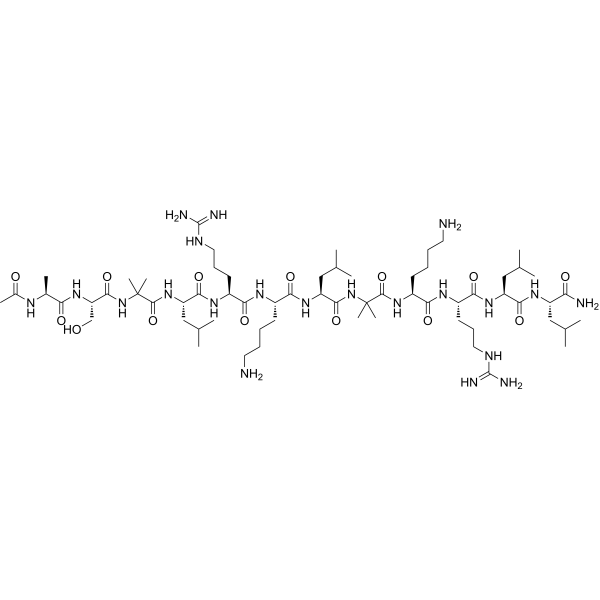
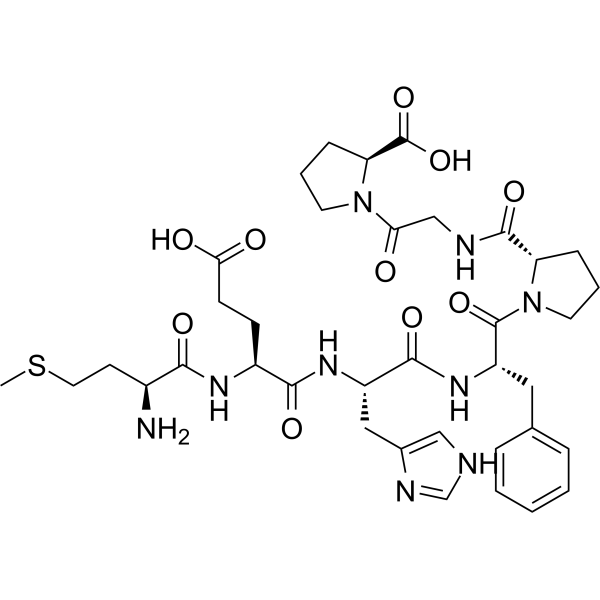
Colivelin is a brain penetrant neuroprotective peptide and a potent activator of STAT3, suppresses neuronal death by activating STAT3 in vitro . Colivelin exhibits long-term beneficial effects against neurotoxicity, Aβ deposition, neuronal apoptosis, and synaptic plasticity deficits in neurodegenerative disease . Colivelin has the potential for the treatment of alzheimer's disease and ischemic brain injury
loading...
    loading...
102
102 Publications Verification
Cat. No.: HY-P1061A
CAS No.: 2803948-60-7
Target:  

STAT Amyloid-β Apoptosis

Research Areas:  

Neurological Disease

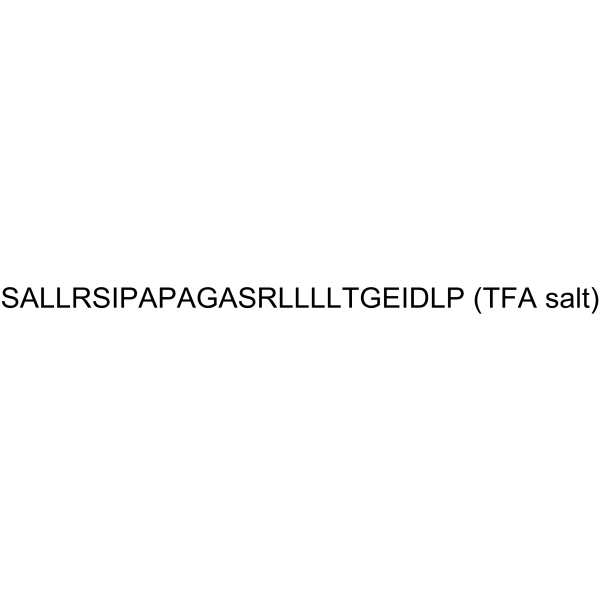
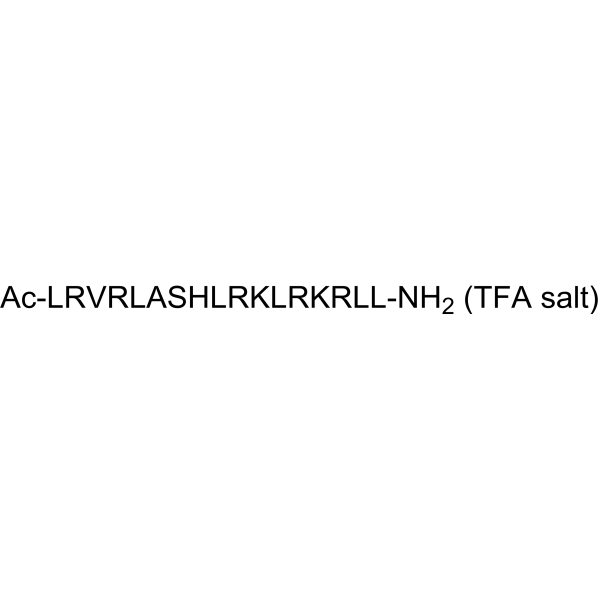
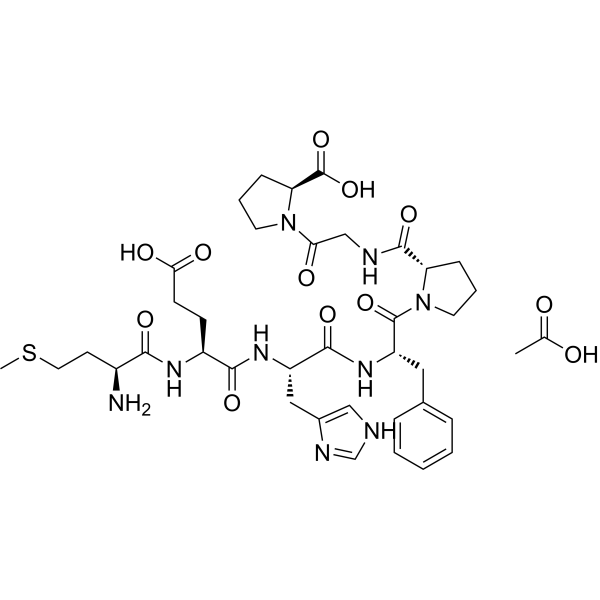
Colivelin TFA is a brain penetrant neuroprotective peptide and a potent activator of STAT3, suppresses neuronal death by activating STAT3 in vitro . Colivelin TFA exhibits long-term beneficial effects against neurotoxicity, Aβ deposition, neuronal apoptosis, and synaptic plasticity deficits in neurodegenerative disease . Colivelin TFA has the potential for the treatment of alzheimer's disease and ischemic brain injury .
loading...
    loading...
27
27 Cited Publications
Cat. No.: HY-P1363
Synonyms: Amyloid β-peptide (1-42) (human) TFA
Target:  

Amyloid-β

Research Areas:  

Neurological Disease

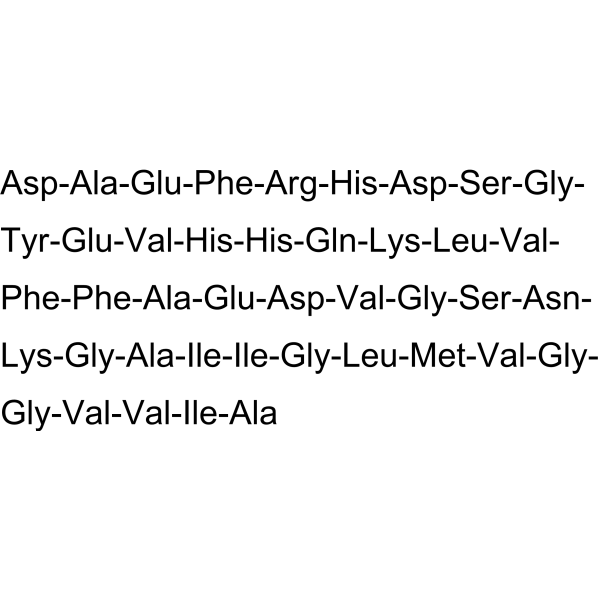
β-Amyloid (1-42) (Amyloid β-peptide (1-42), human TFA, a 42-amino acid peptide that has not been treated with HFIP, is a brain-penetrant amyloid protein fragment, which can be used in research on Alzheimer's disease and Down’s syndrome. β-Amyloid (1-42), human TFA remaining as a monomer exhibits antioxidant and neuroprotective effects. β-Amyloid (1-42), human TFA, after being monomericized by HFIP and dissolved in DMSO to form the stock solution, on the one hand, can form soluble oligomers (AβOs) when incubated at 4 °C, which have synaptic toxicity and neurotoxicity; on the other hand, it can be incubated at 37 °C to form insoluble fibrils, with lower neurotoxicity, and participating in the oxidative damage process. Aβ42 oligomers bind to various neuronal surface receptors (such as PrPc, mGluR5, NMDA receptors, etc.), triggering oxidative stress, calcium homeostasis imbalance, and synaptic toxicity via activating downstream signaling pathways, leading to neuronal dysfunction and death .
loading...
    loading...
27
27 Cited Publications
Cat. No.: HY-P1363A
CAS No.: 107761-42-2
Synonyms: Amyloid β-peptide (1-42) (human)
Target:  

Amyloid-β

Research Areas:  

Neurological Disease

β-Amyloid (1-42) (Amyloid β-peptide (1-42)), human, a 42-amino acid peptide that has not been treated with HFIP, is a brain-penetrant amyloid protein fragment, which can be used in research on Alzheimer's disease and Down’s syndrome. β-Amyloid (1-42), human remaining as a monomer exhibits antioxidant and neuroprotective effects. β-Amyloid (1-42), human, after being monomericized by HFIP and dissolved in DMSO to form the stock solution, on the one hand, can form soluble oligomers (AβOs) when incubated at 4 °C, which have synaptic toxicity and neurotoxicity; on the other hand, it can be incubated at 37 °C to form insoluble fibrils, with lower neurotoxicity, and participating in the oxidative damage process. Aβ42 oligomers bind to various neuronal surface receptors (such as PrPc, mGluR5, NMDA receptors, etc.), triggering oxidative stress, calcium homeostasis imbalance, and synaptic toxicity via activating downstream signaling pathways, leading to neuronal dysfunction and death .
loading...
    loading...
27
27 Cited Publications
Cat. No.: HY-P1363B
CAS No.: 107761-42-2
Target:  

Amyloid-β

Research Areas:  

Neurological Disease

β-Amyloid (1-42), human, HFIP-treated, a 42-amino acid peptide that has been treated with HFIP from β-Amyloid (1-42), human (HY-P1363A), is a brain-penetrant amyloid protein fragment, which can be used in research on Alzheimer's disease and Down’s syndrome. β-Amyloid (1-42), human, HFIP-treated remaining as a monomer exhibits antioxidant and neuroprotective effects. β-Amyloid (1-42), human, HFIP-treated, after being dissolved in DMSO to form the stock solution, on the one hand, can form soluble oligomers (AβOs) when incubated at 4°C, which have synaptic toxicity and neurotoxicity; on the other hand, it can be incubated at 37°C to form insoluble fibrils, with lower neurotoxicity, and participating in the oxidative damage process. Aβ42 oligomers bind to various neuronal surface receptors (such as PrPc, mGluR5, NMDA receptors, etc.), triggering oxidative stress, calcium homeostasis imbalance, and synaptic toxicity via activating downstream signaling pathways, leading to neuronal dysfunction and death .
loading...
    loading...
14
14 Cited Publications
Cat. No.: HY-100529
CAS No.: 179528-45-1
Purity:  98.57%
Target:  

Proteasome

Research Areas:  

Cancer

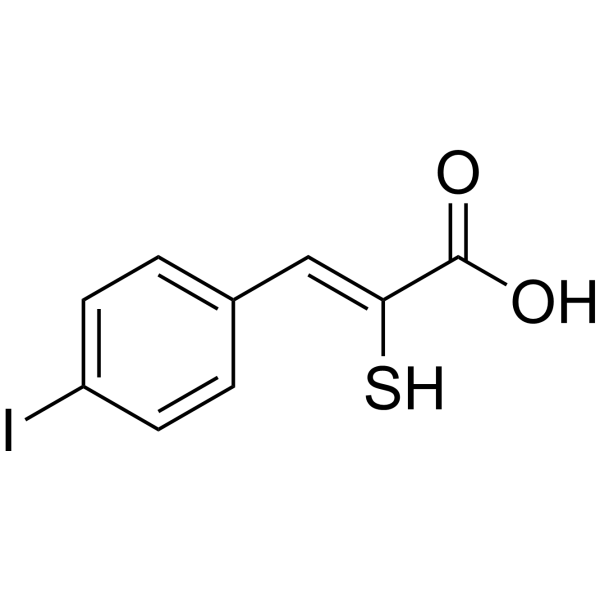
PD 150606 is a selective, cell-permeable non-peptide calpain inhibitor with Ki values of 0.21 μM and 0.37 μM for μ- and m-calpains respectively, which is neuroprotective .
loading...
    loading...
11
11 Cited Publications
Cat. No.: HY-B1588
CAS No.: 5697-56-3
Carbenoxolone is a blood-brain barrier-permeable Pannexin1 inhibitor, gap junction (Gap junction) blocker, and β-amyloid 42 inhibitor. Carbenoxolone modulates voltage-gated currents of wild-type and mutant Panx1, and inhibits stimulus-activated Panx1 channel function. Carbenoxolone interacts with stable residues of β-amyloid 42 peptides, fibrils and oligomers, thereby inhibiting their aggregation. Carbenoxolone alleviates liver fibrosis. Carbenoxolone exerts neuroprotective and nootropic effects. Carbenoxolone can be used in studies related to Alzheimer's disease and liver fibrosis .
loading...
    loading...
8
8 Cited Publications
Cat. No.: HY-17417
CAS No.: 357-08-4
Target:  

Opioid Receptor

Research Areas:  

Neurological Disease

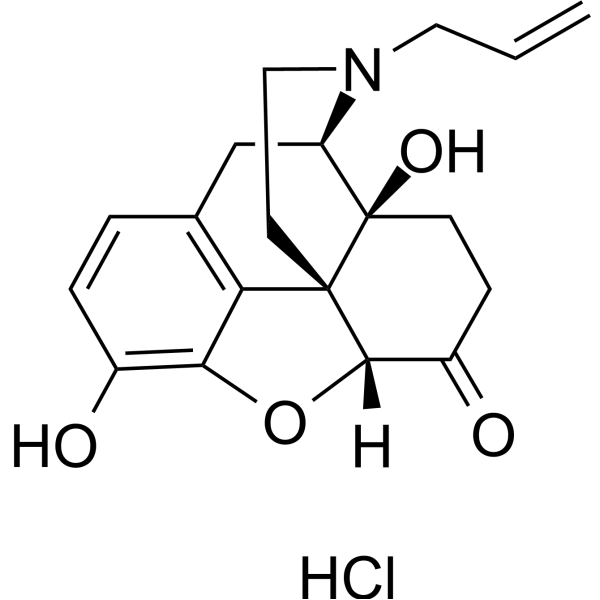
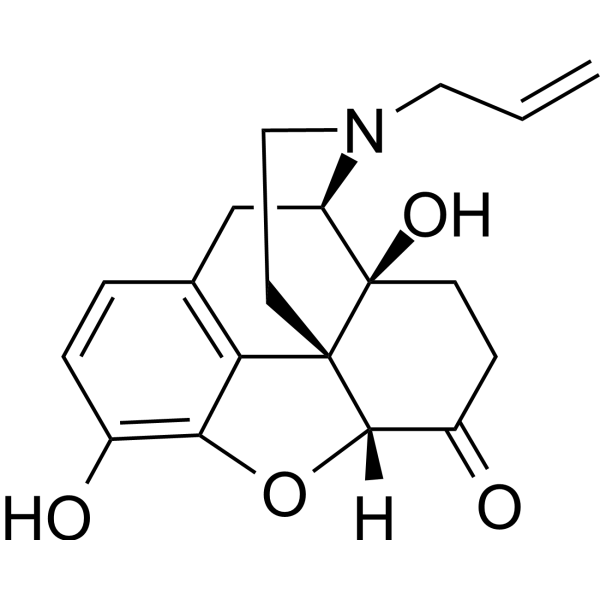
Naloxone hydrochloride is an orally active opioid receptor antagonist. Naloxone hydrochloride attenuates spinal cord stimulation‑associated anti‑hyperalgesic effects, antagonizes physiologic effects of endogenous opioid peptides linked to central nervous system injury sequelae, functions as a pressor agent to induce modest elevations in mean arterial blood pressure, exerts neuroprotective effects to improve post‑traumatic neurologic motor function, blocks opioid receptor‑mediated amnesic pathways, enhances memory consolidation, reverses Adrenocorticotropic hormone (ACTH) (HY-106373)- and epinephrine‑induced amnesia, and potentiates the memory‑facilitatory effects of ACTH and epinephrine .
loading...
    loading...
8
8 Cited Publications
Cat. No.: HY-17417A
CAS No.: 465-65-6
Target:  

Opioid Receptor

Research Areas:  

Neurological Disease

Naloxone hydrochloride is an orally active opioid receptor antagonist. Naloxone hydrochloride attenuates spinal cord stimulation‑associated anti‑hyperalgesic effects, antagonizes physiologic effects of endogenous opioid peptides linked to central nervous system injury sequelae, functions as a pressor agent to induce modest elevations in mean arterial blood pressure, exerts neuroprotective effects to improve post‑traumatic neurologic motor function, blocks opioid receptor‑mediated amnesic pathways, enhances memory consolidation, reverses Adrenocorticotropic hormone (ACTH) (HY-106373)‑ and epinephrine‑induced amnesia, and potentiates the memory‑facilitatory effects of ACTH and epinephrine .
loading...
    loading...
5
5 Cited Publications
Cat. No.: HY-P2136
CAS No.: 878009-24-6
COG1410 is an apolipoprotein E-derived peptide and an apoptosis inhibitor. COG1410 exerts neuroprotective and antiinflammatory effects in a murine model of traumatic brain injury (TBI). COG1410 can be used for the research of neurological disease .
loading...
    loading...
5
5 Cited Publications
Cat. No.: HY-B0780
CAS No.: 247257-48-3
Synonyms: BR-A-657
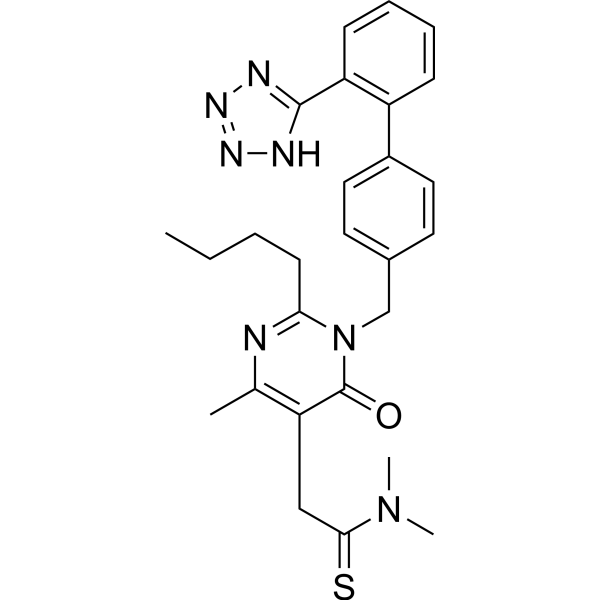
Fimasartan (BRA-657) is an orally effective angiotensin receptor AT1 non-peptide antagonist. Fimasartan has antihypertensive effects. Fimasartan improves neuroinflammation and brain injury mediated by NLRP3 inflammatome after intracerebral hemorrhage, and has neuroprotective effect. Fimasartan inhibits the expression of inducible nitric oxide synthase through the inactivation of NF-κB and activator protein-1 .
loading...
    loading...
2
2 Cited Publications
Cat. No.: HY-P1050
CAS No.: 514200-66-9
Target:  

nAChR

COG 133 is a fragment of Apolipoprotein E (APOE) peptide. COG 133 competes with the ApoE holoprotein for binding the LDL receptor, with potent anti-inflammatory and neuroprotective effects. COG 133 is also a nAChR antagonist with an IC50 of 445 nM .
loading...
    loading...
2
2 Cited Publications
Cat. No.: HY-P1050A
CAS No.: 2828432-37-5
COG 133 TFA is a fragment of Apolipoprotein E (APOE) peptide. COG 133 TFA competes with the ApoE holoprotein for binding the LDL receptor, with potent anti-inflammatory and neuroprotective effects. COG 133 TFA is also a nAChR antagonist with an IC50 of 445 nM .
loading...
    loading...
1
1 Cited Publications
Cat. No.: HY-P1146
CAS No.: 80714-61-0
Semax is a BBB-penetrable adrenocorticotropic hormone-like peptide and can form stable complexes with Cu 2+. Semax is a synthetic peptide analog of Adrenocorticotropic hormone (ACTH) (4-10). Semax has immunomodulatory, nootropic and neuroprotective activities. Semax can be used in the research of central nervous system diseases such as Alzheimer's disease and cerebral ischemia .
loading...
    loading...
1
1 Cited Publications
Cat. No.: HY-P10368
CAS No.: 1411976-18-5
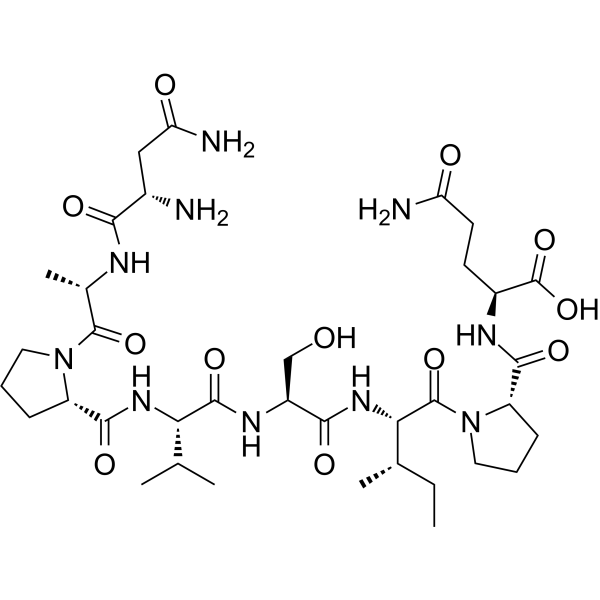
P110 heptapeptide is a peptide inhibitor of the Drp1-Fis1 interaction. P110 heptapeptide has anti-inflammatory, immunomodulatory, mitochondrial protective, and neuroprotective activities. Without blocking the physiological functions of Drp1, P110 heptapeptide reduces pathological functions in many models of neurodegeneration, ischemia, and sepsis. P110 heptapeptide can be used for research on neurological and inflammatory diseases .
loading...
    loading...
1
1 Cited Publications
Cat. No.: HY-P0133A
CAS No.: 2283335-13-5
Synonyms: Nona-L-arginine TFA; peptide R9 TFA
Target:  

Ser/Thr Protease

Research Areas:  

Neurological Disease

(Arg)9 (Nona-L-arginine) TFA is a cell-penetrating peptide (CPP) made up of 9 arginine residues. (Arg)9 TFA has neuroprotective property, exhibits neuroprotective activity with an IC50 of 0.78 μM in the glutamic acid model .
loading...
    loading...
1
1 Cited Publications
Cat. No.: HY-P1146A
CAS No.: 2828433-33-4
Semax acetate is a BBB-penetrable adrenocorticotropic hormone-like peptide and can form stable complexes with Cu 2+. Semax acetate is a synthetic peptide analog of Adrenocorticotropic hormone (ACTH) (4-10). Semax acetate has immunomodulatory, nootropic and neuroprotective activities. Semax acetate can be used in the research of central nervous system diseases such as Alzheimer's disease and cerebral ischemia .
loading...
    loading...
1
1 Cited Publications
Cat. No.: HY-105066
CAS No.: 211439-12-2
Purity:  99.64%
Research Areas:  

Neurological Disease

Davunetide is an eight amino acid snippet derived from activity-dependent neuroprotective protein (ADNP), a neurotrophic factor that exists in the mammalian CNS. Davunetide possesses neuroprotective, neurotrophic and cognitive protective roperties. Davunetide, a microtubule-stabilizing peptide, interacts with and stabilises neuron-specific βIII-tubulin in vitro. Davunetide penetrates the blood-brain barrier and is non-toxic. Davunetide inhibits Aβ aggregation and Aβ-induced neurotoxicity .
loading...
    loading...
1
1 Cited Publications
Cat. No.: HY-P0133B
Synonyms: Nona-L-arginine acetate; peptide R9 acetate
Target:  

Ser/Thr Protease

Research Areas:  

Neurological Disease

(Arg)9 (Nona-L-arginine) acetate is a cell-penetrating peptide (CPP) made up of 9 arginine residues. (Arg)9 acetate has neuroprotective property, exhibits neuroprotective activity with an IC50 of 0.78 μM in the glutamic acid model .
loading...
    loading...
Cat. No.: HY-105174
CAS No.: 137525-51-0
Purity:  99.78%
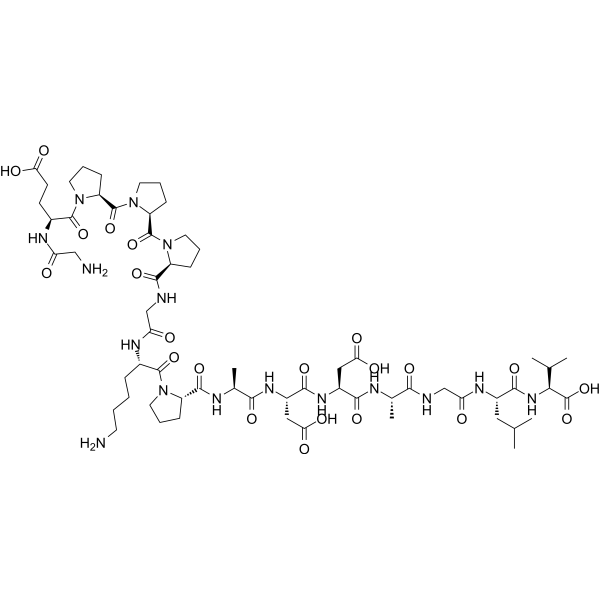
BPC 157 is the 15-amino acide fragment of gastric peptide BPC. BPC 157 exhibits wound healing promoting and neuroprotective activity. BPC 157 maintains the integrity of the gastrointestinal mucosa without significant toxicity. BPC 157 acetate counteracts NSAIDs/insulin overdose/copper-induced toxicity. BPC 157 ameliorates specific (over)stimulated/damaged neurotransmitter systems-induced behavioral disorders through serotonergic and dopaminergic systems .
loading...
    loading...

