18 Results for "

nonhomologous

" in MedChemExpress (MCE) Product Catalog:
Products (18)

18 Results for "nonhomologous" in MCE Product Catalog:

22
22 Publications Verification
Cat. No.: HY-107845
CAS No.: 14892-97-8
Purity:  99.88%
Research Areas:  

Cancer

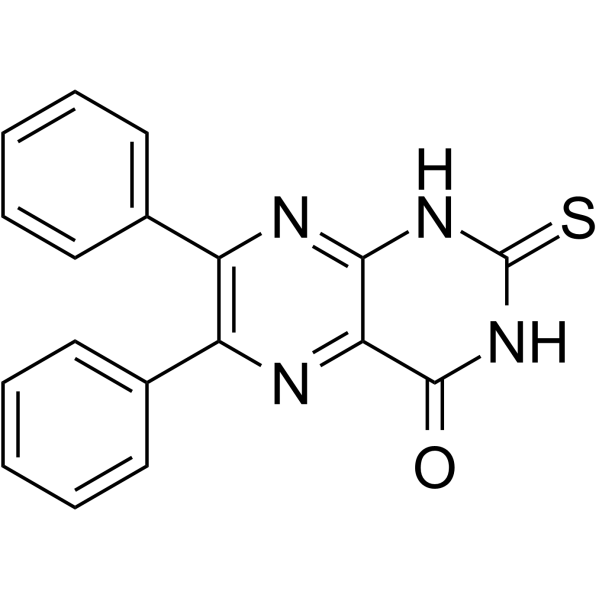
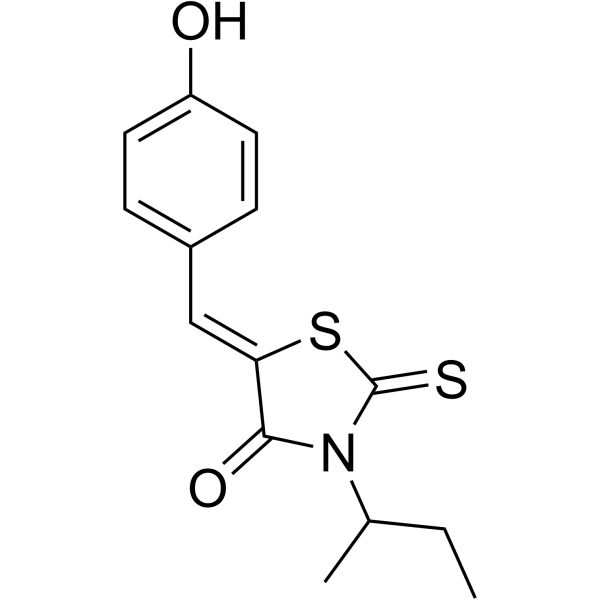
SCR7 pyrazine is a DNA ligase IV inhibitor that blocks nonhomologous end-joining (NHEJ) in a ligase IV-dependent manner. SCR7 pyrazine increases the efficiency of Cas9-mediated homology-directed repair (HDR). SCR7 pyrazine induces cell apoptosis and has anticancer activity .
loading...
    loading...
6
6 Cited Publications
Cat. No.: HY-130603
CAS No.: 2242470-43-3
Purity:  99.81%
Target:  

NF-κB Apoptosis

Research Areas:  

Cancer

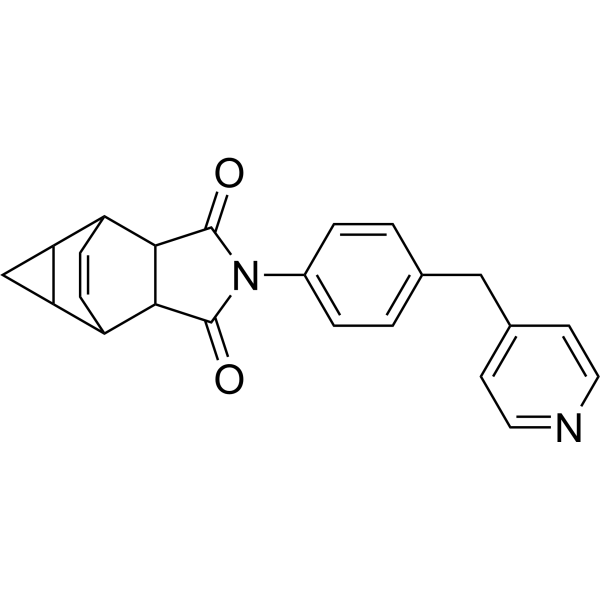
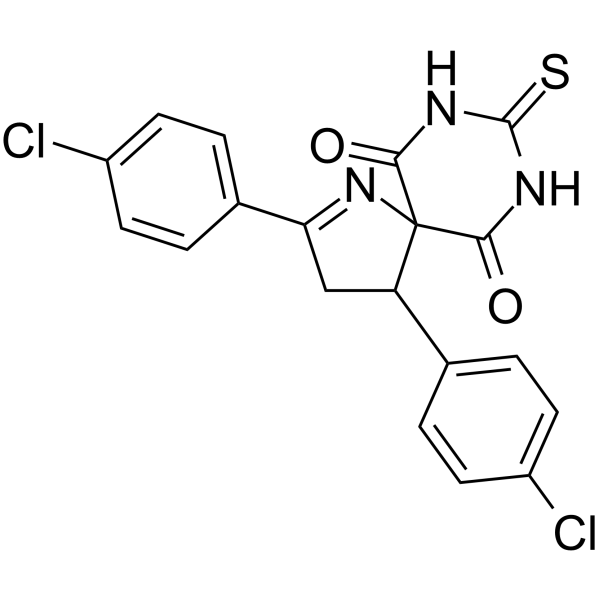
DCZ0415, a potent TRIP13 inhibitor, impairs nonhomologous end joining repair and inhibits NF-κB activity. DCZ0415 induces anti-myeloma activity in vitro, in vivo, and in primary cells derived from drug-resistant myeloma patients .
loading...
    loading...
6
6 Cited Publications
Cat. No.: HY-116770
CAS No.: 1558598-41-6
Purity:  99.91%
Target:  

Endonuclease

Research Areas:  

Cancer

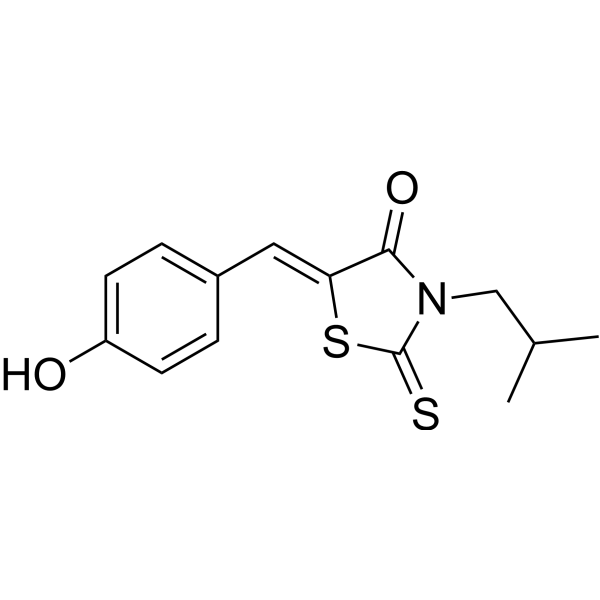
PFM01, N-alkylated Mirin derivative, is a MRE11 endonuclease inhibitor. PFM01 can regulate double-strand break repair (DSBR) by nonhomologous end-joining (NHEJ) versus homologous recombination (HR) .
loading...
    loading...
5
5 Cited Publications
Cat. No.: HY-19939S
CAS No.: 1476074-39-1
Synonyms: M9831
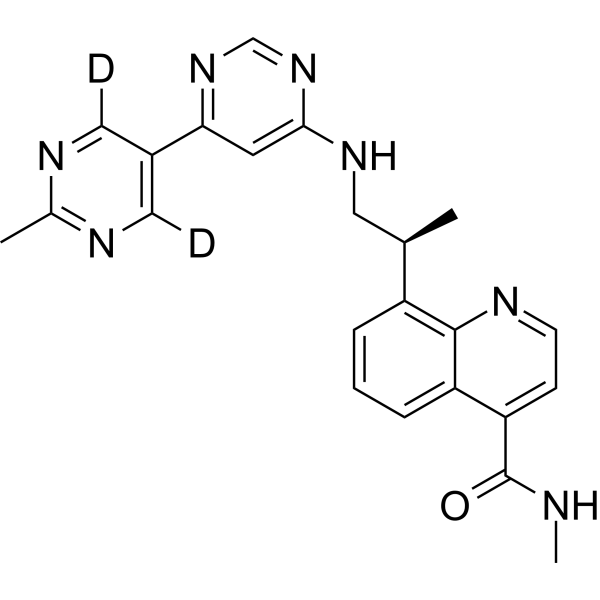
VX-984 is an orally active, potent, selective and BBB-penetrated DNA-PK inhibitor. VX-984 efficiently inhibits NHEJ (non-homologous end joining) and increases DSBs (DNA double-strand breaks). VX-984 can be used for glioblastomas (GBM) and non-small cell lung cancer (NSCLC) research. VX-984 is a de novo deuterium .
loading...
    loading...
5
5 Cited Publications
Cat. No.: HY-148078
CAS No.: 1558598-48-3
Purity:  99.86%
Target:  

Endonuclease

Research Areas:  

Others

PFM03 is a MRE11 Endonuclease inhibitor. PFM03 regulates DNA double-strand break repair (DSBR) by nonhomologous end-joining (NHEJ) .
loading...
    loading...
1
1 Cited Publications
Cat. No.: HY-139297
CAS No.: 2377858-38-1
Purity:  98.23%
Research Areas:  

Cancer

SCR130 is a SCR7-based DNA nonhomologous end-joining (NHEJ) inhibitor. SCR130 inhibits the end-joining of DNA in a Ligase IV-dependent manner. SCR130 is specific to Ligase IV, and shows minimal or no effect on Ligase III and Ligase I mediated joining. SCR130 induces cell apoptosis and has anticancer activity .
loading...
    loading...
Cat. No.: HY-174374
CAS No.: 3076446-44-8
Target:  

Topoisomerase

Research Areas:  

Cardiovascular Disease

Topobexin is a TOP2B-selective inhibitor with IC50 values of 0.19 μM and 4.8 μM for TOP2B and TOP2A (DNA decatenation assay). Topobexin binds to non-homologous residues in the obex pocket and targets the ATPase domain of TOP2B. Topobexin prevents anthracycline-induced DNA double-strand break formation, apoptotic signaling mediated by caspase 3/7, 8 and 9, cardiomyocyte morphological changes, mitochondrial depolarization/loss, left ventricular systolic dysfunction, extracellular matrix remodeling, fibrotic alterations, and increases in plasma cardiac troponin T and BNP. Topobexin does not impair the antiproliferative effects of anthracyclines in cancer cells, exhibits no intrinsic cytotoxicity in cardiomyocytes, and is well tolerated in rabbits. Topobexin can be used in studies related to anthracycline-induced cardiotoxicity .
loading...
    loading...
Cat. No.: HY-100705
CAS No.: 20357-25-9
Purity:  98.76%
Synonyms: 6-Nitroveratraldehyde
Target:  

Drug Intermediate

Research Areas:  

Neurological Disease

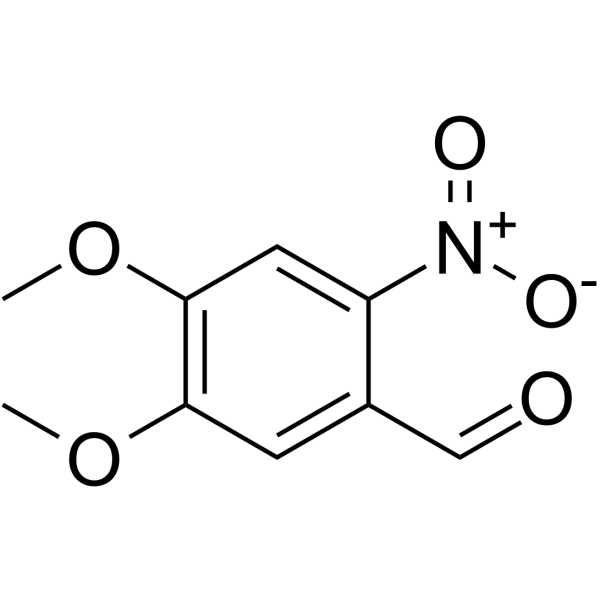
DMNB (6-Nitroveratraldehyde) is a photolabile proton donor that releases acidic substances when excited at a wavelength of 405 nM. DMNB can be used for the synthesis of no-carrier-added 6-[18F]fluoro-L-DOPA (6-FDOPA). DMNB is also applicable to the preparation of o-nitroaryl-bis (5-methylfur-2-yl) methanes and the synthesis of alpha-asarone (HY-N0700). DMNB is an enzyme involved in the non-homologous end joining (NHEJ) pathway responsible for DNA double-strand break (DSB) repair. DMNB can be used in PET studies of the dopaminergic system .
loading...
    loading...
Cat. No.: HY-160096
CAS No.: 1360628-91-6
Research Areas:  

Cancer

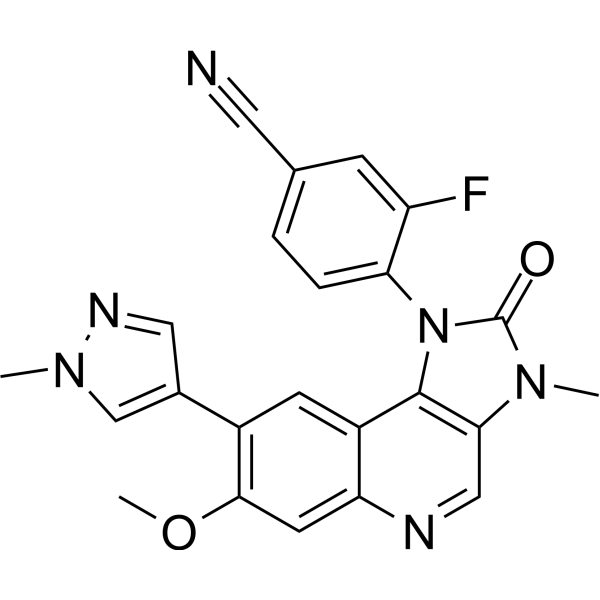
M3541 is an orally effective DNA-dependent protein kinase (DNA-PK) inhibitor . M3541 inhibits ionizing radiation-induced ATM autophosphorylation and phosphorylation of downstream substrates (KAP1, CHK2, p53), blocks DSB end resection and homologous recombination repair, and simultaneously induces non-homologous end joining, G2-M phase arrest, polyploidization, and cell death. M3541 can be used for research on solid tumors, acute myeloid leukemia, non-small cell lung cancer, triple-negative breast cancer, etc. .
loading...
    loading...
Cat. No.: HY-178021
Research Areas:  

Cancer

HDAC1-IN-11 (Compound 6) is a HDAC1 inhibitor with an IC50 of 106.6  nM. HDAC1-IN-11 inhibits the expression of Sp1 and RAD51, thereby inducing Caspase-dependent apoptosis. HDAC1-IN-11 has antitumor activity and sensitizes Etoposide (HY-13629) and Gemcitabine (HY-17026), promoting synergistic death of NSCLC cells through the inhibition of homologous recombination and non-homologous end joining (NHEJ) pathways involved in DNA DSB repair. HDAC1-IN-11 can be used for chemotherapy of cancers like NSCLC research .
loading...
    loading...
Cat. No.: HY-178022
Research Areas:  

Cancer

HDAC6-IN-63 (Compound 7) is an orally active HDAC6 inhibitor with an IC50 of 145  nM. HDAC6-IN-63 inhibits the expression of Sp1 and RAD51, thereby inducing Caspase-dependent apoptosis. HDAC6-IN-63 has antitumor activity and sensitizes Etoposide (HY-13629) and Gemcitabine (HY-17026), promoting synergistic death of NSCLC cells through the inhibition of homologous recombination and non-homologous end joining (NHEJ) pathways involved in DNA DSB repair. HDAC6-IN-63 can be used for chemotherapy of cancers like NSCLC research .
loading...
    loading...
Cat. No.: HY-174499
Target:  

mRNA

Research Areas:  

Others

Cas9 Nickase D10A mRNA expresses a version of the Streptococcus pyogenes SF370 Cas9 protein (CRISPR Associated Protein 9) that contains a D10A amino acid substitution. This mRNA also contains a C-terminal nuclear localization signal followed by a HA tag.Cas9 functions as part of the CRISPR (clustered regularly interspaced short palindromic repeats) genome editing system. In the CRISPR system, an RNA guide sequence targets the site of interest and the Cas9 protein is employed to perform the DNA cleavage. While wild-type Cas9 creates a double-stranded break at the target site, Cas9 nickase creates a single-stranded break. This favors homology-directed repair and decreases the occurrence of non-homologous end joining.
loading...
    loading...
Cat. No.: HY-123401
CAS No.: 4402-18-0
Target:  

DNA/RNA Synthesis

Research Areas:  

Cancer

DDRI-18 is a DNA damage response inhibitor that inhibits the non-homologous end-joining (NHEJ) DNA repair process. DDRI-18 is an effective chemosensitizing agent .
loading...
    loading...
Cat. No.: HY-146194
CAS No.: 2974448-39-8
Research Areas:  

Cancer

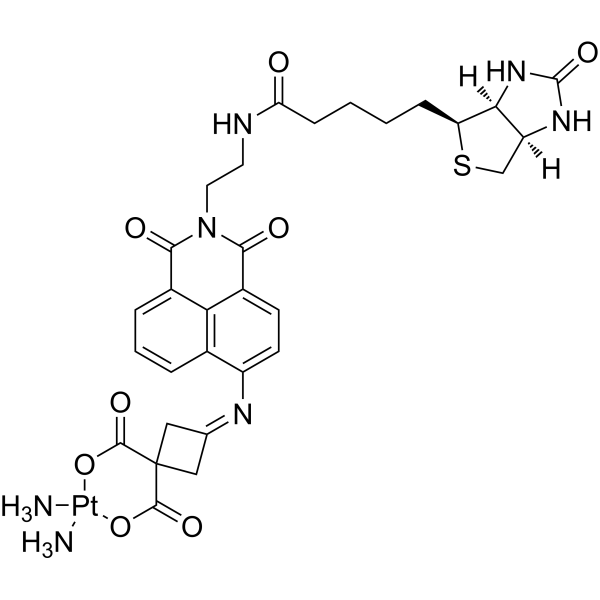
NHEJ inhibitor-1 (Compound C2) is a trifunctional Pt(II) complex, alleviates the non-homologous end connection (NHEJ)/homologous recombination (HR)-related double strand breaks (DSBs) repairs to evade Cisplatin-resistance in non-small cell lung cancer (NSCLC). NHEJ inhibitor-1 inhibits the damage repair proteins Ku70 and Rad51 to make tumors re-sensitive to Cisplatin. NHEJ inhibitor-1 also induces ROS generation and MMP deduction .
loading...
    loading...
Cat. No.: HY-120750
CAS No.: 111783-54-1
Target:  

Endogenous Metabolite

Research Areas:  

Cancer

A 62176 hydrochloride is a compound that targets DNA topoisomerase II and has the activity of inhibiting purine synthesis in cancer cells. A 62176 hydrochloride interferes with c-MYC mRNA expression by interacting with G-quadruplex. The main mechanism of action of A 62176 hydrochloride is by displacing nucleosomes from the quadruplex of non-template strand rDNA, resulting in rapid redistribution of nucleosomes. The application potential of A 62176 hydrochloride is that it causes DNA damage and relies on BRCA1/2-mediated homologous recombination and DNA-PK-mediated non-homologous end-joining pathways to repair the damage .
loading...
    loading...
Cat. No.: HY-122226
CAS No.: 404011-02-5
Target:  

DNA-PK Apoptosis

Research Areas:  

Cancer

IC-87361 is a DNA-dependent protein kinase (DNA-PKcs) inhibitor with an IC50 of 35 nM, and radiosensitizer. IC-87361 inhibits the catalytic activity of DNA-PKcs and blocks non-homologous end joining (NHEJ) DNA double-strand break repair. IC-87361 can be used for the research of lung cancer and melanoma .
loading...
    loading...
Cat. No.: HY-107845R
CAS No.: 14892-97-8
Research Areas:  

Cancer

SCR7 pyrazine (Standard) is the analytical standard of SCR7 pyrazine (HY-107845). This product is intended for research and analytical applications. SCR7 pyrazine is a DNA ligase IV inhibitor that blocks nonhomologous end-joining (NHEJ) in a ligase IV-dependent manner. SCR7 pyrazine increases the efficiency of Cas9-mediated homology-directed repair (HDR). SCR7 pyrazine induces cell apoptosis and has anticancer activity .
loading...
    loading...
Cat. No.: HY-L244
761 compounds

In this era of rapid advancement in gene-editing technology, the CRISPR-Cas system, with its powerful programmability, is leading a transformation in life sciences research. It enables efficient and precise targeted modification of an organism's genome, providing a robust tool for studying gene function, treating genetic diseases, and improving crop varieties. However, bottlenecks such as insufficient editing efficiency, low homologous directed repair efficiency, and potential off-target risks remain major challenges in achieving precise genetic modifications and developing gene therapies.

To overcome these limitations, the MCE High-Efficiency Gene Editing Compound Library systematically includes 761 small molecules that are known or have the potential to enhance gene-editing efficiency. These compounds work by targeting and modulating the DNA damage repair network, mechanistically inhibiting non-homologous end joining, promoting homologous directed repair, or regulating chromatin states and cellular responses, thereby significantly optimizing editing outcomes. This library is suitable for developing "CRISPR-small molecule" combination therapy strategies, improving gene-editing efficiency, and providing a powerful tool for in-depth research into the mechanisms of DNA damage repair in gene editing.

  • 1

