4 Results for "

nuclear condensation

" in MedChemExpress (MCE) Product Catalog:
Products (4)

4 Results for "nuclear condensation" in MCE Product Catalog:

Cat. No.: HY-N2592
CAS No.: 52438-12-7
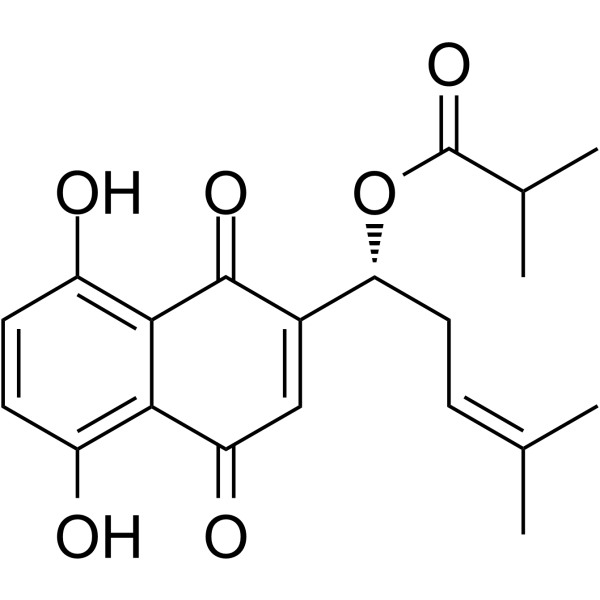
Isobutylshikonin is a kind of shikonin pigments found in hairy root culture of Lithospermum canescens. Isobutylshikonin decreases cell viability induces marked changes in JA-4 cells with nuclear condensation and swelling in the presence of LPS (HY-D1056) .
loading...
    loading...
Cat. No.: HY-W129441
CAS No.: 91281-32-2
Synonyms: N-Ac-4-S-CAP
Research Areas:  

Others

N-Acetyl-4-S-mercaptoaminophenol (N-Ac-4-S-CAP) is a compound that is selectively cytotoxic to melanocytes of black mouse hair follicles. It can cause 98% depigmentation of black mouse hair follicles. N-Ac-4-S-CAP can produce visible changes in hair follicle melanocytes 4 hours after intraperitoneal injection, including aggregation of melanin granules and nuclear condensation. Electron microscopy observations showed that it caused progressive destruction of melanocytes, including swelling of membranous organelles, nuclear condensation, and cytoplasmic vacuolation, ultimately leading to complete cell necrosis. N-Ac-4-S-CAP has a specific cytotoxic effect on melanocytes that actively produce eumelanin, but may not affect precursor or dormant melanocytes. These properties suggest that N-Ac-4-S-CAP may have potential application value in the treatment of melanoma or skin whitening.
loading...
    loading...
Cat. No.: HY-117249
CAS No.: 104958-90-9
Synonyms: AK-2123
Target:  

Apoptosis Caspase

Research Areas:  

Cancer

Sanazole (AK-2123) is a hypoxic cell radiosensitizer. Sanazole enhances radiation-induced DNA strand breaks. In mouse fibroblast tumors, Sanazole increases nuclear condensation and fragmentation, as well as elevates caspase-3 activity, thereby enhancing radiation-induced apoptosis .
loading...
    loading...
Cat. No.: HY-149523
Research Areas:  

Inflammation/Immunology Cancer

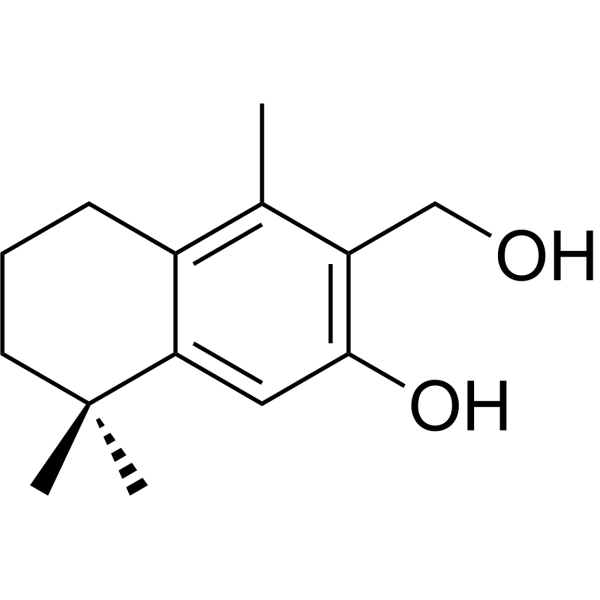
Anticancer agent 157 (compound 15) is a NO inhibitor (IC50=0.62 μg/mL) with anti-inflammatory and anticancer activities. Anticancer agent 157 can bind to iNOS (inducible NO synthase) and caspase 8, causing nuclear fragmentation and chromatin condensation, inducing apoptosis. Anticancer agent 157 inhibits HT29 colon cancer cells (IC50=2.45 μg/mL), Hep-G2 liver cancer cells (IC50=3.25 μg/mL), and B16-F10 murine melanoma cells (IC50=3.84 μg/mL) .
loading...
    loading...

