Search Result
Results for "
partial agonist
" in MedChemExpress (MCE) Product Catalog:
1
Biochemical Assay Reagents
54
Isotope-Labeled Compounds
| Cat. No. |
Product Name |
Target |
Research Areas |
Chemical Structure |
-
- HY-10019
-
|
CP 526555
|
nAChR
|
Neurological Disease
Inflammation/Immunology
Cancer
|
|
Varenicline (CP 526555) is an orally active partial agonist of α4β2 nicotinic acetylcholine receptor (α4β2 nAChR, IC50 = 250 nM), which is the principal mediator of nicotine dependence. Varenicline is also a partial agonist of α6β2 nAChR and a full agonist of α7β2 nAChR. Varenicline blocks the direct agonist effects of nicotine on nAChR while stimulates nAChR in a more moderate way, being widely used as an aid of smoking cessation .
|
-
-
- HY-10021
-
|
CP 526555-18
|
nAChR
ERK
p38 MAPK
|
Others
Neurological Disease
Cancer
|
|
Varenicline (CP 526555) is an orally active partial agonist of α4β2 nicotinic acetylcholine receptor (α4β2 nAChR, IC50 = 250 nM), which is the principal mediator of nicotine dependence. Varenicline is also a partial agonist of α6β2 nAChR and a full agonist of α6β2 nAChR. Varenicline blocks the direct agonist effects of nicotine on nAChR while stimulates nAChR in a more moderate way, being widely used as an aid of smoking cessation .
|
-
-
- HY-N0175
-
|
Cytisine; Sophorine; Baptitoxine
|
nAChR
|
Metabolic Disease
Cancer
|
|
Cytisinicline (Cytisine) is an alkaloid. Cytisinicline (Cytisine) is a partial agonist of α4β2 nAChRs , and partial to full agonist at β4 containing receptors and α7 receptors . Has been used medically to help with smoking cessation .
|
-
-
- HY-14261
-
-
-
- HY-Y1176
-
-
-
- HY-19919
-
|
EXEL04286652; XL-652; BMS-788
|
LXR
|
Metabolic Disease
|
|
BMS-779788 is a LXR partial agonist with IC50 values of 68 nM for LXRα and 14 nM for LXRβ.
|
-
-
- HY-10020
-
|
CP 526555 hydrochloride
|
nAChR
|
Neurological Disease
Inflammation/Immunology
Cancer
|
|
Varenicline (CP 526555) is an orally active partial agonist of α4β2 nicotinic acetylcholine receptor (α4β2 nAChR, IC50 = 250 nM), which is the principal mediator of nicotine dependence. Varenicline is also a partial agonist of α6β2 nAChR and a full agonist of α6β2 nAChR. Varenicline blocks the direct agonist effects of nicotine on nAChR while stimulates nAChR in a more moderate way, being widely used as an aid of smoking cessation .
|
-
-
- HY-107480
-
-
-
- HY-17622
-
-
-
- HY-16086
-
|
DRF 2593; NN 2344
|
PPAR
|
Metabolic Disease
|
|
Balaglitazone is a selective partial PPARγ agonist with an EC50 of 1.351 μM for human PPARγ.
|
-
-
- HY-15430A
-
|
EVP-6124 hydrochloride
|
nAChR
|
Neurological Disease
|
|
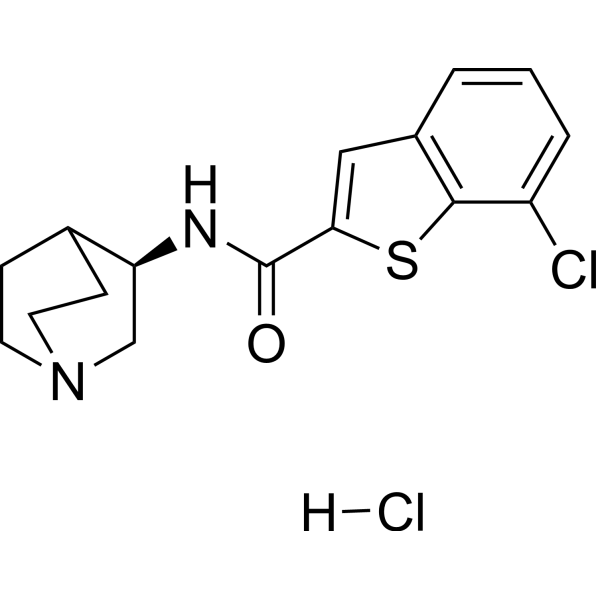
Encenicline hydrochloride (EVP-6124 hydrochloride) is a novel partial agonist of α7 neuronal nicotinic acetylcholine receptors (nAChRs).
|
-
-
- HY-121675
-
|
BOL-148; Bromolysergide
|
5-HT Receptor
G protein-coupled Bile Acid Receptor 1
|
Neurological Disease
|
|
2-Bromo-LSD (BOL-148) is a blood-brain barrier-permeable 5-HT2A partial agonist and competitive partial antagonist. 2-Bromo-LSD acts as both a potent partial agonist (with an EC50 of 0.81 nM for Gq dissociation) and a potent partial antagonist (with a KB of 0.18 nM for Gq dissociation) at the 5-HT2A receptor. 2-Bromo-LSD exhibits partial agonist activity at multiple aminergic GPCRs, including 5-HT2A. 2-Bromo-LSD lacks 5-HT2B agonist activity. 2-Bromo-LSD induces dendritogenesis and spinogenesis. 2-Bromo-LSD reverses the behavioral effects of chronic stress and increases active coping behaviors in mice .
|
-
-
- HY-102053
-
|
NRX-1074; AGN-241660
|
iGluR
|
Neurological Disease
|
|
Apimostinel (NRX-1074; AGN-241660) is an orally active NMDA receptor partial agonist .
|
-
-
- HY-10019A
-
|
CP 526555 dihydrochloride
|
nAChR
|
Neurological Disease
Inflammation/Immunology
Cancer
|
|
Varenicline (CP 526555-18) is an orally active partial agonist of α4β2 nicotinic acetylcholine receptor (α4β2 nAChR, IC50 = 250 nM), which is the principal mediator of nicotine dependence. Varenicline is also a partial agonist of α6β2 nAChR and a full agonist of α7β2 nAChR. Varenicline blocks the direct agonist effects of nicotine on nAChR while stimulates nAChR in a more moderate way, being widely used as an aid of smoking cessation .
|
-
-
- HY-103476
-
|
|
GABA Receptor
|
Neurological Disease
|
|
Ro15-4513, imidazobenzodiazepinone derivative, is a partial inverse agonist of benzodiazepine receptor (BZR) . Ro15-4513 is a potent ethanol antagonist . Ro15-4513 has anti-anxiety effect . Ro15-4513 is a click chemistry reagent, it contains an Azide group and can undergo copper-catalyzed azide-alkyne cycloaddition reaction (CuAAc) with molecules containing Alkyne groups. It can also undergo strain-promoted alkyne-azide cycloaddition (SPAAC) reactions with molecules containing DBCO or BCN groups.
|
-
-
- HY-100140
-
-
-
- HY-103170
-
|
|
Adenosine Receptor
|
Others
|
|
LUF5834 is a selective A2B adenosine receptor (A2BR) partial agonist (EC50 = 12 nM). LUF5834 is also a partial A1/A2A adenosine receptor agonist (lacking selectivity) with Ki values of 2.6 and 28 nM, respectively .
|
-
-
- HY-122235
-
-
-
- HY-N0175R
-
|
Cytisine (Standard); Sophorine (Standard); Baptitoxine (Standard)
|
Reference Standards
nAChR
|
Metabolic Disease
Cancer
|
|
Cytisinicline (Standard) is the analytical standard of Cytisinicline. This product is intended for research and analytical applications. Cytisinicline (Cytisine) is an alkaloid. Cytisinicline (Cytisine) is a partial agonist of α4β2 nAChRs , and partial to full agonist at β4 containing receptors and α7 receptors . Has been used medically to help with smoking cessation .
|
-
-
- HY-107847
-
|
|
5-HT Receptor
Adrenergic Receptor
|
Neurological Disease
|
|
2-(2-Methoxyphenoxy)ethylamine hydrochloride (Compound 2b) is a mixed agonist/antagonist. 2-(2-Methoxyphenoxy)ethylamine hydrochloride is a5-HT1A receptor partial agonist and a α1-adrenergic receptor antagonist. 2-(2-Methoxyphenoxy)ethylamine hydrochloride can be used for neurological diseases research, such as anxiety, depression and psychosis .
|
-
-
- HY-101639A
-
-
-
- HY-101665
-
|
(+)-RP-59037; IP-456; RP-62955
|
GABA Receptor
|
Neurological Disease
|
|
Pagoclone is an active (+)-enantiomer of the racemate RP 59037. Pagoclone is a partial GABA(A) receptor agonist used for the treatment of panic and anxiety disorders.
|
-
-
- HY-15430
-
|
EVP-6124
|
nAChR
|
Neurological Disease
|
|
Encenicline (EVP-6124) is a novel partial agonist of α7 neuronal nicotinic acetylcholine receptors (nAChRs).
|
-
-
- HY-B0735
-
-
-
- HY-101586
-
-
-
- HY-118249
-
|
|
PPAR
|
Neurological Disease
|
GSK 1997132B is a benzimidazole-based PPARγ partial agonist that can cross the blood-brain barrier with a pEC50 value of 8.0. GSK 1997132B has no significant effect on PPARα/δ. GSK 1997132B improves the problem of high blood clearance rate of earlier compounds, avoiding side effects such as weight gain and edema. GSK 1997132B can be used for research on Alzheimer's disease .
|
-
-
- HY-Y1176R
-
-
-
- HY-14958A
-
-
-
- HY-153264
-
|
|
Taste Receptor
|
Others
|
|
TAS2R14 agonist is a potent TAS2R14 partial agonist with an EC50 of 116.6 ±23.6 nM .
|
-
-
- HY-112152
-
-
-
- HY-103418
-
|
|
Dopamine Receptor
|
Neurological Disease
|
|
Dopamine D2 receptor agonist-3 (compound 3) is a selective D2 receptor
partial agonist and Dopamine D3 receptor antagonist (with pEC50 of 8.3 and <5.5 respectively) .
|
-
-
- HY-10021R
-
|
CP 526555-18 (Standard)
|
Reference Standards
nAChR
ERK
p38 MAPK
|
Others
Neurological Disease
|
|
Varenicline (Tartrate) (Standard) is the analytical standard of Varenicline (Tartrate). This product is intended for research and analytical applications. Varenicline (CP 526555) is an orally active partial agonist of α4β2 nicotinic acetylcholine receptor (α4β2 nAChR, IC50 = 250 nM), which is the principal mediator of nicotine dependence. Varenicline is also a partial agonist of α6β2 nAChR and a full agonist of α6β2 nAChR. Varenicline blocks the direct agonist effects of nicotine on nAChR while stimulates nAChR in a more moderate way, being widely used as an aid of smoking cessation .
|
-
-
- HY-137525
-
|
|
Neurotensin Receptor
|
Neurological Disease
|
|
NTRC-808 is a nonpeptide selective GPCR neurotensin receptor type 2 (NTS2) partial agonist with an EC50 of 14 nM and Ki of 88 nM. NTRC-808 has higher selectivity for NTS2 than for NTS1. NTRC-808 has antipsychotic and analgesic activity .
|
-
-
- HY-179063
-
|
|
5-HT Receptor
Dopamine Receptor
Serotonin Transporter
|
Neurological Disease
|
5-HT2A receptor agonist-13 (Compound 28c) is a partial agonist of the 5-HT2A receptor, with an EC50 value of 416.9 nM and a Ki value of 113.9 nM. 5-HT2A receptor agonist-13 exhibits very weak agonistic activity towards the 5-HT2B receptor (EC50 = 120.2 nM), D2 receptor (Ki = 1298 nM), and has no activity towards the 5-HT2C receptor. 5-HT2A receptor agonist-13 exhibits weak inhibitory activity on the serotonin transporter (SERT) (EC50 = 977.2 nM). 5-HT2A receptor agonist-13 has antidepressant activity in mouse models and does not induce hallucinogenic behavior. 5-HT2A receptor agonist-13 can be used for the study of major depressive disorder (MDD) and treatment-resistant depression (TRD) .
|
-
-
- HY-W727728
-
|
|
Free Fatty Acid Receptor
|
Metabolic Disease
|
|
MK-8666 is a potent and selective partial GPR40 agonist (EC50 = 0.54 nM for human GPR40). MK-8666 shows selectivity over GPR119, GPR43, GPR41, GPR120, and other G-protein-coupled receptors (GPCRs). MK-8666 reduces glucose in the rodent. MK-8666 can be used for type 2 diabetes research [1][2].
|
-
-
- HY-101717
-
-
-
- HY-128040
-
-
-
- HY-116257
-
|
|
PPAR
PDHK
Carnitine Palmitoyltransferase (CPT)
|
Others
|
|
GSK-7227 (compound 32) is a PPARδ partial agonist with the activity of regulating the expression of related genes. GSK-7227 has partial agonist effects on PPARδ target genes CPT1a and PDK4 in skeletal muscle cells.
|
-
-
- HY-14958
-
-
-
- HY-116944
-
-
-
- HY-19250
-
-
-
- HY-156972
-
|
|
Opioid Receptor
|
Metabolic Disease
|
|
NOP agonist-1(compound 4) is a nociceptin opioid receptor (NOP) partial agonist. NOP agonist-1attenuate parkinsonian disabilities in 6-OHDA hemilesioned rats .
|
-
-
- HY-101384A
-
|
|
Dopamine Receptor
|
Others
|
|
Ro 10-5824 dihydrochloride is a selective dopamine D4 receptor partial agonist, with Ki of 5.2 nM.
|
-
-
- HY-138809
-
-
-
- HY-N15180
-
|
(-)-Corynantheidine
|
Opioid Receptor
|
Neurological Disease
|
|
Corynantheidine ((-)-Corynantheidine) is a mu-opioid receptor (MOR) partial agonist that shows MOR-dependent analgesic effects in mice .
|
-
-
- HY-B1485
-
|
|
Opioid Receptor
|
Neurological Disease
|
|
Nalmefene hydrochloride is a long acting opioid (MOR and DOR antagonist), and a partial KOR agonist. Nalmefene hydrochloride is used for opioid overdose and alcohol dependence .
|
-
-
- HY-P1433
-
|
|
Insulin Receptor
|
Metabolic Disease
|
|
[Pro3]-GIP (Rat) is a selective GIP receptor partial agonist with a Ki of 13 nM. [Pro3]-GIP (Rat) can be used in diabetes research .
|
-
-
- HY-106206
-
-
-
- HY-107680
-
|
3-Pyr-Cyt
|
nAChR
|
Neurological Disease
|
|
3-Pyr-Cytisine (3-Pyr-Cyt) is a cytisine derivative. 3-Pyr-Cytisine is a very weak α4β2 nAChR partial agonist that has been studied as an antidepressant .
|
-
-
- HY-19082
-
|
|
GABA Receptor
|
Neurological Disease
|
|
Y-23684 is a partial agonist of benzodiazepine receptor (BZR) with anticonvulsant and anxiolytic activities. Y-23684 can be used in the research of treatment of anxiety disorders .
|
-
- HY-10019R
-
|
CP 526555 (Standard)
|
Reference Standards
nAChR
|
Neurological Disease
Inflammation/Immunology
Cancer
|
|
Varenicline (Standard) is the analytical standard of Varenicline. This product is intended for research and analytical applications. Varenicline (CP 526555) is an orally active partial agonist of α4β2 nicotinic acetylcholine receptor (α4β2 nAChR, IC50 = 250 nM), which is the principal mediator of nicotine dependence. Varenicline is also a partial agonist of α6β2 nAChR and a full agonist of α7β2 nAChR. Varenicline blocks the direct agonist effects of nicotine on nAChR while stimulates nAChR in a more moderate way, being widely used as an aid of smoking cessation .
|
-
- HY-10019AR
-
|
CP 526555 dihydrochloride (Standard)
|
Reference Standards
nAChR
|
Neurological Disease
Inflammation/Immunology
Cancer
|
|
Varenicline (dihydrochloride) (Standard) is the analytical standard of Varenicline (dihydrochloride). This product is intended for research and analytical applications. Varenicline (CP 526555-18) is an orally active partial agonist of α4β2 nicotinic acetylcholine receptor (α4β2 nAChR, IC50 = 250 nM), which is the principal mediator of nicotine dependence. Varenicline is also a partial agonist of α6β2 nAChR and a full agonist of α7β2 nAChR. Varenicline blocks the direct agonist effects of nicotine on nAChR while stimulates nAChR in a more moderate way, being widely used as an aid of smoking cessation .
|
-
- HY-10020R
-
|
CP 526555 hydrochloride (Standard)
|
Reference Standards
nAChR
|
Neurological Disease
Inflammation/Immunology
Cancer
|
|
Varenicline (Hydrochloride) (Standard) is the analytical standard of Varenicline (Hydrochloride). This product is intended for research and analytical applications. Varenicline (CP 526555) is an orally active partial agonist of α4β2 nicotinic acetylcholine receptor (α4β2 nAChR, IC50 = 250 nM), which is the principal mediator of nicotine dependence. Varenicline is also a partial agonist of α6β2 nAChR and a full agonist of α6β2 nAChR. Varenicline blocks the direct agonist effects of nicotine on nAChR while stimulates nAChR in a more moderate way, being widely used as an aid of smoking cessation .
|
-
- HY-10019S1
-
|
CP 526555-15N,13C,d2
|
nAChR
Isotope-Labeled Compounds
|
Neurological Disease
Inflammation/Immunology
Cancer
|
|
Varenicline- 15N, 13C,d2 is 15N and deuterated labeled Varenicline (HY-10019). Varenicline (CP 526555) is an orally active partial agonist of α4β2 nicotinic acetylcholine receptor (α4β2 nAChR, IC50=250 nM), which is the principal mediator of nicotine dependence. Varenicline is also a partial agonist of α6β2 nAChR and a full agonist of α7β2 nAChR. Varenicline blocks the direct agonist effects of nicotine on nAChR while stimulates nAChR in a more moderate way, being widely used as an aid of smoking cessation .
|
-
- HY-121249
-
|
SL65.0155
|
5-HT Receptor
|
Neurological Disease
|
|
Capeserod hydrochloride (SL65.0155) is a 5-HT4(e) receptor partial agonist (Ki=0.6 nM) with potent cognitive enhancing properties. Capeserod hydrochloride acts as a partial agonist in cells expressing 5-HT4(b) and 5-HT4(e) splice variants, stimulating cAMP production with IC50 values of 244 and 29 nM, respectively. Capeserod hydrochloride is used in the study of memory impairment and dementia .
|
-
- HY-W062702
-
|
|
nAChR
|
Neurological Disease
|
|
BMS-933043 is a potent and selective α7 nACh receptor partial agonist. BMS-933043 attenuates the cognitive impairment in mice and can be utilized in research related to cognitive dysfunction in schizophrenia .
|
-
- HY-106964A
-
|
|
5-HT Receptor
|
Neurological Disease
|
|
(Rac)-S 16924 is a partial agonist of the 5-HT1A receptor. (Rac)-S 16924 regulates signaling through its interaction with the 5-HT1A receptor, and (Rac)-S 16924 can stabilize the receptor in its G-protein-coupled conformation without fully activating it, which may affect intracellular signaling pathways associated with this receptor. (Rac)-S 16924 can be used to study the 5-HT1A receptor in mental disorders, especially schizophrenia .
|
-
- HY-109065
-
|
|
5-HT Receptor
|
Others
|
|
Minesapride is a partial agonist with a highly selective serotonin 4 (5-HT4) receptor. Minesapride enhances gastrointestinal peristalsis and colon transport by activating the 5-HT4 receptor. Minesapride increases bowel movements and suppresses visceral allergic reactions. Minesapride can be used in the study of constipation-type irritable bowel syndrome (IBS-C) .
|
-
- HY-10019AS1
-
|
|
Isotope-Labeled Compounds
nAChR
|
Inflammation/Immunology
|
|
Varenicline-d4 hydrochloride is a deuterium labeled Varenicline (dihydrochloride) (HY-10019A) . Varenicline (CP 526555) dihydrochloride is a potent partial agonist for α4β2 nicotinic acetylcholine receptor (nAChR) with an EC50 value of 2.3 μM. Varenicline dihydrochloride is a full agonist for α3β4 and α7 nAChRs with EC50 values of 55 μM and 18 μM, respectively . Varenicline dihydrochloride is a nicotinic ligand based on the structure of cytosine, and has the potential for smoking cessation treatment .
|
-
- HY-103476R
-
|
|
Reference Standards
GABA Receptor
|
Neurological Disease
|
|
Ro15-4513 (Standard) is the analytical standard of Ro15-4513. This product is intended for research and analytical applications. Ro15-4513, imidazobenzodiazepinone derivative, is a partial inverse agonist of benzodiazepine receptor (BZR) . Ro15-4513 is a potent ethanol antagonist . Ro15-4513 has anti-anxiety effect . Ro15-4513 is a click chemistry reagent, it contains an Azide group and can undergo copper-catalyzed azide-alkyne cycloaddition reaction (CuAAc) with molecules containing Alkyne groups. It can also undergo strain-promoted alkyne-azide cycloaddition (SPAAC) reactions with molecules containing DBCO or BCN groups.
|
-
- HY-155707
-
|
|
Dopamine Receptor
|
Inflammation/Immunology
|
|
MOR agonist-3 (Compound 84) is a D3R/MOR antagonist/partial agonist a(Ki 382 nM and 55.2 nM respectively). MOR agonist-3 has the potential to produce analgesic effects through MOR (μ-opioid receptor) (HY-149337) partial agonists. MOR agonist-3 can be used in the inflammation and neuropathic pain research .
|
-
- HY-U00066
-
-
- HY-118259
-
-
- HY-146742
-
|
|
PPAR
|
Metabolic Disease
|
|
PPARγ agonist 2 is a potent PPARγ partial agonist and can be used for metabolic disease research .
|
-
- HY-U00216
-
-
- HY-118299
-
-
- HY-118097
-
|
|
PPAR
|
Others
|
|
GW0072 is a partial agonist of PPARγ and does not directly bind to the AF-2 helix of PPARγ, resulting in specific partial receptor transcriptional activation properties .
|
-
- HY-116888
-
-
- HY-101639
-
-
- HY-124225
-
-
- HY-162851
-
|
|
Adenosine Receptor
|
Others
|
|
Adenosine receptor agonist 1 (compound 6m) is an A3 adenosine receptor (AR) partial agonist with Ki value of 6.7 nM .
|
-
- HY-121542
-
|
|
PPAR
|
Metabolic Disease
|
|
PPARδ agonist 10 (compound 7) is an orally active, selective, and partial agonist of PPARδ, with EC50 values of 0.053 μM and 0.30 µM for hPPARδ(LBD)-GAL4 and mPPARδ, respectively. PPARδ agonist 10 is a partial PPARδ agonist in transactivation assay but a full agonist on free fatty acids (FFA) oxidation in muscle cells both in vitro and in vivo. PPARδ agonist 10 can be used for dyslipidemia research .
|
-
- HY-100140A
-
|
PK-8165 hydrochloride
|
GABA Receptor
|
Neurological Disease
|
|
Pipequaline hydrochloride (PK-8165 hydrochloride) is a partial benzodiazepine receptor agonist with anxiolytic activity .
|
-
- HY-120418
-
|
|
mAChR
|
Others
|
|
L-687306 is a high affinity muscarinic M1 receptor partial agonist with activity as a partial agonist of M1 receptors in rat ganglia and as a high affinity competitive antagonist at guinea pig cardiac M2 and ileal M3 muscarinic receptors, useful for studying the receptor reserve of muscarinic receptors.
|
-
- HY-119060
-
|
|
mGluR
|
Neurological Disease
|
|
FP0429 is a full mGlu4 agonist and partial mGlu8 agonist with EC50 values of 48.3 μM and 56.2 μM, respectively .
|
-
- HY-162491
-
-
- HY-116970
-
-
- HY-19308
-
-
- HY-U00215
-
|
|
GABA Receptor
|
Neurological Disease
|
|
Ro 41-3290 is the desethylated derivative of Ro 41-3696, which is a nonbenzodiazepine partial agonist at the benzodiazepine receptor.
|
-
- HY-120456
-
|
|
Opioid Receptor
|
Neurological Disease
|
|
SR16835 has high affinity for both NOPr and MOPr, with full agonist activity for NOPr and partial agonist activity for MOPr. SR16835 has no analgesic effect .
|
-
- HY-169950
-
|
|
iGluR
|
Neurological Disease
|
|
NMDA agonist 1 (compound 42d) is a potent NMDA agonist with a Ki value of 96 nM. NMDA agonist 1 acts as a partial agonist of the GluN1/GluN2B complex with an EC50 value of 78 nM .
|
-
- HY-Y1176S
-
-
- HY-162827
-
|
|
RAR/RXR
Apoptosis
|
Cancer
|
|
RAR/RXR agonist-1 (compound 7) is a chlorinated retinoic acid isomer, a selective RARα agonist and a partial RXRα agonist. RAR/RXR agonist-1 can activate RXRα and induce G2/M arrest and apoptosis in cancer cells .
|
-
- HY-149481
-
|
|
Dopamine Receptor
|
Neurological Disease
|
|
D4R agonist-1 (Compound 16f) is a D4R partial agonist (Ki: 2.2 nM). D4R agonist-1 is metabolically stable in rat and human liver microsomes. D4R agonist-1 can be used for research of neuropsychiatric disorders .
|
-
- HY-W743727
-
|
|
Isotope-Labeled Compounds
nAChR
|
Metabolic Disease
|
|
Cytisine-d4 is the deuterium labeled Cytisinicline (HY-N0175). Cytisinicline (Cytisine) is an alkaloid. Cytisinicline (Cytisine) is a partial agonist of α4β2 nAChRs , and partial to full agonist at β4 containing receptors and α7 receptors . Has been used medically to help with smoking cessation .
|
-
- HY-172979
-
-
- HY-118987
-
-
- HY-155706
-
|
|
Opioid Receptor
Dopamine Receptor
|
Inflammation/Immunology
|
|
MOR agonist-2 (compound 46) is a antagonist of D3R and agonist of MOR (Ki: 7.26 nM and 564 nM, respectively). MOR agonist-2 has the potential to produce analgesic effects through MOR partial agonism. MOR agonist-2 reduces opioid-misuse liability via D3R antagonism .
|
-
- HY-173217
-
|
|
PPAR
Phosphatase
|
Cardiovascular Disease
Metabolic Disease
|
|
PPARα agonist 5 is an orally available, selective partial agonist of PPARα (EC50: 3 nM). PPARα agonist 5 reduces lipid accumulation and upregulates key PPARα target genes, exerting anti-fatty liver effects. PPARα agonist 5 also exhibits significant hypolipidemic and hypoglycemic effects through partial PPARγ agonist activity and mild inhibition of protein tyrosine phosphatase 1B (PTP1B) (IC50: 79.1 μM). PPARα agonist 5 has a good safety profile and can be used in the study of type 2 diabetes with dyslipidemia .
|
-
- HY-119056
-
-
- HY-101384
-
-
- HY-110142
-
|
CC4
|
nAChR
|
Neurological Disease
|
|
Thermopsidine (CC4) is a selective partial agonist at α4β2/α6β2 nAChR with EC50 values of 2.2 μM target α4β2 .
|
-
- HY-105525
-
|
NIH 10908 free base
|
Opioid Receptor
|
Neurological Disease
|
|
Sameridine (NIH-10908 free base) is a weak partial agonist of the μ-opioid receptor. Sameridine shows local anesthetic and analgesic properties. Sameridine has minimal respiratory depression at low doses, but can suppress ventilatory response at high doses. Sameridine can be used for the study of analgesic effect .
|
-
- HY-123813A
-
|
|
CXCR
Arrestin
|
Cancer
|
|
CCX-777 formic is an orthosteric binder and partial agonist of CXCR7/ACKR3. CCX-777 formic induces the recruitment of β-arrestin 2 and affects the rebinding of chemokines to ACKR3. CCX-777 formic functions to stabilize the ACKR3 receptor and promotes the formation of a monodisperse, stable complex of the receptor in DDM/CHS micelles. CCX-777 formic is widely used in cancer-related research .
|
-
- HY-107847R
-
|
|
Reference Standards
5-HT Receptor
Adrenergic Receptor
|
Neurological Disease
|
|
2-(2-Methoxyphenoxy)ethylamine hydrochloride (Standard) is the analytical standard of 2-(2-Methoxyphenoxy)ethylamine (hydrochloride) (HY-107847). This product is intended for research and analytical applications. 2-(2-Methoxyphenoxy)ethylamine hydrochloride (Compound 2b) is a mixed agonist/antagonist. 2-(2-Methoxyphenoxy)ethylamine hydrochloride is a5-HT1A receptor partial agonist and a α1-adrenergic receptor antagonist. 2-(2-Methoxyphenoxy)ethylamine hydrochloride can be used for neurological diseases research, such as anxiety, depression and psychosis .
|
-
- HY-129481
-
|
|
5-HT Receptor
|
Neurological Disease
|
|
LY 178210 (Compound 24) is a selective partial agonist of the 5-HT1A receptor, with Ki values of 0.67 and 380 nM for the 5-HT1A and 5-HT1D receptors, respectively. LY 178210 has almost no activity against α₂-adrenergic receptors, 5-HT₂, and other neurotransmitter receptors. LY 178210 inhibits Foscolin-stimulated cyclase activity, but its maximum potency is lower than that of the full agonist 8-OH-DPAT (HY-112061). LY 178210 significantly reduces 5-hydroxyindoleacetic acid (5-HIAA) levels in the greater hypothalamus and increases serum corticosterone concentrations .
|
-
- HY-119277
-
|
|
Dopamine Receptor
|
Neurological Disease
|
|
CJB-090 dihydrochloride is a partial agonist with activity at dopamine D3 receptors. CJB-090 exhibits partial agonist characteristics in vitro. CJB-090 elicits yawning responses only in monkeys with an extensive history of cocaine use. CJB-090 reduces the reinstatement effects of cocaine in reinstatement behaviors induced by cocaine .
|
-
- HY-W736861
-
|
|
iGluR
|
Neurological Disease
|
|
N-Phthaloylglutamic acid is a partial agonist NMDA receptor with a Ki of 13 μM targeting Glu binding-site .
|
-
- HY-121675A
-
|
BOL-148 D-Tartrate; Bromolysergide D-Tartrate
|
5-HT Receptor
G protein-coupled Bile Acid Receptor 1
|
Neurological Disease
|
|
2-Bromo-LSD D-Tartrate (BOL-148 D-Tartrate) is a blood-brain barrier-permeable 5-HT2A partial agonist and competitive partial antagonist. 2-Bromo-LSD D-Tartrate acts as both a potent partial agonist (with an EC50 of 0.81 nM for Gq dissociation) and a potent partial antagonist (with a KB of 0.18 nM for Gq dissociation) at the 5-HT2A receptor. 2-Bromo-LSD D-Tartrate exhibits partial agonist activity at multiple aminergic GPCRs, including 5-HT2A. 2-Bromo-LSD D-Tartrate lacks 5-HT2B agonist activity. 2-Bromo-LSD D-Tartrate induces dendritogenesis and spinogenesis. 2-Bromo-LSD D-Tartrate reverses the behavioral effects of chronic stress and increases active coping behaviors in mice .
|
-
- HY-183776
-
|
|
Dopamine Receptor
|
Others
|
|
Dopamine D3 receptor agonist-2 is a selective dopamine D3 receptor partial agonist with a Ki of 0.268 nM. Dopamine D3 receptor agonist-2 exhibits 29-fold selectivity over dopamine D2 receptor (Ki= 7.67nM) .
|
-
- HY-106917
-
|
Ro 41-3696
|
GABA Receptor
|
Neurological Disease
|
|
Lirequinil (Ro 41-3696) is an orally active partial agonist of the benzodiazepine (BDZ) receptor. Lirequinil has the effect of promoting sleep .
|
-
- HY-14953
-
|
AWD 131-138
|
GABA Receptor
|
Neurological Disease
|
|
Imepitoin (AWD 131-138) is a new low-affinity partial benzodiazepine receptor agonist with potent anticonvulsant and anxiolytic properties in rodent models.
|
-
- HY-14831
-
|
MBX 102; JNJ 39659100
|
PPAR
|
Metabolic Disease
|
|
Arhalofenate (MBX 102) is a selective partial agonist of peroxisome proliferator-activated receptor (PPAR)-γ, used for the treatment of type 2 diabetes.
|
-
- HY-120633A
-
-
- HY-103548
-
|
|
Glucocorticoid Receptor
|
Endocrinology
|
|
GSK9027, as a non-steroidal glucocorticoid receptor (GR) agonist, behaves as a partial agonist on the 2×glucocorticoid response element (GRE) reporter system, and achieves intrinsic activities relative to dexamethasone .
|
-
- HY-138014
-
|
|
GABA Receptor
|
Neurological Disease
|
|
Cinazepam is a partial GABAA receptor agonist and a benzodiazepine derivative with anxiolytic and sedative properties. Cinazepam can be utilized in research related to sleep disorders .
|
-
- HY-10629
-
LXR-623
Maximum Cited Publications
12 Publications Verification
WAY 252623
|
LXR
|
Metabolic Disease
Cancer
|
|
LXR-623 is a brain-penetrant partial LXRα and full LXRβ agonist, with IC50s of 24 nM and 179 nM, respectively.
|
-
- HY-121740
-
-
- HY-103108
-
|
|
5-HT Receptor
|
Metabolic Disease
|
|
CJ033466 is a novel and selective 5-HT4 receptor partial agonist with an EC50 of 9 nM and has gastroprokinetic effect .
|
-
- HY-129507
-
|
DAB-452 fumarate
|
Dopamine Receptor
|
Neurological Disease
|
|
Aplindore fumarate (DAB-452 fumarate) is a dopamine D2 receptor partial agonist. Aplindore fumarate could be used in studies of Parkinson's disease and schizophrenia .
|
-
- HY-125043
-
-
- HY-182395
-
|
|
FXR
|
Others
|
|
DM175 is a partial agonist of FXR. DM175 binds to the ligand-binding domain of FXR and induces the outward movement of Trp454 .
|
-
- HY-P10377
-
|
|
Neuropeptide FF Receptor
|
Metabolic Disease
|
|
GUB03385 is a long-acting PrRP31 analogue. GUB03385 is a potent dual agonist for GPR10 (full agonist, EC50: 0.4 nM) and NPFF2R (partial agonist, EC50: 20 nM). GUB03385 has anti-obesity effect .
|
-
- HY-180182
-
-
- HY-103417
-
-
- HY-11053
-
|
|
nAChR
|
Neurological Disease
|
|
S 24795 is a partial agonist of α7 nAChR and improves mnemonic function in aged mice for the research of aging-related memory disturbances .
|
-
- HY-167865
-
-
- HY-N8505
-
|
8,10-Diphenyllobelidione
|
Others
|
Others
|
|
Lobelanine (8,10-Diphenyllobelidione) is a chemical precursor for the biosynthesis of Lobeline. Lobeline is a partial nicotinic agonist and is used as a smoking cessation agent .
|
-
- HY-100908
-
|
N10-Acetyltryptamine; Nb-Acetyltryptamine; Nω-Acetyltryptamine
|
Melatonin Receptor
|
Neurological Disease
|
|
N-Acetyltryptamine is a partial agonist for melatonin receptors in the retina . N-Acetyltryptamine is also used for determination of serotonin N-acetyl transferase activity .
|
-
- HY-101869
-
|
MRK-409
|
GABA Receptor
|
Neurological Disease
|
|
MK0343 (MRK-409) is an orally bioavailable GABAA receptor subtype-selective partial agonist. MK0343 is a non-sedating anxiolytic .
|
-
- HY-123447
-
-
- HY-14546
-
|
OPC-14597
|
5-HT Receptor
Dopamine Receptor
|
Infection
Neurological Disease
Inflammation/Immunology
|
|
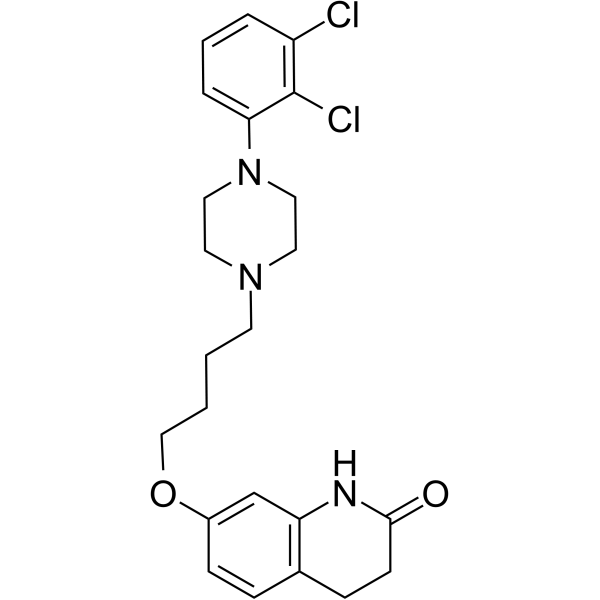
Aripiprazole (OPC-14597), an atypical antipsychotic, is a potent and high-affinity dopamine D2 receptor partial agonist. Aripiprazole is an inverse agonist at 5-HT2B and 5-HT2A receptors and displays partial agonist actions at 5-HT1A, 5-HT2C, D3, and D4 receptors. Aripiprazole can be used for the research of schizophrenia and COVID19 .
|
-
- HY-14546A
-
|
OPC-14597 monohydrate
|
5-HT Receptor
Dopamine Receptor
|
Infection
Neurological Disease
Inflammation/Immunology
|
|
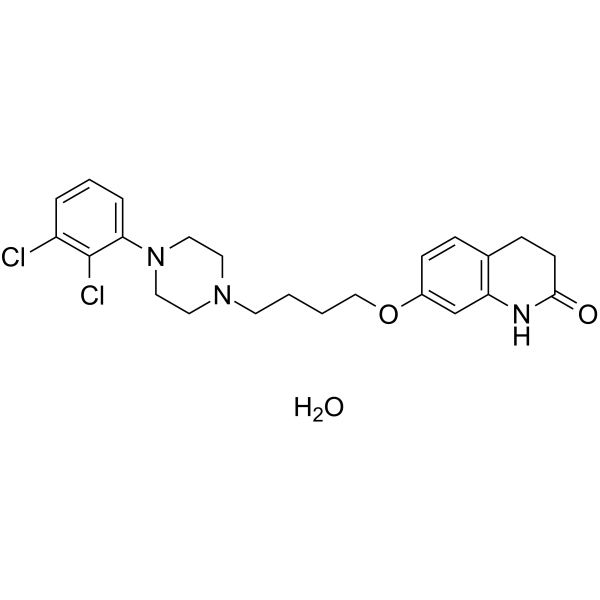
Aripiprazole (OPC-14597) monohydrate, an atypical antipsychotic, is a potent and high-affinity dopamine D2 receptor partial agonist. Aripiprazole monohydrate is an inverse agonist at 5-HT2B and 5-HT2A receptors and displays partial agonist actions at 5-HT1A, 5-HT2C, D3, and D4 receptors. Aripiprazole monohydrate can be used for the research of schizophrenia and COVID19 .
|
-
- HY-114871
-
|
|
GABA Receptor
|
Neurological Disease
|
|
SL651498 is a full agonist of α2 and α3 GABAA receptors, and a partial agonist of α1 and α5 GABAA receptors. SL651498 shows anxiolytic and anticonvulsant activities .
|
-
- HY-180221
-
|
|
FXR
|
Metabolic Disease
|
|
FXR agonist 14 (Compound V15) is a partial, selective, orally active FXR agonist with an EC50 of 0.67 nM. FXR agonist 14 ameliorates pathological features in high-fat and high-sugar diet-induced MASH mice. FXR agonist 14 shows significant anti-cholestatic liver disease effects .
|
-
- HY-107480R
-
-
- HY-169448
-
|
EPT
|
5-HT Receptor
|
Others
|
|
Ethylpropyltryptamine (EPT) is a novel orally active psychoactive substance. Ethylpropyltryptamine (EPT) is predicted to be a partial agonist of the 5-HT2A receptor .
|
-
- HY-100140R
-
|
PK-8165 (Standard)
|
Reference Standards
GABA Receptor
|
Neurological Disease
|
|
Pipequaline (Standard) is the analytical standard of Pipequaline. This product is intended for research and analytical applications. Pipequaline (PK 8165) is a partial benzodiazepine receptor agonist with anxiolytic activity .
|
-
- HY-15436
-
|
|
iGluR
|
Neurological Disease
|
|
L-687414 is an orally active glycine-site NMDA receptor antagonist or low-potency partial agonist. L-687414 has anticonvulsant activity .
|
-
- HY-16729
-
|
YKP10811
|
5-HT Receptor
|
Metabolic Disease
|
|
Relenopride is a agonist of novel potent 5-HT4 receptor partial with weak binding to 5-HT 2B receptors (Ki = 31 nM) .
|
-
- HY-108569
-
|
|
Antibiotic
Bacterial
PPAR
|
Infection
|
|
nTZDpa is an antibiotic. nTZDpa is a PPARG partial agonist. nTZDpa has antibacterial activity. nTZDpa is effective against growing and persistent Staphylococcus aureus by lipid bilayer disruption .
|
-
- HY-169140
-
|
WY-47846
|
5-HT Receptor
|
Neurological Disease
|
|
Zalospirone (WY-47846) is a novel cyclic imide with 5-HT1A partial agonist activity. Zalospirone shows antidepressant efficacy .
|
-
- HY-123127
-
-
- HY-126057
-
|
|
Parasite
5-HT Receptor
|
Infection
|
|
(R)-Praziquantel, the active enantiomer of Praziquantel, is a partial agonist of the human 5-HT2B receptor. (R)-Praziquantel acts as an antischistosomal eutomer .
|
-
- HY-169116
-
|
|
Dopamine Receptor
|
Neurological Disease
|
|
D5R agonist 1 (Compound 5j) is a selective, orally active and BBB penetrable D5R partial agonist (EC50: 269.7 nM). D5R agonist 1 enhances the cognition in the Scopolamine (HY-N0296)-induced amnesia model .
|
-
- HY-143239
-
|
|
PPAR
|
Metabolic Disease
|
|
PPARα/γ agonist 1 (compound 5b) is a potent and dual PPARα/γ partial agonist with EC50 values of 28 nM and 69 nM for PPARα and PPARγ, respectively. PPARα/γ agonist 1 is a promising prototype for dyslipidemia and diabetes research .
|
-
- HY-Z4690
-
-
- HY-14417A
-
|
|
mGluR
|
Neurological Disease
|
|
(1R,2S)-VU0155041, Cis regioisomer of VU0155041, is a partial mGluR4 agonist with an EC50 of 2.35 μM.
|
-
- HY-106851
-
|
FG 10571; PNU 78875
|
GABA Receptor
|
Neurological Disease
|
|
Panadiplon (FG 10571; PNU 78875), a benzodiazepine receptor, is a 5GABAA partial agonist. Panadiplon exhibits selectivity for 5GABAA receptors versus 1GABAA receptors .
|
-
- HY-155099
-
-
- HY-107743
-
|
NalBzoH
|
Opioid Receptor
|
Neurological Disease
|
|
Naloxone benzoylhydrazone (NalBzoH) is a mixed agonist/antagonist. Naloxone benzoylhydrazone is a prototypic κ3-opioid receptor agonist, and a partial agonist at the cloned μ and δ opioid receptors, and an antagonist at opioid-like NOP receptors. Naloxone benzoylhydrazone has potently analgesia effect .
|
-
- HY-167648
-
|
|
Dopamine Receptor
5-HT Receptor
|
Neurological Disease
|
|
PD 158771 is an antipsychotic agent that functions as a partial agonist for D2 /D3 receptors (Ki = 42.0/13.7 nM) and as an agonist for 5-HT1A receptors (Ki = 2.6 nM). PD 158771 can be utilized in antipsychotic research .
|
-
- HY-106699
-
|
CG 4203 sodium
|
Prostaglandin Receptor
nAChR
|
Cardiovascular Disease
|
|
Taprostene sodium is a partial agonist at prostanoid prostacyclin (IP) receptors. Taprostene sodium interacts additively with Prostaglandin E2 (PGE2) (HY-101952), ONO-AE1-259 (selective EP2 agonist), and acetylcholine. Taprostene sodium exerts a significant cardioprotection .
|
-
- HY-168629
-
|
|
FXR
|
Metabolic Disease
|
|
FXR agonist 9 (compound 26) is an oral active and selectivity FXR partial agonist with the EC50 of 0.09 µM (75.13 % maximum efficacy). FXR agonist 9 ameliorates pathological features in HFD and CCl4(HY-Y0298)-induced metabolic dysfunction-associated steatohepatitis mice .
|
-
- HY-141551
-
|
|
Estrogen Receptor/ERR
|
Cancer
|
|
GNE-274 is a structural analog of the ER degrader GDC-0927 and is a non-degrader. GNE-274 does not induce conversion of ER in breast cancer cell lines and functions as a partial ER agonist (partial ER agonist). GNE-274 increases the chromatin accessibility of ER-DNA binding sites, whereas GDC-0927 does not. GNE-274 is an effective ER ligand binding domain (LBD) inhibitor. GNE-274 can be used in cancer research.
|
-
- HY-14546R
-
|
OPC-14597 (Standard)
|
Reference Standards
5-HT Receptor
Dopamine Receptor
|
Infection
Neurological Disease
Inflammation/Immunology
|
|
Aripiprazole (Standard) is the analytical standard of Aripiprazole. This product is intended for research and analytical applications. Aripiprazole (OPC-14597), an atypical antipsychotic, is a potent and high-affinity dopamine D2 receptor partial agonist. Aripiprazole is an inverse agonist at 5-HT2B and 5-HT2A receptors and displays partial agonist actions at 5-HT1A, 5-HT2C, D3, and D4 receptors. Aripiprazole can be used for the research of schizophrenia and COVID19 .
|
-
- HY-P3617
-
|
|
GCGR
|
Metabolic Disease
|
|
Glucagon (22-29) is partial agonist of Glucagon (19–29). Glucagon specifically inhibits the Ca 2+ pump in liver plasma membranes independently of adenylate cyclase activation .
|
-
- HY-16086R
-
|
DRF 2593 (Standard); NN 2344 (Standard)
|
PPAR
Reference Standards
|
Metabolic Disease
|
|
Balaglitazone (Standard) is the analytical standard of Balaglitazone. This product is intended for research and analytical applications. Balaglitazone is a selective partial PPARγ agonist with an EC50 of 1.351 μM for human PPARγ.
|
-
- HY-U00183
-
-
- HY-109164
-
|
AGN-241751; GATE-251
|
iGluR
|
Neurological Disease
|
|
Zelquistinel (AGN-241751) is the orally active N-methyl-D-aspartate (NMDA) receptor partial agonist used for the research of depression, anxiety and other related psychiatric disorders .
|
-
- HY-14261S
-
-
- HY-106432
-
|
SB-202026; Memric
|
mAChR
|
Neurological Disease
|
|
Sabcomeline (SB-202026) is a potent and functionally selective muscarinic M1 receptor partial agonist that improve cognition. Sabcomeline can be used for Alzheimer's disease research .
|
-
- HY-P5131
-
|
|
Opioid Receptor
|
Others
|
|
[Dmt1]DALDA is a potent and long-acting analgesic binds to the mu opioid receptor with high affinity and selectivity. [Dmt1]DALDA is a full agonist at hMOR (Kd = 0.199 nM) and hDOR, but only partial agonist against hKOR .
|
-
- HY-112658
-
|
|
Adrenergic Receptor
Adenosine Receptor
|
Endocrinology
|
|
p-Iodoclonidine hydrochloride is a partial agonist of α2-adrenergic receptor. p-Iodoclonidine hydrochloride also has minimal agonist activity in inhibiting adenylate cyclase in platelet membranes, and potentiates ADP induced platelet aggregation with an EC50 of 1.5 μM .
|
-
- HY-123335
-
|
|
Somatostatin Receptor
|
Others
|
|
L-796778 is an agonist of the hsst3 receptor. In CHO-K1 cells expressing the hsst3 receptor, L-796778 is a partial agonist that inhibits forskolin (HY-15371)-stimulated cAMP production with an IC50 value of 18 nM .
|
-
- HY-19650
-
|
MKC-733; DDP-733
|
5-HT Receptor
|
Metabolic Disease
|
|
Pumosetrag Hydrochloride (MKC-733; DDP-733) is an orally available 5-HT3 partial agonist developed for the treatment of irritable bowel syndrome and gastroesophageal reflux disease.
|
-
- HY-135241
-
|
|
5-HT Receptor
|
Neurological Disease
|
|
25I-NBF hydrochloride is a highly potent partial agonist for the 5-HT2A receptors receptor with a Ki value of 0.26 nM and an EC50 value of 1.6 nM .
|
-
- HY-111985
-
|
BAY Vq 7813
|
5-HT Receptor
Adenylate Cyclase
|
Others
|
|
Revospirone (BAY Vq 7813) is a partial agonist of the 5-HT1A receptor with a Ki of 2 nmol/L. Revospirone inhibits adenylate cyclase activity with an IC50 of 124 nmol/L .
|
-
- HY-103054
-
-
- HY-114706
-
|
MDL-26479
|
GABA Receptor
|
Neurological Disease
|
|
Suritozole (MGL-26479) is a cognitive enhancer that acts as a partial inverse agonist of benzodiazepine receptor sites on GABAA ion channel complexes. Suritozole can be used in the study of neurodegenerative diseases .
|
-
- HY-P2625
-
|
|
GCGR
|
Metabolic Disease
|
|
GLP-2(3-33), generated naturally by dipeptidylpeptidase IV (DPPIV), acts as a partial agonist on GLP-2 receptor (EC50=5.8 nM) .
|
-
- HY-106025
-
|
AC-3933
|
GABA Receptor
|
Neurological Disease
|
|
Radequinil (AC-3933) is a benzodiazepine receptor (BzR) partial inverse agonist. AC-3933 binds to GABA(-) and GABA(+) ligand with Kis of 5.15 and 6.11 nM, respectively .
|
-
- HY-128855
-
|
|
mAChR
|
Neurological Disease
|
|
Talsaclidine is a muscarinic agonist with preferential neuron-stimulating properties. Talsaclidine is a full agonist at the M1 subtype, and as a partial agonist at the M2 and M3 subtypes . Talsaclidine is a click chemistry reagent, it contains an Alkyne group and can undergo copper-catalyzed azide-alkyne cycloaddition (CuAAc) with molecules containing Azide groups.
|
-
- HY-10559
-
|
APD125
|
5-HT Receptor
|
Neurological Disease
Cancer
|
|
Nelotanserin is a potent 5-HT2A inverse agonist, a moderately potent 5-HT2C partial inverse agonist and a weak 5-HT2B inverse agonist, with IC50s of 1.7, 79, 791 nM in IP accumulation assays, respectively.
|
-
- HY-10019S2
-
|
CP 526555-13C,15N
|
Isotope-Labeled Compounds
nAChR
|
Neurological Disease
Inflammation/Immunology
Cancer
|
|
Varenicline- 13C 15N (CP 526555- 13C 15N) is 13C and 15N labeled Varenicline. Varenicline (CP 526555) is an orally active partial agonist of α4β2 nicotinic acetylcholine receptor (α4β2 nAChR, IC50 = 250 nM), which is the principal mediator of nicotine dependence. Varenicline is also a partial agonist of α6β2 nAChR and a full agonist of α7β2 nAChR. Varenicline blocks the direct agonist effects of nicotine on nAChR while stimulates nAChR in a more moderate way, being widely used as an aid of smoking cessation .
|
-
- HY-148922
-
|
|
PPAR
|
Metabolic Disease
|
|
PPARα/γ agonist 2 is an orally active PPARα full agonist and PPARγ partial agonist. PPARα/γ agonist 2 activates PPARα and PPARγ with EC50 values of 0.95 μM and 0.91 μM respectively. PPARα/γ agonist 2 is also a PTP1B inhibitor. PPARα/γ agonist 2 is an anti-diabetic agent .
|
-
- HY-14546S
-
|
OPC-14597-d8
|
5-HT Receptor
|
Neurological Disease
|
|
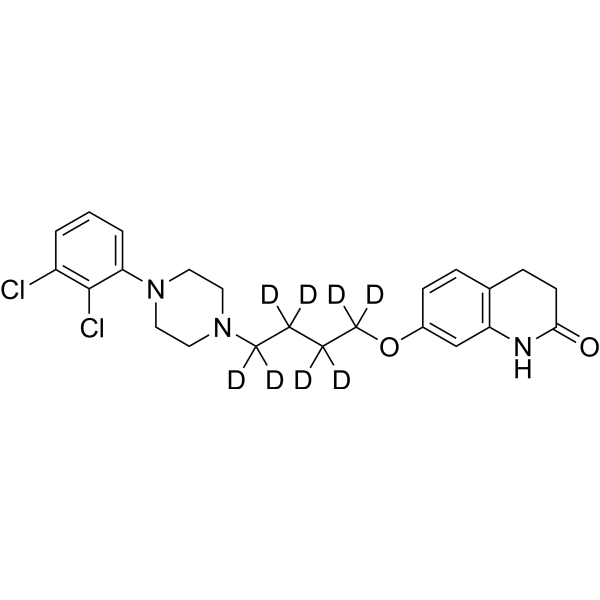
Aripiprazole-d8 (OPC-14597-d8) is the deuterium labeled Aripiprazole (HY-14546). Aripiprazole (OPC-14597), an atypical antipsychotic, is a potent and high-affinity dopamine D2 receptor partial agonist. Aripiprazole is an inverse agonist at 5-HT2B and 5-HT2A receptors and displays partial agonist actions at 5-HT1A, 5-HT2C, D3, and D4 receptors. Aripiprazole can be used for the research of schizophrenia and COVID19.
|
-
- HY-154829
-
|
|
Neuropeptide FF Receptor
|
Inflammation/Immunology
|
|
AC-099 (compound 3) is a selective NPFF2R full agonist (EC50=1189 nM) and NPFF1R partial agonist (EC50=2370 nM). AC-099 attenuates spinal nerve ligation-induced hypersensitivity in rats .
|
-
- HY-154829A
-
|
|
Neuropeptide FF Receptor
|
Inflammation/Immunology
|
|
AC-099 hydrochloride (compound 3) is a selective NPFF2R full agonist (EC50=1189 nM) and NPFF1R partial agonist (EC50=2370 nM). AC-099 hydrochloride attenuates spinal nerve ligation-induced hypersensitivity in rats .
|
-
- HY-P11810
-
|
|
GnRH Receptor
Neuropeptide FF Receptor
|
Metabolic Disease
|
|
GUB08248 is a full GPR10 agonist and a partial NPFF2R agonist, with EC50 values of 0.5 nM and 2.5 nM, respectively. GUB08248 inhibits food intake and induces sustained weight loss. GUB08248 can be used in obesity-related research .
|
-
- HY-155206
-
|
|
5-HT Receptor
|
Neurological Disease
|
|
(+)-OSU6162 is an stabilizer on dopaminergic and serotonergic brain signaling. (+)-OSU6162 is a partial agonist of 5-HT2A receptor. (+)-OSU6162 can be used for neurological research .
|
-
- HY-107671
-
|
|
nAChR
|
Neurological Disease
|
|
DMAB-anabaseine dihydrochloride is a selective nicotinic α7 receptor partial agonist and an α4β2 nAChR antagonist. DMAB-anabaseine dihydrochloride shows cognition-enhancing effects .
|
-
- HY-163916
-
|
|
Opioid Receptor
|
Neurological Disease
|
|
SalA-VS-07 is a G protein-biased partial agonist for the Kappa-opioid receptor (KOR). SalA-VS-07 can be used for research of pain and other disorders .
|
-
- HY-105124A
-
|
Ro 3-4787 hydrochloride
|
Adrenergic Receptor
|
Cardiovascular Disease
Endocrinology
|
|
Bufuralol (Ro 3-4787) hydrochloride is a potent non-selective, orally active β-adrenoreceptor antagonist with partial agonist activity. Bufuralol hydrochloride is a CYP2D6 probe substrate .
|
-
- HY-P5535
-
|
OCE-205
|
Vasopressin Receptor
|
Inflammation/Immunology
|
|
Invopressin (Compound 42) is a vasopressin V1A receptor partial agonist (EC50: 1.0 nM). Invopressin can be used for research of cirrhosis, including bacterial peritonitis, HRS2 and refractory ascites .
|
-
- HY-173443
-
-
- HY-100271
-
|
|
TSH Receptor
|
Endocrinology
|
|
Org41841 is a partial agonist of both luteinizing hormone/chorionic gonadotropin receptor (LHCGR) and thyroid-stimulating hormone receptor (TSHR) with EC50s of 0.2 and 7.7 μM, respectively.
|
-
- HY-134353A
-
|
Adenosine 5'-β-thiodiphosphate trisodium
|
PGE synthase
|
Cardiovascular Disease
|
|
ADP-β-S (trisodium) is an ADP analog and partial agonist. ADP-β-S (trisodium) induces human platelet aggregation and inhibits PGE1-stimulated adenylate cyclase .
|
-
- HY-120609
-
|
|
nAChR
|
Neurological Disease
|
|
BMS-902483 is a quinuclidine-containing spirooxazolidine that is a partial agonist of the α7 nicotinic acetylcholine receptor (nAChR). BMS-902483 improves cognitive ability in preclinical rodent models. .
|
-
- HY-10020S
-
|
CP 526555-15N3 Hydrochloride
|
nAChR
Isotope-Labeled Compounds
|
Neurological Disease
Inflammation/Immunology
Cancer
|
|
Varenicline-15N3 Hydrochloride (CP 526555-15N3 Hydrochloride) is the 15N labeled isotope of Varenicline hydrochloride (HY-10020). Varenicline (CP 526555) is an orally active partial agonist of α4β2 nicotinic acetylcholine receptor (α4β2 nAChR, IC50 = 250 nM), which is the principal mediator of nicotine dependence. Varenicline is also a partial agonist of α6β2 nAChR and a full agonist of α6β2 nAChR. Varenicline blocks the direct agonist effects of nicotine on nAChR while stimulates nAChR in a more moderate way, being widely used as an aid of smoking cessation .
|
-
- HY-120879
-
|
|
Dopamine Receptor
|
Neurological Disease
|
|
PF2562 (Example 6), a dopamine D1 ligand, ascts as a dopamine D1 agonist or partial agonist. PF2562 binds to human D1 receptor with a Ki of 113 nM. PF2562 exhibits activity against human D1 cAMP with an EC50 of 568 nM in HTRF assay .
|
-
- HY-169825
-
-
- HY-106234
-
-
- HY-110241
-
|
|
nAChR
|
Neurological Disease
|
|
Dianicline dihydrochloride is a α4β2 nicotinic acetylcholine receptor partial agonist, a class of agents that includes varenicline and cytisine for smoking cessation. Dianicline dihydrochloride increases cessation rates in a dose-dependent manner .
|
-
- HY-14261R
-
|
EMD 68843 Hydrochloride (Standard); SB659746A Hydrochloride (Standard)
|
Reference Standards
5-HT Receptor
Serotonin Transporter
|
Neurological Disease
|
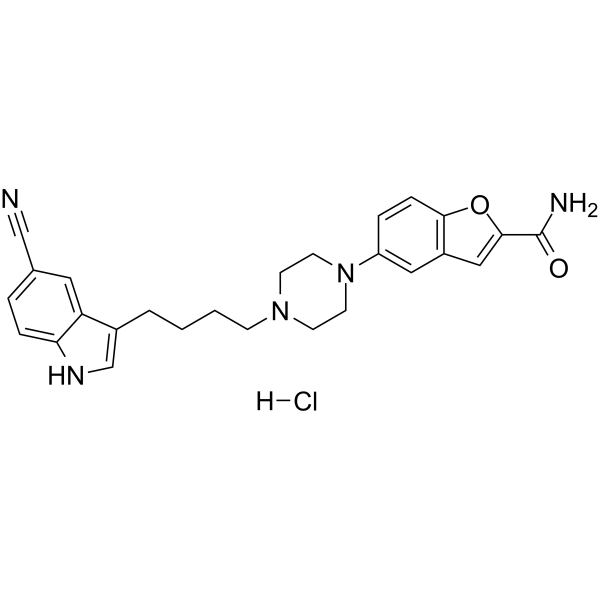
|
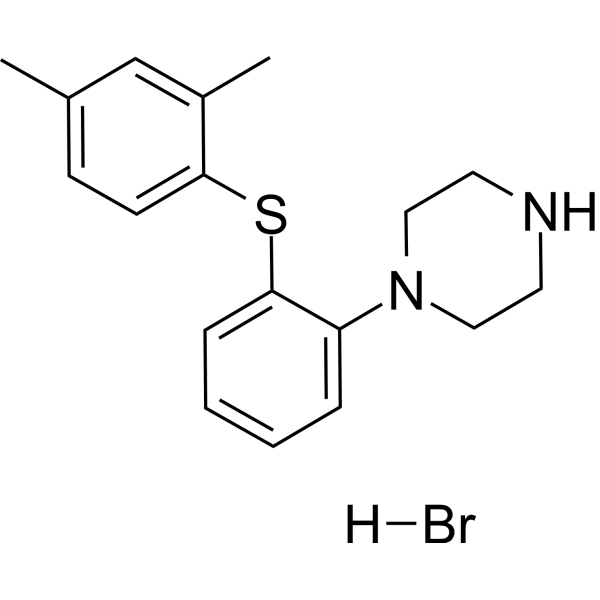
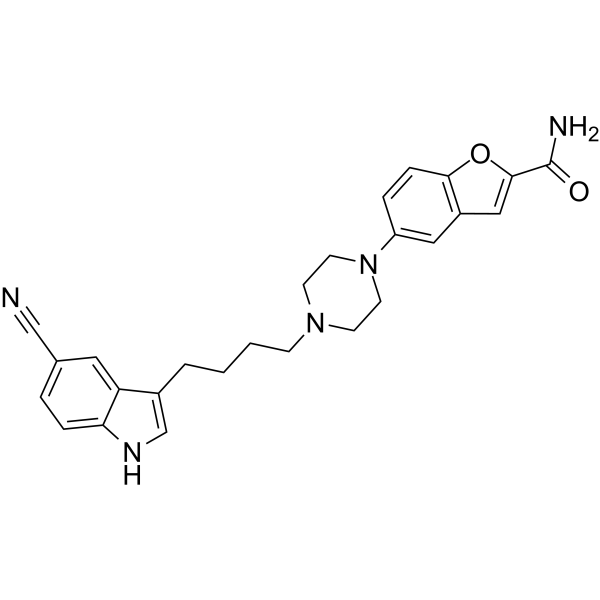
Vilazodone (Hydrochloride) (Standard) is the analytical standard of Vilazodone (Hydrochloride). This product is intended for research and analytical applications. Vilazodone Hydrochloride (EMD 68843 Hydrochloride) is a serotonin transporter (SER) inhibitor and 5-HT1A receptor partial agonist.
|
-
- HY-14262R
-
|
EMD 68843 (Standard); SB659746A (Standard)
|
Reference Standards
5-HT Receptor
Serotonin Transporter
|
Neurological Disease
|
|
Vilazodone (Standard) is the analytical standard of Vilazodone. This product is intended for research and analytical applications. Vilazodone (EMD 68843; SB 659746A) is a potent, selective and orally active serotonin reuptake inhibitor (SSRI) and partial 5-HT1A receptor agonist. Vilazodone exhibits antidepressant efficacy in vivo can be used for the research of major depressive disorder (MDD) and affective disorders .
|
-
- HY-W329175
-
|
SKF-104557
|
Dopamine Receptor
|
Neurological Disease
|
|
N-Despropyl Ropinirole (SKF-104557) is an active metabolite of the dopamine D2 receptor agonist Ropinirole (HY-B0623). N-Despropyl Ropinirole is a full agonist at human D2 and D3 receptors. N-Despropyl Ropinirole is a partial agonistof the hD4 receptor .
|
-
- HY-127003
-
|
|
PPAR
TRP Channel
|
Metabolic Disease
Inflammation/Immunology
Cancer
|
|
Neoambrosin is a sesquiterpene lactone. Neoambrosin acts as a partial agonist of PPARγ and TRPA1 receptors, with no carbonic anhydrase inhibitory activity. Neoambrosin can be used in research on hypoglycemia, analgesia, anti-inflammation and anticancer effects .
|
-
- HY-14831A
-
|
(+)-MBX 102; (+)-JNJ 39659100
|
PPAR
|
Metabolic Disease
|
|
(+)-Arhalofenate ((+)-MBX 102) is the less active enantiomer of Arhalofenate (HY-14831). Arhalofenate is a selective partial agonist of peroxisome proliferator-activated receptor (PPAR)-γ, used for the treatment of type 2 diabetes .
|
-
- HY-102053R
-
|
NRX-1074 (Standard); AGN-241660 (Standard)
|
Reference Standards
iGluR
|
Neurological Disease
|
|
Apimostinel (Standard) is the analytical standard of Apimostinel (HY-102053). This product is intended for research and analytical applications. Apimostinel (NRX-1074; AGN-241660) is an orally active NMDA receptor partial agonist .
|
-
- HY-14953R
-
|
AWD 131-138 (Standard)
|
GABA Receptor
Reference Standards
|
Neurological Disease
|
|
Imepitoin (Standard) is the analytical standard of Imepitoin. This product is intended for research and analytical applications. Imepitoin (AWD 131-138) is a new low-affinity partial benzodiazepine receptor agonist with potent anticonvulsant and anxiolytic properties in rodent models.
|
-
- HY-107744R
-
-
- HY-105124
-
-
- HY-114978
-
|
|
mGluR
PERK
|
Neurological Disease
|
|
VU0424465 is a potent and partial PAM (positive allosteric modulator)-agonist for mGlu5 mediated iCa 2+ mobilization. VU0424465 exhibits high affinity at MPEP allosteric binding site, with a Ki value of 11.8 nM. VU0424465 is also a agonist for pERK1/2 in cortical neurons .
|
-
- HY-137055
-
|
|
Others
|
Others
|
|
PF-3774076 is a highly central nervous system (CNS) penetrant, potent, and selective human α1A-adrenoceptor partial agonist. It exhibits good potency and selectivity in multiple binding and functional assays. PF-3774076 increases peak urethral pressure in anesthetized female dogs in a dose-dependent manner via a central mechanism. PF-3774076 affects both the proximal and distal portions of the urethra in vivo. These properties suggest that PF-3774076 may have significant benefit in the treatment of stress urinary incontinence (SUI) as a CNS-penetrant α1A receptor partial agonist. However, despite its partial agonism and selectivity for α1A receptors, PF-3774076 failed to provide adequate safety differences in in vivo models of cardiovascular function. This may be due to the simultaneous activation of both peripheral and central α1A receptors. These data suggest that while central α1A partial agonists may have significant benefit in the treatment of SUI, this class of agents may have difficulty achieving the desired urethral selectivity without affecting cardiovascular function.
|
-
- HY-123335A
-
|
|
Somatostatin Receptor
|
Neurological Disease
|
|
L-796778 acetate is a selective agonist of the sst3 receptor. In CHO-K1 cells expressing the hsst3 receptor, L-796778 acetate is a partial agonist that inhibits Forskolin (HY-15371)-stimulated cAMP production with an IC50 value of 18 nM. L-796778 acetate has anticonvulsant effect .
|
-
- HY-116445
-
|
|
Dopamine Receptor
|
Neurological Disease
|
|
UNC9975 is a D2R agonist that displays signaling bias via β-arrestin–ergic signaling and a simultaneously antagonist of Gi-regulated cAMP production and partial agonist for D2R/β-arrestin-2 interactions. UNC9975 can be utilized in antipsychotic research .
|
-
- HY-120223
-
|
|
Adrenergic Receptor
|
Metabolic Disease
|
|
BMS-196085 is an orally active, potent and selective full agonist against human β3 adrenergic receptor with a Ki value of 21 nM. BMS-196085 also has partial agonist activity at the β1 receptor. BMS-196085 is promising for research of obesity and type-II diabetes .
|
-
- HY-P3563
-
|
|
Endothelin Receptor
|
Cardiovascular Disease
|
|
[Lys4] Sarafotoxin S6c, a sarafotoxin analogue, is a potent and partial agonist of endothelin receptor. [Lys4] Sarafotoxin S6c elicits contraction of pig coronary artery, with an EC50 of 1.5 nM .
|
-
- HY-138997
-
|
|
PPAR
|
Metabolic Disease
|
|
MBX-102 acid is a selective partial PPAR-γ agonist. MBX-102 acid binds highly to plasma proteins, mainly serum albumin. MBX-102 acid can be used to study type 2 diabetes .
|
-
- HY-118674
-
|
|
Calcium Channel
|
Cardiovascular Disease
|
|
AK-2-38, a Nifedipine (HY-B0284) analogue, is a calcium channel antagonist. AK-2-38 also has partial agonist effects on isolated guinea pig left atrium .
|
-
- HY-101639AR
-
|
|
GABA Receptor
Reference Standards
|
Neurological Disease
|
|
CP-409092 (hydrochloride) (Standard) is the analytical standard of CP-409092 (hydrochloride) (HY-101639A). This product is intended for research and analytical applications. CP-409092 hydrochloride is a partial agonist of GABAA receptor, with anti-anxiety activity .
|
-
- HY-P5358
-
|
|
Protease Activated Receptor (PAR)
|
Others
|
|
YFLLRNP is a biological active peptide. (a partial agonist of PAR-1. YFLLRNP selectively active G12/13 signaling pathway without activating Gq or Gi pathways at low concentrations. YFLLRNP (60 μM))
|
-
- HY-P10325
-
-
- HY-116507
-
|
|
nAChR
|
Neurological Disease
|
|
AZD0328 is a selective α7 nAChR partial agonist. AZD0328 selectively enhances midbrain dopaminergic neuronal activity and enhances cortical dopamine levels in rats. AZD0328 improves cognitive performance .
|
-
- HY-101384AR
-
|
|
Dopamine Receptor
Reference Standards
|
Others
|
|
Ro 10-5824 (dihydrochloride) (Standard) is the analytical standard of Ro 10-5824 (dihydrochloride) (HY-101384A). This product is intended for research and analytical applications. Ro 10-5824 dihydrochloride is a selective dopamine D4 receptor partial agonist, with Ki of 5.2 nM.
|
-
- HY-15293
-
|
K201
|
Calcium Channel
|
Cardiovascular Disease
|
|
JTV-519 (K201) is a Ca 2+-dependent blocker of sarcoplasmic reticulum Ca 2+-stimulated ATPase (SERCA) and a partial agonist of ryanodine receptors in striated muscle. Antiarrhythmic and cardioprotective properties .
|
-
- HY-115494
-
|
Neladenoson bialanate hydrochloride; BAY-1067197 hydrochloride
|
Adenosine Receptor
|
Cardiovascular Disease
|
|
Neladenoson dalanate (Neladenoson bialanate; BAY-1067197) hydrochloride is a orally active agonist precursor of partial Adenosine A1 Receptor. Neladenoson dalanate hydrochloride has a good pharmacokinetic and safety profile, can be used for the chronic heart diseases .
|
-
- HY-123353
-
|
Neladenoson bialanate; BAY-1067197
|
Adenosine Receptor
|
Cardiovascular Disease
|
|
Neladenoson dalanate (Neladenoson bialanate; BAY-1067197) is a orally active agonist precursor of partial Adenosine A1 Receptor. Neladenoson dalanate has a good pharmacokinetic and safety profile, can be used for the chronic heart diseases .
|
-
- HY-N6869
-
|
|
Antibiotic
PPAR
Bacterial
Fungal
|
Infection
Metabolic Disease
Inflammation/Immunology
Cancer
|
|
Dehydroabietic acid is a diterpene resin acid that can be isolated from Pinus and Picea. Dehydroabietic acid has anti-bacterial, anti-fungal, anti-inflammatory, and anticancer activities. Dehydroabietic acid is a dual PPAR-α/γ agonist and PPAR-γ partial agonist, which can attenuate insulin resistance (IR) and hepatic steatosis induced by HFD-consumption in mice .
|
-
- HY-153157
-
|
|
Adenosine Receptor
Arrestin
|
Cardiovascular Disease
|
|
MRS542 is a nucleoside A3 AR antagonist with a pKi of 8.74. MRS542 also acts as a partial agonist (pEC50 = 7.76) in promoting β-arrestin translocation. MRS542 can be converted into an agonist by LUF6000 (HY-13236). MRS542 can be used for cardiovascular disease research .
|
-
- HY-115766S
-
|
|
Isotope-Labeled Compounds
nAChR
|
Neurological Disease
|
|
Anabaseine-d4 is the deuterium labeled Anabaseine (HY-115766). Anabaseine is a non-selective nicotinic agonist. Anabaseine stimulates all AChRs, preferentially stimulates skeletal muscle and brain α7 subtypes . Anabaseine is also a weak partial agonist at α4β2 nAChRs .
|
-
- HY-115766R
-
|
|
nAChR
Reference Standards
|
Neurological Disease
|
|
Anabaseine (Standard) is the analytical standard of Anabaseine. This product is intended for research and analytical applications. Anabaseine is a non-selective nicotinic agonist. Anabaseine stimulates all AChRs, preferentially stimulates skeletal muscle and brain α7 subtypes . Anabaseine is also a weak partial agonist at α4β2 nAChRs .
|
-
- HY-135432
-
|
APD334 arginine
|
LPL Receptor
|
Inflammation/Immunology
|
|
Etrasimod arginine is an orally available S1P receptor modulator that is a potent full agonist of the S1P1 receptor and has partial agonist activity at S1P4. Etrasimod arginine reduces inflammation in a CD4 +CD45RB high T cell-transferred mouse colitis model .
|
-
- HY-103403
-
|
PNU96391 hydrochloride
|
5-HT Receptor
Dopamine Receptor
|
Neurological Disease
|
|
(-)-OSU6162 (PNU96391) hydrochloride is a dopamine stabilizer. (-)-OSU6162 hydrochloride acts as partial agonist at 5-HT2A and is a dopamine D2 antagonist. (-)-OSU6162 hydrochloride can be used for the research of aggression and irritability .
|
-
- HY-177691
-
-
- HY-119486
-
|
PF-06649751; CVL-751
|
Dopamine Receptor
|
Neurological Disease
|
|
Tavapadon (PF-06649751) is an orally active and highly selective dopamine D1/D5 receptor partial agonist. Tavapadon is effective in enabling movement and reducing disability and has the potential for Parkinson's disease .
|
-
- HY-P7060
-
|
TPPT
|
iGluR
|
Neurological Disease
|
|
NT 13 (TPPT) is a tetrapeptide having the amino acid sequence L-threonyl-L-prolyl-L-prolyl-L-threonine amide. NT 13 is a partial N-methyl-D-aspartate receptor (NMDAR) agonist used in the study of depression, anxiety, and other related diseases.
|
-
- HY-120627
-
|
|
5-HT Receptor
|
Neurological Disease
|
|
BMS-442606, the S-enantiomer of 6-hydroxybuspirone (6OHB), is an orally active 5-HT1A partial agonist. BMS-442606 can be used for generalized anxiety disorder (GAD) research .
|
-
- HY-N7687
-
|
|
PPAR
|
Metabolic Disease
Inflammation/Immunology
|
|
Caulophyllogenin is a triterpene saponin extracted from M. polimorpha. Caulophyllogenin is a partial PPARγ agonist, with an EC50 of 12.6 μM. Caulophyllogenin can be used for the research of type-2 diabetes, obesity, metabolic syndrome and inflammation .
|
-
- HY-100976
-
-
- HY-126057S
-
|
|
Parasite
5-HT Receptor
|
Infection
|
|
(R)-Praziquantel-d11 is the deuterium labeled (R)-Praziquantel. (R)-Praziquantel, the active enantiomer of Praziquantel, is a partial agonist of the human 5-HT2B receptor. (R)-Praziquantel acts as an antischistosomal eutomer .
|
-
- HY-100908R
-
|
N10-Acetyltryptamine (Standard); Nb-Acetyltryptamine (Standard); Nω-Acetyltryptamine (Standard)
|
Reference Standards
Melatonin Receptor
|
Neurological Disease
|
|
N-Acetyltryptamine (Standard) is the analytical standard of N-Acetyltryptamine. This product is intended for research and analytical applications. N-Acetyltryptamine is a partial agonist for melatonin receptors in the retina . N-Acetyltryptamine is also used for determination of serotonin N-acetyl transferase activity .
|
-
- HY-15293B
-
|
K201 hemifumarate
|
Calcium Channel
|
Cardiovascular Disease
|
|
JTV-519 hemifumarate (K201 hemifumarate) is a Ca 2+-dependent blocker of sarcoplasmic reticulum Ca 2+-stimulated ATPase (SERCA) and a partial agonist of ryanodine receptors in striated muscle. Antiarrhythmic and cardioprotective properties .
|
-
- HY-107744
-
-
- HY-P1294
-
|
|
CRFR
|
Neurological Disease
|
|
α-Helical CRF(9-41) is a competitive CRF2 receptor antagonist with KB of ~100 nM. α-Helical CRF(9-41) is also a partial agonist of CRF1 receptor with an EC50 of 140 nM .
|
-
- HY-169450
-
|
9-O-Desmethyl mitragynine
|
Opioid Receptor
|
Neurological Disease
|
|
(-)-9-Hydroxycorynantheidine (9-O-Desmethyl mitragynine), the 9-demethyl analogue of Mitragynine, is a selective and partial agonist of μ-opioid receptor. (-)-9-Hydroxycorynantheidine inhibits electrically stimulated twitch contraction in guinea-pig ileum .
|
-
- HY-131651
-
|
LTB4 ethanolamide
|
Endogenous Metabolite
Leukotriene Receptor
|
Cancer
|
|
Leukotriene B4 ethanolamide (LTB4 ethanolamide) is an antagonist and a partial agonist for Leukotriene B4 (LTB4) receptor 1 (BLTR1). Leukotriene B4 ethanolamide ameliorates the tumor progression, which is only asscociated with inflammation .
|
-
- HY-121541
-
|
|
Cannabinoid Receptor
|
Cancer
|
|
CB-25 is a ligand of CB1 cannabinoid receptors, acting as a partial agonist. CB-25 enhances Forskolin (HY-15371)-induced cAMP formation in cancer cells but not hCB1-CHO cells .
|
-
- HY-10629R
-
|
WAY 252623 (Standard)
|
Reference Standards
LXR
|
Metabolic Disease
Cancer
|
|
LXR-623 (Standard) is the analytical standard of LXR-623. This product is intended for research and analytical applications. LXR-623 is a brain-penetrant partial LXRα and full LXRβ agonist, with IC50s of 24 nM and 179 nM, respectively.
|
-
- HY-150030
-
|
|
Cannabinoid Receptor
|
Neurological Disease
|
|
CB1/2 agonist 4 is a full CB1 agonist and CB2 partial agonist with EC50 values of 15.09 nM and 1.16 nM, respectively. CB1/2 agonist 4 also has hCB1 and hCB2 receptor affinities with Ki values of 1.1 nM and 4.2 nM, respectively. CB1/2 agonist 4 has a significant antinociceptive activity, and also can activate cannabinoid and TRPV1 receptor with values of IC50 and EC50 is 0.8 μM and 0.12 μM, respectively .
|
-
- HY-15414
-
-
- HY-A0007
-
|
N-0923 Hydrochloride
|
Dopamine Receptor
Adrenergic Receptor
5-HT Receptor
|
Neurological Disease
|
|
Rotigotine Hydrochloride (N-0923 Hydrochloride) is a full agonist of dopamine receptor, a partial agonist of the 5-HT1A receptor, and an antagonist of the α2B-adrenergic receptor, with Ki of 0.71 nM, 4-15 nM, and 83 nM for the dopamine D3 receptor and D2, D5, D4 receptors, and dopamine D1 receptor.
|
-
- HY-115766
-
|
|
nAChR
|
Neurological Disease
|
|
Anabaseine, a brain-penetrant occurring alkaloid toxin, is potent agonist of multiple nicotinic acetylcholine receptors (AChRs). Anabaseine stimulates the neuromuscular α12β1γδ or α12β1γɛ and α7 AChRs. Anabaseine is also a weak partial agonist at α4β2 nAChRs .
|
-
- HY-G0021
-
|
Norclozapine; Desmethylclozapine; Normethylclozapine
|
mAChR
Opioid Receptor
Drug Metabolite
Virus Protease
|
Infection
|
|
N-Desmethylclozapine is a major active metabolite of the atypical antipsychotic agent Clozapine. N-Desmethylclozapine is a potent, allosteric and partial M1 receptors agonist (EC50=115 nM) and is able to potentiate hippocampal N-methyl-d-aspartate (NMDA) receptor currents through M1 receptor activation. N-Desmethylclozapine is also a δ-opioid agonist .
|
-
- HY-10559R
-
|
APD125 (Standard)
|
Reference Standards
5-HT Receptor
|
Neurological Disease
Cancer
|
|
Nelotanserin (Standard) is the analytical standard of Nelotanserin (HY-10559). This product is intended for research and analytical applications. Nelotanserin is a potent 5-HT2A inverse agonist, a moderately potent 5-HT2C partial inverse agonist and a weak 5-HT2B inverse agonist, with IC50s of 1.7, 79, 791 nM in IP accumulation assays, respectively.
|
-
- HY-P1294A
-
|
|
CRFR
|
Neurological Disease
|
|
α-Helical CRF(9-41) TFA is a competitive CRF2 receptor antagonist with KB of ~100 nM. α-Helical CRF(9-41) TFA is also a partial agonist of CRF1 receptor with an EC50 of 140 nM .
|
-
- HY-101869R
-
|
MRK-409 (Standard)
|
Reference Standards
GABA Receptor
|
Neurological Disease
|
|
MK-0343 (Standard) is the analytical standard of MK-0343. This product is intended for research and analytical applications. MK0343 (MRK-409) is an orally bioavailable GABAA receptor subtype-selective partial agonist. MK0343 is a non-sedating anxiolytic .
|
-
- HY-111616
-
|
|
PPAR
Angiotensin Receptor
|
Cardiovascular Disease
Others
|
|
GSK1820795A, as a telmisartan analog, is a selective hGPR132a antagonist. GSK1820795A blocks activation of yeast cells expressing hGPR132a by N-acylamides . GSK1820795A is also a angiotensin II antagonists and partial PPARγ agonists (compound 38) .
|
-
- HY-15293A
-
|
K201 free base
|
Calcium Channel
|
Cardiovascular Disease
|
|
JTV-519 free base (K201 free base) is a Ca 2+-dependent blocker of sarcoplasmic reticulum Ca 2+-stimulated ATPase (SERCA) and a partial agonist of ryanodine receptors in striated muscle. Antiarrhythmic and cardioprotective properties .
|
-
- HY-132343S
-
|
|
Isotope-Labeled Compounds
|
Neurological Disease
|
|
Zolmitriptan N-Oxide-d6 is a deuterium labeled Zolmitriptan N-Oxide. Zolmitriptan N-Oxide is the major metabolite of Zolmitriptan. Zolmitriptan is a 5-HT1B/1D receptor partial agonist .
|
-
- HY-103108R
-
|
|
Reference Standards
5-HT Receptor
|
Metabolic Disease
|
|
CJ033466 (Standard) is the analytical standard of CJ033466 (HY-103108). This product is intended for research and analytical applications. CJ033466 is a novel and selective 5-HT4 receptor partial agonist with an EC50 of 9 nM and has gastroprokinetic effect .
|
-
- HY-110312
-
|
K201 fumarate
|
Calcium Channel
|
Cardiovascular Disease
|
|
JTV-519 fumarate (K201 fumarate) is a Ca 2+-dependent blocker of sarcoplasmic reticulum Ca 2+-stimulated ATPase (SERCA) and a partial agonist of ryanodine receptors in striated muscle. JTV-519 fumarate is a cardioprotective agent with antiarrhythmic effects .
|
-
- HY-101300
-
|
LD 3098 hydrochloride
|
Adenosine Receptor
|
Neurological Disease
|
|
Cirazoline hydrochloride (LD 3098 hydrochloride) is a potent competitive full α1A-adrenergic receptor (α1A-AR) agonist (Ki=120 nM) and only a partial agonist at α1B-AR (Ki= 960 nM) and α1D-AR (Ki=660 nM) .
|
-
- HY-15394
-
|
N-0437 hydrochloride
|
Dopamine Receptor
Adrenergic Receptor
5-HT Receptor
|
Neurological Disease
Endocrinology
|
|
(Rac)-Rotigotine hydrochloride is a racemate of Rotigotine. Rotigotine is a full agonist of dopamine receptor, a partial agonist of the 5-HT1A receptor, and an antagonist of the α2B-adrenergic receptor, with Kis of 0.71 nM, 4-15 nM, and 83 nM for the dopamine D3 receptor and D2, D5, D4 receptors, and dopamine D1 receptor.
|
-
- HY-117829
-
UNC9994
2 Publications Verification
|
Dopamine Receptor
5-HT Receptor
Histamine Receptor
Arrestin
|
Neurological Disease
|
|
UNC9994, an analog of Aripiprazole, is a functionally selective β-arrestin-biased dopamine D2 receptor (D2R) agonist with EC50 <10 nM for β-arrestin-2 recruitment to D2 receptors. UNC9994 is simultaneously partial agonists of β-arrestin-2 translocation and antagonists of Gi-regulated cAMP production. Antipsychotic Activity .
|
-
- HY-14546S1
-
-
- HY-110053
-
|
SM-3997 hydrochloride
|
5-HT Receptor
|
Neurological Disease
|
|
Tandospirone (SM-3997) hydrochloride is a potent and selective 5-HT1A receptor partial agonist, with a Ki of 27 nM. Tandospirone hydrochloride has anxiolytic and antidepressant activities. Tandospirone hydrochloride can be used for the research of the central nervous system disorders and the underlying mechanisms .
|
-
- HY-B0489A
-
-
- HY-121964
-
|
|
iGluR
|
Neurological Disease
|
|
Cis-piperidine-2,3-dicarboxylic acid is a non-specific antagonist of NMDA, AMPA and kainate ionotropic receptors and a partial agonist for NMDA receptors. Cis-piperidine-2,3-dicarboxylic acid can be used in blocking general excitatory synaptic transmissions .
|
-
- HY-100606
-
|
(-)-Pindolol; (S)-(-)-Pindolol; S-Pindolol
|
5-HT Receptor
Adrenergic Receptor
|
Neurological Disease
|
|
l-Pindolol ((-)-pindolol) is a reversible, competitive and orally active 5-HT1A/1B antagonist. l-Pindolol is a partial β-adrenoceptor agonist. l-Pindolol can be used for the research of neurological disease .
|
-
- HY-N2364
-
-
- HY-14558
-
|
SM-3997
|
5-HT Receptor
|
Neurological Disease
|
|
Tandospirone (SM-3997) is a potent and selective 5-HT1A receptor partial agonist, with a Ki of 27 nM. Tandospirone has anxiolytic and antidepressant activities. Tandospirone can be used for the research of the central nervous system disorders and the underlying mechanisms .
|
-
- HY-100488
-
|
|
Cannabinoid Receptor
|
Cancer
|
|
Bay 59-3074 is a selective cannabinoid CB1/CB2 receptor partial agonist with Ki values of 48.3 and 45.5 nM at human CB1 and CB2 receptors, respectively. Bay 59-3074 has analgesic properties .
|
-
- HY-12023
-
GTx-007
4 Publications Verification
S-4
|
Androgen Receptor
|
Cancer
|
|
GTx-007 (S-4) is an orally active and selective nonsteroidal androgen receptor (AR) modulator (SARM) and a partial agonist, with Ki of 4 nM. GTx-007 (S-4) is identified as SARMs with potent and tissue-selective in vivo pharmacological activity .
|
-
- HY-15056
-
|
|
TRP Channel
|
Inflammation/Immunology
|
|
AMG 9090 is characterized as a compound that acts as a partial agonist of rat TRPA1 channels, demonstrating pharmacological activity in pain and inflammation models. TRPA1 is pivotal in sensing reactive compounds, triggering pain responses in humans and rodents. AMG 9090, along with other trichloro(sulfanyl)ethyl benzamides (TCEB compounds), shows differential effects on human and rat TRPA1 channels: it acts as a potent antagonist of human TRPA1 activated by AITC and noxious cold, whereas it behaves as a partial agonist at rat TRPA1. This suggests AMG 9090's potential as a therapeutic agent targeting TRPA1-mediated pain and inflammation, with additional inhibitory activity against TRPM8 noted .
|
-
- HY-108565
-
|
|
Adenylate Cyclase
Prostaglandin Receptor
|
Cardiovascular Disease
|
|
BMY 45778 is a non-prostanoid prostacyclin mimetic. BMY 45778 inhibits human (IC50 = 35 nM), rabbit (IC50: 136 nM) and rat (IC50 : 1.3 μM) platelet aggregation. BMY 45778 also activates adenylyl cyclase. BMY 45778 is a partial agonist at the prostacyclin receptor .
|
-
- HY-B0030
-
|
|
iGluR
Bacterial
Antibiotic
|
Infection
Neurological Disease
Cancer
|
|
D-Cycloserine is an antibiotic which targets sequential bacterial cell wall peptidoglycan biosynthesis enzymes, with blood-brain barrier permeability. D-Cycloserine is a partial NMDA agonist that can improve cognitive functions. D-Cycloserine can be used for multidrug-resistant tuberculosis research .
|
-
- HY-119069
-
|
|
Dopamine Receptor
|
Neurological Disease
|
|
FAUC 3019 is a partial agonist of dopamine D(4) receptors and has the activity of promoting penile erection. FAUC 3019 has a strong stimulatory effect on penile erection in male rats at low concentrations. The biological activity of FAUC 3019 makes it a promising compound candidate .
|
-
- HY-118788
-
-
- HY-105124AR
-
|
Ro 3-4787 hydrochloride (Standard)
|
Reference Standards
Adrenergic Receptor
|
Cardiovascular Disease
Endocrinology
|
|
Bufuralol (hydrochloride) (Standard) is the analytical standard of Bufuralol (hydrochloride). This product is intended for research and analytical applications. Bufuralol (Ro 3-4787) hydrochloride is a potent non-selective, orally active β-adrenoreceptor antagonist with partial agonist activity. Bufuralol hydrochloride is a CYP2D6 probe substrate .
|
-
- HY-106437
-
|
|
GABA Receptor
|
Neurological Disease
|
|
ELB-139 is a progesterone analogue. ELB-139 is a GABAA receptor partial agonist. ELB-139 has anxiolytic and anticonvulsant activity. ELB-139 induces increase of extracellular 5-HT in the striatum and the medial prefrontal cortex of rats .
|
-
- HY-182723
-
|
|
GPR84
|
Cancer
|
|
PSB-16671 is an allosteric agonist of GPR84. PSB-16671 recruits β-arrestins and couples to Gi, enhances the Gi activation potency of orthosteric agonists, and exerts a synergistic effect with orthosteric agonists. PSB-16671 promotes G protein activation and partial chemotaxis independent of GPR84 in mouse neutrophils, maintains the phagocytic function of macrophages against cancer cells without inducing receptor desensitization. PSB-16671 can be used in cancer-related research .
|
-
- HY-15394A
-
|
N-0437
|
Adrenergic Receptor
5-HT Receptor
Dopamine Receptor
|
Neurological Disease
Endocrinology
|
|
(Rac)-Rotigotine (N-0437) is a racemate of Rotigotine. Rotigotine is a full agonist of dopamine receptor, a partial agonist of the 5-HT1A receptor, and an antagonist of the α2B-adrenergic receptor, with Kis of 0.71 nM, 4-15 nM, and 83 nM for the dopamine D3 receptor and D2, D5, D4 receptors, and dopamine D1 receptor.
|
-
- HY-15414A
-
|
Lu AA21004 hydrobromide
|
5-HT Receptor
Serotonin Transporter
|
Neurological Disease
Cancer
|
|
Vortioxetine (Lu AA 21004) hydrobromide is an antagonist of 5-HT3A and 5-HT7 receptors (Ki: 3.7 nM, 19 nM) and an inhibitor of 5-hydroxytryptamine transporter (SERT) (Ki: 1.6 nM), as well as a 5-HT1A agonist and a partial 5-HT1B agonist (Ki: 15 nM, 33 nM) .
|
-
- HY-169814
-
|
|
mAChR
|
Neurological Disease
|
|
Lu 25-077 is a brain-penetrant and pharmacologically active N-demethyl metabolite of Lu 25-109 (HY-101586), a partial M1 agonist and M2/M3 antagonist. Lu 25-077 can be utilized in neurological research .
|
-
- HY-137350
-
|
|
Leukotriene Receptor
|
Inflammation/Immunology
|
|
12-epi-LTB4 is an agonist for BLT1 and BLT2. 12-epi LTB4 exhibits a partial agonistic activity against mBLT1 and mBLT2, and induces phosphorylation of extracellular signal-regulated kinase in primary mouse keratinocytes .
|
-
- HY-122681
-
|
SR-16435 free base
|
Opioid Receptor
|
Neurological Disease
|
|
SR-16434 is a nociceptin/orphanin FQ (NOP)/μ-opioid receptor partial agonist, with high binding affinity (NOP receptor Ki=7.49; μ-Opioid receptor Ki=2.70). SR-16434 can relieve pain .
|
-
- HY-121053A
-
|
WY-50324 hydrochloride; SEB-324 hydrochloride
|
5-HT Receptor
|
Neurological Disease
|
|
Adatanserin hydrochloride is a high affinity, selective and partial agonist for the 5-HT1A receptor with a Ki of 1 nM. Adatanserin hydrochloride is a moderate affinity 5-HT2 receptor antagonist with a Ki of 73 nM. Adatanserin hydrochloride shows significant anxiolytic and antidepressant activity in an animal conflict model .
|
-
- HY-106432AR
-
|
SB-202026 hydrochloride (Standard); Memric hydrochloride (Standard)
|
Reference Standards
mAChR
|
Neurological Disease
|
|
Sabcomeline hydrochloride (Standard) is the analytical standard of Sabcomeline hydrochloride (HY-106432A). This product is intended for research and analytical applications. Sabcomeline (SB-202026) hydrochloride is a potent and functionally selective muscarinic M1 receptor partial agonist that improve cognition. Sabcomeline hydrochloride can be used for Alzheimer's disease research .
|
-
- HY-112071A
-
|
|
Adrenergic Receptor
|
Endocrinology
|
|
Prenalterol hydrochloride is a partial adrenal agonist with functional β1-receptor specificity and positive inotropic effects. Prenalterol hydrochloride is effective in suppressing acute heart failure, low output syndrome after myocardial infarction, shock, and reducing orthostatic hypotension in Shy-Drager syndrome .
|
-
- HY-12752
-
|
Trimeprazine
|
Histamine Receptor
|
Neurological Disease
Inflammation/Immunology
Cancer
|
|
Alimemazine is a phenothiazine derivative that is generally used as an antipruritic agent and also a hemagglutinin (HA)-receptor antagonist.Alimemazine (Trimeprazine) is also acts as a partial agonist against the histamine H1 receptor (H1R) and other GPCRs. Alimemazine displays antiserotonin, antispasmodic, and antiemetic properties .
|
-
- HY-P99321
-
|
BMS 224819; Chi220; Anti-Human CD40 Recombinant Antibody
|
TNF Receptor
|
Inflammation/Immunology
Cancer
|
|
Teneliximab (BMS-224819) is a chimeric monoclonal antibody, blocks the CD40-CD40L interaction. Teneliximab (BMS-224819) has partial agonist activity resulting in some signaling through CD40 and peripheral B cell depletion .
|
-
- HY-N6869R
-
|
|
Antibiotic
Reference Standards
PPAR
Bacterial
Fungal
|
Infection
Metabolic Disease
Inflammation/Immunology
Cancer
|
|
Dehydroabietic acid (Standard) is the analytical standard of Dehydroabietic acid. This product is intended for research and analytical applications. Dehydroabietic acid is a diterpene resin acid that can be isolated from Pinus and Picea. Dehydroabietic acid has anti-bacterial, anti-fungal, anti-inflammatory, and anticancer activities. Dehydroabietic acid is a dual PPAR-α/γ agonist and PPAR-γ partial agonist, which can attenuate insulin resistance (IR) and hepatic steatosis induced by HFD-consumption in mice .
|
-
- HY-151811
-
|
|
Opioid Receptor
|
Neurological Disease
|
|
NAQ is a potent and selective μ opioid receptor partial agonist, with a Ki of 0.55 nM. NAQ shows selectivity for Mu opioid receptor over the δ receptor (Ki=132.50 nM) and the κ receptor (Ki=26.45 nM). NAQ can be used for the research of opioid withdrawal or dependence .
|
-
- HY-106025R
-
|
AC-3933 (Standard)
|
Reference Standards
GABA Receptor
|
Neurological Disease
|
|
Radequinil (Standard) is the analytical standard of Radequinil (HY-106025). This product is intended for research and analytical applications. Radequinil (AC-3933) is a benzodiazepine receptor (BzR) partial inverse agonist. AC-3933 binds to GABA(-) and GABA(+) ligand with Kis of 5.15 and 6.11 nM, respectively .
|
-
- HY-138879
-
|
|
nAChR
|
Neurological Disease
|
|
CP-601927 is a selective α4β2 nicotinic acetylcholine receptor (nAChR) partial agonist (Ki=1.2 nM; EC50=2.6 μM). CP-601927 shows good brain penetration and antidepressant-like properties .
|
-
- HY-B0489
-
|
methyl 1,2,5,6-tetrahydro-1-methyl-3-pyridinecarboxylate hydrobromide
|
mAChR
nAChR
|
Infection
Neurological Disease
Metabolic Disease
Inflammation/Immunology
Cancer
|
|
Arecoline hydrobromide, a naturally brain-penetrant and orally active occurring psychoactive alkaloid, is a partial agonist of nicotinic and muscarinic acetylcholine receptor. Arecoline hydrobromide exhibits stimulation, alertness, anxiolysis and anti-parasitic effects. Arecoline hydrobromide also can induce oxidative stress .
|
-
- HY-106056
-
|
D 16726
|
Estrogen Receptor/ERR
|
Cancer
|
|
Zindoxifene is a partial anti-estrogen. Zindoxifene works primarily by binding to estrogen receptors, thereby inhibiting the growth of estrogen-dependent tumor cells. Zindoxifene is able to exhibit the dual properties of estrogen agonists and antagonists and can be used in research and development to target estrogen-dependent tumors, such as prostate and breast cancer .
|
-
- HY-P1316
-
|
|
Opioid Receptor
|
Neurological Disease
|
|
Ac-RYYRWK-NH2 is a potent and selective partial agonist for the nociceptin receptor (NOP), [ 3H]Ac-RYYRWK-NH2 binds to rat cortical membranes ORL1 with a Kd of 0.071 nM, but has no affinity for µ-, κ- or δ-opioid receptors .
|
-
- HY-B0061
-
|
SM-3997 citrate
|
5-HT Receptor
|
Neurological Disease
Metabolic Disease
|
|
Tandospirone (SM-3997) citrate is a potent and selective 5-HT1A receptor partial agonist, with a Ki of 27 nM. Tandospirone citrate has anxiolytic and antidepressant activities. Tandospirone citrate can be used for the research of the central nervous system disorders and the underlying mechanisms .
|
-
- HY-P4385
-
|
|
PTHR
|
Metabolic Disease
|
|
(Asn10,Leu11,D-Trp12)-pTH-Related Protein (7-34) amide (human, mouse, rat) is a potent PTH-1R antagonist and does not display any partial agonist activity .
|
-
- HY-P1316A
-
|
|
Opioid Receptor
|
Neurological Disease
|
|
Ac-RYYRWK-NH2 is a potent and selective partial agonist for the nociceptin receptor (NOP), [ 3H]Ac-RYYRWK-NH2 binds to rat cortical membranes ORL1 with a Kd of 0.071 nM, but has no affinity for μ-, κ- or δ-opioid receptors .
|
-
- HY-145698
-
|
|
5-HT Receptor
|
Neurological Disease
|
|
UCSF678 is a 42 nM arrestin-biased partial agonist at the 5-HT5AR with a more restricted off-target profile and decreased assay liabilities. UCSF678 is a selective probe with which to study the function of the 5-HT5AR .
|
-
- HY-131821
-
|
Thymidine-5'-O-monophosphorothioate
|
P2Y Receptor
|
Others
|
|
5'-TMPS (Thymidine-5'-O-monophosphorothioate) is a selective partial agonist of P2Y6R and an antagonist of P2Y14R. Additionally, 5'-TMPS acts as a positive regulator of angiogenesis, exhibiting pro-angiogenic effects
|
-
- HY-107803
-
|
|
Estrogen Receptor/ERR
|
Neurological Disease
|
|
Geranium oil serves as a partial agonist for estrogen receptor (ER), enhancing both the cytotoxicity induced by Tamoxifen (TMX) (HY-13757A) in GT1-7 cells and the adverse effects of TMX on the central nervous system. Geranium oil can be utilized in the research of neurological disorders such as dementia .
|
-
- HY-10233
-
|
Lu 02-030 hydrochloride; THIP hydrochloride
|
GABA Receptor
|
Neurological Disease
|
|
Gaboxadol hydrochloride (Lu 02-030 hydrochloride) is a potent agonist of the GABAA receptor and an antagonist of GABAC receptors (IC50=25 μM). Gaboxadol hydrochloride displays a partial agonist efficacy on subunit α1β2γ2 with an ED50 value of 143 μM, a full agonist efficacy at α5 subunit (ED50=28-129 μM) and a superagonist efficacy at α4β3δ (ED50=6 μM). Gaboxadol hydrochloride is a non-opioid agent .
|
-
- HY-148247
-
|
|
Free Fatty Acid Receptor
|
Metabolic Disease
|
|
BI-2081, a chemical probe, is a GPR40 (FFAR1) partial agonist (EC50: 4 nM). BI-2081 induces glucose depending insulin secretion and reduces the plasma glucose concentration. BI-2081 can be used in the research of metabolic diseases, in particular diabetes type 2 .
|
-
- HY-169446
-
|
|
5-HT Receptor
|
Neurological Disease
|
|
ALEPH (hydrochloride) is the h5-HT2A and h5-HT2B partial agonist with the EC50 values of 10.3 nM and 19.2 nM, respectively. ALEPH (hydrochloride) causes head twitch response in mice (ED50: 0.80 mg/kg) .
|
-
- HY-12217
-
|
|
Neurotensin Receptor
|
Neurological Disease
|
|
NTRC-739 is a selective nonpeptide partial neurotensin receptor type 2 (NTS2) agonist with an EC50 of 12 nM and a Ki of 153 nM. NTRC-739 is 161-fold selective for NTS2 versus NTS1. NTRC-739 can be used for the study of chronic pain research .
|
-
- HY-114085
-
|
|
Dopamine Receptor
|
Neurological Disease
|
|
BP 897 is a potent and partial dopamine D3 receptor agonist and a weak D2 receptor antagonist. BP 897 displays a high affinity at the dopamine D3 receptor (Ki=0.92 nM) and a 70 times lower affinity at the D2 receptor (Ki=61 nM) .
|
-
- HY-181047
-
|
|
Dopamine Receptor
|
Neurological Disease
|
|
FMJ-01-042 is a blood-brain barrier-permeable, low-efficacy partial agonist with high affinity (Kᵢ = 4.33 nM) and exceptional subtype selectivity for the dopamine D4 receptor. FMJ-01-042 exhibits good metabolic stability and is suitable for research on neurological and psychiatric disorders .
|
-
- HY-106660
-
|
|
Dopamine Receptor
|
Neurological Disease
|
|
BP 897 hydrochloride is a potent and partial dopamine D3 receptor agonist and a weak D2 receptor antagonist. BP 897 hydrochloride displays a high affinity at the dopamine D3 receptor (Ki=0.92 nM) and a 70 times lower affinity at the D2 receptor (Ki=61 nM) .
|
-
- HY-16916
-
NS1643
1 Publications Verification
|
Potassium Channel
Autophagy
|
Cancer
|
|
NS1643 is a partial agonist of human ether-a-go-go-related gene (hERG) K + channels with an EC50 of 10.5 μM. NS1643 inhibits the growth of breast cancer tumors in TNBC mouse models. NS1643 inhibits cell migration and invasion of breast cancer cells .
|
-
- HY-19490A
-
|
(S)-AQW-051
|
nAChR
|
Neurological Disease
|
|
(S)-VQW-765 ((S)-AQW-051) is an orally active, selective and effective α7 nicotinic ACh receptor (nAChR) partial agonist. (S)-VQW-765 has potential applications in cognitive disorders related to neurological diseases, such as Alzheimer's disease or schizophrenia .
|
-
- HY-107122
-
-
- HY-14262
-
|
EMD 68843; SB659746A
|
5-HT Receptor
Serotonin Transporter
|
Neurological Disease
|
|
Vilazodone (EMD 68843; SB 659746A) is a potent, selective and orally active serotonin reuptake inhibitor (SSRI) and partial 5-HT1A receptor agonist. Vilazodone exhibits antidepressant efficacy in vivo can be used for the research of major depressive disorder (MDD) and affective disorders .
|
-
- HY-G0021S
-
|
Norclozapine-d8; Desmethylclozapine-d8; Normethylclozapine-d8
|
mAChR
Opioid Receptor
Drug Metabolite
Virus Protease
|
Infection
|
|
N-Desmethylclozapine-d8 is the deuterium labeled N-Desmethylclozapine. N-Desmethylclozapine is a major active metabolite of the atypical antipsychotic agent Clozapine. N-Desmethylclozapine is a potent, allosteric and partial M1 receptors agonist (EC50=115 nM) and is able to potentiate hippocampal N-methyl-d-aspartate (NMDA) receptor currents through M1 receptor activation. N-Desmethylclozapine is also a δ-opioid agonist .
|
-
- HY-115644
-
|
|
Melanocortin Receptor
|
Inflammation/Immunology
|
|
BMS-470539 dihydrochloride is a highly potent and selective melanocortin-1 receptor (MC-1R) agonist with an IC50 of 120 nM, an EC50 of 28 nM. BMS-470539 dihydrochloride does not activate MC-3R and is a very weak partial agonist at MC-4R and MC-5R. BMS-470539 dihydrochloride has potently anti-inflammatory properties .
|
-
- HY-121053
-
|
WY-50324; SEB-324
|
5-HT Receptor
|
Neurological Disease
|
|
Adatanserin (WY-50324) is a high affinity, selective and partial agonist for the 5-HT1A receptor with a Ki of 1 nM. Adatanserin is a moderate affinity 5-HT2 receptor antagonist with a Ki of 73 nM. Adatanserin shows significant anxiolytic and antidepressant activity in an animal conflict model .
|
-
- HY-B0032A
-
|
SM-13496
|
5-HT Receptor
Dopamine Receptor
|
Neurological Disease
|
|
Lurasidone (SM-13496) is an antagonist of both dopamine D2 and 5-HT7 with IC50s of 1.68 and 0.495 nM, respectively. Lurasidone (SM-13496) is also a partial agonist of 5-HT1A receptor with an IC50 of 6.75 nM.
|
-
- HY-B0032
-
|
SM-13496 Hydrochloride
|
5-HT Receptor
Dopamine Receptor
|
Neurological Disease
|
|
Lurasidone (Hydrochloride) (SM-13496 (Hydrochloride)) is an antagonist of both dopamine D2 and 5-HT7 with IC50s of 1.68 and 0.495 nM, respectively. Lurasidone (Hydrochloride) (SM-13496 (Hydrochloride)) is also a partial agonist of 5-HT1A receptor with an IC50 of 6.75 nM.
|
-
- HY-P0227
-
|
|
Melanocortin Receptor
|
Metabolic Disease
|
|
SHU 9119 is a potent human melanocortin 3 and 4 receptors (MC3/4R) antagonist and a partial MC5R agonist; with IC50 values of 0.23, 0.06, and 0.09 nM for human MC3R, MC4R and MC5R, respectively.
|
-
- HY-125751
-
UCSF924
1 Publications Verification
|
Dopamine Receptor
|
Neurological Disease
|
|
UCSF924, a chemical probe, is a potent and specific dopamine D4 receptor (DRD4) partial agonist with a EC50 of 4.2 nM. UCSF924 has no off-target effects on more than 320 non-olfactory GPCRs. UCSF924 can be used for research in the field of neuropsychiatric diseases .
|
-
- HY-162728
-
|
|
Opioid Receptor
|
Neurological Disease
|
|
RO-76 is a mu opioid receptor (μOR) selective partial agonist. RO-76 binds to μOR-G-protein complex with an EC50 value of 454 nM. RO-76 reduces β-Arrestin-1/2 recruitment. RO-76 shows antinociception activity .
|
-
- HY-101300R
-
|
LD 3098 hydrochloride (Standard)
|
Reference Standards
Adenosine Receptor
|
Neurological Disease
|
|
Cirazoline (hydrochloride) (Standard) is the analytical standard of Cirazoline (hydrochloride). This product is intended for research and analytical applications. Cirazoline hydrochloride (LD 3098 hydrochloride) is a potent competitive full?α1A-adrenergic receptor (α1A-AR) agonist (Ki=120 nM) and only a partial agonist at α1B-AR (Ki= 960 nM) and α1D-AR (Ki=660 nM) .
|
-
- HY-111385
-
|
|
Dopamine Receptor
5-HT Receptor
Arrestin
|
Neurological Disease
|
|
UNC9994 hydrochloride is a functionally selective, β-arrestin–biased dopamine D2 receptor (D2R) agonist that selectively activates β-arrestin recruitment and signaling. UNC9994 hydrochloride shows a binding affinity with a Ki of 79 nM for D2R. UNC9994 hydrochloride is also an antagonist of Gi-regulated cAMP production and partial agonist for D2R/β-arrestin-2 interactions. UNC9994 hydrochloride shows antipsychotic-like activity .
|
-
- HY-75502
-
|
N-0923; (-)-N 0437
|
Dopamine Receptor
Adrenergic Receptor
5-HT Receptor
|
Neurological Disease
Endocrinology
|
|
Rotigotine is a potent dopamine receptor agonist with Ki values of 0.71 nM, 4-15 nM, and 83 nM for the dopamine D3 receptor and D2, D5, D4 receptors and dopamine D1 receptor. Rotigotine a partial agonist of the 5-HT1A receptor, and an antagonist of the α2B-adrenergic receptor. Rotigotine can be used for parkinson's disease (PD) research .
|
-
- HY-15414R
-
|
Lu AA 21004 (Standard)
|
Reference Standards
5-HT Receptor
Serotonin Transporter
|
Neurological Disease
Cancer
|
|
Vortioxetine (Standard) is an analytical standard for Vortioxetine. This product is intended for research and analytical applications. Vortioxetine (Lu AA 21004) is an antagonist of 5-HT3A and 5-HT7 receptors (Ki: 3.7 nM, 19 nM) and an inhibitor of serotonin transporter (SERT) (Ki: 1.6 nM), as well as a 5-HT1A agonist and a partial 5-HT1B agonist (Ki: 15 nM, 33 nM) .
|
-
- HY-101327A
-
|
Corwin hemifumarate; ICI 118587 hemifumarate
|
Adrenergic Receptor
|
Cardiovascular Disease
Neurological Disease
Metabolic Disease
|
|
Xamoterol (Corwin; ICI 118587) hemifumarate is an orally active and selective β1-adrenoceptor partial agonist. Xamoterol hemifumarate acts as agonist at low sympathetic tone, antagonist at high sympathetic tone, with context-dependent cardiovascular effects including modulated heart rate, blood pressure, and cardiac output. Xamoterol hemifumarate can be used for the research of heart failure, postural hypotension, and ischemic heart disease .
|
-
- HY-A0007R
-
|
N-0923 Hydrochloride (Standard)
|
Reference Standards
Dopamine Receptor
Adrenergic Receptor
5-HT Receptor
|
Neurological Disease
|
|
Rotigotine (Hydrochloride) (Standard) is the analytical standard of Rotigotine (Hydrochloride). This product is intended for research and analytical applications. Rotigotine Hydrochloride (N-0923 Hydrochloride) is a full agonist of dopamine receptor, a partial agonist of the 5-HT1A receptor, and an antagonist of the α2B-adrenergic receptor, with Ki of 0.71 nM, 4-15 nM, and 83 nM for the dopamine D3 receptor and D2, D5, D4 receptors, and dopamine D1 receptor.
|
-
- HY-G0021S1
-
|
Norclozapine-d8 hydrochloride; Desmethylclozapine-d8 hydrochloride; Normethylclozapine-d8 hydrochloride
|
mAChR
Opioid Receptor
Drug Metabolite
Virus Protease
|
Infection
|
|
N-Desmethylclozapine-d8 (hydrochloride) is the deuterium labeled N-Desmethylclozapine hydrochloride. N-Desmethylclozapine hydrochloride is a major active metabolite of the atypical antipsychotic agent Clozapine. N-Desmethylclozapine hydrochloride is a potent, allosteric and partial M1 receptors agonist (EC50=115 nM) and is able to potentiate hippocampal N-methyl-d-aspartate (NMDA) receptor currents through M1 receptor activation. N-Desmethylclozapine hydrochloride is also a δ-opioid agonist .
|
-
- HY-G0021R
-
|
Norclozapine (Standard); Desmethylclozapine (Standard); Normethylclozapine (Standard)
|
Reference Standards
mAChR
Opioid Receptor
Drug Metabolite
Virus Protease
|
Infection
|
|
N-Desmethylclozapine (Standard) is the analytical standard of N-Desmethylclozapine. This product is intended for research and analytical applications. N-Desmethylclozapine is a major active metabolite of the atypical antipsychotic agent Clozapine. N-Desmethylclozapine is a potent, allosteric and partial M1 receptors agonist (EC50=115 nM) and is able to potentiate hippocampal N-methyl-d-aspartate (NMDA) receptor currents through M1 receptor activation. N-Desmethylclozapine is also a δ-opioid agonist .
|
-
- HY-10019S
-
|
CP 526555-d4
|
Isotope-Labeled Compounds
nAChR
|
Neurological Disease
|
|
Varenicline-d4 is deuterium labeled Varenicline. Varenicline (CP 526555) is a potent partial agonist for α4β2 nicotinic acetylcholine receptor (nAChR) with an EC50 value of 2.3 μM. Varenicline is a full agonist for α3β4 and α7 nAChRs with EC50 values of 55 μM and 18 μM, respectively . Varenicline is a nicotinic ligand based on the structure of cytisine, has the potential for smoking cessation treatment .
|
-
- HY-101327
-
|
Corwin; ICI 118587
|
Adrenergic Receptor
|
Cardiovascular Disease
Neurological Disease
Metabolic Disease
|
|
Xamoterol (Corwin; ICI 118587) is an orally active and selective β1-adrenoceptor partial agonist. Xamoterol acts as agonist at low sympathetic tone, antagonist at high sympathetic tone, with context-dependent cardiovascular effects including modulated heart rate, blood pressure, and cardiac output. Xamoterol can be used for the research of heart failure, postural hypotension, and ischemic heart disease .
|
-
- HY-18138
-
|
|
5-HT Receptor
|
Neurological Disease
|
|
PF-03382792 is a potent 5-HT4 partial agonist with a Ki of 2.7 nM and an EC50 of 0.9 nM for 5-HT4d. PF-03382792 can penetrate the brain. PF-03382792 produces moderate increases in cortical Ach in the rat prefrontal cortex .
|
-
- HY-19029
-
|
|
5-HT Receptor
Dopamine Receptor
|
Neurological Disease
|
|
SDZ 208-912 is a dual-action 5-HT1A/2 receptor agonist and dopamine D1 receptor antagonist. SDZ 208-912 exhibits partial dopamine agonism and atypical neurosedative effects in rodent models. SDZ 208-912 can be used in research on neurological disorders such as schizophrenia .
|
-
- HY-100271R
-
|
|
TSH Receptor
Reference Standards
|
Endocrinology
|
|
Org41841 (Standard) is the analytical standard of Org41841 (HY-100271). This product is intended for research and analytical applications. Org41841 is a partial agonist of both luteinizing hormone/chorionic gonadotropin receptor (LHCGR) and thyroid-stimulating hormone receptor (TSHR) with EC50s of 0.2 and 7.7 μM, respectively.
|
-
- HY-117799
-
|
|
5-HT Receptor
|
Endocrinology
|
|
LY426965 is a potent arylpiperazine compound known for its role as a full antagonist of the serotonin 1A receptor, lacking partial agonist activity. It is identified as a selective 5-HT1A antagonist, showing promise in preclinical studies for treating conditions associated with serotonin dysregulation, such as smoking cessation and depression-related disorders .
|
-
- HY-17533
-
|
ANS118
|
Insecticide
|
Infection
|
|
Chromafenozide is a potent partial ecdysone receptor agonist and dibenzoylhydrazine insecticide. Chromafenozide inhibits insect feeding and causes the insect to molt prematurely, leading to death. Chromafenozide shows antagonistic activity against 20-HE. Chromafenozide shows high toxicity against Spodoptera exigua and Spodoptera littoralis .
|
-
- HY-P3343A
-
|
|
Estrogen Receptor/ERR
|
Cancer
|
|
hFSH-β-(33-53) TFA, a thiol-containing peptide which corresponds to a second FSH receptor-binding domain, is a FSHR (follicle-stimulating hormone receptor) antagonist. hFSH-β-(33-53) TFA inhibits binding of FSH to receptor and is a partial agonist of estradiol synthesis in Sertoli cells .
|
-
- HY-116565
-
|
SUVN-D4010
|
5-HT Receptor
|
Neurological Disease
|
|
Usmarapride (SUVN-D4010) (Example 3)is a potent, selective, orally active and brain penetrant 5-HT4 receptor partial agonist (EC50=27.5 nM). Usmarapride (SUVN-D4010) can be used for the research of cognitive deficits associated with Alzheimer's disease .
|
-
- HY-105124R
-
|
Ro 3-4787 (Standard)
|
Reference Standards
Adrenergic Receptor
|
Cardiovascular Disease
Endocrinology
|
|
Bufuralol (Standard) is the analytical standard of Bufuralol (HY-105124). This product is intended for research and analytical applications. Bufuralol (Ro 3-4787) is a potent non-selective, orally active β-adrenoreceptor antagonist with partial agonist activity. Bufuralol hydrochloride is a CYP2D6 probe substrate .
|
-
- HY-178203
-
|
|
Cannabinoid Receptor
|
Neurological Disease
|
|
AM12814 is a potent and partial CB1 and CB2 agonist with Ki values of 0.7 nM and 3.4 nM. AM12814 can inhibit cAMP accumulation and recruitse β-arrestin 2. AM12814 exhibits cannabimimetic effects. AM12814 can be used for the research of neurological disease, suah as catalepsy .
|
-
- HY-108057
-
|
RG3487 free base
|
nAChR
5-HT Receptor
|
Neurological Disease
|
|
Facinicline (RG3487) is an orally active nicotinic α7 receptor partial agonist, with a Ki of 6 nM for α7 human nAChR. Facinicline improves cognition and sensorimotor gating in rodents. Facinicline hydrochloride shows high affinity (antagonist) to 5-HT3Rs with a Ki value of 1.2 nM .
|
-
- HY-107556
-
|
|
Histamine Receptor
|
Neurological Disease
|
|
VUF 5681 dihydrobromide is a neutral antagonist of histamine H3 receptor. VUF 5681 dihydrobromide also has partial agonist function of H3 receptor. VUF 5681 dihydrobromide blocks the effects of Thioperamide (HY-12206). VUF 5681 dihydrobromide is used in central nervous system disease research .
|
-
- HY-116565A
-
|
SUVN-D4010 free base
|
5-HT Receptor
|
Neurological Disease
|
|
Usmarapride (SUVN-D4010) free base is a potent, selective, orally active and brain penetrant 5-HT4 receptor partial agonist (EC50=44 nM). Usmarapride (SUVN-D4010) free base can be used for the research of cognitive deficits associated with Alzheimer's disease .
|
-
- HY-126932
-
|
|
Estrogen Receptor/ERR
|
Cancer
|
|
TTC-352 is an orally bioavailable selective human estrogen receptor (ER) α partial agonist (ShERPA). TTC-352 inhibits the growth of three ER+ breast cancer cells. TTC-352 induces tumor regression accompanied by exit of ERα from the nucleus to extranuclear sites .
|
-
- HY-W414109
-
|
|
Opioid Receptor
Arrestin
|
Neurological Disease
|
|
ID110460002 possesses both full agonist activity at the μ-opioid receptor (OPRM) and agonist activity at the δ-opioid receptor (OPRD). ID110460002 acts as a potent agonist for the G protein pathways of both receptors, but exhibits only very weak partial agonist activity towards the β-arrestin-2 pathway. The agonistic potency of ID110460002 at OPRM has extremely high intrinsic activity and is unaffected by reduced receptor expression levels, while its potency at OPRD depends on receptor expression levels. ID110460002 displays tissue- or organ-dependent properties, and serves as a critical compound for investigating pain mechanisms and analgesia .
|
-
- HY-14153AS
-
|
SDZ-HTF-919-13C,d3; HTF-919-13C,d3
|
Isotope-Labeled Compounds
5-HT Receptor
|
Neurological Disease
Metabolic Disease
|
|
Tegaserod- 13C,d3 (maleate) is the 13C- and deuterium labeled Tegaserod (maleate). Tegaserod maleate is a selective 5-HT4 receptor partial agonist and a 5-HT2B receptor antagonist. Tegaserod maleate exhibits a promotile effect throughout the gastrointestinal (GI) tract .
|
-
- HY-B0030R
-
|
|
Reference Standards
iGluR
Bacterial
Antibiotic
|
Infection
Neurological Disease
Cancer
|
|
D-Cycloserine (Standard) is the analytical standard of D-Cycloserine. This product is intended for research and analytical applications. D-Cycloserine is an antibiotic which targets sequential bacterial cell wall peptidoglycan biosynthesis enzymes. D-Cycloserine is a partial NMDA agonist that can improve cognitive functions. D-Cycloserine can be used for multidrug-resistant tuberculosis research .
|
-
- HY-117799A
-
|
|
5-HT Receptor
|
Endocrinology
|
|
LY-426965 hydrochloride is a potent arylpiperazine compound known for its role as a full antagonist of the serotonin 1A receptor, lacking partial agonist activity. It is identified as a selective 5-HT1A antagonist, showing promise in preclinical studies for treating conditions associated with serotonin dysregulation, such as smoking cessation and depression-related disorders .
|
-
- HY-119873
-
|
REV 5320
|
NO Synthase
Adrenergic Receptor
|
Cardiovascular Disease
|
|
Celiprolol (REV 5320) is a potent, cardioselective and orally active β1-andrenoceptor r antagonist with partial β2 agonist activity, with Ki values of 0.14-8.3 μM. Celiprolol has antihypertensive and antianginal activity, and can be used for the research of cardiovascular disease such as high blood pressure .
|
-
- HY-W574030
-
|
|
Neurotensin Receptor
|
Neurological Disease
|
|
Fmoc-DL-Leu-OH acts as a partial agonist of the neurotensin NTS1 receptor (NTS1R) with an EC50 of 215.50 μM. Fmoc-DL-Leu-OH triggers intracellular calcium mobilization, and its activity is blocked by selective NTS1R antagonists. Fmoc-DL-Leu-OH can be used in the research of schizophrenia .
|
-
- HY-150743
-
|
|
Toll-like Receptor (TLR)
|
Infection
Inflammation/Immunology
|
|
ODN 2395 is a C class oligodeoxynucleotide and can be used as vaccine adjuvant. ODN 2395 is also a TLR9 agonist. ODN 2395 can be used in the research of immunological vaccines. Sequence: 5'-tcgtcgttttcggcgc:gcgccg-3' (Note: The bases are phosphorothioate; ODN 2395 contains the partial palindromic sequence cggcgc:gcgccg) .
|
-
- HY-117575
-
|
|
5-HT Receptor
|
Neurological Disease
|
|
WAY-100135 is a serotonergic compound belonging to the phenylpiperazine family, utilized in scientific research for its role as a strong antagonist of the 5-HT1A receptor and a partial agonist of the 5-HT1D receptor, with minimal activity at the 5-HT1B receptor.
|
-
- HY-B1264
-
|
|
NO Synthase
Adrenergic Receptor
|
Cardiovascular Disease
|
|
Celiprolol (REV 5320) is a potent, cardioselective and orally active β1-andrenoceptor r antagonist with partial β2 agonist activity, with Ki values of 0.14-8.3 μM. Celiprolol has antihypertensive and antianginal activity, and can be used for the research of cardiovascular disease such as high blood pressure .
|
-
- HY-106316
-
|
|
GABA Receptor
|
Neurological Disease
|
|
CGS 20625 is a potent, selective and orally active partial agonist for the central benzodiazepine receptor. CGS 20625 inhibits [3H]-flunitrazepam binding to central benzodiazepine receptors with an IC50 of 1.3 nM. CGS 20625 enhances GABA in Xenopus laevis oocytes . CGS 20625 can be used for the research of pentylenetetrazol-induced seizures and anxiety .
|
-
- HY-103524
-
|
(-)-Valerenic Acid
|
GABA Receptor
5-HT Receptor
|
Neurological Disease
|
|
Valerenic acid ((-)-Valerenic Acid), a sesquiterpenoid, is an orally active positive allosteric modulator of GABAA receptors. Valerenic acid is also a partial agonist of the 5-HT5a receptor. Valerenic acid mediates anxiolytic activity via GABAA receptors containing the β3 subunit. Valerenic acid also exhibits potent antioxidant properties .
|
-
- HY-162083
-
|
|
Cannabinoid Receptor
5-HT Receptor
|
Neurological Disease
|
|
CB2R/5-HT1AR agonist 1 (Compound 2o) is an orally active partial agonist of the CB2 receptor (EC50=479.6 nM). CB2R/5-HT1AR agonist 1 is a full agonist of 5-HT1A receptor (EC50=2.7 μM). CB2R/5-HT1AR agonist 1 exhibits anti-anxiety and anti-depressive effects. CB2R/5-HT1AR agonist 1 possesses favorable pharmacokinetic properties .
|
-
- HY-160887
-
|
|
5-HT Receptor
|
Neurological Disease
|
|
FPT, a 2-Aminotetralin, is an efficacious partial agonist at 5-HT1AR, a full agonist at 5-HT1BR and 5-HT1DR with EC50s of 39.3 nM, 1.2 nM, 0.5 nM, respectively. FPT is a weak agonist at 5-HT7R. FPT shows in vivo efficacy as an antiepileptic in Fmr1 knockout mice and has anxiolytic-like and prosocial effects in Fmr1 knockout mice and other mouse models .
|
-
- HY-157425
-
|
|
5-HT Receptor
|
Neurological Disease
|
|
5-HT2CR agonist 1 (compound 8), a 7-chloro analogue, is a selective 5-HT2CR partial agonist (Emax=71.09%) with an EC50 value of 121.5 nM and no observed activity toward 5-HT2AR or 5-HT2BR. 5-HT2CR agonist 1 exhibits no recruitment activity for β-arrestin and shows low inhibition of hERG at 10 μM .
|
-
- HY-10233R
-
|
Lu 02-030 hydrochloride (Standard); THIP hydrochloride (Standard)
|
Reference Standards
GABA Receptor
|
Neurological Disease
|
|
Gaboxadol (hydrochloride) (Standard) is the analytical standard of Gaboxadol (hydrochloride). This product is intended for research and analytical applications. Gaboxadol hydrochloride (Lu 02-030 hydrochloride) is a potent agonist of the GABAA receptor and an antagonist of GABAC receptors (IC50=25 μM). Gaboxadol hydrochloride displays a partial agonist efficacy on subunit α1β2γ2 with an ED50 value of 143 μM, a full agonist efficacy at α5 subunit (ED50=28-129 μM) and a superagonist efficacy at α4β3δ (ED50=6 μM). Gaboxadol hydrochloride is a non-opioid agent .
|
-
- HY-15394S1
-
|
N-0437-d3 hydrochloride
|
Isotope-Labeled Compounds
Adrenergic Receptor
Dopamine Receptor
5-HT Receptor
|
Endocrinology
|
|
(Rac)-Rotigotine-d3 hydrochloride is a deuterium labeled (Rac)-Rotigotine (hydrochloride) (HY-15394). (Rac)-Rotigotine hydrochloride is a racemate of Rotigotine. Rotigotine is a full agonist of dopamine receptor, a partial agonist of the 5-HT1A receptor, and an antagonist of the α2B-adrenergic receptor, with Kis of 0.71 nM, 4-15 nM, and 83 nM for the dopamine D3 receptor and D2, D5, D4 receptors, and dopamine D1 receptor.
|
-
- HY-15414S
-
|
Lu AA 21004 d8
|
Isotope-Labeled Compounds
5-HT Receptor
Serotonin Transporter
|
Neurological Disease
|
|
Vortioxetine-d8 (Lu AA 21004-d8) is a deuterated version of Vortioxetine. Vortioxetine (Lu AA 21004) is an antagonist of 5-HT3A and 5-HT7 receptors (Ki: 3.7 nM, 19 nM) and an inhibitor of 5-hydroxytryptamine transporter (SERT) (Ki: 1.6 nM), as well as a 5-HT1A agonist and a partial 5-HT1B agonist (Ki: 15 nM, 33 nM) .
|
-
- HY-129516
-
|
|
Cholecystokinin Receptor
|
Metabolic Disease
|
|
A-70874 is a tyrosine-free tetrapeptide analog of cholecystokinin (30-33) (CCK-4). A-70874 is an agonist that stimulates pancreatic amylase release and a partial agonist that stimulates pancreatic phosphoinositide decomposition. A-70874 has an IC50 of 4.9 nM for the guinea pig pancreatic CCK receptor. Cholecystokinin (CCK) receptors are divided into CCK-A (digestive tract) and CCK-B (brain). A-70874 has an affinity of 1.6 μM for the CCK-B/gastrin receptor .
|
-
- HY-15414S2
-
|
Lu AA 21004-d4
|
Isotope-Labeled Compounds
5-HT Receptor
Serotonin Transporter
|
Neurological Disease
|
|
Vortioxetine-d4 (Lu AA 21004-d4) is the deuterium labeled Vortioxetine (HY-15414). Vortioxetine is an antagonist of 5-HT3A and 5-HT7 receptors (Ki: 3.7 nM, 19 nM) and an inhibitor of serotonin transporter (SERT) (Ki: 1.6 nM), as well as a 5-HT1A agonist and a partial agonist of 5-HT1B (Ki: 15 nM, 33 nM) .
|
-
- HY-15394R
-
|
N-0437 hydrochloride (Standard)
|
Dopamine Receptor
Adrenergic Receptor
5-HT Receptor
Reference Standards
|
Neurological Disease
Endocrinology
|
|
(Rac)-Rotigotine (hydrochloride) (Standard) is the analytical standard of (Rac)-Rotigotine (hydrochloride). This product is intended for research and analytical applications. (Rac)-Rotigotine hydrochloride is a racemate of Rotigotine. Rotigotine is a full agonist of dopamine receptor, a partial agonist of the 5-HT1A receptor, and an antagonist of the α2B-adrenergic receptor, with Kis of 0.71 nM, 4-15 nM, and 83 nM for the dopamine D3 receptor and D2, D5, D4 receptors, and dopamine D1 receptor.
|
-
- HY-15394S
-
|
N-0437-d7 hydrochloride
|
Isotope-Labeled Compounds
Dopamine Receptor
Adrenergic Receptor
5-HT Receptor
|
Neurological Disease
Endocrinology
|
|
(Rac)-Rotigotine-d7 (hydrochloride) is deuterium labeled (Rac)-Rotigotine (hydrochloride). (Rac)-Rotigotine hydrochloride is a racemate of Rotigotine. Rotigotine is a full agonist of dopamine receptor, a partial agonist of the 5-HT1A receptor, and an antagonist of the α2B-adrenergic receptor, with Kis of 0.71 nM, 4-15 nM, and 83 nM for the dopamine D3 receptor and D2, D5, D4 receptors, and dopamine D1 receptor.
|
-
- HY-15414AS
-
|
Lu AA21004-d8 hydrobromide
|
Isotope-Labeled Compounds
5-HT Receptor
Serotonin Transporter
|
Neurological Disease
|
|
Vortioxetine-d8 (Lu AA 21004-d8) hydrobromide is the deuterated form of Vortioxetine. Vortioxetine (Lu AA 21004) is an antagonist of 5-HT3A and 5-HT7 receptors (Ki: 3.7 nM, 19 nM) and an inhibitor of 5-hydroxytryptamine transporter (SERT) (Ki: 1.6 nM), as well as a 5-HT1A agonist and a partial 5-HT1B agonist (Ki: 15 nM, 33 nM) .
|
-
- HY-171758
-
|
|
Opioid Receptor
|
Neurological Disease
|
|
BU72 is a highly potent and long-acting agonist of μ and κ opioid receptors, and also has a partial agonist effect on δ opioid receptors (EC50 values are 0.054, 0.033, and 0.58 nM, respectively). BU72 has a strong and long-lasting analgesic effect, which is mainly mediated by μ opioid receptors. BU72 has a long-lasting activity and can partially reverse the analgesic effect of morphine. BU72 can be used in the study of opioid dependence .
|
-
- HY-15414AR
-
|
Lu AA21004 hydrobromide (Standard)
|
5-HT Receptor
Serotonin Transporter
Reference Standards
|
Neurological Disease
Cancer
|
|
Vortioxetine (hydrobromide) (Standard) is the analytical standard of Vortioxetine (hydrobromide). This product is intended for research and analytical applications. Vortioxetine (Lu AA 21004) hydrobromide is an antagonist of 5-HT3A and 5-HT7 receptors (Ki: 3.7 nM, 19 nM) and an inhibitor of 5-hydroxytryptamine transporter (SERT) (Ki: 1.6 nM), as well as a 5-HT1A agonist and a partial 5-HT1B agonist (Ki: 15 nM, 33 nM) .
|
-
- HY-19733
-
|
ITI-007 tosylate
|
5-HT Receptor
Dopamine Receptor
|
Neurological Disease
Cancer
|
|
Lumateperone (ITI-007) tosylate is a 5-HT2A receptor antagonist (Ki = 0.54 nM), a partial agonist of presynaptic D2 receptors and an antagonist of postsynaptic D2 receptors (Ki = 32 nM), and a dopamine D1 receptor modulator. Lumateperone tosylate has anticancer activity and can also be used in studies of psychiatric disorders such as schizophrenia .
|
-
- HY-121974
-
|
|
Opioid Receptor
|
Neurological Disease
|
|
SR14150 is a partial agonist of the NOP receptor with high affinity. The biological activity of SR14150 makes it potentially useful for the development of a new generation of multi-target opioids designed to simultaneously improve analgesia and reduce side effects. The activity of SR14150 and its interaction with other opioid receptors may provide new inhibitory options for the management of chronic pain .
|
-
- HY-P0205A
-
|
[Sar1,Ala8] Angiotensin II acetate hydrate
|
Angiotensin Receptor
|
Cardiovascular Disease
Inflammation/Immunology
|
|
Saralasin ([Sar1,Ala8] Angiotensin II) acetate hydrate is an octapeptide analog of angiotensin II. Saralasin acetate hydrate is a competitive angiotensin II receptor antagonist with a Ki value of 0.32 nM for 74% of the binding sites, and has partial agonist activity as well. Saralasin acetate hydrate can be used for the research of renovascular hypertension, renin-dependent (angiotensinogenic) hypertension .
|
-
- HY-107656
-
|
|
mAChR
|
Neurological Disease
|
|
PTAC oxalate is a selective muscarinic receptor ligand. PTAC oxalate is an partial agonist of M2 and M4 but antagonist of M1, M3, and M5 (Ki values of 0.2-2.8 nM for hM1-5 in CHO cells). PTAC oxalate alleviates the mechanical allodynia on the neuropathic pain and has antidepression effects .
|
-
- HY-W001158
-
|
Dimethylglycine hydrochloride; DMG hydrochloride; N-Methylsarcosine hydrochloride
|
Endogenous Metabolite
iGluR
Amino Acid Derivatives
|
Neurological Disease
Metabolic Disease
|
|
N,N-Dimethylglycine (Dimethylglycine) hydrochloride, a natural N-methylated glycine, is a nutrient supplement and acts as an NMDAR glycine site partial agonist. N,N-Dimethylglycine hydrochloride is a methyl donor that can improve immunity, act as an antioxidant to prevent oxidative stress, and scavenge excess free radicals. N,N-Dimethylglycine hydrochloride has antidepressant-like and surfactant effects .
|
-
- HY-W754114
-
-
- HY-108057A
-
|
RG3487 hydrochloride
|
nAChR
5-HT Receptor
|
Neurological Disease
|
Facinicline hydrochloride (RG3487 hydrochloride) is an orally active nicotinic α7 receptor partial agonist, with a Ki of 6 nM for α7 human nAChR. Facinicline hydrochloride (RG3487 hydrochloride) improves cognition and sensorimotor gating in rodents. Facinicline hydrochloride (RG3487 hydrochloride) shows high affinity (antagonist) to 5-HT3Rs with a Ki value of 1.2 nM .
|
-
- HY-W011235R
-
|
|
Reference Standards
5-HT Receptor
Calcium Channel
Drug Metabolite
|
Cardiovascular Disease
Neurological Disease
|
|
Arecoline (hydrobromide) (Standard) is the analytical standard of Arecoline (hydrobromide). This product is intended for research and analytical applications. Arecoline hydrobromide, a naturally occurring psychoactive alkaloid, is a partial agonist of nicotinic and muscarinic acetylcholine receptor. Arecoline hydrobromide exhibits stimulation, alertness, anxiolysis and anti-parasitic effects. Arecoline hydrobromide also can induce oxidative stress .
|
-
- HY-Y0511
-
|
Dimethylglycine; DMG; N-Methylsarcosine
|
Endogenous Metabolite
iGluR
Amino Acid Derivatives
|
Neurological Disease
Metabolic Disease
|
|
N,N-Dimethylglycine (Dimethylglycine), a natural N-methylated glycine, is a nutrient supplement and acts as an NMDAR glycine site partial agonist. N,N-Dimethylglycine is a methyl donor that can improve immunity, act as an antioxidant to prevent oxidative stress, and scavenge excess free radicals. N,N-Dimethylglycine has antidepressant-like and surfactant effects .
|
-
- HY-122112
-
|
|
Sigma Receptor
|
Cancer
|
|
CM572 is a selective irreversible partial sigma-2 receptor agonist. CM572 has antitumor activity. CM572 induces dose-dependent cell death, with an EC50 of 7.6 μM in SK-N-SH neuroblastoma cells. CM572 can be used for the research of kinds of diseases such as neuroblastoma, breast cancer .
|
-
- HY-W739837
-
-
- HY-P0205
-
|
[Sar1,Ala8] Angiotensin II
|
Angiotensin Receptor
|
Cardiovascular Disease
Inflammation/Immunology
|
|
Saralasin ([Sar1,Ala8] Angiotensin II) is an octapeptide analog of angiotensin II. Saralasin is a competitive angiotensin II receptor antagonist with a Ki value of 0.32 nM for 74% of the binding sites, and has partial agonist activity as well. Saralasin can be used for the research of renovascular hypertension, renin-dependent (angiotensinogenic) hypertension .
|
-
- HY-14558R
-
|
SM-3997 (Standard)
|
Reference Standards
5-HT Receptor
|
Neurological Disease
|
|
Tandospirone (Standard) is the analytical standard of Tandospirone. This product is intended for research and analytical applications. Tandospirone (SM-3997) is a potent and selective 5-HT1A receptor partial agonist, with a Ki of 27 nM. Tandospirone has anxiolytic and antidepressant activities. Tandospirone can be used for the research of the central nervous system disorders and the underlying mechanisms .
|
-
- HY-153693
-
|
|
Cannabinoid Receptor
|
Neurological Disease
Inflammation/Immunology
|
|
CB2 receptor agonist 4 (Compound 8) is a highly selective cannabinoid receptor type 2 (CB2 Receptor) agonist with an EC50 of 13.99 nM. CB2 receptor agonist 4 shows no significant activity against cannabinoid receptor type 1. CB2 receptor agonist 4 can be used for the research of pain and immune-related diseases .
|
-
- HY-W399025
-
|
|
Opioid Receptor
Arrestin
|
Neurological Disease
|
|
ID110460001 is a full agonist of μ-opioid receptor and an agonist of δ-opioid receptor. ID110460001 exhibits high intrinsic efficacy for G protein pathway activation of μ-opioid receptor, and this property is not affected by the reduction in receptor quantity. ID110460001 acts only as a very weak partial agonist in the β-arrestin-2 pathway of both receptors, and binds to μ-opioid receptor via a specific mode. The efficacy of ID110460001 in the G protein pathway of δ-opioid receptor is sensitive to changes in receptor quantity. ID110460001 can be used in pain-related research .
|
-
- HY-100428
-
|
MCC-555; Isaglitazone
|
PPAR
|
Metabolic Disease
|
|
Netoglitazone (MCC-555) is an orally active PPARγ ligand with an EC50 of 8 μM. Netoglitazone mediates cell type-specific functional regulation, and modulates the transcriptional activity of PPARγ as a full agonist, partial agonist or antagonist. Netoglitazone induces adipogenesis, inhibits osteoblastogenesis, alters the weight of extramedullary fat depots and enhances insulin sensitivity. Netoglitazone reduces blood glucose levels. Netoglitazone can be used in research related to type 2 diabetes and non-insulin-dependent diabetes mellitus .
|
-
- HY-15414S3
-
-
- HY-75502R
-
|
N-0923 (Standard); (-)-N 0437 (Standard)
|
Reference Standards
Dopamine Receptor
Adrenergic Receptor
5-HT Receptor
|
Neurological Disease
Endocrinology
|
|
Rotigotine (Standard) is the analytical standard of Rotigotine. This product is intended for research and analytical applications. Rotigotine is a potent dopamine receptor agonist with Ki values of 0.71 nM, 4-15 nM, and 83 nM for the dopamine D3 receptor and D2, D5, D4 receptors and dopamine D1 receptor. Rotigotine a partial agonist of the 5-HT1A receptor, and an antagonist of the α2B-adrenergic receptor. Rotigotine can be used for parkinson's disease (PD) research .
|
-
- HY-101198
-
|
|
Histamine Receptor
Apoptosis
|
Neurological Disease
Cancer
|
|
Clobenpropit dihydrobromide is a potent histamine H3R antagonist/inverse agonist with a pEC50 of 8.07 for histamine H3LR . Clobenpropit dihydrobromide acts as partial agonist at histamine H4 receptors (Ki 13 nM). Clobenpropit dihydrobromide also binds to serotonin 5-HT3 receptors (Ki 7.4 nM) and α2A/α2C adrenoceptors (Ki 17.4/7.8 nM) . Clobenpropit dihydrobromide increases apoptosis .
|
-
- HY-103409
-
|
|
Dopamine Receptor
|
Neurological Disease
|
|
ABT-724 trihydrochloride is a potent and highly selective dopamine D4 receptor agonist with an EC50 of 12.4 nM for human dopamine D4 receptor. ABT-724 trihydrochloride is a potent partial agonist at the rat D4 (EC50 of 14.3 nM) and the ferret D4 receptor (EC50 of 23.2 nM), and has no effect on dopamine D1, D2, D3, or D5 receptors. ABT-724 trihydrochloride could be useful for the treatment of erectile dysfunction and has favorable side-effect profile .
|
-
- HY-15414S1
-
|
Lu AA 21004-d6
|
Serotonin Transporter
5-HT Receptor
Isotope-Labeled Compounds
|
Neurological Disease
Cancer
|
|
Vortioxetine-d6 (Lu AA 21004-d6) is the deuterium labeled Vortioxetine (HY-B1490A). Vortioxetine (Lu AA 21004) is an antagonist of 5-HT3A and 5-HT7 receptors (Ki: 3.7 nM, 19 nM) and an inhibitor of serotonin transporter (SERT) (Ki: 1.6 nM), as well as a 5-HT1A agonist and a partial agonist of 5-HT1B (Ki: 15 nM, 33 nM) .
|
-
- HY-P2625S
-
|
|
Isotope-Labeled Compounds
|
Metabolic Disease
|
|
GLP-2(3-33) (Leu- 13C6, 15N) is 13C and 15N labeled GLP-2(3-33) (HY-P2625). GLP-2(3-33), generated naturally by dipeptidylpeptidase IV (DPPIV), acts as a partial agonist on GLP-2 receptor (EC50=5.8 nM).
|
-
- HY-100822
-
|
(+)-HA-966
|
iGluR
|
Neurological Disease
|
|
(R)-(+)-HA-966 ((+)-HA-966) is a partial agonist/antagonist of glycine site of the N-methyl-D-aspartate (NMDA) receptor complex. (R)-(+)-HA-966 selectively blocks the activation of the mesolimbic dopamine system by amphetamine . (R)-(+)-HA-966 can cross the blood-brain barrier and has the potential for neuropathic and acute pain .
|
-
- HY-17637
-
|
ITI-007
|
Dopamine Receptor
5-HT Receptor
|
Neurological Disease
Cancer
|
|
Lumateperone (ITI-007) is an orally active 5-HT2A receptor antagonist (Ki = 0.54 nM), a partial agonist of presynaptic D2 receptors and an antagonist of postsynaptic D2 receptors (Ki = 32 nM), and a dopamine D1 receptor modulator. Lumateperone has anticancer activity and can also be used for the study of schizophrenia and bipolar depression .
|
-
- HY-B0032AS
-
|
SM-13496-d8
|
5-HT Receptor
Dopamine Receptor
|
Neurological Disease
|
|
Lurasidone-d8 is deuterium labeled Lurasidone. Lurasidone (SM-13496) is an antagonist of both dopamine D2 and 5-HT7 with IC50s of 1.68 and 0.495 nM, respectively. Lurasidone (SM-13496) is also a partial agonist of 5-HT1A receptor with an IC50 of 6.75 nM.
|
-
- HY-P0205B
-
|
[Sar1,Ala8] Angiotensin II TFA
|
Angiotensin Receptor
|
Cardiovascular Disease
Inflammation/Immunology
|
|
Saralasin ([Sar1,Ala8] Angiotensin II) TFA is an octapeptide analog of angiotensin II. Saralasin TFA is a competitive angiotensin II receptor antagonist with a Ki value of 0.32 nM for 74% of the binding sites, and has partial agonist activity as well. Saralasin TFA can be used for the research of renovascular hypertension, renin-dependent (angiotensinogenic) hypertension .
|
-
- HY-B0731
-
|
SM-9018
|
5-HT Receptor
Dopamine Receptor
|
Neurological Disease
|
|
Perospirone hydrochloride (SM-9018) is an orally active antagonist of 5-HT2A receptor (Ki of 0.6 nM) and dopamine D2 receptor (Ki of 1.4 nM). Perospirone hydrochloride is also a partial agonist of 5-HT1A receptor (Ki of 2.9 nM). Perospirone hydrochloride is an atypical antipsychotic agent and has the potential for schizophrenic disease research .
|
-
- HY-N1951R
-
-
- HY-105115
-
|
ZK 112119
|
GABA Receptor
|
Neurological Disease
|
|
Abecarnil (ZK 112119) is a ligand or a partial agonist for benzodiazepine (BZ) receptor. Abecarnil possesses anxiolytic and anticonvulsant properties. Abecarnil can act as a positive allosteric modulator of GABAA receptor. Abecarnil inhibits the binding of the BZ [3H]lormetazepam to rat cerebral cortex membranes, with an IC50 of 0.82 nM. Abecarnil can be used for epilepsy research .
|
-
- HY-130311
-
|
2-Monolinolein; 2-Monolinoleoylglycerol
|
Cannabinoid Receptor
|
Neurological Disease
|
|
2-Linoleoyl glycerol (2-Monolinolein) is a partial CB1 receptor agonist with a pEC50 of 4.781. 2-Linoleoyl glycerol activates the hCB1 receptor. 2-Linoleoyl glycerol does not induce an increase in intracellular free Ca 2+. 2-Linoleoyl glycerol can be used in the research of neurological disorders .
|
-
- HY-135493
-
|
|
5-HT Receptor
|
Neurological Disease
|
|
RS-56812 is a partial agonist of the 5-HT3 receptor. RS-56812 significantly enhances the propulsive peristalsis of the colon. RS-56812 indirectly enhances cholinergic neurotransmission and improves the working memory performance of non-human primates. RS-56812 is used in research on diarrhea/colon peristalsis and cognitive disorders (such as Alzheimer's disease) .
|
-
- HY-164703
-
|
|
Drug Metabolite
Dopamine Receptor
5-HT Receptor
|
Neurological Disease
|
|
Lumateperone metabolite 1 (Formula T) is a metabolite of Lumateperone (HY-17637) . Lumateperone (ITI-007) is an orally active 5-HT2A receptor antagonist (Ki = 0.54 nM), a partial agonist of presynaptic D2 receptors and an antagonist of postsynaptic D2 receptors (Ki = 32 nM), and a dopamine D1 receptor modulator
|
-
- HY-34763
-
|
7-Hydroxyquinolinone; 2,7-Dihydroxyquinoline
|
Drug Derivative
|
Others
|
|
7-Hydroxycarbostyril (7-Hydroxy-2(1H)-quinolinone) (Compound 7) is a quinolinone derivative. 7-Hydroxycarbostyril can be used for synthesis of Brexpiprazole (HY-15780). Brexpiprazole, a typical orally active antipsychotic agent, is a partial agonist of human 5-HT1A and dopamine D2L receptor .
|
-
- HY-N1951
-
|
Rosmariquinone
|
GABA Receptor
Apoptosis
Carboxylesterase (CES)
SARS-CoV
|
Neurological Disease
Cancer
|
|
Miltirone is an orally active natural compound found in the root of Salvia miltiorrhiza. Miltirone is a central benzodiazepine receptor partial agonist, with an IC50 of 0.3 μM. Miltirone induces ROS - and-p53 dependent apoptosis. Miltirone inhibits carboxylesterase 2 (CES2; Ki = 0.04 μM) and SARS-CoV main protease (Mpro) .
|
-
- HY-180398
-
|
|
PPAR
PGC-1α
|
Metabolic Disease
|
|
PA-082 is a selective PPAR-γ modulator that functions as a partial agonist. PA-082 causes partial recruitment of SRC1, TIF2, SRC3 and full recruitment of PGC1-α to PPAR-γ ligand-binding domain. PA-082 prevents triglyceride accumulation during de novo adipogenesis and antagonizes Rosiglitazone (HY-17386)-induced lipid accumulation. PA-082 potentiates insulin-stimulated glucose uptake in adipocytes and protects against TNFα-induced insulin resistance. PA-082 can be used for the research of type 2 diabetes .
|
-
- HY-129707
-
|
|
Free Fatty Acid Receptor
|
Metabolic Disease
|
|
AMG 837 hemicalcium is a potent, orally bioavailable and partial agonist of GPR40/FFA1. AMG 837 hemicalcium inhibits specific [ 3H]AMG 837 binding at the human FFA1 receptor with a pIC50 of 8.13. AMG 837 hemicalcium could enhance insulin secretion and lower glucose levels in rodents .
|
-
- HY-109009
-
|
UCB-0942
|
GABA Receptor
|
Neurological Disease
|
|
Padsevonil (UCB0942) is a potent antiepileptic agent that selectively acts on presynaptic and postsynaptic targets. Padsevonil binds to synaptic vesicular protein 2 (SV2) with high affinity. Padsevonil is also a positive allosteric modulator and partial agonist of GABAAR, with high potency against α1 and α5 receptors. Padsevonil has antiepileptic effects in a variety of rodent models .
|
-
- HY-16718
-
|
PF-00251802
|
Glucocorticoid Receptor
Cytochrome P450
|
Inflammation/Immunology
Endocrinology
|
|
Dagrocorat (PF-00251802) is an orally active and selective high-affinity partial agonist of the glucocorticoid receptor. Dagrocorat is also a time-dependent reversible inhibitor of CYP3A (IC50=1.3 μM in human liver microsomes) and CYP2D6 (Ki=0.57 μM in human liver microsomes). Dagrocorat can be used for the research of rheumatoid arthritis .
|
-
- HY-B0032R
-
|
SM-13496 Hydrochloride (Standard)
|
Reference Standards
5-HT Receptor
Dopamine Receptor
|
Neurological Disease
|
|
Lurasidone (Hydrochloride) (Standard) is the analytical standard of Lurasidone (Hydrochloride). This product is intended for research and analytical applications. Lurasidone (Hydrochloride) (SM-13496 (Hydrochloride)) is an antagonist of both dopamine D2 and 5-HT7 with IC50s of 1.68 and 0.495 nM, respectively. Lurasidone (Hydrochloride) (SM-13496 (Hydrochloride)) is also a partial agonist of 5-HT1A receptor with an IC50 of 6.75 nM.
|
-
- HY-14262S1
-
|
EMD 68843-d8; SB659746A-d8
|
5-HT Receptor
Serotonin Transporter
Isotope-Labeled Compounds
|
Neurological Disease
|
|
Vilazodone-d8 hydrochloride is deuterated labeled Vilazodone (HY-14262). Vilazodone (EMD 68843; SB 659746A) is a potent, selective and orally active serotonin reuptake inhibitor (SSRI) and partial 5-HT1A receptor agonist. Vilazodone exhibits antidepressant efficacy in vivo can be used for the research of major depressive disorder (MDD) and affective disorders .
|
-
- HY-14558S
-
|
SM-3997-d8
|
Isotope-Labeled Compounds
5-HT Receptor
|
Neurological Disease
|
|
Tandospirone-d8 (SM-3997-d8) is deuterium labeled Tandospirone. Tandospirone (SM-3997) is a potent and selective 5-HT1A receptor partial agonist, with a Ki of 27 nM. Tandospirone has anxiolytic and antidepressant activities. Tandospirone can be used for the research of the central nervous system disorders and the underlying mechanisms .
|
-
- HY-19505
-
|
|
GABA Receptor
|
Neurological Disease
|
|
TPA-023B is a high-affinity and orally active GABAA receptor α2/α3 subtype (Kis of 0.73 nM/2 nM) partial agonist and a α1 subtype (Ki of 1.8 nM) antagonist. TPA-023B has non-sedating anxiolytic-like properties .
|
-
- HY-P2625S1
-
|
|
Isotope-Labeled Compounds
GCGR
|
Metabolic Disease
|
|
GLP-2(3-33) (Leu- 13C6, 15N) TFA is 13C and 15N labeled GLP-2(3-33) (HY-P2625). GLP-2(3-33), generated naturally by dipeptidylpeptidase IV (DPPIV), acts as a partial agonist on GLP-2 receptor (EC50=5.8 nM).
|
-
- HY-B0032AR
-
|
SM-13496 (Standard)
|
Reference Standards
5-HT Receptor
Dopamine Receptor
|
Neurological Disease
|
|
Lurasidone (Standard) is the analytical standard of Lurasidone. This product is intended for research and analytical applications. Lurasidone (SM-13496) is an antagonist of both dopamine D2 and 5-HT7 with IC50s of 1.68 and 0.495 nM, respectively. Lurasidone (SM-13496) is also a partial agonist of 5-HT1A receptor with an IC50 of 6.75 nM.
|
-
- HY-16718A
-
|
PF-00251802 hydrochloride
|
Glucocorticoid Receptor
Cytochrome P450
|
Inflammation/Immunology
Endocrinology
|
|
Dagrocorat (PF-00251802) hydrochloride is an orally active and selective high-affinity partial agonist of the glucocorticoid receptor. Dagrocorat hydrochloride is also a time-dependent reversible inhibitor of CYP3A (IC50=1.3 μM in human liver microsomes) and CYP2D6 (Ki=0.57 μM in human liver microsomes). Dagrocorat hydrochloride can be used for the research of rheumatoid arthritis .
|
-
- HY-169951
-
|
|
iGluR
|
Neurological Disease
|
|
Lu AF90103 (Compound 42e) is a methyl ester prodrug of compound 42d capable of penetrating the blood-brain barrier. Compound 42d acts as a partial agonist of the GluN1/GluN2B complex, exhibiting 24% efficacy, and has an EC50 value of 78 nM. Lu AF90103 plays an important role in neuropsychiatric diseases research .
|
-
- HY-B0489R
-
|
methyl 1,2,5,6-tetrahydro-1-methyl-3-pyridinecarboxylate hydrobromide (Standard)
|
Reference Standards
mAChR
nAChR
|
Infection
Neurological Disease
Metabolic Disease
Inflammation/Immunology
Cancer
|
|
Arecoline hydrobromide (Standard) is the analytical standard of Arecoline hydrobromide. This product is intended for research and analytical applications. Arecoline hydrobromide, a naturally brain-penetrant and orally active occurring psychoactive alkaloid, is a partial agonist of nicotinic and muscarinic acetylcholine receptor. Arecoline hydrobromide exhibits stimulation, alertness, anxiolysis and anti-parasitic effects. Arecoline hydrobromide also can induce oxidative stress .
|
-
- HY-12752A
-
|
Trimeprazine hemitartrate
|
Histamine Receptor
Influenza Virus
|
Neurological Disease
Inflammation/Immunology
Cancer
|
|
Alimemazine hemitartrate (Trimeprazine hemitartrate) is an antagonist of the histamine (HA) receptor that can be taken orally and also acts as a partial agonist at other GPCR receptors. Alimemazine hemitartrate has effects that include anti-serotonin, antispasmodic, antihistamine, sedation, hypnotic, antiviral, and anti-nausea properties. Alimemazine hemitartrate promotes the growth of pancreatic β-cells in mice and improves diabetes in mice .
|
-
- HY-W002112
-
|
Nornicotine
|
Endogenous Metabolite
Drug Metabolite
nAChR
β-catenin
|
Cardiovascular Disease
Neurological Disease
|
|
(±)-Nornicotine is a major metabolite of Nicotine. (±)-Nornicotine is a partial nAChRs agonist, specifically activating receptor subtypes containing α7 and α6 subunits. (±)-Nornicotine disrupts β-catenin and ZO-1, and induces F-actin depolymerization. (±)-Nornicotine supports self-administration behavior. (±)-Nornicotine can be used in the research of atherosclerosis, Alzheimer's disease, and schizophrenia .
|
-
- HY-W654010
-
|
SM-13496-d8-1 hydrochloride
|
Isotope-Labeled Compounds
5-HT Receptor
Dopamine Receptor
|
Neurological Disease
|
|
Lurasidone-d8-1 (hydrochloride) is deuterium labeled Lurasidone (Hydrochloride). Lurasidone (Hydrochloride) (SM-13496 (Hydrochloride)) is an antagonist of both dopamine D2 and 5-HT7 with IC50s of 1.68 and 0.495 nM, respectively. Lurasidone (Hydrochloride) (SM-13496 (Hydrochloride)) is also a partial agonist of 5-HT1A receptor with an IC50 of 6.75 nM .
|
-
- HY-A0007S
-
|
N-0923 D7 Hydrochloride
|
Isotope-Labeled Compounds
Dopamine Receptor
|
Neurological Disease
|
|
Rotigotine-d7 (N-0923-d7) hydrochloride is the deuterium labeled Rotigotine(HY-75502). Rotigotine is a potent dopamine receptor agonist with Ki values of 0.71 nM, 4-15 nM, and 83 nM for the dopamine D3 receptor and D2, D5, D4 receptors and dopamine D1 receptor. Rotigotine a partial agonist of the 5-HT1A receptor, and an antagonist of the α2B-adrenergic receptor. Rotigotine can be used for parkinson's disease (PD) research.
|
-
- HY-14330
-
|
|
Dopamine Receptor
|
Neurological Disease
|
|
ABT-724, a chemical probe, is a potent and highly selective dopamine D4 receptor agonist with an EC50 of 12.4 nM for human dopamine D4 receptor. ABT-724 is a potent partial agonist at the rat D4 (EC50 of 14.3 nM) and the ferret D4 receptor (EC50 of 23.2 nM). ABT-724 has no effect on dopamine D1, D2, D3, or D5 receptors. ABT-724 could be useful for the treatment of erectile dysfunction and has favorable side-effect profile .
|
-
- HY-182473
-
|
|
Prostaglandin Receptor
|
Neurological Disease
|
|
AL-6556 is a full agonist of the DP receptor and a partial agonist of the EP2 receptor. AL-6556 has an EC50 of 799 nM for bovine DP, a Ki of 3200 nM for human DP, and an EC50 of 1180 nM for human EP2, with selectivity over EP3, FP, IP, TP and 19 non-prostaglandin receptors. AL-6556 stimulates cAMP production via receptor activation and reduces intraocular pressure through aqueous humor inflow and outflow mechanisms. AL-6556 can be used in research related to ocular hypertension and glaucoma .
|
-
- HY-100186
-
|
|
Androgen Receptor
|
Cardiovascular Disease
Others
Metabolic Disease
Inflammation/Immunology
Endocrinology
Cancer
|
|
GSK-2881078 is an orally active and nonsteroidal selective androgen receptor modulator (SARM) which act as partial AR agonists in androgenic tissues while mainly as complete AR agonists in synthetic metabolic tissues,induces AR-mediated transcriptional activation in PC3(AR)2 cells (EC50 = 3.99 nM) and the effect can be inhibited by the non-steroidal AR antagonist Bicalutamide. GSK-2881078 can be used in research of muscle weakness and cachexia associated with both chronic and acute illness .
|
-
- HY-14547A
-
|
|
Dopamine Receptor
5-HT Receptor
|
Neurological Disease
|
|
Bifeprunox mesylate is a potent dopamine D2-like and 5-HT1A receptor partial agonist with pKis of 7.19 and 8.83 for cortex 5-HT1A and striatum D2, and a pEC50 of 6.37 for hippocampus 5-HT1A, respectively. Bifeprunox mesylate is an antipsychotic for the research of schizophrenia .
|
-
- HY-108565R
-
|
|
Adenylate Cyclase
Prostaglandin Receptor
Reference Standards
|
Cardiovascular Disease
|
|
BMY 45778 (Standard) is the analytical standard of BMY 45778 (HY-108565). This product is intended for research and analytical applications. BMY 45778 is a non-prostanoid prostacyclin mimetic. BMY 45778 inhibits human (IC50 = 35 nM), rabbit (IC50: 136 nM) and rat (IC50 : 1.3 μM) platelet aggregation. BMY 45778 also activates adenylyl cyclase. BMY 45778 is a partial agonist at the prostacyclin receptor .
|
-
- HY-105056
-
|
Ro 16-6028
|
GABA Receptor
|
Neurological Disease
|
|
Bretazenil (Ro 16-6028) is a partial agonist at the gamma-aminobutyric acid A (GABAA) receptor-linked benzodiazepine site. Bretazenil is potent benzodiazepine examined, exhibiting an IC50 (concentration at which half-maximal inhibition of specific [35S]TBPS binding occurs) of 6.1 nM. Bretazenil shows an EC50 of 10 nM for recombinant α1β1γ2. Anticonvulsant effects .
|
-
- HY-17533R
-
|
ANS118 (Standard)
|
Insecticide
Reference Standards
|
Infection
|
|
Chromafenozide (Standard) is the analytical standard of Chromafenozide. This product is intended for research and analytical applications. Chromafenozide is a potent partial ecdysone receptor agonist and dibenzoylhydrazine insecticide. Chromafenozide inhibits insect feeding and causes the insect to molt prematurely, leading to death. Chromafenozide shows antagonistic activity against 20-HE. Chromafenozide shows high toxicity against Spodoptera exigua and Spodoptera littoralis .
|
-
- HY-14547
-
|
|
Dopamine Receptor
5-HT Receptor
|
Neurological Disease
|
|
Bifeprunox is a potent dopamine D2-like and 5-HT1A receptor partial agonist with pKis of 7.19 and 8.83 for cortex 5-HT1A and striatum D2, and a pEC50 of 6.37 for hippocampus 5-HT1A, respectively. Bifeprunox is an antipsychotic for the research of schizophrenia .
|
-
- HY-12752BS
-
|
Trimeprazine-d6 hydrochloride
|
Histamine Receptor
Isotope-Labeled Compounds
|
Neurological Disease
Inflammation/Immunology
Cancer
|
|
Alimemazine-d6 hydrochloride (Trimeprazine-d6 hydrochloride) is the deuterium labeled Alimemazine (HY-12752). Alimemazine is a phenothiazine derivative that is generally used as an antipruritic agent and also a hemagglutinin (HA)-receptor antagonist.Alimemazine (Trimeprazine) is also acts as a partial agonist against the histamine H1 receptor (H1R) and other GPCRs. Alimemazine displays antiserotonin, antispasmodic, and antiemetic properties .
|
-
- HY-101586A
-
|
Lu 25-109 maleate
|
mAChR
|
Neurological Disease
|
|
Alvameline (Lu 25-109) maleate is a partial agonist of M1 and an antagonist of M2/M3. Alvameline maleate competitively antagonizes contractions induced by ammonium chloride (HY-Y1269) and electrical field stimulation in human detrusor muscle, indicating its potential application in regulating bladder function. Additionally, alvameline maleate can improve cognitive function following traumatic brain injury in rats .
|
-
- HY-108157
-
|
|
mAChR
|
Neurological Disease
|
|
A-72055 is a partial agonist of muscarinic receptors. A-72055 has binding activity to both M1 and M2 receptors, with Ki values of 32 nM and 30 nM, respectively. A-72055 can enhance cognitive function and improve learning and memory deficits. A-72055 has better security. A-72055 can be used for research on neurological disorders such as cognitive impairment .
|
-
- HY-123689A
-
|
ALKS-33 hydrochloride; RDC-0313 hydrochloride
|
Opioid Receptor
|
Neurological Disease
|
|
Samidorphan hydrochloride is an orally active opioid system modulator that has a high affinity for binding with μ‐opioid, κ‐opioid, and δ‐opioid receptors. Samidorphan hydrochloride acts as an antagonist at μ‐opioid receptors and acts as a partial agonist at k-opioid and δ‐opioid receptors. Samidorphan hydrochloride primarily acts as an opioid receptor antagonist in vivo. Samidorphan can improve the behavior of depressed animals .
|
-
- HY-101327AR
-
|
Corwin hemifumarate (Standard); ICI 118587 hemifumarate (Standard)
|
Adrenergic Receptor
Reference Standards
|
Cardiovascular Disease
Neurological Disease
Metabolic Disease
|
|
Xamoterol hemifumarate (Standard) is the analytical standard of Xamoterol hemifumarate (HY-101327A). This product is intended for research and analytical applications. Xamoterol (Corwin; ICI 118587) hemifumarate is an orally active and selective β1-adrenoceptor partial agonist. Xamoterol hemifumarate acts as agonist at low sympathetic tone, antagonist at high sympathetic tone, with context-dependent cardiovascular effects including modulated heart rate, blood pressure, and cardiac output. Xamoterol hemifumarate can be used for the research of heart failure, postural hypotension, and ischemic heart disease .
|
-
- HY-19686A
-
|
TVX Q 7821
|
5-HT Receptor
|
Neurological Disease
|
|
Ipsapirone hydrochloride (TVX Q 7821) is an anxiolytic compound and a 5-HT1A receptor partial agonist. Ipsapirone hydrochloride (TVX Q 7821) also exhibits 5-HT1A receptor antagonistic effect, and only at high doses it can also produce an inhibitory effect on 5-HT2 and the α1-adrenergic function .
|
-
- HY-139618R
-
|
|
Reference Standards
Bacterial
Antibiotic
|
Infection
|
|
Celiprolol (hydrochloride) (Standard) is the analytical standard of Celiprolol (hydrochloride). This product is intended for research and analytical applications. Celiprolol (REV 5320) is a potent, cardioselective and orally active β1-andrenoceptor r antagonist with partial β2 agonist activity, with Ki values of 0.14-8.3 μM. Celiprolol has antihypertensive and antianginal activity, and can be used for the research of cardiovascular disease such as high blood pressure .
|
-
- HY-B0731A
-
|
SM-9018 free base
|
5-HT Receptor
Dopamine Receptor
|
Neurological Disease
|
|
Perospirone (SM-9018 free base) is an orally active antagonist of 5-HT2A receptor (Ki=0.6 nM) and dopamine D2 receptor (Ki=1.4 nM), and also a partial agonist of 5-HT1A receptor (Ki=2.9 nM). Perospirone is an atypical antipsychotic agent and has the potential for schizophrenic disease research .
|
-
- HY-186170B
-
|
|
5-HT Receptor
|
Neurological Disease
|
|
(R,S)-MDMA acts as a partial agonist of 5-HT2A, 5-HT2B and 5-HT2C receptors. (R,S)-MDMA belongs to psychoactive substances. (R,S)-MDMA exhibits antidepressant activity. (R,S)-MDMA can be used for research on mental disorders such as post-traumatic stress disorder and depression .
|
-
- HY-147757
-
|
|
PPAR
|
Metabolic Disease
|
|
PPARγ/δ modulator 1 (compound 3e) is a potent PPAR modulator. PPARγ/δ modulator 1 is a PPARδ antagonist and a PPARγ partial agonist , with Ki values of 14.4 nM and 5.31 μM, respectively. PPARγ/δ modulator 1 has the EC50 of 7.3 and 12.6 μM for PPARδ corepression and adiponectin production, respectively .
|
-
- HY-106660R
-
|
|
Reference Standards
Dopamine Receptor
|
Neurological Disease
|
|
BP 897 hydrochloride (Standard) is the analytical standard of BP 897 (hydrochloride) (HY-106660). This product is intended for research and analytical applications. BP 897 hydrochloride is a potent and partial dopamine D3 receptor agonist and a weak D2 receptor antagonist. BP 897 hydrochloride displays a high affinity at the dopamine D3 receptor (Ki=0.92 nM) and a 70 times lower affinity at the D2 receptor (Ki=61 nM) .
|
-
- HY-103524R
-
|
(-)-Valerenic Acid (Standard)
|
5-HT Receptor
GABA Receptor
Reference Standards
|
Neurological Disease
|
|
Valerenic acid (Standard) is the analytical standard of Valerenic acid. This product is intended for research and analytical applications. Valerenic acid ((-)-Valerenic Acid), a sesquiterpenoid, is an orally active positive allosteric modulator of GABAA receptors. Valerenic acid is also a partial agonist of the 5-HT5a receptor. Valerenic acid mediates anxiolytic activity via GABAA receptors containing the β3 subunit. Valerenic acid also exhibits potent antioxidant properties .
|
-
- HY-A0087
-
|
|
Environmental Pollutants
PPAR
Estrogen Receptor/ERR
Biochemical Assay Reagents
Cytochrome P450
|
Others
|
|
Octocrylene is an organic ultraviolet (UV) filter that absorbs mainly UVB radiation and shorter UVA wavelengths. Octocrylene acts as a partial agonist of PPARγ, which alters the gene transcription profile of lipid metabolism enzymes. In addition, Octocrylene is cytotoxic and genotoxic to human skin fibroblasts and mediates the biosynthesis of estrogens such as estriol in zebrafish larvae, while affecting antioxidant pathways including glutathione transferase and peroxisomes .
|
-
- HY-P1318
-
|
|
Opioid Receptor
|
Neurological Disease
|
|
Ac-RYYRIK-NH2 is a potent and partial agonist on ORL1 transfected in CHO cells (Kd=1.5 nM) and behaves as a endogenous ligand of ORL1. Ac-RYYRIK-NH2 is a specific antagonist for the activation of G protein and competitively antagonizes the stimulation of [ 35S]-GTPgS binding to G proteins by nociceptin/orphanin FQ (noc/OFQ) in membranes and sections of rat brain .
|
-
- HY-118796
-
|
4-HO-MET; 4-Hydroxy-N-methyl-N-ethyltryptamine
|
5-HT Receptor
Serotonin Transporter
|
Neurological Disease
|
|
4-Hydroxy MET (4-HO-MET; 4-Hydroxy-N-methyl-N-ethyltryptamine) is a synthetic tryptamine psychoactive substance. 4-Hydroxy MET is a partial 5-HT2A receptor agonist, a serotonin transporter inhibitor and weak norepinephrine transporter inhibitor. 4-Hydroxy MET affects emotional, motoric, and cognitive functions via serotonergic hallucinogenic activity .
|
-
- HY-B1264R
-
|
|
Reference Standards
NO Synthase
Adrenergic Receptor
|
Cardiovascular Disease
|
|
Celiprolol (hydrochloride) (Standard) is the analytical standard of Celiprolol (hydrochloride). This product is intended for research and analytical applications. Celiprolol (REV 5320) is a potent, cardioselective and orally active β1-andrenoceptor r antagonist with partial β2 agonist activity, with Ki values of 0.14-8.3 μM. Celiprolol has antihypertensive and antianginal activity, and can be used for the research of cardiovascular disease such as high blood pressure .
|
-
- HY-P1318A
-
|
|
Opioid Receptor
|
Neurological Disease
|
|
Ac-RYYRIK-NH2 TFA is a potent and partial agonist on ORL1 transfected in CHO cells (Kd=1.5 nM) and behaves as a endogenous ligand of ORL1. Ac-RYYRIK-NH2 is a specific antagonist for the activation of G protein and competitively antagonizes the stimulation of [ 35S]-GTPgS binding to G proteins by nociceptin/orphanin FQ (noc/OFQ) in membranes and sections of rat brain .
|
-
- HY-179684
-
|
|
CGRP Receptor
5-HT Receptor
ERK
Epigenetic Reader Domain
|
Neurological Disease
|
|
PCC0105005 is a dual-target CGRP Receptor antagonist (IC50 = 1.01 nM) and a partial agonist of 5-HT1F Receptor (EC50 = 77.91 nM). PCC0105005 shows significant efficacy in the rat model of migraine. PCC0105005 significantly reduces the expression of CGRP and c-Fos proteins, and inhibits the phosphorylation levels of ERK and CREB. PCC0105005 can be used for research on migraine .
|
-
- HY-19686
-
|
TVX Q 7821 free base
|
5-HT Receptor
|
Neurological Disease
|
|
Ipsapirone (TVX Q 7821) is an anxiolytic compound and a 5-HT1A receptor partial agonist. Ipsapirone (TVX Q 7821) also exhibits 5-HT1A receptor antagonistic effect, and only at high doses it can also produce an inhibitory effect on 5-HT2 and the α1-adrenergic function .
|
-
- HY-N0049
-
Nuciferine
Maximum Cited Publications
8 Publications Verification
|
Parasite
5-HT Receptor
Dopamine Receptor
|
Neurological Disease
|
|
Nuciferine is an antagonist at 5-HT2A (IC50=478 nM), 5-HT2C (IC50=131 nM), and 5-HT2B (IC50=1 μM), an inverse agonist at 5-HT7 (IC50=150 nM), a partial agonist at D2 (EC50=64 nM), D5 (EC50=2.6 μM) and 5-HT6 (EC50=700 nM), an agonist at 5-HT1A (EC50=3.2 μM) and D4 (EC50=2 μM) receptor.
|
-
- HY-119486A
-
|
(Rac)-PF-06649751; (Rac)-CVL-751
|
Dopamine Receptor
Arrestin
|
Neurological Disease
|
|
(Rac)-Tavapadon ((Rac)-PF-06649751) is a potent and selective noncatechol dopamine D1 receptor agonist. (Rac)-Tavapadon displays potent full agonism in the GS activation assay as well as partial agonism in the β-arrestin2 recruitment assay (GS-cAMP, EC50=0.8 nM; β-arrestin2, EC50=68 nM). (Rac)-Tavapadon has antiparkinsonian activity .
|
-
- HY-P2090
-
|
|
Somatostatin Receptor
Adenylate Cyclase
|
Cardiovascular Disease
|
|
Angiopeptin, a cyclic octapeptide analogue of somatostatin, is a weak sst2/sst5 receptor partial agonist with IC50 values of 0.26 nM and 6.92 nM, respectively. Angiopeptin is a potent inhibitor of growth hormone release and insulin-like growth factor-1 (IGF-1) production. Angiopeptin inhibits adenylate cyclase or stimulates extracellular acidification. Angiopeptin has the potential for coronary atherosclerosis research .
|
-
- HY-U00033
-
|
|
Endogenous Metabolite
|
Neurological Disease
|
|
Iomazenil is a benzodiazepine receptor antagonist with partial inverse agonist activity. Iomazenil can assess the binding potential of central benzodiazepine receptors in the cerebral cortex and may reflect neuronal function in viable tissue. Iomazenil use is associated with improved cognitive function in adult patients with ischemic cerebral pathology after indirect revascularization surgery. Iomazenil demonstrated restoration of benzodiazepine receptor binding potential in the affected hemisphere after surgery on brain SPECT imaging .
|
-
- HY-125626
-
|
8-iso-15-keto PGF2α
|
Prostaglandin Receptor
|
Cardiovascular Disease
|
|
8-iso-15-keto Prostaglandin F2α (8-iso-15-keto PGF2α) is a partial agonist for Thromboxane receptor (TP), which exhibits a vasoconstrictor efficacy with a pD2 of 5.8. 8-iso-15-keto Prostaglandin F2α mediates a weak relaxation of rats aorta rings at high concentration .
|
-
- HY-117560
-
|
|
GABA Receptor
|
Neurological Disease
|
|
PWZ-029 is a selective inverse agonist for 5 GABAA receptors. PWZ-029 is a benzodiazepine site ligand. PWZ-029 shows a weak but significant partial agonistic effect at 1- and 3-containing receptors. PWZ-029 significantly increases retention session latency in mouse fibroblast cells. PWZ-029 can improve object recognition in normal and scopolamine-treated rat model .
|
-
- HY-133152
-
|
DM-3411
|
5-HT Receptor
Dopamine Receptor
|
Neurological Disease
|
|
Brexpiprazole S-oxide (DM-3411) is a main metabolite of Brexpiprazole and is metabolized by cytochrome P450 3A4 (CYP3A4). Brexpiprazole is an atypical antipsychotic agent and a partial agonist of human 5-HT1A and dopamine receptor with Kis of 0.12 nM and 0.3 nM, respectively. Brexpiprazole is also a 5-HT2A receptor antagonist with a Ki of 0.47 nM .
|
-
- HY-100428R
-
|
MCC-555 (Standard); Isaglitazone (Standard)
|
Reference Standards
PPAR
|
Metabolic Disease
|
|
Netoglitazone (Standard) is the analytical standard of Netoglitazone (HY-100428). This product is intended for research and analytical applications. Netoglitazone (MCC-555) is an orally active PPARγ ligand with an EC50 of 8 μM. Netoglitazone mediates cell type-specific functional regulation, and modulates the transcriptional activity of PPARγ as a full agonist, partial agonist or antagonist. Netoglitazone induces adipogenesis, inhibits osteoblastogenesis, alters the weight of extramedullary fat depots and enhances insulin sensitivity. Netoglitazone reduces blood glucose levels. Netoglitazone can be used in research related to type 2 diabetes and non-insulin-dependent diabetes mellitus .
|
-
- HY-N2025
-
|
|
PPAR
Glycosidase
|
Metabolic Disease
|
|
Oroxin A is the major component of an ethanol-water Oroxylum indicum (L.) Kurz (Bignoniaceae) seed extract (OISE). Oroxin A acts as a partial PPARγ agonist that can activate PPARγ transcriptional activation. Oroxin A activates PPARγ by docking into the PPARγ protein ligand-binding domain. Oroxin A also exhibits an inhibitory activity against α-glucosidase and an antioxidant capacity . Oroxin A exerts anti-breast cancer effects by inducing ER stress-mediated senescence .
|
-
- HY-174825
-
-
- HY-P2090A
-
|
|
Somatostatin Receptor
Adenylate Cyclase
|
Cardiovascular Disease
|
|
Angiopeptin TFA, a cyclic octapeptide analogue of somatostatin, is a weak sst2/sst5 receptor partial agonist with IC50 values of 0.26 nM and 6.92 nM, respectively. Angiopeptin TFA is a potent inhibitor of growth hormone release and insulin-like growth factor-1 (IGF-1) production. Angiopeptin TFA inhibits adenylate cyclase or stimulates extracellular acidification. Angiopeptin TFA has the potential for coronary atherosclerosis research .
|
-
- HY-169841
-
|
|
5-HT Receptor
Arrestin
|
Neurological Disease
|
|
IHCH-7086 is a blood-brain barrier-permeable, partial β-arrestin-biased agonist of 5-HT2AR with a Ki of 12.59 nM. IHCH-7086 blocks D-lysergic acid diethylamide-induced head-twitch response in mice and alleviates depression-like behaviors in mice subjected to acute restraint stress or injected with Corticosterone (HY-B1618). IHCH-7086 is applicable to research related to depression .
|
-
- HY-123689S
-
|
ALKS-33-d4; RDC-0313-d4
|
Isotope-Labeled Compounds
Opioid Receptor
|
Neurological Disease
|
|
Samidorphan-d4 is the deuterium labeled Samidorphan(HY-123689).Samidorphan (ALKS-33) is an orally active opioid system modulator that has a high affinity for binding with μ‐opioid, κ‐opioid, and δ‐opioid receptors. Samidorphan acts as an antagonist at μ‐opioid receptors and acts as a partial agonist at k-opioid and δ‐opioid receptors. Samidorphan primarily acts as an opioid receptor antagonist in vivo .
|
-
- HY-108057AR
-
|
RG3487 hydrochloride (Standard)
|
Reference Standards
nAChR
5-HT Receptor
|
Neurological Disease
|
Facinicline hydrochloride (Standard) is the analytical standard of Facinicline (hydrochloride) (HY-108057A). This product is intended for research and analytical applications. Facinicline hydrochloride (RG3487 hydrochloride) is an orally active nicotinic α7 receptor partial agonist, with a Ki of 6 nM for α7 human nAChR. Facinicline hydrochloride (RG3487 hydrochloride) improves cognition and sensorimotor gating in rodents. Facinicline hydrochloride (RG3487 hydrochloride) shows high affinity (antagonist) to 5-HT3Rs with a Ki value of 1.2 nM .
|
-
- HY-19411
-
|
|
nAChR
|
Neurological Disease
|
|
SSR180711 hydrochloride is an orally active, selective and reversible α7 acetylcholine nicotinic receptor (n-AChRs) partial agonist. SSR180711 hydrochloride can act on rat α7 n-AChR (Ki=22 nM; IC50=30 nM) and human α7 n-AChR (Ki=14 nM; IC50=18 nM). SSR180711 hydrochloride increases glutamatergic neurotransmission, ACh release and long-term potentiation (LTP) in the hippocampus .
|
-
- HY-B0731R
-
|
SM-9018 (Standard)
|
Reference Standards
5-HT Receptor
Dopamine Receptor
|
Neurological Disease
|
|
Perospirone (hydrochloride) (Standard) is the analytical standard of Perospirone (hydrochloride). This product is intended for research and analytical applications. Perospirone hydrochloride (SM-9018) is an orally active antagonist of 5-HT2A receptor (Ki of 0.6 nM) and dopamine D2 receptor (Ki of 1.4 nM). Perospirone hydrochloride is also a partial agonist of 5-HT1A receptor (Ki of 2.9 nM). Perospirone hydrochloride is an atypical antipsychotic agent and has the potential for schizophrenic disease research .
|
-
- HY-123689S1
-
|
ALKS-33-d5; RDC-0313-d5
|
Isotope-Labeled Compounds
Opioid Receptor
|
Neurological Disease
|
|
Samidorphan-d5 (ALKS-33-d5) is is a deuterated compound of Samidorphan. Samidorphan is an orally active opioid system modulator that binds with high affinity to μ-opioid, κ-opioid, and δ-opioid receptors. Samidorphan is a μ-opioid receptor antagonist and a partial agonist at k-opioid and δ-opioid receptors. Samidorphan acts primarily as an opioid receptor antagonist in vivo .
|
-
- HY-115861
-
|
|
Endogenous Metabolite
|
Neurological Disease
|
|
UCM765 is a selective MT2-type melatonin receptor ligand with hypnotic, analgesic and anxiolytic activities. The partial agonist effect of UCM765 has attracted attention in pharmacological studies. By structurally modifying UCM765, its water solubility and metabolic stability can be improved, thereby increasing its bioavailability. The biological activity of UCM765 has been verified in a rat model, supporting its potential for further pharmacological studies .
|
-
- HY-10063
-
|
TC-1734; ACD3480
|
nAChR
|
Neurological Disease
|
|
Ispronicline (TC-1734), an orally active, brain-selective α4β2 nicotine acetylcholine receptor (nAChR) partial agonist, has shown memory-enhancing properties in rodents and a good tolerability profile. Ispronicline binds to the α4β2 nAChR with high affinity (Ki=11 nM) and is highly selective to other nAChRs such as α7 nAChR and α3β4 nAChR .
|
-
- HY-123689
-
|
ALKS-33; RDC-0313
|
Opioid Receptor
|
Neurological Disease
|
|
Samidorphan (ALKS-33) is an orally active opioid system modulator that has a high affinity for binding with μ‐opioid, κ‐opioid, and δ‐opioid receptors. Samidorphan acts as an antagonist at μ‐opioid receptors and acts as a partial agonist at k-opioid and δ‐opioid receptors. Samidorphan primarily acts as an opioid receptor antagonist in vivo. Samidorphan can improve the behavior of depressed animals .
|
-
- HY-123813
-
|
|
CXCR
Arrestin
|
Cancer
|
|
CCX-777 is an orthosteric binder and partial agonist of CXCR7/ACKR3. CCX-777 induces the recruitment of β-arrestin 2 and affects the rebinding of chemokines to ACKR3. CCX-777 functions to stabilize the ACKR3 receptor and promotes the formation of a monodisperse, stable complex of the receptor in DDM/CHS micelles. CCX-777 is widely used in cancer-related research .
|
-
- HY-17637R
-
|
ITI-007 (Standard)
|
Dopamine Receptor
5-HT Receptor
Reference Standards
|
Neurological Disease
Cancer
|
|
Lumateperone (Standard) is the analytical standard of Lumateperone. This product is intended for research and analytical applications. Lumateperone (ITI-007) is an orally active 5-HT2A receptor antagonist (Ki = 0.54 nM), a partial agonist of presynaptic D2 receptors and an antagonist of postsynaptic D2 receptors (Ki = 32 nM), and a dopamine D1 receptor modulator. Lumateperone has anticancer activity and can also be used for the study of schizophrenia and bipolar depression .
|
-
- HY-109009A
-
|
(S)-UCB-0942
|
GABA Receptor
|
Neurological Disease
|
|
(S)-Padsevonil is the S-enantiomer of Padsevonil (HY-109009).Padsevonil (UCB0942) is a potent antiepileptic agent that selectively acts on presynaptic and postsynaptic targets. Padsevonil binds to synaptic vesicular protein 2 (SV2) with high affinity. Padsevonil is also a positive allosteric modulator and partial agonist of GABAAR, with high potency against α1 and α5 receptors. Padsevonil has antiepileptic effects in a variety of rodent models .
|
-
- HY-W040555
-
|
N-Desalkylquetiapine dihydrochloride
|
Drug Metabolite
5-HT Receptor
HCN Channel
Serotonin Transporter
|
Neurological Disease
|
|
Norquetiapine ( N-Desalkylauetiapine) dihydrochloride, a metabolite of Quetiapine (HY-14544), is a selective HCN1 channel inhibitor, with an IC50 of 13.9 μM. Norquetiapine dihydrochloride selectively inhibits noradrenaline reuptake, is a partial 5-HT1A (Ki = 45 nM) receptor agonist, and acts as an antagonist at presynapticα2 (Ki = 237 nM), 5-HT2C(Ki = 107 nM), and 5-HT7 (Ki = 76 nM) receptors. Norquetiapine dihydrochloride blocks the human cardiac sodium channel Nav1.5 in a state-dependent manner. Norquetiapine dihydrochloride shows partial anti-inflammatory effects in LPS (HY-D1056) injected C57BL/6 mice. Norquetiapine dihydrochloride can be used for the study of depression and inflammation .
|
-
- HY-W052508
-
|
N-Desalkylquetiapine
|
Drug Metabolite
5-HT Receptor
HCN Channel
Serotonin Transporter
|
Neurological Disease
|
|
Norquetiapine ( N-Desalkylauetiapine), a metabolite of Quetiapine (HY-14544), is a selective HCN1 channel inhibitor, with an IC50 of 13.9 μM. Norquetiapine selectively inhibits noradrenaline reuptake, is a partial 5-HT1A (Ki = 45 nM) receptor agonist, and acts as an antagonist at presynapticα2 (Ki = 237 nM), 5-HT2C(Ki = 107 nM), and 5-HT7 (Ki = 76 nM) receptors. Norquetiapine blocks the human cardiac sodium channel Nav1.5 in a state-dependent manner. Norquetiapine shows partial anti-inflammatory effects in LPS (HY-D1056) injected C57BL/6 mice. Norquetiapine can be used for the study of depression and inflammation .
|
-
- HY-N0049R
-
|
|
Reference Standards
5-HT Receptor
Dopamine Receptor
|
Neurological Disease
|
|
Nuciferine (Standard) is the analytical standard of Nuciferine. This product is intended for research and analytical applications. Nuciferine is an antagonist at 5-HT2A (IC50=478 nM), 5-HT2C (IC50=131 nM), and 5-HT2B (IC50=1 μM), an inverse agonist at 5-HT7 (IC50=150 nM), a partial agonist at D2 (EC50=64 nM), D5 (EC50=2.6 μM) and 5-HT6 (EC50=700 nM), an agonist at 5-HT1A (EC50=3.2 μM) and D4 (EC50=2 μM) receptor.
|
-
- HY-103409R
-
|
|
Reference Standards
Dopamine Receptor
|
Neurological Disease
|
|
ABT-724 trihydrochloride (Standard) is the analytical standard of ABT-724 trihydrochloride (HY-103409). This product is intended for research and analytical applications. ABT-724 trihydrochloride is a potent and highly selective dopamine D4 receptor agonist with an EC50 of 12.4 nM for human dopamine D4 receptor. ABT-724 trihydrochloride is a potent partial agonist at the rat D4 (EC50 of 14.3 nM) and the ferret D4 receptor (EC50 of 23.2 nM), and has no effect on dopamine D1, D2, D3, or D5 receptors. ABT-724 trihydrochloride could be useful for the treatment of erectile dysfunction and has favorable side-effect profile .
|
-
- HY-100658
-
|
|
5-HT Receptor
Dopamine Receptor
|
Neurological Disease
|
|
Didesmethyl cariprazine is an orally active, BBB-permeable metabolite of Cariprazine (HY-14763). Didesmethyl cariprazine is a partial agonist at the D2 and D3 receptors, full agonist at the 5-HT1A receptor, and antagonist at the human 5-HT2B receptor (Ki: 1.41 nM (human D2L), 0.056 nM (human D3), 1.7 nM (human 5-HT1A), 0.52 nM (human 5-HT2B)). Didesmethyl cariprazine dose-dependently inhibits the spontaneous activity of rat midbrain dopaminergic neurons .
|
-
- HY-109009R
-
|
UCB-0942 (Standard)
|
GABA Receptor
Reference Standards
|
Neurological Disease
|
|
Padsevonil (Standard) is the analytical standard of Padsevonil (HY-109009). This product is intended for research and analytical applications. Padsevonil (UCB0942) is a potent antiepileptic agent that selectively acts on presynaptic and postsynaptic targets. Padsevonil binds to synaptic vesicular protein 2 (SV2) with high affinity. Padsevonil is also a positive allosteric modulator and partial agonist of GABAAR, with high potency against α1 and α5 receptors. Padsevonil has antiepileptic effects in a variety of rodent models .
|
-
- HY-165453
-
|
|
Histamine Receptor
|
Inflammation/Immunology
|
|
VUF14480 is a partial agonist of histamine H4 (hH4) receptor-mediated G protein signalling and β-arrestin2 recruitment. VUF14480 binds covalently to hH4 receptor (pKi: 6.3 for hH4-WT receptor). VUF14480 partially induces hH4 receptor-mediated G protein activation and β-arrestin2 recruitment. VUF14480 can be used in the research of inflammatory diseases .
|
-
- HY-120423
-
|
|
Cannabinoid Receptor
|
Neurological Disease
|
|
AM6538 is a long-acting, high affinity and pseudo-irreversible cannabinoid (CB) antagonist. AM6538 is a structural analog of rimonabant. AM6538 can be effectively used to evaluate the apparent efficacy of cannabinoid full and partial agonists. AM6538 may be useful in future studies that require temporary reductions in cannabinoid receptor availability . AM-6538 is a click chemistry reagent, it contains an Alkyne group and can undergo copper-catalyzed azide-alkyne cycloaddition (CuAAc) with molecules containing Azide groups.
|
-
- HY-W001158S1
-
|
Dimethylglycine-d3 hydrochloride; DMG-d3 hydrochloride; N-Methylsarcosine-d3 hydrochloride
|
Isotope-Labeled Compounds
Endogenous Metabolite
iGluR
Amino Acid Derivatives
|
Neurological Disease
Metabolic Disease
|
|
N,N-Dimethylglycine-d3 (Dimethylglycine-d3) hydrochloride is the deuterium labeled N,N-Dimethylglycine hydrochloride (HY-W001158). N,N-Dimethylglycine (Dimethylglycine) hydrochloride, a natural N-methylated glycine, is a nutrient supplement and acts as an NMDAR glycine site partial agonist. N,N-Dimethylglycine hydrochloride is a methyl donor that can improve immunity, act as an antioxidant to prevent oxidative stress, and scavenge excess free radicals. N,N-Dimethylglycine hydrochloride has antidepressant-like and surfactant effects .
|
-
- HY-123689R
-
|
ALKS-33 (Standard); RDC-0313 (Standard)
|
Opioid Receptor
Reference Standards
|
Neurological Disease
|
|
Samidorphan (Standard) is the analytical standard of Samidorphan. This product is intended for research and analytical applications. Samidorphan (ALKS-33) is an orally active opioid system modulator that has a high affinity for binding with μ‐opioid, κ‐opioid, and δ‐opioid receptors. Samidorphan acts as an antagonist at μ‐opioid receptors and acts as a partial agonist at k-opioid and δ‐opioid receptors. Samidorphan primarily acts as an opioid receptor antagonist in vivo. Samidorphan can improve the behavior of depressed animals.
|
-
- HY-153667
-
|
|
Free Fatty Acid Receptor
|
Metabolic Disease
|
|
MK-2305 is an orally active GPR40 partial agonist with an EC50 of 6 nM in rats. MK-2305 mediates glucose-stimulated insulin secretion and inhibits endogenous glucose production by reducing gluconeogenesis from tricarboxylic acid (TCA) cycle substrates. MK-2305 increases plasma insulin levels under hyperglycemic and glucose-stimulated conditions, reduces fasting blood glucose, and improves glucose homeostasis. MK-2305 can be used in studies related to type 2 diabetes .
|
-
- HY-W002112R
-
|
Nornicotine (Standard)
|
Reference Standards
Endogenous Metabolite
Drug Metabolite
nAChR
β-catenin
|
Cardiovascular Disease
Neurological Disease
|
|
(±)-Nornicotine (Standard) is the analytical standard of (±)-Nornicotine (HY-W002112). This product is intended for research and analytical applications. (±)-Nornicotine is a major metabolite of Nicotine. (±)-Nornicotine is a partial nAChRs agonist, specifically activating receptor subtypes containing α7 and α6 subunits. (±)-Nornicotine disrupts β-catenin and ZO-1, and induces F-actin depolymerization. (±)-Nornicotine supports self-administration behavior. (±)-Nornicotine can be used in the research of atherosclerosis, Alzheimer's disease, and schizophrenia .
|
-
- HY-120045A
-
|
|
Opioid Receptor
|
Neurological Disease
|
|
DuP 747 hydrochloride is an analgesic with selective kappa-opioid receptor agonist activity. DuP 747 showed less spiradoline-appropriate selection when administered SC, but showed a partial generalized response to spiradoline when administered IP or PO. The 5-hydroxy-desmethoxy metabolite of DuP 747 induced selection of the saline-appropriate lever only. The effects of DuP 747 suggest that its metabolites may play a major role in the similar responses to spiradoline after IP and PO administration .
|
-
- HY-114678
-
|
|
5-HT Receptor
|
Neurological Disease
|
|
LY302148 is a receptor ligand for 5-HT1F. Compared to the Emax of 5-HT, LY302148 behaves as a partial agonist for the 5-HT1F receptor. In the [ 35S]GTPγS binding assay targeting human 5-HT1F receptors, LY302148 exhibits good potency with an EC50 value of 5.23 nM. LY302148 can be used in the research of migraine .
|
-
- HY-100665
-
|
OPC-14857; DM-14857
|
5-HT Receptor
Dopamine Receptor
|
Neurological Disease
|
|
Dehydroaripiprazole (OPC-14857) is an active metabolite of Aripiprazole (HY-14546) and dopamine D2/D3 receptor partial agonist. Dehydroaripiprazole also has certain affinity for serotonin 5-HT1A, 5-HT2A and 5-HT2B receptors. Dehydroaripiprazole has antipsychotic activity equivalent to Aripiprazole .
|
-
- HY-17637S2
-
|
ITI-007-d4
|
Isotope-Labeled Compounds
Dopamine Receptor
5-HT Receptor
|
Neurological Disease
Cancer
|
|
Lumateperone-d4 (ITI-007-d4) is deuterium labeled Lumateperone. Lumateperone (ITI-007) is an orally active 5-HT2A receptor antagonist (Ki = 0.54 nM), a partial agonist of presynaptic D2 receptors and an antagonist of postsynaptic D2 receptors (Ki = 32 nM), and a dopamine D1 receptor modulator. Lumateperone has anticancer activity and can also be used for the study of schizophrenia and bipolar depression .
|
-
- HY-W002112S1
-
|
Nornicotine-d7
|
Isotope-Labeled Compounds
Endogenous Metabolite
Drug Metabolite
nAChR
β-catenin
|
Cardiovascular Disease
Neurological Disease
|
|
(±)-Nornicotine-d7 is the deuterium labeled (±)-Nornicotine (HY-W002112). (±)-Nornicotine is a major metabolite of Nicotine. (±)-Nornicotine is a partial nAChRs agonist, specifically activating receptor subtypes containing α7 and α6 subunits. (±)-Nornicotine disrupts β-catenin and ZO-1, and induces F-actin depolymerization. (±)-Nornicotine supports self-administration behavior. (±)-Nornicotine can be used in the research of atherosclerosis, Alzheimer's disease, and schizophrenia .
|
-
- HY-W002112S
-
|
Nornicotine-d4
|
nAChR
Isotope-Labeled Compounds
Endogenous Metabolite
Drug Metabolite
β-catenin
|
Cardiovascular Disease
Neurological Disease
|
|
(±)-Nornicotine-d4 is the deuterium labeled (±)-Nornicotine (HY-W002112). (±)-Nornicotine is a major metabolite of Nicotine. (±)-Nornicotine is a partial nAChRs agonist, specifically activating receptor subtypes containing α7 and α6 subunits. (±)-Nornicotine disrupts β-catenin and ZO-1, and induces F-actin depolymerization. (±)-Nornicotine supports self-administration behavior. (±)-Nornicotine can be used in the research of atherosclerosis, Alzheimer's disease, and schizophrenia .
|
-
- HY-Y0511R
-
|
Dimethylglycine (Standard); DMG (Standard); N-Methylsarcosine (Standard)
|
Reference Standards
Endogenous Metabolite
iGluR
Amino Acid Derivatives
|
Neurological Disease
Metabolic Disease
|
|
N,N-Dimethylglycine (Dimethylglycine) (Standard) is the analytical standard of N,N-Dimethylglycine (HY-Y0511). This product is intended for research and analytical applications. N,N-Dimethylglycine (Dimethylglycine), a natural N-methylated glycine, is a nutrient supplement and acts as an NMDAR glycine site partial agonist. N,N-Dimethylglycine is a methyl donor that can improve immunity, act as an antioxidant to prevent oxidative stress, and scavenge excess free radicals. N,N-Dimethylglycine has antidepressant-like and surfactant effects.
|
-
- HY-101393A
-
|
(±)-CGP 12177 hydrochloride
|
Adrenergic Receptor
|
Cardiovascular Disease
Metabolic Disease
|
|
CGP 12177 ((±)-CGP 12177) hydrochloride is a β-Adrenergic receptor (β-AR) ligand. CGP 12177 hydrochloride is a β3-AR (Ki = 88 nM) agonist with β1/β2-AR (Ki = 0.9 nM for β1; Ki = 4 nM for β2) antagonist action. CGP 12177 hydrochloride exhibits partial agonist properties for α1-AR in rat pulmonary artery. CGP 12177 hydrochloride regulates the expression of ucp and leptin genes in NMRI mice adipose tissues. CGP 12177 hydrochloride can be used for cardiovascular and metabolic disease research [1][2][3][4].
|
-
- HY-W040176
-
|
N-Palmitoyl-tyrosine phosphoric acid ammonium
|
LPL Receptor
|
Cardiovascular Disease
Neurological Disease
Inflammation/Immunology
|
|
N-PTyrosine PA (N-Palmitoyl-tyrosine phosphoric acid) ammonium is a lysophosphatidic acid (LPA) receptor modulator, which exhibits weak inhibitory activity against LPA1 and partial agonist properties towards LPA5. N-PTyrosine PA ammonium inhibits the activation of LPA receptors and downstream responses by competing with agonists for binding sites. N-PTyrosine PA ammonium can induce morphological changes and aggregation, and also inhibit LPA-induced morphological changes through receptor desensitization caused by pre-incubation. N-PTyrosine PA ammonium can be used in the research of related diseases such as atherosclerosis and acute ischemic syndromes (e.g., unstable angina, myocardial infarction, stroke) .
|
-
- HY-101393
-
|
(±)-CGP 12177
|
Adrenergic Receptor
|
Cardiovascular Disease
Metabolic Disease
|
|
CGP 12177 ((±)-CGP 12177) is a β-Adrenergic receptor (β-AR) ligand. CGP 12177 is a β3-AR (Ki = 88 nM) agonist with β1/β2-AR (Ki = 0.9 nM for β1; Ki = 4 nM for β2) antagonist action. CGP 12177 exhibits partial agonist properties for α1-AR in rat pulmonary artery. CGP 12177 regulates the expression of ucp and leptin genes in NMRI mice adipose tissues. CGP 12177 can be used for cardiovascular and metabolic disease research .
|
-
- HY-W052508S
-
|
N-Desalkylquetiapine-d8
|
Isotope-Labeled Compounds
|
Others
Neurological Disease
Inflammation/Immunology
|
|
Norquetiapine-d8 (N-Desalkylquetiapine-d8) is the deuterium labeled Norquetiapine.Norquetiapine ( N-Desalkylauetiapine), a metabolite of Quetiapine (HY-14544), is a selective HCN1 channel inhibitor, with an IC50 of 13.9 μM. Norquetiapine selectively inhibits noradrenaline reuptake, is a partial 5-HT1A (Ki = 45 nM) receptor agonist, and acts as an antagonist at presynapticα2 (Ki = 237 nM), 5-HT2C(Ki = 107 nM), and 5-HT7 (Ki = 76 nM) receptors. Norquetiapine blocks the human cardiac sodium channel Nav1.5 in a state-dependent manner. Norquetiapine shows partial anti-inflammatory effects in LPS (HY-D1056) injected C57BL/6 mice. Norquetiapine can be used for the study of depression and inflammation .
|
-
- HY-100658S
-
|
|
Isotope-Labeled Compounds
5-HT Receptor
Dopamine Receptor
|
Neurological Disease
|
|
Didesmethyl cariprazine-d8 is the deuterium labeled Didesmethyl cariprazine (HY-100658). Didesmethyl cariprazine is an orally active, BBB-permeable metabolite of Cariprazine (HY-14763). Didesmethyl cariprazine is a partial agonist at the D2 and D3 receptors, full agonist at the 5-HT1A receptor, and antagonist at the human 5-HT2B receptor (Ki: 1.41 nM (human D2L), 0.056 nM (human D3), 1.7 nM (human 5-HT1A), 0.52 nM (human 5-HT2B)). Didesmethyl cariprazine dose-dependently inhibits the spontaneous activity of rat midbrain dopaminergic neurons.
|
-
- HY-B1562C
-
|
(±)-Bopindolol fumarate
|
Adrenergic Receptor
Renin
5-HT Receptor
|
Cardiovascular Disease
Neurological Disease
|
|
Bopindolol ((±)-Bopindolol) fumarate is an orally active antagonist of β-adrenoceptors (ARs) with partial agonist activity. Bopindolol fumarate is non-selective for β1- and β2-ARs and has low affinity for β3-AR subtype. Bopindolol fumarate has intrinsic sympathomimetic as well as membrane stabilizing actions, inhibits renin secretion, and interacts with 5-HT receptors. Bopindolol fumarate is a proagent of Pindolol (HY-B0982). Bopindolol fumarate can be used for essential and renovascular hypertension research.
|
-
- HY-130344
-
|
|
Dopamine Receptor
Sigma Receptor
|
Neurological Disease
|
|
SKF83959 is a potent and selective dopamine D1-like receptor partial agonist. SKF83959 Ki values for rat D1, D5, D2 and D3 receptors are 1.18, 7.56, 920 and 399 nM, respectively. SKF83959 is a potent allosteric modulator of sigma (σ)-1 receptor. SKF83959 belongs to benzazepine family and has improvements on cognitive dysfunction. SKF83959 can be used for the research of Alzheimer's disease and depression .
|
-
- HY-W654296
-
|
|
Isotope-Labeled Compounds
PPAR
Cytochrome P450
Biochemical Assay Reagents
Estrogen Receptor/ERR
|
Others
|
|
Octocrylene- 13C3 is the 13C-labeled Octocrylene (HY-A0087). Octocrylene is an organic ultraviolet (UV) filter that absorbs mainly UVB radiation and shorter UVA wavelengths. Octocrylene acts as a partial agonist of PPARγ, which alters the gene transcription profile of lipid metabolism enzymes. In addition, Octocrylene is cytotoxic and genotoxic to human skin fibroblasts and mediates the biosynthesis of estrogens such as estriol in zebrafish larvae, while affecting antioxidant pathways including glutathione transferase and peroxisomes .
|
-
- HY-B1562
-
|
(±)-Bopindolol
|
Adrenergic Receptor
Renin
5-HT Receptor
|
Cardiovascular Disease
Neurological Disease
|
|
Bopindolol ((±)-Bopindolol) is an orally active antagonist of β-adrenoceptors (ARs) with partial agonist activity. Bopindolol is non-selective for β1- and β2-ARs and has low affinity for β3-AR subtype. Bopindolol has intrinsic sympathomimetic as well as membrane stabilizing actions, inhibits renin secretion, and interacts with 5-HT receptors. Bopindolol is a proagent of Pindolol (HY-B0982). Bopindolol can be used for essential and renovascular hypertension research.
|
-
- HY-15780A
-
|
OPC-34712 hydrochloride
|
5-HT Receptor
Dopamine Receptor
Adrenergic Receptor
|
Neurological Disease
|
|
Brexpiprazole (OPC-34712) hydrochloride, an atypical orally active antipsychotic agent, is a partial agonist of human 5-HT1A and dopamine D2L receptor with Kis of 0.12 nM and 0.3 nM, respectively. Brexpiprazole hydrochloride is also a 5-HT2A receptor antagonist with a Ki of 0.47 nM. Brexpiprazole hydrochloride also shows potent antagonist activity at human noradrenergic α1B (Ki=0.17 nM) and α2C receptors (Ki=0.59 nM) .
|
-
- HY-125094
-
|
|
Angiotensin Receptor
|
Cardiovascular Disease
|
|
L-162782 is a high affinity AT1 receptor ligand for rat and human wild-type AT1 with IC50 values of 28.5 and 24.6 nM, respectively. L-162782 acts as a partial agonist (EC50 ≈ 30 nM) and insurmountable antagonist (IC50 = 6.5 μM) on wild-type rat AT1 receptors in COS-7 cells. L-162782 reduces Angiotensin II (HY-13948)-induced phosphatidylinositol turnover. L-162782 can be used for hypertension research .
|
-
- HY-105056R
-
|
Ro 16-6028 (Standard)
|
Reference Standards
GABA Receptor
|
Neurological Disease
|
|
Bretazenil (Standard) is the analytical standard of Bretazenil (HY-105056). This product is intended for research and analytical applications. Bretazenil (Ro 16-6028) is a partial agonist at the gamma-aminobutyric acid A (GABAA) receptor-linked benzodiazepine site. Bretazenil is potent benzodiazepine examined, exhibiting an IC50 (concentration at which half-maximal inhibition of specific [35S]TBPS binding occurs) of 6.1 nM. Bretazenil shows an EC50 of 10 nM for recombinant α1β1γ2. Anticonvulsant effects .
|
-
- HY-19733S
-
|
ITI-007-13C,d3 tosylate
|
Isotope-Labeled Compounds
Dopamine Receptor
5-HT Receptor
|
Neurological Disease
Cancer
|
|
Lumateperone- 13C,d3 (ITI-007- 13C,d3) tosylate is 13C and deuterium labeled Lumateperone (tosylate). Lumateperone (ITI-007) tosylate is a 5-HT2A receptor antagonist (Ki = 0.54 nM), a partial agonist of presynaptic D2 receptors and an antagonist of postsynaptic D2 receptors (Ki = 32 nM), and a dopamine D1 receptor modulator. Lumateperone tosylate has anticancer activity and can also be used in studies of psychiatric disorders such as schizophrenia .
|
-
- HY-182597
-
|
|
Imidazoline Receptor
5-HT Receptor
Adrenergic Receptor
|
Neurological Disease
|
|
Tracizoline is an orally active I2-imidazoline receptor agonist. Tracizoline functionally modulates I2-imidazoline receptors, regulates hippocampal FADD cell fate adaptor, attenuates mechanical and thermal hyperalgesia, activates α2A-adrenergic receptors with very weak partial agonism, and induces antidepressant-like activity via 5-HT1A receptor activation. Tracizoline can be used for the research of inflammatory pain, neuropathic pain, and depression .
|
-
- HY-111254
-
|
|
PPAR
NF-κB
JNK
|
Inflammation/Immunology
|
|
GQ-16 is an orally active PPARγ partial agonist with an IC50 of 1.84 μM and a Ki of 160 nM against human PPARγ. GQ-16 inhibits Cdk5-mediated Ser-273 phosphorylation. GQ-16 improves insulin sensitivity and glucose tolerance in obese and diabetic mice. GQ-16 also exhibits certain cytotoxicity against tumor cells. GQ-16 can be used in research related to obesity, diabetes and cancer .
|
-
- HY-165444
-
|
NGD-913
|
GABA Receptor
|
Neurological Disease
|
|
CP-615003 is a potent and subtype-selective partial agonist of GABAA receptor (GABAA receptor) (Ki = 1.1 μM). CP-615003 is mainly converted into the active metabolite CP-900725 through oxidative deamination in monkeys and humans, and the latter also has GABAA receptor affinity. CP-615003 is a substrate of P-glycoprotein (P-gp/MDR1), resulting in severe limitation of its penetration into the central nervous system (CNS). CP-615003 can be used for the study of CNS-related indications .
|
-
- HY-100822R
-
|
(+)-HA-966 (Standard)
|
iGluR
Reference Standards
|
Neurological Disease
|
|
(R)-(+)-HA-966 (Standard) is the analytical standard of (R)-(+)-HA-966 (HY-100822). This product is intended for research and analytical applications. (R)-(+)-HA-966 ((+)-HA-966) is a partial agonist/antagonist of glycine site of the N-methyl-D-aspartate (NMDA) receptor complex. (R)-(+)-HA-966 selectively blocks the activation of the mesolimbic dopamine system by amphetamine . (R)-(+)-HA-966 can cross the blood-brain barrier and has the potential for neuropathic and acute pain .
|
-
- HY-136207
-
|
|
nAChR
|
Neurological Disease
|
|
TC-2559 idifumarate is a CNS-selective, orally active α4β2 subtype of nicotinic acetylcholine receptor (nAChR) partial agonist (EC50=0.18 μM). TC-2559 difumarate shows selectivity for α4β2 over α2β4, α4β4 and α3β4 receptors, with EC50s in the range of 10-30 µM. Antinociceptive effect .
|
-
- HY-15780
-
|
OPC-34712
|
5-HT Receptor
Dopamine Receptor
Adrenergic Receptor
|
Neurological Disease
|
|
Brexpiprazole (OPC-34712), an atypical orally active antipsychotic agent, is a partial agonist of human 5-HT1A and dopamine D2L receptor with Kis of 0.12 nM and 0.3 nM, respectively. Brexpiprazole is also a 5-HT2A receptor antagonist with a Ki of 0.47 nM. Brexpiprazole also shows potent antagonist activity at human noradrenergic α1B (Ki=0.17 nM) and α2C receptors (Ki=0.59 nM) .
|
-
- HY-W001158S
-
|
Dimethylglycine-d6 hydrochloride; DMG-d6 hydrochloride; N-Methylsarcosine-d6 hydrochloride
|
Isotope-Labeled Compounds
Endogenous Metabolite
iGluR
Amino Acid Derivatives
|
Neurological Disease
Metabolic Disease
|
|
N,N-Dimethylglycine-d6 (Dimethylglycine-d6) hydrochloride is the deuterium labeled N,N-Dimethylglycine hydrochloride (HY-W001158). N,N-Dimethylglycine (Dimethylglycine) hydrochloride, a natural N-methylated glycine, is a nutrient supplement and acts as an NMDAR glycine site partial agonist. N,N-Dimethylglycine hydrochloride is a methyl donor that can improve immunity, act as an antioxidant to prevent oxidative stress, and scavenge excess free radicals. N,N-Dimethylglycine hydrochloride has antidepressant-like and surfactant effects .
|
-
- HY-120498
-
|
|
5-HT Receptor
|
Neurological Disease
|
|
RS-64459-193 is a 5-HT1A receptor partial agonist with a Ki of 24.9 nM. RS-64459-193 also shows high affinity for 5-HT2C, 5-HT2A and 5-HT7 with pKi values of 6.87, 7.02, and 7.18, respectively. RS-64459-193 is almost devoid of activity at the m 5-HT3 receptor .
|
-
- HY-19252
-
|
|
5-HT Receptor
|
Neurological Disease
|
|
GR-4991W93 is an orally active partial agonist against 5HT1B/1D receptor, with pIC50 values of 6.95 and 7.80 against 5HT1B and 5HT1D, respectively. GR-4991W93 demonstrates potent inhibition of electrically evoked plasma extravasation in the guinea pig. GR-4991W93 can be used for migraine research .
|
-
- HY-109009AR
-
|
(S)-UCB-0942 (Standard)
|
Reference Standards
GABA Receptor
|
Neurological Disease
|
|
(S)-Padsevonil (Standard) is the analytical standard of (S)-Padsevonil (HY-109009A). This product is intended for research and analytical applications. (S)-Padsevonil is the S-enantiomer of Padsevonil (HY-109009).Padsevonil (UCB0942) is a potent antiepileptic agent that selectively acts on presynaptic and postsynaptic targets. Padsevonil binds to synaptic vesicular protein 2 (SV2) with high affinity. Padsevonil is also a positive allosteric modulator and partial agonist of GABAAR, with high potency against α1 and α5 receptors. Padsevonil has antiepileptic effects in a variety of rodent models .
|
-
- HY-132190
-
|
1-O-Hexa-decyl-2-acetyl-sn-glycero-3-phospho(N,N,N-trimethyl)-hexanolamine
|
Platelet-activating Factor Receptor (PAFR)
|
Cardiovascular Disease
|
|
Hexanolamino PAF C-16 (1-O-hexadecyl-2-acetyl-sn-glycero-3-phospho (N,N,N trimethyl) hexanolamine) is a Platelet-activating Factor Receptor (PAFR) Modulator with partial agonist activity. Hexanolamino PAF C-16 induces platelet aggregation and macrophage production but fails to increase [Ca2+]i in platelets, suggesting that PAF receptors may interact with PAF receptors through Ca 2+-dependent and -independent pathways. Related to platelet aggregation .
|
-
- HY-14565
-
|
ABT-089
|
nAChR
|
Neurological Disease
|
|
Pozanicline (ABT-089) selectively activate neuronal nicotinic acetylcholine receptor (nAChR) subtypes, is a novel cholinergic agent that is a partial agonist at α4β2* nAChRs (Ki=16 nM) and shows high selectivity for α6β2* and α4α5β2 nAChR subtypes, the binding affinity (Ki, rat) for Pozanicline to [ 3H] cytisine sites is 16.7 nM.
Pozanicline reverses nicotine withdrawal-induced cognitive deficits, may be an effective component of novel therapeutic strategies for nicotine addiction .
|
-
- HY-133152S
-
|
DM-3411 d8
|
Isotope-Labeled Compounds
5-HT Receptor
Dopamine Receptor
|
Neurological Disease
|
|
Brexpiprazole S-oxide-d8 (DM-3411 D8) is a deuterium labeled Brexpiprazole S-oxide (HY-133152). Brexpiprazole S-oxide is a main metabolite of Brexpiprazole and is metabolized by cytochrome P450 3A4 (CYP3A4). Brexpiprazole is an atypical antipsychotic agent and a partial agonist of human 5-HT1A and dopamine receptor with Kis of 0.12 nM and 0.3 nM, respectively. Brexpiprazole is also a 5-HT2A receptor antagonist with a Ki of 0.47 nM .
|
-
- HY-B0072S
-
-
- HY-100665R
-
|
OPC-14857 (Standard); DM-14857 (Standard)
|
Reference Standards
5-HT Receptor
|
Neurological Disease
|
|
Dehydroaripiprazole (Standard) is the analytical standard of Dehydroaripiprazole. This product is intended for research and analytical applications. Dehydroaripiprazole (OPC-14857) is an active metabolite of Aripiprazole (HY-14546) and dopamine D2/D3 receptor partial agonist. Dehydroaripiprazole also has certain affinity for serotonin 5-HT1A, 5-HT2A and 5-HT2B receptors. Dehydroaripiprazole has antipsychotic activity equivalent to Aripiprazole .
|
-
- HY-B1562B
-
|
(±)-Bopindolol malonate
|
Adrenergic Receptor
Renin
5-HT Receptor
|
Cardiovascular Disease
Neurological Disease
|
|
Bopindolol ((±)-Bopindolol) malonate is an orally active antagonist of β-adrenoceptors (ARs) with partial agonist activity. Bopindolol malonate is non-selective for β1- and β2-ARs and has low affinity for β3-AR subtype. Bopindolol malonate has intrinsic sympathomimetic as well as membrane stabilizing actions, inhibits renin secretion, and interacts with 5-HT receptors. Bopindolol malonate is a proagent of Pindolol (HY-B0982). Bopindolol malonate can be used for essential and renovascular hypertension research.
|
-
- HY-P2159
-
|
|
Opioid Receptor
Endogenous Metabolite
|
Neurological Disease
|
|
Dynorphin A (1-8) is a ligand with preference for the κ-opioid receptor, and its IC50 value against human placental κ-opioid receptor is 330 nM. Dynorphin A (1-8) mediates neuroprotective effects by inhibiting oxidative stress, suppressing apoptosis, and competitively displacing the binding of κ partial agonists. Dynorphin A (1-8) is the dominant opioid peptide in human placental villi and tissue extracts; it undergoes rapid hydrolysis and can enter the central nervous system via intranasal administration. Dynorphin A (1-8) can be used in studies related to ischemic stroke .
|
-
- HY-N2025R
-
|
|
Reference Standards
PPAR
Glycosidase
|
Metabolic Disease
|
|
Oroxin A (Standard) is the analytical standard of Oroxin A. This product is intended for research and analytical applications. Oroxin A is the major component of an ethanol-water Oroxylum indicum (L.) Kurz (Bignoniaceae) seed extract (OISE). Oroxin A acts as a partial PPARγ agonist that can activate PPARγ transcriptional activation. Oroxin A activates PPARγ by docking into the PPARγ protein ligand-binding domain. Oroxin A also exhibits an inhibitory activity against α-glucosidase and an antioxidant capacity . Oroxin A exerts anti-breast cancer effects by inducing ER stress-mediated senescence .
|
-
- HY-168241
-
|
|
Cholinesterase (ChE)
5-HT Receptor
|
Infection
|
|
Flucopride (Compound 4a) is an AChE inhibitor (IC50: 24 nM), and a partial 5-HT4R agonist (Ki: 9.6 nM for (h)5-HT4R). Flucopride promotes the non-amyloidogenic processing of APP in COS-7 transiently expressing (h)5-HT4R (EC50: 23.0 nM). Flucopride may has good gastrointestinal track (GIT) penetration, and blood-brain barrier (BBB) cross-membrane penetration (PAMPA assay) .
|
-
- HY-B0229
-
|
BW-311C90; 311C90
|
5-HT Receptor
Endogenous Metabolite
|
Neurological Disease
|
|
Zolmitriptan (BW-311C90; 311C90) is a 5-HT1B/1D receptor partial agonist that can cross the blood-brain barrier, with Kis of 5.01 nM, 0.63 nM, and 63.09 nM for 5-HT1B, 5-HT1D, 5-HT1F receptor, respectively. Zolmitriptan can be used for the research of migraine .
|
-
- HY-B0229S
-
-
- HY-103412
-
|
|
Dopamine Receptor
Sigma Receptor
|
Neurological Disease
|
|
SKF83959 hydrobromide is a potent and selective dopamine D1-like receptor partial agonist. SKF83959 hydrobromide Ki values for rat D1, D5, D2 and D3 receptors are 1.18, 7.56, 920 and 399 nM, respectively. SKF83959 hydrobromide is a potent allosteric modulator of sigma (σ)-1 receptor. SKF83959 hydrobromide belongs to benzazepine family and has improvements on cognitive dysfunction. SKF83959 hydrobromide can be used for the research of Alzheimer's disease and depression .
|
-
- HY-B0731AS
-
|
SM-9018-d8 free base
|
Isotope-Labeled Compounds
5-HT Receptor
Dopamine Receptor
|
Neurological Disease
|
|
Perospirone-d8 (SM-9018-d8 (free base)) is deuterium labeled Perospirone. Perospirone (SM-9018 free base) is an orally active antagonist of 5-HT2A receptor (Ki=0.6 nM) and dopamine D2 receptor (Ki=1.4 nM), and also a partial agonist of 5-HT1A receptor (Ki=2.9 nM). Perospirone is an atypical antipsychotic agent and has the potential for schizophrenic disease research .
|
-
- HY-100658R
-
|
|
5-HT Receptor
Reference Standards
Dopamine Receptor
|
Neurological Disease
|
|
Didesmethyl cariprazine (Standard) is the analytical standard of Didesmethyl cariprazine (HY-100658). This product is intended for research and analytical applications. Didesmethyl cariprazine is an orally active, BBB-permeable metabolite of Cariprazine (HY-14763). Didesmethyl cariprazine is a partial agonist at the D2 and D3 receptors, full agonist at the 5-HT1A receptor, and antagonist at the human 5-HT2B receptor (Ki: 1.41 nM (human D2L), 0.056 nM (human D3), 1.7 nM (human 5-HT1A), 0.52 nM (human 5-HT2B)). Didesmethyl cariprazine dose-dependently inhibits the spontaneous activity of rat midbrain dopaminergic neurons .
|
-
- HY-180181
-
|
|
RAR/RXR
|
Metabolic Disease
Cancer
|
|
RXR antagonist 6 (Compound 34) is a selective partial retinoid X receptor (RXR) antagonist. RXR antagonist 6 shows no agonistic activity for any of the human RXRα/β/γ subtypes but it can strongly inhibit the receptor activation induced by full agonists of RXR (such as Bezafibrate (HY-B0637)) with an IC50 of 2.7 μM. RXR antagonist 6 can enhance PMA (HY-18739)-induced THP-1 cell differentiation. RXR antagonist 6 can be used for the research of cancer, metabolic and neurological disease, such as lymphoma .
|
-
- HY-N2411
-
|
|
5-HT Receptor
|
Neurological Disease
|
|
Geissoschizine methyl ether is an orally active, blood-brain barrier permeable alkaloid, and a partial agonist of the 5-HT1A receptor. It can be isolated from Uncaria hook. Geissoschizine methyl ether potently inhibits the binding of [ 3H]8-OH-DPAT to the 5-HT1A receptor in a concentration-dependent manner, with an IC50 of 0.904 μM. It ameliorates isolation-induced increased aggression and reduced sociability in mice. Geissoschizine methyl ether promotes oligodendrocyte differentiation and remyelination in the medial prefrontal cortex of adult mice .
|
-
- HY-121579
-
|
|
PPAR
|
Others
|
|
L-764406 is a non-thiazolidinedione (TZD)-type PPARg nuclear receptor ligand with high affinity. L-764406 has significant binding ability to PPARg (IC50=70 nM). L-764406 exhibited partial agonist activity and induced expression of the adipocyte-specific gene aP2 in chimeric receptors expressing the PPARg LBD and the corresponding reporter gene, as well as in 3T3-L1 cells. In contrast, L-764406 showed no activity in cells transfected with chimeric receptors containing PPARa or PPARd LBDs .
|
-
- HY-100552
-
|
|
5-HT Receptor
|
Neurological Disease
|
|
VUF10166 is a potent and high-affinity 5-HT3 receptor antagonist, with Ki values of 0.04 nM (5-HT3A) and 22 nM (5-HT3AB). VUF10166 inhibits 5-HT-induced responses at 5-HT3A and 5-HT3AB receptors at nanomolar concentrations. At 5-HT3 receptor, VUF10166 at higher concentrations also acts as a partial agonist, with an EC50 of 5.2 μM .
|
-
- HY-173115
-
|
|
COX
Lipoxygenase
Interleukin Related
PPAR
|
Metabolic Disease
Inflammation/Immunology
|
|
15-LOX-IN-2 (Compound 2a) is an orally active COX-2/15-LOX inhibitor and a partial agonist of PPARγ. 15-LOX-IN-2 has anti-inflammatory activity and inhibits the levels of 20-HETE, IL-1β and TNF-α in RAW 264.7 cells treated with LPS (HY-D1056). In addition, 15-LOX-IN-2 has significant glucose uptake capacity in the absence of insulin. 15-LOX-IN-2 can be used for the research of metabolic diseases .
|
-
- HY-W052508R
-
|
N-Desalkylquetiapine (Standard)
|
5-HT Receptor
Reference Standards
|
Neurological Disease
|
|
Norquetiapine is an antidepressant and neuroprotective agent and is the active metabolic component of Quetiapine (HY-14544). Norquetiapine is also a partial 5-HT1A receptor agonist, and a presynaptic α2, 5-HT2C and 5-HT7 b> Receptor antagonist. Norquetiapine can also selectively inhibit norepinephrine transporter (NET), inhibit norepinephrine reuptake, and has potential inhibitory effects on bipolar depression, major depressive disorder, and generalized anxiety disorder. Norquetiapine demonstrated in vivo activity in forced swimming in mice and learned helplessness tests in rats .
|
-
- HY-P2055
-
|
|
Endogenous Metabolite
|
Endocrinology
|
|
A-57696 is a cholecystokinin antagonist with selective activity at cortical CCK-B receptors (IC50 = 25 nM). A-57696 behaves as a competitive antagonist in reversing CCK8-stimulated pancreatic alpha-amylase secretion and phosphatidylinositol degradation. A-57696 fails to induce gallbladder contraction and inhibits CCK8-induced contraction. A-57696 behaves as a partial agonist at CCK-B/gastrin receptors on NCI-H345 cells, achieving 80% of the maximal CCK8 response. A-57696 and CCK8 inhibit each other in a calcium mobilization assay .
|
-
- HY-15780R
-
|
OPC-34712 (Standard)
|
Reference Standards
5-HT Receptor
Dopamine Receptor
Adrenergic Receptor
|
Neurological Disease
|
|
Brexpiprazole (Standard) is the analytical standard of Brexpiprazole. This product is intended for research and analytical applications. Brexpiprazole (OPC-34712), an atypical orally active antipsychotic agent, is a partial agonist of human 5-HT1A and dopamine D2L receptor with Kis of 0.12 nM and 0.3 nM, respectively. Brexpiprazole is also a 5-HT2A receptor antagonist with a Ki of 0.47 nM. Brexpiprazole also shows potent antagonist activity at human noradrenergic α1B (Ki=0.17 nM) and α2C receptors (Ki=0.59 nM) .
|
-
- HY-148032
-
|
5-BT
|
5-HT Receptor
|
Neurological Disease
|
|
5-Benzyloxytryptamine (5-BT) is a selective partial agonist for 5-hydroxytryptamine 1D/1B (5-HT1D/1B) receptors with an IC50 value of 40 nM for bovine caudate 5-HT1D and reduced affinity for other receptors (5-HT2 IC50>470 nM). 5-Benzyloxytryptamine inhibits adenylate cyclase to decrease neurotransmitter release and downregulate cAMP signaling. 5-Benzyloxytryptamine is promising for research of neurotransmitter imbalance-related disorders like migraine .
|
-
- HY-100634
-
|
(±)-4-hydroxy Propranolol hydrochloride
|
Adrenergic Receptor
|
Cardiovascular Disease
|
|
4-Hydroxypropranolol hydrochloride is a non-cardiac selective β-adrenergic receptor antagonist and a metabolite produced after oral administration of Propranolol (HY-B0573B). 4-Hydroxypropranolol hydrochloride also acts as a membrane stabilizer and possesses intrinsic sympathomimetic inhibitory activity. 4-Hydroxypropranolol hydrochloride blocks β-adrenergic receptors to antagonize the effects of catecholamines, acts as a partial β-adrenergic receptor agonist, and induces membrane stabilization. 4-Hydroxypropranolol hydrochloride alters heart rate, left ventricular contractility, and atrioventricular conduction time. 4-Hydroxypropranolol hydrochloride can be used in research related to cardiovascular and cerebrovascular diseases .
|
-
- HY-138879B
-
|
(1S,5R)-CP-601927
|
nAChR
|
Neurological Disease
|
|
CP-601932 ((1S,5R)-CP-601927) is a high-affinity partial agonist at α3β4 nAChR (Ki=21 nM; EC50=~ 3 μM). CP-601932 has the same high-binding affinity at α4β2 nAChR (Ki=21 nM) and an order of magnitude lower affinity for α6 and α7 nAChR subtypes. CP-601932 selectively decreases ethanol but not sucrose consumption and operant self-administration following long-term exposure. CP-601932 can penetrate the CNS .
|
-
- HY-18102
-
|
|
Androgen Receptor
|
Neurological Disease
|
|
GLPG0492 is an orally active, non-steroidal selective androgen receptor modulator. GLPG0492 exerts functional transactivation by binding to the ligand-binding domain of the receptor, exhibiting preferential partial agonist activity in muscle and bone tissues with low activity in reproductive tissues. GLPG0492 effectively counteracts muscle atrophy-related pathways, significantly enhances muscle strength, maintains motor ability, reduces fibrosis and improves electrophysiological parameters. GLPG0492 prevents immobilization-induced muscle atrophy and regulates muscle mass homeostasis, serving as a valuable tool compound for studies on Duchenne muscular dystrophy, muscle loss and various types of disuse musculoskeletal atrophy .
|
-
- HY-19842
-
|
CVT 3619
|
Adenosine Receptor
|
Cardiovascular Disease
Metabolic Disease
|
|
GS-9667 (CVT 3619), a novel N 6-5'-substituted adenosine analog, is a selective, partial agonist of the A1 adenosine receptor (A1AdoR). GS-9667 binds to adipocyte membranes with high (KH=14 nM) and low (KL=5.4 μM) affinities. GS-9667 reduces cyclic AMP content and release of nonesterified fatty acids from epididymal adipocytes with IC50 values of 6 nM and 44 nM, respectively. GS-9667 inhibits lipolysis and has the potential for Type 2 diabetes (T2DM) and dyslipidemia via lowering of free fatty acids (FFA) .
|
-
- HY-100554
-
|
|
Adrenergic Receptor
5-HT Receptor
|
Cardiovascular Disease
|
|
BMY 7378 is a selective antagonist of α1D-adrenoceptor (α1D-AR). BMY 7378 binds to membranes expressing the cloned rat α1D-AR with a >100-fold higher affinity (Ki=2 nM) than binding to either the cloned rat α1A-AR (Ki=800 nM) or the hamster α1B-AR (Ki=600 nM). BMY 7378 is a 5-HT1A receptor partial agonist .
|
-
- HY-121900
-
|
|
PPAR
|
Metabolic Disease
Endocrinology
|
|
LT175, a dual PPARα/γ ligand, is an orally active partial agonist against PPARγ(hPPARα:EC50=0.22 μm; mPPARα:EC50=0.26 μm; hPPARγ:EC50=0.48 μm). LT175 interacts with PPARγ and affects the recruitment of the coregulators cyclic-AMP response element-binding protein-binding protein and nuclear corepressor 1 (NCoR1). LT175 interacts with PPARγ in a hydrophobic region called “diphenyl pocket”. LT175 has potent insulin-sensitizing effects and reduced adipogenic properties .
|
-
- HY-G0002
-
|
|
Drug Metabolite
Dopamine Receptor
5-HT Receptor
|
Neurological Disease
|
|
Lurasidone metabolite 14326 is a minor active metabolite of Lurasidone (HY-B0032A) generated via metabolism by CYP3A4. Lurasidone metabolite 14326 shares similar receptor-binding properties with Lurasidone, acting as an antagonist of the dopamine D2 receptor (dopamine D2 receptor), an antagonist of the serotonin 5-HT2A and 5-HT7 receptors (5-HT2A and 5-HT7 receptor), and a partial agonist of the serotonin 5-HT1A receptor. Lurasidone metabolite 14326 can be used in the research of schizophrenia and bipolar depression .
|
-
- HY-W742404
-
|
(±)-Bopindolol-d9
|
Isotope-Labeled Compounds
Adrenergic Receptor
5-HT Receptor
|
Neurological Disease
|
|
Bopindolol-d9 ((±)-Bopindolol-d9) is the deuterium labeled Bopindolol (HY-B1562). Bopindolol ((±)-Bopindolol) is an orally active antagonist of β-adrenoceptors (ARs) with partial agonist activity. Bopindolol is non-selective for β1- and β2-ARs and has low affinity for β3-AR subtype. Bopindolol has intrinsic sympathomimetic as well as membrane stabilizing actions, inhibits renin secretion, and interacts with 5-HT receptors. Bopindolol is a proagent of Pindolol (HY-B0982). Bopindolol can be used for essential and renovascular hypertension research.
|
-
- HY-W009009
-
|
|
GABA Receptor
|
Neurological Disease
|
|
L-838417 is a selective partial agonist at the α2, α3 and α5 subtypes of the GABAA receptor and an antagonist at the α1, with binding Ki values of 0.79 nM, 0.67 nM, 1.67 nM, 267 nM, 2.25 nM and 2183 nM for α1β3γ2, α2β3γ2, α3β3γ2, α4β3γ2, α5β3γ2 and α6β3γ2. L-838417 has anti-anxiety activity .
|
-
- HY-101341
-
|
|
5-HT Receptor
|
Neurological Disease
|
|
RS 67333 hydrochloride is a potent and selective 5-HT4 receptor (5-HT4R) partial agonist with a pKi of 8.7 in guinea-pig striatum. RS 67333 hydrochloride exhibits lower affinities at several other receptors including 5-HT1A, 5-HT1D, 5-HT2A, 5-HT2C, dopamine D1, D2 and muscarinic M1-M3 receptors. RS 67333 hydrochloride has neuroprotective effects, and can be used for Alzheimer's disease research .
|
-
- HY-15780S
-
|
OPC-34712-d8
|
Isotope-Labeled Compounds
5-HT Receptor
Dopamine Receptor
Adrenergic Receptor
|
Neurological Disease
|
|
Brexpiprazole-d8 (OPC-34712-d8) is the deuterium labeled Brexpiprazole (HY-15780). Brexpiprazole (OPC-34712), an atypical orally active antipsychotic agent, is a partial agonist of human 5-HT1A and dopamine D2L receptor with Kis of 0.12 nM and 0.3 nM, respectively. Brexpiprazole is also a 5-HT2A receptor antagonist with a Ki of 0.47 nM. Brexpiprazole also shows potent antagonist activity at human noradrenergic α1B (Ki=0.17 nM) and α2C receptors (Ki=0.59 nM) .
|
-
- HY-15780S1
-
|
OPC-34712-d8-1
|
Isotope-Labeled Compounds
Dopamine Receptor
Adrenergic Receptor
5-HT Receptor
|
Neurological Disease
|
|
Brexpiprazole-d8-1 (OPC-34712-d8-1) is the deuterium labeled Brexpiprazole (HY-15780) . Brexpiprazole (OPC-34712), an atypical orally active antipsychotic agent, is a partial agonist of human 5-HT1A and dopamine D2L receptor with Kis of 0.12 nM and 0.3 nM, respectively. Brexpiprazole is also a 5-HT2A receptor antagonist with a Ki of 0.47 nM. Brexpiprazole also shows potent antagonist activity at human noradrenergic α1B (Ki=0.17 nM) and α2C receptors (Ki=0.59 nM) .
|
-
- HY-109112
-
|
RP5063
|
Dopamine Receptor
5-HT Receptor
|
Neurological Disease
Inflammation/Immunology
|
|
Brilaroxazine (RP5603) is a potent and orally active multimodal dopamine (DA)/serotonin (5-HT) modulator. Brilaroxazine is a partial agonist of dopamine (DA) D2, D3, and D4 receptors, 5-HT1A (Ki=1.5 nM) and 5-HT2A (Ki=2.5 nM), and has antagonist activity at 5-HT2B (Ki=0.19 nM), and 5-HT7 (Ki=2.7 nM) receptors . Brilaroxazine is an atypical antipsychotic agent, and has the potential to improve cognitive impairments in neuropsychiatric and neurological diseases in vivo .
|
-
- HY-N0927
-
|
Tetrahydrocolumbamine; (S)-Tetrahydrocolumbamine
|
Dopamine Receptor
|
Others
Neurological Disease
|
|
(-)-Isocorypalmine (Tetrahydrocolumbamine; (S)-Tetrahydrocolumbamine) is a dopamine receptor ligand and modulator capable of crossing the blood-brain barrier. (-)-Isocorypalmine exhibits receptor selectivity, acting as a partial agonist of dopamine D1 and D5 receptors (coupled via Gs proteins), as well as an antagonist of D2, D3 and D4 receptors (by blocking Gi protein-mediated signaling). (-)-Isocorypalmine shows no significant binding to various non-dopamine receptors, ion channels and transporters. (-)-Isocorypalmine is metabolically stable in vivo, effectively inhibits spontaneous and cocaine-induced hyperlocomotion, sensitization and conditioned place preference in mice, and does not induce addictive place preference when administered alone. (-)-Isocorypalmine can be used in addiction research .
|
-
- HY-P1650
-
|
B 9870
|
Bradykinin Receptor
ERK
|
Cancer
|
|
Breceptin (B 9870) is an antagonist of the bradykinin B1/B2 receptor (B1/B2R). Breceptin exhibits an irreversible antagonist effect on B2R, inhibiting the vasodilation induced by Bradykinin (HY-P0206) in the rabbit carotid vein contraction experiment. B-9870 shows partial agonist properties in HEK 293 cells with high expression of B2R, and can activate ERK1/2 phosphorylation, calcium ion mobilization, arachidonic acid release, and receptor internalization. Breceptin can be used in research to inhibit breast cancer and non-small cell lung cancer .
|
-
- HY-176287
-
|
|
Dopamine Receptor
GSK-3
PKA
P-glycoprotein
|
Neurological Disease
|
|
ARN25657 is a dual-acting D3R/GSK-3β modulator. ARN25657 has both partial D3R agonist activity (EC50 = 15.2 nM, Ki =1.5 nM) and potent GSK-3β inhibitor activity (IC50 = 19.3 nM). ARN25657 exhibits excellent GSK-3β selectivity over FYN, PKA, and CDK5/p35. ARN25657 inhibits P-glycoprotein (P-gP)-mediated acetoxymethyl calcein efflux and improves in vitro ADME properties while maintaining a balanced dual-target profile. ARN25657 is useful for studying bipolar disorder and related neuropsychiatric disorders .
|
-
- HY-175070
-
|
Ins(2,4,5)P3 sodium salt; 2,4,5-IP3 sodium salt
|
Calcium Channel
|
Metabolic Disease
|
|
D-myo-Inositol-2,4,5-triphosphate (Ins(2,4,5)P3) (sodium salt) is a second messenger produced in cells by phospholipase C-mediated hydrolysis of phosphatidylinositol-4,5-biphosphate. D-myo-Inositol-2,4,5-triphosphate (sodium salt) can open calcium channels and increase intracellular calcium upon binding to its receptors on the endoplasmic reticulum. D-myo-Inositol-2,4,5-triphosphate (sodium salt) also acts as a partial agonist at rat hepatic IP3 receptors. D-myo-Inositol-2,4,5-triphosphate (sodium salt) can be studied in research on calcium ions signaling pathway .
|
-
- HY-W027553
-
|
NIK-247 free base; Amiridine free base
|
Cholinesterase (ChE)
Potassium Channel
Sodium Channel
|
Neurological Disease
Metabolic Disease
|
|
Ipidacrine is orally active and brain-penetrant AChE and BuChE inhibitors with IC50 values of 1 μM and 1.9 μM, respectively, which is also a partial agonist of M2-cholinergic receptors and a reversible cholinesterase inhibitor. Ipidacrine has a stimulating effect on neuromuscular transmission and excitation along the nerve fibres with a moderately anti-pain effect. Ipidacrine is an aminopyridines and is structurally similar to Tacrine (HY-111338). Ipidacrine is effective in various amnesia models, improves erectile function and inhibits K + and Na +-channels in the neuronal membrane in diabetic rats. Ipidacrine is promising for research of Alzheimer’s disease, ischaemic stroke, idiopathic neuropathy of the facial nerve, diabetes mellitus-induced erectile dysfunction and other deficits in central or peripheral cholinergic deseases .
|
-
- HY-118646
-
|
|
nAChR
TNF Receptor
|
Neurological Disease
Inflammation/Immunology
|
|
NS-6740 is a partial agonist of α7 nicotinic acetylcholine receptor (α7 nAChR) with an IC50 of 3 nM. NS-6740 also acts as a potent modulator of the cholinergic anti-inflammatory pathway. NS-6740 alters the signaling pattern of α7 in an ion channel-independent manner, thereby reducing synaptic function. NS-6740 induces the desensitized state of α7 nAChR. NS-6740 generates robust nAChR-mediated currents. NS-6740 reduces LPS (HY-D1056)-induced TNF-α release from microglia. NS-6740 can be used in the research of neuroinflammation and neuropathic pain .
|
-
- HY-116982
-
|
|
Adrenergic Receptor
5-HT Receptor
|
|
|
BMY 7378 (free base) is a selective antagonist of α1D-adrenoceptor (α1D-AR). BMY 7378 (free base) binds to membranes expressing the cloned rat α1D-AR with a >100-fold higher affinity (Ki=2 nM) than binding to either the cloned rat α1A-AR (Ki=800 nM) or the hamster α1B-AR (Ki=600 nM). BMY 7378 (free base) is a 5-HT1A receptor partial agonist .
|
-
- HY-108548
-
|
Rp-8-Bromo-PET-cGMPS
|
PKG
|
Inflammation/Immunology
|
|
Rp-8-Br-PET-cGMPS sodium (Rp-8-Bromo-PET-cGMPS) is an analog of cyclic GMP (cGMP). It is a cell permeable, competitive, and reversible inhibitor of cGMP-dependent protein kinases (cGKs) that blocks activation of cGKI and cGKII by cGMP (Kis=35 and 30 nM). It less potently inhibits protein kinase A (Ki=11 μM) and cGMP-induced activation of cyclic nucleotide-gated channels (IC50=25 μM). In the absence of cGMP stimulation, Rp-8-bromo-PET-cGMPS can act as a partial agonist of cGKI (Ki=1 μM). Rp-8-bromo-PET-cGMPS is resistant to hydrolysis by phosphodiesterase 11.
|
-
- HY-115857
-
|
|
GABA Receptor
|
Neurological Disease
|
|
SH-053-S-CH3-2'F is a selective positive allosteric modulator that produces mild to partial agonistic activity at α(1) GABA(A) receptors. SH-053-S-CH3-2'F showed anxiety-relieving effects at a dose of 30 mg/kg. SH-053-S-CH3-2'F completely avoids the memory impairment commonly caused by benzodiazepine site agonists. SH-053-S-CH3-2'F shows strong selectivity at GABA(A) receptors, which could potentially be used to develop more selective anti-anxiety drugs .
|
-
- HY-B0072
-
|
SDZ-ICS-930 free base
|
5-HT Receptor
nAChR
p38 MAPK
NF-κB
AP-1
Nuclear Factor of activated T Cells (NFAT)
JAK
|
Neurological Disease
Inflammation/Immunology
Cancer
|
|
Tropisetron is an orally active 5-HT3R antagonist (Ki = 5.3 nM) as well as being a potent and selective α7 nicotinic partial agonist (EC50 = 1.3 μM). Tropisetron prevents phosphorylation and activation of the p38 MAPK. Tropisetron inhibits both IL-2 gene transcription and IL-2 synthesis in stimulated T cells. Tropisetron inhibits the binding to DNA and the transcriptional activity of NFAT and AP-1. Tropisetron is anti-inflammatory and antiemetic. Tropisetron has antitumor and neuroprotective effects. Tropisetron can be studied in research for diseases including hemorrhagic cystitis, chronic joint inflammation, lung cancer and chronic cerebral hypoperfusion .
|
-
- HY-118646A
-
|
|
nAChR
TNF Receptor
|
Neurological Disease
Inflammation/Immunology
|
|
NS-6740 hydrochloride is a partial agonist of α7 nicotinic acetylcholine receptor (α7 nAChR) with an IC50 of 3 nM. NS-6740 hydrochloride also acts as a potent modulator of the cholinergic anti-inflammatory pathway. NS-6740 hydrochloride alters the signaling pattern of α7 in an ion channel-independent manner, thereby reducing synaptic function. NS-6740 hydrochloride induces the desensitized state of α7 nAChR. NS-6740 hydrochloride generates robust nAChR-mediated currents. NS-6740 hydrochloride reduces LPS (HY-D1056)-induced TNF-α release from microglia. NS-6740 hydrochloride can be used in the research of neuroinflammation and neuropathic pain .
|
-
- HY-15831
-
|
|
Isotope-Labeled Compounds
GABA Receptor
|
Neurological Disease
|
|
L-838417-d9 is the deuterium labeled L-838417 (HY-W009009). L-838417 is a selective partial agonist at the α2, α3 and α5 subtypes of the GABAA receptor and an antagonist at the α1, with binding Ki values of 0.79 nM, 0.67 nM, 1.67 nM, 267 nM, 2.25 nM and 2183 nM for α1β3γ2, α2β3γ2, α3β3γ2, α4β3γ2, α5β3γ2 and α6β3γ2. L-838417 has anti-anxiety activity .
|
-
- HY-18137
-
|
|
5-HT Receptor
|
Neurological Disease
|
|
PF-04995274 is a potent, high-affinity, orally active and partial serotonin 4 receptor (5-HT4R) agonist. PF-04995274 has an EC50 range of 0.26-0.47 nM for human 5-HT4A/4B/4D/4E (Ki range of 0.15-0.46 nM), and has an EC50 range of 0.59-0.65 nM for rat 5-HT4S/4L/4E (Ki of 0.30 nM for rat 5-HT4S). PF-04995274 is brain penetrant and can be used for cognitive disorders associated with Alzheimer's disease .
|
-
- HY-186169
-
|
|
5-HT Receptor
Drug Derivative
|
Neurological Disease
|
|
R-MDDMA, 4-methylenedioxymethamphetamine (MDMA) analogue, is a 5-HT2A/5-HT2C receptor modulator. R-MDDMA shows antagonistic activity against 5-HT2A/5-HT2C with IC50 values of 642 and 137 nM, and also shows partial agonist activity with EC50 values of 24.5 and 14.4 nM, but does not activate 5-HT2B receptors. R-MDDMA promotes cortical neuron growth. R-MDDMA facilitates fear extinction learning and produces antidepressant-like effects in preclinical rodent models. R-MDDMA can be used for the researches of post-traumatic stress disorder and depression .
|
-
- HY-165459
-
|
MK-056
|
TRP Channel
|
Infection
Inflammation/Immunology
|
|
KJM429 (MK-056) is a high-affinity ligand for the rat vanilloid receptor rTRPV1 (Ki=30-63 nM) with a unique dual regulatory function. KJM429 acts as a competitive antagonist to inhibit TRPV1 receptor activation induced by Capsaicin (HY-10448), resiniferatoxin, thermal stimulation and weak acid (pH 6.0), and switches to a TRPV1 agonist under strong acid conditions (pH<5.5). KJM429 effectively blocks calcium influx induced by Capsaicin and partial thermal stimulation, and triggers calcium uptake under low pH conditions, with minimal effects on non-TRPV1-mediated calcium signaling. KJM429 can be used for research on the mechanisms of pain-related diseases such as postherpetic neuralgia, diabetic neuropathy, cluster headache, osteoarthritis and pruritus .
|
-
- HY-19689
-
|
NIK-247; Amiridine
|
Cholinesterase (ChE)
Potassium Channel
Sodium Channel
|
Cardiovascular Disease
Neurological Disease
Endocrinology
|
|
Ipidacrine (NIK-247; Amiridine) hydrochloride is orally active and blood-brain-barrier-penetrant AChE and BuChE inhibitors with IC50 values of 1 μM and 1.9 μM, respectively, which is also a partial agonist of M2-cholinergic receptors and a reversible cholinesterase inhibitor. Ipidacrine hydrochloride has a stimulating effect on neuromuscular transmission and excitation along the nerve fibres with a moderately anti-pain effect. Ipidacrine hydrochloride is an aminopyridines and is structurally similar to Tacrine (HY-111338). Ipidacrine hydrochloride is effective in various amnesia models, improves erectile function and inhibits K + and Na +-channels in the neuronal membrane in diabetic rats. Ipidacrine hydrochloride is promising for research of Alzheimer’s disease, ischaemic stroke, idiopathic neuropathy of the facial nerve, diabetes mellitus-induced erectile dysfunction and other deficits in central or peripheral cholinergic deseases .
|
-
- HY-101341R
-
|
|
5-HT Receptor
Reference Standards
|
Neurological Disease
|
|
RS 67333 (hydrochloride) (Standard) is the analytical standard of RS 67333 (hydrochloride) (HY-101341). This product is intended for research and analytical applications. RS 67333 hydrochloride is a potent and selective 5-HT4 receptor (5-HT4R) partial agonist with a pKi of 8.7 in guinea-pig striatum. RS 67333 hydrochloride exhibits lower affinities at several other receptors including 5-HT1A, 5-HT1D, 5-HT2A, 5-HT2C, dopamine D1, D2 and muscarinic M1-M3 receptors. RS 67333 hydrochloride has neuroprotective effects, and can be used for Alzheimer's disease research .
|
-
- HY-109112R
-
|
RP5063 (Standard)
|
Reference Standards
Dopamine Receptor
5-HT Receptor
|
Neurological Disease
Inflammation/Immunology
|
|
Brilaroxazine (Standard) is the analytical standard of Brilaroxazine. This product is intended for research and analytical applications. Brilaroxazine (RP5603) is a potent and orally active multimodal dopamine (DA)/serotonin (5-HT) modulator. Brilaroxazine is a partial agonist of dopamine (DA) D2, D3, and D4 receptors, 5-HT1A (Ki=1.5 nM) and 5-HT2A (Ki=2.5 nM), and has antagonist activity at 5-HT2B (Ki=0.19 nM), and 5-HT7 (Ki=2.7 nM) receptors . Brilaroxazine is an atypical antipsychotic agent, and has the potential to improve cognitive impairments in neuropsychiatric and neurological diseases in vivo .
|
-
- HY-W009009R
-
|
|
Reference Standards
GABA Receptor
|
Neurological Disease
|
|
L-838417 (Standard) is the analytical standard of L-838417 (HY-W009009). This product is intended for research and analytical applications. L-838417 is a selective partial agonist at the α2, α3 and α5 subtypes of the GABAA receptor and an antagonist at the α1, with binding Ki values of 0.79 nM, 0.67 nM, 1.67 nM, 267 nM, 2.25 nM and 2183 nM for α1β3γ2, α2β3γ2, α3β3γ2, α4β3γ2, α5β3γ2 and α6β3γ2. L-838417 has anti-anxiety activity .
|
-
- HY-100554R
-
|
|
Adrenergic Receptor
Reference Standards
5-HT Receptor
|
Cardiovascular Disease
|
|
BMY 7378 (Standard) is the analytical standard of BMY 7378 (HY-100554). This product is intended for research and analytical applications. BMY 7378 is a selective antagonist of α1D-adrenoceptor (α1D-AR). BMY 7378 binds to membranes expressing the cloned rat α1D-AR with a >100-fold higher affinity (Ki=2 nM) than binding to either the cloned rat α1A-AR (Ki=800 nM) or the hamster α1B-AR (Ki=600 nM). BMY 7378 is a 5-HT1A receptor partial agonist .
|
-
- HY-139583
-
|
S 117957; IMB 115
|
Opioid Receptor
|
Neurological Disease
|
|
Sunobinop (S 117957; IMB 115) is an orally active and blood-brain barrier-permeable selective partial agonist of the human nociceptin/orphanin FQ receptor (NOP), which exhibits high affinity for human targets (Ki=3.3 nM; EC50=4.03 nM; Emax=47.8%) without activating μ and κ opioid receptors. Sunobinop significantly reduces wakefulness time and increases non-rapid eye movement sleep in rats by activating NOP receptors, and produces no significant side effects on learning, memory, reward, respiration or intestinal function at effective doses. Sunobinop displays competitive antagonist properties in specific signaling pathways, such as β-arrestin 2 recruitment. With these unique pharmacological properties, Sunobinop can be used to investigate insomnia, moderate-to-severe alcohol use disorder, and urinary incontinence caused by overactive bladder .
|
-
- HY-W027553R
-
|
NIK-247 free base (Standard); Amiridine free base (Standard)
|
Reference Standards
Cholinesterase (ChE)
Potassium Channel
Sodium Channel
|
Neurological Disease
Metabolic Disease
|
|
Ipidacrine (Standard) is the analytical reference standard of Ipidacrine. This product is used for research and analytical applications. Ipidacrine is orally active and blood-brain-barrier-penetrant AChE and BuChE inhibitors with IC50 values of 1 μM and 1.9 μM, respectively, which is also a partial agonist of M2-cholinergic receptors and a reversible cholinesterase inhibitor. Ipidacrine has a stimulating effect on neuromuscular transmission and excitation along the nerve fibres with a moderately anti-pain effect. Ipidacrine is an aminopyridines and is structurally similar to Tacrine (HY-111338). Ipidacrine is effective in various amnesia models, improves erectile function and inhibits K + and Na +-channels in the neuronal membrane in diabetic rats. Ipidacrine is promising for research of Alzheimer’s disease, ischaemic stroke, idiopathic neuropathy of the facial nerve, diabetes mellitus-induced erectile dysfunction and other deficits in central or peripheral cholinergic deseases .
|
-
- HY-P1793A
-
|
|
Opioid Receptor
Biochemical Assay Reagents
|
Neurological Disease
Inflammation/Immunology
Cancer
|
|
α-Casein (90-95) TFA is a partial agonist of opioid receptors and a copper ion ligand, with opioid activity. α-Casein (90-95) TFA inhibits the secretion of β-hexosaminidase by rat peritoneal mast cells (PMC) with IC50= 0.1 μM. α-Casein (90-95) TFA inhibits the proliferation of prostate cancer cells LNCaP, DU145, and PC3 with IC50 of 0.94 nM, 137 nM, and 6.92 nM, respectively. α-Casein (90-95) TFA activates Gi-like proteins through a membrane-assisted, receptor-independent pathway, or reversibly binds to opioid receptors, inducing intracellular calcium release and conformational changes, and exerts the activity of promoting mast cell secretion and inhibiting tumor cell proliferation. α-Casein (90-95) TFA can be used in the study of the mechanisms of allergic diseases and prostate cancer .
|
-
- HY-W770198
-
|
2-Monolinolein-d5; 2-Monolinoleoylglycerol-d5
|
Isotope-Labeled Compounds
Cannabinoid Receptor
|
Neurological Disease
|
|
2-Linoleoyl glycerol-d5 (2-Monolinolein-d5; 2-Monolinoleoylglycerol-d5) is the deuterium labeled 2-Linoleoyl glycerol (HY-130311). 2-Linoleoyl glycerol (2-Monolinolein; 2-Monolinoleoylglycerol) is a monoacylglycerol that is an antagonist and partial agonist at the type 1 cannabinoid CB1 receptor. The potency of 2-Linoleoyl glycerol can be enhanced by JZL195 (HY-15250), an inhibitor of FAAH and MAGL, and inhibited by the CB1 antagonist AM251 (HY-15443) and Cannabidiol. As a CB1 antagonist, 2-Linoleoyl glycerol does not enhance, but only attenuates, the activity of the CB1/CB2 receptor ligands cannabinoids (AEA) and 2-arachidonoylglycerol (2-AG) .
|
-
- HY-P1793
-
|
|
Opioid Receptor
Biochemical Assay Reagents
|
Neurological Disease
Inflammation/Immunology
Cancer
|
|
α-Casein (90-95) is a partial agonist of opioid receptors and a copper ion ligand, with opioid activity. α-Casein (90-95) inhibits the secretion of β-hexosaminidase by rat peritoneal mast cells (PMC) with IC50= 0.1 μM. α-Casein (90-95) inhibits the proliferation of prostate cancer cells LNCaP, DU145, and PC3 with IC50 of 0.94 nM, 137 nM, and 6.92 nM, respectively. α-Casein (90-95) activates Gi-like proteins through a membrane-assisted, receptor-independent pathway, or reversibly binds to opioid receptors, inducing intracellular calcium release and conformational changes, and exerts the activity of promoting mast cell secretion and inhibiting tumor cell proliferation. α-Casein (90-95) can be used in the study of the mechanisms of allergic diseases and prostate cancer .
|
-
- HY-10861
-
|
|
5-HT Receptor
Dopamine Receptor
|
Neurological Disease
|
|
D3/5-HT receptor modulator-1 (compound 5i) is a selective dopamine D3 receptor and 5-HT2A receptor antagonist and a partial 5-HT1A receptor agonist. D3/5-HT receptor modulator-1 shows Ki values of 4.5 nM, 11.9 nM, and 15.3 nM for dopamine D3, 5-HT2A, and 5-HT2A receptors. D3/5-HT receptor modulator-1 has a low affinity for dopamine D2 receptors, 5-HT2C receptors, and hERG channels. D3/5-HT receptor modulator-1 has an atypical antipsychotic profile .
|
-
- HY-139583A
-
|
S 117957 TFA; IMB 115 TFA
|
Opioid Receptor
|
Neurological Disease
|
|
Sunobinop (S 117957) TFA is an orally active and blood-brain barrier-permeable selective partial agonist of the human nociceptin/orphanin FQ receptor (NOP), which exhibits high affinity for human targets (Ki=3.3 nM; EC50=4.03 nM; Emax=47.8%) without activating μ and κ opioid receptors. Sunobinop TFA significantly reduces wakefulness time and increases non-rapid eye movement sleep in rats by activating NOP receptors, and produces no significant side effects on learning, memory, reward, respiration or intestinal function at effective doses. Sunobinop TFA displays competitive antagonist properties in specific signaling pathways, such as β-arrestin 2 recruitment. With these unique pharmacological properties, Sunobinop TFA can be used to investigate insomnia, moderate-to-severe alcohol use disorder, and urinary incontinence caused by overactive bladder .
|
-
- HY-W680886
-
|
|
Monoamine Transporter
Serotonin Transporter
Dopamine Transporter
5-HT Receptor
|
Neurological Disease
|
|
6-APDB is a class of monoamine neurotransmitter releaser and Monoamine Transporter modulator that exerts selective effects on human monoamine transporters and acts as a partial agonist at 5-HT2 family receptors. For NET, 6-APDB has an IC50 of 0.56 μM and a Ki of 18 μM; for SERT, it has an IC50 of 2.3 μM and a Ki of 23 μM; for DAT, it has an IC50 of 33 μM and a Ki of >30 μM, and affinity for rat and mouse TAAR1, with Ki values of 1.0 μM and 0.21 μM, respectively. 6-APDB inhibits norepinephrine and 5-HT reuptake, mediates the release of three types of monoamine neurotransmitters, shows a dose-dependent biphasic locomotor effect in mice, and fully substitutes the discriminative stimulus effect of MDMA. 6-APDB shows no significant cytotoxicity at high concentrations, and possesses empathogenic psychoactivity, potential hallucinogenic effects, and behavioral effects associated with intermittent abuse .
|
-
- HY-W027553S1
-
|
NIK-247-d9 free base
|
Isotope-Labeled Compounds
Cholinesterase (ChE)
Potassium Channel
Sodium Channel
|
Metabolic Disease
|
|
Ipidacrine-d9 (NIK-247-d9 (free base)) is the deuterium labeled Ipidacrine (HY-W027553). Ipidacrine is orally active and brain-penetrant AChE and BuChE inhibitors with IC50 values of 1 μM and 1.9 μM, respectively, which is also a partial agonist of M2-cholinergic receptors and a reversible cholinesterase inhibitor. Ipidacrine has a stimulating effect on neuromuscular transmission and excitation along the nerve fibres with a moderately anti-pain effect. Ipidacrine is an aminopyridines and is structurally similar to Tacrine (HY-111338). Ipidacrine is effective in various amnesia models, improves erectile function and inhibits K+ and Na+-channels in the neuronal membrane in diabetic rats. Ipidacrine is promising for research of Alzheimer’s disease, ischaemic stroke, idiopathic neuropathy of the facial nerve, diabetes mellitus-induced erectile dysfunction and other deficits in central or peripheral cholinergic deseases .
|
-
- HY-N2110
-
|
|
Akt
Sirtuin
Integrin
STAT
PI3K
Apoptosis
ERK
PPAR
PKC
Toll-like Receptor (TLR)
HIV
|
Inflammation/Immunology
|
|
Phellopterin, an orally active furocoumarin with multiple biological activities. Phellopterin is a partial agonist of the central benzodiazepine receptors. Phellopterin exerts anti-inflammatory effects by upregulating SIRT1, downregulating ICAM-1 (reducing chronic inflammation, aiding diabetic ulcer healing), inhibiting STAT3 phosphorylation (easing atopic dermatitis inflammation), regulating Akt/PKC pathways (lowering TNF-α-induced VCAM-1 to block monocyte adhesion), and inhibiting TLR4/NF-κB pathway and macrophage M2 polarization (alleviating colitis-related cancers). Phellopterin suppresses ovarian cancer progression via inhibiting the PU.1/CLEC5A/PI3K-AKT loop (inducing cell cycle arrest, apoptosis, DNA damage). Phellopterin alleviates murine diabetes by promoting adipocyte differentiation and increasing PPARγ. Phellopterin also has anti-HSV-1 activity. Phellopterin can be used for studying anti-inflammation, anti-cancer (e.g., ovarian cancer, colitis cancer), blood glucose lowering, anti-diabetes, and anti-virus .
|
-
- HY-N2110R
-
|
|
Reference Standards
Akt
Sirtuin
Integrin
STAT
PI3K
Apoptosis
ERK
PPAR
PKC
Toll-like Receptor (TLR)
HIV
|
Infection
Cardiovascular Disease
Neurological Disease
Metabolic Disease
Inflammation/Immunology
Cancer
|
|
Phellopterin (Standard) is the analytical standard of Phellopterin. Phellopterin, an orally active furocoumarin with multiple biological activities. Phellopterin is a partial agonist of the central benzodiazepine receptors. Phellopterin exerts anti-inflammatory effects by upregulating SIRT1, downregulating ICAM-1 (reducing chronic inflammation, aiding diabetic ulcer healing), inhibiting STAT3 phosphorylation (easing atopic dermatitis inflammation), regulating Akt/PKC pathways (lowering TNF-α-induced VCAM-1 to block monocyte adhesion), and inhibiting TLR4/NF-κB pathway and macrophage M2 polarization (alleviating colitis-related cancers). Phellopterin suppresses ovarian cancer progression via inhibiting the PU.1/CLEC5A/PI3K-AKT loop (inducing cell cycle arrest, apoptosis, DNA damage). Phellopterin alleviates murine diabetes by promoting adipocyte differentiation and increasing PPARγ. Phellopterin also has anti-HSV-1 activity. Phellopterin can be used for studying anti-inflammation, anti-cancer (e.g., ovarian cancer, colitis cancer), blood glucose lowering, anti-diabetes, and anti-virus.
|
-
| Cat. No. |
Product Name |
Type |
-
- HY-174825
-
|
|
Biochemical Assay Reagents
|
|
TRPM8 antagonist 4 is a CB2R partial agonist (EC50=54.2 nM, Ki=3.2 μM) and TRPM8 antagonists (IC50=42.3 nM) with high functional selectivity and good physicochemical properties. TRPM8 antagonist 4 has significant anti-inflammatory and analgesic effects and good safety, reduces the mRNA expression of TNF-α, IL-6, and IL-1β .
|
| Cat. No. |
Product Name |
Target |
Research Area |
-
- HY-P0227
-
|
|
Melanocortin Receptor
|
Metabolic Disease
|
|
SHU 9119 is a potent human melanocortin 3 and 4 receptors (MC3/4R) antagonist and a partial MC5R agonist; with IC50 values of 0.23, 0.06, and 0.09 nM for human MC3R, MC4R and MC5R, respectively.
|
-
- HY-P4385
-
|
|
PTHR
|
Metabolic Disease
|
|
(Asn10,Leu11,D-Trp12)-pTH-Related Protein (7-34) amide (human, mouse, rat) is a potent PTH-1R antagonist and does not display any partial agonist activity .
|
-
- HY-P0205
-
|
[Sar1,Ala8] Angiotensin II
|
Angiotensin Receptor
|
Cardiovascular Disease
Inflammation/Immunology
|
|
Saralasin ([Sar1,Ala8] Angiotensin II) is an octapeptide analog of angiotensin II. Saralasin is a competitive angiotensin II receptor antagonist with a Ki value of 0.32 nM for 74% of the binding sites, and has partial agonist activity as well. Saralasin can be used for the research of renovascular hypertension, renin-dependent (angiotensinogenic) hypertension .
|
-
- HY-P3617
-
|
|
GCGR
|
Metabolic Disease
|
|
Glucagon (22-29) is partial agonist of Glucagon (19–29). Glucagon specifically inhibits the Ca 2+ pump in liver plasma membranes independently of adenylate cyclase activation .
|
-
- HY-P0205B
-
|
[Sar1,Ala8] Angiotensin II TFA
|
Angiotensin Receptor
|
Cardiovascular Disease
Inflammation/Immunology
|
|
Saralasin ([Sar1,Ala8] Angiotensin II) TFA is an octapeptide analog of angiotensin II. Saralasin TFA is a competitive angiotensin II receptor antagonist with a Ki value of 0.32 nM for 74% of the binding sites, and has partial agonist activity as well. Saralasin TFA can be used for the research of renovascular hypertension, renin-dependent (angiotensinogenic) hypertension .
|
-
- HY-P2159
-
|
|
Opioid Receptor
Endogenous Metabolite
|
Neurological Disease
|
|
Dynorphin A (1-8) is a ligand with preference for the κ-opioid receptor, and its IC50 value against human placental κ-opioid receptor is 330 nM. Dynorphin A (1-8) mediates neuroprotective effects by inhibiting oxidative stress, suppressing apoptosis, and competitively displacing the binding of κ partial agonists. Dynorphin A (1-8) is the dominant opioid peptide in human placental villi and tissue extracts; it undergoes rapid hydrolysis and can enter the central nervous system via intranasal administration. Dynorphin A (1-8) can be used in studies related to ischemic stroke .
|
-
- HY-P1294
-
|
|
CRFR
|
Neurological Disease
|
|
α-Helical CRF(9-41) is a competitive CRF2 receptor antagonist with KB of ~100 nM. α-Helical CRF(9-41) is also a partial agonist of CRF1 receptor with an EC50 of 140 nM .
|
-
- HY-P10377
-
|
|
Neuropeptide FF Receptor
|
Metabolic Disease
|
|
GUB03385 is a long-acting PrRP31 analogue. GUB03385 is a potent dual agonist for GPR10 (full agonist, EC50: 0.4 nM) and NPFF2R (partial agonist, EC50: 20 nM). GUB03385 has anti-obesity effect .
|
-
- HY-P2625
-
|
|
GCGR
|
Metabolic Disease
|
|
GLP-2(3-33), generated naturally by dipeptidylpeptidase IV (DPPIV), acts as a partial agonist on GLP-2 receptor (EC50=5.8 nM) .
|
-
- HY-P5535
-
|
OCE-205
|
Vasopressin Receptor
|
Inflammation/Immunology
|
|
Invopressin (Compound 42) is a vasopressin V1A receptor partial agonist (EC50: 1.0 nM). Invopressin can be used for research of cirrhosis, including bacterial peritonitis, HRS2 and refractory ascites .
|
-
- HY-P3343A
-
|
|
Estrogen Receptor/ERR
|
Cancer
|
|
hFSH-β-(33-53) TFA, a thiol-containing peptide which corresponds to a second FSH receptor-binding domain, is a FSHR (follicle-stimulating hormone receptor) antagonist. hFSH-β-(33-53) TFA inhibits binding of FSH to receptor and is a partial agonist of estradiol synthesis in Sertoli cells .
|
-
- HY-W001158
-
|
Dimethylglycine hydrochloride; DMG hydrochloride; N-Methylsarcosine hydrochloride
|
Endogenous Metabolite
iGluR
Amino Acid Derivatives
|
Neurological Disease
Metabolic Disease
|
|
N,N-Dimethylglycine (Dimethylglycine) hydrochloride, a natural N-methylated glycine, is a nutrient supplement and acts as an NMDAR glycine site partial agonist. N,N-Dimethylglycine hydrochloride is a methyl donor that can improve immunity, act as an antioxidant to prevent oxidative stress, and scavenge excess free radicals. N,N-Dimethylglycine hydrochloride has antidepressant-like and surfactant effects .
|
-
- HY-P1793
-
|
|
Opioid Receptor
Biochemical Assay Reagents
|
Neurological Disease
Inflammation/Immunology
Cancer
|
|
α-Casein (90-95) is a partial agonist of opioid receptors and a copper ion ligand, with opioid activity. α-Casein (90-95) inhibits the secretion of β-hexosaminidase by rat peritoneal mast cells (PMC) with IC50= 0.1 μM. α-Casein (90-95) inhibits the proliferation of prostate cancer cells LNCaP, DU145, and PC3 with IC50 of 0.94 nM, 137 nM, and 6.92 nM, respectively. α-Casein (90-95) activates Gi-like proteins through a membrane-assisted, receptor-independent pathway, or reversibly binds to opioid receptors, inducing intracellular calcium release and conformational changes, and exerts the activity of promoting mast cell secretion and inhibiting tumor cell proliferation. α-Casein (90-95) can be used in the study of the mechanisms of allergic diseases and prostate cancer .
|
-
- HY-P1294A
-
|
|
CRFR
|
Neurological Disease
|
|
α-Helical CRF(9-41) TFA is a competitive CRF2 receptor antagonist with KB of ~100 nM. α-Helical CRF(9-41) TFA is also a partial agonist of CRF1 receptor with an EC50 of 140 nM .
|
-
- HY-106234
-
-
- HY-P5358
-
|
|
Protease Activated Receptor (PAR)
|
Others
|
|
YFLLRNP is a biological active peptide. (a partial agonist of PAR-1. YFLLRNP selectively active G12/13 signaling pathway without activating Gq or Gi pathways at low concentrations. YFLLRNP (60 μM))
|
-
- HY-P3563
-
|
|
Endothelin Receptor
|
Cardiovascular Disease
|
|
[Lys4] Sarafotoxin S6c, a sarafotoxin analogue, is a potent and partial agonist of endothelin receptor. [Lys4] Sarafotoxin S6c elicits contraction of pig coronary artery, with an EC50 of 1.5 nM .
|
-
- HY-P2090A
-
|
|
Somatostatin Receptor
Adenylate Cyclase
|
Cardiovascular Disease
|
|
Angiopeptin TFA, a cyclic octapeptide analogue of somatostatin, is a weak sst2/sst5 receptor partial agonist with IC50 values of 0.26 nM and 6.92 nM, respectively. Angiopeptin TFA is a potent inhibitor of growth hormone release and insulin-like growth factor-1 (IGF-1) production. Angiopeptin TFA inhibits adenylate cyclase or stimulates extracellular acidification. Angiopeptin TFA has the potential for coronary atherosclerosis research .
|
-
- HY-P5131
-
|
|
Opioid Receptor
|
Others
|
|
[Dmt1]DALDA is a potent and long-acting analgesic binds to the mu opioid receptor with high affinity and selectivity. [Dmt1]DALDA is a full agonist at hMOR (Kd = 0.199 nM) and hDOR, but only partial agonist against hKOR .
|
-
- HY-P10325
-
-
- HY-P1316A
-
|
|
Opioid Receptor
|
Neurological Disease
|
|
Ac-RYYRWK-NH2 is a potent and selective partial agonist for the nociceptin receptor (NOP), [ 3H]Ac-RYYRWK-NH2 binds to rat cortical membranes ORL1 with a Kd of 0.071 nM, but has no affinity for μ-, κ- or δ-opioid receptors .
|
-
- HY-P0205A
-
|
[Sar1,Ala8] Angiotensin II acetate hydrate
|
Angiotensin Receptor
|
Cardiovascular Disease
Inflammation/Immunology
|
|
Saralasin ([Sar1,Ala8] Angiotensin II) acetate hydrate is an octapeptide analog of angiotensin II. Saralasin acetate hydrate is a competitive angiotensin II receptor antagonist with a Ki value of 0.32 nM for 74% of the binding sites, and has partial agonist activity as well. Saralasin acetate hydrate can be used for the research of renovascular hypertension, renin-dependent (angiotensinogenic) hypertension .
|
-
- HY-P1793A
-
|
|
Opioid Receptor
Biochemical Assay Reagents
|
Neurological Disease
Inflammation/Immunology
Cancer
|
|
α-Casein (90-95) TFA is a partial agonist of opioid receptors and a copper ion ligand, with opioid activity. α-Casein (90-95) TFA inhibits the secretion of β-hexosaminidase by rat peritoneal mast cells (PMC) with IC50= 0.1 μM. α-Casein (90-95) TFA inhibits the proliferation of prostate cancer cells LNCaP, DU145, and PC3 with IC50 of 0.94 nM, 137 nM, and 6.92 nM, respectively. α-Casein (90-95) TFA activates Gi-like proteins through a membrane-assisted, receptor-independent pathway, or reversibly binds to opioid receptors, inducing intracellular calcium release and conformational changes, and exerts the activity of promoting mast cell secretion and inhibiting tumor cell proliferation. α-Casein (90-95) TFA can be used in the study of the mechanisms of allergic diseases and prostate cancer .
|
-
- HY-P1433
-
|
|
Insulin Receptor
|
Metabolic Disease
|
|
[Pro3]-GIP (Rat) is a selective GIP receptor partial agonist with a Ki of 13 nM. [Pro3]-GIP (Rat) can be used in diabetes research .
|
-
- HY-P7060
-
|
TPPT
|
iGluR
|
Neurological Disease
|
|
NT 13 (TPPT) is a tetrapeptide having the amino acid sequence L-threonyl-L-prolyl-L-prolyl-L-threonine amide. NT 13 is a partial N-methyl-D-aspartate receptor (NMDAR) agonist used in the study of depression, anxiety, and other related diseases.
|
-
- HY-P1316
-
|
|
Opioid Receptor
|
Neurological Disease
|
|
Ac-RYYRWK-NH2 is a potent and selective partial agonist for the nociceptin receptor (NOP), [ 3H]Ac-RYYRWK-NH2 binds to rat cortical membranes ORL1 with a Kd of 0.071 nM, but has no affinity for µ-, κ- or δ-opioid receptors .
|
-
- HY-P2625S
-
|
|
Isotope-Labeled Compounds
|
Metabolic Disease
|
|
GLP-2(3-33) (Leu- 13C6, 15N) is 13C and 15N labeled GLP-2(3-33) (HY-P2625). GLP-2(3-33), generated naturally by dipeptidylpeptidase IV (DPPIV), acts as a partial agonist on GLP-2 receptor (EC50=5.8 nM).
|
-
- HY-P2625S1
-
|
|
Isotope-Labeled Compounds
GCGR
|
Metabolic Disease
|
|
GLP-2(3-33) (Leu- 13C6, 15N) TFA is 13C and 15N labeled GLP-2(3-33) (HY-P2625). GLP-2(3-33), generated naturally by dipeptidylpeptidase IV (DPPIV), acts as a partial agonist on GLP-2 receptor (EC50=5.8 nM).
|
-
- HY-P1318
-
|
|
Opioid Receptor
|
Neurological Disease
|
|
Ac-RYYRIK-NH2 is a potent and partial agonist on ORL1 transfected in CHO cells (Kd=1.5 nM) and behaves as a endogenous ligand of ORL1. Ac-RYYRIK-NH2 is a specific antagonist for the activation of G protein and competitively antagonizes the stimulation of [ 35S]-GTPgS binding to G proteins by nociceptin/orphanin FQ (noc/OFQ) in membranes and sections of rat brain .
|
-
- HY-P1318A
-
|
|
Opioid Receptor
|
Neurological Disease
|
|
Ac-RYYRIK-NH2 TFA is a potent and partial agonist on ORL1 transfected in CHO cells (Kd=1.5 nM) and behaves as a endogenous ligand of ORL1. Ac-RYYRIK-NH2 is a specific antagonist for the activation of G protein and competitively antagonizes the stimulation of [ 35S]-GTPgS binding to G proteins by nociceptin/orphanin FQ (noc/OFQ) in membranes and sections of rat brain .
|
-
- HY-P2090
-
|
|
Somatostatin Receptor
Adenylate Cyclase
|
Cardiovascular Disease
|
|
Angiopeptin, a cyclic octapeptide analogue of somatostatin, is a weak sst2/sst5 receptor partial agonist with IC50 values of 0.26 nM and 6.92 nM, respectively. Angiopeptin is a potent inhibitor of growth hormone release and insulin-like growth factor-1 (IGF-1) production. Angiopeptin inhibits adenylate cyclase or stimulates extracellular acidification. Angiopeptin has the potential for coronary atherosclerosis research .
|
-
- HY-P2055
-
|
|
Endogenous Metabolite
|
Endocrinology
|
|
A-57696 is a cholecystokinin antagonist with selective activity at cortical CCK-B receptors (IC50 = 25 nM). A-57696 behaves as a competitive antagonist in reversing CCK8-stimulated pancreatic alpha-amylase secretion and phosphatidylinositol degradation. A-57696 fails to induce gallbladder contraction and inhibits CCK8-induced contraction. A-57696 behaves as a partial agonist at CCK-B/gastrin receptors on NCI-H345 cells, achieving 80% of the maximal CCK8 response. A-57696 and CCK8 inhibit each other in a calcium mobilization assay .
|
-
- HY-P11810
-
|
|
GnRH Receptor
Neuropeptide FF Receptor
|
Metabolic Disease
|
|
GUB08248 is a full GPR10 agonist and a partial NPFF2R agonist, with EC50 values of 0.5 nM and 2.5 nM, respectively. GUB08248 inhibits food intake and induces sustained weight loss. GUB08248 can be used in obesity-related research .
|
| Cat. No. |
Product Name |
Target |
Research Area |
Image |
-
- HY-P99321
-
|
BMS 224819; Chi220; Anti-Human CD40 Recombinant Antibody
|
TNF Receptor
|
Inflammation/Immunology
Cancer
|
|
Teneliximab (BMS-224819) is a chimeric monoclonal antibody, blocks the CD40-CD40L interaction. Teneliximab (BMS-224819) has partial agonist activity resulting in some signaling through CD40 and peripheral B cell depletion .
|
-
(5)
| Cat. No. |
Product Name |
Category |
Target |
Chemical Structure |
-
- HY-N2364
-
-
-
- HY-B0030
-
-
-
- HY-N0175
-
-
-
- HY-B0489
-
-
-
- HY-N1951
-
-
-
- HY-Y0511
-
-
-
- HY-N0049
-
-
-
- HY-W002112
-
-
-
- HY-B0229
-
-
-
- HY-N6869
-
-
-
- HY-N2025
-
-
-
- HY-P2159
-
-
-
- HY-N2110
-
|
|
Structural Classification
Classification of Application Fields
Coumarins
Phenylpropanoids
Umbelliferae
Helogyne apaloidea Nutt.
Plants
Inflammation/Immunology
Disease Research Fields
Source Classification
|
Akt
Sirtuin
Integrin
STAT
PI3K
Apoptosis
ERK
PPAR
PKC
Toll-like Receptor (TLR)
HIV
|
|
Phellopterin, an orally active furocoumarin with multiple biological activities. Phellopterin is a partial agonist of the central benzodiazepine receptors. Phellopterin exerts anti-inflammatory effects by upregulating SIRT1, downregulating ICAM-1 (reducing chronic inflammation, aiding diabetic ulcer healing), inhibiting STAT3 phosphorylation (easing atopic dermatitis inflammation), regulating Akt/PKC pathways (lowering TNF-α-induced VCAM-1 to block monocyte adhesion), and inhibiting TLR4/NF-κB pathway and macrophage M2 polarization (alleviating colitis-related cancers). Phellopterin suppresses ovarian cancer progression via inhibiting the PU.1/CLEC5A/PI3K-AKT loop (inducing cell cycle arrest, apoptosis, DNA damage). Phellopterin alleviates murine diabetes by promoting adipocyte differentiation and increasing PPARγ. Phellopterin also has anti-HSV-1 activity. Phellopterin can be used for studying anti-inflammation, anti-cancer (e.g., ovarian cancer, colitis cancer), blood glucose lowering, anti-diabetes, and anti-virus .
|
-
-
- HY-N2411
-
-
-
- HY-N0175R
-
-
-
- HY-B0030R
-
-
-
- HY-N0927
-
|
Tetrahydrocolumbamine; (S)-Tetrahydrocolumbamine
|
Alkaloids
Structural Classification
Monophenols
other families
Classification of Application Fields
Other Diseases
Phenols
Plants
Isoquinoline Alkaloids
Disease Research Fields
Source Classification
|
Dopamine Receptor
|
|
(-)-Isocorypalmine (Tetrahydrocolumbamine; (S)-Tetrahydrocolumbamine) is a dopamine receptor ligand and modulator capable of crossing the blood-brain barrier. (-)-Isocorypalmine exhibits receptor selectivity, acting as a partial agonist of dopamine D1 and D5 receptors (coupled via Gs proteins), as well as an antagonist of D2, D3 and D4 receptors (by blocking Gi protein-mediated signaling). (-)-Isocorypalmine shows no significant binding to various non-dopamine receptors, ion channels and transporters. (-)-Isocorypalmine is metabolically stable in vivo, effectively inhibits spontaneous and cocaine-induced hyperlocomotion, sensitization and conditioned place preference in mice, and does not induce addictive place preference when administered alone. (-)-Isocorypalmine can be used in addiction research .
|
-
-
- HY-N8505
-
-
-
- HY-Y0511R
-
-
-
- HY-N1951R
-
-
-
- HY-N15180
-
-
-
- HY-N7687
-
-
-
- HY-B0489R
-
|
methyl 1,2,5,6-tetrahydro-1-methyl-3-pyridinecarboxylate hydrobromide (Standard)
|
Alkaloids
Structural Classification
Areca catechu L.
Other Alkaloids
Palmae
Plants
Source Classification
|
Reference Standards
mAChR
nAChR
|
|
Arecoline hydrobromide (Standard) is the analytical standard of Arecoline hydrobromide. This product is intended for research and analytical applications. Arecoline hydrobromide, a naturally brain-penetrant and orally active occurring psychoactive alkaloid, is a partial agonist of nicotinic and muscarinic acetylcholine receptor. Arecoline hydrobromide exhibits stimulation, alertness, anxiolysis and anti-parasitic effects. Arecoline hydrobromide also can induce oxidative stress .
|
-
-
- HY-N2110R
-
|
|
Structural Classification
Coumarins
Phenylpropanoids
Umbelliferae
Helogyne apaloidea Nutt.
Plants
Source Classification
|
Reference Standards
Akt
Sirtuin
Integrin
STAT
PI3K
Apoptosis
ERK
PPAR
PKC
Toll-like Receptor (TLR)
HIV
|
|
Phellopterin (Standard) is the analytical standard of Phellopterin. Phellopterin, an orally active furocoumarin with multiple biological activities. Phellopterin is a partial agonist of the central benzodiazepine receptors. Phellopterin exerts anti-inflammatory effects by upregulating SIRT1, downregulating ICAM-1 (reducing chronic inflammation, aiding diabetic ulcer healing), inhibiting STAT3 phosphorylation (easing atopic dermatitis inflammation), regulating Akt/PKC pathways (lowering TNF-α-induced VCAM-1 to block monocyte adhesion), and inhibiting TLR4/NF-κB pathway and macrophage M2 polarization (alleviating colitis-related cancers). Phellopterin suppresses ovarian cancer progression via inhibiting the PU.1/CLEC5A/PI3K-AKT loop (inducing cell cycle arrest, apoptosis, DNA damage). Phellopterin alleviates murine diabetes by promoting adipocyte differentiation and increasing PPARγ. Phellopterin also has anti-HSV-1 activity. Phellopterin can be used for studying anti-inflammation, anti-cancer (e.g., ovarian cancer, colitis cancer), blood glucose lowering, anti-diabetes, and anti-virus.
|
-
-
- HY-B0489A
-
-
-
- HY-N6869R
-
-
-
- HY-107803
-
|
|
Natural Products
Plants
Geraniaceae
Source Classification
|
Estrogen Receptor/ERR
|
|
Geranium oil serves as a partial agonist for estrogen receptor (ER), enhancing both the cytotoxicity induced by Tamoxifen (TMX) (HY-13757A) in GT1-7 cells and the adverse effects of TMX on the central nervous system. Geranium oil can be utilized in the research of neurological disorders such as dementia .
|
-
-
- HY-N0049R
-
|
|
Alkaloids
other families
Plants
Source Classification
|
Reference Standards
5-HT Receptor
Dopamine Receptor
|
|
Nuciferine (Standard) is the analytical standard of Nuciferine. This product is intended for research and analytical applications. Nuciferine is an antagonist at 5-HT2A (IC50=478 nM), 5-HT2C (IC50=131 nM), and 5-HT2B (IC50=1 μM), an inverse agonist at 5-HT7 (IC50=150 nM), a partial agonist at D2 (EC50=64 nM), D5 (EC50=2.6 μM) and 5-HT6 (EC50=700 nM), an agonist at 5-HT1A (EC50=3.2 μM) and D4 (EC50=2 μM) receptor.
|
-
-
- HY-W002112R
-
-
-
- HY-N2025R
-
-
-
- HY-127003
-
-
| Cat. No. |
Product Name |
Chemical Structure |
-
- HY-W001158S
-
|
|
|
N,N-Dimethylglycine-d6 (Dimethylglycine-d6) hydrochloride is the deuterium labeled N,N-Dimethylglycine hydrochloride (HY-W001158). N,N-Dimethylglycine (Dimethylglycine) hydrochloride, a natural N-methylated glycine, is a nutrient supplement and acts as an NMDAR glycine site partial agonist. N,N-Dimethylglycine hydrochloride is a methyl donor that can improve immunity, act as an antioxidant to prevent oxidative stress, and scavenge excess free radicals. N,N-Dimethylglycine hydrochloride has antidepressant-like and surfactant effects .
|
-
-
- HY-15831
-
|
|
|
L-838417-d9 is the deuterium labeled L-838417 (HY-W009009). L-838417 is a selective partial agonist at the α2, α3 and α5 subtypes of the GABAA receptor and an antagonist at the α1, with binding Ki values of 0.79 nM, 0.67 nM, 1.67 nM, 267 nM, 2.25 nM and 2183 nM for α1β3γ2, α2β3γ2, α3β3γ2, α4β3γ2, α5β3γ2 and α6β3γ2. L-838417 has anti-anxiety activity .
|
-
-
- HY-15780S1
-
|
|
|
Brexpiprazole-d8-1 (OPC-34712-d8-1) is the deuterium labeled Brexpiprazole (HY-15780) . Brexpiprazole (OPC-34712), an atypical orally active antipsychotic agent, is a partial agonist of human 5-HT1A and dopamine D2L receptor with Kis of 0.12 nM and 0.3 nM, respectively. Brexpiprazole is also a 5-HT2A receptor antagonist with a Ki of 0.47 nM. Brexpiprazole also shows potent antagonist activity at human noradrenergic α1B (Ki=0.17 nM) and α2C receptors (Ki=0.59 nM) .
|
-
-
- HY-126057S
-
|
|
|
(R)-Praziquantel-d11 is the deuterium labeled (R)-Praziquantel. (R)-Praziquantel, the active enantiomer of Praziquantel, is a partial agonist of the human 5-HT2B receptor. (R)-Praziquantel acts as an antischistosomal eutomer .
|
-
-
- HY-W002112S
-
|
|
|
(±)-Nornicotine-d4 is the deuterium labeled (±)-Nornicotine (HY-W002112). (±)-Nornicotine is a major metabolite of Nicotine. (±)-Nornicotine is a partial nAChRs agonist, specifically activating receptor subtypes containing α7 and α6 subunits. (±)-Nornicotine disrupts β-catenin and ZO-1, and induces F-actin depolymerization. (±)-Nornicotine supports self-administration behavior. (±)-Nornicotine can be used in the research of atherosclerosis, Alzheimer's disease, and schizophrenia .
|
-
-
- HY-W052508S
-
|
|
|
Norquetiapine-d8 (N-Desalkylquetiapine-d8) is the deuterium labeled Norquetiapine.Norquetiapine ( N-Desalkylauetiapine), a metabolite of Quetiapine (HY-14544), is a selective HCN1 channel inhibitor, with an IC50 of 13.9 μM. Norquetiapine selectively inhibits noradrenaline reuptake, is a partial 5-HT1A (Ki = 45 nM) receptor agonist, and acts as an antagonist at presynapticα2 (Ki = 237 nM), 5-HT2C(Ki = 107 nM), and 5-HT7 (Ki = 76 nM) receptors. Norquetiapine blocks the human cardiac sodium channel Nav1.5 in a state-dependent manner. Norquetiapine shows partial anti-inflammatory effects in LPS (HY-D1056) injected C57BL/6 mice. Norquetiapine can be used for the study of depression and inflammation .
|
-
-
- HY-15780S
-
|
|
|
Brexpiprazole-d8 (OPC-34712-d8) is the deuterium labeled Brexpiprazole (HY-15780). Brexpiprazole (OPC-34712), an atypical orally active antipsychotic agent, is a partial agonist of human 5-HT1A and dopamine D2L receptor with Kis of 0.12 nM and 0.3 nM, respectively. Brexpiprazole is also a 5-HT2A receptor antagonist with a Ki of 0.47 nM. Brexpiprazole also shows potent antagonist activity at human noradrenergic α1B (Ki=0.17 nM) and α2C receptors (Ki=0.59 nM) .
|
-
-
- HY-14546S
-
|
|
|
Aripiprazole-d8 (OPC-14597-d8) is the deuterium labeled Aripiprazole (HY-14546). Aripiprazole (OPC-14597), an atypical antipsychotic, is a potent and high-affinity dopamine D2 receptor partial agonist. Aripiprazole is an inverse agonist at 5-HT2B and 5-HT2A receptors and displays partial agonist actions at 5-HT1A, 5-HT2C, D3, and D4 receptors. Aripiprazole can be used for the research of schizophrenia and COVID19.
|
-
-
- HY-14546S1
-
|
|
|
Aripiprazole (1,1,2,2,3,3,4,4-d8) is the deuterium labeled Aripiprazole. Aripiprazole (OPC-14597) is a human 5-HT1A receptor partial agonist with a Ki of 4.2 nM .
|
-
-
- HY-G0021S1
-
|
|
|
N-Desmethylclozapine-d8 (hydrochloride) is the deuterium labeled N-Desmethylclozapine hydrochloride. N-Desmethylclozapine hydrochloride is a major active metabolite of the atypical antipsychotic agent Clozapine. N-Desmethylclozapine hydrochloride is a potent, allosteric and partial M1 receptors agonist (EC50=115 nM) and is able to potentiate hippocampal N-methyl-d-aspartate (NMDA) receptor currents through M1 receptor activation. N-Desmethylclozapine hydrochloride is also a δ-opioid agonist .
|
-
-
- HY-15414S
-
|
|
|
Vortioxetine-d8 (Lu AA 21004-d8) is a deuterated version of Vortioxetine. Vortioxetine (Lu AA 21004) is an antagonist of 5-HT3A and 5-HT7 receptors (Ki: 3.7 nM, 19 nM) and an inhibitor of 5-hydroxytryptamine transporter (SERT) (Ki: 1.6 nM), as well as a 5-HT1A agonist and a partial 5-HT1B agonist (Ki: 15 nM, 33 nM) .
|
-
-
- HY-133152S
-
|
|
|
Brexpiprazole S-oxide-d8 (DM-3411 D8) is a deuterium labeled Brexpiprazole S-oxide (HY-133152). Brexpiprazole S-oxide is a main metabolite of Brexpiprazole and is metabolized by cytochrome P450 3A4 (CYP3A4). Brexpiprazole is an atypical antipsychotic agent and a partial agonist of human 5-HT1A and dopamine receptor with Kis of 0.12 nM and 0.3 nM, respectively. Brexpiprazole is also a 5-HT2A receptor antagonist with a Ki of 0.47 nM .
|
-
-
- HY-14261S
-
1 Publications Verification
|
|
Vilazodone-d8 is the a deuterium labeled vilazodone, which is a combined serotonin specific reuptake inhibitor (SSRI) and 5-HT1A receptor partial agonist.
|
-
-
- HY-115766S
-
|
|
|
Anabaseine-d4 is the deuterium labeled Anabaseine (HY-115766). Anabaseine is a non-selective nicotinic agonist. Anabaseine stimulates all AChRs, preferentially stimulates skeletal muscle and brain α7 subtypes . Anabaseine is also a weak partial agonist at α4β2 nAChRs .
|
-
-
- HY-G0021S
-
|
|
|
N-Desmethylclozapine-d8 is the deuterium labeled N-Desmethylclozapine. N-Desmethylclozapine is a major active metabolite of the atypical antipsychotic agent Clozapine. N-Desmethylclozapine is a potent, allosteric and partial M1 receptors agonist (EC50=115 nM) and is able to potentiate hippocampal N-methyl-d-aspartate (NMDA) receptor currents through M1 receptor activation. N-Desmethylclozapine is also a δ-opioid agonist .
|
-
-
- HY-15414AS
-
|
|
|
Vortioxetine-d8 (Lu AA 21004-d8) hydrobromide is the deuterated form of Vortioxetine. Vortioxetine (Lu AA 21004) is an antagonist of 5-HT3A and 5-HT7 receptors (Ki: 3.7 nM, 19 nM) and an inhibitor of 5-hydroxytryptamine transporter (SERT) (Ki: 1.6 nM), as well as a 5-HT1A agonist and a partial 5-HT1B agonist (Ki: 15 nM, 33 nM) .
|
-
-
- HY-15394S
-
|
|
|
(Rac)-Rotigotine-d7 (hydrochloride) is deuterium labeled (Rac)-Rotigotine (hydrochloride). (Rac)-Rotigotine hydrochloride is a racemate of Rotigotine. Rotigotine is a full agonist of dopamine receptor, a partial agonist of the 5-HT1A receptor, and an antagonist of the α2B-adrenergic receptor, with Kis of 0.71 nM, 4-15 nM, and 83 nM for the dopamine D3 receptor and D2, D5, D4 receptors, and dopamine D1 receptor.
|
-
-
- HY-W754114
-
|
|
|
Nalmefene Sulfate-d3 is the deuterium labeled Nalmefene (HY-107744). Nalmefene is a BBB-penetrable opioid receptor modulator. Nalmefene is an antagonist of MOR and DOR, and a partial agonist of KOR. Nalmefene has anti-inflammatory and neuroprotective activities. Nalmefene can be used in the research of reducing alcohol-dependent disorders .
|
-
-
- HY-B0032AS
-
|
|
|
Lurasidone-d8 is deuterium labeled Lurasidone. Lurasidone (SM-13496) is an antagonist of both dopamine D2 and 5-HT7 with IC50s of 1.68 and 0.495 nM, respectively. Lurasidone (SM-13496) is also a partial agonist of 5-HT1A receptor with an IC50 of 6.75 nM.
|
-
-
- HY-14262S1
-
|
|
|
Vilazodone-d8 hydrochloride is deuterated labeled Vilazodone (HY-14262). Vilazodone (EMD 68843; SB 659746A) is a potent, selective and orally active serotonin reuptake inhibitor (SSRI) and partial 5-HT1A receptor agonist. Vilazodone exhibits antidepressant efficacy in vivo can be used for the research of major depressive disorder (MDD) and affective disorders .
|
-
-
- HY-A0007S
-
|
|
|
Rotigotine-d7 (N-0923-d7) hydrochloride is the deuterium labeled Rotigotine(HY-75502). Rotigotine is a potent dopamine receptor agonist with Ki values of 0.71 nM, 4-15 nM, and 83 nM for the dopamine D3 receptor and D2, D5, D4 receptors and dopamine D1 receptor. Rotigotine a partial agonist of the 5-HT1A receptor, and an antagonist of the α2B-adrenergic receptor. Rotigotine can be used for parkinson's disease (PD) research.
|
-
-
- HY-123689S1
-
|
|
|
Samidorphan-d5 (ALKS-33-d5) is is a deuterated compound of Samidorphan. Samidorphan is an orally active opioid system modulator that binds with high affinity to μ-opioid, κ-opioid, and δ-opioid receptors. Samidorphan is a μ-opioid receptor antagonist and a partial agonist at k-opioid and δ-opioid receptors. Samidorphan acts primarily as an opioid receptor antagonist in vivo .
|
-
-
- HY-17637S2
-
|
|
|
Lumateperone-d4 (ITI-007-d4) is deuterium labeled Lumateperone. Lumateperone (ITI-007) is an orally active 5-HT2A receptor antagonist (Ki = 0.54 nM), a partial agonist of presynaptic D2 receptors and an antagonist of postsynaptic D2 receptors (Ki = 32 nM), and a dopamine D1 receptor modulator. Lumateperone has anticancer activity and can also be used for the study of schizophrenia and bipolar depression .
|
-
-
- HY-B0229S
-
|
|
|
Zolmitriptan-d6 is deuterium labeled Zolmitriptan. Zolmitriptan (BW-311C90; 311C90) is a 5-HT1B/1D receptor partial agonist with Kis of 5.01 nM, 0.63 nM, and 63.09 nM for 5-HT1B, 5-HT1D, 5-HT1F receptor, respectively. Zolmitriptan can be used for the research of migraine .
|
-
-
- HY-10019S1
-
|
|
|
Varenicline- 15N, 13C,d2 is 15N and deuterated labeled Varenicline (HY-10019). Varenicline (CP 526555) is an orally active partial agonist of α4β2 nicotinic acetylcholine receptor (α4β2 nAChR, IC50=250 nM), which is the principal mediator of nicotine dependence. Varenicline is also a partial agonist of α6β2 nAChR and a full agonist of α7β2 nAChR. Varenicline blocks the direct agonist effects of nicotine on nAChR while stimulates nAChR in a more moderate way, being widely used as an aid of smoking cessation .
|
-
-
- HY-10019AS1
-
|
|
|
Varenicline-d4 hydrochloride is a deuterium labeled Varenicline (dihydrochloride) (HY-10019A) . Varenicline (CP 526555) dihydrochloride is a potent partial agonist for α4β2 nicotinic acetylcholine receptor (nAChR) with an EC50 value of 2.3 μM. Varenicline dihydrochloride is a full agonist for α3β4 and α7 nAChRs with EC50 values of 55 μM and 18 μM, respectively . Varenicline dihydrochloride is a nicotinic ligand based on the structure of cytosine, and has the potential for smoking cessation treatment .
|
-
-
- HY-Y1176S
-
|
|
|
Isonipecotic acid-d9 is the deuterium labeled Isonipecotic acid . Isonipecotic acid is a GABAA receptor partial agonist .
|
-
-
- HY-W743727
-
|
|
|
Cytisine-d4 is the deuterium labeled Cytisinicline (HY-N0175). Cytisinicline (Cytisine) is an alkaloid. Cytisinicline (Cytisine) is a partial agonist of α4β2 nAChRs , and partial to full agonist at β4 containing receptors and α7 receptors . Has been used medically to help with smoking cessation .
|
-
-
- HY-10019S2
-
|
|
|
Varenicline- 13C 15N (CP 526555- 13C 15N) is 13C and 15N labeled Varenicline. Varenicline (CP 526555) is an orally active partial agonist of α4β2 nicotinic acetylcholine receptor (α4β2 nAChR, IC50 = 250 nM), which is the principal mediator of nicotine dependence. Varenicline is also a partial agonist of α6β2 nAChR and a full agonist of α7β2 nAChR. Varenicline blocks the direct agonist effects of nicotine on nAChR while stimulates nAChR in a more moderate way, being widely used as an aid of smoking cessation .
|
-
-
- HY-10020S
-
|
|
|
Varenicline-15N3 Hydrochloride (CP 526555-15N3 Hydrochloride) is the 15N labeled isotope of Varenicline hydrochloride (HY-10020). Varenicline (CP 526555) is an orally active partial agonist of α4β2 nicotinic acetylcholine receptor (α4β2 nAChR, IC50 = 250 nM), which is the principal mediator of nicotine dependence. Varenicline is also a partial agonist of α6β2 nAChR and a full agonist of α6β2 nAChR. Varenicline blocks the direct agonist effects of nicotine on nAChR while stimulates nAChR in a more moderate way, being widely used as an aid of smoking cessation .
|
-
-
- HY-10019S
-
|
|
|
Varenicline-d4 is deuterium labeled Varenicline. Varenicline (CP 526555) is a potent partial agonist for α4β2 nicotinic acetylcholine receptor (nAChR) with an EC50 value of 2.3 μM. Varenicline is a full agonist for α3β4 and α7 nAChRs with EC50 values of 55 μM and 18 μM, respectively . Varenicline is a nicotinic ligand based on the structure of cytisine, has the potential for smoking cessation treatment .
|
-
-
- HY-14153AS
-
|
|
|
Tegaserod- 13C,d3 (maleate) is the 13C- and deuterium labeled Tegaserod (maleate). Tegaserod maleate is a selective 5-HT4 receptor partial agonist and a 5-HT2B receptor antagonist. Tegaserod maleate exhibits a promotile effect throughout the gastrointestinal (GI) tract .
|
-
-
- HY-15394S1
-
|
|
|
(Rac)-Rotigotine-d3 hydrochloride is a deuterium labeled (Rac)-Rotigotine (hydrochloride) (HY-15394). (Rac)-Rotigotine hydrochloride is a racemate of Rotigotine. Rotigotine is a full agonist of dopamine receptor, a partial agonist of the 5-HT1A receptor, and an antagonist of the α2B-adrenergic receptor, with Kis of 0.71 nM, 4-15 nM, and 83 nM for the dopamine D3 receptor and D2, D5, D4 receptors, and dopamine D1 receptor.
|
-
-
- HY-15414S2
-
|
|
|
Vortioxetine-d4 (Lu AA 21004-d4) is the deuterium labeled Vortioxetine (HY-15414). Vortioxetine is an antagonist of 5-HT3A and 5-HT7 receptors (Ki: 3.7 nM, 19 nM) and an inhibitor of serotonin transporter (SERT) (Ki: 1.6 nM), as well as a 5-HT1A agonist and a partial agonist of 5-HT1B (Ki: 15 nM, 33 nM) .
|
-
-
- HY-15414S3
-
|
|
|
Vortioxetine-d3 (Lu AA 21004-d3) is a deuterium labeled Vortioxetine (HY-15414). Vortioxetine (Lu AA 21004) is an antagonist of 5-HT3A and 5-HT7 receptors (Ki: 3.7 nM, 19 nM) and an inhibitor of serotonin transporter (SERT) (Ki: 1.6 nM), as well as a 5-HT1A agonist and a partial agonist of 5-HT1B (Ki: 15 nM, 33 nM) .
|
-
-
- HY-15414S1
-
|
|
|
Vortioxetine-d6 (Lu AA 21004-d6) is the deuterium labeled Vortioxetine (HY-B1490A). Vortioxetine (Lu AA 21004) is an antagonist of 5-HT3A and 5-HT7 receptors (Ki: 3.7 nM, 19 nM) and an inhibitor of serotonin transporter (SERT) (Ki: 1.6 nM), as well as a 5-HT1A agonist and a partial agonist of 5-HT1B (Ki: 15 nM, 33 nM) .
|
-
-
- HY-P2625S
-
|
|
|
GLP-2(3-33) (Leu- 13C6, 15N) is 13C and 15N labeled GLP-2(3-33) (HY-P2625). GLP-2(3-33), generated naturally by dipeptidylpeptidase IV (DPPIV), acts as a partial agonist on GLP-2 receptor (EC50=5.8 nM).
|
-
-
- HY-W654010
-
|
|
|
Lurasidone-d8-1 (hydrochloride) is deuterium labeled Lurasidone (Hydrochloride). Lurasidone (Hydrochloride) (SM-13496 (Hydrochloride)) is an antagonist of both dopamine D2 and 5-HT7 with IC50s of 1.68 and 0.495 nM, respectively. Lurasidone (Hydrochloride) (SM-13496 (Hydrochloride)) is also a partial agonist of 5-HT1A receptor with an IC50 of 6.75 nM .
|
-
-
- HY-14558S
-
|
|
|
Tandospirone-d8 (SM-3997-d8) is deuterium labeled Tandospirone. Tandospirone (SM-3997) is a potent and selective 5-HT1A receptor partial agonist, with a Ki of 27 nM. Tandospirone has anxiolytic and antidepressant activities. Tandospirone can be used for the research of the central nervous system disorders and the underlying mechanisms .
|
-
-
- HY-P2625S1
-
|
|
|
GLP-2(3-33) (Leu- 13C6, 15N) TFA is 13C and 15N labeled GLP-2(3-33) (HY-P2625). GLP-2(3-33), generated naturally by dipeptidylpeptidase IV (DPPIV), acts as a partial agonist on GLP-2 receptor (EC50=5.8 nM).
|
-
-
- HY-12752BS
-
|
|
|
Alimemazine-d6 hydrochloride (Trimeprazine-d6 hydrochloride) is the deuterium labeled Alimemazine (HY-12752). Alimemazine is a phenothiazine derivative that is generally used as an antipruritic agent and also a hemagglutinin (HA)-receptor antagonist.Alimemazine (Trimeprazine) is also acts as a partial agonist against the histamine H1 receptor (H1R) and other GPCRs. Alimemazine displays antiserotonin, antispasmodic, and antiemetic properties .
|
-
-
- HY-123689S
-
|
|
|
Samidorphan-d4 is the deuterium labeled Samidorphan(HY-123689).Samidorphan (ALKS-33) is an orally active opioid system modulator that has a high affinity for binding with μ‐opioid, κ‐opioid, and δ‐opioid receptors. Samidorphan acts as an antagonist at μ‐opioid receptors and acts as a partial agonist at k-opioid and δ‐opioid receptors. Samidorphan primarily acts as an opioid receptor antagonist in vivo .
|
-
-
- HY-W001158S1
-
|
|
|
N,N-Dimethylglycine-d3 (Dimethylglycine-d3) hydrochloride is the deuterium labeled N,N-Dimethylglycine hydrochloride (HY-W001158). N,N-Dimethylglycine (Dimethylglycine) hydrochloride, a natural N-methylated glycine, is a nutrient supplement and acts as an NMDAR glycine site partial agonist. N,N-Dimethylglycine hydrochloride is a methyl donor that can improve immunity, act as an antioxidant to prevent oxidative stress, and scavenge excess free radicals. N,N-Dimethylglycine hydrochloride has antidepressant-like and surfactant effects .
|
-
-
- HY-W002112S1
-
|
|
|
(±)-Nornicotine-d7 is the deuterium labeled (±)-Nornicotine (HY-W002112). (±)-Nornicotine is a major metabolite of Nicotine. (±)-Nornicotine is a partial nAChRs agonist, specifically activating receptor subtypes containing α7 and α6 subunits. (±)-Nornicotine disrupts β-catenin and ZO-1, and induces F-actin depolymerization. (±)-Nornicotine supports self-administration behavior. (±)-Nornicotine can be used in the research of atherosclerosis, Alzheimer's disease, and schizophrenia .
|
-
-
- HY-W654296
-
|
|
|
Octocrylene- 13C3 is the 13C-labeled Octocrylene (HY-A0087). Octocrylene is an organic ultraviolet (UV) filter that absorbs mainly UVB radiation and shorter UVA wavelengths. Octocrylene acts as a partial agonist of PPARγ, which alters the gene transcription profile of lipid metabolism enzymes. In addition, Octocrylene is cytotoxic and genotoxic to human skin fibroblasts and mediates the biosynthesis of estrogens such as estriol in zebrafish larvae, while affecting antioxidant pathways including glutathione transferase and peroxisomes .
|
-
-
- HY-19733S
-
|
|
|
Lumateperone- 13C,d3 (ITI-007- 13C,d3) tosylate is 13C and deuterium labeled Lumateperone (tosylate). Lumateperone (ITI-007) tosylate is a 5-HT2A receptor antagonist (Ki = 0.54 nM), a partial agonist of presynaptic D2 receptors and an antagonist of postsynaptic D2 receptors (Ki = 32 nM), and a dopamine D1 receptor modulator. Lumateperone tosylate has anticancer activity and can also be used in studies of psychiatric disorders such as schizophrenia .
|
-
-
- HY-B0072S
-
|
|
|
Tropisetron-d5 (SDZ-ICS-930-d5 (free base)) is deuterium labeled Tropisetron. Tropisetron (SDZ-ICS-930 free base) is an orally active anti-inflammatory and antiemetic agent. Tropisetron is 5-HT3R antagonists with a Ki of 5.3 nM. Tropisetron is also a partial agonist of α7 nicotinic receptor (α7 nAChR) with an EC50 of 1.3 μM. In addition, Tropisetron has antitumor and neuroprotective effects .
|
-
-
- HY-B0731AS
-
|
|
|
Perospirone-d8 (SM-9018-d8 (free base)) is deuterium labeled Perospirone. Perospirone (SM-9018 free base) is an orally active antagonist of 5-HT2A receptor (Ki=0.6 nM) and dopamine D2 receptor (Ki=1.4 nM), and also a partial agonist of 5-HT1A receptor (Ki=2.9 nM). Perospirone is an atypical antipsychotic agent and has the potential for schizophrenic disease research .
|
-
-
- HY-W742404
-
|
|
|
Bopindolol-d9 ((±)-Bopindolol-d9) is the deuterium labeled Bopindolol (HY-B1562). Bopindolol ((±)-Bopindolol) is an orally active antagonist of β-adrenoceptors (ARs) with partial agonist activity. Bopindolol is non-selective for β1- and β2-ARs and has low affinity for β3-AR subtype. Bopindolol has intrinsic sympathomimetic as well as membrane stabilizing actions, inhibits renin secretion, and interacts with 5-HT receptors. Bopindolol is a proagent of Pindolol (HY-B0982). Bopindolol can be used for essential and renovascular hypertension research.
|
-
-
- HY-W770198
-
|
|
|
2-Linoleoyl glycerol-d5 (2-Monolinolein-d5; 2-Monolinoleoylglycerol-d5) is the deuterium labeled 2-Linoleoyl glycerol (HY-130311). 2-Linoleoyl glycerol (2-Monolinolein; 2-Monolinoleoylglycerol) is a monoacylglycerol that is an antagonist and partial agonist at the type 1 cannabinoid CB1 receptor. The potency of 2-Linoleoyl glycerol can be enhanced by JZL195 (HY-15250), an inhibitor of FAAH and MAGL, and inhibited by the CB1 antagonist AM251 (HY-15443) and Cannabidiol. As a CB1 antagonist, 2-Linoleoyl glycerol does not enhance, but only attenuates, the activity of the CB1/CB2 receptor ligands cannabinoids (AEA) and 2-arachidonoylglycerol (2-AG) .
|
-
- HY-W027553S1
-
|
|
|
Ipidacrine-d9 (NIK-247-d9 (free base)) is the deuterium labeled Ipidacrine (HY-W027553). Ipidacrine is orally active and brain-penetrant AChE and BuChE inhibitors with IC50 values of 1 μM and 1.9 μM, respectively, which is also a partial agonist of M2-cholinergic receptors and a reversible cholinesterase inhibitor. Ipidacrine has a stimulating effect on neuromuscular transmission and excitation along the nerve fibres with a moderately anti-pain effect. Ipidacrine is an aminopyridines and is structurally similar to Tacrine (HY-111338). Ipidacrine is effective in various amnesia models, improves erectile function and inhibits K+ and Na+-channels in the neuronal membrane in diabetic rats. Ipidacrine is promising for research of Alzheimer’s disease, ischaemic stroke, idiopathic neuropathy of the facial nerve, diabetes mellitus-induced erectile dysfunction and other deficits in central or peripheral cholinergic deseases .
|
-
- HY-132343S
-
|
|
|
Zolmitriptan N-Oxide-d6 is a deuterium labeled Zolmitriptan N-Oxide. Zolmitriptan N-Oxide is the major metabolite of Zolmitriptan. Zolmitriptan is a 5-HT1B/1D receptor partial agonist .
|
-
- HY-W739837
-
|
|
|
Arecoline-d5 hydrobromide is the deuterium labeled Arecoline hydrobromide (HY-B0489). Arecoline hydrobromide, a naturally occurring psychoactive alkaloid, is a partial agonist of nicotinic and muscarinic acetylcholine receptor. Arecoline hydrobromide exhibits stimulation, alertness, anxiolysis and anti-parasitic effects. Arecoline hydrobromide also can induce oxidative stress .
|
-
- HY-100658S
-
|
|
|
Didesmethyl cariprazine-d8 is the deuterium labeled Didesmethyl cariprazine (HY-100658). Didesmethyl cariprazine is an orally active, BBB-permeable metabolite of Cariprazine (HY-14763). Didesmethyl cariprazine is a partial agonist at the D2 and D3 receptors, full agonist at the 5-HT1A receptor, and antagonist at the human 5-HT2B receptor (Ki: 1.41 nM (human D2L), 0.056 nM (human D3), 1.7 nM (human 5-HT1A), 0.52 nM (human 5-HT2B)). Didesmethyl cariprazine dose-dependently inhibits the spontaneous activity of rat midbrain dopaminergic neurons.
|
-
| Cat. No. |
Product Name |
|
Classification |
-
- HY-103476
-
|
|
|
Azide
|
|
Ro15-4513, imidazobenzodiazepinone derivative, is a partial inverse agonist of benzodiazepine receptor (BZR) . Ro15-4513 is a potent ethanol antagonist . Ro15-4513 has anti-anxiety effect . Ro15-4513 is a click chemistry reagent, it contains an Azide group and can undergo copper-catalyzed azide-alkyne cycloaddition reaction (CuAAc) with molecules containing Alkyne groups. It can also undergo strain-promoted alkyne-azide cycloaddition (SPAAC) reactions with molecules containing DBCO or BCN groups.
|
-
- HY-128855
-
|
|
|
Alkynes
|
|
Talsaclidine is a muscarinic agonist with preferential neuron-stimulating properties. Talsaclidine is a full agonist at the M1 subtype, and as a partial agonist at the M2 and M3 subtypes . Talsaclidine is a click chemistry reagent, it contains an Alkyne group and can undergo copper-catalyzed azide-alkyne cycloaddition (CuAAc) with molecules containing Azide groups.
|
-
- HY-173115
-
|
|
|
Alkynes
|
|
15-LOX-IN-2 (Compound 2a) is an orally active COX-2/15-LOX inhibitor and a partial agonist of PPARγ. 15-LOX-IN-2 has anti-inflammatory activity and inhibits the levels of 20-HETE, IL-1β and TNF-α in RAW 264.7 cells treated with LPS (HY-D1056). In addition, 15-LOX-IN-2 has significant glucose uptake capacity in the absence of insulin. 15-LOX-IN-2 can be used for the research of metabolic diseases .
|
| Cat. No. |
Product Name |
|
Classification |
-
- HY-150743
-
|
|
|
CpG ODNs
|
|
ODN 2395 is a C class oligodeoxynucleotide and can be used as vaccine adjuvant. ODN 2395 is also a TLR9 agonist. ODN 2395 can be used in the research of immunological vaccines. Sequence: 5'-tcgtcgttttcggcgc:gcgccg-3' (Note: The bases are phosphorothioate; ODN 2395 contains the partial palindromic sequence cggcgc:gcgccg) .
|
Your information is safe with us. * Required Fields.
Inquiry Information
- Product Name:
- Cat. No.:
- Quantity:
- MCE Japan Authorized Agent:

