48 Results for "

plant growth and development

" in MedChemExpress (MCE) Product Catalog:
Products (48)

48 Results for "plant growth and development" in MCE Product Catalog:

5
5 Cited Publications
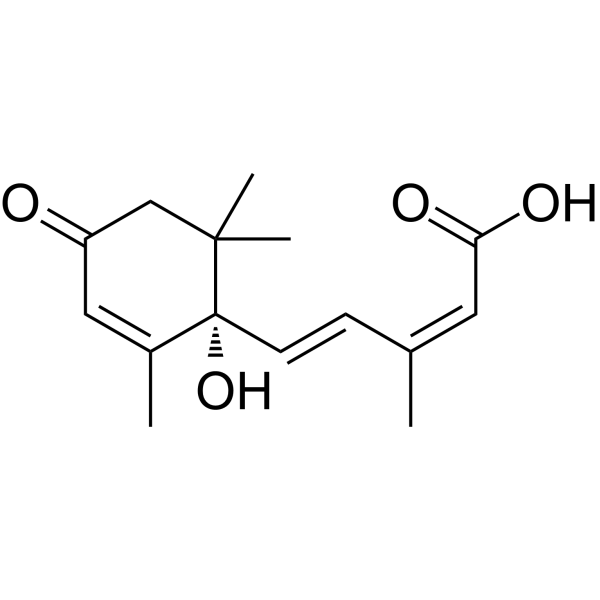
Cat. No.: HY-100560
CAS No.: 21293-29-8
Purity:  99.64%
Synonyms: (S)​-​(+)​-​Abscisic acid; ABA
Abscisic acid ((S)-(+)-Abscisic acid), an orally active phytohormone in fruits and vegetables, is an endogenously produced mammalian hormone. Abscisic acid is a growth inhibitor and can regulate many aspects of plant growth and development. Abscisic acid inhibits proton pump (H +-ATPase) and leads to the plasma membrane depolarization in a Ca 2+-dependent manner. Abscisic acid, a LANCL2 natural ligand, is a potent insulin-sensitizing compound and has the potential for pre-diabetes, type 2 diabetes and metabolic syndrome .
loading...
    loading...
4
4 Cited Publications
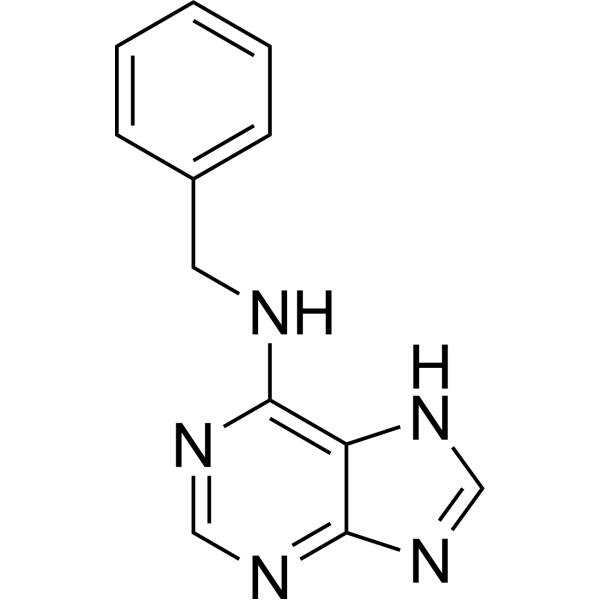
Cat. No.: HY-B0941
CAS No.: 1214-39-7
Synonyms: Benzyladenine; 6-BAP; N6-Benzyladenine
6-Benzylaminopurine (Benzyladenine) is a cytokinin that causes plant growth and development by stimulating cell division and inhibiting respiratory kinases, thereby prolonging the preservation of green vegetables .
loading...
    loading...
2
2 Cited Publications
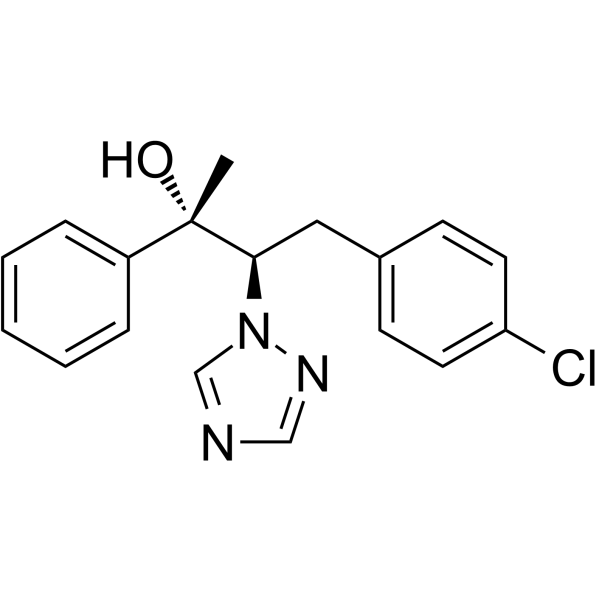
Cat. No.: HY-121161A
CAS No.: 280129-83-1
Purity:  99.71%
Target:  

Cytochrome P450

Research Areas:  

Others

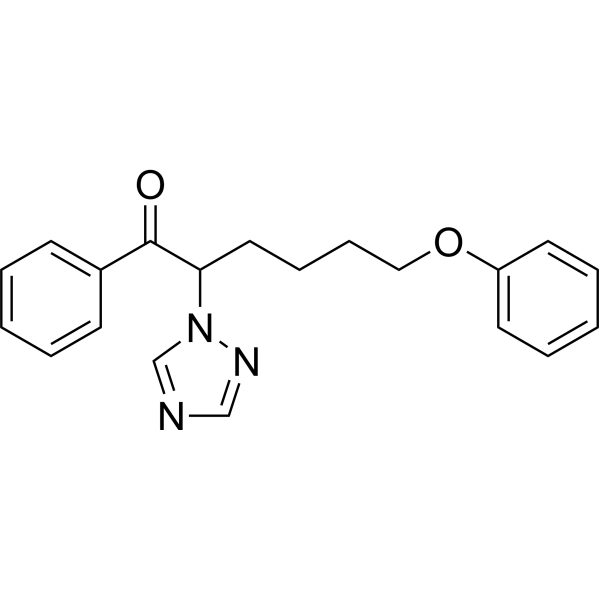
Brassinazole is a selective triazole-type brassinosteroid (BR) biosynthesis inhibitor. Brassinazole is used for regulating plant growth and development .
loading...
    loading...
2
2 Cited Publications
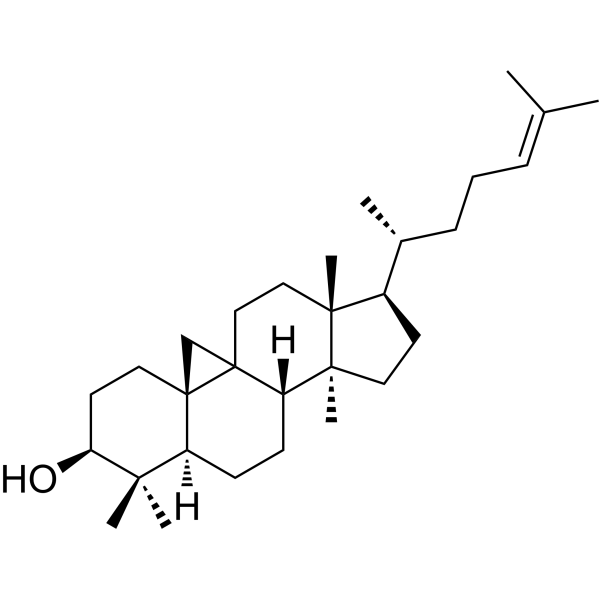
Cat. No.: HY-N7255
CAS No.: 469-38-5
Cycloartenol, a phytosterol compound, is one of the key precusor substances for biosynthesis of numerous sterol compounds. Cycloartenol inhibits the migration of glioma cells and suppresses the phosphorylation of the p38 MAP kinase. Cycloartenol has a variety of pharmacological activities such as anti-inflammatory, anti-tumor, antioxidant, antibiosis and anti-alzheimer's disease. Cycloartenol also plays an important role in the process of plant growth and development .
loading...
    loading...
1
1 Cited Publications
Cat. No.: HY-18572
CAS No.: 94-75-7
Synonyms: 2,4-Dichlorophenoxyacetic acid
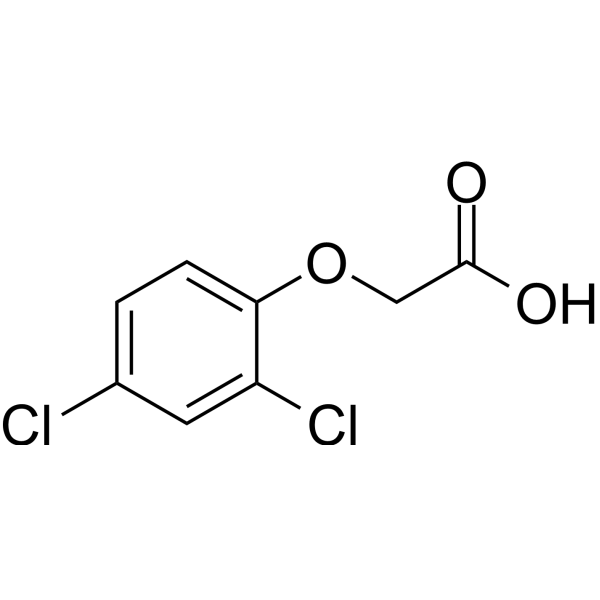
2,4-D (2, 4-dichlorophenoxyacetic acid) is a selective herbicide that can be used for the control of broad-leaved weeds. 2,4-D can induce apoptosis. 2,4-D inhibits DNA and protein synthesis, thereby preventing normal plant growth and development .
loading...
    loading...
1
1 Cited Publications
Cat. No.: HY-18572A
CAS No.: 2702-72-9
Synonyms: 2,4-Dichlorophenoxyacetic acid sodium
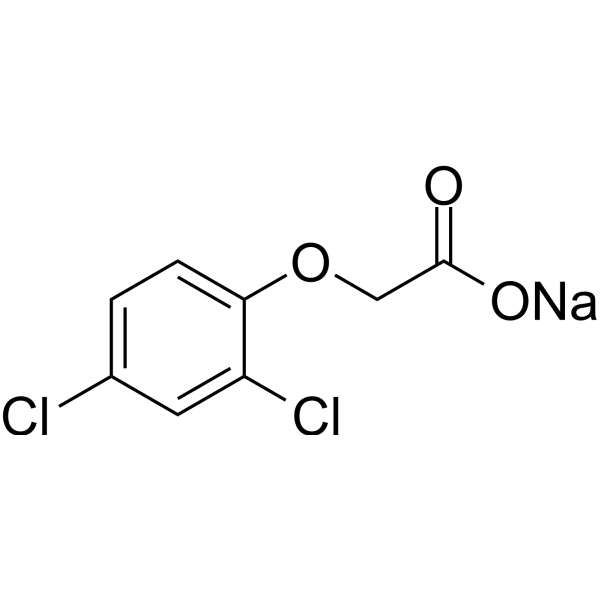
2,4-D (2,4-Dichlorophenoxyacetate) sodium is a selective herbicide that can be used for the control of broad-leaved weeds. 2,4-D sodium salt can induce apoptosis. 2,4-D sodium salt inhibits DNA and protein synthesis, thereby preventing normal plant growth and development .
loading...
    loading...
1
1 Cited Publications
Cat. No.: HY-B2062
CAS No.: 1861-32-1
Synonyms: Dimethyl tetrachloroterephthalate
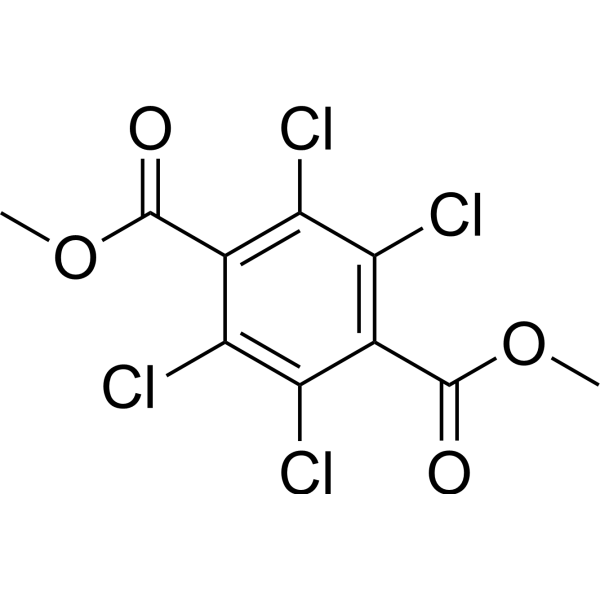
Chlorthal-dimethyl (Dimethyl tetrachloroterephthalate) is a plant growth regulator. Chlorthal-dimethyl affects cell division and differentiation, interfering with the normal development of vascular tissue. Chlorthal-dimethyl causes localized swelling of tomato hypocotyls and disrupts normal mitosis in germinating millet seedlings .
loading...
    loading...
Cat. No.: HY-P10533
CAS No.: 845727-64-2
Target:  

Tyrosinase

Research Areas:  

Others

Cysteine peptide is a tyrosinase inhibitor with skin-whitening, antioxidant and multi-regulatory activities. Cysteine peptide inhibits enzyme activity and blocks melanin transport, effectively reducing UV-B-induced skin erythema and pigmentation. Cysteine peptide synergistically maintains skin health by quenching ROS, resisting oxidative stress and promoting pheomelanin production. Cysteine peptide safely prevents daily ultraviolet damage and supports moderate sun exposure for vitamin D synthesis. Cysteine peptide also acts as a plant signaling factor to regulate vegetative growth, development and stress resistance responses .
loading...
    loading...
Cat. No.: HY-N10568
CAS No.: 427-77-0
Gibberellin A9 is a plant hormone that targets gibberellin receptor GID1. Gibberellin A9 binds to GID1 to form a GA-GID1-DELLA protein complex, which promotes the degradation of DELLA proteins. This relieves the inhibitory effect of DELLA proteins on plant growth, thereby promoting plant cell elongation and division, and increasing seed germination rate. Gibberellin A9 is promising for use in studies on plant growth and development, such as stem elongation and flowering induction .
loading...
    loading...
Cat. No.: HY-N9599
CAS No.: 14729-29-4
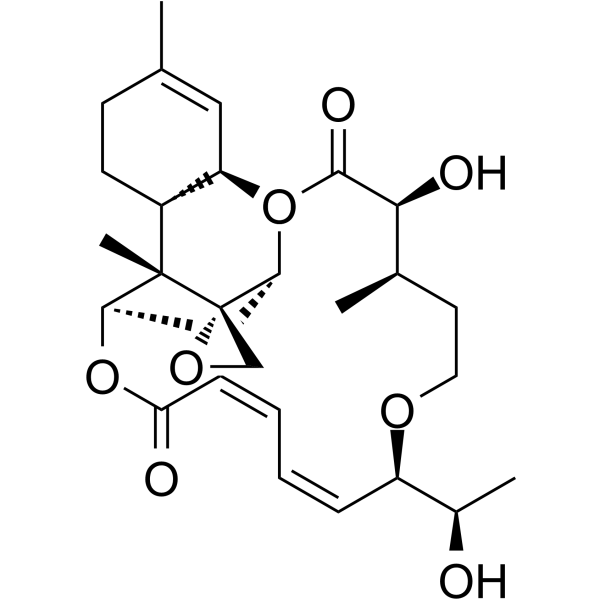
Roridin A acts as an inhibitor of pollen development in Arabidopsis thaliana and nematicide. Roridin A is isolated from the fungus Cylindrocarpon sp. Roridin A delays the flowering time of Arabidopsis thaliana, inhibits pollen development and stem elongation, and blocks plant growth. Roridin A induces larval death of the southern root-knot nematode (Meloidogyne incognita) .
loading...
    loading...
Cat. No.: HY-142006A
Synonyms: (±)-JA-L-Ile
Target:  

Phytohormone

Research Areas:  

Others

(±)-Jasmonic-L-isoleucine ((±)-JA-L-Ile) is a mixture of (±)-Jasmonic acid (HY-122464) and isoleucine isomers. (±)-Jasmonic-L-isoleucine is a phytohormone that participates in the jasmonic acid signaling pathway. (±)-Jasmonic-L-isoleucine regulates biological processes in plants, including defense responses, growth and development, and stress tolerance .
loading...
    loading...
Cat. No.: HY-136403
CAS No.: 1315459-30-3
Purity:  99.92%
Target:  

Phytohormone

Research Areas:  

Others

TIS108 is a triazole-type strigolactone biosynthesis inhibitor. TIS108 inhibits Arabidopsis embryogenesis and root hair growth, and promotes shoot branching. TIS108 can also increase the gibberellin content in Gastrodia elata. TIS108 can be used in the research of plant growth and development as well as plant responses to the environment .
loading...
    loading...
Cat. No.: HY-122940
CAS No.: 644-06-4
Purity:  99.95%
Synonyms: Ageratochromene
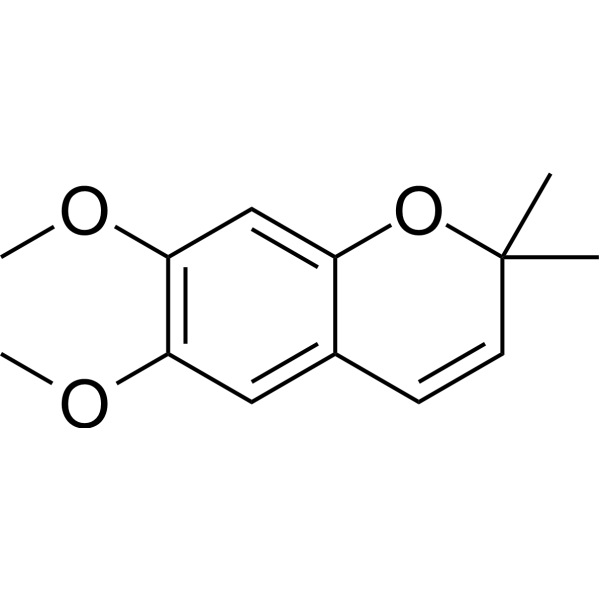
Precocene II (Ageratochromene) is a plant larva hormone antagonists that inhibits the biosynthesis of juvenile hormone. Precocene II inhibits corpora allata function and downregulates juvenile hormone levels, while exerting multiple effects including inducing precocious metamorphosis, forming macropterous morphs, inhibiting ovarian growth, producing cytotoxicity, disrupting insect development, and causing sterility and kidney damage. Precocene II blocks normal nymphal development, causes renal tubular damage and increases blood urea nitrogen levels, and also blocks juvenile hormone biosynthesis in vitro. Precocene II undergoes oxidative metabolism catalyzed by NADPH-dependent monooxygenase to generate a variety of metabolites. Precocene II can be applied in studies related to insect growth regulation and nephrotoxicity .
loading...
    loading...
Cat. No.: HY-B0941A
CAS No.: 1214-39-7
Synonyms: Benzyladenine, suitable for plant cell culture; 6-BAP, suitable for plant cell culture; N6-Benzyladenine, suitable for plant cell culture
6-Benzylaminopurine,suitable for plant cell culture is a cytokinin that induces plant growth and development by stimulating cell division, and prolongs the freshness of green vegetables through inhibiting respiratory kinases .
loading...
    loading...
Cat. No.: HY-131116
CAS No.: 3572-64-3
Purity:  99.26%
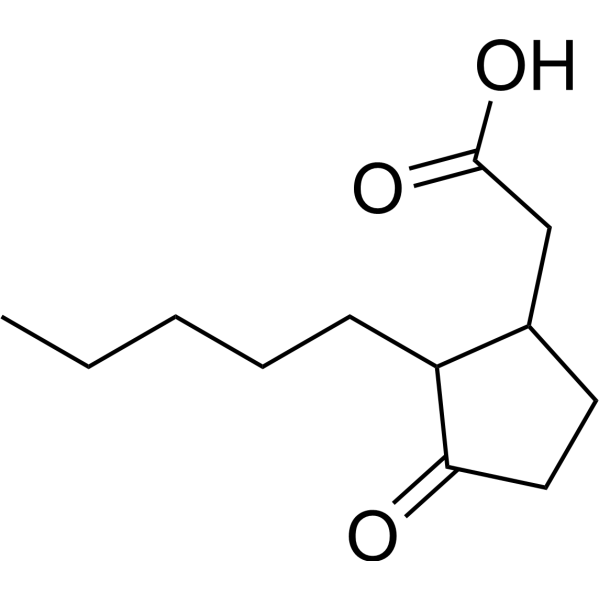
Dihydrojasmonic acid is a pentacyclic oxygen-containing lipid plant growth regulator related to Jasmonic acid (HY-122464), with activities including growth inhibition, promotion of leaf senescence, and induction of the accumulation of some plant secondary metabolites . Dihydrojasmonic acid serves as a substrate for metabolic modification and undergoes biotransformation via side-chain hydroxylation, glycosylation, and amino acid conjugation in the aerial parts and seedlings of barley (Hordeum vulgare). Dihydrojasmonic acid inhibits the growth of dwarf rice seedlings and can induce the synthesis of secondary metabolites in some plant cell culture species, with its activity being species-dependent. Dihydrojasmonic acid is involved in studies related to the regulation of plant growth and development .
loading...
    loading...
Cat. No.: HY-W588263
CAS No.: 57105-48-3
Synonyms: IAGlu
Target:  

Drug Derivative

Research Areas:  

Others

Indole-3-acetyl glutamate (IAGlu) is a derivative of the plant hormone indole-3-acetic acid (IAA). As a conjugated form of IAA, Indole-3-acetyl glutamate involves in the transport, storage, and homeostatic regulation of IAA within the plant. Indole-3-acetyl glutamate can be used for research into the effects of plant hormones on the growth and development of plants .
loading...
    loading...
Cat. No.: HY-18572S2
CAS No.: 352438-69-8
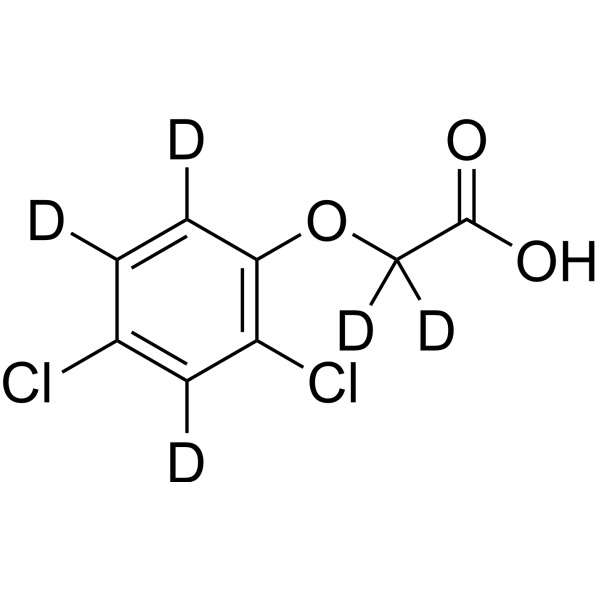
2,4-D-d5 (2,4-Dichlorophenoxyacetic acid-d5) is the deuterium labeled 2,4-D (HY-18572) . 2,4-D (2,4-Dichlorophenoxyacetic acid) is a selective systemic herbicide for the control of broad-leaved weeds. 2,4-D acts as a plant hormone, causing uncontrolled growth in the meristematic tissues. 2,4-D inhibits DNA and protein synthesis and thereby prevents normal plant growth and development .
loading...
    loading...
Cat. No.: HY-100560R
CAS No.: 21293-29-8
Synonyms: (S)​-​(+)​-​Abscisic acid (Standard); ABA (Standard)
Abscisic acid (Standard) is the analytical standard of Abscisic acid. This product is intended for research and analytical applications. Abscisic acid ((S)-(+)-Abscisic acid), an orally active phytohormone in fruits and vegetables, is an endogenously produced mammalian hormone. Abscisic acid is a growth inhibitor and can regulate many aspects of plant growth and development. Abscisic acid inhibits proton pump (H+-ATPase) and leads to the plasma membrane depolarization in a Ca2+-dependent manner. Abscisic acid, a LANCL2 natural ligand, is a potent insulin-sensitizing compound and has the potential for pre-diabetes, type 2 diabetes and metabolic syndrome .
loading...
    loading...
Cat. No.: HY-E70425
CAS No.: 9030-05-1
Target:  

Glycosyltransferase

Research Areas:  

Metabolic Disease

Sucrose synthase belongs to glycosyltransferases and is a reversible catalyst present in plants, which catalyzes the conversion of sucrose into fructose and UDP-G or ADP-G. Sucrose synthase localizes to the cytoplasm, plasma membrane, cell wall, vacuole and mitochondria of plants. Sucrose synthase regulates sugar metabolism, supports the development of taproots, fruits, seeds and vascular tissues, drives the synthesis of starch, cellulose and callose, and enhances nitrogen fixation capacity. Sucrose synthase mediates signal transduction in plant meristems. Sucrose synthase is associated with plant growth, anaerobic stress tolerance, as well as shoot apical meristem and leaf morphology; overexpression of this enzyme promotes plant growth, increases xylem size, and elevates cellulose and starch contents .
loading...
    loading...
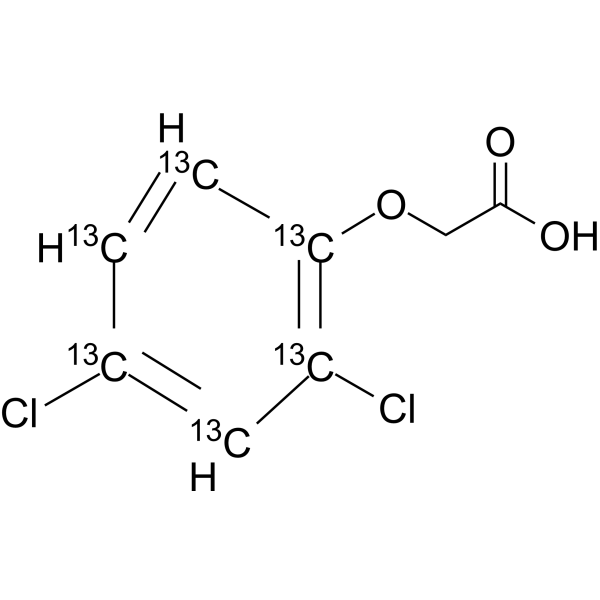
Cat. No.: HY-18572S
CAS No.: 150907-52-1
Synonyms: 2,4-Dichlorophenoxyacetic acid-13C6
2,4-D- 13C6 is the 13C-labeled 2,4-D (HY-18572). 2,4-D (2,4-Dichlorophenoxyacetic acid) is a selective systemic herbicide for the control of broad-leaved weeds. 2,4-D acts as a plant hormone, causing uncontrolled growth in the meristematic tissues. 2,4-D inhibits DNA and protein synthesis and thereby prevents normal plant growth and development .
loading...
    loading...

