
1. Search Result
Search Result
Results for "

rat skin

" in MedChemExpress (MCE) Product Catalog:

25

Inhibitors & Agonists

3

Biochemical Assay Reagents

2

Peptides

2

Inhibitory Antibodies

3

Natural
Products

Cat. No. Product Name Target Research Areas Chemical Structure
  • HY-109114

    MT-7117

    Melanocortin Receptor Metabolic Disease
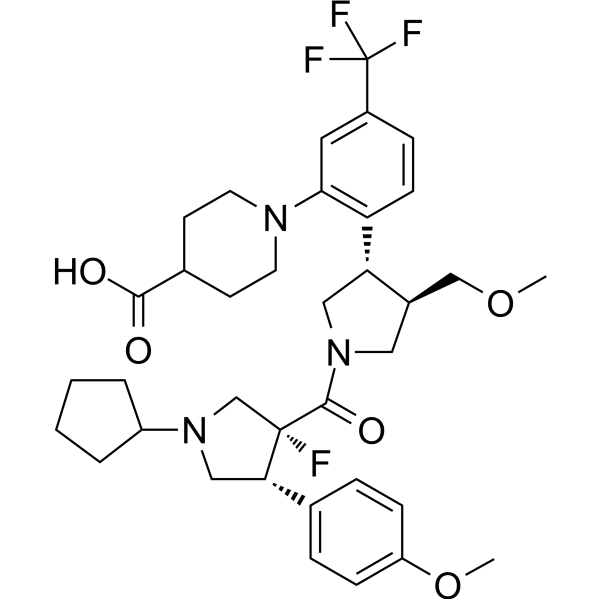
    Dersimelagon (MT-7117) is an orally active, selective melanocortin 1 receptor (MC1R) agonist with EC50 values of 8.16, 3.91, 1.14 and 0.251 nM for human (h), cynomolgus monkey (cm), mouse (m) and rat (r) MC1R, respectively. Dersimelagon shows good affinity for hMC1R and hMC4R with Ki values of 2.26, 32.9 nM, respectively. Dersimelagon can be used for the research of skin pigmentation .
    Dersimelagon
  • HY-14933
    Prinaberel
    3 Publications Verification

    ERB-041

    Estrogen Receptor/ERR Wnt Apoptosis Cancer
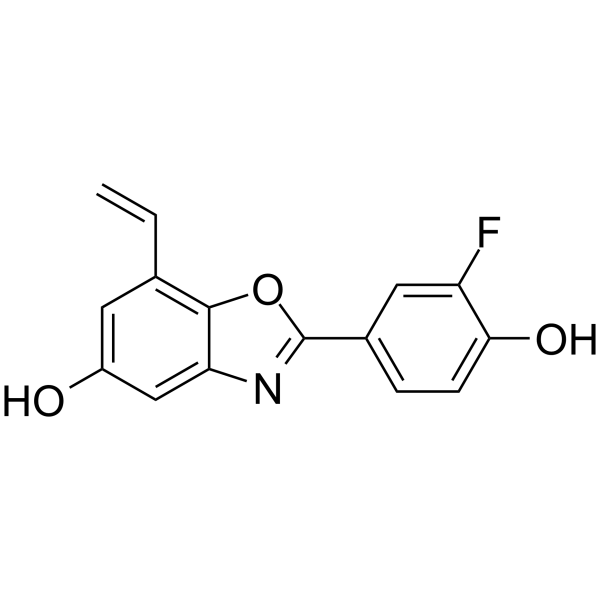
    Prinaberel (ERB-041) is a potent and selective estrogen receptor (ER) β agonist with IC50s of 5.4, 3.1 and 3.7 nM for human, rat and mouse ERβ, respectively. Prinaberel displays >200-fold selectivity for ERβ over ERα. Prinaberel is a potent skin cancer chemopreventive agent that acts by dampening the WNT/β-catenin signaling pathway. Prinaberel induces ovarian cancer apoptosis .
    Prinaberel
  • HY-N0886
    Aloin B
    3 Publications Verification

    Isobarbaloin

    SARS-CoV Virus Protease Infection Endocrinology Cancer
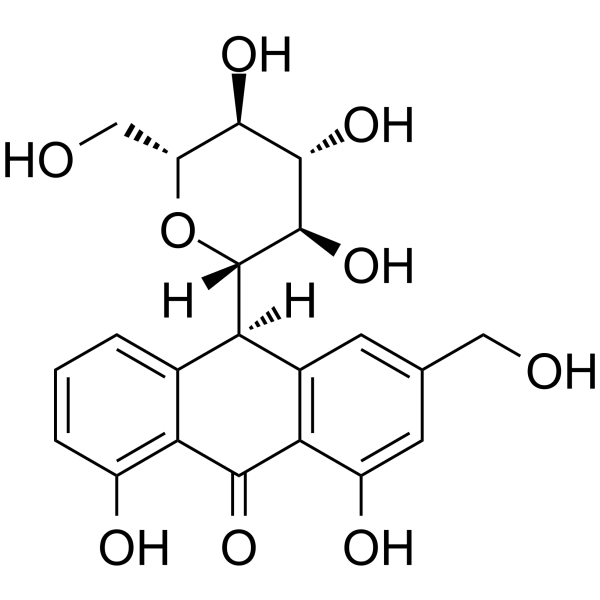
    Aloin B (Isobarbaloin) is an orally active SARS-CoV-2 papain-like protease (PLpro) inhibitor with an IC50 of 16.08 μM (hydrolytic activity) and 17.51 μM (deubiquitinase activity). Aloin B is metabolized by rat intestinal flora into aloe-emodin-9-anthrone to exert laxative effects. Aloin B inhibits TPA (HY-18739)-induced ear edema, putrescine elevation, and tumor promotion in mouse skin. Aloin B can be used in research related to anti-inflammation, tumor promotion inhibition, coronavirus disease 2019 (COVID-19) and constipation .
    Aloin B
  • HY-112487

    Acyltransferase Metabolic Disease
    Sandoz 58-035 is a selective acyl-CoA:cholesterol acyltransferase (ACAT) inhibitor. Sandoz 58-035 inhibits this enzyme in intact cells and isolated microsomal fractions. Sandoz 58-035 blocks the esterification of exogenous vesicle-derived cholesterol and the incorporation of oleic acid into cellular cholesterol esters, reducing the formation and accumulation of cholesterol esters. Sandoz 58-035 causes a slight increase in cellular free cholesterol, and at high concentrations, it also causes a slight reduction in overall cellular protein synthesis. Sandoz 58-035 can be used in studies related to cellular cholesterol regulation .
    Sandoz 58-035
  • HY-Y0850U3

    Polyvinyl alcohol (Mw 125000, 98-99% hydrolyzed, ~2800 polymerization); Poly(Ethenol) (Mw 125000, 98-99% hydrolyzed, ~2800 polymerization)

    Biochemical Assay Reagents Others
    PVA (Polyvinyl alcohol) (Mw 125000, 98-99% hydrolyzed, ~2800 polymerization) is a water-soluble, biodegradable, biocompatible and non-immunogenic polymer. PVA (Mw 125000, 98-99% hydrolyzed, ~2800 polymerization) causes no irritation to rabbit eyes, no skin sensitization in guinea pigs, promotes the proliferation of human skin keratinocytes, and reduces the loss of corneal endothelial cells. The LD50 of PVA (Mw 125000, 98-99% hydrolyzed, ~2800 polymerization) in rats and dogs is greater than 10 g/kg. PVA (Mw 125000, 98-99% hydrolyzed, ~2800 polymerization) is hardly absorbed by the digestive system, causes no adverse effects upon long-term oral administration, and shows no mutagenicity or carcinogenicity. However, repeated intravenous or portal vein injection of PVA (Mw 125000, 98-99% hydrolyzed, ~2800 polymerization) may induce pathological changes such as glomerular lesions, anemia, hypertension or liver fibrosis in rats or dogs. Crosslinked nanofibers prepared by modifying PVA (Mw 125000, 98-99% hydrolyzed, ~2800 polymerization) can be used in studies related to wound dressings and other applications .
    PVA (Mw 125000, 98-99% hydrolyzed, ~2800 polymerization)
  • HY-13219

    COX Lipoxygenase Reactive Oxygen Species (ROS) NF-κB Neurological Disease Inflammation/Immunology
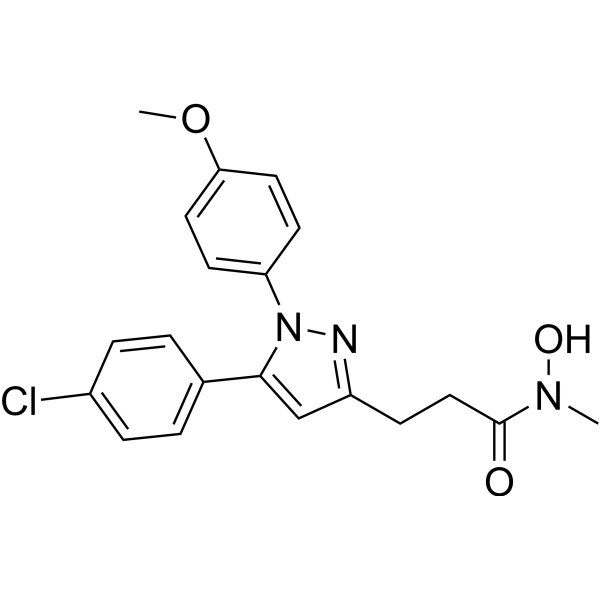
    Tepoxalin is an orally active dual inhibitor of Cyclooxygenase/Lipoxygenase, with IC50 values of 4.6 μM (sheep cyclooxygenase), 2.85 μM (rat cyclooxygenase), 0.15 μM (rat 5-lipoxygenase), and 3.0 μM (h12-lipoxygenase), respectively. Tepoxalin inhibits ROS production and NF-κB activation. Tepoxalin suppresses the production of thromboxane B2, leukotriene B4, prostaglandins and cytokines, and blocks platelet aggregation. Tepoxalin exhibits potent anti-inflammatory activity in rats with adjuvant-induced arthritis. Tepoxalin possesses analgesic activity. Tepoxalin shows no ulcerogenic activity within the anti-inflammatory dose range. Tepoxalin can be used in studies related to adjuvant-induced arthritis, skin inflammation and Alzheimer's disease .
    Tepoxalin
  • HY-B0708
    β-Estradiol 17-acetate
    1 Publications Verification

    1,3,5(10)-Estratriene-3,17β-diol 17-acetate

    Estrogen Receptor/ERR Endocrinology
    β-Estradiol 17-acetate (1,3,5(10)-Estratriene-3,17β-diol 17-acetate) is a long-acting endogenous estrogen precursor and also a cell viability and proliferation enhancer. β-Estradiol 17-acetate promotes the adhesion and proliferation of freshly isolated and revived female-derived human brain microvascular endothelial cells, and reverses the decreased viability of revived male-derived human brain microvascular endothelial cells. β-Estradiol 17-acetate exerts the microvascular protective effect of estrogen, enabling non-tumor human brain microvascular endothelial cells to be cultured in vitro for 2 months after cryopreservation. β-Estradiol 17-acetate is biotransformed into β-estradiol via hydrolase action in the in vitro skin of humans, hairless dogs, rats and hairless mice .
    β-Estradiol 17-acetate
  • HY-113364

    5α-THB

    Glucocorticoid Receptor Endogenous Metabolite Drug Metabolite Metabolic Disease Inflammation/Immunology
    5α-Tetrahydrocorticosterone (5α-HB), an endogenous steroid, is a glucocorticoid receptor (GR) agonist and a metabolite of Corticosterone (HY-B1618). 5α-Tetrahydrocorticosterone is an effective topical anti-inflammatory agent in vivo. 5α-Tetrahydrocorticosterone reduces metabolites that bind to GR-Corticosterone and its 5α-reduced metabolites in rat hepatocytes, with a Kd of 268 nM. 5α-Tetrahydrocorticosterone can be used for research on inflammatory skin diseases .
    5α-Tetrahydrocorticosterone
  • HY-121935

    Environmental Pollutants Fungal Infection
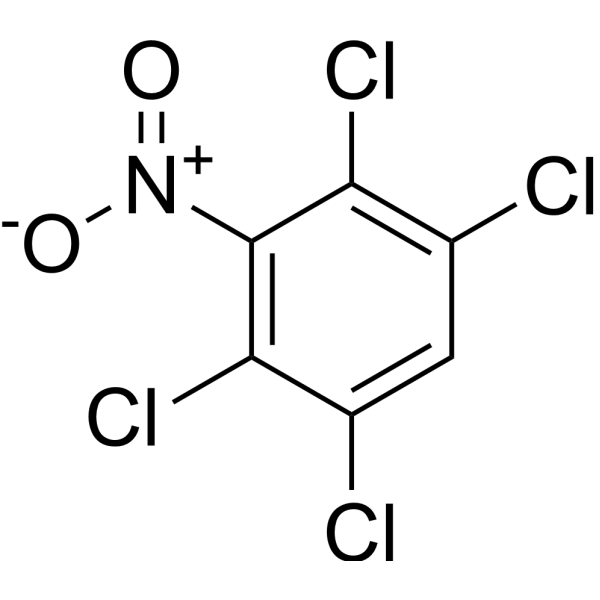
    Tecnazene is a dinitroaromatic fungicide and plant growth regulator. Tecnazene binds irreversibly to human skin tissues and exhibits acute toxicity in Rattus norvegicus (brown rat). Tecnazene exerts sprouting-inhibiting and antifungal activities by inhibiting the sprouting of potato tuber buds and blocking the growth and reproduction of fungi that cause dry rot. Tecnazene has significant antifungal and sprouting-inhibiting activities, and shows high toxicity to aquatic organisms such as freshwater fish and crustaceans. Tecnazene is used for sprouting inhibition and dry rot control during potato storage .
    Tecnazene
  • HY-P990227

    Interleukin Related Bacterial Infection Inflammation/Immunology
    Anti-Mouse IL-12 Antibody (R1-5D9) is a rat-derived IgG2a type antibody inhibitor, targeting to mouse IL-12. Anti-Mouse IL-12 Antibody (R1-5D9) can neutralize IL-12. Anti-Mouse IL-12 Antibody (R1-5D9) can be used for the researches of infection, inflammation and immunology, such as Leishmania infection and skin inflammation .
    Anti-Mouse IL-12 Antibody (R1-5D9)
  • HY-130705

    VD/VDR Drug Intermediate Metabolic Disease Inflammation/Immunology
    Previtamin D3 is an orally active, thermolabile steroidal compound that generates vitamin D3, as well as biologically inactive lumisterol and tachysterol. Previtamin D3 is synthesized in the skin of humans and rats via the UV-B-mediated photoconversion of 7-dehydrocholesterol. Previtamin D3 lacks direct anti-rachitic activity, and its in vivo activity relies on the vitamin D3 it produces. Previtamin D3 can be used in studies related to rickets and vitamin D metabolism .
    Previtamin D3
  • HY-P2706

    Histamine Receptor Endocrinology
    Granuliberin R is a new mast cell degranulating peptide comes from amphibian, can be isolated from the skin of frog Rana rugosa. Granuliberin R is a dodecapeptide, can act on rat peritoneal mast cell to liberate granules and release histamine .
    Granuliberin R
  • HY-121935R

    Reference Standards Fungal Infection
    Tecnazene (Standard) is the analytical standard of Tecnazene. This product is intended for research and analytical applications. Tecnazene is a dinitroaromatic fungicide and plant growth regulator. Tecnazene binds irreversibly to human skin tissues and exhibits acute toxicity in Rattus norvegicus (brown rat). Tecnazene exerts sprouting-inhibiting and antifungal activities by inhibiting the sprouting of potato tuber buds and blocking the growth and reproduction of fungi that cause dry rot. Tecnazene has significant antifungal and sprouting-inhibiting activities, and shows high toxicity to aquatic organisms such as freshwater fish and crustaceans. Tecnazene is used for sprouting inhibition and dry rot control during potato storage .
    Tecnazene (Standard)
  • HY-NP107

    rat Type I collagen, immunization grade

    MMP Inflammation/Immunology
    Highly purified Type I collagen, from rat skin (Rat Type I collagen, immunization grade) is an immune grade collagen derived from rat skin, which can stimulate the animal's immune system to produce specific antibodies against this collagen. Collagen is also a substrate for hydrolysis by MMPs .
    Highly purified Type I collagen, from rat skin
  • HY-109114A

    MT-7117 phosphate

    Melanocortin Receptor Metabolic Disease
    Dersimelagon phosphate is an orally active, selective melanocortin 1 receptor (MC1R) agonist with EC50 values of 8.16, 3.91, 1.14 and 0.251 nM for human (h), cynomolgus monkey (cm), mouse (m) and rat (r) MC1R, respectively. Dersimelagon phosphate shows good affinity for hMC1R and hMC4R with Ki values of 2.26, 32.9 nM, respectively. Dersimelagon phosphate can be used for the research of skin pigmentation .
    Dersimelagon phosphate
  • HY-113932

    Biochemical Assay Reagents Others
    Trolamine salicylate ester is a compound with percutaneous absorption properties. After pretreatment of rat skin, different treatments have different effects on its percutaneous absorption, and eucalyptus oil can enhance its absorption.
    Trolamine salicylate ester
  • HY-NP157E

    Biochemical Assay Reagents Others
    Type I Collagen, T Cell Grade, from Rat has unique immunological features and plays an important role in the structure and function of skin, bones, tendons, etc. Type I Collagen, T Cell Rat, from Bovine can be used as a stimulating antigen for T-cells in in vitro culture systems .
    Type I Collagen, T Cell Grade, from Rat
  • HY-107380A

    A-42872 TFA

    TSH Receptor Endocrinology
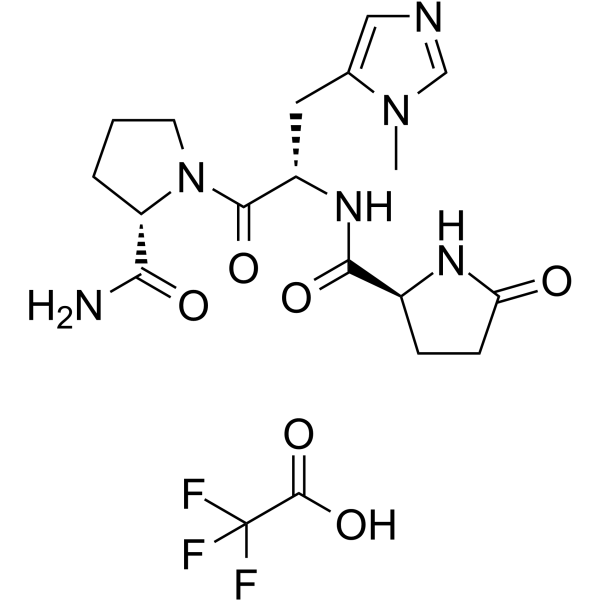
    PGlu-3-methyl-His-Pro-NH2 TFA (A-42872 TFA), the modified thyrotropin-releasing hormone (TRH) peptide, enhances binding to pituitary TRH receptors and increases stimulation of thyroid-stimulating hormone (TSH) release from the pituitary. The in vitro permeability of PGlu-3-methyl-His-Pro-NH2 TFA through rat skin is increased in the presence of enhancers Ethanol and Cineole .
    PGlu-3-methyl-His-Pro-NH2 TFA
  • HY-P990292

    Interleukin Related Metabolic Disease Inflammation/Immunology Cancer
    Anti-Mouse CD132 (common γ chain) Antibody (3E12) is a rat-derived IgG2b type antibody inhibitor, targeting to mouse CD132. Anti-Mouse CD132 (common γ chain) Antibody (3E12) can block IL-2, IL-4 and IL-7. Anti-Mouse CD132 (common γ chain) Antibody (3E12) can inhibit T cells and B cells. Anti-Mouse CD132 (common γ chain) Antibody (3E12) can be used for the researches of cancer, immunology, inflammation and metabolic disease, such as tumor, skin transfer and diabetes .
    Anti-Mouse CD132 (common γ chain) Antibody (3E12)
  • HY-N0886R

    Isobarbaloin (Standard)

    Reference Standards Virus Protease SARS-CoV Infection Metabolic Disease Cancer
    Aloin B (Isobarbaloin) (Standard) is the analytical standard of Aloin B. This product is intended for research and analytical applications. Aloin B is an orally active SARS-CoV-2 papain-like protease (PLpro) inhibitor with an IC50 of 16.08 μM (hydrolytic activity) and 17.51 μM (deubiquitinase activity). Aloin B is metabolized by rat intestinal flora into aloe-emodin-9-anthrone to exert laxative effects. Aloin B inhibits TPA (HY-18739)-induced ear edema, putrescine elevation, and tumor promotion in mouse skin. Aloin B can be used in research related to anti-inflammation, tumor promotion inhibition, coronavirus disease 2019 (COVID-19) and constipation .
    Aloin B (Standard)
  • HY-W415753

    VUFB-15754

    Drug Derivative Neurological Disease Inflammation/Immunology
    Alaptide, a spirocyclic synthetic dipeptide and a derivative of melanocyte-stimulating hormone release-inhibiting factor (MIF), is a transdermal permeation modifier. Alaptide loaded on nanofibrous membranes accelerates the healing of skin incisions, particularly the healing of skin burns. Alaptide is a nootropic agent, that influences the dopaminergic system and increases homovanillic acid level in the striatum of rat models. Alaptide can be used for wound healing with large damaged areas and neurological diseases research .
    Alaptide
  • HY-129442

    X 910279; HMR-279; FK-779

    Drug Derivative Inflammation/Immunology
    MNA 279 (X 910279) is an orally active, immunosuppressive malononitrilamide and A 771726 derivative. MNA 279 suppresses IgM and IgG antibody production. MNA 279 prevents the development of systemic lupus erythematosus (SLE)-like disease in mice. MNA 279 prolongs skin xenograft survival in a mouse-to-rat model .
    MNA 279
  • HY-19107

    HMG-CoA Reductase (HMGCR) Metabolic Disease Endocrinology
    SQ-33600 is an HMG-CoA reductase inhibitor. SQ-33600 has cholesterol-lowering activity. SQ-33600 possesses cell-type selectivity, with much higher inhibitory activity on rat hepatocytes (IC50: 93 nM) than on human skin fibroblasts (IC50: 14200 nM). SQ-33600 can be used in the research of diseases such as hypercholesterolemia .
    SQ-33600
  • HY-W761985

    Insecticide Inflammation/Immunology
    Furathiocarb is a carbamate pro-insecticide and a contact allergen. Furathiocarb is commonly used in studies related to contact allergy. Furathiocarb induces significant proliferation of MHC II-positive B cells in auricular lymph node cells and induces the production of Th1 cytokines (such as IL-2, TNF-γ and IFN-γ). However, Furathiocarb does not induce respiratory allergy in mice. After absorption through the abdominal skin of isolated rats, Furathiocarb is completely metabolized into carbofuran, and its permeation amount increases with time and dosage. The skin permeation rates of both emulsifiable concentrate (EC) and wettable powder (WP) formulations of Furathiocarb are higher than that of Furathiocarb itself, with no significant difference between the two formulations .
    Furathiocarb
  • HY-183647

    NO Synthase Inflammation/Immunology
    iNOs-IN-9 is a selective inducible nitric oxide synthase (iNOS) inhibitor with an IC50 of 82 nM against hiNOS. iNOs-IN-9 reduces cytokine-induced inflammatory responses and cell necrosis in inflammatory cell models. iNOs-IN-9 can be used for research related to psoriasis .
    iNOs-IN-9

Inquiry Online

Your information is safe with us. * Required Fields.

Salutation


Country or Region *

Applicant Name *


Organization Name *

Department *


Email Address *


Product Name *

Cat. No.


Requested quantity *

Phone Number *


Remarks

Inquiry Online

Inquiry Information

Product Name:
Cat. No.:
Quantity:
MCE Japan Authorized Agent:

