

20 Results for "

retention time

" in MedChemExpress (MCE) Product Catalog:
Products (20)

20 Results for "retention time" in MCE Product Catalog:

2
2 Cited Publications
Cat. No.: HY-156404
CAS No.: 1449483-78-6
Purity:  99.04%
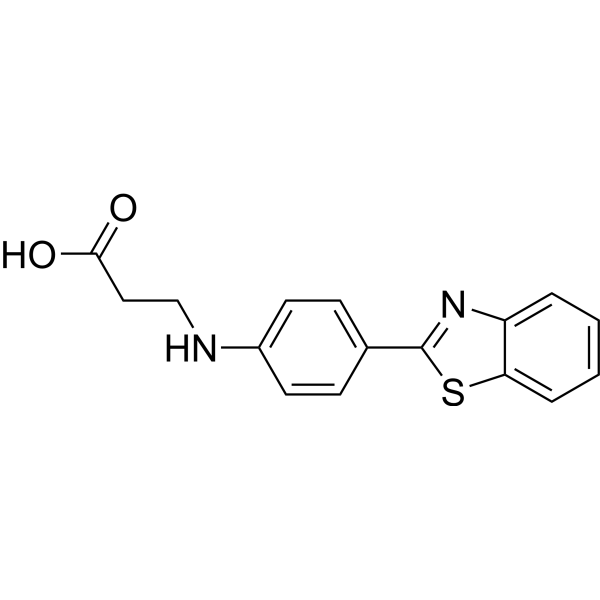
PM-1, a derivative of Thioflavin-T (ThT; HY-D0218), is a small but highly specific plasma membrane (PM) fluorescent dye for specific and long-time membrane imaging of living and fixed cells. PM-1 is embedded directly into the cell membrane and exhibits a very long retention time on the plasma membrane with a half-life of approximately 15 h. PM-1 can be used in combination with protein labeling probes to study ectodomain shedding and endocytosis processes of cell surface proteins .
loading...
    loading...
Cat. No.: HY-175023A
Target:  

Phosphatase

Research Areas:  

Cancer

OncoACP3 TFA is a small-molecule ligand of prostatic acid phosphatase (ACP3) with an IC50 of 0.30 nM. OncoACP3 TFA has a modular structure that supports flexible payload delivery. After radiolabeling with Lu-177 it selectively accumulates in ACP3-expressing tumors with a long retention time, enabling targeted radiation delivery. OncoACP3 TFA is applicable to research related to prostate cancer .
loading...
    loading...
Cat. No.: HY-B1325
CAS No.: 64544-07-6
Target:  

Bacterial Antibiotic

Research Areas:  

Infection Inflammation/Immunology

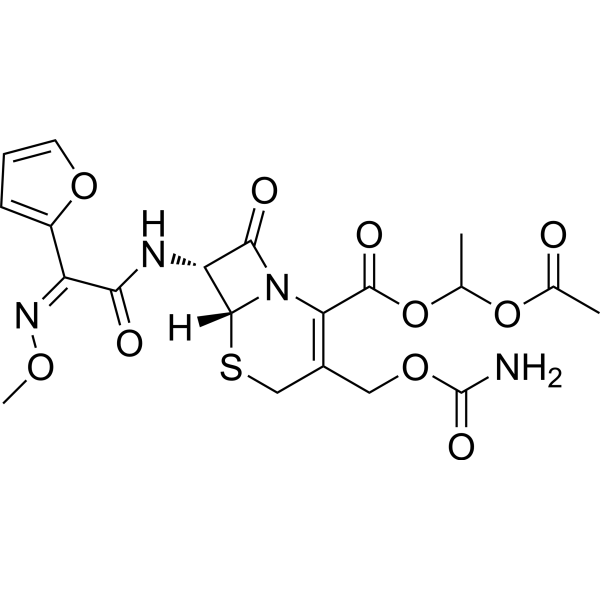
Cefuroxime axetil is an orally effective broad-spectrum β-lactam antibiotic that targets bacterial penicillin-binding proteins (PBPs, such as PBP3 and PBP1). Cefuroxime axetil inhibits cell wall synthesis, leading to bacterial lysis and death, with a minimum inhibitory concentration (MIC) of 0.12-4 mg/L for non-typeable Haemophilus influenzae (NTHi). Cefuroxime axetil is hydrolyzed by esterase to the active ingredient Cefuroxime (HY-B1256A) after oral absorption. Topical administration of Cefuroxime via bioadhesive nanoparticles (BNPs) can prolong the drug's retention time in the middle ear (≥7 days). Cefuroxime axetil can be used in the study of otitis media (especially NTHi infection). Cefuroxime axetil can achieve precise antibacterial effects through oral or topical nano-delivery systems, reducing systemic exposure and the risk of antibiotic resistance .
loading...
    loading...
Cat. No.: HY-154659
CAS No.: 9003-97-8
Research Areas:  

Others

Polycarbophil is an orally active hydrophilic polymer. Polycarbophil achieves bioadhesion through hydrogen bonding between carboxyl groups and mucosal surfaces, and prolongs compound retention time and regulates compound release through swelling properties. Polycarbophil relieves constipation and diarrhea .
loading...
    loading...
Cat. No.: HY-16496
CAS No.: 26599-17-7
Synonyms: OSI-7836
Target:  

DNA/RNA Synthesis

Research Areas:  

Cancer

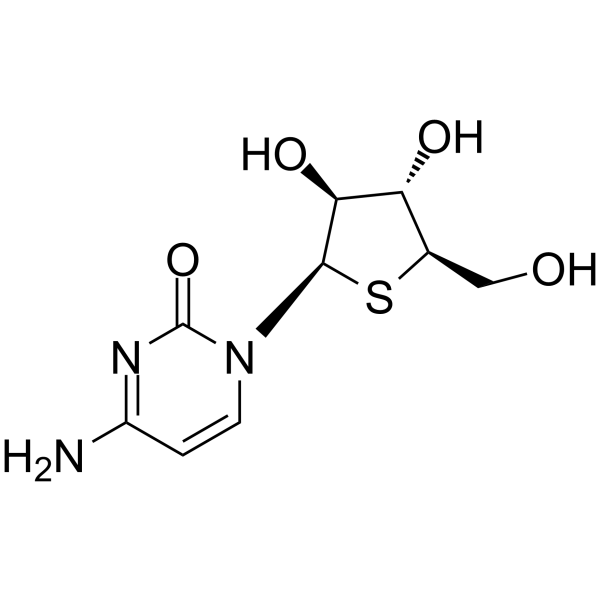
Thiarabine (OSI-7836) is an orally active cytotoxic antitumor agent that acts as a deoxycytidine kinase substrate and a DNA chain terminator. Thiarabine is metabolized to form its major active metabolite T-araCTP, which potently inhibits DNA synthesis and exhibits a long retention time in tumor cells. Thiarabine is widely applicable to research related to leukemia, lymphoma, hematologic malignancies, acute myeloid leukemia, and advanced solid malignancies .
loading...
    loading...
Cat. No.: HY-175023
CAS No.: 3084147-81-6
Target:  

Phosphatase

Research Areas:  

Cancer

OncoACP3 is a small-molecule ligand of prostatic acid phosphatase (ACP3) with an IC50 of 0.30 nM. OncoACP3 has a modular structure that supports flexible payload delivery. After radiolabeling with Lu-177 it selectively accumulates in ACP3-expressing tumors with a long retention time, enabling targeted radiation delivery. OncoACP3 is applicable to research related to prostate cancer .
loading...
    loading...
Cat. No.: HY-175888
CAS No.: 2921735-93-3
Synonyms: Mc-exo-EVC-Exatecan
Research Areas:  

Cancer

APL-1082 is a drug-Linker conjugate that can be used for ADC synthesis. APL-1082 contains Exatecan (HY-13631) and Linker (HY-175929). APL-1082 reduces aggregation and hydrophobicity in Trastuzumab (HY-P9907) ADCs, enables production of high-DAR (10) ADCs with homogeneity and defined physicochemical properties. APL-1082 forms a Trastuzumab ADC with enhanced stability, showing greater DAR retention over time. APL-1082 can be used for the research of gastric cancer .
loading...
    loading...
Cat. No.: HY-158119A
CAS No.: 3036415-37-6
Synonyms: Felivotide mopaxetan
Target:  

PSMA

Research Areas:  

Cancer

PSMA-trillium (Felivotide mopaxetan) is a PSMA-targeted molecule that contains a highly specific PSMA-binding motif, an albumin-binding domain optimized for tumor uptake and retention, and a Macropa chelator conjugated to the α-emitter 225Ac. PSMA-trillium binds to albumin to prolong plasma retention time and binds to PSMA via its specific motif. 225Ac-PSMA-Trillium exhibits dose-dependent inhibition of LNCaP tumor growth in mice. PSMA-trillium can be used in research related to prostate cancer and metastatic castration-resistant prostate cancer .
loading...
    loading...
Cat. No.: HY-174383
CAS No.: 2857007-03-3
Research Areas:  

Inflammation/Immunology

PDE3/4-IN-2 is a dual PDE3A and PDE4B1 inhibitor, with an IC50 of 0.13 nM against PDE3A and 50 nM against PDE4B1. PDE3/4-IN-2 exhibits higher systemic exposure and longer retention time in lung tissues in ICR mice. PDE3/4-IN-2 can be used in research on respiratory diseases such as asthma and chronic obstructive pulmonary disease, as well as autoimmune inflammation-related studies .
loading...
    loading...
Cat. No.: HY-164725
CAS No.: 3023869-94-2
Research Areas:  

Cancer

FAPI-mFS is a selective fibroblast activation protein (FAP) inhibitor with an IC50 of 0.0014 μM against human FAP. Through its covalent binding property with FAP, FAPI-mFS enhances its uptake and retention time in cancer cells. When radiolabeled with 68Ga, FAPI-mFS serves as a PET/CT imaging agent with superior tumor-to-background tissue contrast and lesion detection capability. When radiolabeled with 177Lu or 225Ac, FAPI-mFS induces tumor regression and inhibition in preclinical models. FAPI-mFS can be used in studies related to cancer and radionuclide-conjugated drugs (RDC) .
loading...
    loading...
Cat. No.: HY-D1005A7
CAS No.: 9003-11-6
Synonyms: PEG-PPG-PEG, 2400 (Average)
Poloxamer 125 (L45) (PEG-PPG-PEG, 2400 (Average)) is a block polymer of polyoxyethylene and polyoxypropylene, belonging to water-soluble non-ionic biosurfactants with properties such as emulsification and wetting. Poloxamer 125 (L45) has thermosensitive characteristics and can form thermoreversible hydrogels in aqueous solutions, presenting a fluid state at room temperature and transforming into a viscous gel under body temperature conditions; when its concentration is higher than the critical micelle concentration, it can also self-assemble into micelles in aqueous systems. Poloxamer 125 (L45) enables controlled drug release, prolongs the local retention time of drugs, and is often used as a drug delivery carrier. Poloxamer 125 (L45) can be applied in the fields of cosmetics, biomedicine and tissue engineering .
loading...
    loading...
Cat. No.: HY-172351B
CAS No.: 24991-53-5
PEG10000-bis-amine is a bisamine-terminated polyethylene glycol that serves as a key starting material for the preparation of cholesterol-conjugated polyethylene glycol derivatives. After radioiodination modification, PEG10000-bis-amine significantly prolongs plasma retention time and exhibits enhanced tumor accumulation in a subcutaneous melanoma mouse model. PEG10000-bis-amine has important application value in studies of tumor-targeted delivery and drug modification .
loading...
    loading...
Cat. No.: HY-158266
Purity:  97.02%
Synonyms: LNC1003
Research Areas:  

Cancer

DOTA-PSMA-EB-01 (Compound LNC1003) is a specific inhibitor of PSMA (IC50= 10.77 nM).DOTA-PSMA-EB-01 enhances the uptake and retention time of 177Lu in tumors . DOTA-PSMA-EB-01 can be used for the synthesis/research of Radionuclide-Drug Conjugates (RDCs).
loading...
    loading...
Cat. No.: HY-15112
CAS No.: 162203-65-8
Research Areas:  

Infection

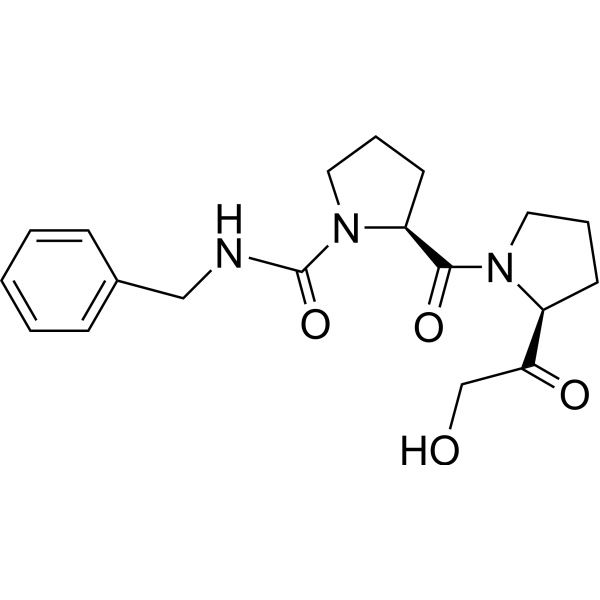
JTP-4819 is a potent and specific inhibitor of prolyl endopeptidase (PREP) with IC50s of 0.83 nM (in rat brain supernatant) and 5.43 nM (in Flavobacterium meningosepticum). JTP-4819 has blood-brain penetration, also improves the retention time of amnesia rats induced by Scopolamine (HY-N2096) .
loading...
    loading...
Cat. No.: HY-169232
Target:  

PROTACs PD-1/PD-L1

Research Areas:  

Cancer

PCC16 chloride is a dual PROTAC degrader targeting DHHC3 and PD-L1, with a DC50 of 0.103 μM for PD-L1 degradation. PCC16 chloride induces DHHC3 degradation via the ubiquitin-proteasome pathway by recruiting the CRBN E3 ubiquitin ligase (E3 ubiquitin ligase). By targeting DHHC3-which is essential for PD-L1 palmitoylation and membrane stability-PCC16 chloride reduces PD-L1 levels, decreases PD-L1 membrane retention time, and impairs its immunosuppressive function. PCC16 chloride enhances anti-tumor immunity by disrupting PD-L1-mediated immunosuppression. PCC16 chloride can be used in the research of immune checkpoint blockade-resistant cancers .
loading...
    loading...
Cat. No.: HY-116604
CAS No.: 4425-23-4
Synonyms: PD 139530
Target:  

PI3K Akt

Research Areas:  

Cancer

RLX (PD 139530) is a PI3K/Akt/FoxO3a signaling inhibitor, possessing significant therapeutic potential in experimental colon cancer. RLX can effectively modulate the tumor microenvironment, enhancing the efficacy of cancer immunotherapy. RLX demonstrates the ability to improve the retention time of therapeutic agents within the tumor microenvironment by utilizing advanced nanoparticle delivery systems. RLX can be integrated with various treatment modalities, such as chemotherapy and radiotherapy, to enhance overall tumor therapy effectiveness .
loading...
    loading...
Cat. No.: HY-116604A
CAS No.: 21314-60-3
Synonyms: PD 139530 hydrochloride
Target:  

PI3K Akt

Research Areas:  

Cancer

RLX (PD 139530) hydrochloride is the hydrochloride of RLX (HY-116604). RLX is a PI3K/Akt/FoxO3a signaling inhibitor, possessing significant therapeutic potential in experimental colon cancer. RLX can effectively modulate the tumor microenvironment, enhancing the efficacy of cancer immunotherapy. RLX demonstrates the ability to improve the retention time of therapeutic agents within the tumor microenvironment by utilizing advanced nanoparticle delivery systems. RLX can be integrated with various treatment modalities, such as chemotherapy and radiotherapy, to enhance overall tumor therapy effectiveness .
loading...
    loading...
Cat. No.: HY-184800
CAS No.: 38115-21-8
Research Areas:  

Infection

Desacetyl cephapirin is the active metabolite of Cephapirin (HY-A0153). Desacetyl cephapirin retains bactericidal activity by disrupting bacterial cell wall synthesis, but exhibits reduced antimicrobial activity, longer in vivo residual time, and high tissue retention. Desacetyl cephapirin can be used in studies related to Gram-positive bacterial infections .
loading...
    loading...
Cat. No.: HY-P11924
Research Areas:  

Cancer

TATE-DA-I is a somatostatin receptor 2 (SSTR2) ligand with an IC50 of 25.3 nM. TATE-DA-I binds to albumin to prolong its circulation retention time and also exhibits enhanced tumor accumulation capacity. TATE-DA-I enables clear visualization of SSTR2-positive tumors in SPECT/CT imaging. TATE-DA-I can be used in cancer-related research .
loading...
    loading...
Cat. No.: HY-16496A
CAS No.: 1060763-87-2
Synonyms: OSI-7836 hydrochloride
Target:  

DNA/RNA Synthesis

Research Areas:  

Cancer

Thiarabine (OSI-7836) hydrochloride is an orally active cytotoxic antitumor agent that acts as a deoxycytidine kinase substrate and a DNA chain terminator. Thiarabine hydrochloride is metabolized to form its major active metabolite T-araCTP, which potently inhibits DNA synthesis and exhibits a long retention time in tumor cells. Thiarabine hydrochloride is widely applicable to research related to leukemia, lymphoma, hematologic malignancies, acute myeloid leukemia, and advanced solid malignancies .
loading...
    loading...
  • 1

