
12 Results for "

ruminant

" in MedChemExpress (MCE) Product Catalog:
Products (12)

12 Results for "ruminant" in MCE Product Catalog:

1
1 Cited Publications
Cat. No.: HY-W020215
CAS No.: 99-14-9
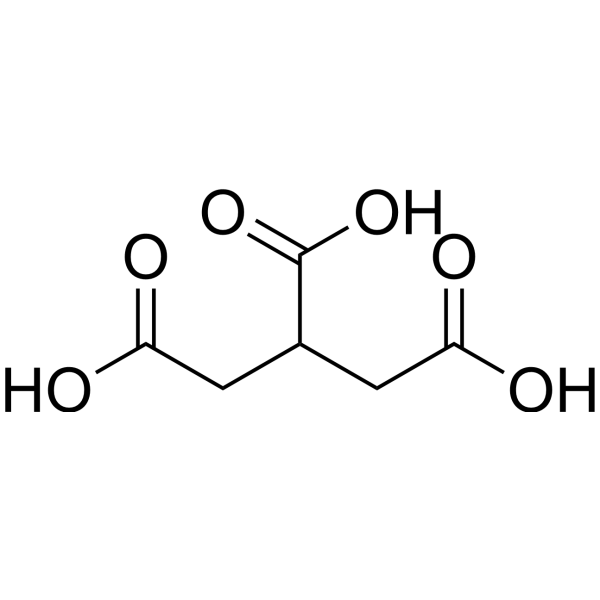
Tricarballylic acid is an orally active compound that can be produced by rumen microorganisms and has the activity of chelating magnesium. Tricarballylic acid is also a competitive inhibitor of aconitate hydratase, with a Ki value of 0.52 mM. Tricarballylic acid can inhibit the oxidation of acetate in the citric acid cycle and can be used in the research of ruminant tissue metabolism and grass tetany syndrome. In addition, Tricarballylic acid can be used to synthesize specific complexes and produce plasticizers .
loading...
    loading...
Cat. No.: HY-P0084
CAS No.: 38916-34-6
Synonyms: SRIF-14; Somatostatin-14
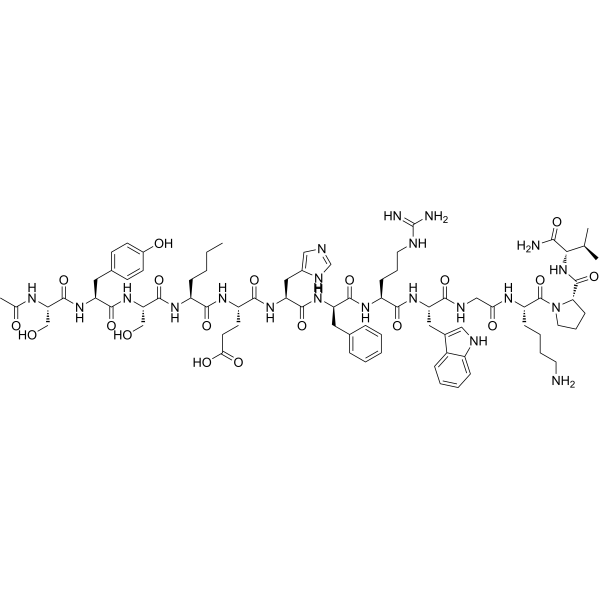
Cyclic somatostatin (SRIF-14) is a growth hormone-release inhibiting factor used in the research of severe, acute hemorrhages of gastroduodenal ulcers. Cyclic somatostatin is a neuropeptide co-stored with acetylcholine in the cardiac parasympathetic innervation, exerts influences directly on contraction of ventricular cardiomyocytes. Cyclic somatostatin inhibits the contractile response of isoprenaline with an IC50 value of 13 nM. Cyclic somatostatin can be used for the research of cardiovascular disease .
loading...
    loading...
Cat. No.: HY-B0294S
CAS No.: 1173021-08-3
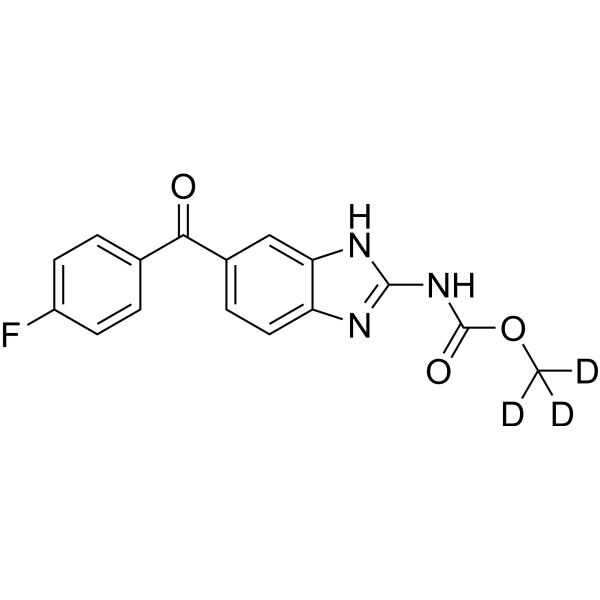
Flubendazole-d3 is the deuterium labeled Flubendazole. Flubendazole is a safe and efficacious anthelmintic agent, which is widely used for anthelmintic to human, rodents and ruminants. Flubendazole exerts anticancer activities by mechanisms including inhibition of microtubule function. Flubendazole induces p53-mediated apoptosis and arrests G2/M cell cycle .
loading...
    loading...
Cat. No.: HY-B1036
CAS No.: 18507-89-6
Target:  

Parasite

Research Areas:  

Infection

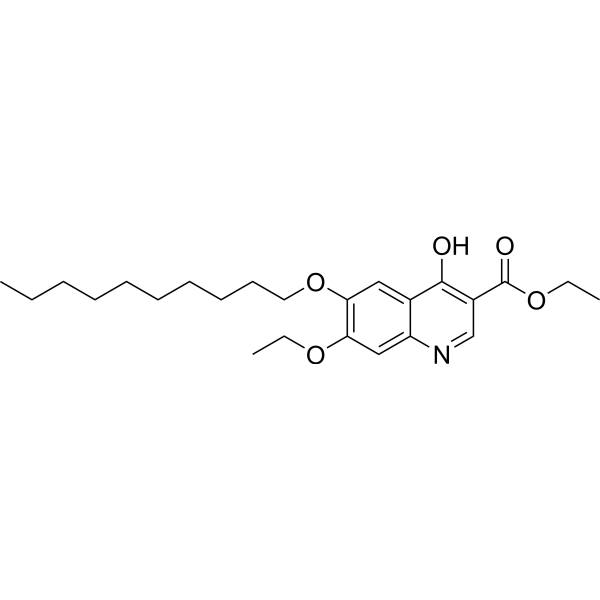
Decoquinate is an orally active, selective inhibitor of the mitochondrial bc1 complex, targeting Eimeria spp. sporozoites and first generation schizonts, and Plasmodium spp. Decoquinate inhibits electron transfer by competitively binding to the mitochondrial cytochrome b system, blocking the parasite's energy metabolism, thereby inhibiting its development and reproduction. Decoquinate has significant anticoccidial activity, preventing intestinal damage and improving host growth performance, and also has inhibitory effects on the liver and blood stages of Plasmodium. Decoquinate is mainly used in veterinary research to prevent and treat coccidiosis in ruminants and poultry .
loading...
    loading...
Cat. No.: HY-P2919
CAS No.: 9042-08-4
Target:  

Endogenous Metabolite

Research Areas:  

Inflammation/Immunology

Rennet is is a mixture of the proteolytic enzymes pepsin and chymosin (rennin), which is found in the fourth stomach of young ruminants. Rennet is promising for research of allergies (e.g., asthma, rhinitis) .
loading...
    loading...
Cat. No.: HY-167917
CAS No.: 121250-47-3
Conjugated linoleic acid is a group of isomers of Linoleic acid (HY-N0729) containing conjugated double bonds. Conjugated linoleic acid is mainly derived from dairy products and ruminant meats. Conjugated linoleic acid exhibits various activities such as anti-carcinogenicity, immunomodulation, weight loss promotion, reduction of muscle damage, and alleviation of inflammatory responses. Conjugated linoleic acid can be used as a food additive .
loading...
    loading...
Cat. No.: HY-B0922
CAS No.: 116-52-9
Synonyms: DCU; Dichlorolurea
Research Areas:  

Endocrinology

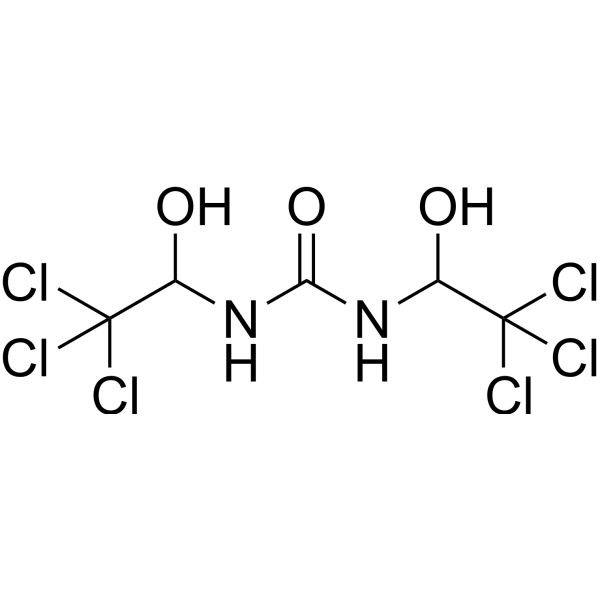
Dicloralurea is a veterinary food additive that inhibits methane production in herbicide ruminants, acts as a growth stimulant.
loading...
    loading...
Cat. No.: HY-W749927
CAS No.: 1981-50-6
Synonyms: C17:1(9Z); Margaroleic acid
Target:  

Endogenous Metabolite

Research Areas:  

Metabolic Disease

cis-9-Heptadecenoic acid is a monounsaturated fatty acid that is a major constituent of ruminant fat and milk. The levels of cis-9-heptadecenoic acid in milk are negatively correlated with methane production in cows fed a high-lipid diet.
loading...
    loading...
Cat. No.: HY-B1036R
CAS No.: 18507-89-6
Research Areas:  

Infection

Decoquinate (Standard) is the analytical standard of Decoquinate. This product is intended for research and analytical applications. Decoquinate is a quinolone derivative that can be used for research of coccidiosis in domestic ruminants. Decoquinate also has potent activity against both Plasmodium hepatic development and red cell replication .
loading...
    loading...
Cat. No.: HY-P0084A
CAS No.: 54472-66-1
Synonyms: SRIF-14 acetate; Somatostatin-14 acetate
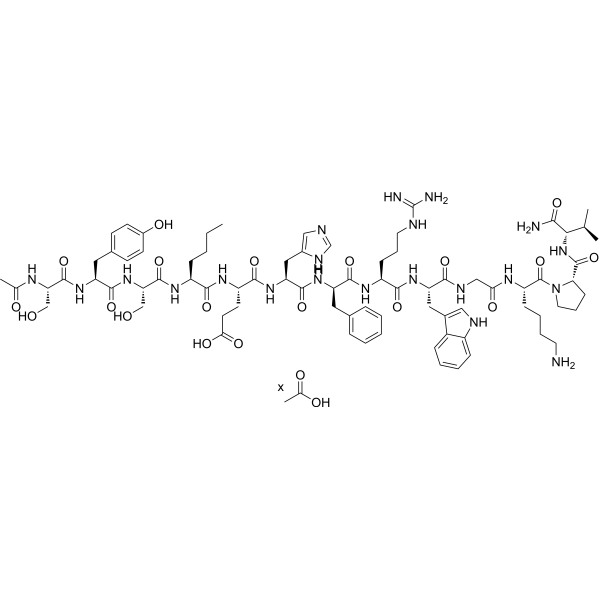
Cyclic somatostatin (SRIF-14) acetate is a growth hormone-release inhibiting factor used in the research of severe, acute hemorrhages of gastroduodenal ulcers. Cyclic somatostatin acetate is a neuropeptide co-stored with acetylcholine in the cardiac parasympathetic innervation, exerts influences directly on contraction of ventricular cardiomyocytes. Cyclic somatostatin acetate inhibits the contractile response of isoprenaline with an IC50 value of 13 nM. Cyclic somatostatin acetate can be used for the research of cardiovascular disease .
loading...
    loading...
Cat. No.: HY-W020215R
CAS No.: 99-14-9
Tricarballylic acid (Standard) is the analytical standard of Tricarballylic acid (HY-W020215). This product is intended for research and analytical applications. Tricarballylic acid is an orally active compound that can be produced by rumen microorganisms and has the activity of chelating magnesium. Tricarballylic acid is also a competitive inhibitor of aconitate hydratase, with a Ki value of 0.52 mM. Tricarballylic acid can inhibit the oxidation of acetate in the citric acid cycle and can be used in the research of ruminant tissue metabolism and grass tetany syndrome. In addition, Tricarballylic acid can be used to synthesize specific complexes and produce plasticizers .
loading...
    loading...
Cat. No.: HY-114969
CAS No.: 14437-41-3
Synonyms: NSC 233846; SYD 230; Tremerad
Category:  

Natural Products Animals

Target:  

Parasite

Clioxanide is a potential anti-liver fluke (Fasciola hepatica) agent. The results showed that Clioxanide showed no efficacy against 4-week-old or 19-week-old flukes at doses of 135 mg/kg or 200 mg/kg. In contrast, hexachloroethane was very effective against older flukes, reaching 100% efficacy at lower doses. The study pointed out that laboratory mice may not be suitable for screening potential compounds against liver fluke infections in ruminants such as cattle and sheep. In addition, no obvious toxic reactions were observed in mice with Clioxanide .
loading...
    loading...
  • 1

