1. Search Result
Search Result
Pathways Recommended: Neuronal Signaling JAK/STAT Signaling
Results for "

signalling inhibition

" in MedChemExpress (MCE) Product Catalog:

254

Inhibitors & Agonists

2

Screening Libraries

6

Fluorescent Dyes

3

Biochemical Assay Reagents

9

Peptides

1

MCE Kits

14

Inhibitory Antibodies

65

Natural
Products

18

Isotope-Labeled Compounds

2

Click Chemistry

7

Oligonucleotides

2

GMP Molecules

Cat. No. Product Name Target Research Areas Chemical Structure
  • HY-12848
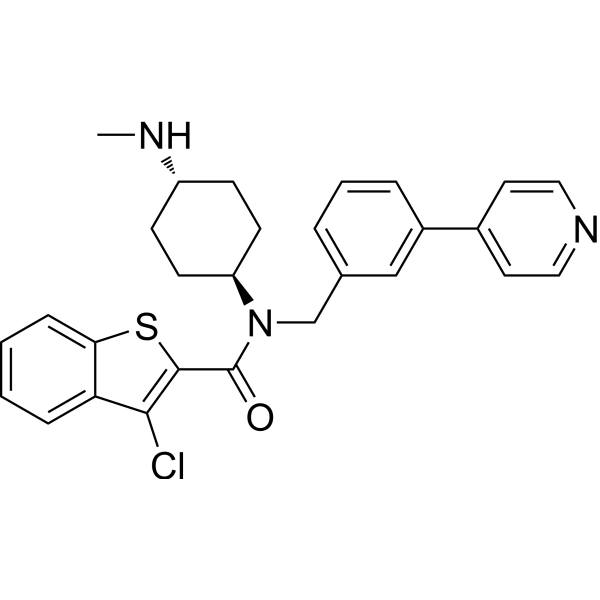
    SAG
    Maximum Cited Publications
    37 Publications Verification

    Smo Cancer
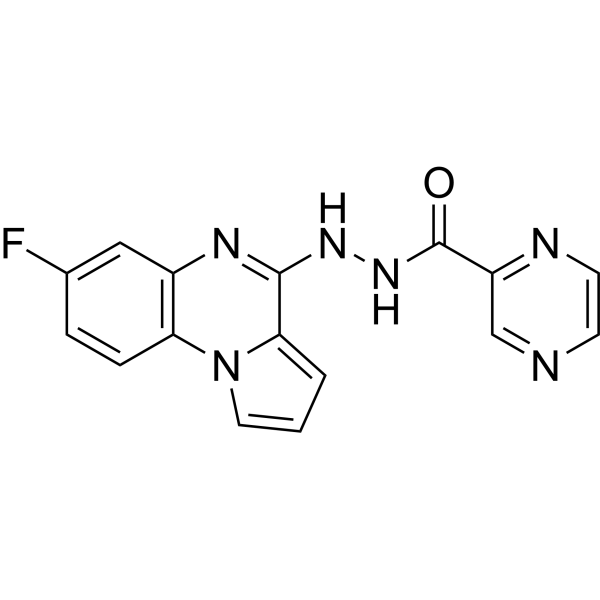
    SAG is a potent Smoothened (Smo) receptor agonist (EC50=3 nM; Kd=59 nM). SAG activates the Hedgehog signaling pathway and counteracts Cyclopamine (HY-17024) inhibition of Smo .
    SAG
  • HY-N0717
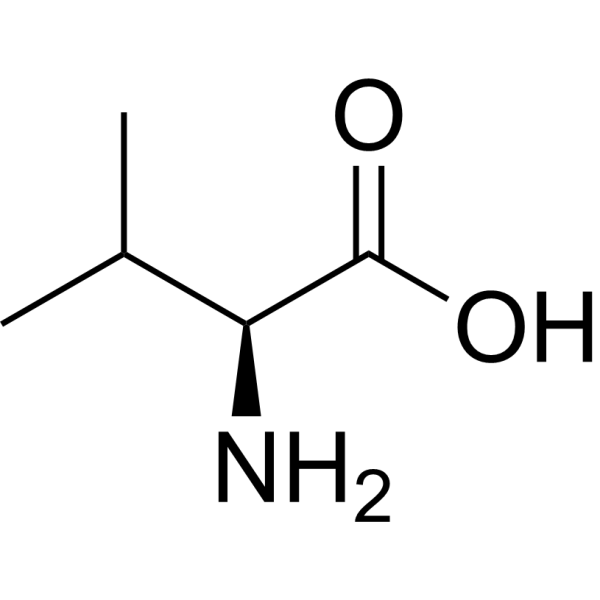
    L-Valine
    5 Publications Verification

    (S)-Valine

    Bacterial Arginase Akt Infection
    L-Valine ((S)-Valine) is a nonlinear semiorganic material. L-Valine causes lipid peroxidation and accumulation of malondialdehyde (MDA), exhibits inhibitory activity against cyanobacteria. L-Valine inhibits multidrug-resistant bacteria through activation of PI3K/Akt signaling pathway and inhibition of arginase .
    L-Valine
  • HY-15185
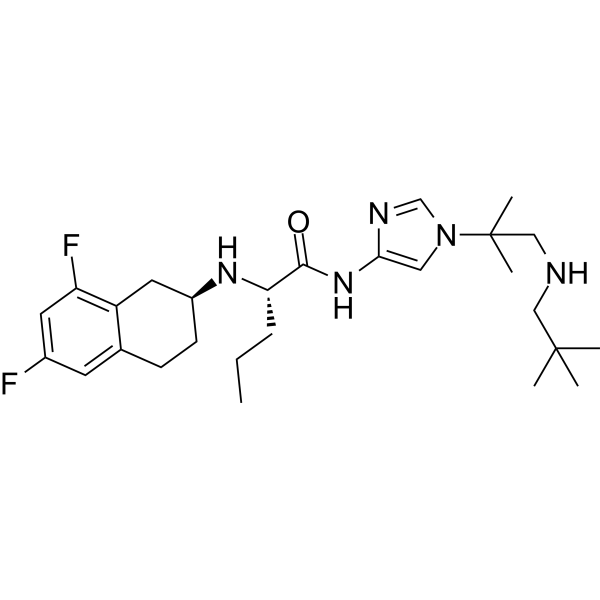
    Nirogacestat
    10+ Cited Publications

    PF-3084014

    γ-secretase Apoptosis Cancer
    Nirogacestat (PF-3084014) is a reversible, orally bioavailable, noncompetitive, and selective γ-secretase inhibitor with an IC50 of 6.2 nM. Inhibition of Notch signaling by Nirogacestat while minimizing gastrointestinal toxicity presents a promising approach for research of Notch receptor-dependent cancers .
    Nirogacestat
  • HY-111557
    YM-254890
    15+ Cited Publications

    P2Y Receptor Cardiovascular Disease
    YM-254890 is a selective Gαq/11 protein inhibitor isolated from Chromobacterium sp. YM-254890 shows no inhibition of other G protein subtypes. YM-254890 inhibits platelet aggregation induced by ADP by blocking the P2Y1 signal transduction pathway, with an IC50 value below 0.6 μM .
    YM-254890
  • HY-P99590
    Sotatercept
    2 Publications Verification

    ACE-011; MK-7962

    TGF-β Receptor Cardiovascular Disease Inflammation/Immunology Cancer
    Sotatercept (ACE-011) is a soluble activin receptor 2A (ACVR2A) type IgG Fc fusion protein. Sotatercept combines activin and growth differentiation factor to try to restore the balance between growth promotion and growth inhibition signal pathways. Sotatercept has potential application in pulmonary arterial hypertension, anemia, bone loss, erythropoiesis, multiple myeloma (MM) osteolytic lesions .
    Sotatercept
  • HY-N6673
    Okanin
    2 Publications Verification

    Toll-like Receptor (TLR) NF-κB Cardiovascular Disease Neurological Disease Inflammation/Immunology
    Okanin, effective constituent of the flower tea Coreopsis tinctoria, attenuates LPS-induced microglial activation through inhibition of the TLR4/NF-κB signaling pathways .
    Okanin
  • HY-12848B
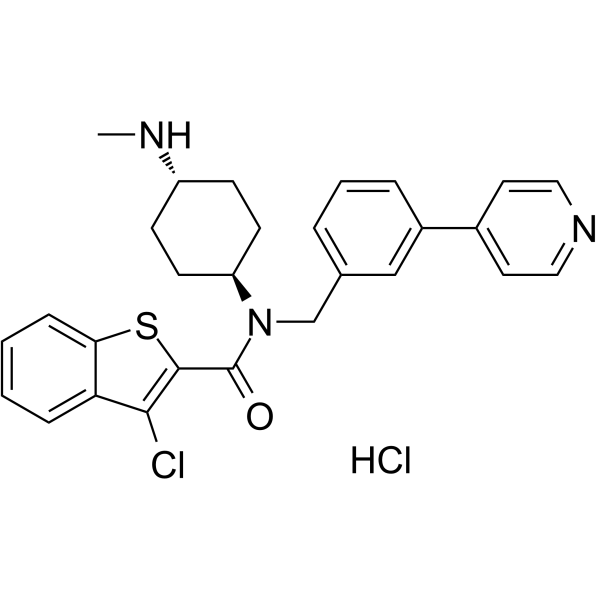
    SAG hydrochloride
    Maximum Cited Publications
    37 Publications Verification

    Smo Cancer
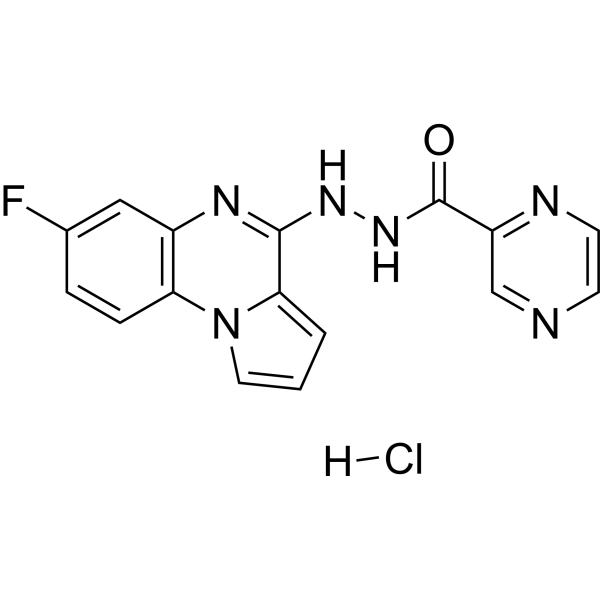
    SAG hydrochloride is a potent Smoothened (Smo) receptor agonist (EC50=3 nM; Kd=59 nM). SAG hydrochloride activates the Hedgehog signaling pathway and counteracts Cyclopamine (HY-17024) inhibition of Smo .
    SAG hydrochloride
  • HY-126397
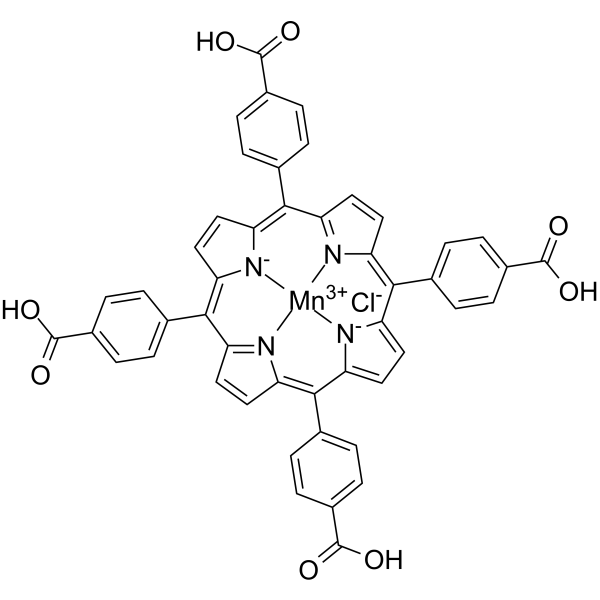
    MnTBAP chloride
    5+ Cited Publications

    NF-κB Inflammation/Immunology
    MnTBAP chloride is a superoxide dismutase (SOD) mimetic and peroxynitrite scavenger. MnTBAP chloride is a manganic porphyrin complex and has anti-oxidative property. MnTBAP chloride mediates anti-inflammatory effects through upregulation of BMPR-II and inhibition of the NFκB signaling. MnTBAP chloride has the potential for the fibrotic response in chronic kidney diseases (CKDs) research .
    MnTBAP chloride
  • HY-N6246

    NF-κB ERK Inflammation/Immunology Cancer
    Asperulosidic Acid (ASPA), a bioactive iridoid glycoside, is extracted from the herbs of Hedyotis diffusa Willd. Asperulosidic Acid (ASPA) has anti-tumor, anti-oxidant, and anti-inflammatory activities . ASPA is related to the inhibition of inflammatory cytokines (TNF-α, IL-6) and mediators via suppression of the NF-κB and mitogen-activated protein kinase (MAPK) signaling pathways .
    Asperulosidic Acid
  • HY-N6940

    Progenin III

    Apoptosis Caspase Pyroptosis STAT Cancer
    Prosapogenin A, a natural product from Veratrum, induces apoptosis in human cancer cells in vitro via inhibition of the STAT3 signaling pathway and glycolysis .
    Prosapogenin A
  • HY-N0635
    Prim-O-glucosylcimifugin
    4 Publications Verification

    TNF Receptor NO Synthase COX Inflammation/Immunology
    Prim-O-glucosylcimifugin exerts anti-inflammatory effects through the inhibition of iNOS and COX-2 expression by through regulating JAK2/STAT3 signaling.
    Prim-O-glucosylcimifugin
  • HY-13968
    JW 55
    5 Publications Verification

    PARP Cancer
    JW 55 is a potent and selective β-catenin signaling pathway inhibitor, which functions via inhibition of the PARP domain of tankyrase 1 and tankyrase 2 (TNKS1/2). JW 55 decreases auto-PARsylation of TNKS1/2 in vitro with IC50s of 1.9 μM and 830 nM respectively.
    JW 55
  • HY-12848C
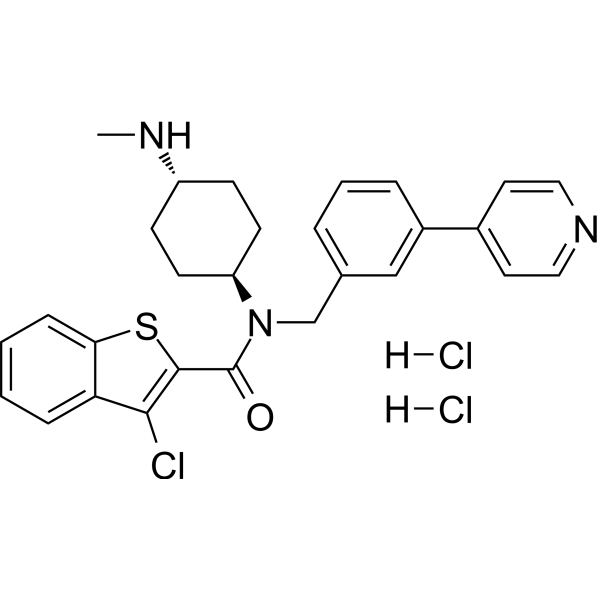
    SAG dihydrochloride
    Maximum Cited Publications
    37 Publications Verification

    Smo Cancer
    SAG dihydrochloride is a potent Smoothened (Smo) receptor agonist (EC50=3 nM; Kd=59 nM). SAG dihydrochloride activates the Hedgehog signaling pathway and counteracts Cyclopamine (HY-17024) inhibition of Smo .
    SAG dihydrochloride
  • HY-145267

    PARP Wnt Cancer
    OM-153 is a potent and orally active tankyrase inhibitor with IC50s of 13 nM and 2 nM for tankyrase 1 and tankyrase 2 (TNKS1/2), respectively. OM-153 inhibits luciferase-based Wnt/β-catenin signaling reporter activity with an IC50 value of 0.63 nM. OM-153 shows inhibition of Wnt/β-catenin signaling and proliferation in COLO 320DM .
    OM-153
  • HY-121222

    PI3K Apoptosis Cancer
    alpha-Bisabolol, an orally active sesquiterpene alcohol, induces cell cycle arrest, mitochondrial apoptosis and inhibition of PI3K/Akt signalling pathways. alpha-Bisabolol exerts a protective action against Cisplatin (HY-17394)-induced nephrotoxicity by mitigating inflammation and oxidative stress through the inhibition of NFκB activation. alpha-Bisabolol exhibits anti-inflammatory, analgesic, antibiotic and anticancer activities .
    alpha-Bisabolol
  • HY-15185B
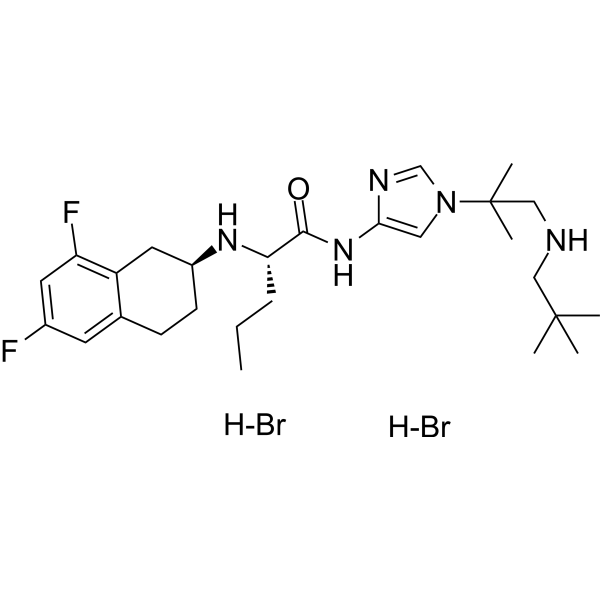
    Nirogacestat dihydrobromide
    10+ Cited Publications

    PF-3084014 dihydrobromide; PF-03084014 dihydrobromide

    γ-secretase Apoptosis Cancer
    Nirogacestat dihydrobromide (PF-3084014 dihydrobromide) is a reversible, orally bioavailable, noncompetitive, and selective γ-secretase inhibitor with an IC50 of 6.2 nM. Inhibition of Notch signaling by Nirogacestat dihydrobromide while minimizing gastrointestinal toxicity presents a promising approach for research of Notch receptor-dependent cancers .
    Nirogacestat dihydrobromide
  • HY-P2230
    Angstrom6
    1 Publications Verification

    A6 Peptide

    PAI-1 Cancer
    Angstrom6 (A6 Peptide) is an 8 amino-acid peptide derived from single-chain urokinase plasminogen activator (scuPA) and interferes with the uPA/uPAR cascade and abrogates downstream effects. Angstrom6 binds to CD44 resulting in the inhibition of migration, invasion, and metastasis of tumor cells, and the modulation of CD44-mediated cell signaling .
    Angstrom6
  • HY-N2312
    Mogrol
    2 Publications Verification

    ERK STAT Cancer
    Mogrol is a biometabolite of mogrosides, and acts via inhibition of the ERK1/2 and STAT3 pathways, or reducing CREB activation and activating AMPK signaling.
    Mogrol
  • HY-N2477

    Apoptosis NF-κB Inflammation/Immunology Cancer
    Taraxerol is isolated from Taraxacum mongolicum, and has anti-inflammtory and anti-cancer effects. Taraxerol attenuates acute inlammation through inhibition of NF-κB signaling pathway. Taraxerol induces cell apoptosis .
    Taraxerol
  • HY-N2357

    (-)-Eudesmin; Eudesmine; (-)-Eudesmine

    Ribosomal S6 Kinase (RSK) Infection Metabolic Disease Inflammation/Immunology Cancer
    Eudesmin ((-)-Eudesmin) impairs adipogenic differentiation via inhibition of S6K1 signaling pathway. Eudesmin possesses diverse therapeutic effects, including anti-tumor, anti-inflammatory, and anti-bacterial activities .
    Eudesmin
  • HY-110398
    5,6,7-Trimethoxyflavone
    1 Publications Verification

    Baicalein trimethyl ether

    NF-κB AP-1 STAT HSV CMV Enterovirus Infection Inflammation/Immunology
    5,6,7-Trimethoxyflavone is a flavonoid compound that can be isolated from plants Callicarpa japonica. 5,6,7-Trimethoxyflavone exhibits antiviral and anti-inflammatory activities through inhibition of NF-κB/AP-1/STAT signaling pathway .
    5,6,7-Trimethoxyflavone
  • HY-P99845

    MEDI 4920; VIB 4920

    TNF Receptor Inflammation/Immunology
    Dazodalibep (MEDI 4920; VIB 4920) is a non-antibody fusion protein that targets CD40L. Dazodalibep inhibits the co-stimulatory signals between immune cells (such as T cells, B cells, and antigen-presenting cells), thereby enabling the inhibition of a broader range of cellular and humoral responses. Dazodalibep can be used for research on rheumatoid arthritis and Sjögren's syndrome .
    Dazodalibep
  • HY-N1365
    Isoscopoletin
    1 Publications Verification

    6-Hydroxy-7-methoxycoumarin

    HBV p38 MAPK NF-κB STAT Akt ERK JNK Infection Inflammation/Immunology Cancer
    Isoscopoletin (6-Hydroxy-7-methoxycoumarin) is an active constituent in Artemisia argyi leaves. Isoscopoletin shows substantial inhibition against cell proliferation, with IC50s of 4.0 μM and 1.6 μM for human CCRF-CEM leukaemia cells and multidrug resistant subline CEM/ADR5000, respectively . Isoscopoletin (6-Hydroxy-7-methoxycoumarin) possesses inhibitory activity against HBV replication . Isoscopoletin exhibits anti-inflammatory activity through inhibition of MAPK/NF-κB/STAT/AKT signaling pathway .
    Isoscopoletin
  • HY-N0665
    Specnuezhenide
    1 Publications Verification

    (8E)-Nuezhenide

    NF-κB Wnt Inflammation/Immunology
    Specnuezhenide ((8E)-Nuezhenide) is isolated from the fruits of Ligustrum lucidum. Specnuezhenide ((8E)-Nuezhenide) can inhibit IL-1β-induced inflammation in chondrocytes via inhibition of NF-κB and wnt/β-catenin signaling. Specnuezhenide ((8E)-Nuezhenide) exerts anti-inflammatory effects in a rat model of osteoarthritis (OA) .
    Specnuezhenide
  • HY-121418

    c-Myc Cancer
    Lusianthridin, a pure compound from Dendrobium venustum, have an anti-migratory effect. Lusianthridin enhances c-Myc degradation through the inhibition of Src-STAT3 signaling .
    Lusianthridin
  • HY-18614

    Notch γ-secretase Cancer
    LY900009 is a potent and orally active, First-in-class inhibitor of Notch signaling via selective inhibition of the γ-secretase protein (GSI). LY900009 inhibits Notch signalling in tumor cell lines and endothelial cells (IC50=0.005-20 nM). LY900009 can be used for advanced cancer research .
    LY900009
  • HY-N0608
    Myrislignan
    1 Publications Verification

    NF-κB Inflammation/Immunology
    Myrislignan, a lignan isolated from Myristica fragrans Houtt, possesses anti-inflammatory activities. Myrislignan attenuates LPS-induced inflammation reaction in murine macrophage cells through inhibition of NF-kB signalling pathway activation .
    Myrislignan
  • HY-N1513

    AP-1 NF-κB Cancer
    Ganoderic acid H is a lanostane-type triterpene isolated from Ganoderma lucidum. Ganoderic acid H suppresses growth and invasive behavior of breast cancer cells through the inhibition of transcription factors AP-1 and NF-kappaB signaling .
    Ganoderic acid H
  • HY-N6036
    Ganoderic acid F
    1 Publications Verification

    Others Cancer
    Ganoderic acid F is a ganoderic acid. Ganoderic acid F exhibits antitumor and antimetastatic activities through inhibition of angiogenesis and alteration of proteins involving cell proliferation and/or cell death, carcinogenesis, oxidative stress, calcium signaling, and endoplasmic reticulum stress .
    Ganoderic acid F
  • HY-151931

    Jasmonyl-ACC

    Phytohormone Metabolic Disease
    JA-ACC (Jasmonyl-ACC) is a derivative of 1-aminocyclopropane-1-carboxylic acid (ACC). ACC is the direct precursor of the plant hormone ethylene. JA-ACC inhibits root growth in Arabidopsis and the inhibition is independent of jasmonic acid (JA) signaling .
    JA-ACC
  • HY-N0781
    Linderalactone
    2 Publications Verification

    Apoptosis Cancer
    Linderalactone is an important sesquiterpene lactone isolated from Lindera aggregata. Linderalactone inhibits cancer growth by modulating the expression of apoptosis-related proteins and inhibition of JAK/STAT signalling pathway. Linderalactone also inhibits the proliferation of the lung cancer A-549 cells with an IC50 of 15 µM .
    Linderalactone
  • HY-18959
    CWP232228
    5+ Cited Publications

    β-catenin Wnt Cancer
    CWP232228, a highly potent selective Wnt/β-catenin signaling inhibitor, antagonizes binding of β-catenin to T-cell factor (TCF) in the nucleus. CWP232228 suppresses tumor formation and metastasis without toxicity through the inhibition of the growth of breast and liver cancer stem cells (CSCs) .
    CWP232228
  • HY-108648A

    2-Methylthioadenosine diphosphate; 2-Methylthio-ADP

    P2Y Receptor Neurological Disease
    2-MeSADP is a P2Y receptor agonist, with an EC50 of 5 nM for human P2Y12, EC50 values of 19 nM and 13 nM for human P2Y13, and an EC50 of 6.2 nM for mouse P2Y13. It shows slightly higher selectivity for P2Y12 over human P2Y13. 2-MeSADP triggers increases in intracellular calcium levels, Gi-mediated cAMP inhibition, adenylate cyclase inhibition and downstream signal transduction. 2-MeSADP can be used in research related to glaucoma .
    2-MeSADP
  • HY-131502

    P2X Receptor Inflammation/Immunology
    Taspine is a natural product with anti-inflammatory activity. Taspine suppresses P2X4 receptor activity via PI3K inhibition. Taspine inhibits pro-inflammatory signalling via inhibition of P2X4 receptors in macrophage .
    Taspine
  • HY-P99895

    PD-1/PD-L1 Inflammation/Immunology Cancer
    Rulonilimab is a human IgG1 monoclonal antibody against PD-1 that targets, binds and inhibits PD-1 and its downstream signalling pathways with potential immune checkpoint inhibition and anti-tumour activity .
    Rulonilimab
  • HY-P99818

    ACE-031

    TGF-β Receptor Metabolic Disease
    Ramatercept (ACE-031) is a soluble ActRIIB receptor and can be used as a soluble activin receptor 2 (ACVR2) antagonist. Ramatercept inhibits the signal pathway of muscle growth inhibition and has potential application in muscle atrophy .
    Ramatercept
  • HY-N12124

    Monascinol

    Akt mTOR AMPK Androgen Receptor Apoptosis Autophagy Cancer
    Monascuspiloin (Monascinol) exhibits anti-androgenic activity with an IC50 of 7 μM. Monascuspiloin inhibits viability of PC-3 and LNCaP with IC50 of 45 and 47 μM. Monascuspiloin induces apoptosis in LNCaP through inhibition of Akt/mTOR signaling pathway, induces autophagy through activation AMPK signaling pathway and arrest cell cycle at G2/M phase in PC-3. Monascuspiloin exhibits antitumor efficacy in mice .
    Monascuspiloin
  • HY-103224

    PI3K Cancer
    PIT-1 is a selective PIP3 (phosphatidylinositol 3,4,5-trisphosphate) antagonist. PIT-1 inhibits cancer cell survival and induces apoptosis by inhibition of PIP3 dependent PI3K / Akt signaling. PIT-1 exhibits antitumor activity in vivo .
    PIT-1
  • HY-132310

    MAGL Neurological Disease
    MAGL-IN-4 is an orally active, selective and reversible monoacylglycerol lipase (MAGL) inhibitor with an IC50 of 6.2 nM. MAGL-IN-4 can penetrate the blood-brain barrier (BBB). MAGL-IN-4 enhances endocannabinoid signaling mostly by the increase in the level of 2-AG via selective MAGL inhibition in the brain .
    MAGL-IN-4
  • HY-132808

    SAR 444727; PRN473

    Btk Inflammation/Immunology
    Atuzabrutinib (SAR 444727) is a potent, selective reversible inhibitor of Btk (Bruton's tyrosine kinase) inhibitor. Atuzabrutinib inhibits neutrophil recruitment via inhibition of macrophage antigen-1 signalling .
    Atuzabrutinib
  • HY-145721A

    GED-0301 sodium

    TGF-beta/Smad Inflammation/Immunology
    Mongersen sodium is a specific and orally active SMAD7 antisense oligonucleotide. Mongersen sodium restores TGF-β1 activity leading to inhibition of inflammatory signals. Mongersen sodium can attenuate Crohn's disease-like experimental colitis in mice .
    Mongersen sodium
  • HY-12848R

    Smo Reference Standards Cancer
    SAG (Standard) is the analytical standard of SAG. SAG is a potent Smoothened (Smo) receptor agonist (EC50=3 nM; Kd=59 nM). SAG activates the Hedgehog signaling pathway and counteracts Cyclopamine (HY-17024) inhibition of Smo .
    SAG (Standard)
  • HY-145721

    GED-0301

    TGF-beta/Smad Inflammation/Immunology
    Mongersen (GED-0301) is a specific and orally active SMAD7 antisense oligonucleotide. Mongersen restores TGF-β1 activity leading to inhibition of inflammatory signals. Mongersen can attenuate Crohn's disease-like experimental colitis in mice .
    Mongersen
  • HY-P10392B

    β-catenin Wnt Cancer
    aStAx-35R TFA, a stapled peptide, antagonizes nuclear form of β-catenin and inhibits Wnt signaling. aStAx-35R TFA inhibits competitively the binding of β-catenin to TCF4. aStAx-35R TFA selectively induces growth inhibition of Wnt-dependent cancer cells .
    aStAx-35R TFA
  • HY-12848G

    Smo Cancer
    SAG (GMP) is SAG (HY-12848) in GMP grade. GMP-grade small molecules can be used as auxiliary reagents in cell therapy. SAG is a potent Smoothened (Smo) receptor agonist (EC50=3 nM; Kd=59 nM). SAG activates the Hedgehog signaling pathway and counteracts Cyclopamine (HY-17024) inhibition of Smo .
    SAG
  • HY-N6932

    Cannabinoid Receptor P-glycoprotein PI3K Akt mTOR Apoptosis Autophagy EGFR Metabolic Disease Cancer
    Voacamine is an indole alkaloid with cannabinoid 1 (CB1) antagonistic activity. Voacamine can inhibit nuclear translocation. Voacamine is effective in enhancing the effect of Doxorubicin (HY-15142A) as it interferes with the P-glycoprotein (P-gp) function. Voacamine promotes apoptosis-independent autophagic cell death in human osteosarcoma cells. Voacamine activates mitochondrial-associated apoptosis signaling pathway and inhibition of PI3K/Akt/mTOR signaling pathway to suppress breast cancer progression. Voacamine inhibits EGFR to exert oncogenic activity against colorectal cancer .
    Voacamine
  • HY-147187

    STAT Apoptosis Bcl-2 Family Survivin Cancer
    MNK8 is a potent STAT3 (signal transducer and activator of transcription 3) inhibitor. MNK8 inhibits STAT3 activation and reduced its DNA binding ability. MNK8 shows good growth inhibition against hepatocellular carcinoma (HCC) cells. MNK8 induces apoptosis in HCC cells. MNK8 reduces prosurvival proteins expression and migration/invasion of HCC cells .
    MNK8
  • HY-156512

    TGF-beta/Smad Cancer
    DT-6 is an effective TGF-β1 inhibitor. DT-6 inhibits M2 macrophage induced epithelial to mesenchymal transition and invasive migration of cancer cells. DT-6 can be used for cancer diseases research .
    DT-6
  • HY-P10839

    NF-κB Inflammation/Immunology
    NBD peptide inhibits NF-κB signaling pathway through inhibition of the NEMO-IKK complex combination. NBD peptide exhibits anti-inflammatory efficacy through block of pro-inflammatory cytokines production. NBD peptide exhibits immunosuppressive activity through regulation of immune cells. NBD peptide enhances its transmembrane ability by combining with cell-penetrating peptide HIV-TAT .
    NBD peptide
  • HY-12848A

    Smo Cancer
    (Rac)-SAG is an isoform of SAG (HY-12848). SAG is a potent Smoothened (Smo) receptor agonist (EC50=3 nM; Kd=59 nM). SAG activates the Hedgehog signaling pathway and counteracts Cyclopamine (HY-17024) inhibition of Smo .
    (Rac)-SAG

Inquiry Online

Your information is safe with us. * Required Fields.

Salutation


Country or Region *

Applicant Name *


Organization Name *

Department *


Email Address *


Product Name *

Cat. No.


Requested quantity *

Phone Number *


Remarks

Inquiry Online

Inquiry Information

Product Name:
Cat. No.:
Quantity:
MCE Japan Authorized Agent:

