
Search Result
Results for "
stem cell culture
" in MedChemExpress (MCE) Product Catalog:
2
Biochemical Assay Reagents
3
Isotope-Labeled Compounds
| Cat. No. |
Product Name |
Target |
Research Areas |
Chemical Structure |
-
- HY-103701A
-
|
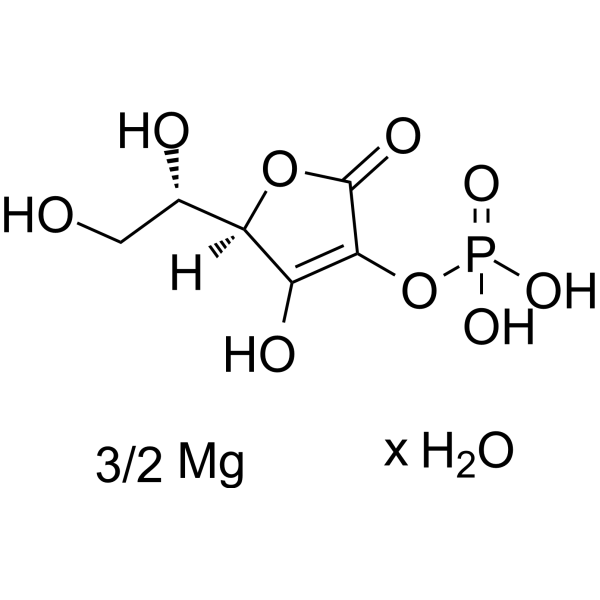
2-Phospho-L-ascorbic acid magnesium; LAA2P magnesium
|
Phosphatase
Reactive Oxygen Species (ROS)
Endogenous Metabolite
|
Metabolic Disease
|
|
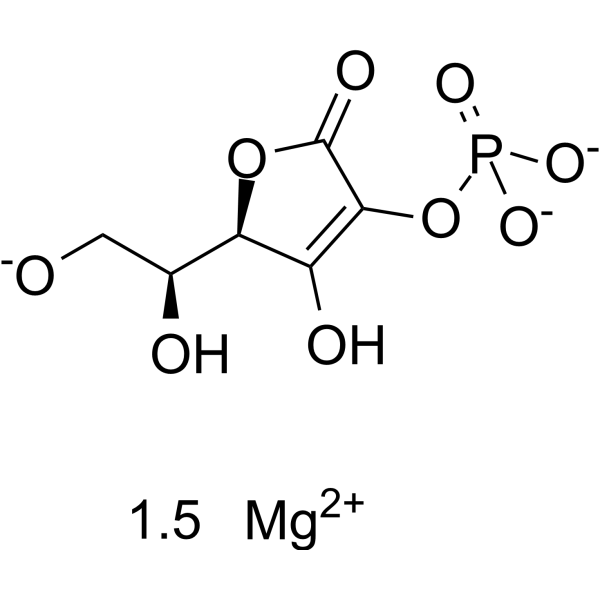
L-Ascorbic acid 2-phosphate magnesium (2-Phospho-L-ascorbic acid magnesium) is a long-acting vitamin C derivative that can stimulate collagen formation and expression . L-Ascorbic acid 2-phosphate magnesium (2-Phospho-L-ascorbic acid magnesium) can be used as a culture medium supplement for the osteogenic differentiation of human adipose stem cells (hASCs). L-Ascorbic acid 2-phosphate magnesium (2-Phospho-L-ascorbic acid magnesium) increases alkaline phosphatase (ALP) activity and expression of runx2A in hASCs during the osteogenic differentiation .
|
-
-
- HY-107837
-
|
2-Phospho-L-ascorbic acid trisodium
|
Phosphatase
Reactive Oxygen Species (ROS)
Endogenous Metabolite
|
Metabolic Disease
|
|
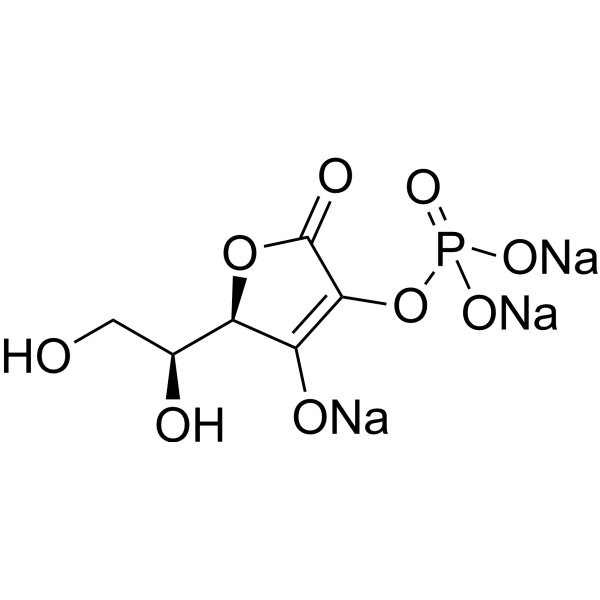
L-Ascorbic acid 2-phosphate trisodium (2-Phospho-L-ascorbic acid trisodium) is a long-acting vitamin C derivative that can stimulate collagen formation and expression . L-Ascorbic acid 2-phosphate trisodium (2-Phospho-L-ascorbic acid trisodium) can be used as a culture medium supplement for the osteogenic differentiation of human adipose stem cells (hASCs). L-Ascorbic acid 2-phosphate trisodium (2-Phospho-L-ascorbic acid trisodium) increases alkaline phosphatase (ALP) activity and expression of runx2A in hASCs during the osteogenic differentiation .
|
-
-
- HY-103701
-
|
2-Phospho-L-ascorbic acid; LAA2P
|
Phosphatase
Reactive Oxygen Species (ROS)
Endogenous Metabolite
|
Metabolic Disease
|
|
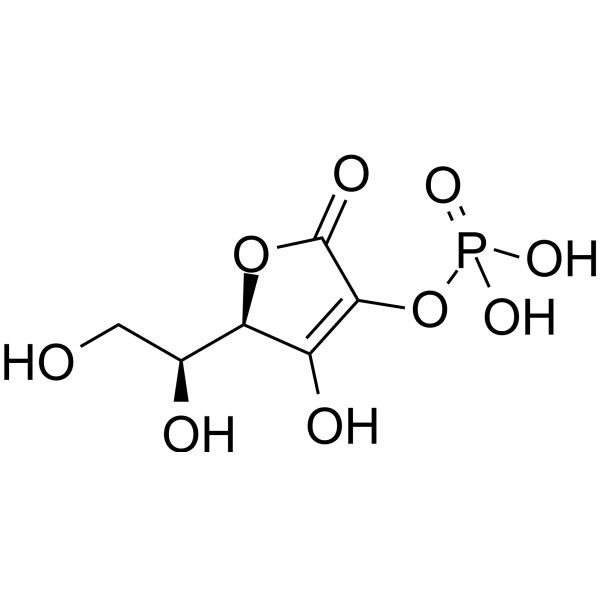
L-ascorbic acid 2-phosphate (2-Phospho-L-ascorbic acid) is a long-acting vitamin C derivative that can stimulate collagen formation and expression . L-ascorbic acid 2-phosphate (2-Phospho-L-ascorbic acid) can be used as a culture medium supplement for the osteogenic differentiation of human adipose stem cells (hASCs). L-ascorbic acid 2-phosphate increases alkaline phosphatase (ALP) activity and expression of runx2A in hASCs during the osteogenic differentiation .
|
-
-
- HY-103701B
-
|
2-Phospho-L-ascorbic acid magnesium hydrate; LAA2P magnesium hydrate
|
Phosphatase
Reactive Oxygen Species (ROS)
Endogenous Metabolite
|
Metabolic Disease
|
|
L-ascorbic acid 2-phosphate (2-Phospho-L-ascorbic acid) magnesium hydrate is a long-acting vitamin C derivative that can stimulate collagen formation and expression. L-ascorbic acid 2-phosphate magnesium hydrate can be used as a culture medium supplement for the osteogenic differentiation of human adipose stem cells (hASCs). L-ascorbic acid 2-phosphate magnesium hydrate increases alkaline phosphatase (ALP) activity and expression of runx2A in hASCs during the osteogenic differentiation .
|
-
-
- HY-129047B
-
|
|
Biochemical Assay Reagents
|
Others
|
|
Recombinant Trypsin Solution is an animal-free trypsin solution used to digest cells or tissues. Recombinant Trypsin Solution has high stability at room temperature and gentle digestion, and can be used to digest weakly adherent cells or stem cells under low serum or serum-free culture conditions. Compared with traditional trypsin digestion solution, Recombinant Trypsin Solution does not contain any animal-derived ingredients, is gentle and effective, and can replace the application of animal-derived trypsin in cell digestion .
|
-
-
- HY-W008923
-
|
|
MMP
Parasite
Bacterial
Antibiotic
Apoptosis
Akt
PI3K
|
Infection
Neurological Disease
Inflammation/Immunology
Cancer
|
|
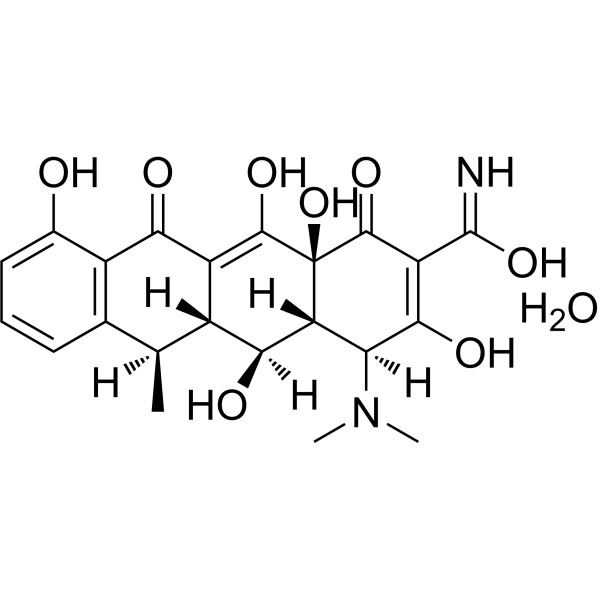
Doxycycline monohydrate is an orally active highly lipophilic, tissue-permeable MMP inhibitor with broad-spectrum antibacterial activity. Doxycycline monohydrate is also a semi-synthetic antibiotic with chelating properties, which blocks bacterial protein synthesis and inhibits extracellular matrix degradation through interactions with zinc and calcium atoms. Doxycycline monohydrate also inhibits mitochondrial biogenesis, translation, and the expression of respiratory chain proteins. Doxycycline monohydrate induces apoptosis, inhibits autophagy and EMT, downregulates stem cell markers, and activates the PI3K-AKT pathway, thereby effectively inhibiting the viability and proliferation of cancer cells such as breast cancer cells. Doxycycline monohydrate also promotes the survival and self-renewal of embryonic stem cells and neural stem cells, and reduces the frequency of medium changes in culture. Doxycycline monohydrate has been applied in studies related to breast cancer, prostate cancer, bladder cancer, and other cancers .
|
-
-
- HY-12346
-
|
NSC 12407; BRD-K4477
|
Quinone Reductase
|
Others
|
|
FH1 (NSC 12407) is a NQO2 inhibitor with hepatoprotective effects. FH1 enhances hepatocyte function and promotes differentiation of induced pluripotent stem (iPS)-derived hepatocytes to a more mature phenotype and maturation of well-differentiated hepatocyte-like cell (iHeps) cultures. FH1 protects against Acetaminophen (HY-66005)-induced hepatotoxicity in both embryos and adult zebrafish .
|
-
-
- HY-N0565S1
-
|
|
Isotope-Labeled Compounds
MMP
Parasite
Bacterial
Antibiotic
Apoptosis
Akt
PI3K
|
Infection
Neurological Disease
Inflammation/Immunology
Cancer
|
|
Doxycycline-d3 hyclate (major) is the deuterium labeled Doxycycline hyclate (HY-N0565B). Doxycycline hyclate is an orally active highly lipophilic, tissue-permeable MMP inhibitor with broad-spectrum antibacterial activity. Doxycycline hyclate is also a semi-synthetic antibiotic with chelating properties, which blocks bacterial protein synthesis and inhibits extracellular matrix degradation through interactions with zinc and calcium atoms. Doxycycline hyclate also inhibits mitochondrial biogenesis, translation, and the expression of respiratory chain proteins. Doxycycline hyclate induces apoptosis, inhibits autophagy and EMT, downregulates stem cell markers, and activates the PI3K-AKT pathway, thereby effectively inhibiting the viability and proliferation of cancer cells such as breast cancer cells. Doxycycline hyclate also promotes the survival and self-renewal of embryonic stem cells and neural stem cells, and reduces the frequency of medium changes in culture. Doxycycline hyclate has been applied in studies related to breast cancer, prostate cancer, bladder cancer, and other cancers .
|
-
-
- HY-N0565AR
-
|
|
Reference Standards
MMP
Parasite
Bacterial
Antibiotic
Apoptosis
Akt
PI3K
|
Infection
Neurological Disease
Inflammation/Immunology
Cancer
|
|
Doxycycline hydrochloride (Standard) is the analytical standard of Doxycycline hydrochloride (HY-N0565A). This product is intended for research and analytical applications. Doxycycline hydrochloride is an orally active highly lipophilic, tissue-permeable MMP inhibitor with broad-spectrum antibacterial activity. Doxycycline hydrochloride is also a semi-synthetic antibiotic with chelating properties, which blocks bacterial protein synthesis and inhibits extracellular matrix degradation through interactions with zinc and calcium atoms. Doxycycline hydrochloride also inhibits mitochondrial biogenesis, translation, and the expression of respiratory chain proteins. Doxycycline hydrochloride induces apoptosis, inhibits autophagy and EMT, downregulates stem cell markers, and activates the PI3K-AKT pathway, thereby effectively inhibiting the viability and proliferation of cancer cells such as breast cancer cells. Doxycycline hydrochloride also promotes the survival and self-renewal of embryonic stem cells and neural stem cells, and reduces the frequency of medium changes in culture. Doxycycline hydrochloride has been applied in studies related to breast cancer, prostate cancer, bladder cancer, and other cancers .
|
-
-
- HY-N0565R
-
|
|
Reference Standards
MMP
Parasite
Bacterial
Antibiotic
Apoptosis
Akt
PI3K
|
Infection
Neurological Disease
Inflammation/Immunology
Cancer
|
|
Doxycycline (Standard) is the analytical standard of Doxycycline (HY-N0565). This product is intended for research and analytical applications. Doxycycline is an orally active highly lipophilic, tissue-permeable MMP inhibitor with broad-spectrum antibacterial activity. Doxycycline is also a semi-synthetic antibiotic with chelating properties, which blocks bacterial protein synthesis and inhibits extracellular matrix degradation through interactions with zinc and calcium atoms. Doxycycline also inhibits mitochondrial biogenesis, translation, and the expression of respiratory chain proteins. Doxycycline induces apoptosis, inhibits autophagy and EMT, downregulates stem cell markers, and activates the PI3K-AKT pathway, thereby effectively inhibiting the viability and proliferation of cancer cells such as breast cancer cells. Doxycycline also promotes the survival and self-renewal of embryonic stem cells and neural stem cells, and reduces the frequency of medium changes in culture. Doxycycline has been applied in studies related to breast cancer, prostate cancer, bladder cancer, and other cancers .
|
-
-
- HY-N0565BR
-
|
Doxycycline (hydrochloride hemiethanolate hemihydrate) (Standard); WC2031 (Standard)
|
Reference Standards
MMP
Parasite
Bacterial
Antibiotic
Apoptosis
Akt
PI3K
|
Infection
Neurological Disease
Inflammation/Immunology
Cancer
|
|
Doxycycline hyclate (Standard) is the analytical standard of Doxycycline hyclate (HY-N0565B). This product is intended for research and analytical applications. Doxycycline hyclate is an orally active highly lipophilic, tissue-permeable MMP inhibitor with broad-spectrum antibacterial activity. Doxycycline hyclate is also a semi-synthetic antibiotic with chelating properties, which blocks bacterial protein synthesis and inhibits extracellular matrix degradation through interactions with zinc and calcium atoms. Doxycycline hyclate also inhibits mitochondrial biogenesis, translation, and the expression of respiratory chain proteins. Doxycycline hyclate induces apoptosis, inhibits autophagy and EMT, downregulates stem cell markers, and activates the PI3K-AKT pathway, thereby effectively inhibiting the viability and proliferation of cancer cells such as breast cancer cells. Doxycycline hyclate also promotes the survival and self-renewal of embryonic stem cells and neural stem cells, and reduces the frequency of medium changes in culture. Doxycycline hyclate has been applied in studies related to breast cancer, prostate cancer, bladder cancer, and other cancers .
|
-
-
- HY-116057
-
|
|
Apoptosis
|
Others
|
|
Stemazole is a protective agent that promotes stem cell survival. Stemazole has the protective effect of human embryonic stem cells (hESCs). Stemazole enhances clonal expansion of single cells and decreases apoptosis. Stemazole for the study of stem cell survival in starvation culture .
|
-
-
- HY-P4047
-
|
|
Drug Derivative
|
Others
|
|
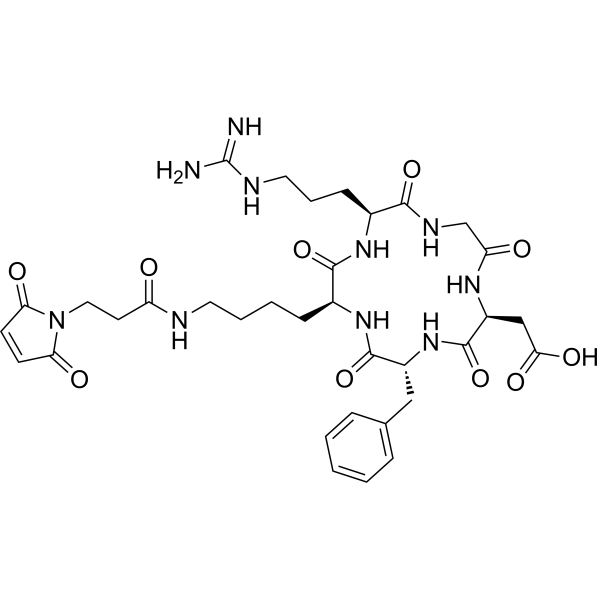
Cyclo(RGDfK(Mal)) is a pentapeptide. Cyclo(RGDfK(Mal)) improves the attachment and infiltration of human pluripotent stem cells. Cyclo(RGDfK(Mal)) can be used for 3D stem cell culture and expansion .
|
-
-
- HY-N0565AS
-
|
|
Isotope-Labeled Compounds
MMP
Parasite
Bacterial
Antibiotic
Apoptosis
Akt
PI3K
|
Infection
Neurological Disease
Inflammation/Immunology
Cancer
|
|
Doxycycline-d3 hydrochloride is deuterium labeled Doxycycline hydrochloride (HY-N0565A). Doxycycline hydrochloride is an orally active highly lipophilic, tissue-permeable MMP inhibitor with broad-spectrum antibacterial activity. Doxycycline hydrochloride is also a semi-synthetic antibiotic with chelating properties, which blocks bacterial protein synthesis and inhibits extracellular matrix degradation through interactions with zinc and calcium atoms. Doxycycline hydrochloride also inhibits mitochondrial biogenesis, translation, and the expression of respiratory chain proteins. Doxycycline hydrochloride induces apoptosis, inhibits autophagy and EMT, downregulates stem cell markers, and activates the PI3K-AKT pathway, thereby effectively inhibiting the viability and proliferation of cancer cells such as breast cancer cells. Doxycycline hydrochloride also promotes the survival and self-renewal of embryonic stem cells and neural stem cells, and reduces the frequency of medium changes in culture. Doxycycline hydrochloride has been applied in studies related to breast cancer, prostate cancer, bladder cancer, and other cancers .
|
-
-
- HY-N0565S3
-
|
|
Isotope-Labeled Compounds
MMP
Parasite
Bacterial
Antibiotic
Apoptosis
Akt
PI3K
|
Infection
Neurological Disease
Inflammation/Immunology
Cancer
|
|
Doxycycline- 13C,d3 is 13C and deuterium labeled Doxycycline (HY-N0565). Doxycycline is an orally active highly lipophilic, tissue-permeable MMP inhibitor with broad-spectrum antibacterial activity. Doxycycline is also a semi-synthetic antibiotic with chelating properties, which blocks bacterial protein synthesis and inhibits extracellular matrix degradation through interactions with zinc and calcium atoms. Doxycycline also inhibits mitochondrial biogenesis, translation, and the expression of respiratory chain proteins. Doxycycline induces apoptosis, inhibits autophagy and EMT, downregulates stem cell markers, and activates the PI3K-AKT pathway, thereby effectively inhibiting the viability and proliferation of cancer cells such as breast cancer cells. Doxycycline also promotes the survival and self-renewal of embryonic stem cells and neural stem cells, and reduces the frequency of medium changes in culture. Doxycycline has been applied in studies related to breast cancer, prostate cancer, bladder cancer, and other cancers .
|
-
-
- HY-103701AR
-
|
2-Phospho-L-ascorbic acid magnesium (Standard); LAA2P magnesium (Standard)
|
Reference Standards
Phosphatase
Reactive Oxygen Species (ROS)
Endogenous Metabolite
|
Metabolic Disease
|
|
L-Ascorbic acid 2-phosphate (magnesium) (Standard) is the analytical standard of L-Ascorbic acid 2-phosphate (magnesium). This product is intended for research and analytical applications. L-Ascorbic acid 2-phosphate magnesium (2-Phospho-L-ascorbic acid magnesium) is a?long-acting?vitamin?C?derivative?that can stimulate collagen formation and expression . L-Ascorbic acid 2-phosphate magnesium (2-Phospho-L-ascorbic acid magnesium) can be used as a culture medium supplement for the osteogenic differentiation of human adipose stem cells (hASCs). L-Ascorbic acid 2-phosphate magnesium (2-Phospho-L-ascorbic acid magnesium) increases alkaline phosphatase (ALP) activity and expression of runx2A in hASCs during the osteogenic differentiation .
|
-
-
- HY-115893A
-
|
|
CDK
|
Cancer
|
|
P18IN005 hydrochloride is a novel inhibitor of p18, exhibiting potent activity in negatively regulating haematopoietic stem cell (HSC) self-renewal. P18IN005 hydrochloride has been shown to be more effective than p27 in inhibiting HSC self-renewal in mouse models. P18IN005 hydrochloride promotes the expansion of functional HSCs in short-term cultures. P18IN005 hydrochloride serves as a valuable tool for dissecting the signaling pathways involved in stem cell self-renewal.
|
-
-
- HY-N0565C
-
|
|
MMP
Parasite
Bacterial
Antibiotic
Apoptosis
Akt
PI3K
|
Infection
Neurological Disease
Inflammation/Immunology
Cancer
|
|
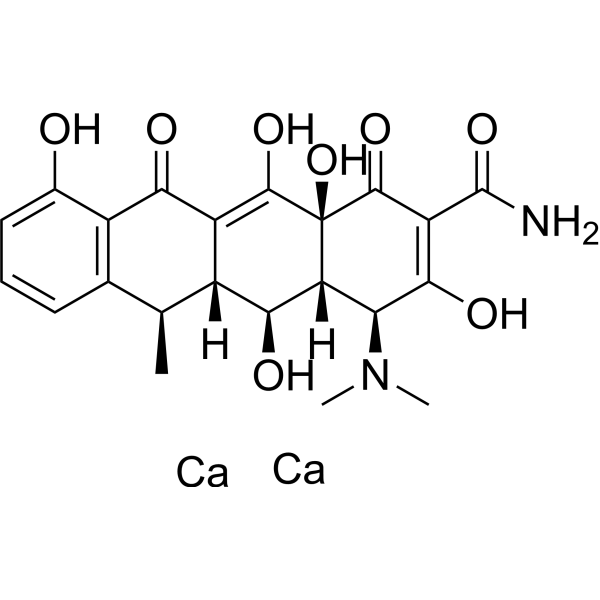
Doxycycline calcium is an orally active highly lipophilic, tissue-permeable MMP inhibitor with broad-spectrum antibacterial activity. Doxycycline calcium is also a semi-synthetic antibiotic with chelating properties, which blocks bacterial protein synthesis and inhibits extracellular matrix degradation through interactions with zinc and calcium atoms. Doxycycline calcium also inhibits mitochondrial biogenesis, translation, and the expression of respiratory chain proteins. Doxycycline calcium induces apoptosis, inhibits autophagy and EMT, downregulates stem cell markers, and activates the PI3K-AKT pathway, thereby effectively inhibiting the viability and proliferation of cancer cells such as breast cancer cells. Doxycycline calcium also promotes the survival and self-renewal of embryonic stem cells and neural stem cells, and reduces the frequency of medium changes in culture. Doxycycline calcium has been applied in studies related to breast cancer, prostate cancer, bladder cancer, and other cancers .
|
-
-
- HY-W008923R
-
|
|
Reference Standards
MMP
Parasite
Bacterial
Antibiotic
Apoptosis
Akt
PI3K
|
Infection
Neurological Disease
Inflammation/Immunology
Cancer
|
|
Doxycycline monohydrate (Standard) is the analytical standard of Doxycycline monohydrate (HY-W008923). Doxycycline monohydrate is an orally active highly lipophilic, tissue-permeable MMP inhibitor with broad-spectrum antibacterial activity. Doxycycline monohydrate is also a semi-synthetic antibiotic with chelating properties, which blocks bacterial protein synthesis and inhibits extracellular matrix degradation through interactions with zinc and calcium atoms. Doxycycline monohydrate also inhibits mitochondrial biogenesis, translation, and the expression of respiratory chain proteins. Doxycycline monohydrate induces apoptosis, inhibits autophagy and EMT, downregulates stem cell markers, and activates the PI3K-AKT pathway, thereby effectively inhibiting the viability and proliferation of cancer cells such as breast cancer cells. Doxycycline monohydrate also promotes the survival and self-renewal of embryonic stem cells and neural stem cells, and reduces the frequency of medium changes in culture. Doxycycline monohydrate has been applied in studies related to breast cancer, prostate cancer, bladder cancer, and other cancers .
|
-
-
- HY-107837R
-
|
2-Phospho-L-ascorbic acid trisodium (Standard)
|
Reference Standards
Phosphatase
Reactive Oxygen Species (ROS)
Endogenous Metabolite
|
Metabolic Disease
|
|
L-Ascorbic acid 2-phosphate (trisodium) (Standard) is the analytical standard of L-Ascorbic acid 2-phosphate (trisodium). This product is intended for research and analytical applications. L-Ascorbic acid 2-phosphate trisodium (2-Phospho-L-ascorbic acid trisodium) is a long-acting vitamin C derivative that can stimulate collagen formation and expression[1]. L-Ascorbic acid 2-phosphate trisodium (2-Phospho-L-ascorbic acid trisodium) can be used as a culture medium supplement for the osteogenic differentiation of human adipose stem cells (hASCs). L-Ascorbic acid 2-phosphate trisodium (2-Phospho-L-ascorbic acid trisodium) increases alkaline phosphatase (ALP) activity and expression of runx2A in hASCs during the osteogenic differentiation[2][3].
|
-
-
- HY-D3185
-
|
|
Fluorescent Dye
Aldehyde Dehydrogenase (ALDH)
|
Cancer
|
|
AlDeSense AM is a cell-permeable ALDH1A1-selective fluorescent reporter. AlDeSense AM is oxidized by ALDH1A1, which eliminates photoinduced electron transfer quenching and enhances the fluorescent signal. AlDeSense AM can be used to detect cells with cancer stem cell properties, as well as to monitor the plasticity of cancer stem cells in cell culture systems and animal models. AlDeSense AM is applicable to the study of cancers associated with cancer stem cells, including chronic myeloid leukemia, melanoma, and breast cancer .
|
-
-
- HY-N0565AG
-
|
|
Apoptosis
MMP
Akt
PI3K
|
Infection
Neurological Disease
Inflammation/Immunology
Cancer
|
|
Doxycycline hydrochloride GMP is Doxycycline (hydrochloride) (HY-N0565A) produced by using GMP guidelines. GMP small molecules works appropriately as an auxiliary reagent for cell therapy manufacture. Doxycycline hydrochloride is an orally active highly lipophilic, tissue-permeable MMP inhibitor with broad-spectrum antibacterial activity. Doxycycline hydrochloride is also a semi-synthetic antibiotic with chelating properties, which blocks bacterial protein synthesis and inhibits extracellular matrix degradation through interactions with zinc and calcium atoms. Doxycycline hydrochloride also inhibits mitochondrial biogenesis, translation, and the expression of respiratory chain proteins. Doxycycline hydrochloride induces apoptosis, inhibits autophagy and EMT, downregulates stem cell markers, and activates the PI3K-AKT pathway, thereby effectively inhibiting the viability and proliferation of cancer cells such as breast cancer cells. Doxycycline hydrochloride also promotes the survival and self-renewal of embryonic stem cells and neural stem cells, and reduces the frequency of medium changes in culture. Doxycycline hydrochloride has been applied in studies related to breast cancer, prostate cancer, bladder cancer, and other cancers .
|
-
| Cat. No. |
Product Name |
Type |
-
- HY-D3185
-
|
|
Fluorescent Dyes
|
|
AlDeSense AM is a cell-permeable ALDH1A1-selective fluorescent reporter. AlDeSense AM is oxidized by ALDH1A1, which eliminates photoinduced electron transfer quenching and enhances the fluorescent signal. AlDeSense AM can be used to detect cells with cancer stem cell properties, as well as to monitor the plasticity of cancer stem cells in cell culture systems and animal models. AlDeSense AM is applicable to the study of cancers associated with cancer stem cells, including chronic myeloid leukemia, melanoma, and breast cancer .
|
-
- HY-N0565AG
-
|
|
Fluorescent Dyes
|
|
Doxycycline hydrochloride GMP is Doxycycline (hydrochloride) (HY-N0565A) produced by using GMP guidelines. GMP small molecules works appropriately as an auxiliary reagent for cell therapy manufacture. Doxycycline hydrochloride is an orally active highly lipophilic, tissue-permeable MMP inhibitor with broad-spectrum antibacterial activity. Doxycycline hydrochloride is also a semi-synthetic antibiotic with chelating properties, which blocks bacterial protein synthesis and inhibits extracellular matrix degradation through interactions with zinc and calcium atoms. Doxycycline hydrochloride also inhibits mitochondrial biogenesis, translation, and the expression of respiratory chain proteins. Doxycycline hydrochloride induces apoptosis, inhibits autophagy and EMT, downregulates stem cell markers, and activates the PI3K-AKT pathway, thereby effectively inhibiting the viability and proliferation of cancer cells such as breast cancer cells. Doxycycline hydrochloride also promotes the survival and self-renewal of embryonic stem cells and neural stem cells, and reduces the frequency of medium changes in culture. Doxycycline hydrochloride has been applied in studies related to breast cancer, prostate cancer, bladder cancer, and other cancers .
|
| Cat. No. |
Product Name |
Type |
-
- HY-103701B
-
|
2-Phospho-L-ascorbic acid magnesium hydrate; LAA2P magnesium hydrate
|
Biochemical Assay Reagents
|
|
L-ascorbic acid 2-phosphate (2-Phospho-L-ascorbic acid) magnesium hydrate is a long-acting vitamin C derivative that can stimulate collagen formation and expression. L-ascorbic acid 2-phosphate magnesium hydrate can be used as a culture medium supplement for the osteogenic differentiation of human adipose stem cells (hASCs). L-ascorbic acid 2-phosphate magnesium hydrate increases alkaline phosphatase (ALP) activity and expression of runx2A in hASCs during the osteogenic differentiation .
|
-
- HY-N0565AG
-
|
|
Biochemical Assay Reagents
|
|
Doxycycline hydrochloride GMP is Doxycycline (hydrochloride) (HY-N0565A) produced by using GMP guidelines. GMP small molecules works appropriately as an auxiliary reagent for cell therapy manufacture. Doxycycline hydrochloride is an orally active highly lipophilic, tissue-permeable MMP inhibitor with broad-spectrum antibacterial activity. Doxycycline hydrochloride is also a semi-synthetic antibiotic with chelating properties, which blocks bacterial protein synthesis and inhibits extracellular matrix degradation through interactions with zinc and calcium atoms. Doxycycline hydrochloride also inhibits mitochondrial biogenesis, translation, and the expression of respiratory chain proteins. Doxycycline hydrochloride induces apoptosis, inhibits autophagy and EMT, downregulates stem cell markers, and activates the PI3K-AKT pathway, thereby effectively inhibiting the viability and proliferation of cancer cells such as breast cancer cells. Doxycycline hydrochloride also promotes the survival and self-renewal of embryonic stem cells and neural stem cells, and reduces the frequency of medium changes in culture. Doxycycline hydrochloride has been applied in studies related to breast cancer, prostate cancer, bladder cancer, and other cancers .
|
| Cat. No. |
Product Name |
Target |
Research Area |
-
- HY-P4047
-
|
|
Drug Derivative
|
Others
|
|
Cyclo(RGDfK(Mal)) is a pentapeptide. Cyclo(RGDfK(Mal)) improves the attachment and infiltration of human pluripotent stem cells. Cyclo(RGDfK(Mal)) can be used for 3D stem cell culture and expansion .
|
-
- HY-K3022
-
|
|
|
MCE Recombinant Human Serum Albumin Solution (rHSA, 20%) can be widely used in various cell culture systems and is particularly suitable for maintaining the undifferentiated growth and expansion of human embryonic stem cells (hESC) and induced pluripotent stem cells (hiPSC) under both feeder-dependent and feeder-free conditions.
|
-
- HY-K6502
-
|
|
|
MCE Human iPSC-Derived Brain Organoid Long-term Culture Medium is a specialized culture system developed through systematic reformulation and concentration optimization based on neuronal cell culture platforms. It significantly enhances the adaptability and stability of long-term culture for brain organoids derived from human induced pluripotent stem cells (iPSCs).
|
-
- HY-K6501
-
|
|
|
MCE Human PSC Maintenance Medium is a ready-to-use, chemically defined formulation designed to support the robust growth and self-renewal of human embryonic stem cells (hESCs) and induced pluripotent stem cells (iPSCs) under feeder-free culture conditions.
|
-
- HY-K6127
-
|
|
|
MCE Human Airway Organoid Kit includes a basic culture medium for Human Airway organoids, as well as culture supplements, and is designed for the effective construction of human airway organoids (hAOs) from human airway stem cells.
|
-
- HY-K6132
-
|
|
|
MCE Mouse Airway Organoid Kit includes a basic culture medium for Mouse Airway organoids, as well as culture supplements, and is designed for the establishment and long-term maintenance of mouse airway organoids derived from airway stem cells.
|
-
- HY-K6006
-
|
|
|
MCE Basement Membrane Matrix IPSC-qualified is primarily composed of natural basement membrane matrix extracted from mouse tumors. This product is mainly used for stem cells culture.
|
-
- HY-K6135
-
|
|
|
MCE Human Liver Ductal (Differentiation) Organoid Kit includes a basic culture medium for Human Liver Ductal (Differentiation) organoids, as well as culture supplements, and is designed for the establishment and long-term maintenance of human liver ductal organoids (hLDs) derived from adult stem cells.
|
-
- HY-K6131
-
|
|
|
MCE Mouse Liver Ductal (Differentiation) Organoid Kit includes a basic culture medium for Mouse Liver Ductal (Differentiation) organoids, as well as culture supplements, and is designed for the establishment and long-term maintenance of mouse liver ductal organoids (mLDs) derived from adult stem cells.
|
-
- HY-K6021
-
|
|
|
MCE CEPT Cocktail Plus (1000×) is a composite supplement specifically formulated for pluripotent stem cell culture. Through synergistic effects, it inhibits oxidative damage, blocks apoptotic pathways, and regulates protein translation, significantly reducing cellular stress levels through multiple targets. This dramatically improves the survival rate and cloning efficiency of pluripotent stem cells.
|
-
- HY-K6503
-
|
|
|
MCE Human PSC Embryoid Body (EB) Induction Medium is specifically designed to support the efficient and reproducible formation of uniform embryoid bodies from pluripotent stem cells under suspension culture conditions. This optimized culture system integrates microenvironmental regulation with metabolic adaptation strategies, significantly improving the stability and reproducibility of EB formation.
|
-
- HY-K6020
-
|
|
|
MCE iPSC/ESC Dissociation Solution (Enzyme-Free) is a chelation-based, enzyme-free cell dissociation reagent specifically designed for the culture and manipulation of induced pluripotent stem cells (iPSCs) and embryonic stem cells (ESCs). This optimized solution enables gentle and efficient dissociation of iPSCs/ESCs within 5-8 min, making it suitable for routine passaging, dissociation, and cell-cluster handling. It provides superior stability and better preservation of cell state compared with traditional methods.
|
-
- HY-K6301
-
|
|
|
MCE Human iPSC/ESC Cortical Brain Organoid Induction Differentiation Kit is a standardized culture system specifically designed to recapitulate the developmental processes and functional features of the human cerebral cortex through forebrain ventralization-based signaling regulation. By sequentially activating the Wnt/β-catenin pathway and gradually inhibiting BMP/Smad signaling, this system efficiently drives human pluripotent stem cells (PSC) to differentiate into high-purity glutamatergic neurons (VGLUT1/2+ > 85%), while simultaneously promoting the formation of Pax6+/BLBP+ radial glial cells that establish a biomimetic ventricular-zone–like structure.
|
| Cat. No. |
Product Name |
Category |
Target |
Chemical Structure |
| Cat. No. |
Product Name |
Chemical Structure |
-
- HY-N0565S1
-
|
|
|
Doxycycline-d3 hyclate (major) is the deuterium labeled Doxycycline hyclate (HY-N0565B). Doxycycline hyclate is an orally active highly lipophilic, tissue-permeable MMP inhibitor with broad-spectrum antibacterial activity. Doxycycline hyclate is also a semi-synthetic antibiotic with chelating properties, which blocks bacterial protein synthesis and inhibits extracellular matrix degradation through interactions with zinc and calcium atoms. Doxycycline hyclate also inhibits mitochondrial biogenesis, translation, and the expression of respiratory chain proteins. Doxycycline hyclate induces apoptosis, inhibits autophagy and EMT, downregulates stem cell markers, and activates the PI3K-AKT pathway, thereby effectively inhibiting the viability and proliferation of cancer cells such as breast cancer cells. Doxycycline hyclate also promotes the survival and self-renewal of embryonic stem cells and neural stem cells, and reduces the frequency of medium changes in culture. Doxycycline hyclate has been applied in studies related to breast cancer, prostate cancer, bladder cancer, and other cancers .
|
-
-
- HY-N0565AS
-
|
|
|
Doxycycline-d3 hydrochloride is deuterium labeled Doxycycline hydrochloride (HY-N0565A). Doxycycline hydrochloride is an orally active highly lipophilic, tissue-permeable MMP inhibitor with broad-spectrum antibacterial activity. Doxycycline hydrochloride is also a semi-synthetic antibiotic with chelating properties, which blocks bacterial protein synthesis and inhibits extracellular matrix degradation through interactions with zinc and calcium atoms. Doxycycline hydrochloride also inhibits mitochondrial biogenesis, translation, and the expression of respiratory chain proteins. Doxycycline hydrochloride induces apoptosis, inhibits autophagy and EMT, downregulates stem cell markers, and activates the PI3K-AKT pathway, thereby effectively inhibiting the viability and proliferation of cancer cells such as breast cancer cells. Doxycycline hydrochloride also promotes the survival and self-renewal of embryonic stem cells and neural stem cells, and reduces the frequency of medium changes in culture. Doxycycline hydrochloride has been applied in studies related to breast cancer, prostate cancer, bladder cancer, and other cancers .
|
-
-
- HY-N0565S3
-
|
|
|
Doxycycline- 13C,d3 is 13C and deuterium labeled Doxycycline (HY-N0565). Doxycycline is an orally active highly lipophilic, tissue-permeable MMP inhibitor with broad-spectrum antibacterial activity. Doxycycline is also a semi-synthetic antibiotic with chelating properties, which blocks bacterial protein synthesis and inhibits extracellular matrix degradation through interactions with zinc and calcium atoms. Doxycycline also inhibits mitochondrial biogenesis, translation, and the expression of respiratory chain proteins. Doxycycline induces apoptosis, inhibits autophagy and EMT, downregulates stem cell markers, and activates the PI3K-AKT pathway, thereby effectively inhibiting the viability and proliferation of cancer cells such as breast cancer cells. Doxycycline also promotes the survival and self-renewal of embryonic stem cells and neural stem cells, and reduces the frequency of medium changes in culture. Doxycycline has been applied in studies related to breast cancer, prostate cancer, bladder cancer, and other cancers .
|
-
| Cat. No. |
Product Name |
Target |
Research Areas |
Chemical Structure |
-
- HY-N0565AG
-
|
|
Apoptosis
MMP
Akt
PI3K
|
Infection
Neurological Disease
Inflammation/Immunology
Cancer
|
|
Doxycycline hydrochloride GMP is Doxycycline (hydrochloride) (HY-N0565A) produced by using GMP guidelines. GMP small molecules works appropriately as an auxiliary reagent for cell therapy manufacture. Doxycycline hydrochloride is an orally active highly lipophilic, tissue-permeable MMP inhibitor with broad-spectrum antibacterial activity. Doxycycline hydrochloride is also a semi-synthetic antibiotic with chelating properties, which blocks bacterial protein synthesis and inhibits extracellular matrix degradation through interactions with zinc and calcium atoms. Doxycycline hydrochloride also inhibits mitochondrial biogenesis, translation, and the expression of respiratory chain proteins. Doxycycline hydrochloride induces apoptosis, inhibits autophagy and EMT, downregulates stem cell markers, and activates the PI3K-AKT pathway, thereby effectively inhibiting the viability and proliferation of cancer cells such as breast cancer cells. Doxycycline hydrochloride also promotes the survival and self-renewal of embryonic stem cells and neural stem cells, and reduces the frequency of medium changes in culture. Doxycycline hydrochloride has been applied in studies related to breast cancer, prostate cancer, bladder cancer, and other cancers .
|
-
Your information is safe with us. * Required Fields.
Inquiry Information
- Product Name:
- Cat. No.:
- Quantity:
- MCE Japan Authorized Agent:

