17 Results for "

surface pH

" in MedChemExpress (MCE) Product Catalog:
Products (17)

17 Results for "surface pH" in MCE Product Catalog:

4
4 Cited Publications
Art. -Nr.: HY-W412175
CAS. Nr.: 68938-73-8
Synonyms: ZincpHyrin dihydrochloride
Target:  

Bacterial

Forschungsgebiete:  

Infection

Coproporphyrin III dihydrochloride is a bioactive molecule excreted by nostril- and skin-associated Propionibacterium species that induces aggregation of Staphylococcus aureus (conditions: during early stationary phase growth, low pH: 4-6). Coproporphyrin III dihydrochloride also induces plasma-independent biofilm formation on abiotic surfaces by Staphylococcus aureus. Coproporphyrin III dihydrochloride may be an important mediator of S. aureus accumulation and/or biofilm formation in the nostrils or other sites where Propionibacterium and S. aureus inhabit .
loading...
    loading...
2
2 Cited Publications
Art. -Nr.: HY-135474
CAS. Nr.: 304481-60-5
Reinheit:  99.67%
Forschungsgebiete:  

Others

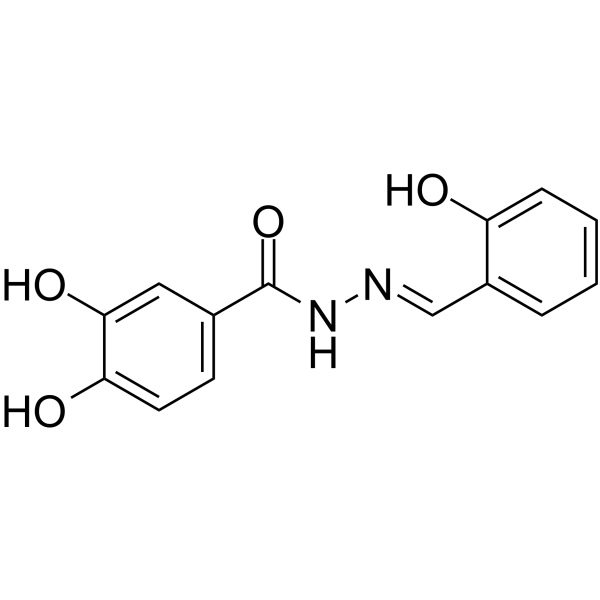
KM91104 is a cell-permeable V-ATPase a3-b2 inhibitor (IC50 = 2.3 µM). KM91104 reduces the metabolic activity, cell proliferation capacity and V-ATPase subunit protein expression levels of primary human hepatic stellate cells, increases intracellular ATP levels and decreases cytoplasmic pH. KM91104 reduces TLR4 expression on the surface of oligodendrocyte precursor cells, blocks the ENV-TLR4 interaction, and reverses oligodendrocyte myelination defects induced by ENV protein .
loading...
    loading...
Art. -Nr.: HY-W243303J
CAS. Nr.: 9003-01-4
Poly(acrylic acid) (MW 250000) is a synthetic cationic electrolyte containing abundant carboxyl groups (-COOH), which exhibits excellent water absorption and retention properties and is often cross-linked to form hydrogels. Poly(acrylic acid) (with a molecular weight of 250,000). Poly(acrylic acid) (MW 250000) can be used as a non-collagenous analog in the biomimetic mineralization research of type I collagen. Poly(acrylic acid) (MW 250000) has pH responsiveness and biocompatibility and is often used as a drug carrier, surface modifier and functional material .
loading...
    loading...
Art. -Nr.: HY-D0075
CAS. Nr.: 61255-63-8
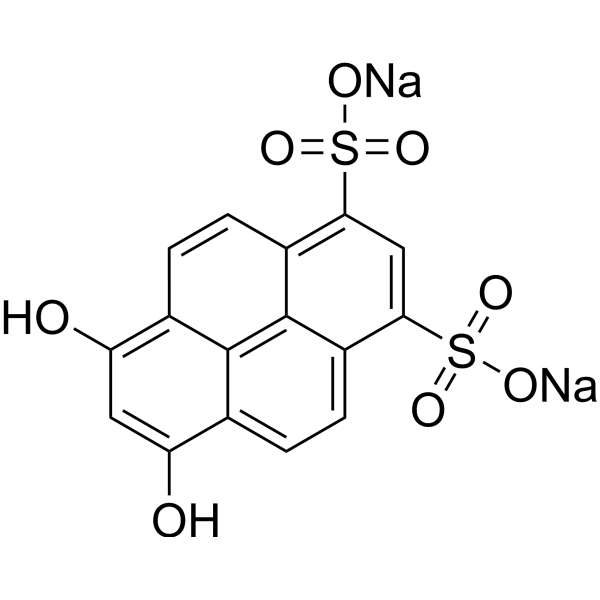
DHPDS disodium salt is a pH-sensitive fluorescent dye. DHPDS disodium salt is used to measure intracellular pH (pHi) from the surface fluorescence of the isolated perfused rat liver .
loading...
    loading...
Art. -Nr.: HY-164071
CAS. Nr.: 9044-05-7
Synonyms: CM-Dextran
Target:  

Drug Derivative

Forschungsgebiete:  

Others

Carboxymethyl Dextran (CM-Dextran) is a dextran derivative and a biocompatible coating for superparamagnetic iron oxide nanoparticles. When coated on the surface of superparamagnetic nanoparticles, Carboxymethyl Dextran forms stable particles across all pH values and NaCl concentrations. Carboxymethyl Dextran can be used to prepare materials for magnetic resonance molecular imaging .
loading...
    loading...
Art. -Nr.: HY-D1556
CAS. Nr.: 384832-91-1
Synonyms: 1,2-dioleoyl-sn-glycero-3-pHospHoethanolamine-N-(carboxyfluorescein) ammonium
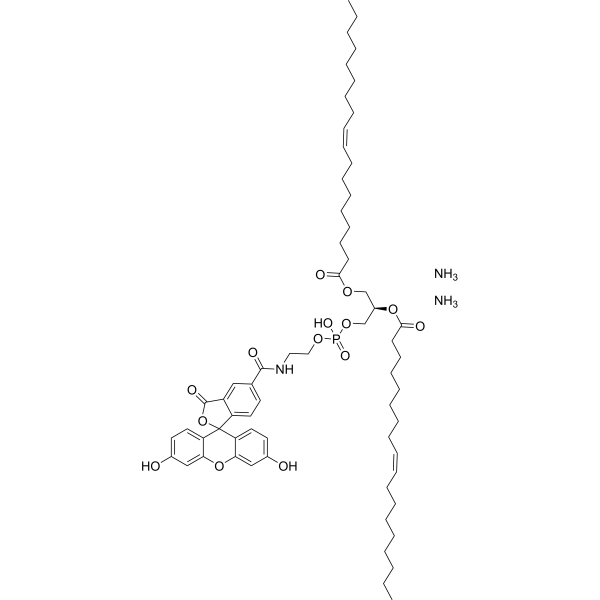
18:1 PE CF (1,2-dioleoyl-sn-glycero-3-phosphoethanolamine-N-(carboxyfluorescein) (ammonium)) is a pH-sensitive fluorescent indicator. 18:1 PE CF exhibits changes in fluorescence intensity in response to pH variations and reflects the electrostatic states of cationic liposomes and lipoplexes. 18:1 PE CF supports real-time visualization of pH distribution and membrane deformation in giant unilamellar vesicles and is suitable for steady-state fluorescence testing in large unilamellar vesicle membranes. 18:1 PE CF is capable of monitoring the surface electrical potential of cationic liposomes and lipoplexes and can effectively label lipid bilayers and nanomicelles. 18:1 PE CF can be used for the research of the investigation of lung cancer (Ex = 495 nm; Em = 520 nm) .
loading...
    loading...
Art. -Nr.: HY-W129456
CAS. Nr.: 4214-72-6
Forschungsgebiete:  

Neurological Disease

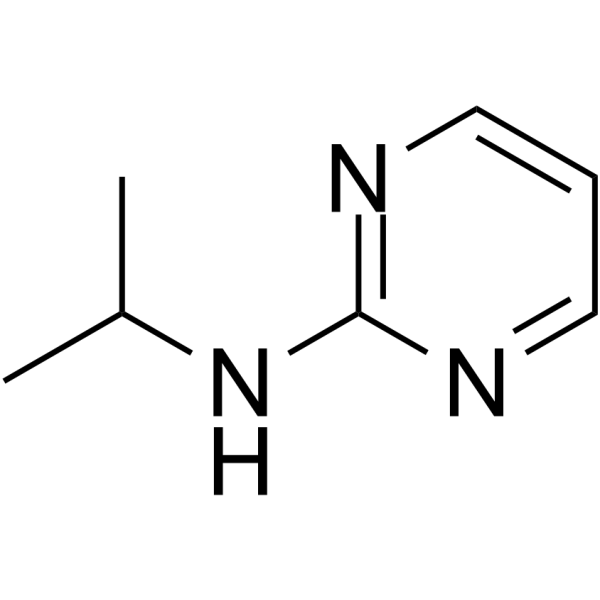
Isaxonine acts as a modifier of the surface pH of the bilayer . Isaxonine accelerates the rate of peripheral nerve regeneration, stimulate axonal sprouting and promote motor and sensory function recovery . Isaxonine is a neurotrophic agent .
loading...
    loading...
Art. -Nr.: HY-133847
CAS. Nr.: 61792-31-2
Synonyms: Laurylamidopropyldimethylamine oxide
Target:  

Endogenous Metabolite

Forschungsgebiete:  

Others

LAPAO (Laurylamidopropyldimethylamine oxide) is an amphoteric surfactant with good biocompatibility and surface activity. LAPAO can be used as a detergent and foam enhancer for personal care and household cleaning products. LAPAO is stable at different pH values and can effectively remove dirt and grease. LAPAO also has a conditioning effect and is suitable for use in skin care and hair care products .
loading...
    loading...
Art. -Nr.: HY-W739372
CAS. Nr.: 25704-18-1
Forschungsgebiete:  

Others

Poly (sodium 4-styrenesulfonate) is an anionic cation-exchange polyelectrolyte and metal ion binding/retention agent. It selectively retains Cr III and Fe II under pH 1 conditions, and its retention effect on all tested metal ions is enhanced under higher pH conditions. Poly (sodium 4-styrenesulfonate) inhibits nanosheet aggregation through edge-face interactions between aromatic rings and the graphite surface, thereby stabilizing the dispersion of reduced graphene oxide nanosheets. When incorporated into the mixed Nafion coating of bismuth film electrodes, Poly (sodium 4-styrenesulfonate) improves the reproducibility, stability, sensitivity, and anti-fouling capability for trace metal detection .
loading...
    loading...
Art. -Nr.: HY-124703
CAS. Nr.: 65004-42-4
Target:  

Ferroportin

Forschungsgebiete:  

Others

Pyrimidinone 8 is a reversible linear non-competitive inhibitor of divalent metal transporter 1 (DMT1), with a Ki of 20 μM (hDMT1). Pyrimidinone 8 does not affect hDMT1 cell surface expression and shows no dependence with the extracellular pH. Pyrimidinone 8 can inhibit hDMT1-mediated iron uptake, with an IC50 of 13.8 μM .
loading...
    loading...
Art. -Nr.: HY-E70311
Synonyms: Thermomyces lanuginosus lipase
Target:  

Endogenous Metabolite

Forschungsgebiete:  

Others

1,3-specific lipase,Bacillus lanolin (Immobilized)(Thermomyces lanuginosus lipase) is a high-efficiency biocatalyst, a lipase from Thermomyces lanuginosus. 1,3-specific lipase,Bacillus lanolin (Immobilized) can be conjugated to magnetic nanoparticles and coupled to the surface of Fe(3)O(4)-COOH to obtain better temperature resistance and pH resistance. The activity unit (U) of lipase is defined as the amount of enzyme that produces 1 μmol of fatty acid per minute under experimental conditions .
loading...
    loading...
Art. -Nr.: HY-129424
CAS. Nr.: 82697-73-2
Synonyms: KM-1146
Forschungsgebiete:  

Inflammation/Immunology

Mezolidon (KM-1146) is an anti-ulcer agent with weak gastric acid secretion inhibitory activity. Mezolidon prevents the formation of gastric mucosal ulcers in stressed rats, increases and maintains their gastric mucosal blood flow, and inhibits the decrease in their transmucosal potential difference. Mezolidon can be used in the research of gastric ulcers .
loading...
    loading...
Art. -Nr.: HY-P86254
Synonyms: SPAM1; HYAL3; pH20; Hyaluronidase pH-20 ; Hyal-pH20; Hyaluronoglucosaminidase pH-20; Sperm adhesion molecule 1; Sperm surface protein pH-20;

Host:  

Rabbit

Application:  

WB, IHC-P

Reactivity:  

Human

loading...
    loading...
Art. -Nr.: HY-184638
APTS Fe2O3 Nanoparticles (Aminated ferric oxide magnetic nanoparticles) are magnetic nanomaterials modified with amino functional groups using APTS. This material consists of a ferric oxide (Fe3O4) nanoparticle core and an amino (-NH2) surface modification layer. The aminated surface helps improve the biocompatibility of the nanoparticles and reduce cytotoxicity. The amino functional groups can be further chemically modified for coupling with biomolecules such as drugs, proteins, and nucleic acids. The amino functional groups undergo protonation at different pH values, resulting in different surface charges on the nanoparticles in different pH environments.
loading...
    loading...
Art. -Nr.: HY-P5423C
Target:  

Peptides

Forschungsgebiete:  

Others

GALA-Cys is a chemically modified GALA peptide (HY-P5423) that retains GALA functions while acquiring strong covalent conjugation capability. GALA-Cys undergoes pH-driven reversible secondary structure transition, rearranges into an amphipathic α-helix, self-oligomerizes, penetrates lipid membranes to form pores, and disrupts lipid bilayers, thereby enabling endosomal escape and cytosolic cargo delivery. GALA-Cys can be conjugated with lipid DPTE for integration into liposomes, self-assembles into a tilted monolayer on gold surfaces, and serves as a pH-responsive coating for particle surface functionalization. GALA-Cys is applicable to studies related to targeted cargo delivery .
loading...
    loading...
Art. -Nr.: HY-184606
PEI stabilized gold nanoclusters (PEI-Au NCs) are nanomaterials combining gold nanoclusters and polyethyleneimine. They consist of a few to dozens of gold atoms forming the core of the gold nanoclusters, while polyethyleneimine (PEI), a positively charged hyperbranched polyamine, is selected as the end-capping agent, encapsulating the surface of the gold nanoclusters. PEI-Au NCs have gained widespread application due to their high luminescence properties and stability over a wide pH range. Furthermore, their good biocompatibility and ease of surface modification or functionalization make them attractive for many biomedical applications.
loading...
    loading...
Art. -Nr.: HY-184603
Bovine serum albumin-modified gold nanoclusters (BSA-Au NCs) are nanomaterials combining gold nanoclusters and bovine serum albumin (BSA). Composed of several to dozens of gold atoms forming the core of the gold nanoclusters, BSA acts as a protective ligand, coating the surface of the gold nanoclusters. BSA-Au NCs are widely used due to their high luminescence properties and stability over a wide pH range. When Au(III) ions are introduced into a BSA solution, BSA acts as a scaffold protein, isolating and capturing Au ions, similar to the biomineralization behavior of inorganic ions in organisms in nature. The captured Au ions are then reduced in situ by BSA to form Au NCs. The synthesized Au NCs consist of 25-Au atoms and are stable in BSA as BSA-Au NCs, exhibiting strong red fluorescence. BSA-Au NCs possess good biocompatibility and their surface is easily modified or functionalized, making them attractive for many biomedical applications.
loading...
    loading...
  • 1

