1. Search Result
Search Result
Results for "

tinea

" in MedChemExpress (MCE) Product Catalog:

13

Inhibitors & Agonists

1

Peptides

3

Natural
Products

3

Isotope-Labeled Compounds

Cat. No. Product Name Target Research Areas Chemical Structure
  • HY-14283
    Luliconazole
    1 Publications Verification

    NND 502

    Fungal Antibiotic Infection
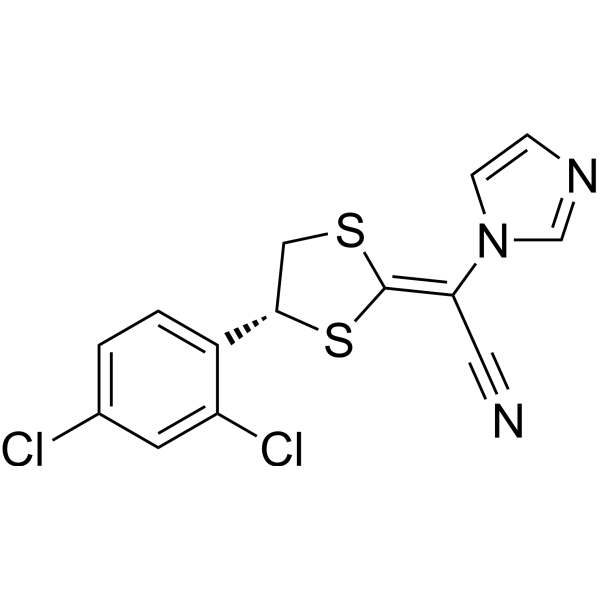
    Luliconazole (NND 502) is a topical antifungal imidazole antibiotic with broad-spectrum and potent antifungal activity. Luliconazole can be used for the research of skin infection, including dermatophytosis, tinea corporis, tinea pedis et al .
    Luliconazole
  • HY-B0518A

    Fungal Antibiotic Infection
    Naftifine hydrochloride is an antibiotic. Naftifine hydrochloride has antifungal activity against dermatophytes, aspergilli, Sporothrix schenckii, and yeasts of the genus Candida. Naftifine hydrochloride can be used for the research of superficial dermatomycoses inhibition .
    Naftifine hydrochloride
  • HY-P5255

    Bacterial Infection Inflammation/Immunology
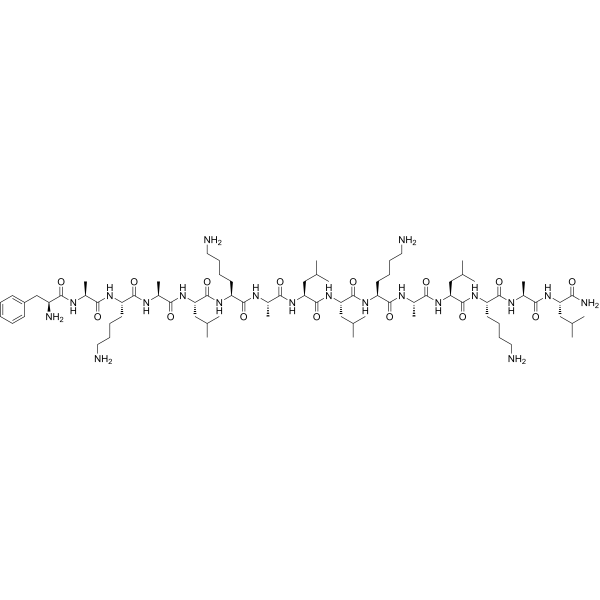
    Oligopeptide-10 is a bioactive peptide with antimicrobial activity. Oligopeptide-10 exhibits broad-spectrum bactericidal effects against Gram-positive bacteria including Propionibacterium acnes and Staphylococcus aureus. Oligopeptide-10 targets lipoteichoic acid (LTA) on the surface of bacterial cell membranes, induces bacterial osmotic imbalance by disrupting the integrity of bacterial membranes, and reduces the release of pro-inflammatory cytokines induced by bacteria. Oligopeptide-10 possesses skin-protective activity. Oligopeptide-10 can be applied in research related to acne vulgaris, dandruff, seborrheic dermatitis, and tinea pedis .
    Oligopeptide-10
  • HY-B0894

    Acetylresorcinol; Resorcin monoacetate

    Fungal Infection
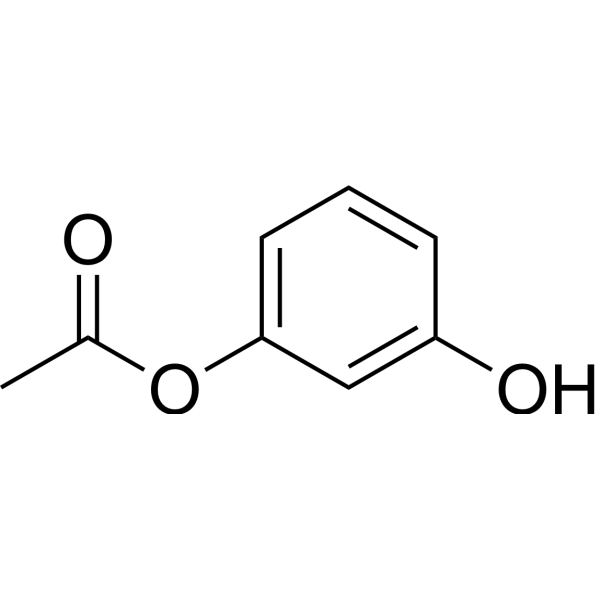
    Resorcinol monoacetate (Acetylresorcinol) is a derivative of Resorcinol (HY-B0907). Resorcinol monoacetate can be used in research of skin infections such as acne, seborrheic dermatitis and tinea pedis .
    Resorcinol monoacetate
  • HY-114518

    KP363

    Fungal Infection
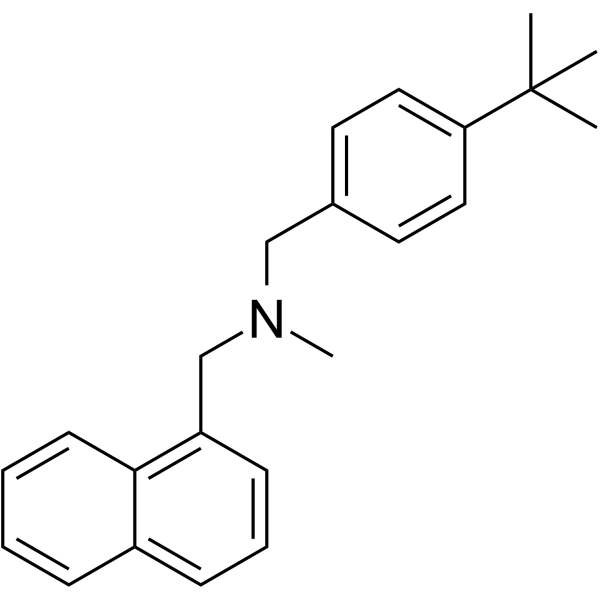
    Butenafine (KP363) is a potent and broad spectrum benzylamine antifungal agent . Butenafine inhibits fungal ergosterol biosynthesis at the point of squalene epoxidation, leading to a deficiency of the fungal cell membranes. Butenafine is effective against dermatophytes infections, such as  tinea pedis,  tinea cruris, tinea versicolor .
    Butenafine
  • HY-14283R

    NND 502 (Standard)

    Reference Standards Fungal Antibiotic Infection
    Luliconazole (Standard) is the analytical standard of Luliconazole. This product is intended for research and analytical applications. Luliconazole (NND 502) is a topical antifungal imidazole antibiotic with broad-spectrum and potent antifungal activity. Luliconazole can be used for the research of skin infection, including dermatophytosis, tinea corporis, tinea pedis et al .
    Luliconazole (Standard)
  • HY-14283S1

    NND 502-d3

    Isotope-Labeled Compounds Antibiotic Fungal Infection
    Luliconazole-d3 (NND 502-d3) is deuterium labeled Luliconazole. Luliconazole (NND 502)?is a topical antifungal imidazole antibiotic with broad-spectrum and potent antifungal activity. Luliconazole can be used for the research of skin infection, including?dermatophytosis, tinea corporis, tinea pedis?et al .
    Luliconazole-d3
  • HY-114518S2

    KP363-d4

    Fungal Isotope-Labeled Compounds Infection
    Butenafine-d4 (KP363-d4) is the deuterium labeled Butenafine (HY-114518). Butenafine (KP363) is a potent and broad spectrum benzylamine antifungal agent . Butenafine inhibits fungal ergosterol biosynthesis at the point of squalene epoxidation, leading to a deficiency of the fungal cell membranes. Butenafine is effective against dermatophytes infections, such as ?tinea pedis, ?tinea cruris, tinea versicolor .
    Butenafine-d4
  • HY-B0518AR

    Reference Standards Fungal Antibiotic Infection
    Naftifine (hydrochloride) (Standard) is the analytical standard of Naftifine (hydrochloride). This product is intended for research and analytical applications. Naftifine hydrochloride is an antibiotic. Naftifine hydrochloride has antifungal activity against dermatophytes, aspergilli, Sporothrix schenckii, and yeasts of the genus Candida. Naftifine hydrochloride can be used for the research of superficial dermatomycoses inhibition .
    Naftifine hydrochloride (Standard)
  • HY-14283S

    NND 502-13C7

    Isotope-Labeled Compounds Infection
    Luliconazole- 13C7 (NND 502- 13C7) is 13C labeled Luliconazole. Luliconazole (NND 502)?is a topical antifungal imidazole antibiotic with broad-spectrum and potent antifungal activity. Luliconazole can be used for the research of skin infection, including?dermatophytosis, tinea corporis, tinea pedis?et al .
    Luliconazole-13C7
  • HY-N14547

    Fungal Infection
    Crotocin has the fungal activity of anti-cryptococcus neoforme, candida albicans, Tinea trichoderma of brewer's yeast, and can be inactivated by blood .
    Crotocin
  • HY-N19063

    Bacterial Infection Inflammation/Immunology
    Cassia alata extract contains anthraquinones (including hypericic acid), flavonoids, phenolic compounds, fatty acids, natural sterols, terpenoids, and saponins, among other bioactive compounds. Cassia alata extract possesses antifungal, antibacterial, and anti-inflammatory properties and can be used in research on skin diseases such as tinea, eczema, and fungal infections.
    Cassia alata extract
  • HY-N19791

    NF-κB Fungal Interleukin Related Infection Cancer
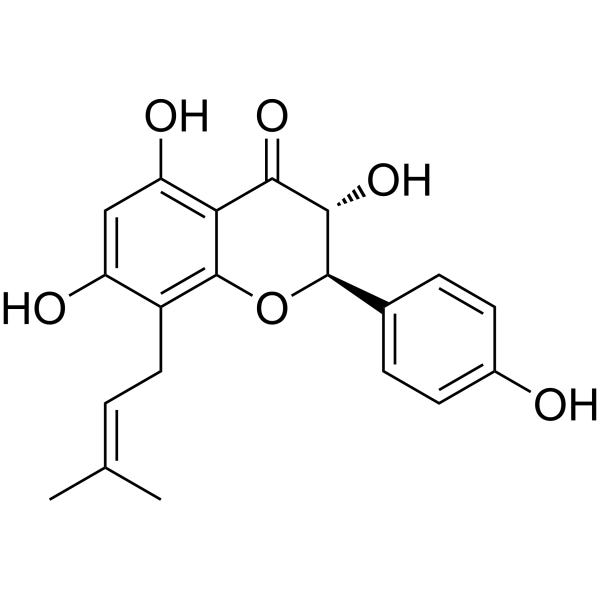
    6-Methoxymellein, a phytoalexin, is a NF-κB inhibitor. 6-Methoxymellein reduces nuclear localization and DNA binding activity of NF-κB p65 and p50 subunits. 6-Methoxymellein decreases mRNA transcription and secretion of IL-6 and IL-8. 6-Methoxymellein reduces the proportion of CD44 +/CD24 breast cancer cells, decreases expression of c-Myc, Sox-2 and Oct4, inhibits proliferation and migration of breast cancer cells, and reduces mammosphere growth. 6-Methoxymellein inhibits fungal growth of Trichophyton rubrum and Botrytis cinerea, and inhibits Trichophyton rubrum biofilm formation via hyphal disintegration. 6-Methoxymellein can be used for the research of breast cancer, tinea corporis, and carrot post-harvest storage rot .
    6-Methoxymellein

Inquiry Online

Your information is safe with us. * Required Fields.

Salutation


Country or Region *

Applicant Name *


Organization Name *

Department *


Email Address *


Product Name *

Cat. No.


Requested quantity *

Phone Number *


Remarks

Inquiry Online

Inquiry Information

Product Name:
Cat. No.:
Quantity:
MCE Japan Authorized Agent:

