


1. Search Result
Search Result
Results for "

truncated peptide

" in MedChemExpress (MCE) Product Catalog:

21

Inhibitors & Agonists

19

Peptides

Cat. No. Product Name Target Research Areas Chemical Structure
  • HY-161111

    Ser/Thr Kinase Cancer
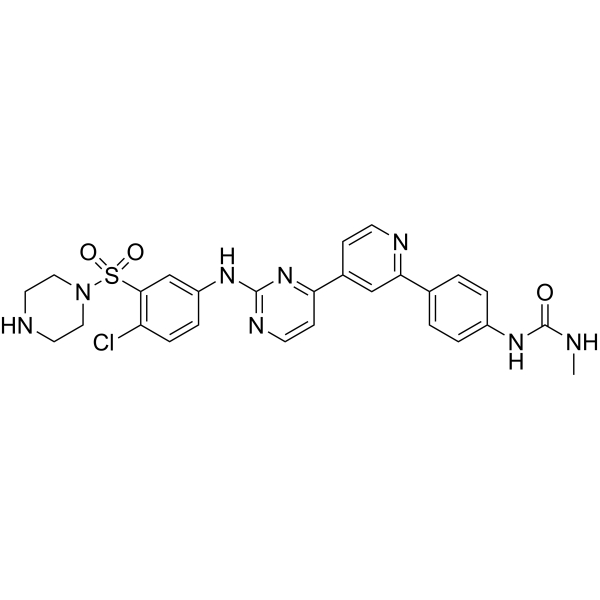
    KVS0001 is a selective SMG1 inhibitor. KVS0001 elevates the expression of transcripts and proteins resulting from truncating mutations. KVS0001 increased the presentation of immune-targetable HLA class I-associated peptides from nonsense-mediated decay (NMD)-downregulated proteins on the surface of cancer cells. KVS0001 exerts anti-tumor properties and can be studied in research for NMD-related diseases, including cancer and inherited diseases .
    KVS0001
  • HY-P1471
    Adrenomedullin (AM) (22-52), human
    4 Publications Verification

    22-52-Adrenomedullin (human)

    CGRP Receptor Cardiovascular Disease
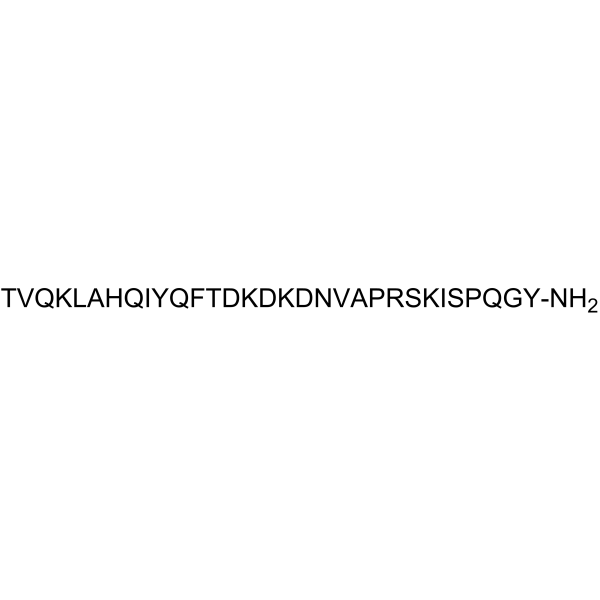
    Adrenomedullin (AM) (22-52), human, an NH2 terminal truncated adrenomedullin analogue, is an adrenomedullin receptor antagonist, and also antagonizes the calcitonin generelated peptide (CGRP) receptor in the hindlimb vascular bed of the cat .
    Adrenomedullin (AM) (22-52), human
  • HY-P1484

    Bradykinin Fragment 1-​7

    Bradykinin Receptor Cardiovascular Disease Endocrinology
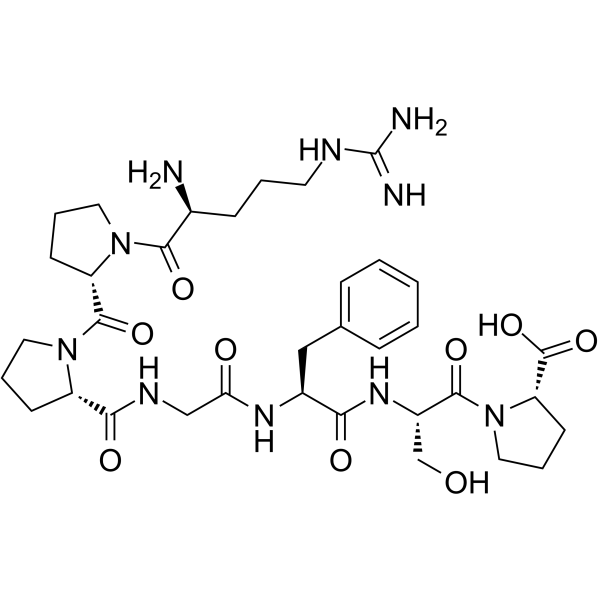
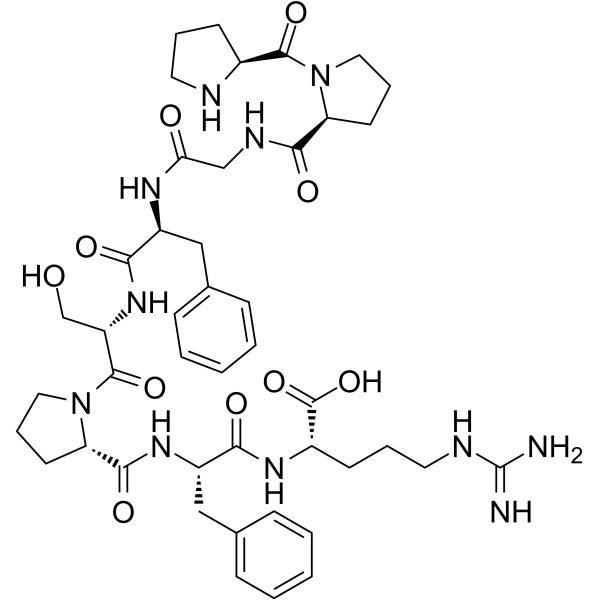
    Bradykinin (1-7) is an amino-truncated Bradykinin peptide. Bradykinin (1-7) is a metabolite of Bradykinin, cleaved by endopeptidase.
    Bradykinin (1-7)
  • HY-107024

    OGP(10-14); Historphin

    Src Others
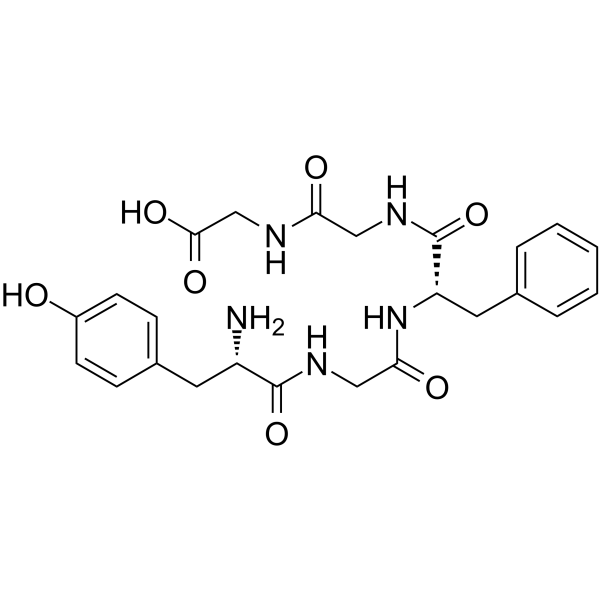
    Osteogenic Growth Peptide (10-14) (OGP(10-14)), the C-terminal truncated pentapeptide of osteogenic growth peptide (OGP), retains the full OGP-like activity. Osteogenic Growth Peptide (10-14) is responsible for the binding to the OGP receptor and activates an intracellular Gi-protein-MAP kinase signaling pathway. Osteogenic Growth Peptide (10-14) is a potent mitogen and stimulator of osteogenesis and hematopoiesis. Osteogenic Growth Peptide (10-14) acts as a Src inhibitor .
    Osteogenic Growth Peptide (10-14)
  • HY-P1651
    SOR-C13
    1 Publications Verification

    TRP Channel Cancer
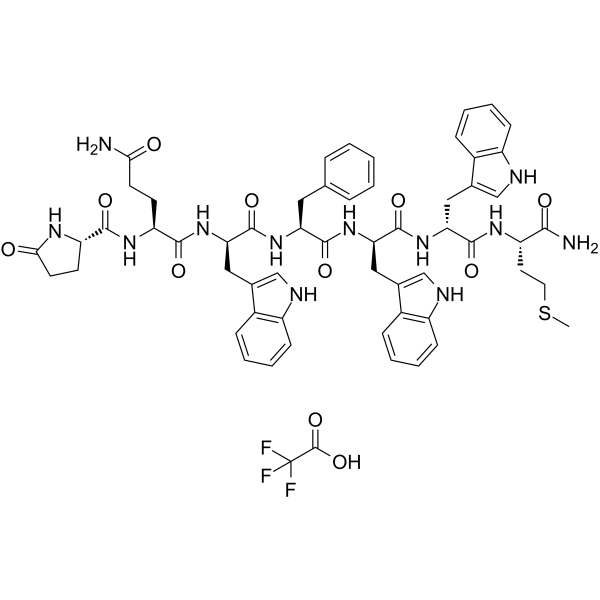
    SOR-C13, a carboxy-terminal truncated peptide, is a high-affinity TRPV6 antagonist with an IC50 value of 14 nM. TRPV6 is a non-voltage gated calcium channel that is associated with malignancy and poor prognosis in breast cancer. SOR-C13 has anticancer activity .
    SOR-C13
  • HY-P1469

    Bradykinin Receptor Cardiovascular Disease Endocrinology
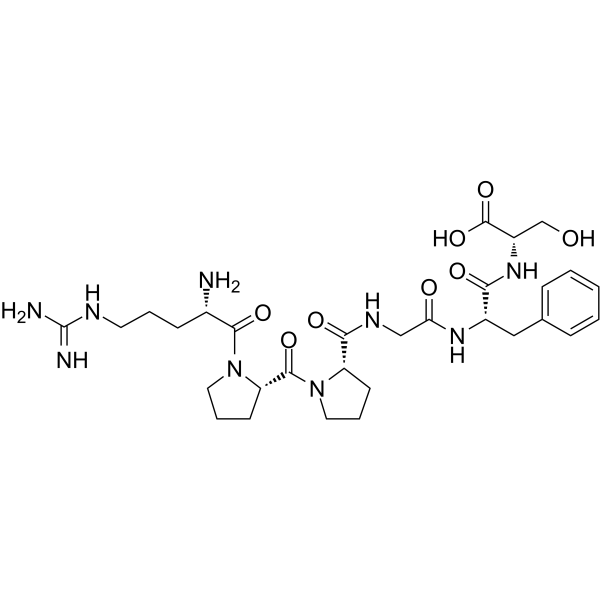
    Bradykinin (1-6) is an amino-truncated Bradykinin peptide. Bradykinin (1-6) is a stable metabolite of Bradykinin, cleaved by carboxypeptidase Y (CPY).
    Bradykinin (1-6)
  • HY-P5107

    LMWP; TDSP5

    VEGFR Cancer
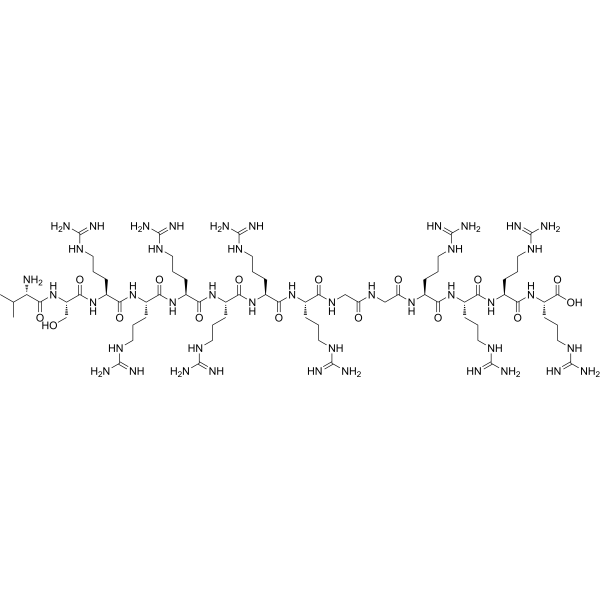
    Low molecular weight protamine (LMWP;TDSP5) is a truncated arginine-rich protamine peptide, as well as a heparin/low-molecular-weight heparin antidote and a cell-penetrating delivery carrier. Low molecular weight protamine neutralizes heparin-induced anticoagulant activities, including aPTT, anti-Xa and anti-IIa activities, and also neutralizes anti-Xa activity of commercially available low-molecular-weight heparin preparations. Low molecular weight protamine translocates across mammalian cell membranes, delivers conjugated impermeable molecules across tumor tissues, enhances skin permeability of conjugated epidermal growth factor, and accelerates wound healing when conjugated with epidermal growth factor. Low molecular weight protamine retains the in vitro cell proliferation activity of conjugated EGF, and also enables site-specific conjugation with peptides or proteins via genetic recombination. Low molecular weight protamine can be used in studies related to colon adenocarcinoma, skin wounds and diabetic skin wounds .
    Low molecular weight protamine
  • HY-P1651A
    SOR-C13 TFA
    1 Publications Verification

    TRP Channel Cancer
    SOR-C13 TFA, a carboxy-terminal truncated peptide, is a high-affinity TRPV6 antagonist with an IC50 value of 14 nM. TRPV6 is a non-voltage gated calcium channel that is associated with malignancy and poor prognosis in breast cancer. SOR-C13 TFA has anticancer activity .
    SOR-C13 TFA
  • HY-P3968

    CD47 Others
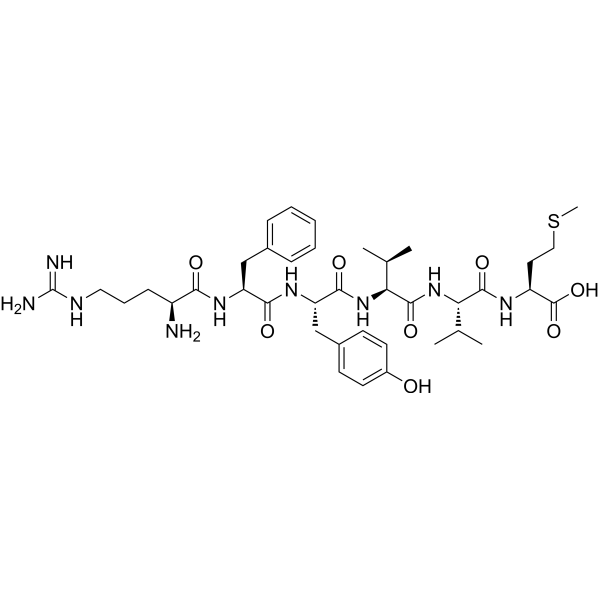
    Thrombospondin-1 (1016-1021) (human, bovine, mouse), a Thrombospondin-1-derived peptide, is a truncated peptide devoid of CD47-binding activity .
    Thrombospondin-1 (1016-1021) (human, bovine, mouse)
  • HY-P1490

    Des-Arg1-bradykinin

    Bradykinin Receptor Cardiovascular Disease Endocrinology
    Bradykinin (2-9) is an amino-truncated Bradykinin peptide. Bradykinin (2-9) is a metabolite of Bradykinin, cleaved by Aminopeptidase P.
    Bradykinin (2-9)
  • HY-P3539

    GCGR Neurological Disease Endocrinology
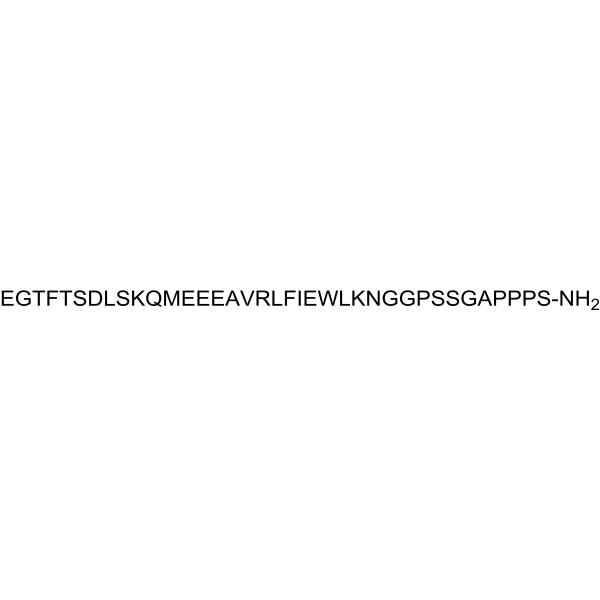
    Exendin-4 (3-39) is a peptide. Exendin-4 (3-39) is a truncated form of Exendin-4 (HY-13443) that lacks the first two amino acids. Exendin-4 is a potent Glucagon-like peptide-1 receptor (GLP-1r) agonist. Exendin-4 (3-39) and Exendin-4 can be used for the research of diabetic and hypothalamic-pituitary-adrenal (HPA) axis .
    Exendin-4 (3-39)
  • HY-W198345

    Dipeptidyl Peptidase Metabolic Disease
    Val-Pyrrolidide hydrochloride (compound 9) is a DPIV inhibitor. Val-Pyrrolidide hydrochloride can prevent N-terminal truncation of the peptide Gln3-Aβ(1–11) [1] .
    Val-Pyrrolidide hydrochloride
  • HY-P5446

    Bacterial Others
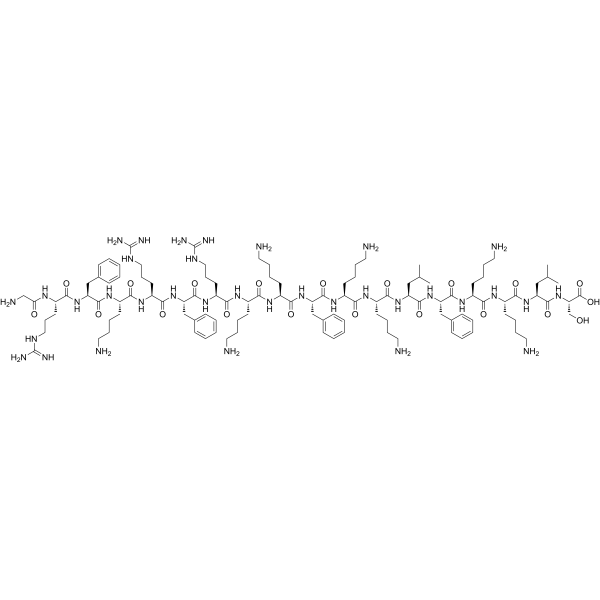
    BMAP-18 is a biological active peptide. (BMAP-18 is a truncated form of the antimicrobial peptide BMAP-27. Bovine myeloid antimicrobial peptide-27 (BMAP-27) belongs to the Cathelicidin family of peptides which displays rapid bactericidal activity against Staphylococcus aureus, Streptococcus uberis, and Escherichia coli. BMAP-27 is cytotoxic to human erythrocytes and neutrophils, although at higher than microbicidal concentrations. BMAP-18 displays much higher cell selectivity as compared to parental BMAP-27 because of its decreased hemolytic activity and retained antimicrobial activity.)
    BMAP-18
  • HY-P5107A

    LMWP acetate; TDSP5 acetate

    VEGFR Cancer
    Low molecular weight protamine acetate (LMWP acetate;TDSP5 acetate) is a truncated arginine-rich protamine peptide, which also acts as an antidote for heparin/low molecular weight heparin and a cell-penetrating delivery vector. Low molecular weight protamine acetate neutralizes heparin-induced anticoagulant activities, including aPTT, anti-Xa and anti-IIa activities. Low molecular weight protamine acetate translocates across mammalian cell membranes, delivers conjugated impermeable molecules through tumor tissues, enhances the skin permeability of conjugated epidermal growth factor, and accelerates wound healing when conjugated with epidermal growth factor. Low molecular weight protamine acetate retains the in vitro cell proliferation activity of conjugated EGF, and also enables site-specific conjugation with peptides or proteins via genetic recombination. Low molecular weight protamine acetate can be used in studies related to colon cancer, skin wounds and diabetic skin wounds .
    Low molecular weight protamine acetate
  • HY-P5637

    Bacterial Infection
    Tur1A is an antimicrobial peptide derived from bottlenose dolphins Tursiops truncates. Tur1A inhibits bacterial protein synthesis by binding to ribosomes and blocking the transition from the initiation stage to the extension stage .
    Tur1A
  • HY-P1459

    Bacterial Infection
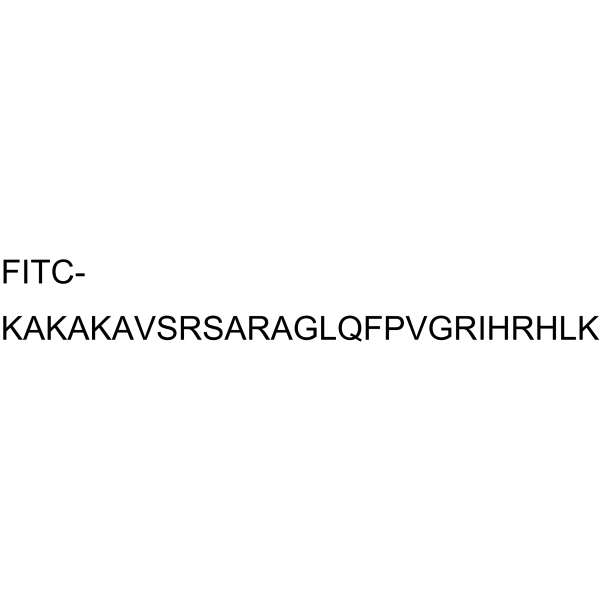
    Sphistin Synthetic Peptide (12-38, Fitc in N-Terminal-Fluorescently Labeled Peptide) is a truncated fragments of Sphistin Synthetic Peptide that shows potent antimicrobial activity.
    Sphistin Synthetic Peptide(12-38,Fitc in N-Terminal-Fluorescently Labeled Peptide)
  • HY-P1497

    Bradykinin Receptor Cardiovascular Disease Endocrinology
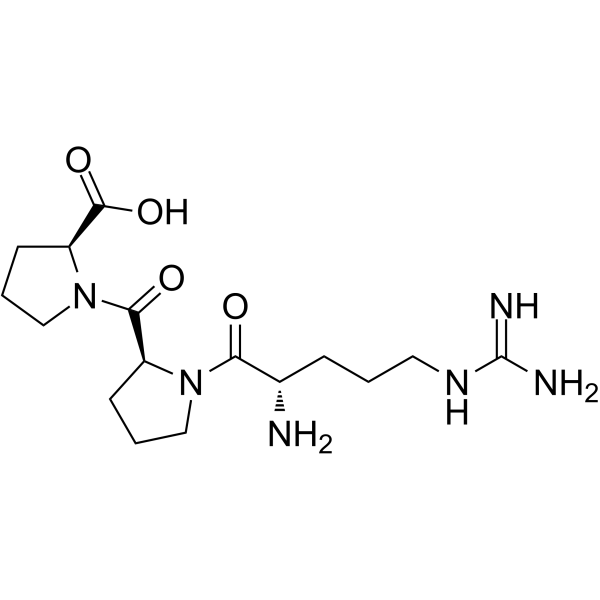
    Bradykinin (1-3) is a 3-amino acid residue peptide. Bradykinin (1-3) is an amino-truncated Bradykinin peptide, cleaved by Prolyl endopeptidase.
    Bradykinin (1-3)
  • HY-P1341A

    Orexin A (17-33) (human, mouse, rat, bovine) TFA

    Orexin Receptor (OX Receptor) Neurological Disease
    OXA(17-33) TFA is a potent and selective orexin-1 receptor (OX1) agonist. OXA(17-33) TFA shows a ∼23-fold selectivity for the OX1 (EC50=8.29 nM) over OX2 (187 nM) .
    OXA(17-33) TFA
  • HY-P1376A
    G-Protein antagonist peptide TFA
    1 Publications Verification

    mAChR Adrenergic Receptor Endocrinology
    G-Protein antagonist peptide TFA is a truncated substance P-related peptide, competes with receptor for G protein binding. G-Protein antagonist peptide TFA inhibits the activation of Gi or Go by M2 muscarinic cholinergic receptor (M2 mAChR) or of Gs by beta-adrenergic receptor in the reconstituted phospholipid vesicles, assayed by receptor-promoted GTP hydrolysis .
    G-Protein antagonist peptide TFA
  • HY-P1471A

    22-52-Adrenomedullin (human) TFA

    CGRP Receptor Cardiovascular Disease
    Adrenomedullin (AM) (22-52), human (22-52-Adrenomedullin human) TFA, an NH2 terminal truncated adrenomedullin analogue, is an adrenomedullin receptor antagonist. Adrenomedullin (AM) (22-52), human also antagonizes the calcitonin generelated peptide (CGRP) receptor in the hindlimb vascular bed of the cat .
    Adrenomedullin (AM) (22-52), human TFA
  • HY-P5484

    Bacterial Others
    SMAP-18 is a biological active peptide. (SMAP-18 is a 18-amino acid residue peptide amide which is a truncated form of SMAP-29. Sheep myeloid antimicrobial peptide-29 (SMAP-29) displays extremely high antimicrobial activity against Pseudomonas strains, other Gram-negative bacteria, and multidrug-resistant pathogens. SMAP-18 displays much higher cell selectivity as compared to parental SMAP-29 because of its decreased hemolytic activity and retained antimicrobial activity.)
    SMAP-18

Inquiry Online

Your information is safe with us. * Required Fields.

Salutation


Country or Region *

Applicant Name *


Organization Name *

Department *


Email Address *


Product Name *

Cat. No.


Requested quantity *

Phone Number *


Remarks

Inquiry Online

Inquiry Information

Product Name:
Cat. No.:
Quantity:
MCE Japan Authorized Agent:

