
28 Results for "

tubulin networks

" in MedChemExpress (MCE) Product Catalog:
Products (28)

28 Results for "tubulin networks" in MCE Product Catalog:

3
3 Cited Publications
Cat. No.: HY-P99151
CAS No.: 2088770-90-3
Synonyms: CAC-10

Research Areas:  

Cancer

Brentuximab (CAC-10) is a chimeric antibody targeting CD30. Brentuximab is conjugated with Monomethyl auristatin E (MMAE) (HY-15162) to form the antibody-drug conjugate Brentuximab vedotin (HY-P99107A). Brentuximab can be used for the research of cancer, such as lymphoma .
loading...
    loading...
1
1 Cited Publications
Cat. No.: HY-156675A
Purity:  99.34%
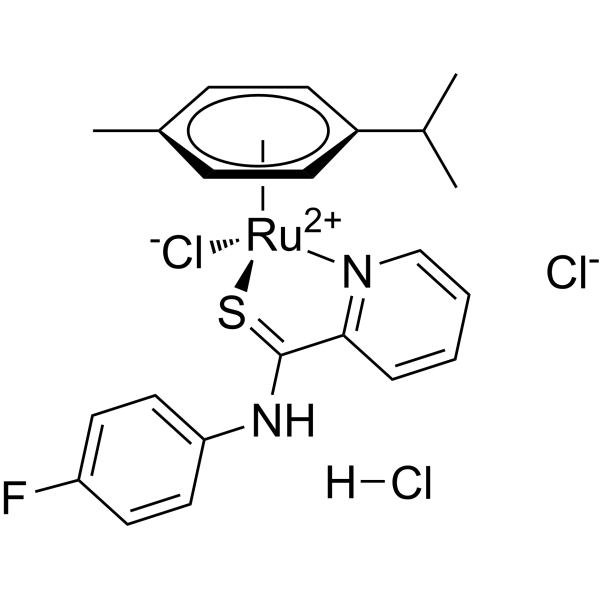
Plecstatin-1 hydrochloride is a metal complex that drives the aggregation and collapse of the plectin network, and disrupts the cytoskeletal structures of α‑tubulin and F‑actin. Plecstatin-1 hydrochloride triggers oxidative stress, mediates the phosphorylation of eIF2α, and induces molecular features associated with immunogenic cell death, including calreticulin membrane exposure, membrane localization of HSP70/HSP90, ATP secretion, and HMGB‑1 release. Plecstatin-1 hydrochloride induces apoptosis via the intrinsic mitochondrial pathway and exerts anti-invasive activity. Plecstatin-1 hydrochloride inhibits sphere proliferation and reduces clonogenicity in the 3D tumor spheroid model of colon cancer cells. Plecstatin-1 hydrochloride is applicable to relevant research on colorectal cancer .
loading...
    loading...
Cat. No.: HY-156675
CAS No.: 2119725-22-1
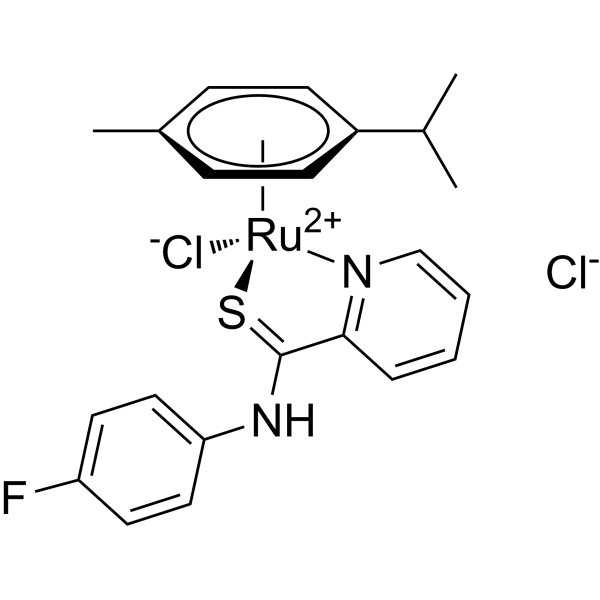
Plecstatin‑1 is a metal complex that drives the aggregation and collapse of the plectin network, and disrupts the cytoskeletal structures of α‑tubulin and F‑actin. Plecstatin-1 triggers oxidative stress, mediates the phosphorylation of eIF2α, and induces molecular features associated with immunogenic cell death, including calreticulin membrane exposure, membrane localization of HSP70/HSP90, ATP secretion, and HMGB‑1 release. Plecstatin-1 induces apoptosis via the intrinsic mitochondrial pathway and exerts anti-invasive activity. Plecstatin‑1 inhibits sphere proliferation and reduces clonogenicity in the 3D tumor spheroid model of colon cancer cells. Plecstatin-1 is applicable to relevant research on colorectal cancer .
loading...
    loading...
Cat. No.: HY-175555
Research Areas:  

Cancer

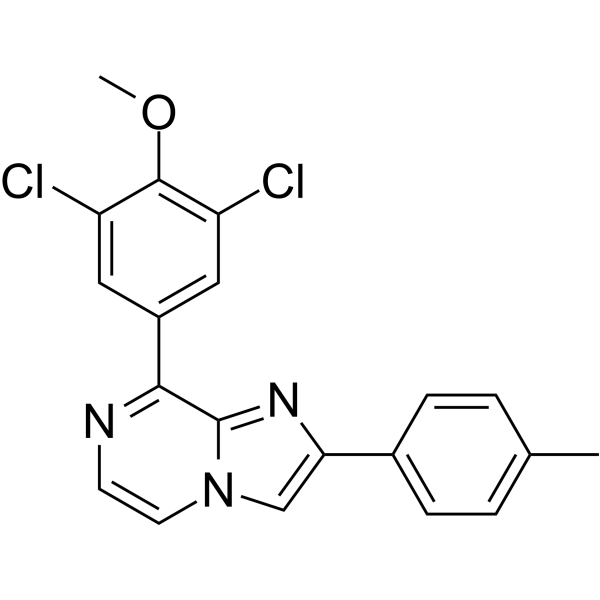
Tubulin-IN-54 is a tubulin inhibitor. Tubulin-IN-54 exhibits anti-proliferative activity against various cancer cells. Tubulin-IN-54 inhibits tubulin polymerization, disrupts microtubule networks, induces G2/M cell cycle arrest, and promotes cancer cell apoptosis. Tubulin-IN-54 demonstrates significant anti-tumor efficacy in mice bearing PC-3/TxR xenografts. Tubulin-IN-54 can be used for the study of taxane-resistant cancers (prostate cancer, melanoma) .
loading...
    loading...
Cat. No.: HY-176283
Tubulin/LSD1-IN-1 is an effective dual inhibitor of Tubulin polymerization and LSD1 (IC50 = 1.72 μM). Tubulin/LSD1-IN-1 has broad-spectrum antiproliferative activity against cancer cell lines. Tubulin/LSD1-IN-1 inhibits tubulin polymerization by targeting colchicine binding sites, thereby disrupting the microtubule network in gastric cancer cells. Tubulin/LSD1-IN-1 increases the methylation levels of H3K4me1/2 and H3K9me2/3, thereby achieving epigenetic regulation. Tubulin/LSD1-IN-1 induces G2/M arrest, promotes apoptosis, and effectively inhibits colony formation of gastric cancer cells .
loading...
    loading...
Cat. No.: HY-155963
CAS No.: 2982893-22-9
Target:  

Microtubule/Tubulin

Research Areas:  

Cancer

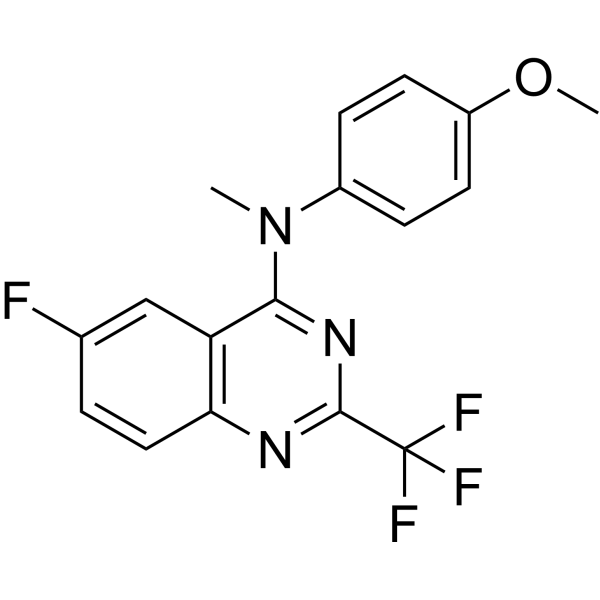
Tubulin polymerization-IN-48 (Compound 4k) is a tubulin polymerization inhibitor. Tubulin polymerization-IN-48 has a moderate effect on disruption of the microtubule network. Tubulin polymerization-IN-48 inhibits neuroblastoma cancer cell proliferation, with IC50s of 79 and 165 nM for Chp-134 and Kelly cell line .
loading...
    loading...
Cat. No.: HY-149363
CAS No.: 2773345-90-5
Purity:  99.60%
Research Areas:  

Cancer

Tubulin polymerization-IN-43 (compound 15h) is a tubulin polymerization inhibitor. Tubulin polymerization-IN-43 disrupts cellular microtubule networks by targeting the Colchicine (HY-16569) site, and promots cell cycle arrest of leukemia cells at G2/M phase and cell apoptosis, as well as inhibiting angiogenesis .
loading...
    loading...
Cat. No.: HY-175512
Tubulin-IN-53 is a potent Tubulin inhibitor with an IC50 of 6.06 μM. Tubulin-IN-53 inhibits the polymerization of tubulin by targeting the colchicine binding site of tubulin and destroys the microtubule network. Tubulin-IN-53 induces MCF-7 cell cycle arrest in the G2/M phase and apoptosis, and inhibits cell migration accompanied by the decrease of mitochondrial membrane potential and increase the accumulation of ROS. Tubulin-IN-53 destroys the angiogenesis of human umbilical vein endothelial cells.Tubulin-IN-53 can used for the study of cancers such as breast cancer and lung cancer .
loading...
    loading...
Cat. No.: HY-163983
CAS No.: 2924156-96-5
Research Areas:  

Cancer

Tubulin polymerization-IN-68 (compound 32) is a tubulin inhibitor that can inhibit tubulin polymerization and destroy the cellular microtubule network. Tubulin polymerization-IN-68 can upregulate the expression of PARP-1 and caspase-3 and induce cell apoptosis, and has anticancer activity. Tubulin polymerization-IN-68 can effectively inhibit HepG2 (IC50=93 nM) and significantly inhibit the growth of HepG2 xenograft tumors in nude mice by oral administration .
loading...
    loading...
Cat. No.: HY-155196
CAS No.: 2922929-62-0
Target:  

Estrogen Receptor/ERR

Research Areas:  

Cancer

ER degrader 6 (compound 35s) is a potent Estrogen Receptor (ER)α degrader. ER degrader 6 disrupts the microtubule network by restraining tubulin polymerization. ER degrader 6 suppresses tumor growth without noticeable poisonousness .
loading...
    loading...
Cat. No.: HY-176171
Research Areas:  

Cancer

Tubulin polymerization-IN-79 (Compound C20) is a tubulin polymerization inhibitor. Tubulin polymerization-IN-79 shows potent antiproliferative activity against esophageal cancer cells (e.g., KYSE450, IC50=0.36 μM; EC-109, IC50=0.63 μM). Tubulin polymerization-IN-79 occupies the colchicine binding site to disrupt microtubule network integrity, activating the Hippo signaling pathway, downregulating the oncogenic protein YAP expression, and inducing G2/M phase arrest and apoptosis in esophageal cancer cells. Tubulin polymerization-IN-79 is promising for research of esophageal cancers .
loading...
    loading...
Cat. No.: HY-155197
CAS No.: 2922929-63-1
Research Areas:  

Cancer

ER degrader 7 is an estrogen receptor α (ERα) degrader and a tubulin (tubulin) inhibitor. ER degrader 7 inhibits the cell viability of various cancer cell lines. ER degrader 7 disrupts the microtubule network in breast cancer cells, induces G2/M phase cell cycle arrest, and exhibits concentration-dependent accumulation in Tamoxifen-resistant LCC2 cells. ER degrader 7 suppresses tumor growth in vivo without causing body weight loss. ER degrader 7 can be applied in studies related to breast cancer .
loading...
    loading...
Cat. No.: HY-182753
CAS No.: 3110538-32-1
Tubulin-IN-66 is a tubulin (tubulin) and P-gp inhibitor with antiproliferative activity against cancer cells. Tubulin-IN-66 covalently binds to the Colchicine (HY-16569)-binding site at Cys239 of the β-tubulin subunit, inhibits tubulin polymerization and disrupts the microtubule network. Tubulin-IN-66 inhibits P-gp function to overcome multidrug resistance. Tubulin-IN-66 arrests the cell cycle at the G2/M phase and induces apoptosis (apoptosis). Tubulin-IN-66 inhibits colony formation and migration of cancer cells. Tubulin-IN-66 can be used in the research of tumors such as breast cancer .
loading...
    loading...
Cat. No.: HY-117587
CAS No.: 1351592-10-3
Target:  

Microtubule/Tubulin

Research Areas:  

Cardiovascular Disease Cancer

EHT-6706 free base is a tubulin inhibitor with an IC50 value of 1 μM against porcine tubulin. EHT-6706 free base binds to the colchicine-binding site on tubulin to inhibit tubulin polymerization and disrupt the cellular microtubule network. EHT-6706 free base acts as an antiproliferative, vascular-disrupting, permeability-modulating, migration-inhibiting and antiangiogenic agent. EHT-6706 free base exhibits inhibitory activity against human tumor cells. EHT-6706 free base can be used in cancer and angiogenesis research .
loading...
    loading...
Cat. No.: HY-184760
CAS No.: 3022872-60-9
Tubulin polymerization-IN-93 is a β-tubulin polymerization inhibitor. Tubulin polymerization-IN-93 disrupts the microtubule network structure. Tubulin polymerization-IN-93 activates the spindle assembly checkpoint and promotes Mitotic catastrophe. Tubulin polymerization-IN-93 activates the mitochondrial Apoptotic pathway. Tubulin polymerization-IN-93 exhibits anticancer activity against acute myeloid leukemia .
loading...
    loading...
Cat. No.: HY-169882
CAS No.: 1023875-75-3
Target:  

Microtubule/Tubulin

Research Areas:  

Cancer

Tubulin inhibitor 49 (Compound 18) is an inhibitor for tubulin polymerization with an IC50 of 48 μM. Tubulin inhibitor 49 disrupts the cell microtubule network, arrests the cell cycle at G2 phase, and exhibits cytotoxicity (IC50=8.8 μM in HeLa cell). Tubulin inhibitor 49 can be used in the research of cervical cancer .
loading...
    loading...
Cat. No.: HY-169882A
Target:  

Microtubule/Tubulin

Research Areas:  

Cancer

Tubulin inhibitor 49 (Compound 18) hydrobromide is an inhibitor for tubulin polymerization with an IC50 of 48 μM. Tubulin inhibitor 49 hydrobromide disrupts the cell microtubule network, arrests the cell cycle at G2 phase, and exhibits cytotoxicity (IC50=8.8 μM in HeLa cell). Tubulin inhibitor 49 hydrobromide can be used in the research of cervical cancer .
loading...
    loading...
Cat. No.: HY-180159
Research Areas:  

Cancer

Tubulin-IN-63 is a potent tubulin polymerization inhibitor targeting the colchicine-binding site, with an IC50 of 6.03 µM. Tubulin-IN-63 disrupts microtubule dynamics, induces G2/M arrest and apoptosis, thereby suppressing cancer cell proliferation. Tubulin-IN-63 disrupts capillary network formation in human umbilical vein endothelial cells (HUVECs) and exhibits in vivo antitumor efficacy in a B16-F10 mouse model. Tubulin-IN-63 can be used for the research of cancers, such as melanoma, lung cancer, and liver cancer .
loading...
    loading...
Cat. No.: HY-170924
Research Areas:  

Cancer

Tubulin polymerization-IN-76 (compound 20b) is a potent and orally active Tubulin polymerization inhibitor. Tubulin polymerization-IN-76 inhibits Tubulin polymerization with an IC50 of 2.505 μM by acting on the colchicine binding site, thereby disrupting intracellular Microtubule networks and interfering with cell mitosis. Tubulin polymerization-IN-76 demonstrates exceptional efficacy against MGC-803 and HGC-27 cells with IC50s of 1.61 and 1.82 nM, respectively. Tubulin polymerization-IN-76 effectively inhibits the colony formation and cell migration activities, and induces G2/M phase cycle arrest and Apoptosis in MGC-803 and HGC-27 cells.Tubulin polymerization-IN-76 shows a broad-spectrum antiproliferative activity .
loading...
    loading...
Cat. No.: HY-119126
CAS No.: 932331-38-9
Target:  

Microtubule/Tubulin

Research Areas:  

Cancer

PK-3 is a cancer cell growth inhibitor with microtubule-binding activity. PK-3 binds to tubulin, disrupts the intracellular microtubule network required for mitosis, and induces cell death. PK-3 can be used in research related to chronic myeloid leukemia .
loading...
    loading...

