
32 Results for "

vivo tumor imaging

" in MedChemExpress (MCE) Product Catalog:
Products (32)

32 Results for "vivo tumor imaging" in MCE Product Catalog:

7
7 Publications Verification
Cat. No.: HY-D1063
CAS No.: 207399-07-3
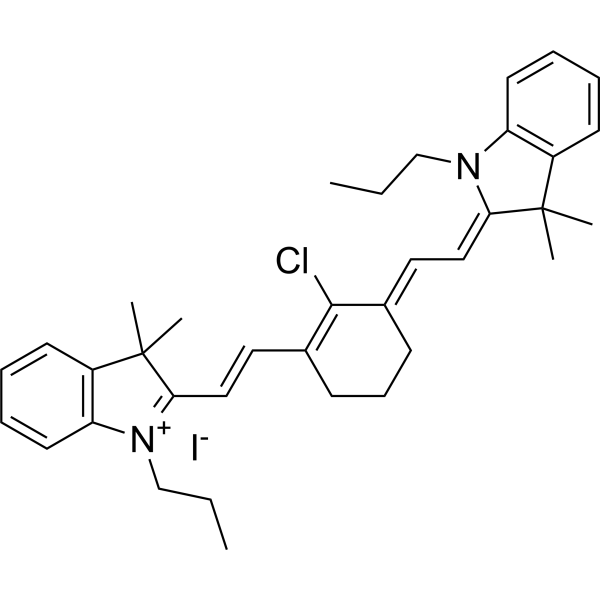
IR-780 is a near-infrared fluorescent probe for in vivo imaging of tumor cells. IR-780 is transported into tumor cells via OATPs and ABCB10, with uptake dependent on glycolytic activity and plasma membrane potential. IR-780 preferentially accumulates in tumor cell mitochondria, including those of drug-resistant cancer cells, without chemical conjugation. IR-780 generates reactive oxygen species (ROS), induces hyperthermia and apoptosis, inhibits tumor growth and recurrence, and modulates HSP70 expression upon ultrasound or 808 nm laser exposure. IR-780 acts as a sonosensitizer, photodynamic and photothermal agent, and drug delivery carrier, with low acute imaging-dose toxicity and rapid vital organ clearance. IR-780 can be used for the research of cancer, such as breast cancer, lung cancer, and non-small cell lung cancer (NSCLC) .
loading...
    loading...
1
1 Cited Publications
Cat. No.: HY-D1464
CAS No.: 1622250-38-7
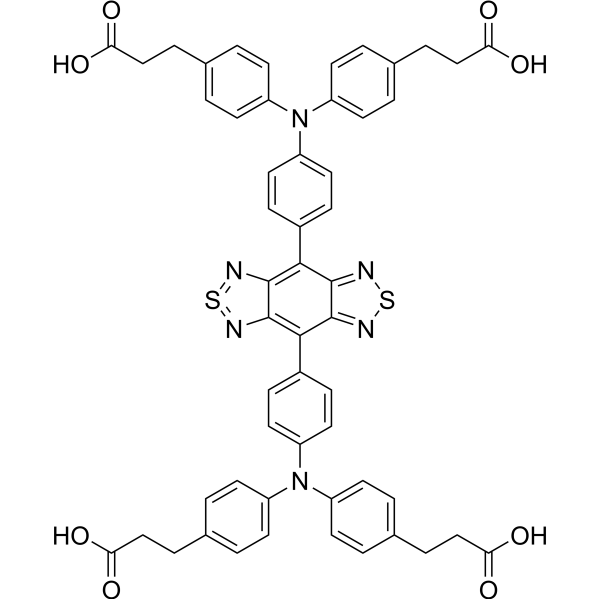
CH1055 is a near-infrared II (NIR-II) fluorescent dye that can be used as a fluorescent probe for in vivo imaging. CH1055 can be conjugated with antibodies or ligands for specific imaging (for example the tumor imaging) .
loading...
    loading...
1
1 Cited Publications
Cat. No.: HY-D1719
CAS No.: 95837-47-1
Target:  

Fluorescent Dye

Research Areas:  

Others

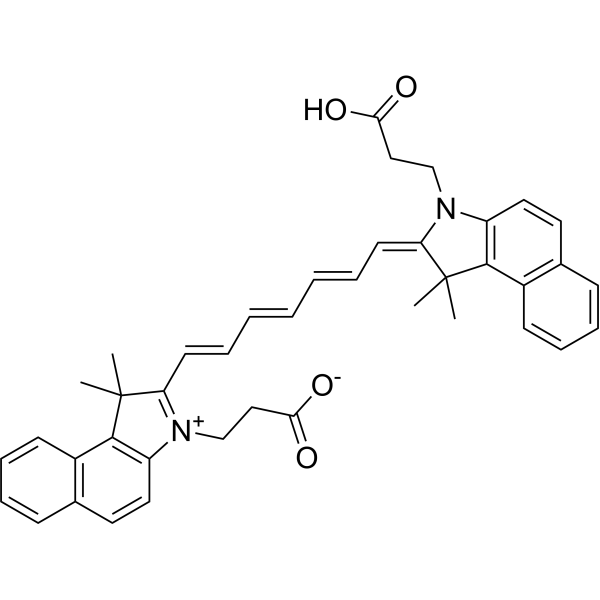
Cypate, a cyanine dye, is a near infrared (NIR) fluorescent probe for in vivo tumor imaging .
loading...
    loading...
1
1 Cited Publications
Cat. No.: HY-122607
CAS No.: 958233-07-3
Purity:  99.86%
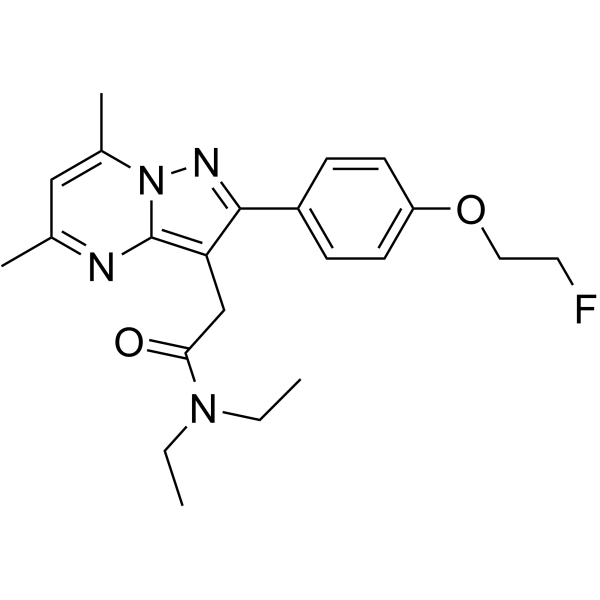
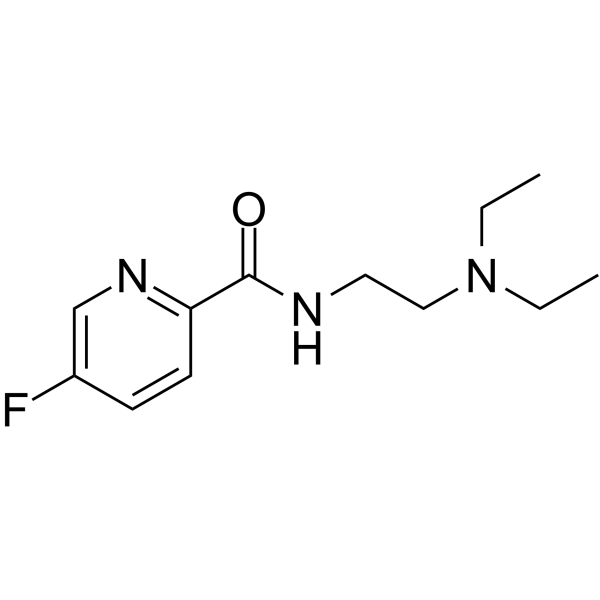
DPA-714 is a high affinity translocator protein (TSPO) ligand (Ki=7 nM), which is designed with a fluorine atom in its structure, allowing labelling with fluorine -18 and in vivo imaging using positron emission tomography. 18FDPA-714 successfully evaluates for the specific imaging of inflammation in various models of neuroinflammation and in a brain tumor model .
loading...
    loading...
1
1 Cited Publications
Cat. No.: HY-D1464A
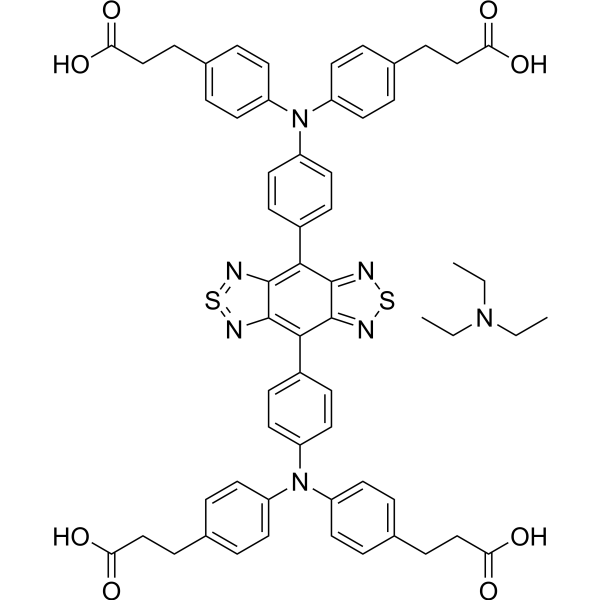
CH1055 triethylamine is a near-infrared II (NIR-II) fluorescent dye that can be used as a fluorescent probe for in vivo imaging. CH1055 triethylamine can be conjugated with antibodies or ligands for specific imaging (for example the tumor imaging) .
loading...
    loading...
Cat. No.: HY-W440911
Research Areas:  

Cancer

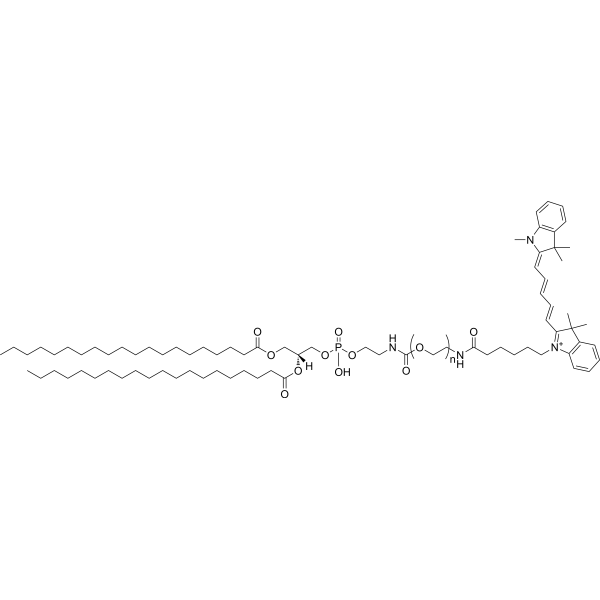
DSPE-PEG2000-Cy5 is a Cy5 (HY-D0821) fluorophore-labeled conjugate of distearoylphosphatidylethanolamine and polyethylene glycol, as well as a liposome component. The Cy5 fluorophore is commonly used for labeling proteins and nucleic acids in imaging, flow cytometry and genomic applications. DSPE-PEG2000-Cy5 supports cell membrane modification, in vivo tumor targeting research and long-term in vivo circulation of its liposomal formulations (Ex/Em=633/670 nm) .
loading...
    loading...
Cat. No.: HY-P991577
Synonyms: DS-8895A

Target:  

Ephrin Receptor

Research Areas:  

Cancer

DS-8895(DS-8895A) is an anti-EphA2 monoclonal antibody with specific binding to EphA2 receptors and EphA2-expressing cells. DS-8895, when conjugated with 89Zr, 111In, or 125I, supports molecular imaging of EphA2 expression in xenograft models. DS-8895 allows noninvasive measurement of EphA2 expresssion in tumors in vivo. .
loading...
    loading...
Cat. No.: HY-P991319

Target:  

Inhibitory Antibodies

Research Areas:  

Cancer

TAB-004 is a murine IgG1 monoclonal antibody that specifically binds to the tumor-associated hypoglycosylated mucin 1 (tMUC1), with high selectivity for human tMUC1. TAB-004 can be conjugated with Indocyanine green (ICG) (HY-D0711) for in vivo targeted imaging. TAB-004 can be used for the research of early detection, tumor progression monitoring and cancer stem cell targeting in breast cancer and pancreatic cancer.
loading...
    loading...
Cat. No.: HY-D2062
CAS No.: 1448146-89-1
ATTO 740 NHS ester is a near-infrared fluorescent dye and a multimodal fluorescence/photoacoustic contrast agent with excellent near-infrared emission properties and extremely high photostability. The photoacoustic signal of ATTO 740 NHS ester shows no significant decrease after continuous irradiation with a 750 nm laser for 30 min, making it suitable for in vivo fluorescence imaging and photoacoustic contrast imaging. When conjugated with the cystine knot peptide R01, ATTO 740 NHS ester enables precise detection of integrin αvβ6-positive cells and tumors in nude mouse xenograft models .
loading...
    loading...
Cat. No.: HY-W440913
Research Areas:  

Cancer

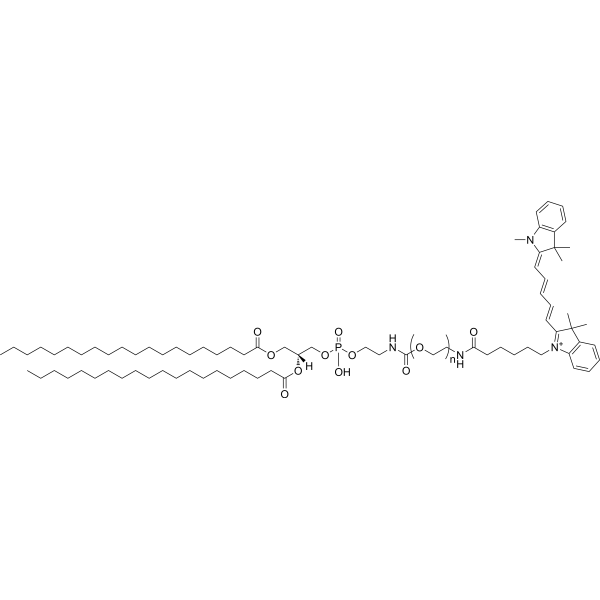
DSPE-PEG5000-Cy5 is a fluorescently labeled PEGylated phospholipid. After intravenous injection, DSPE-PEG5000-Cy5 shows only extremely low fluorescence accumulation at tumor sites in orthotopic tumor-bearing mice, and can be used as a negative control for evaluating tumor accumulation of nanoparticles. DSPE-PEG5000-Cy5 can serve as a fluorescent marker to prepare Cy5-labeled NPs-DPPA and NPs-DPPA (C3F8) for pharmacokinetic and biodistribution studies in mice. DSPE-PEG5000-Cy5 is widely applicable to research in fields related to triple-negative breast cancer, hepatocellular carcinoma and so on .
loading...
    loading...
Cat. No.: HY-149298
CAS No.: 2946600-14-0
Target:  

PSMA

Research Areas:  

Cancer

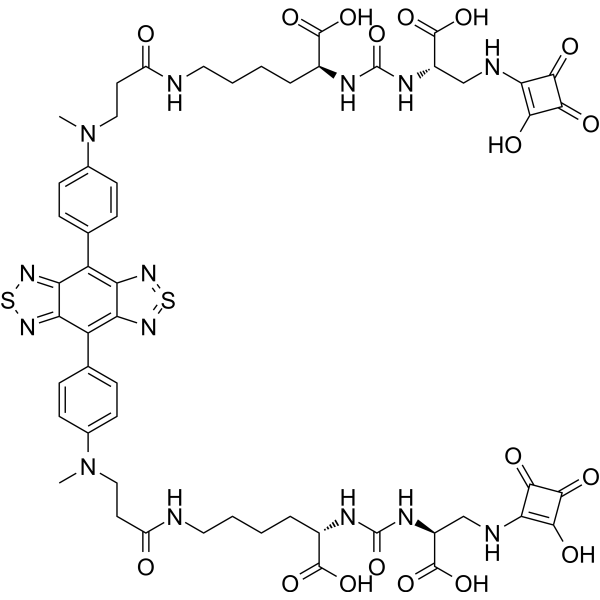
PSMA-IN-2 is an inhibitor of PSMA with a Ki value of 1.07 nM. PSMA-IN-2 displays favorable in vivo NIR imagingEM = 1088 nm, λex = 808 nm), and can be used for NIRII image-guided tumor resection surgery in PSMA-positive tumor-bearing mice .
loading...
    loading...
Cat. No.: HY-P5520
CAS No.: 2413262-74-3
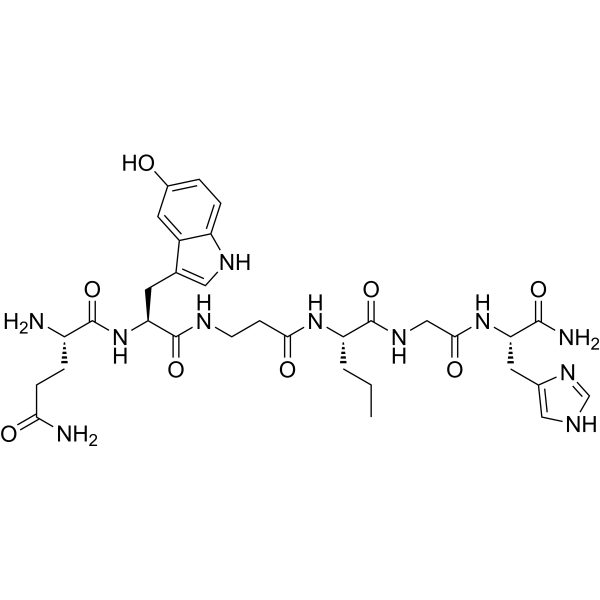
GB-6 is a short linear peptide that targets the gastrin releasing peptide receptor (GRPR). GRPR is overexpressed in pancreatic cancer. Based on the tumor selectivity and tumor-specific accumulation properties of GB-6, GB-6 labeled with near infrared (NIR) fluorescent dyes or radionuclide netium-99m (99mTc) can be used as a high-contrast imaging probe. GB-6 has excellent in vivo stability, with tumor to pancreatic and intestinal fluorescence signal ratios of 5.2 and 6.3, respectively, in SW199 0 subcutaneous xenograft models. GB-6 can rapidly target tumors and accurately delineate tumor boundaries, which has broad application prospects .
loading...
    loading...
Cat. No.: HY-136404
CAS No.: 1420844-62-7
Purity:  98.06%
Target:  

Fluorescent Dye

Research Areas:  

Cancer

Melanin probe-1 is an 18F-picolinamides based PET probe. Melanin probe-1 can be used for PET imaging of malignant melanoma. Melanin probe-1 exhibits high tumor targeting efficiency, excellent tumor imaging contrasts, desirable biodistribution patterns, and good in vivo stability .
loading...
    loading...
Cat. No.: HY-152102
Target:  

Fluorescent Dye

Research Areas:  

Cancer

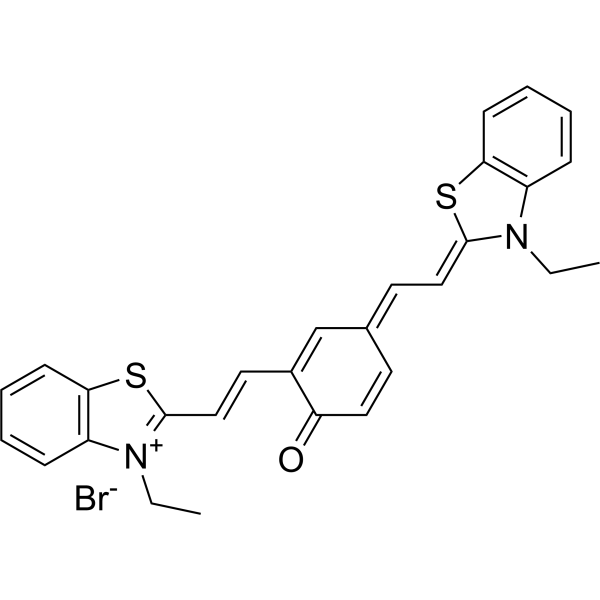
BTCy is a near-infrared (NIR) fluorescence probe with polarity-responsive and cell plasma membrane-targeting properties. BTCy can be used for in vivo imaging of tumor tissue (λex = 561 nm, λem = 600-700 nm) .
loading...
    loading...
Cat. No.: HY-D2334
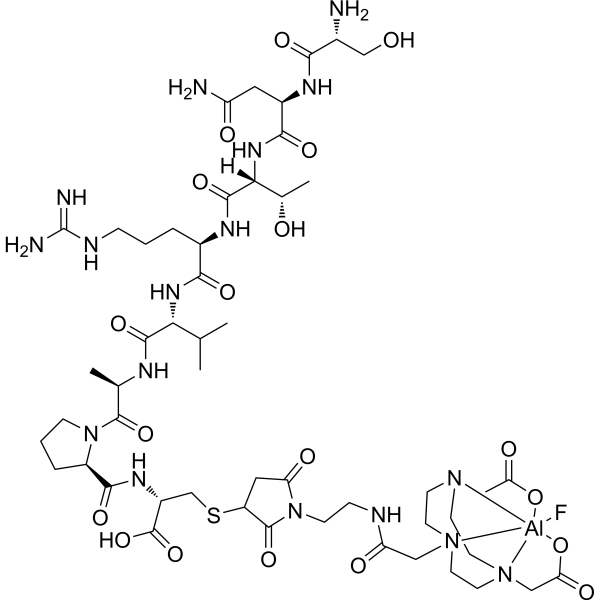
AlF-NOTA-c-d-VAP is a peptide positron emission tomography (PET) probe that used for targeted tumor imaging of GRP78. AlF-NOTA-c-d-VAP demonstrates high stability in vitro and in vivo .
loading...
    loading...
Cat. No.: HY-155486
Target:  

Fluorescent Dye

Research Areas:  

Cancer

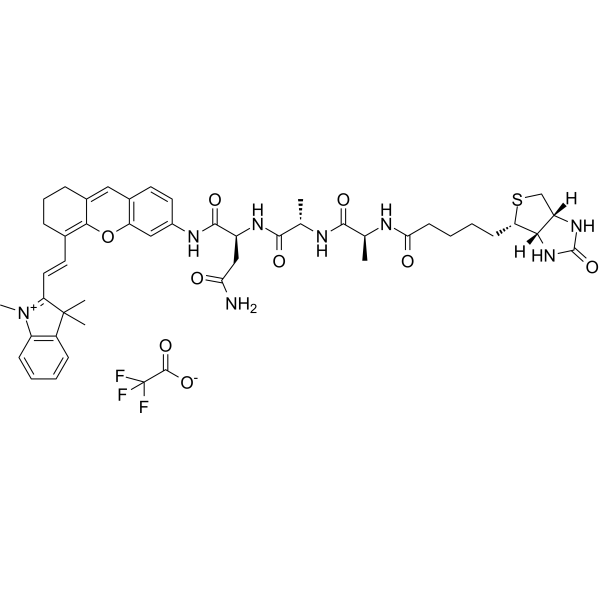
HCy-AAN-Bio is a tumor-targeted hemicyanine (HCy) probe for Fluorescent/photoacoustic (FL/PA) imaging of legumain in vivo. Legumain can specifically cleave HCy-AAN-Bio with the generation of FL/PA signal. HCy-AAN-Bio is a powerful tool for early diagnosis of associated cancer .
loading...
    loading...
Cat. No.: HY-122607R
CAS No.: 958233-07-3
Research Areas:  

Inflammation/Immunology Cancer

DPA-714 (Standard) is the analytical standard of DPA-714. This product is intended for research and analytical applications. DPA-714 is a high affinity translocator protein (TSPO) ligand (Ki=7 nM), which is designed with a fluorine atom in its structure, allowing labelling with fluorine -18 and in vivo imaging using positron emission tomography. 18FDPA-714 successfully evaluates for the specific imaging of inflammation in various models of neuroinflammation and in a brain tumor model .
loading...
    loading...
Cat. No.: HY-156124
CAS No.: 2860554-32-9
Target:  

Sigma Receptor

Research Areas:  

Cancer

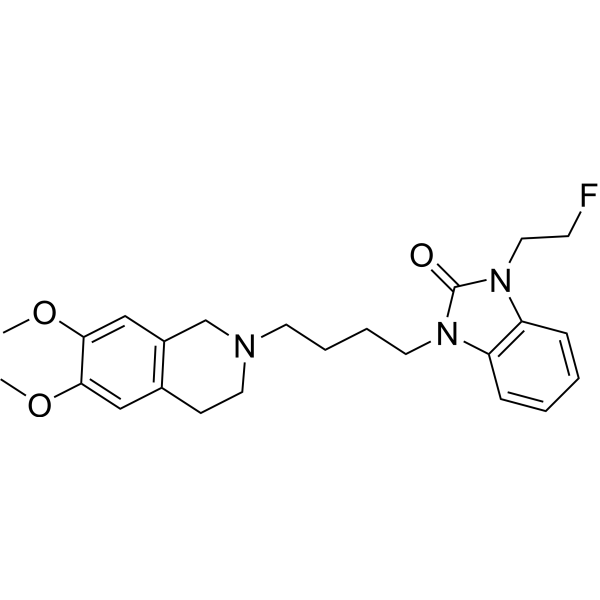
Sigma-2 Radioligand 1 (compound 1) is a Sigma-2 selective ligand. Sigma-2 Radioligand 1 has good biodistribution in mice and good in vivo activity in rats. [18F] Modified Sigma-2 Radioligand 1 for visualization of tumors in micro-PET/CT imaging, exhibiting high tumor uptake and tumor-to-background ratio. Experiments show that Sigma-2 Radioligand 1 binds highly specifically in U87MG glioma xenografts .
loading...
    loading...
Cat. No.: HY-D3083
CAS No.: 2894792-95-9
Target:  

Fluorescent Dye

Research Areas:  

Cancer

MOM is a polarity-sensitive fluorescent probe that can be used for cancer cell membrane, tumor imaging and cell membrane polarity detection (Ex/Em=488/570−630 nm). MOM can also be applied for in vivo imaging, with an Ex/Em of 460/600 nm in living animals, and exhibits photostability .
loading...
    loading...
Cat. No.: HY-W416298
CAS No.: 55520-64-4
Research Areas:  

Cancer

5-Vinyl-uridine is a fluorescent probe that can be used for intracellular RNA imaging, cell division stage imaging, and in vivo tumor imaging in mice. The detection mechanism of 5-Vinyl-uridine relies on metabolic incorporation into cellular RNA during RNA synthesis; after incorporation, it undergoes a bioorthogonal Diels-Alder reaction with Biotin (HY-B0511)-tetrazine. When paired with Streptavidin (HY-P3152)-Alexa Fluor 488, 5-Vinyl-uridine has an Ex/Em = 488/500-550 nm; when using Biotin-tetrazine, the emission peak is at approximately 510 nm, with the excitation/emission filter settings of 450-490/500-550 nm. 5-Vinyl-uridine can be used in tumor-related research .
loading...
    loading...

