21 Results for "

voiding reflexes

" in MedChemExpress (MCE) Product Catalog:
Products (21)

21 Results for "voiding reflexes" in MCE Product Catalog:

3
3 Cited Publications
Art. -Nr.: HY-B1164
CAS. Nr.: 4093-35-0
Target:  

Dopamine Receptor

Forschungsgebiete:  

Neurological Disease

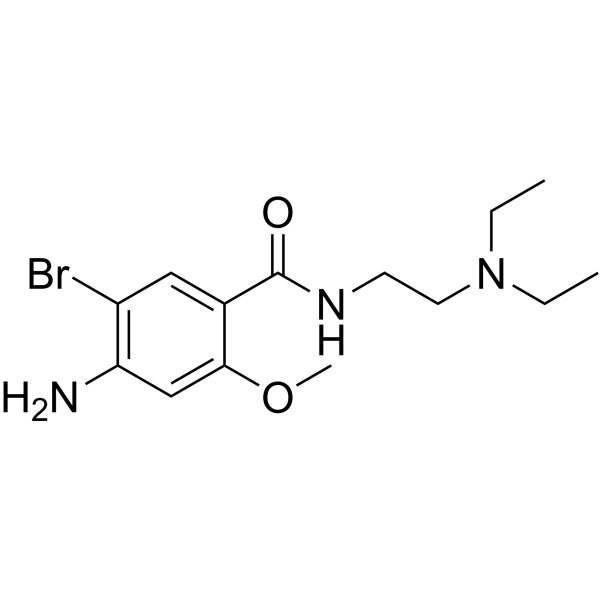
Bromopride is a selective, irreversible, competitive, and orally effective dopamine D2 receptor antagonist. Bromopride can pass through the blood-brain barrier, inhibit the vomiting center, and enhance gastrointestinal motility, exerting antiemetic and gastrointestinal motility effects. Bromopride antagonizes dopamine-mediated vomiting reflexes and promotes gastrointestinal smooth muscle contraction, and has no adverse effects on abdominal wall healing in rats with postoperative abdominal infection. Bromopride can be used for the study of digestive system diseases (such as gastric hypomotility, nausea and vomiting) .
loading...
    loading...
1
1 Cited Publications
Art. -Nr.: HY-P1137
CAS. Nr.: 955091-53-9
Target:  

Gap Junction Protein

Forschungsgebiete:  

Others

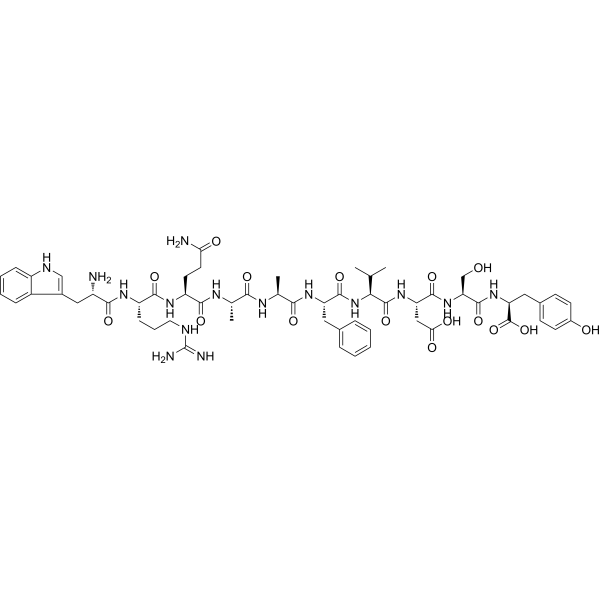
10Panx is a competitive inhibitor of selective Pannexin 1 (PANX1) channels. 10Panx blocks the opening of PANX1 channels, inhibits ATP release and downstream P2X7 receptor-mediated signaling pathways, thereby reducing cell death and inflammatory responses. 10Panx can be used in the study of diseases such as neuropathic pain, inflammatory bowel disease, and Clostridioides difficile infection. 10Panx can effectively reduce mechanical hyperalgesia and enhanced C-reflexes, and inhibit the expression of pro-inflammatory factors such as IL-6[1][2][3].
loading...
    loading...
Art. -Nr.: HY-B0549A
CAS. Nr.: 3717-88-2
Synonyms: Rec-7-0040; DW61
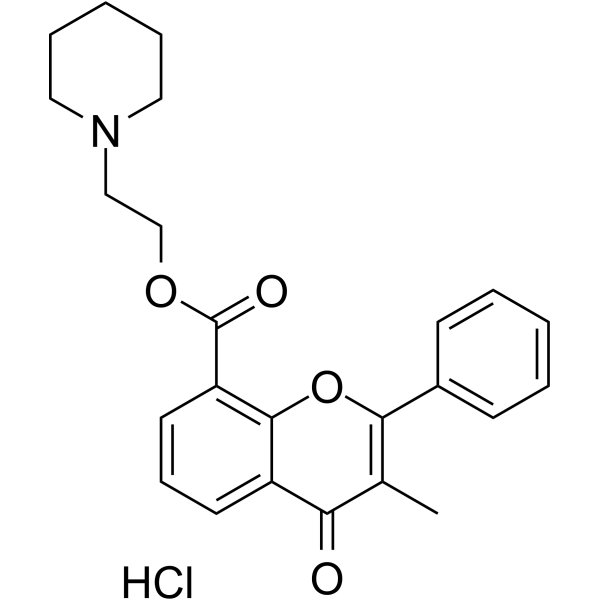
Flavoxate hydrochloride (Rec-7-0040; DW61) is an orally active L-type Ca 2+ channel inhibitor and antispasmodic. Flavoxate hydrochloride inhibits cyclic adenosine monophosphate production by blocking voltage-dependent inward Ba 2+ currents, regulating the brainstem micturition center, and stimulating G protein-coupled receptors. Consequently, Flavoxate hydrochloride induces relaxation of bladder smooth muscle and inhibits isovolumetric rhythmic contractions. Flavoxate hydrochloride effectively increases bladder capacity and alleviates symptoms of urgent urination frequency and pollakiuria caused by overactive bladder. Flavoxate hydrochloride can be used in research on overactive bladder and related voiding dysfunctions .
loading...
    loading...
Art. -Nr.: HY-160888
CAS. Nr.: 1839583-42-4
Target:  

mAChR

Forschungsgebiete:  

Endocrinology

ASP8302 is a positive and allosteric muscarinic M3 receptor modulator. ASP8302 improves voiding efficiency and reduced residual urine volume in two voiding dysfunction models. ASP8302 can be used for research of underactive bladder .
loading...
    loading...
Art. -Nr.: HY-108482
CAS. Nr.: 132746-60-2
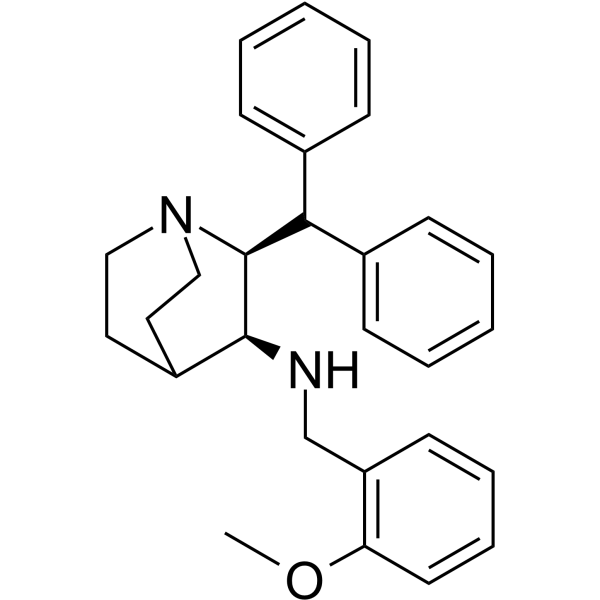
CP-96,345 is a non-peptide selective NK-1 receptor antagonist (Ki = 0.31 nM). CP-96,345 inhibits cell rolling, adhesion, and plasma extravasation, and inhibits degranulation and pancreatic MPO activity. CP-96,345 attenuates neurogenic inflammation, edema, and adhesion molecule expression. CP-96,345 attenuates static contraction- and muscle stretch-evoked pressor reflexes through blockade of NK-1 receptors in the dorsal horn. CP-96,345 impairs post-ischemic recovery of LVDevP, HR, and CF in isolated hearts and increases reperfusion fibrillation. CP-96,345 can be used for research on chronic colitis, myocardial ischemia-reperfusion injury, smoke inhalation and burn injury, acute pancreatitis, oxazolone colitis, and neurogenic inflammation .
loading...
    loading...
Art. -Nr.: HY-W103463
CAS. Nr.: 4641-57-0
Synonyms: 1-Phenylpyrrolidin-2-one
Target:  

GABA Receptor

Forschungsgebiete:  

Neurological Disease

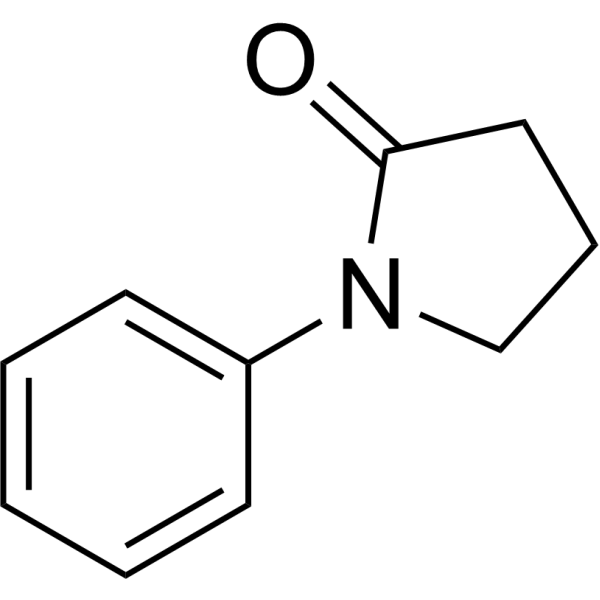
1-Phenyl-2-pyrrolidinone (1-Phenylpyrrolidin-2-one) is a phenyl analogue of GABA with sedative effect, decreasing the exploratory behavior of rats at 50-100 mg/kg (i.v.). 1-Phenyl-2-pyrrolidinone also has been proved to inhibit emotional reactions in dogs and cats. 1-Phenyl-2-pyrrolidinone induces decreases in the pressor reaction to emotional stress without accompanied by normalization of the function of baroreceptor reflexes .
loading...
    loading...
Art. -Nr.: HY-116927
CAS. Nr.: 214764-26-8
Forschungsgebiete:  

Neurological Disease

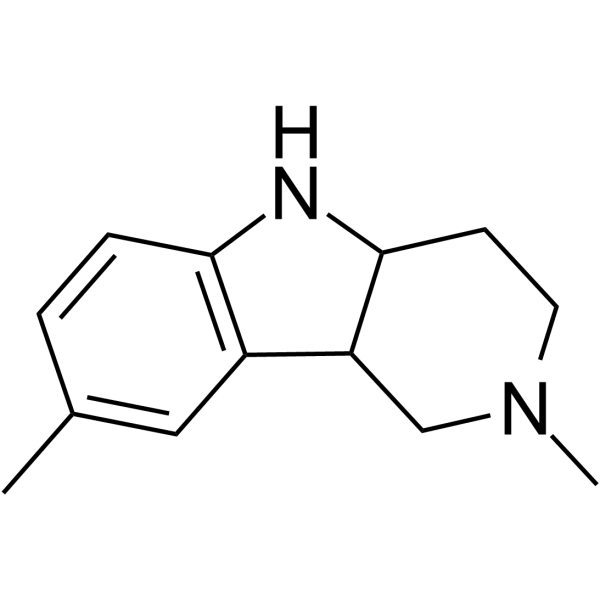
KW-7158 is a putative afferent nerve inhibitor that can depress vesica-vascular reflexes in rats. KW-7158 is an inhibitor of nucleoside transporter-1 (ENT1/SLC29A1) and acts as an antagonist for overactive bladder (OAB) .
loading...
    loading...
Art. -Nr.: HY-B1462S
CAS. Nr.: 1185173-60-7
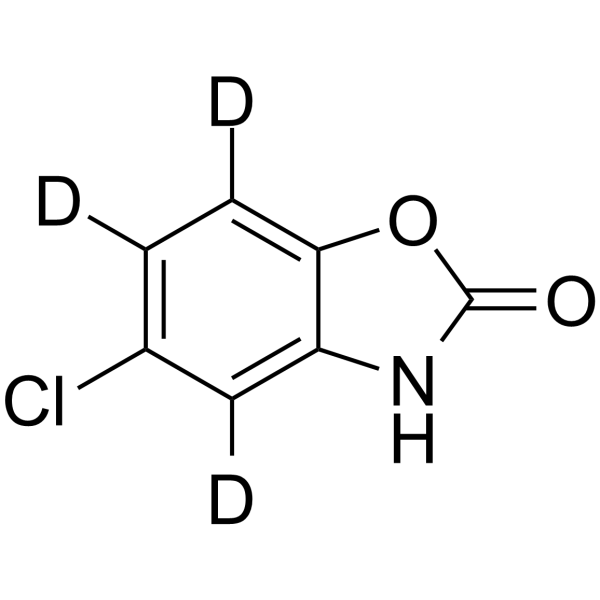
Chlorzoxazone-d3 is the deuterium labeled Chlorzoxazone. Chlorzoxazone is a centrally acting muscle relaxant used to treat muscle spasm and the resulting pain or discomfort. It acts on the spinal cord by depressing reflexes.Chlorzoxazone is currently being used as a marker substrate in vitro/vivo studies to quantify cytochrome P450 2E1 (CYP2E1) activity in humans.
loading...
    loading...
Art. -Nr.: HY-127086A
CAS. Nr.: 33162-17-3
Reinheit:  98.93%
Target:  

Dopamine Receptor

Forschungsgebiete:  

Neurological Disease

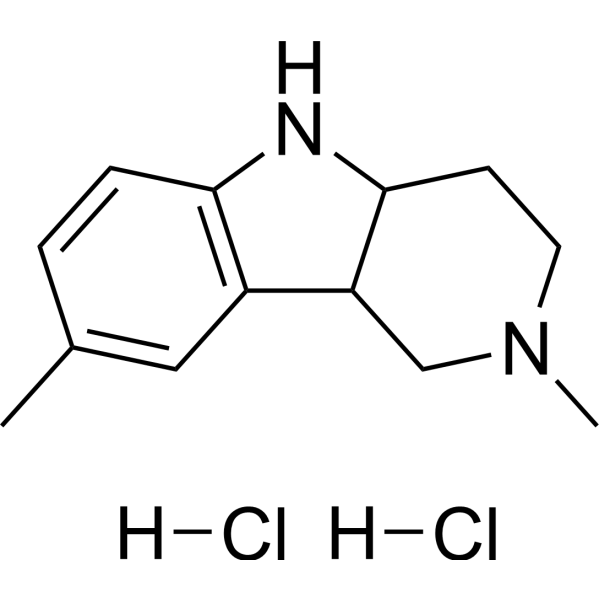
Dicarbine dihydrochloride blocks dopamine receptors in various brain parts and prevents the depression of the conditioned defence reflexes caused by stimulation of the mesencephalic portion of the reticular formation. Dicarbine dihydrochloride could be used in the schizophrenia and alcoholic psychosis studies .
loading...
    loading...
Art. -Nr.: HY-128891
CAS. Nr.: 64840-90-0
Target:  

P2X Receptor

Forschungsgebiete:  

Neurological Disease

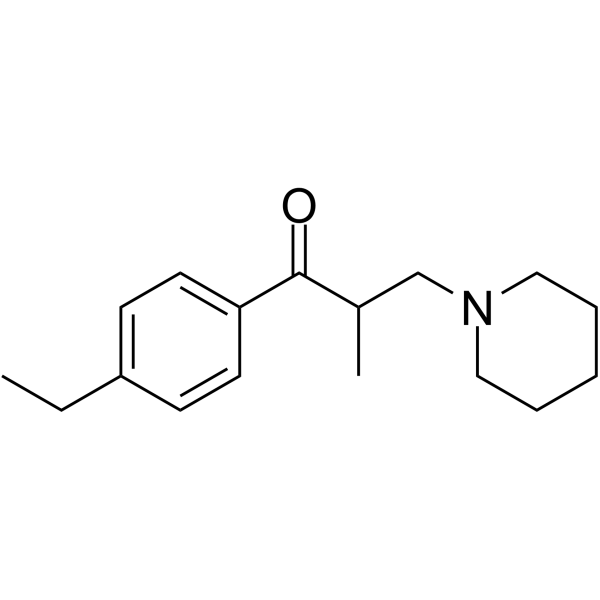
Eperisone ((±)-Eperisone) is an antispasmodic agent and centrally acting muscle relaxant useful in the study of diseases characterized by muscle stiffness and pain. Eperisone acts by relaxing skeletal and vascular smooth muscle, resulting in vasodilation, decreased muscle tone, improved circulation, and inhibition of pain reflexes. Eperisone is also a potent P2X7 receptor antagonist .
loading...
    loading...
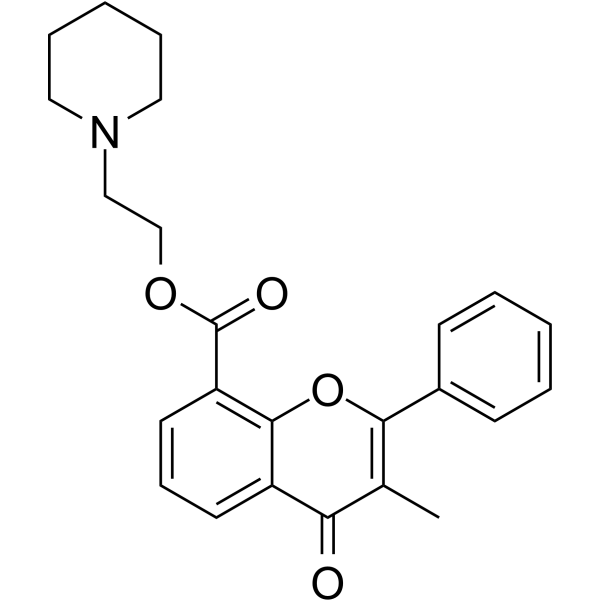
Art. -Nr.: HY-B0549
CAS. Nr.: 15301-69-6
Synonyms: Rec-7-0040 free base; DW61 free base
Flavoxate (Rec-7-0040 free base; DW61 free base) is an orally active L-type Ca 2+ channel inhibitor and antispasmodic. Flavoxate inhibits cyclic adenosine monophosphate production by blocking voltage-dependent inward Ba 2+ currents, regulating the brainstem micturition center, and stimulating G protein-coupled receptors. Consequently, Flavoxate induces relaxation of bladder smooth muscle and inhibits isovolumetric rhythmic contractions. Flavoxate effectively increases bladder capacity and alleviates symptoms of urgent urination frequency and pollakiuria caused by overactive bladder. Flavoxate can be used in research on overactive bladder and related voiding dysfunctions .
loading...
    loading...
Art. -Nr.: HY-B0549AR
CAS. Nr.: 3717-88-2
Synonyms: Rec-7-0040 (Standard); DW61 (Standard)
Flavoxate (hydrochloride) (Standard) is the analytical standard of Flavoxate (hydrochloride). This product is intended for research and analytical applications. Flavoxate hydrochloride (Rec-7-0040; DW61) is an orally active L-type Ca 2+ channel inhibitor and antispasmodic. Flavoxate hydrochloride inhibits cyclic adenosine monophosphate production by blocking voltage-dependent inward Ba 2+ currents, regulating the brainstem micturition center, and stimulating G protein-coupled receptors. Consequently, Flavoxate hydrochloride induces relaxation of bladder smooth muscle and inhibits isovolumetric rhythmic contractions. Flavoxate hydrochloride effectively increases bladder capacity and alleviates symptoms of urgent urination frequency and pollakiuria caused by overactive bladder. Flavoxate hydrochloride can be used in research on overactive bladder and related voiding dysfunctions .
loading...
    loading...
Art. -Nr.: HY-127086
CAS. Nr.: 17411-19-7
Target:  

Dopamine Receptor

Forschungsgebiete:  

Neurological Disease

Dicarbine blocks dopamine receptors in various brain parts and prevents the depression of the conditioned defence reflexes caused by stimulation of the mesencephalic portion of the reticular formation. Dicarbine could be used in the schizophrenia and alcoholic psychosis studies .
loading...
    loading...
Art. -Nr.: HY-120473
CAS. Nr.: 1192348-73-4
Target:  

Adrenergic Receptor

Forschungsgebiete:  

Metabolic Disease

TAK-259 is an orally active α1D-adrenergic receptor antagonist with a Ki value of 1.1 nM for human α1D-adrenergic receptors. TAK-259 can inhibit the contraction of isolated bladder strips in rats with bladder outlet obstruction, reduce non-voiding bladder contractions, and improve urinary frequency symptoms. TAK-259 can be used in research related to overactive bladder .
loading...
    loading...
Art. -Nr.: HY-B1164A
CAS. Nr.: 52423-56-0
Target:  

Dopamine Receptor

Forschungsgebiete:  

Neurological Disease

Bromopride hydrochloride is a selective, irreversible, competitive, and orally active dopamine D2 receptor antagonist. Bromopride hydrochloride can pass through the blood-brain barrier, inhibit the vomiting center, and enhance gastrointestinal motility, exerting antiemetic and gastrointestinal motility effects. Bromopride hydrochloride antagonizes dopamine-mediated vomiting reflexes and promotes gastrointestinal smooth muscle contraction, and has no adverse effects on abdominal wall healing in rats with postoperative abdominal infection. Bromopride hydrochloride can be used for the study of digestive system diseases (such as gastric hypomotility, nausea and vomiting) .
loading...
    loading...
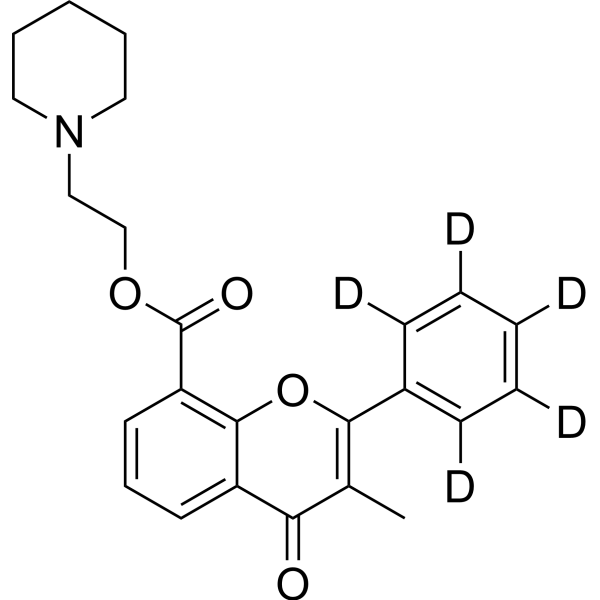
Art. -Nr.: HY-B0549S
CAS. Nr.: 2748541-85-5
Flavoxate-d5 is deuterium labeled Flavoxate. Flavoxate hydrochloride (Rec-7-0040; DW61) is an orally active L-type Ca 2+ channel inhibitor and antispasmodic. Flavoxate hydrochloride inhibits cyclic adenosine monophosphate production by blocking voltage-dependent inward Ba 2+ currents, regulating the brainstem micturition center, and stimulating G protein-coupled receptors. Consequently, Flavoxate hydrochloride induces relaxation of bladder smooth muscle and inhibits isovolumetric rhythmic contractions. Flavoxate hydrochloride effectively increases bladder capacity and alleviates symptoms of urgent urination frequency and pollakiuria caused by overactive bladder. Flavoxate hydrochloride can be used in research on overactive bladder and related voiding dysfunctions .
loading...
    loading...
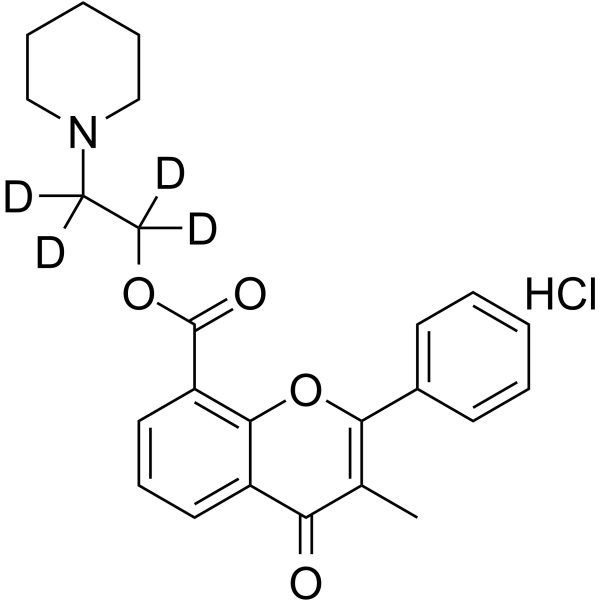
Art. -Nr.: HY-B0549AS
CAS. Nr.: 1189678-43-0
Flavoxate-d4 hydrochloride (Rec-7-0040-d4) is the deuterium labeled Flavoxate hydrochloride. Flavoxate hydrochloride (Rec-7-0040; DW61) is an orally active L-type Ca 2+ channel inhibitor and antispasmodic. Flavoxate hydrochloride inhibits cyclic adenosine monophosphate production by blocking voltage-dependent inward Ba 2+ currents, regulating the brainstem micturition center, and stimulating G protein-coupled receptors. Consequently, Flavoxate hydrochloride induces relaxation of bladder smooth muscle and inhibits isovolumetric rhythmic contractions. Flavoxate hydrochloride effectively increases bladder capacity and alleviates symptoms of urgent urination frequency and pollakiuria caused by overactive bladder. Flavoxate hydrochloride can be used in research on overactive bladder and related voiding dysfunctions .
loading...
    loading...
Art. -Nr.: HY-P11075
CAS. Nr.: 2770688-04-3
Target:  

Neurokinin Receptor

Forschungsgebiete:  

Metabolic Disease

[Lys5,Tyr6,mLeu9,Nle10]-Neurokinin A (4-10) (ID 305) is a selective NK2R agonist with an EC50 of 3.7  nM for hNK2R. [Lys5,Tyr6,mLeu9,Nle10]-Neurokinin A (4-10) significantly inhibits weight loss in diet-induced obese (DIO) mice model and improves Loperamide (HY-156131)-induced dysfunctional voiding in wild-type mice. [Lys5,Tyr6,mLeu9,Nle10]-Neurokinin A (4-10) can be used for neurokinin receptor mediated disorders, such as obesity, insulin resistance and type 2 diabetes research .
loading...
    loading...
Art. -Nr.: HY-119511
CAS. Nr.: 529-73-7
Target:  

Parasite

Forschungsgebiete:  

Cardiovascular Disease Infection

Isopentaquine is an orally active antimalarial agent. Isopentaquine induces mild morphological changes in the exoerythrocytic stage of Plasmodium fallax, with a ED50 of 6.7 mg/L. Isopentaquine causes degenerative changes in the development of Plasmodium oocysts in infected mosquitoes. Isopentaquine reduces the infectivity of Plasmodium falciparum gametocytes. Isopentaquine impairs sympathetic cardiovascular reflexes. Isopentaquine decreases the recurrence rate and total disease duration of Plasmodium vivax infection. Isopentaquine can be used in malaria-related research .
loading...
    loading...
Art. -Nr.: HY-120473A
CAS. Nr.: 1192347-42-4
Target:  

Adrenergic Receptor

Forschungsgebiete:  

Metabolic Disease

TAK-259 hydrochloride is an orally active α1D-adrenergic receptor antagonist with a Ki value of 1.1 nM for human α1D-adrenergic receptors. TAK-259 hydrochloride can inhibit the contraction of isolated bladder strips in rats with bladder outlet obstruction, reduce non-voiding bladder contractions, and improve urinary frequency symptoms. TAK-259 hydrochloride can be used in research related to overactive bladder .
loading...
    loading...

