



Amlenetug

Based on 1 Customer Validation
Amlenetug (Lu-AF82422) is a blood-brain barrier-penetrant monoclonal antibody targeting the C-terminal ILEDMP epitope of α-synuclein and recognizes multiple forms of α-synuclein. Amlenetug reduces plasma and cerebrospinal fluid α-synuclein levels by inhibiting its seeding, neuronal uptake, aggregation, and spreading, and by clearing aggregates from brain homogenates of multiple system atrophy, Parkinson's disease, and dementia with Lewy bodies. Amlenetug can be used in research on multiple system atrophy, Parkinson's disease, and synucleinopathies.
For research use only. We do not sell to patients.
- Purity : 99.85%
- CAS No.: 2850367-41-6
- Molecular Weight:144.09 kDa
-
Storage:Shipping with dry ice
Please store the product under the recommended conditions in the Certificate of Analysis.


To place orders, for customer services and technical support, please contact: MedChemExpress USA
Tel: 609-228-6898 E-mail: [email protected] [email protected]


-
 Biological Activity
-
Chemical Information
- Protocols
- Purity & Documentation
- References
-
 Help & FAQs


All α-synuclein Isoforms
More

Biological Activity
Description
Isotype
Human IgG1 kappa
Recommend Isotype Controls
Species Reactivity
Human
IC50 & Target
[1]|
α-synuclein |
In Vitro
Amlenetug (50 nM; RT 1 h-RT 30 min) binds MSA-derived α-syn aggregates with an EC50 of 0.09 nM and binds PD-derived α-syn aggregates with an EC50 of 0.16 nM[1].
Amlenetug (50 nM; RT 1 h-RT 30 min) binds recombinant PFF-type fibrillar α-syn with an EC50 of 0.30 nM[1].
Amlenetug (1 µg/mL; 30 s) binds recombinant human monomeric α-syn via SPR with a KD of 36 nM[1].
Amlenetug binds α-syn oligomers with 0.3 nM affinity and monomers with 12 nM affinity via MDS[1].
Amlenetug (1.25 μg/mL; 10-30 min) immunohistochemically labels pathological α-syn inclusions in human PD, DLB, and MSA brain tissue, including LBs, LNs, and GCIs[1].
Amlenetug (8 μg antibody/mg magnetic beads; 120 min at 4°C-5 min at 95°C) immunoprecipitates full-length and truncated α-syn from human MSA, PD, and DLB brain homogenates, and enriches pS129 α-syn from MSA tissue[1].
Amlenetug immunodepletes aggregated α-syn in MSA, PD, and DLB brain homogenates to control-sample levels[1].
Amlenetug (7-fold dilution series; RT 15 min) inhibits α-syn aggregation induced by P91, Ribbons, Fibrils, PFF, MSA brain extracts, and truncated α-syn 1-119 seeds in F28 primary mouse neurons in a dose-dependent manner[1].
Amlenetug (250 µg/mL; 15 min) prevents the accumulation of truncated 12 kDa α-syn seed species and inhibits the formation of insoluble aggregated α-syn in wild-type and F28 primary mouse neurons[1].
Amlenetug (dilution series; 15 min) inhibits pHrodo-labeled PFF seed uptake in F28 primary mouse neurons by approximately 80% at the highest tested concentration[1].
Amlenetug binds monomeric α-syn with a monovalent KD of 16 nM by Biacore[3].
Amlenetug (1 hour) binds α-syn PFF with an ELISA EC50 of 0.05 nM[3].
Amlenetug (1 μg/mL; 1 hour) exhibits strong selectivity for α-syn PFF over monomers in dot blot analysis[3].
Amlenetug binds to α-syn PFF and co-localizes with it, as shown by TEM[3].
Amlenetug (0.05-50 μg/mL) binds Lewy pathology, but in human Parkinson's disease brain tissue it also shows non-Lewy reactivity without selective Lewy staining[3].
Amlenetug (1-10 µg/mL; 24 hours) inhibits α-syn PFF uptake in rat cortical neurons, with an inhibition rate of 89% at 1 µg/mL[3].
Amlenetug (5-15 µg/mL; 13 days) reduces PFF seed-formed pS129 α-syn in rat cortical neurons, with an inhibition rate of 78% at 5 µg/mL[3].
Amlenetug (10-100 µg/mL; 6 days) inhibits α-syn PFF-induced aggregation in HEK293 FRET reporter cells, with an inhibition rate of 54% at 10 µg/mL[3].
Amlenetug (0.064-10,000 µg/mL; 24-48 hours) does not induce cytokine release from human whole blood or PBMCs across the tested concentration range[4].
Amlenetug (0.5-2 µg/mL) specifically binds to human neural tissues in tissue sections, including the cerebellum, cerebral cortex, colonic myenteric plexus, eye, ileal myenteric plexus, pars nervosa of the pituitary, peripheral nerves, and spinal cord, and the staining intensity generally increases as the concentration rises from 0.5 to 2 µg/mL[4].
MedChemExpress (MCE) has not independently confirmed the accuracy of these methods. They are for reference only.
In Vivo
Amlenetug (100 mg/kg; i.p.; once weekly; from 2 weeks before seed inoculation to 6 weeks after inoculation, or from 1 week after seed inoculation to 6 weeks after inoculation) administered before intrastriatal α-syn seed inoculation reduces pS129-α-syn pathology in the mouse motor cortex, but has no such effect when administration begins after seed inoculation[1].
Amlenetug (1-30 mg/kg; i.v.; single dose) produces dose-dependent plasma target engagement in cynomolgus monkeys[4].
Amlenetug (30-600 mg/kg; i.v.; once every 10 days, administered on days 1, 11, and 21; 30-day dosing period) produces rapid and sustained plasma and CSF target engagement in cynomolgus monkeys[4].
MedChemExpress (MCE) has not independently confirmed the accuracy of these methods. They are for reference only.
-
Animal Model:C57BL6JBomTac (male, 8-10 weeks of age)[1]
-
Dosage:antibody:Fibril molar ratios of 1:1, 1:3, and 1:10; 2 µg fibrils
-
Administration:intrastriatal; single co-injection
-
Result:Concentration-dependently reduced pS129-α-syn pathology compared with control hIgG at 1:1, 1:3, and 1:10 antibody:Fibril ratios.
Representative staining showed reduced pS129-α-syn-positive cells versus control.
-
Animal Model:C57BL/6J BomTac (male, 8-10 weeks of age)[1]
-
Dosage:100 mg/kg i.p. once weekly from 2 weeks before to 6 weeks after seeding initiation; 100 mg/kg i.p. once weekly from 1 week after to 6 weeks after seeding initiation
-
Administration:i.p.; once weekly; from 2 weeks before to 6 weeks after seeding initiation; i.p.; once weekly; from 1 week after to 6 weeks after seeding initiation
-
Result:Reduced pS129-α-syn pathology in the motor cortex ipsilateral to injection (50-60% reduction) and showed a tendency for reduction in the substantia nigra pars compacta when weekly i.p. was started 2 weeks before seeding.
No inhibition of pathology development was observed when dosing was initiated 1 week after seed injection.
Plasma hIgG levels in the pre-dosing group were 1166 µg/mL at week 1 after seeding and 1183 µg/mL at week 6; in the post-seeding-initiation group, levels were 501 µg/mL at week 1 and 1077 µg/mL at week 6.
-
Animal Model:C57BL6JBomTac (male, 8-10 weeks of age)[2]
-
Dosage:antibody:Fibril molar ratios of 1:1, 1:3, and 1:10; 2 µL of the mixture containing 2 µg Fibrils
-
Administration:unilateral intrastriatal; single injection
-
Result:Reduced the number of pS129-α-syn-positive cell bodies in the substantia nigra ipsilateral to injection in a concentration-dependent manner at antibody:Fibril ratios of 1:1, 1:3, and 1:10 compared with control.
Representative pS129-α-syn staining showed fewer positive cells in the 1:1 group than in the control group.
-
Animal Model:C57BL/6J BomTac (male, 8-10 weeks of age)[2]
-
Dosage:100 mg/kg
-
Administration:i.p.; once weekly; from 2 weeks before seeding initiation through 6 weeks after seeding initiation; i.p.; once weekly; from 1 week after seeding initiation through 6 weeks after seeding initiation
-
Result:In the group dosed from 2 weeks before seeding, pS129-α-syn pathology was reduced in the substantia nigra and in the motor cortex ipsilateral to injection, with a 50-60% reduction in motor cortex and a tendency for reduction in substantia nigra.
In the group dosed from 1 week after seeding, pS129-α-syn pathology development was not inhibited.
-
Animal Model:Asian origin (female)[4]
-
Dosage:1 mg/kg; 3 mg/kg; 10 mg/kg; 30 mg/kg
-
Administration:i.v.; single dose
-
Result:Predose total alpha-synuclein was 18.3 ng/mL in plasma and 0.595 ng/mL in CSF, with CSF levels 3.25% of plasma levels.
Predose free alpha-synuclein in plasma was 18.7 ng/mL.
A dose-dependent decrease in free alpha-synuclein in plasma was seen within 30 minutes after dosing.
In animals dosed with 30 mg/kg, total alpha-synuclein in plasma tended to increase during the first 2 weeks after administration.
Free-to-total alpha-synuclein ratios showed a dose-dependent decrease throughout the 8-week sampling period.
A dose-dependent correlation was shown between the free-to-total alpha-synuclein ratios and the plasma concentration, with an IC50 of 5.6 μg/mL; baseline E0 was 0.998, maximal inhibition (IMAX) was 0.940, and R square was 0.928.
CSF levels of total alpha-synuclein varied considerably with no dose-related changes; free alpha-synuclein in CSF was not measured.
-
Animal Model:Asian origin (male and female)[4]
-
Dosage:30 mg/kg; 100 mg/kg; 300 mg/kg; 600 mg/kg
-
Administration:i.v.; every 10 days on Days 1, 11, and 21; 30-day dosing period
-
Result:Predose total and free alpha-synuclein levels were similar, approximately 30 ng/mL in plasma and 0.3 ng/mL in CSF.
Predose plasma total alpha-synuclein was 23.3 ng/mL in males and 37.2 ng/mL in females.
Predose plasma free alpha-synuclein was 29.6 ng/mL in males and 38.8 ng/mL in females.
Predose CSF total alpha-synuclein was 0.358 ng/mL in males and 0.164 ng/mL in females.
Predose CSF free alpha-synuclein was 0.380 ng/mL in males and 0.229 ng/mL in females.
In plasma from animals administered 30-300 mg/kg, free alpha-synuclein showed a rapid and sustained decrease following IV administration at all dose levels.
For all animals administered 100 or 300 mg/kg, free alpha-synuclein levels were below the lower limit of quantification (LLOQ) or below 7.5% of predose values throughout the dosing period.
Alpha-synuclein levels were not determined in plasma after dosing with 600 mg/kg.
Total alpha-synuclein in CSF varied considerably, especially in the control group, with no clear dose-related changes after dosing.
The free-to-total alpha-synuclein ratio in CSF decreased in animals dosed with 100, 300, and 600 mg/kg at Day 11 and Day 31 compared with predose; no changes were observed in control animals or in animals dosed with 30 mg/kg.
A dose-dependent correlation was shown between the free-to-total alpha-synuclein ratios and the CSF concentration.
When the CSF data were superimposed on the nonlinear regression plot of the plasma data, a similar slope of the binding curve was seen.
Clinical Trial
| NCT Number | Sponsor | Condition | Start Date |
Phase

|
|---|---|---|---|---|
| NCT01329991 | 2011-05 | PHASE1 |
Gene ID
Accession
Conjugated
Unconjugated
Reconsititution
The product can be reconstituted/diluted with sterile PBS or saline.
Format
-
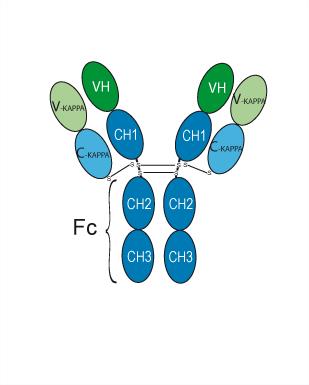
IgG1-kappa
Application
ELISA, FACS, Functional assay
Verified Bioactivity
-
 Immobilized SNCA Protein, Human (His, HY-P71327) can bind Amlenetug. The EC50 for this effect is 0.9253 ng/mL.
-
 Flow Cytometry analysis of Hela cells labelling SNCA (red) with Amlenetug (HY-P990898). Cells were fixed with 4% paraformaldehyde and permeabilised with 90% methanol. Then cells were stained with the primary antibody at 1/200 dilution for an hour at 4℃. Goat Anti-Human IgG H&L (AF488) (HY-P83776) was used as the secondary antibody at 1/1,000 dilution for 30 minutes at 4℃. Human IgG1 kappa (HY-P99001, blue) was used as the isotype control, cells without incubation with primary antibody were used as the unlabeled control (black).


Chemical Information
-
CAS No. 2850367-41-6
-
Appearance Liquid
-
Molecular Weight 144.09 kDa
-
Color Colorless to light yellow
-
SMILES
[Amlenetug]
-
Synonyms
Lu-AF82422
-
Shipping
Shipping with dry ice.
-
Formulation
Please refer to the lot-specific COA for specific buffer information.
-
Storage
Please store the product under the recommended conditions in the Certificate of Analysis.


Purity & Documentation
-
Data Sheet (287 KB)
-
SDS (251 KB)
- English - EN (251 KB)
- Français - FR (251 KB)
- Deutsch - DE (251 KB)
- Norwegian - NO (251 KB)
- Español - ES (251 KB)
- Swedish - SV (251 KB)
- Italian - IT (251 KB)
- Korean - KR (251 KB)
- Portuguese - PT (251 KB)
-
Inhibitory Antibodies User Guide (603 KB)
References

Calculators
Concentration (start) × Volume (start) = Concentration (final) × Volume (final)


Amlenetug Related Classifications
HY-P990898 Related Classifications
 Powered by Bioz