



SN003
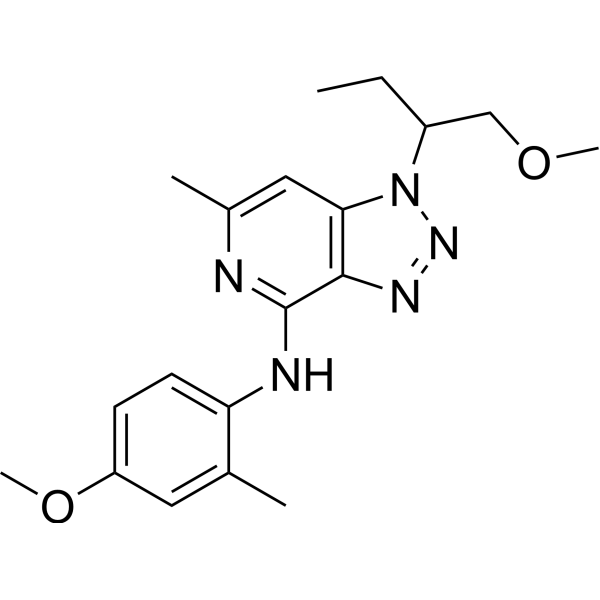
SN003 is a reversible antagonist of corticotropin releasing factor receptor 1 (CRFR 1) (IC50 = 241 nM) that displays more than 1000-fold selectivity over CRFR 2. SN003 suppresses CRF-induced ACTH release in vitro. SN003 attenuates depressive-like behavior in rat.
For research use only. We do not sell to patients.
- CAS No.: 197801-88-0
- Formula: C19H25N5O2
- Molecular Weight:355.43
-
Storage:
Please store the product under the recommended conditions in the Certificate of Analysis.

To place orders, for customer services and technical support, please contact: MedChemExpress USA
Tel: 609-228-6898 E-mail: [email protected] [email protected]


-
 Biological Activity
-
Chemical Information
- Protocols
- Purity & Documentation
- References
-
 Help & FAQs


-
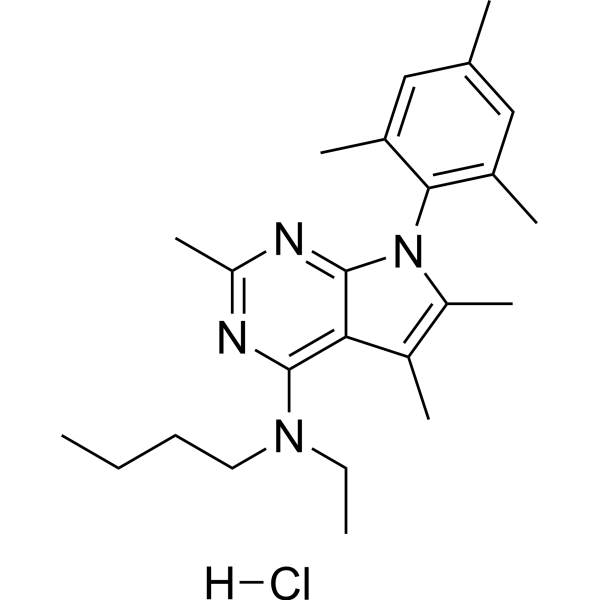
HY-103377
Antalarmin hydrochlorideCRHR1 Antagonist -

HY-12129
CP 154526 hydrochlorideCRF1 Antagonist -
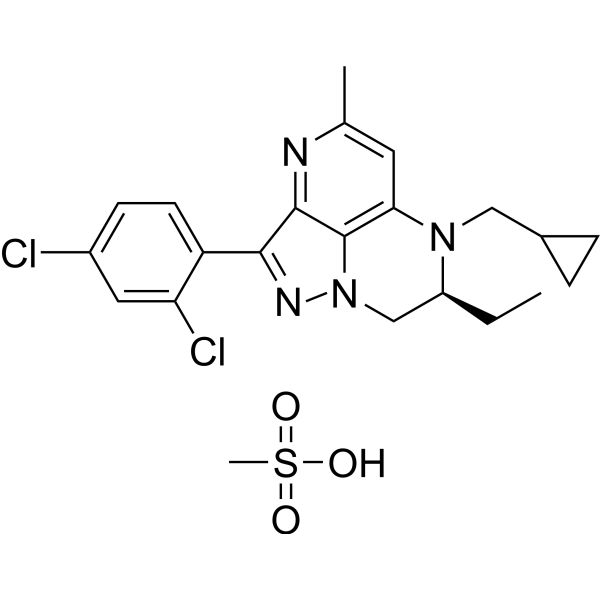
HY-103378
NBI 35965 methanesulfonateCRF1 Antagonist -

HY-103377R
Antalarmin hydrochloride (Standard)CRHR1 Antagonist -
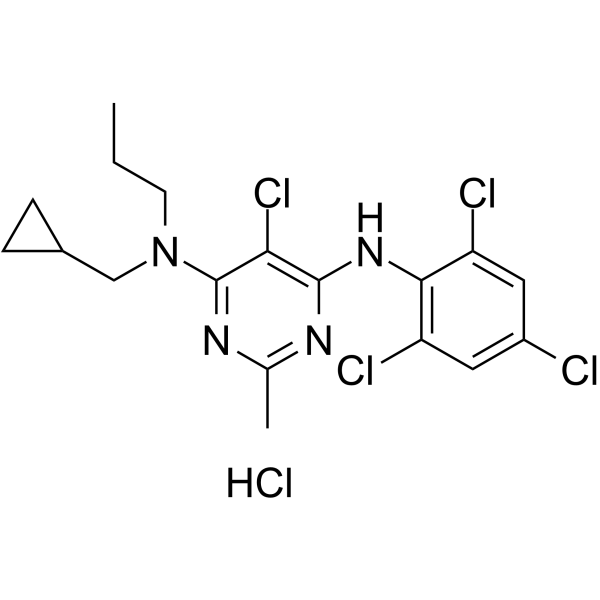
HY-103376
NBI-27914 hydrochlorideCRF1 Receptor Antagonist -
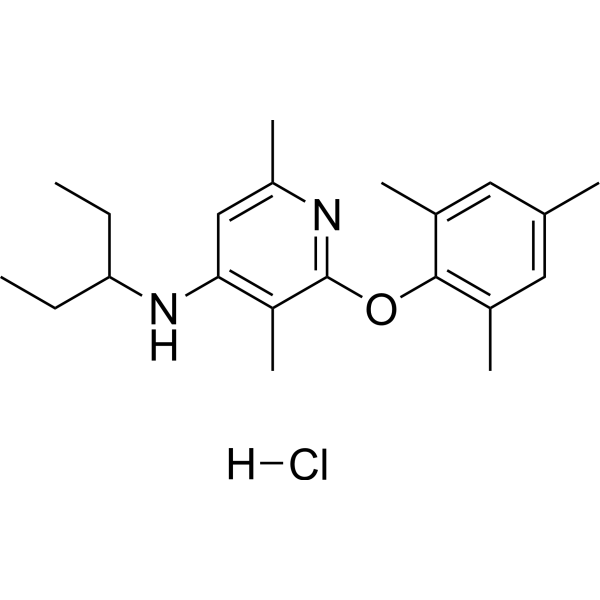
HY-103379
CP 376395 hydrochlorideCRF1 Receptor Antagonist -
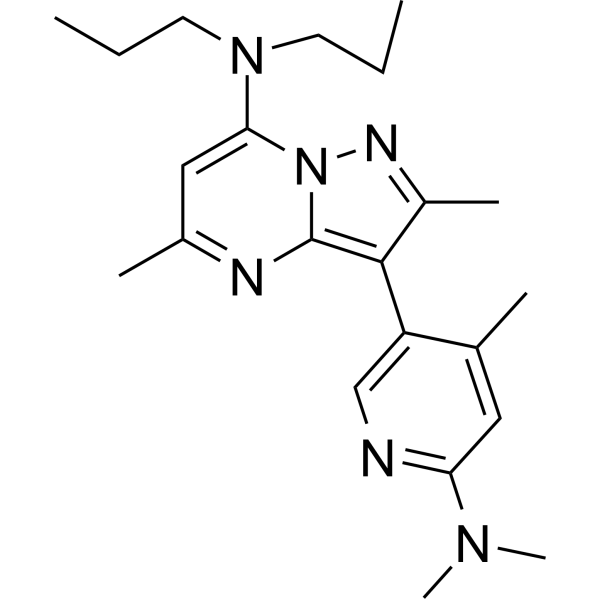
HY-14127
R121919CRF1 Receptor Antagonist -
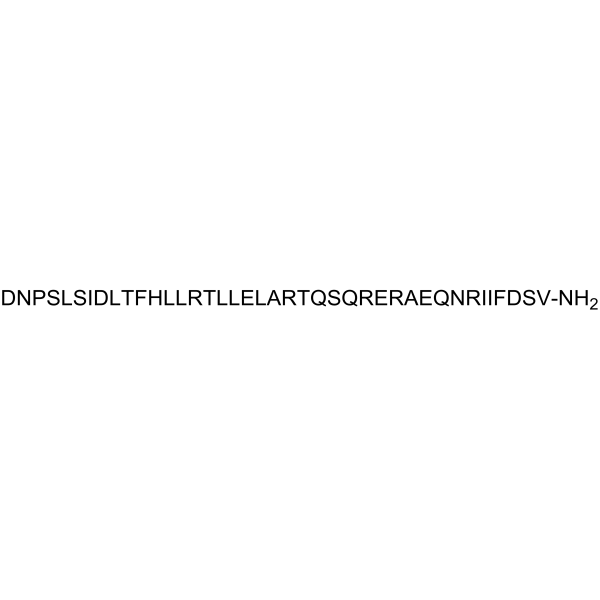
HY-P1295
Urocortin, humanCRF Receptor Agonist -
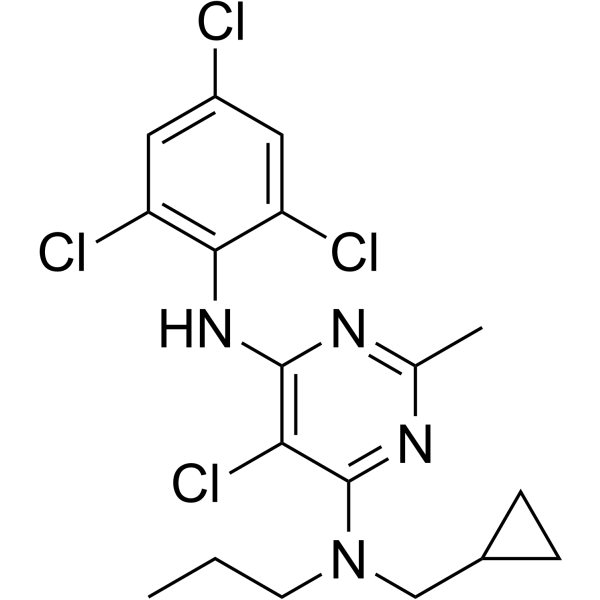
HY-135542
NBI-27914CRFR1 Antagonist -
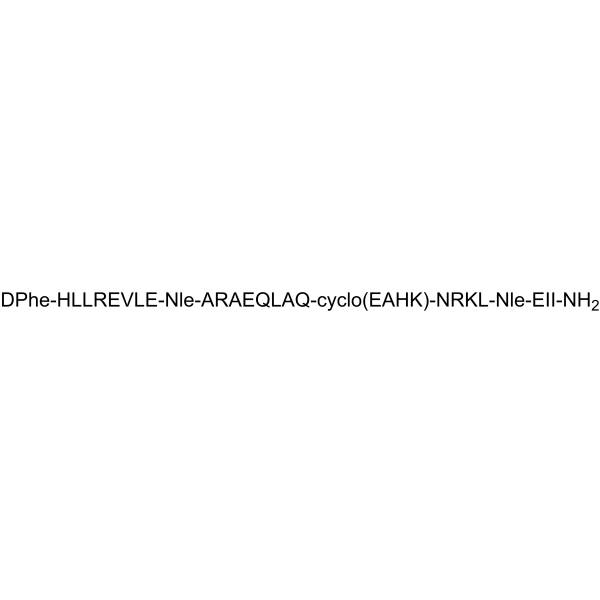
HY-P0257
AstressinCRF Antagonist -
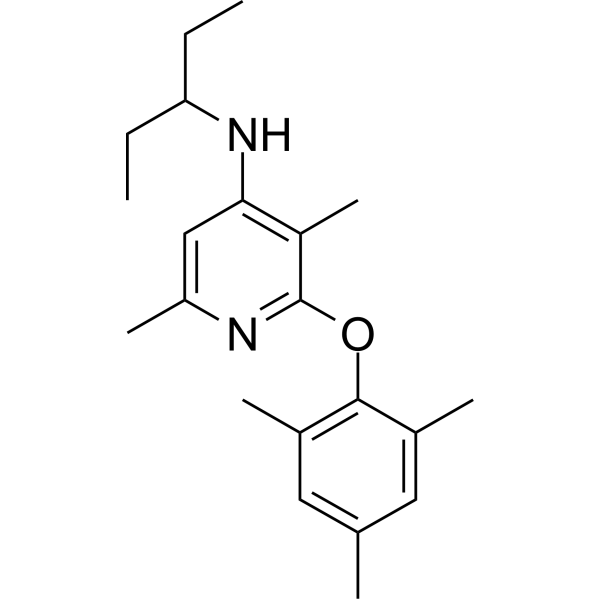
HY-14130
CP 376395CRF1 Receptor Antagonist -
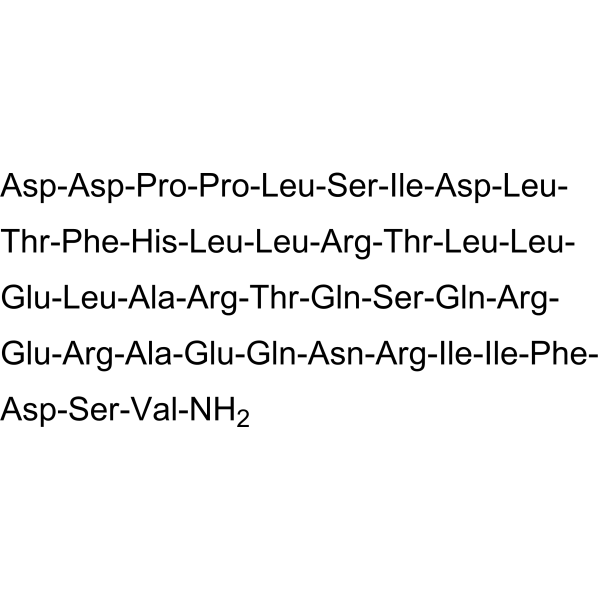
HY-P1296
Urocortin, ratCRFR Agonist


Biological Activity
Description


Chemical Information
-
CAS No. 197801-88-0
-
Molecular Weight 355.43
-
Formula C19H25N5O2
-
SMILES
CC1=CC(N(C(COC)CC)N=N2)=C2C(NC3=CC=C(OC)C=C3C)=N1
-
Shipping
Room temperature in continental US; may vary elsewhere.
-
Storage
Please store the product under the recommended conditions in the Certificate of Analysis.

Protocols
-
Cell Cytotoxicity Assay
Cytotoxicity assays are usually based on the assessment of cell membrane damage, which can also be indirectly detected by measuring cell viability. Detection methods include MTT assay, CKK-8 assay, LDH assay and ATP assay, etc.
-
Protocol for Tail Suspension Test (TST)
The Tail Suspension Test is a mouse behavioral assay in which an animal is suspended by the tail in an inescapable position, causing alternating escape-directed activity and immobility; the main readout is immobility time, and antidepressant-like treatments generally reduce immobility compared with vehicle controls. The assay detects behavioral response to acute inescapable stress rather than a molecular event; immobility is interpreted as passive stress-coping behavior, while reduced immobility is used as a predictive screen for antidepressant-like activity, with important limitations related to strain, locomotor activity, and tail-climbing behavior.
-
Protocol for Forced Swim Test (FST)
The Forced Swim Test is a rodent behavioral assay in which a mouse or rat is placed in an inescapable cylinder of water, and the main readout is the time spent immobile versus active escape-related behaviors such as swimming or climbing. Reduced immobility after treatment has historically been interpreted as antidepressant-like activity, but the assay should be interpreted as a behavioral response to acute inescapable stress rather than a complete model of human depression.
-
Protocol for Sucrose Preference Test (SPT)
The Sucrose Preference Test is a rodent two-bottle choice assay used to estimate reward-related behavior by measuring preference for a sweet sucrose solution over water. Reduced sucrose preference is commonly interpreted as an anhedonia-like phenotype in stress-based depression models, but it can also be affected by thirst, hunger, body weight, learning, motivation, and general fluid intake.


Purity & Documentation
References
[1]. J S Dileep Kumar, et al. Synthesis and in vivo evaluation of [11C]SN003 as a PET ligand for CRF1 receptors. Bioorg Med Chem. 2006 Jun 15;14(12):4029-34. [Content Brief]
[2]. Andrzej Wróbel, et al. Inhibition of the CRF1 receptor influences the activity of antidepressant drugs in the forced swim test in rats. Naunyn Schmiedebergs Arch Pharmacol. 2017 Aug;390(8):769-774. [Content Brief]
[3]. Simeon J Ramsey, et al. Quantitative pharmacological analysis of antagonist binding kinetics at CRF1 receptors in vitro and in vivo. Br J Pharmacol. 2011 Oct;164(3):992-1007. [Content Brief]

Calculators
Concentration (start) × Volume (start) = Concentration (final) × Volume (final)


SN003 Related Classifications
HY-103375 Related Classifications
 Powered by Bioz