



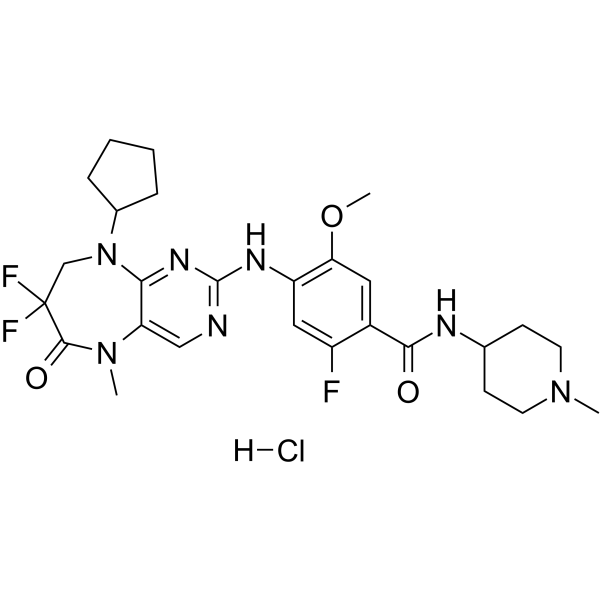
TAK-960 monohydrochloride
Based on 2 publication(s) in Google Scholar
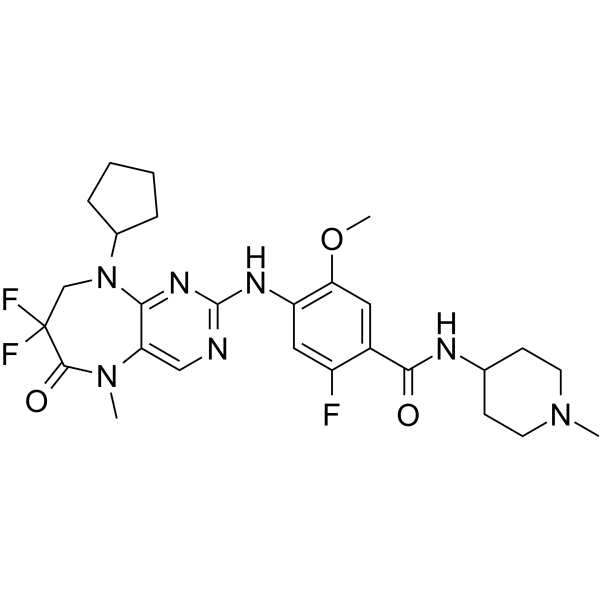
TAK-960 monohydrochloride is an orally available, selective inhibitor of polo-like kinase 1 (PLK1), with an IC50 of 0.8 nM. TAK-960 monohydrochloride also shows inhibitory activities against PLK2 and PLK3, with IC50s of 16.9 and 50.2 nM, respectively. TAK-960 monohydrochloride inhibits proliferation of multiple cancer cell lines and exhibits significant efficacy against multiple tumor xenografts.
For research use only. We do not sell to patients.
- CAS No.: 2108449-45-0
- Formula: C27H35ClF3N7O3
- Molecular Weight:598.06
-
Storage:
Please store the product under the recommended conditions in the Certificate of Analysis.

To place orders, for customer services and technical support, please contact: MedChemExpress USA
Tel: 609-228-6898 E-mail: [email protected] [email protected]


-
 Biological Activity
-
Chemical Information
- Protocols
- Purity & Documentation
- References
-
 Help & FAQs


-
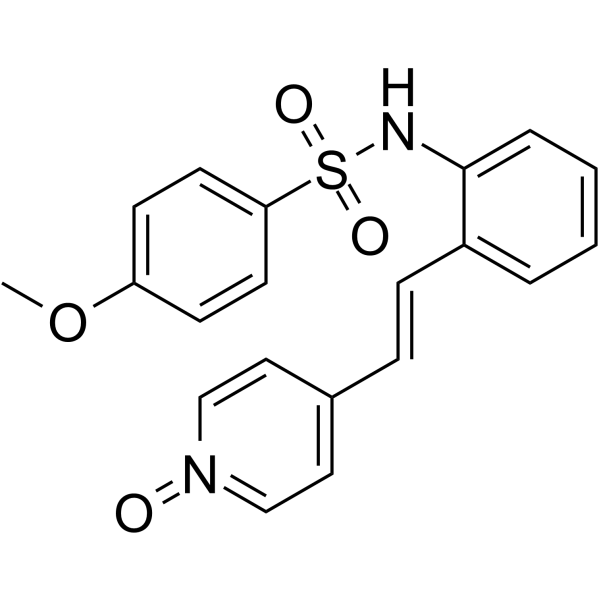
HY-13647
HMN-176PLK Inhibitor -
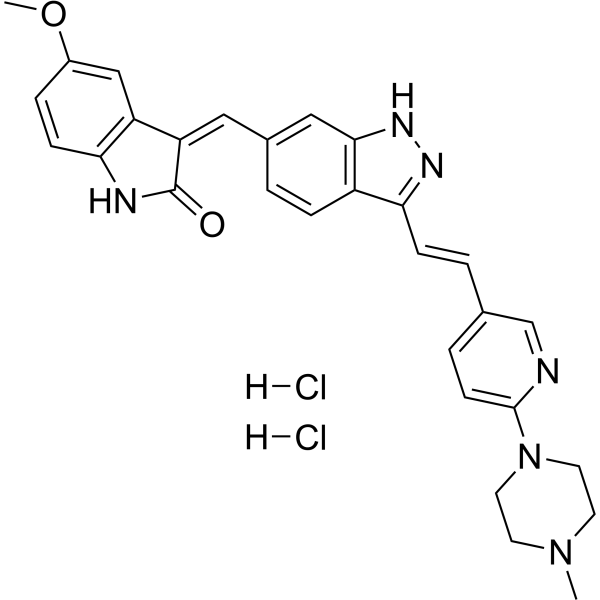
HY-132135
(1E)-CFI-400437 dihydrochloridePLK4 Inhibitor -
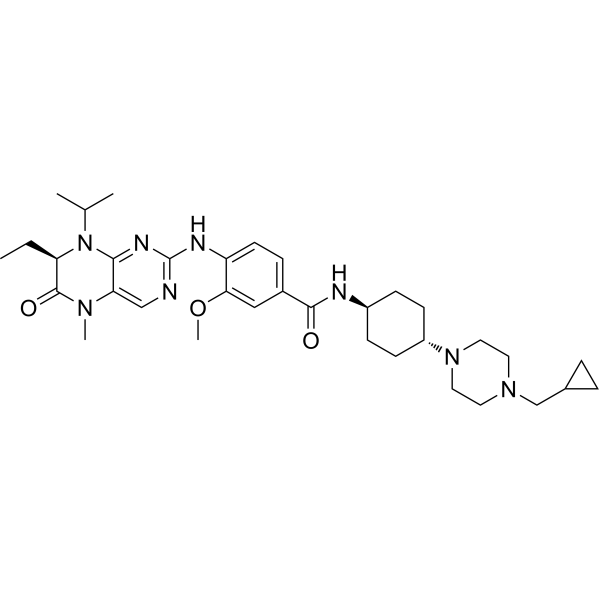
HY-12137
VolasertibPLK1 Inhibitor -
HY-15828
OnvansertibPLK1 Inhibitor -
HY-12300B
Ocifisertib fumaratePLK4 Inhibitor -
HY-15160
TAK-960PLK1 Inhibitor -
HY-50877
GSK461364PLK1 Inhibitor -
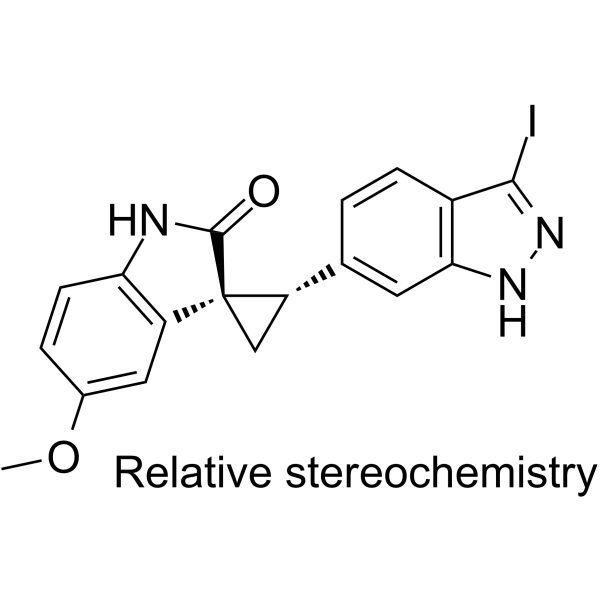
HY-134775
PLK4-IN-1PLK4 Inhibitor -
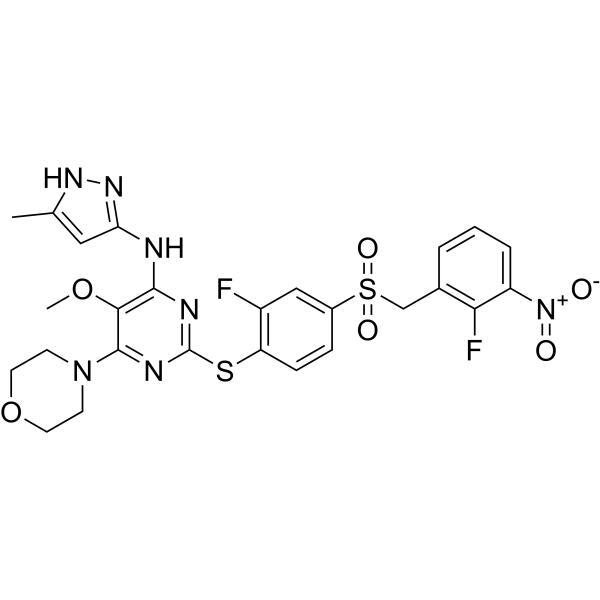
HY-18682
CentrinonePLK4 Inhibitor -
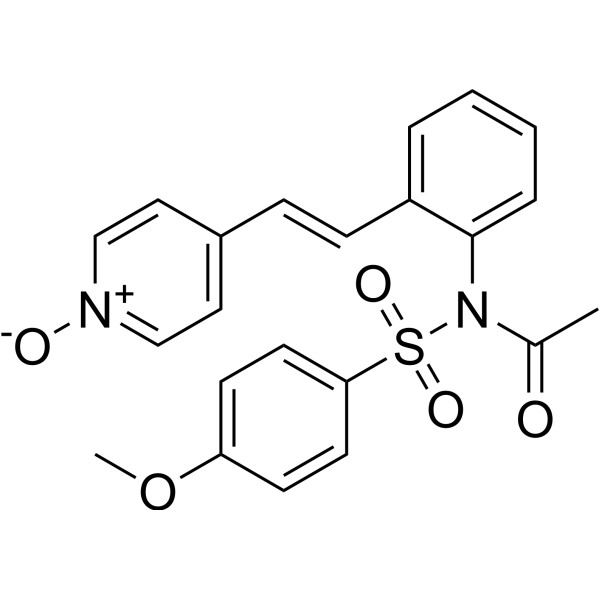
HY-12045
HMN-214PLK1 Inhibitor -
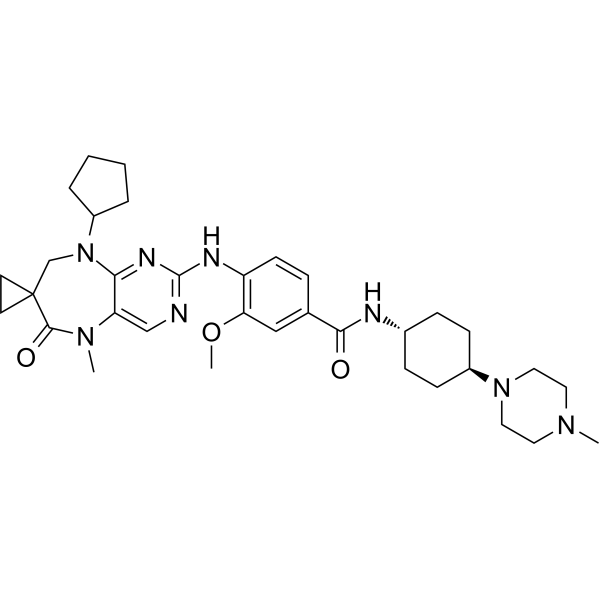
HY-147298
PlogosertibPLK1 Inhibitor -
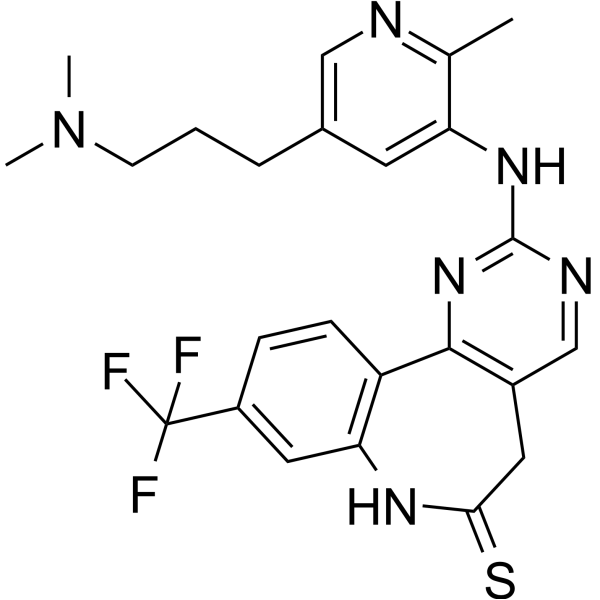
HY-15155
MLN0905PLK1 Inhibitor
Publications Citing Use of MedChemExpress (MCE) TAK-960 monohydrochloride
More

Biological Activity
Description
In Vitro
TAK-960 monohydrochloride treatment causes accumulation of G2-M cells, aberrant polo mitosis morphology, and increased phosphorylation of histone H3 (pHH3). TAK-960 monohydrochloride (2-1000 nM; 72 hours) inhibits proliferation of multiple cancer cell lines, with mean EC50 values ranging from 8.4 to 46.9 nM, but not in nondividing normal cells[1].
TAK-960 monohydrochloride (8 nM) leads to G2/M cell cycle arrest without significant cytotoxicity in HeLa cells[2].
MedChemExpress (MCE) has not independently confirmed the accuracy of these methods. They are for reference only. Further protocols information, click here.
-
Cell Line:HT-29, HCT116, COLO320DM, HCT-15, RKO, SW480, K-562….Hela, DU 145 cells
-
Concentration:2-1000 nM
-
Incubation Time:72 hours
-
Result:Inhibited proliferation of human cancer cell lines regardless of TP53 and KRAS mutation and MDR1 expression status.
In Vivo
In animal models, TAK-960 monohydrochloride (p.o.) increases pHH3 in a dose-dependent manner and significantly inhibits the growth of HT-29 colorectal cancer xenografts[1].
MedChemExpress (MCE) has not independently confirmed the accuracy of these methods. They are for reference only.
-
Animal Model:nude mice or SCID mice (bearing HCT116, PC-3, BT474, A549, NCI-H1299, NCI-H1975, A2780, and MV4-11 cells)[1]
-
Dosage:10 mg/kg
-
Administration:P.o.; once daily for 2 weeks
-
Result:Substantial antitumor activity and good tolerability.


Chemical Information
-
CAS No. 2108449-45-0
-
Molecular Weight 598.06
-
Formula C27H35ClF3N7O3
-
SMILES
[H]Cl.O=C(NC1CCN(C)CC1)C2=CC(OC)=C(NC3=NC=C(N4C)C(N(C5CCCC5)CC(F)(F)C4=O)=N3)C=C2F
-
Shipping
Room temperature in continental US; may vary elsewhere.
-
Storage
Please store the product under the recommended conditions in the Certificate of Analysis.


Publications (2)
-
Journal Impact Factor
-
Most Recent
-
Sci Transl Med
PP2A inhibition is a druggable MEK inhibitor resistance mechanism in KRAS-mutant lung cancer cells. [Abstract]2018 Jul 18;10(450):eaaq1093. PMID: 30021885 -
Cancer Lett
Inhibition of the mitotic kinase PLK1 overcomes therapeutic resistance to BET inhibitors in triple negative breast cancer. [Abstract]2020 Oct 28:491:50-59. PMID: 32735909

Protocols
-
Cell Cytotoxicity Assay
Cytotoxicity assays are usually based on the assessment of cell membrane damage, which can also be indirectly detected by measuring cell viability. Detection methods include MTT assay, CKK-8 assay, LDH assay and ATP assay, etc.
-
Cell Viability Determination by MTT Colorimetric Assay
The following protocol uses the MTT colorimetric assay as a classic literature-established method for assessing cell viability/metabolic activity in cultured mammalian cells. MTT[3-(4,5-dimethylthiazol-2-yl)-2,5-diphenyltetrazolium bromide] is reduced by metabolically active cells to a colored formazan product; the amount of formazan is quantified spectrophotometrically and provides an indirect measure of metabolically active viable cells. Importantly, MTT reduction reflects cellular oxidoreductase/metabolic activity rather than an absolute direct count of living cells, so changes in cellular metabolism can alter the signal independently of cell number.


Purity & Documentation
References
[1]. Hikichi Y, et al. TAK-960, a novel, orally available, selective inhibitor of polo-like kinase 1, shows broad-spectrum preclinical antitumor activity in multiple dosing regimens. Mol Cancer Ther. 2012 Mar;11(3):700-9. [Content Brief]
[2]. Inoue M, et al. PLK1 blockade enhances therapeutic effects of radiation by inducing cell cycle arrest at the mitotic phase. Sci Rep. 2015 Oct 27;5:15666. [Content Brief]

Calculators
Concentration (start) × Volume (start) = Concentration (final) × Volume (final)


TAK-960 monohydrochloride Related Classifications
HY-15160C Related Classifications
 Powered by Bioz