



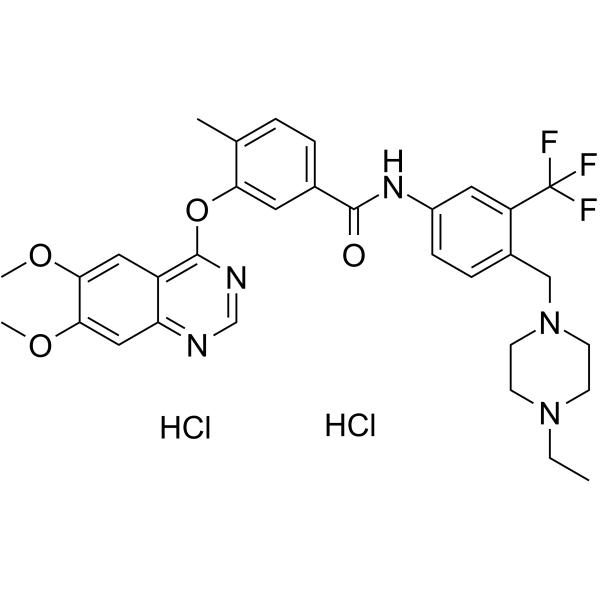
TL02-59 dihydrochloride
Based on 8 publication(s) in Google Scholar
TL02-59 dihydrochloride is an orally active, selective Src-family kinase Fgr inhibitor with an IC50 of 0.03 nM. TL02-59 dihydrochloride inhibits Lyn and Hck with IC50s of 0.1 nM and 160 nM, respectively. TL02-59 dihydrochloride potently suppresses acute myelogenous leukemia (AML) cell growth.
For research use only. We do not sell to patients.
- CAS No.: 2415263-06-6
- Formula: C32H36Cl2F3N5O4
- Molecular Weight:682.56
-
Storage:
Please store the product under the recommended conditions in the Certificate of Analysis.

To place orders, for customer services and technical support, please contact: MedChemExpress USA
Tel: 609-228-6898 E-mail: [email protected] [email protected]


-
 Biological Activity
-
Chemical Information
- Purity & Documentation
- References
-
 Help & FAQs


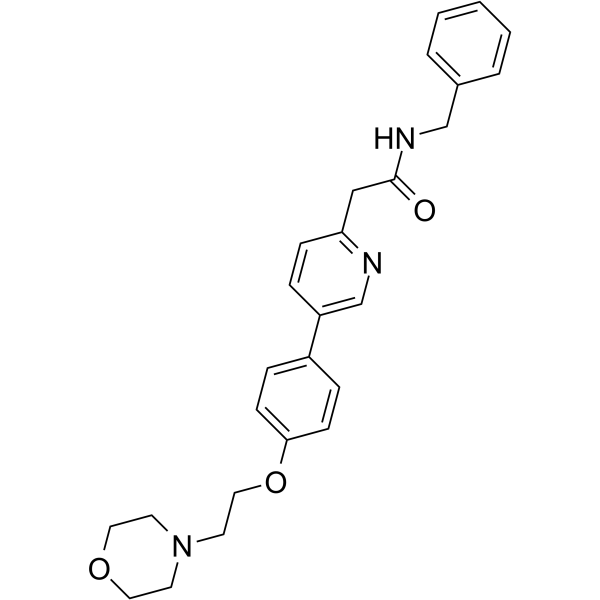
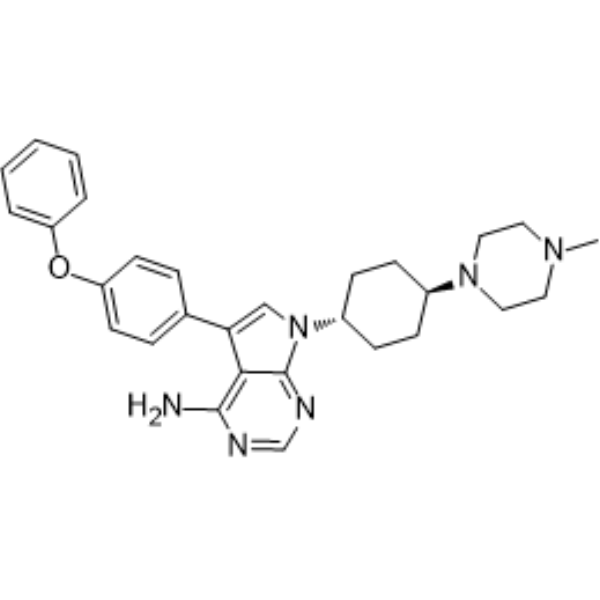
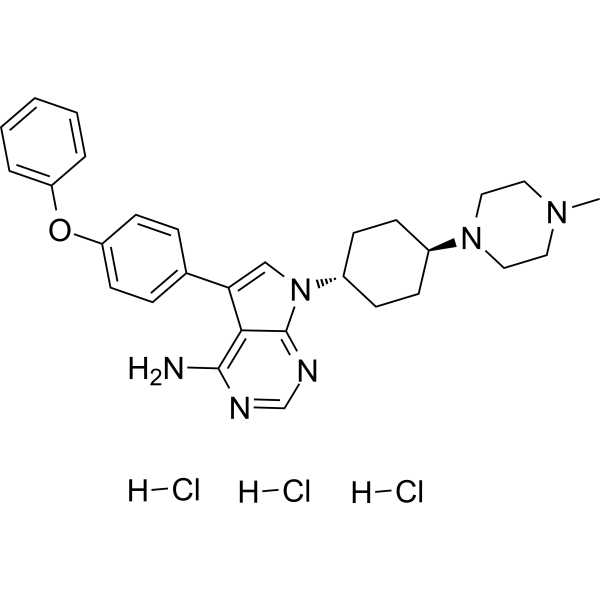
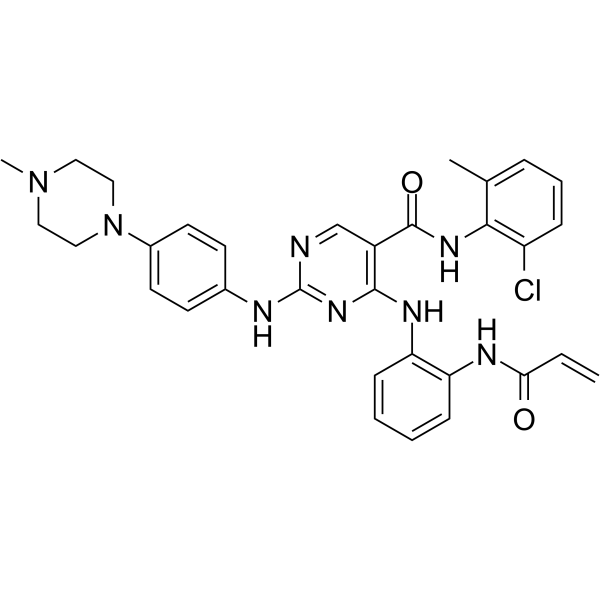
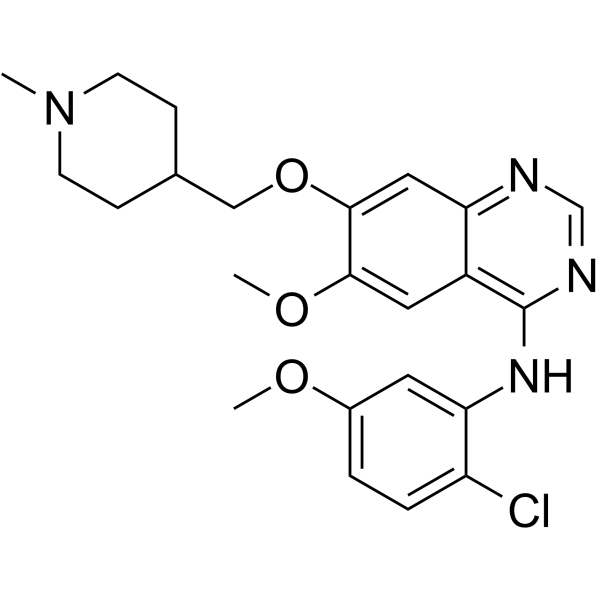
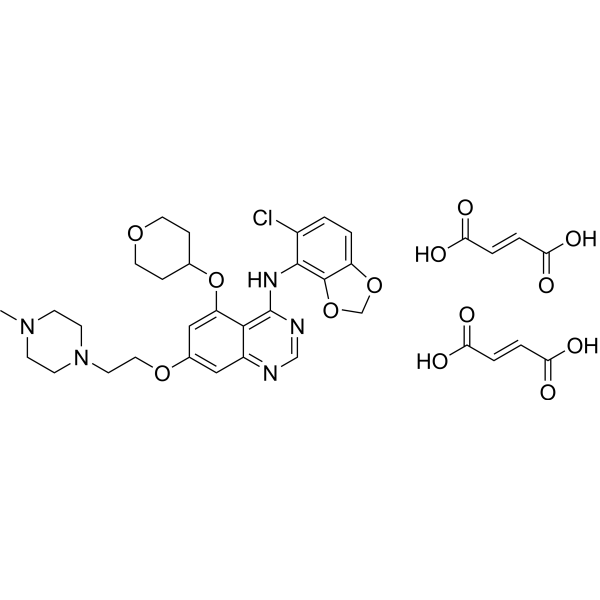
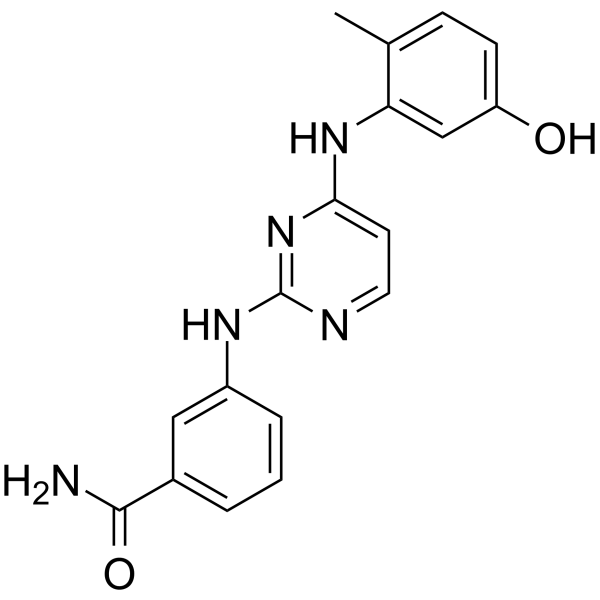
Publications Citing Use of MedChemExpress (MCE) TL02-59 dihydrochloride
More- Cell Commun Signal. 2024 Dec 18;22(1):598. [Abstract]
- Cell Death Discov. 2023 Jul 17;9(1):252. [Abstract]
- Cell Death Discov. 2021 Nov 12;7(1):349. [Abstract]
- J Transl Med. 2023 Jul 20;21(1):486. [Abstract]
- Cell Rep. 2026 Jan 21;45(2):116899. [Abstract]
- Neurosci Bull. 2026 Apr 9. [Abstract]
- In Vivo. 2021 Nov-Dec;35(6):3053-3066. [Abstract]
- bioRxiv. 2026 Feb 11.


Biological Activity
Description
IC50 & Target
IC50: 0.03 nM (Fgr), 0.1 nM (Lyn) and 160 nM (Hck)[1]
In Vitro
TL02-59 dihydrochloride (0.1-1000 nM; 6 hours) potently inhibits Fgr autophosphorylation in TF-1 cells, with paritial inhibition at 0.1-1 nM and complete inhibition above 10 nM. Hck, Lyn and Flt3 are inhibited in the 100 to 1000 nM range[1].
TL02-59 dihydrochloride inhibits the growth and induced apoptosis of AML cell lines expressing this kinase with single-digit nM potency[1].
TL02-59 dihydrochloride induces growth arrest in primary AML bone marrow samples[1].
MedChemExpress (MCE) has not independently confirmed the accuracy of these methods. They are for reference only.
-
Cell Line:TF-1 myeloid cells
-
Concentration:0.1, 1, 10, 100, 1000 nM
-
Incubation Time:6 hours
-
Result:Inhibited Fgr autophosphorylation in TF-1 cells.
In Vivo
TL02-59 has a t1/2 of 5.7 h by i.v injection and 6.5 h by p.o. administration, respectively[1].
MedChemExpress (MCE) has not independently confirmed the accuracy of these methods. They are for reference only.
-
Animal Model:NOD.Cg-PrkdcscidIl2rgtm1Wjl/SzJ (NSG) mice with human MV4-11 AML cells[1]
-
Dosage:1 and 10 mg/kg
-
Administration:Oral; for three weeks
-
Result:Eliminated AML cells from the spleen and peripheral blood in a mouse model of AML, while dramatically suppressing bone marrow involvement.


Chemical Information
-
CAS No. 2415263-06-6
-
Molecular Weight 682.56
-
Formula C32H36Cl2F3N5O4
-
SMILES
O=C(NC1=CC=C(CN2CCN(CC)CC2)C(C(F)(F)F)=C1)C3=CC=C(C)C(OC4=C5C=C(OC)C(OC)=CC5=NC=N4)=C3.Cl.Cl
-
Shipping
Room temperature in continental US; may vary elsewhere.
-
Storage
Please store the product under the recommended conditions in the Certificate of Analysis.


Publications (8)
-
Journal Impact Factor
-
Most Recent
-
Cell Commun Signal
CD91-mediated reprogramming of DCs by immunogenic heat shock proteins requires the kinases AXL and Fgr. [Abstract]2024 Dec 18;22(1):598. PMID: 39696592 -
Cell Death Discov
2023 Jul 17;9(1):252. PMID: 37460469 -
Cell Death Discov
2021 Nov 12;7(1):349. PMID: 34772919 -
J Transl Med
An Fgr kinase inhibitor attenuates sepsis-associated encephalopathy by ameliorating mitochondrial dysfunction, oxidative stress, and neuroinflammation via the SIRT1/PGC-1α signaling pathway. [Abstract]2023 Jul 20;21(1):486. PMID: 37475042 -
Cell Rep
A positive feedback loop between FGR and p65 sustains satellite glial cell activation and chronic neuropathic pain. [Abstract]2026 Jan 21;45(2):116899. PMID: 41575848 -
Neurosci Bull
Targeting Fgr-STAT3 Mediated Autophagy Inhibition in the Spinal Cord Alleviates Neuropathic Pain in Rats. [Abstract]2026 Apr 9. PMID: 41957340 -
In Vivo
Silica Induced Lung Fibrosis Is Associated With Senescence, Fgr, and Recruitment of Bone Marrow Monocyte/Macrophages. [Abstract]2021 Nov-Dec;35(6):3053-3066. PMID: 34697137 -


Purity & Documentation
References

Calculators
Concentration (start) × Volume (start) = Concentration (final) × Volume (final)


TL02-59 dihydrochloride Related Classifications
HY-112852A Related Classifications
 Powered by Bioz