



Hispidol
Based on 1 publication(s) in Google Scholar
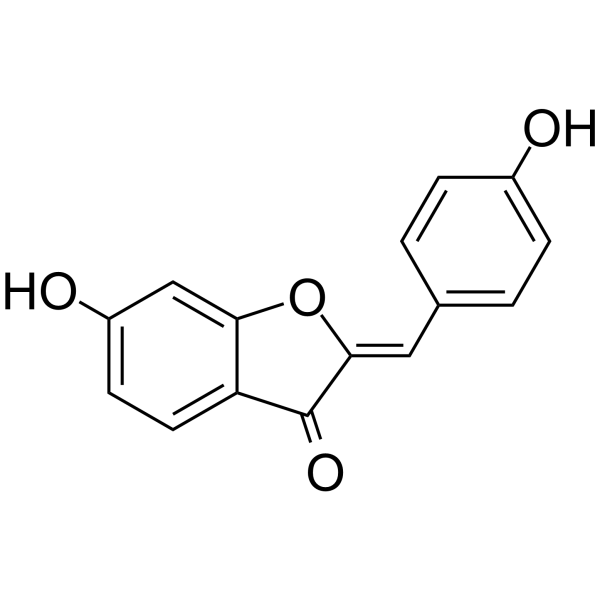
Hispidol ((Z)-Hispidol) is a potential therapeutic for inflammatory bowel disease; inhibits TNF-α induced adhesion of monocytes to colon epithelial cells with an IC50 of 0.50 μM.
For research use only. We do not sell to patients.
- Purity : 98.30%
- CAS No.: 5786-54-9
- Formula: C15H10O4
- Molecular Weight:254.24
-
Storage:Powder -20°C, 3 years , 4°C, 2 years ; In solvent -80°C, 2 years , -20°C, 1 year

To place orders, for customer services and technical support, please contact: MedChemExpress USA
Tel: 609-228-6898 E-mail: [email protected] [email protected]


-
 Biological Activity
-
Chemical Information
-
Solvent & Solubility
- Protocols
- Purity & Documentation
- References
-
 Help & FAQs


-
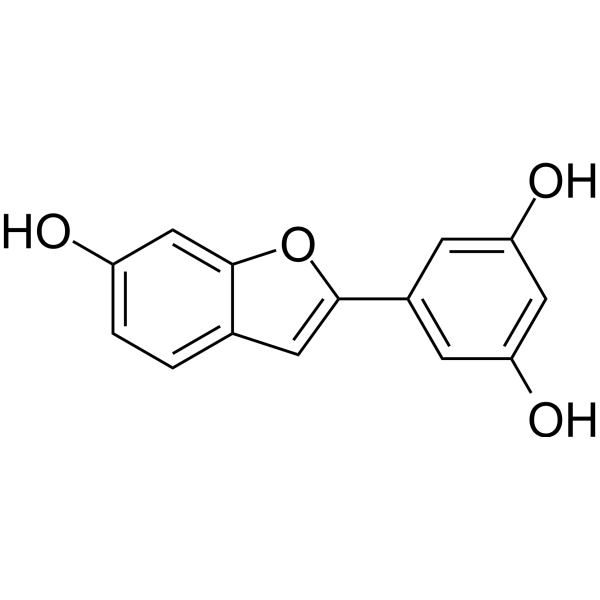
HY-122942
Moracin MEndogenous Metabolite -
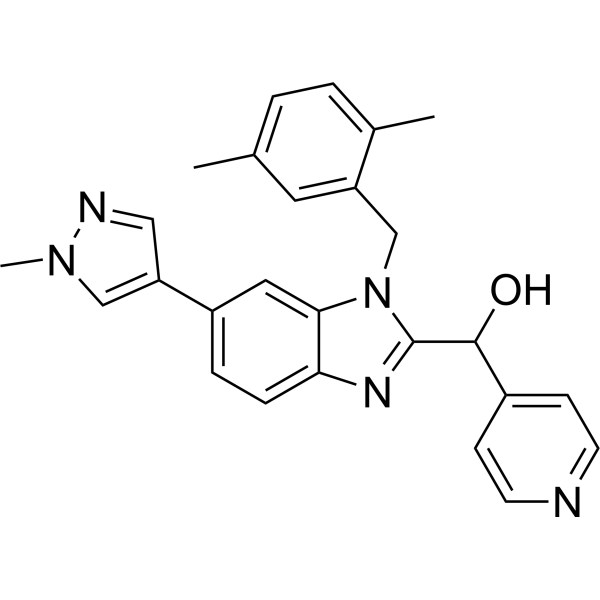
HY-133122
UCB-9260TNF Signaling Inhibitor -
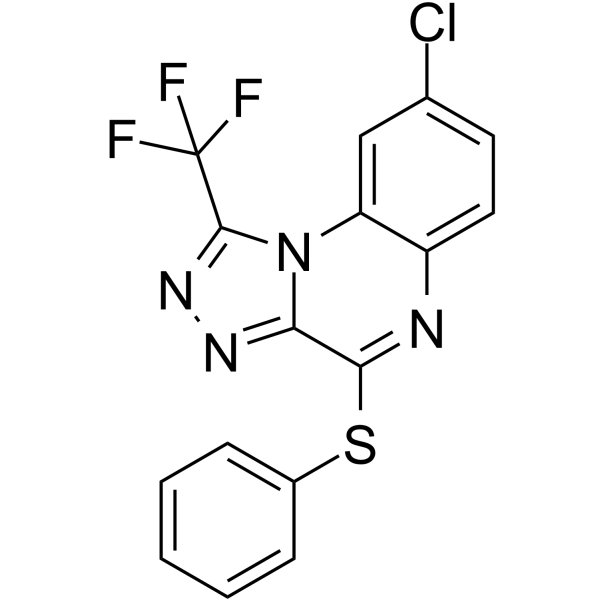
HY-110203
R-7050TNF Receptor Antagonist -
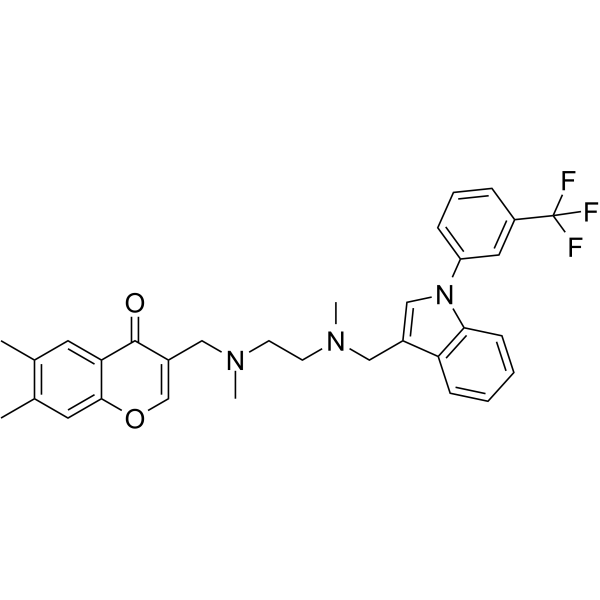
HY-111255
SPD304TNFα Inhibitor -
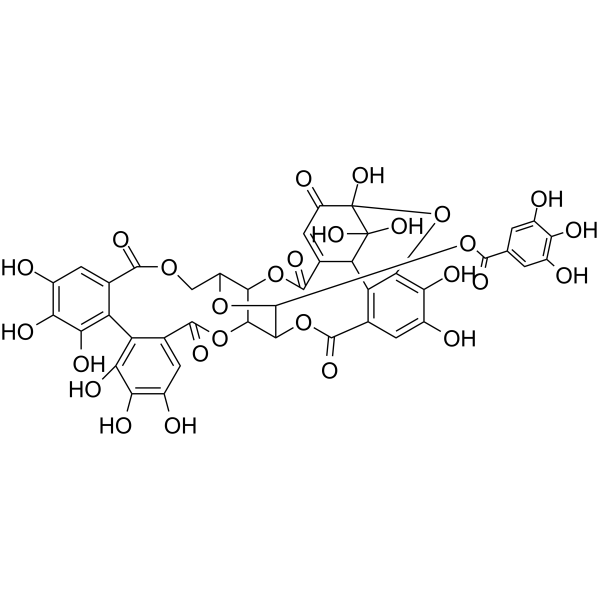
HY-N0472
GeraniinTNF Receptor Inhibitor -

HY-102040R
Hispidol (Standard)TNF-α Inhibitor -
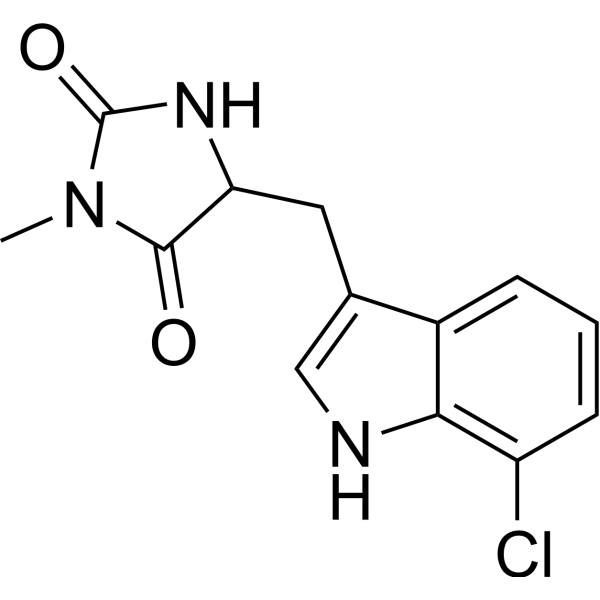
HY-14622A
Necrostatin 2 racemateRIPK1 Inhibitor -

HY-P9908
AdalimumabTNF-α Inhibitor -
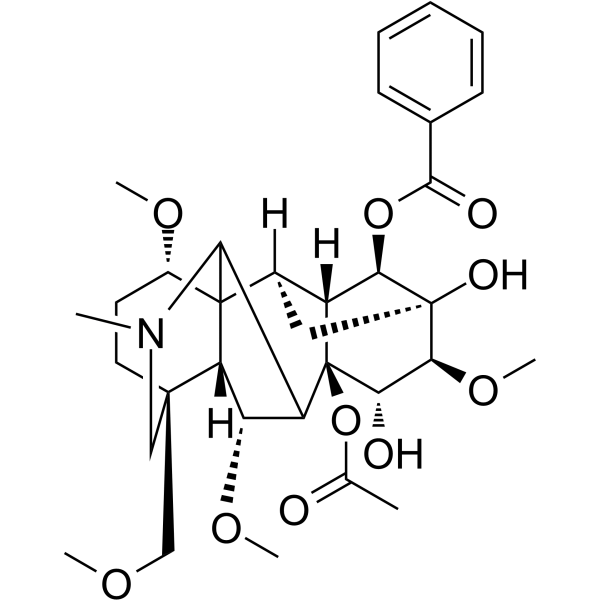
HY-N0267
HypaconitineTNF Receptor Inhibitor -
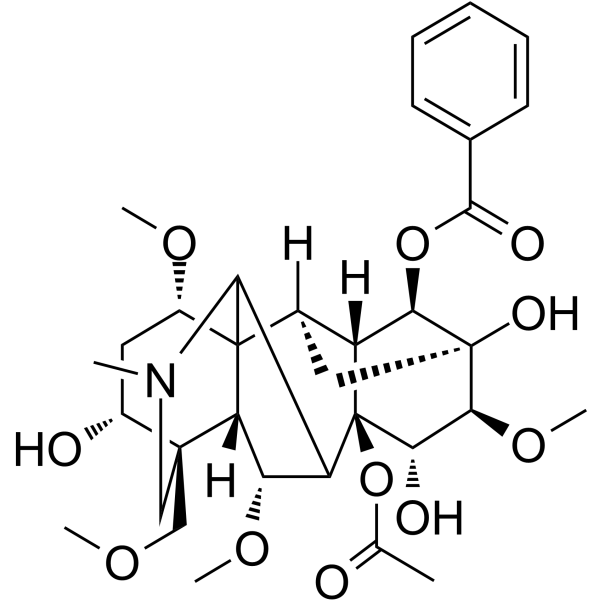
HY-N0724
MesaconitineNitric Oxide Synthase Activator -

HY-108847
EtanerceptTNF Inhibitor -
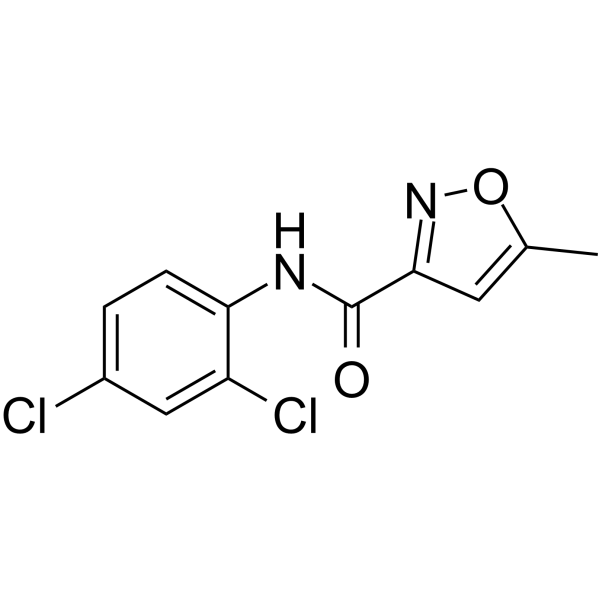
HY-117082
UTL-5gTNF-α Inhibitor
Publications Citing Use of MedChemExpress (MCE) Hispidol
More

Biological Activity
Description
Cellular Effect
|
Cell Line

|
Type | Value | Description | References |
|---|---|---|---|---|
| HT-29 | IC50 |
0.5 μM
Compound: 55
|
Inhibition of TNF-alpha-induced adhesion of BCECF-labeled human U937 cells to human HT-29 cells preincubated for 1 hr followed by TNF-alpha challenge measured after 3 hrs by fluorescence microscopic method
Inhibition of TNF-alpha-induced adhesion of BCECF-labeled human U937 cells to human HT-29 cells preincubated for 1 hr followed by TNF-alpha challenge measured after 3 hrs by fluorescence microscopic method
|
[PMID: 28646757] |
| RAW264.7 | IC50 |
1.06 μM
Compound: 2c
|
Antiinflammatory activity in mouse RAW264.7 cells assessed as inhibition of LPS-induced PGE2 production treated 1 hr before LPS challenge measured after 24 hrs by EIA
Antiinflammatory activity in mouse RAW264.7 cells assessed as inhibition of LPS-induced PGE2 production treated 1 hr before LPS challenge measured after 24 hrs by EIA
|
[PMID: 21723122] |
| RAW264.7 | IC50 |
38.7 μM
Compound: 2c
|
Antiinflammatory activity in mouse RAW264.7 cells assessed as inhibition of LPS-induced nitric oxide production after 24 hrs by Griess reaction
Antiinflammatory activity in mouse RAW264.7 cells assessed as inhibition of LPS-induced nitric oxide production after 24 hrs by Griess reaction
|
[PMID: 21723122] |
| RAW264.7 | IC50 |
99.79 μM
Compound: 2c
|
Cytotoxicity against mouse RAW264.7 cells after 24 hrs by MTT assay
Cytotoxicity against mouse RAW264.7 cells after 24 hrs by MTT assay
|
[PMID: 21723122] |
In Vitro
Hispidol shows potent inhibitory effect (>70%) on the TNF-α-induced adhesion of monocytes to colon epithelial cells, which is one of the hallmark events leading to inflammatory bowel disease (IBD). Hispidol shows strong inhibitory activities against TNF-α-induced monocytic-colonic epithelial cell adhesion as well as LPS-induced TNF-α expression, is as an excellent candidate for IBD drug development. This inhibition of TNF-α expression by hispidol corresponds to the additional inhibitory activity against AP-1 transcriptional activity, which is another transcription factor required for high level TNF-α expression[1].
MedChemExpress (MCE) has not independently confirmed the accuracy of these methods. They are for reference only.
In Vivo
MedChemExpress (MCE) has not independently confirmed the accuracy of these methods. They are for reference only.


Chemical Information
-
CAS No. 5786-54-9
-
Appearance Solid
-
Molecular Weight 254.24
-
Formula C15H10O4
-
Color Light yellow to yellow
-
SMILES
O=C1C2=CC=C(O)C=C2O/C1=C\C3=CC=C(O)C=C3
-
Synonyms
(Z)-Hispidol
-
Shipping
Room temperature in continental US; may vary elsewhere.
-
Storage
Powder -20°C 3 years 4°C 2 years In solvent -80°C 2 years -20°C 1 year


Publications (1)
-
Journal Impact Factor
-
Most Recent
-
Bioorg Med Chem
Synthesis and biological evaluation of O4'-benzyl-hispidol derivatives and analogs as dual monoamine oxidase-B inhibitors and anti-neuroinflammatory agents. [Abstract]2024 Aug 1:110:117826. PMID: 39004050


Solvent & Solubility
In Vitro:
DMSO : ≥ 100 mg/mL (393.33 mM; Hygroscopic DMSO has a significant impact on the solubility of product, please use newly opened DMSO)
* "≥" means soluble, but saturation unknown.
Please refer to the solubility information to select the appropriate solvent. Once prepared, please aliquot and store the solution to prevent product inactivation from repeated freeze-thaw cycles.
Storage method and period of stock solution: -80°C, 2 years; -20°C, 1 year. When stored at -80°C, please use it within 2 years. When stored at -20°C, please use it within 1 year.
Please refer to the solubility information to select the appropriate solvent. Once prepared, please aliquot and store the solution to prevent product inactivation from repeated freeze-thaw cycles.
Storage method and period of stock solution: -80°C, 2 years; -20°C, 1 year. When stored at -80°C, please use it within 2 years. When stored at -20°C, please use it within 1 year.
Concentration (start) × Volume (start) = Concentration (final) × Volume (final)


Purity & Documentation
-
Data Sheet (274 KB)
-
SDS (393 KB)
- English - EN (393 KB)
- Français - FR (393 KB)
- Deutsch - DE (393 KB)
- Norwegian - NO (393 KB)
- Español - ES (393 KB)
- Swedish - SV (393 KB)
- Italian - IT (393 KB)
- Korean - KR (393 KB)
- Portuguese - PT (393 KB)
-
Handling Instructions (2659 KB)
References


Complete Stock Solution Preparation Table
Please refer to the solubility information to select the appropriate solvent. Once prepared, please aliquot and store the solution to prevent product inactivation from repeated freeze-thaw cycles.
Storage method and period of stock solution: -80°C, 2 years; -20°C, 1 year. When stored at -80°C, please use it within 2 years. When stored at -20°C, please use it within 1 year.
| Optional Solvent | Concentration Solvent Mass | 1 mg | 5 mg | 10 mg | 25 mg |
|---|---|---|---|---|---|
| DMSO | 1 mM | 3.9333 mL | 19.6665 mL | 39.3329 mL | 98.3323 mL |
| 5 mM | 0.7867 mL | 3.9333 mL | 7.8666 mL | 19.6665 mL | |
| 10 mM | 0.3933 mL | 1.9666 mL | 3.9333 mL | 9.8332 mL | |
| 15 mM | 0.2622 mL | 1.3111 mL | 2.6222 mL | 6.5555 mL | |
| 20 mM | 0.1967 mL | 0.9833 mL | 1.9666 mL | 4.9166 mL | |
| 25 mM | 0.1573 mL | 0.7867 mL | 1.5733 mL | 3.9333 mL | |
| 30 mM | 0.1311 mL | 0.6555 mL | 1.3111 mL | 3.2777 mL | |
| 40 mM | 0.0983 mL | 0.4917 mL | 0.9833 mL | 2.4583 mL | |
| 50 mM | 0.0787 mL | 0.3933 mL | 0.7867 mL | 1.9666 mL | |
| 60 mM | 0.0656 mL | 0.3278 mL | 0.6555 mL | 1.6389 mL | |
| 80 mM | 0.0492 mL | 0.2458 mL | 0.4917 mL | 1.2292 mL | |
| 100 mM | 0.0393 mL | 0.1967 mL | 0.3933 mL | 0.9833 mL |


Hispidol Related Classifications
HY-102040 Related Classifications
 Powered by Bioz