



β-Elemene
Based on 8 publication(s) in Google Scholar
β-Elemene ((-)-β-Elemene; Levo-β-elemene) is isolated from natural plant Curcuma aromatica with an antitumor activity. β-Elemene can induce cell apoptosis.
Nur für Forschungszwecke. Wir verkaufen nicht an Patienten.
- Reinheit : 99.62%
- CAS. Nr.: 515-13-9
- Formel: C15H24
- Molecular Weight:204.35
-
Speicherung:
4°C, stored under nitrogen
* In solvent : -80°C, 6 months; -20°C, 1 month (stored under nitrogen)

To place orders, for customer services and technical support, please contact: MedChemExpress USA
Tel: 609-228-6898 E-mail: [email protected] [email protected]


-
 Biologische Aktivität
-
Chemical Information
-
Lösungsmittel & Löslichkeit
- Protokoll
- Reinheit & Dokumentation
- Verweise
-
 Help & FAQs


-
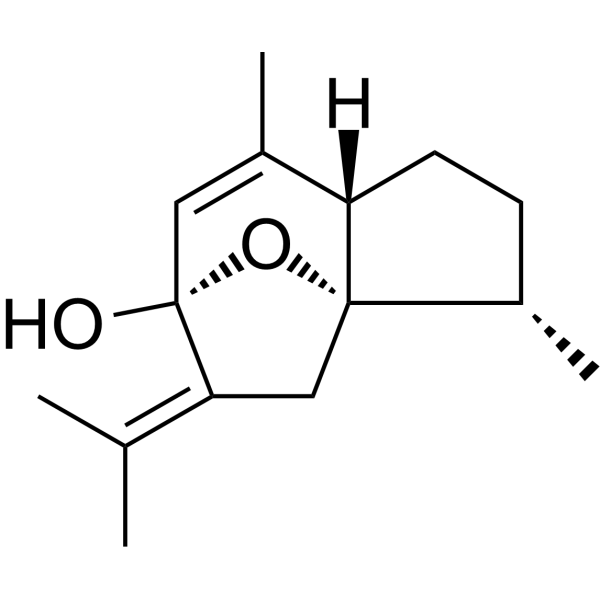
HY-N2259
CurcumenolCYP3A4 Inhibitor -
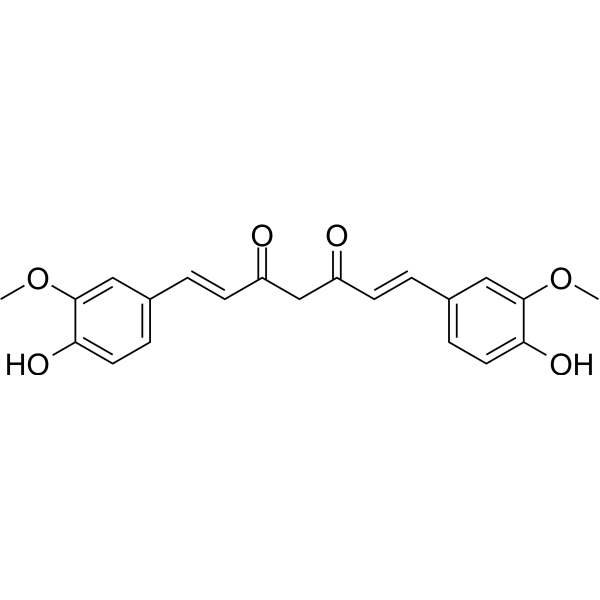
HY-N0005
Curcuminp300 Histone Acetylatransferase Inhibitor -
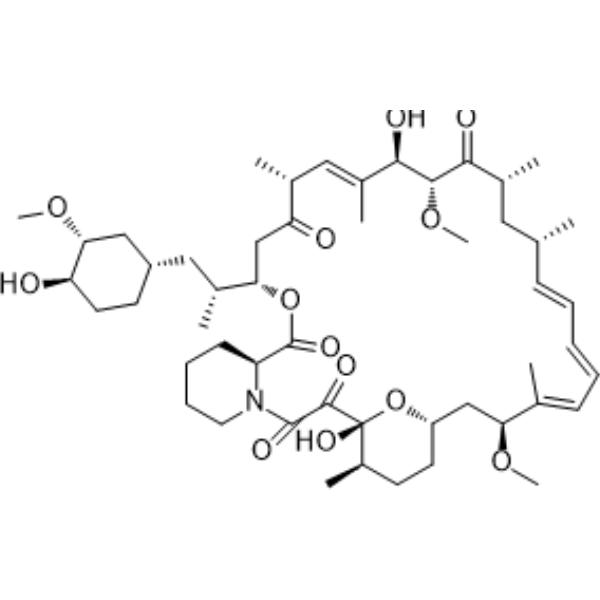
HY-10219
RapamycinmTOR Inhibitor -
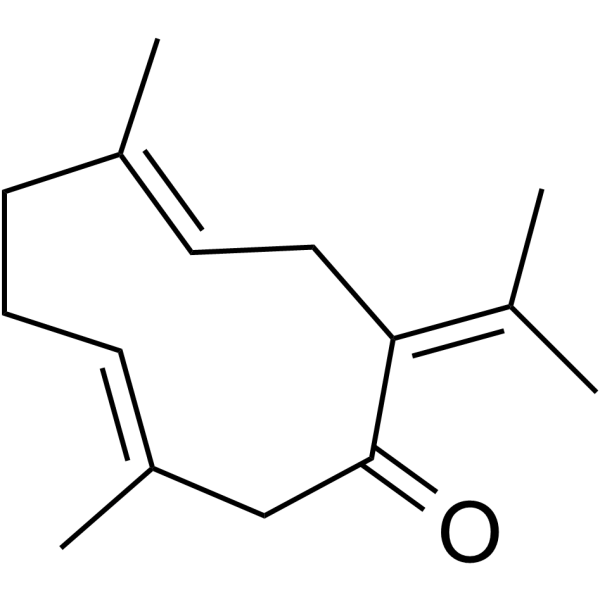
HY-N0440
GermacroneAnti-viral/Cancer/Inflammatory Agent -
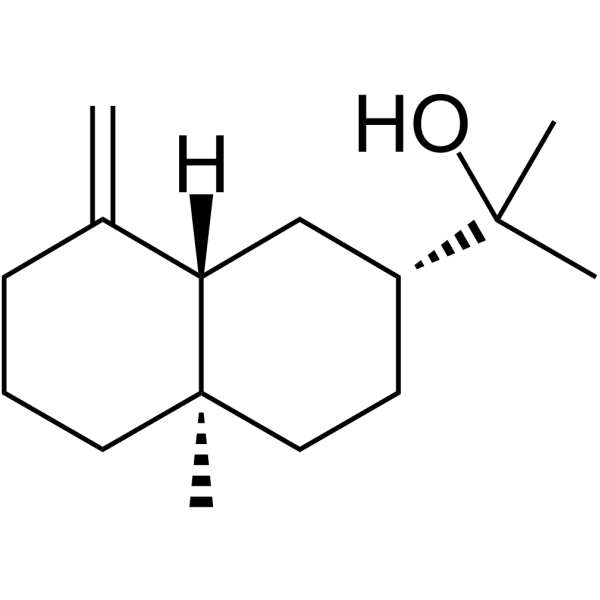
HY-N6018
β-EudesmolAnti-inflammatory Agent -
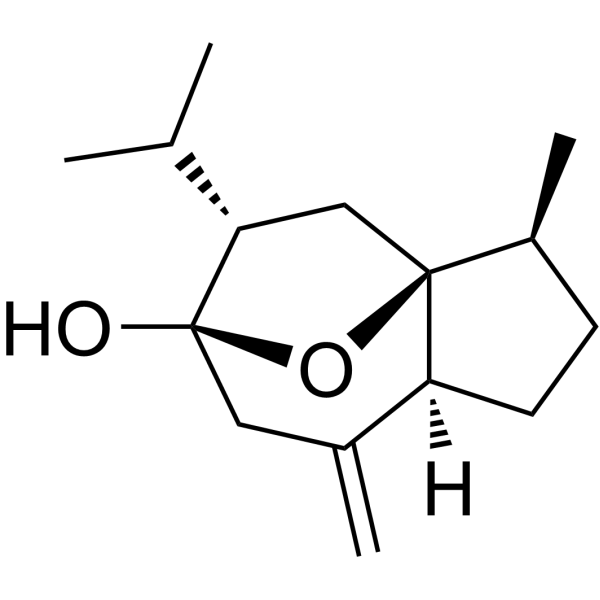
HY-N0104
CurcumolApoptosis Inducer -
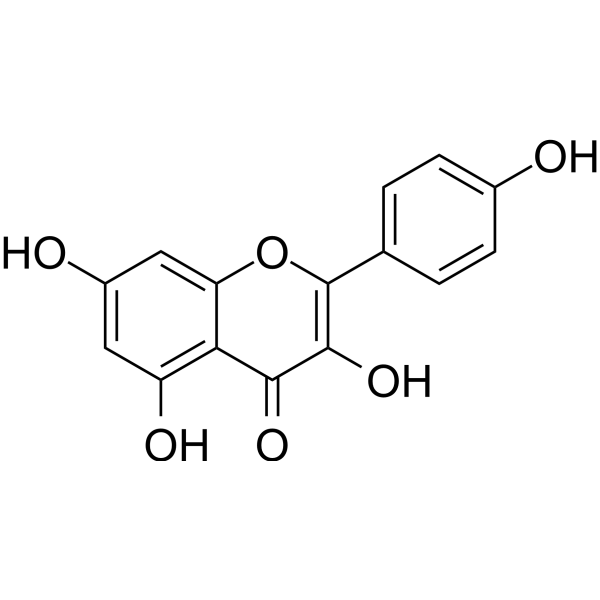
HY-14590
KaempferolEstrogen Receptor α Inhibitor -

HY-107324R
β-Elemene (Standard)Apoptosis Activator -
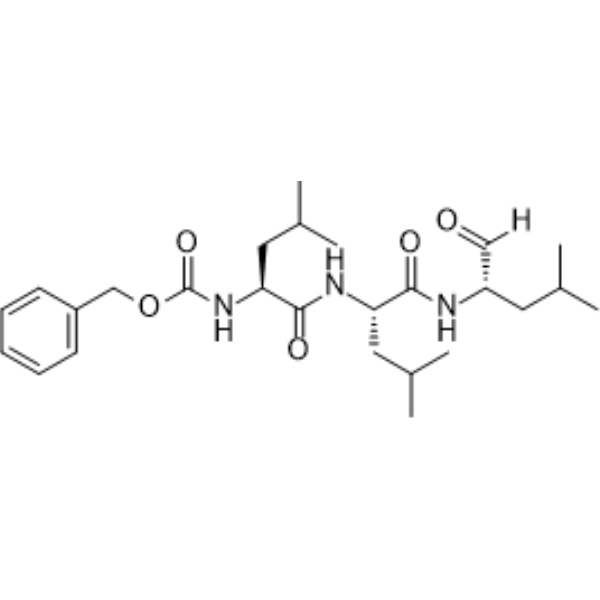
HY-13259
MG-132Proteasome Inhibitor -
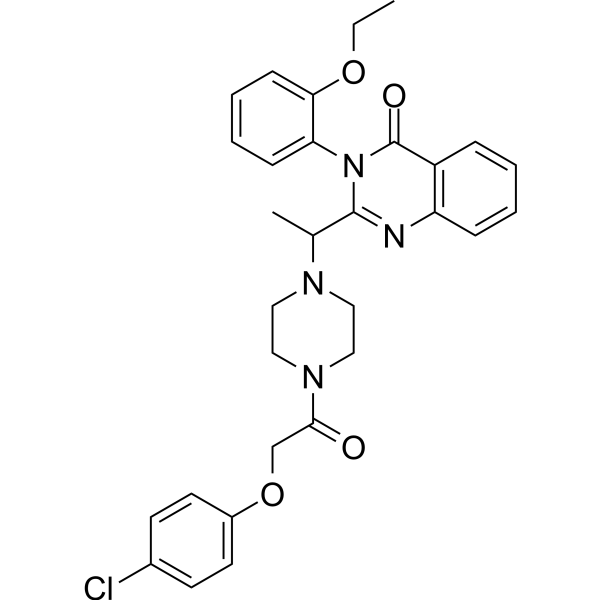
HY-15763
ErastinFerroptosis Inducer -
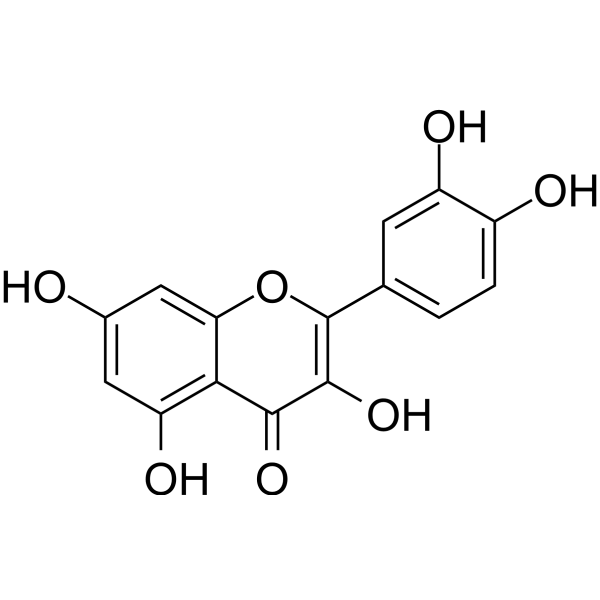
HY-18085
QuercetinFlavonoid Antioxidant -
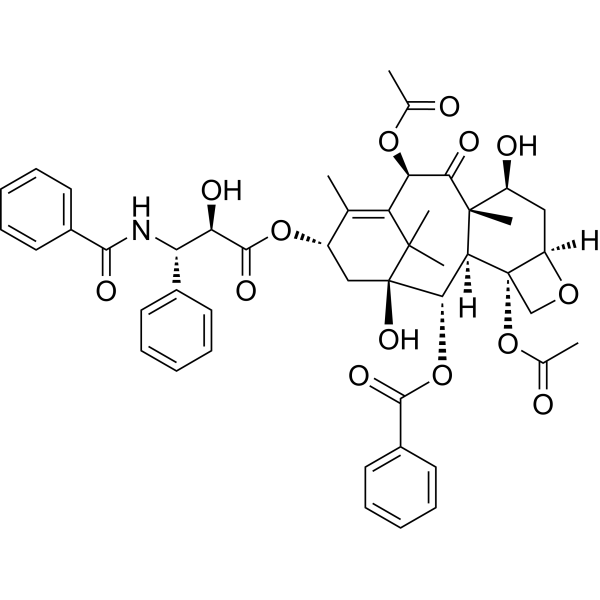
HY-B0015
PaclitaxelAntitumor Agent
Publications Citing Use of MedChemExpress (MCE) β-Elemene
More- Adv Sci (Weinh). 2026 May 27:e21445. [Abstract]
- Phytomedicine. 2026 Jul:156:158242. [Abstract]
- Antioxidants. 2024 Dec 9;13(12):1499. [Abstract]
- Sci Rep. 2023 Jul 27;13(1):12160. [Abstract]
- IUBMB Life. 2022 Jun;74(6):508-518. [Abstract]
- BMC Pulm Med. 2025 Feb 28;25(1):97. [Abstract]
- Biochim Biophys Acta Gen Subj. 2026 Mar;1870(3):130901. [Abstract]
- Heliyon. 2024 May 18;10(10):e31537. [Abstract]
 Customer Validation & Images

-
Cell Proliferation/Viability Assay
-
WB
-
Cell Proliferation/Viability Assay
-
RT-PCR
-
WB


Biologische Aktivität
Beschreibung
Cellular Effect
|
Cell Line

|
Type | Value | Description | References |
|---|---|---|---|---|
| A549 | IC50 |
227 μM
Compound: 1
|
Antiproliferative activity against human A549 cells assessed as inhibition of cell growth measured after 48 hrs by CCK8 assay relative to control
Antiproliferative activity against human A549 cells assessed as inhibition of cell growth measured after 48 hrs by CCK8 assay relative to control
|
[PMID: 36240626] |
| HCT-116 | IC50 |
781.9 μM
Compound: 1
|
Antiproliferative activity against human HCT-116 cells assessed as inhibition of cell growth measured after 48 hrs by CCK8 assay relative to control
Antiproliferative activity against human HCT-116 cells assessed as inhibition of cell growth measured after 48 hrs by CCK8 assay relative to control
|
[PMID: 36240626] |
| HeLa | IC50 |
213.51 μM
Compound: beta-Elemene
|
Antiproliferative activity against human HeLa cells after 72 hrs by MTT assay
Antiproliferative activity against human HeLa cells after 72 hrs by MTT assay
|
[PMID: 28463784] |
| HeLa | IC50 |
236.2 μM
Compound: beta-elemene
|
Antiproliferative activity against human HeLa cells after 24 hrs by WST-1 assay
Antiproliferative activity against human HeLa cells after 24 hrs by WST-1 assay
|
[PMID: 19128976] |
| PC-3 | IC50 |
276.2 μM
Compound: 1
|
Antiproliferative activity against human PC-3 cells assessed as inhibition of cell growth measured after 48 hrs by CCK8 assay relative to control
Antiproliferative activity against human PC-3 cells assessed as inhibition of cell growth measured after 48 hrs by CCK8 assay relative to control
|
[PMID: 36240626] |
| SGC-7901 | IC50 |
236.27 μM
Compound: beta-Elemene
|
Antiproliferative activity against human SGC7901 cells after 72 hrs by MTT assay
Antiproliferative activity against human SGC7901 cells after 72 hrs by MTT assay
|
[PMID: 28463784] |
| U-251 | IC50 |
180.8 μM
Compound: 1
|
Antiproliferative activity against human U-251 cells assessed as inhibition of cell growth measured after 48 hrs by CCK8 assay relative to control
Antiproliferative activity against human U-251 cells assessed as inhibition of cell growth measured after 48 hrs by CCK8 assay relative to control
|
[PMID: 36240626] |
| U-87MG ATCC | IC50 |
179.72 μM
Compound: beta-Elemene
|
Antiproliferative activity against human U87 cells after 72 hrs by MTT assay
Antiproliferative activity against human U87 cells after 72 hrs by MTT assay
|
[PMID: 28463784] |
| U-87MG ATCC | IC50 |
266.3 μM
Compound: 1
|
Antiproliferative activity against human U-87 MG cells assessed as inhibition of cell growth measured after 48 hrs by CCK8 assay relative to control
Antiproliferative activity against human U-87 MG cells assessed as inhibition of cell growth measured after 48 hrs by CCK8 assay relative to control
|
[PMID: 36240626] |
In Vitro
β-Elemene (0-200 μg/ml; 24 hours) shows IC50 values of 72.8 μg/ml; 47.4 μg/ml; 61.5 μg/ml; 3.661 μg/ml; 68 μg/ml; 72.12 μg/ml; 37.894 μg/ml and 37.703 μg/ml for SV-HUC-1, T24, 5637, TCCSUP, J82,UMUC-3,RT4, and SW780 cells, respectively[1]. β-Elemene (0-75 μg/ml; 24 hours) decreases cell number from 50 μg/ml and is notably decreased at 75 μg/ml, induces dose-dependent G1-phase arrest in T24cells and significantly reduces the percentage of cells in the S-phase[1]. β-Elemene (50 μg/ml; 12 hours) downregulates the expression levels of p-STAT3 and the cell cycle-related proteins cyclin D1, CDK4 and CDK6, and upregulates p21 and p27expression in T24 cells [1]. β-Elemene (50 μg/ml; 24 hours) enhances cisplatin-induced apoptosis by activating the ROS-AMPK signaling pathway[1].
MedChemExpress (MCE) has not independently confirmed the accuracy of these methods. They are for reference only.
-
Cell Line:T24, 5637, TCCSUP, J82, UM-UC-3, RT4 and SW780 cells
-
Concentration:0, 6.25, 12.5, 25, 50, 100, 150 and 200 µg/ml
-
Incubation Time:24 hours
-
Result:Inhibited the proliferation of RT4, SW780, J82, UMUC-3, TCCSUP, 5637 and T24 human bladder cancer cells and SV-HUC-1 human urothelial cells.
-
Cell Line:T24 and 5637 cells
-
Concentration:0, 25, 50 and 75 µg/ml
-
Incubation Time:24 hours
-
Result:Induced the percentage of cells in the S-phase as a dose-dependent manner.
-
Cell Line:T24 cells
-
Concentration:50 µg/ml
-
Incubation Time:24 hours
-
Result:Downregulated p-STAT3 and cell cycle-related proteins.
Clinical Trial
| NCT Number | Sponsor | Condition | Start Date |
Phase
|
|---|---|---|---|---|
| NCT01329991 | Plexxikon| | 2011-05 | PHASE1 |


Chemical Information
-
CAS. Nr. 515-13-9
-
Appearance Liquid (Density: 0.862 g/cm3)
-
Molecular Weight 204.35
-
Formel C15H24
-
Color Colorless to light yellow
-
SMILES
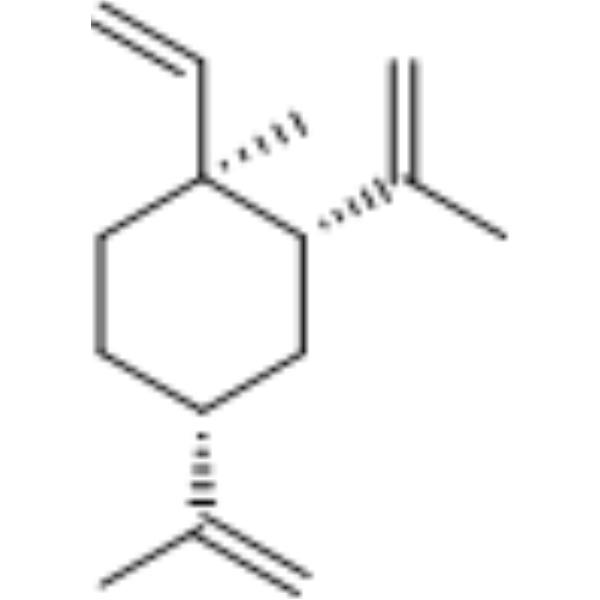
CC([C@H]1[C@@](C)(CC[C@@H](C(C)=C)C1)C=C)=C
-
Synonyms
(-)-β-Elemene; Levo-β-elemene
-
Structure Classification
-
Initial Source
-
Versand
Room temperature in continental US; may vary elsewhere.
-
Speicherung
4°C, stored under nitrogen
* In solvent : -80°C, 6 months; -20°C, 1 month (stored under nitrogen)


Publications (8)
-
Journal Impact Factor
-
Most Recent
-
Adv Sci (Weinh)
β-Elemene Rescues Radiation-Induced Enteritis by Orchestrating a Host-Microbiome Circuit That Fuels Epigenetic DNA Repair. [Abstract]2026 May 27:e21445. PMID: 42201651 -
Phytomedicine
Targeting UBE2T by β-elemene inhibits prostate cancer stem cells and bone metastasis by blocking the TRIM28/pGSK3β/β-catenin signaling. [Abstract]2026 Jul:156:158242. PMID: 42070337 -
Antioxidants
The Novel Elemene Derivative, OMe-Ph-Elemene, Attenuates Oxidative Phosphorylation and Facilitates Apoptosis by Inducing Intracellular Reactive Oxygen Species. [Abstract]2024 Dec 9;13(12):1499. PMID: 39765827 -
Sci Rep
The pharmacological mechanism of β-elemene in the treatment of esophageal cancer revealed by network pharmacology and experimental verification. [Abstract]2023 Jul 27;13(1):12160. PMID: 37500660
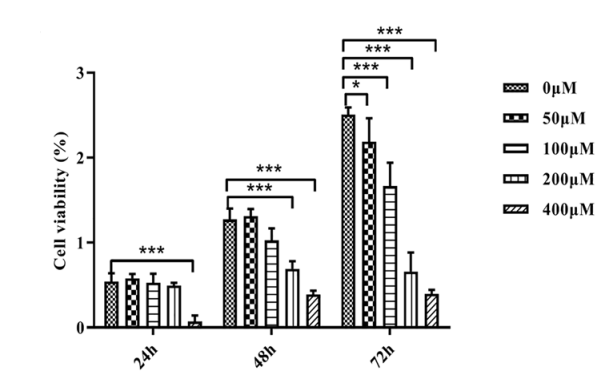
β-Elemene purchased from MedChemExpress. Usage Cited in: Sci Rep. 2023 Jul 27;13(1):12160. [Abstract]
Effects of β-elemene (0-400 μM, 0-72 h) on cell viability and mRNA expression of key targets in ECA-109 cells. Here showed the results of cell viability experiments.
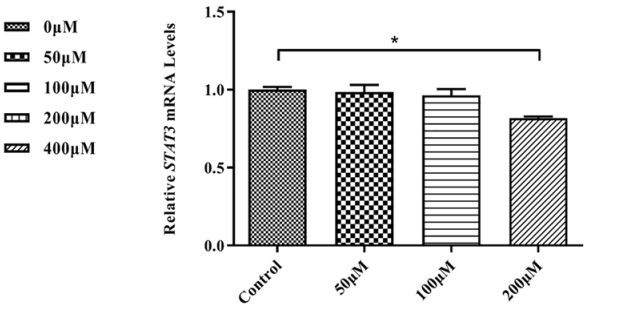
β-Elemene purchased from MedChemExpress. Usage Cited in: Sci Rep. 2023 Jul 27;13(1):12160. [Abstract]
Effects of β-elemene (0-400 μM) on cell viability and mRNA expression of key targets in ECA-109 cells. Here showed the results of the effects of β-elemene on STAT3 mRNA expressions in ECA-109 cells.
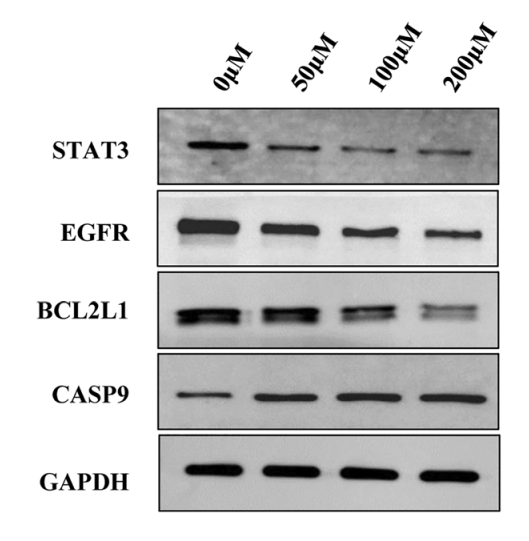
β-Elemene purchased from MedChemExpress. Usage Cited in: Sci Rep. 2023 Jul 27;13(1):12160. [Abstract]
Effects of β-elemene (0-200 μM) on protein expression levels of key targets in ECA-109 cells. Here showed the results of the protein expression levels of STAT3, EGFR, BCL2L1, and CASP9 analyzed by western blot.
-
IUBMB Life
β-Elemene induces apoptosis by activating the P53 pathway in human hypertrophic scar fibroblasts. [Abstract]2022 Jun;74(6):508-518. PMID: 35294085 -
BMC Pulm Med
β-elemene inhibits tumor-promoting in small cell lung cancer by affecting M2 macrophages and TGF-β. [Abstract]2025 Feb 28;25(1):97. PMID: 40022030 -
Biochim Biophys Acta Gen Subj
Targeting the IGF1/Twist1 axis: A novel mechanism for β-elemene-induced anoikis and EMT inhibition in breast cancer cells. [Abstract]2026 Mar;1870(3):130901. PMID: 41490592 -
Heliyon
β-elemene alleviates esophageal fibrosis after endoscopic submucosal dissection via the FAP-mediated PTEN-PI3K/AKT signaling pathway. [Abstract]2024 May 18;10(10):e31537. PMID: 38807882
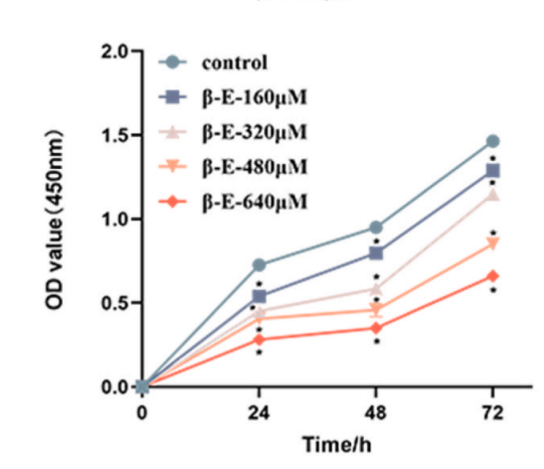
β-Elemene purchased from MedChemExpress. Usage Cited in: Heliyon. 2024 May 18;10(10):e31537. [Abstract]
CCK-8 to assess the proliferation of PHEGFs after β-elemene (0-640=-640Μm, 0-72 h) intervention.
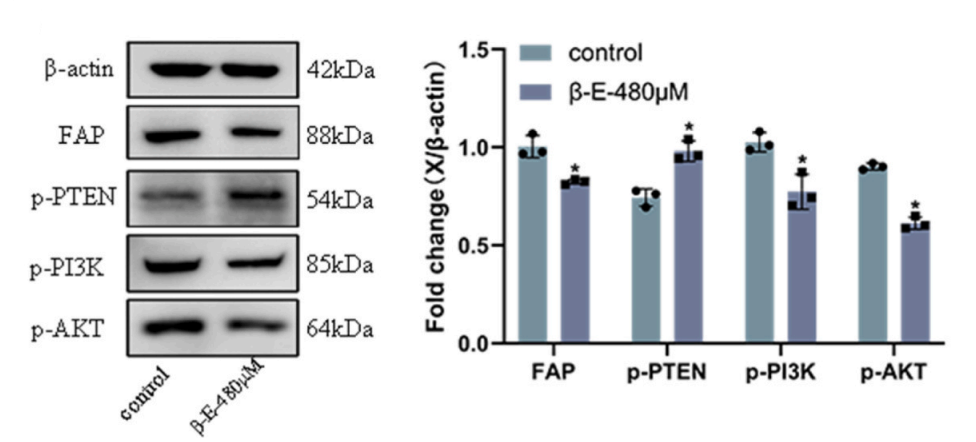
β-Elemene purchased from MedChemExpress. Usage Cited in: Heliyon. 2024 May 18;10(10):e31537. [Abstract]
β-elemene (480 μM) suppressed the proliferation and promoted the apoptosis of PHEGFs. Flod change of FAP, p-PTEN, p-PI3K, and p-AKT.


Lösungsmittel & Löslichkeit
In Vitro:
Ethanol : 50 mg/mL (244.68 mM; Need ultrasonic)
DMSO : 50 mg/mL (244.68 mM; Need ultrasonic; Hygroscopic DMSO has a significant impact on the solubility of product, please use newly opened DMSO)
Please refer to the solubility information to select the appropriate solvent. Once prepared, please aliquot and store the solution to prevent product inactivation from repeated freeze-thaw cycles.
Storage method and period of stock solution: -80°C, 6 months; -20°C, 1 month (stored under nitrogen). When stored at -80°C, please use it within 6 months. When stored at -20°C, please use it within 1 month.
Please refer to the solubility information to select the appropriate solvent. Once prepared, please aliquot and store the solution to prevent product inactivation from repeated freeze-thaw cycles.
Storage method and period of stock solution: -80°C, 6 months; -20°C, 1 month (stored under nitrogen). When stored at -80°C, please use it within 6 months. When stored at -20°C, please use it within 1 month.
Konzentration (Stammlösung) × Volumen (Stammlösung) = Konzentration (Ziellösung) × Volumen (Ziellösung)
In Vivo:
Select the appropriate dissolution method based on your experimental animal and administration route.
- For the following dissolution methods, please ensure to first prepare a clear stock solution using an In Vitro approach and then sequentially add co-solvents:
- To ensure reliable experimental results, the clarified stock solution can be appropriately stored based on storage conditions. As for the working solution for In Vivo experiments, it is recommended to prepare freshly and use it on the same day.
- The percentages shown for the solvents indicate their volumetric ratio in the final prepared solution. If precipitation or phase separation occurs during preparation, heat and/or sonication can be used to aid dissolution.
Add each solvent one by one: 10% DMSO 40% PEG300 5% Tween-80 45% Saline
Solubility: ≥ 2.5 mg/mL (12.23 mM); Clear solution
This protocol yields a clear solution of ≥ 2.5 mg/mL (saturation unknown).
Taking 1 mL working solution as an example, add 100 μL DMSO stock solution (25.0 mg/mL) to 400 μL PEG300, and mix evenly; then add 50 μL Tween-80 and mix evenly; then add 450 μL Saline to adjust the volume to 1 mL.
Preparation of Saline: Dissolve 0.9 g sodium chloride in ddH₂O and dilute to 100 mL to obtain a clear Saline solution.
Add each solvent one by one: 10% DMSO 90% (20% SBE-β-CD in Saline)
Solubility: ≥ 2.5 mg/mL (12.23 mM); Clear solution
This protocol yields a clear solution of ≥ 2.5 mg/mL (saturation unknown).
Taking 1 mL working solution as an example, add 100 μL DMSO stock solution (25.0 mg/mL) to 900 μL 20% SBE-β-CD in Saline, and mix evenly.
Preparation of 20% SBE-β-CD in Saline (4°C, storage for one week): 2 g SBE-β-CD powder is dissolved in 10 mL Saline, completely dissolve until clear.
In Vivo Dissolution Calculator
Please enter the basic information of animal experiments:
-
-
-
-
Recommended: Prepare an additional quantity of animals to account for potential losses during experiments.
Please enter your animal formula composition:
-
%DMSO +
Recommended: Keep the proportion of DMSO in working solution below 2% if your animal is weak.
-
%+
-
+%Tween-80 + +
-
%Saline +
The co-solvents required include: DMSO, . All of co-solvents are available by MedChemExpress (MCE). , Tween 80. All of co-solvents are available by MedChemExpress (MCE).
Working solution concentration: 0.22 mg/mL
Method for preparing stock solution: mg drug dissolved in μL DMSO. Stock solution concentration: mg/mL. * In solvent : -80°C, 6 months; -20°C, 1 month (stored under nitrogen)
1. Take μL DMSO stock solution;
2. Add μL .
μL , mix evenly;
3. Then add μL Tween 80, mix evenly;
4. Then add μL
Please ensure that the stock solution in the first step is dissolved to a clear state, and add co-solvents in sequence. You can use ultrasonic heating (ultrasonic cleaner, recommended frequency 20-40 kHz), vortexing, etc. to assist dissolution.


Reinheit & Dokumentation
-
Data Sheet (279 KB)
-
SDS (252 KB)
- English - EN (252 KB)
- Français - FR (252 KB)
- Deutsch - DE (252 KB)
- Norwegian - NO (252 KB)
- Español - ES (252 KB)
- Swedish - SV (252 KB)
- Italian - IT (252 KB)
- Korean - KR (252 KB)
- Portuguese - PT (252 KB)
-
Handling Instructions (2659 KB)
Verweise
[1]. Ross, S.A., and ElSohly, M.A. The volatile oil composition of fresh and air-dried buds of Cannabis sativa. J. Nat. Prod. 59(1), 49-51 (1996). [Content Brief]
[2]. Gan D, et al. β-elemene enhances cisplatin-induced apoptosis in bladder cancer cells through the ROS-AMPK signaling pathway.Oncol Lett. 2020 Jan;19(1):291-300. [Content Brief]


Complete Stock Solution Preparation Table
Please refer to the solubility information to select the appropriate solvent. Once prepared, please aliquot and store the solution to prevent product inactivation from repeated freeze-thaw cycles.
Storage method and period of stock solution: -80°C, 6 months; -20°C, 1 month (stored under nitrogen). When stored at -80°C, please use it within 6 months. When stored at -20°C, please use it within 1 month.
| Optional Solvent | Concentration Solvent Mass | 1 mg | 5 mg | 10 mg | 25 mg |
|---|---|---|---|---|---|
| Ethanol / DMSO | 1 mM | 4.8936 mL | 24.4678 mL | 48.9356 mL | 122.3391 mL |
| 5 mM | 0.9787 mL | 4.8936 mL | 9.7871 mL | 24.4678 mL | |
| 10 mM | 0.4894 mL | 2.4468 mL | 4.8936 mL | 12.2339 mL | |
| 15 mM | 0.3262 mL | 1.6312 mL | 3.2624 mL | 8.1559 mL | |
| 20 mM | 0.2447 mL | 1.2234 mL | 2.4468 mL | 6.1170 mL | |
| 25 mM | 0.1957 mL | 0.9787 mL | 1.9574 mL | 4.8936 mL | |
| 30 mM | 0.1631 mL | 0.8156 mL | 1.6312 mL | 4.0780 mL | |
| 40 mM | 0.1223 mL | 0.6117 mL | 1.2234 mL | 3.0585 mL | |
| 50 mM | 0.0979 mL | 0.4894 mL | 0.9787 mL | 2.4468 mL | |
| 60 mM | 0.0816 mL | 0.4078 mL | 0.8156 mL | 2.0390 mL | |
| 80 mM | 0.0612 mL | 0.3058 mL | 0.6117 mL | 1.5292 mL | |
| 100 mM | 0.0489 mL | 0.2447 mL | 0.4894 mL | 1.2234 mL |


β-Elemene Related Classifications
HY-107324 Related Classifications
 Powered by Bioz