



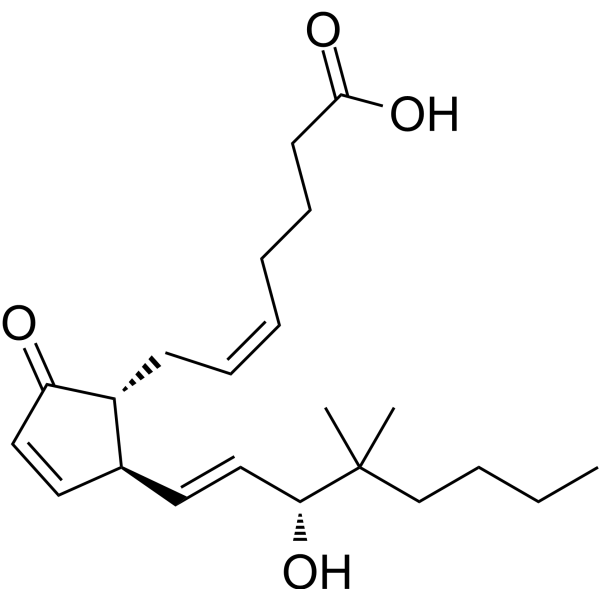
16,16-Dimethyl PGA2
16,16-Dimethyl PGA2 is an orally active prostaglandin analog with a prolonged in vivo half-life. 16,16-Dimethyl PGA2 can be used to study hypertension.
For research use only. We do not sell to patients.
- CAS No.: 41691-92-3
- Formula: C22H34O4
- Molecular Weight:362.50
-
Storage:
Please store the product under the recommended conditions in the Certificate of Analysis.

To place orders, for customer services and technical support, please contact: MedChemExpress USA
Tel: 609-228-6898 E-mail: [email protected] [email protected]


-
 Biological Activity
-
Chemical Information
- Protocols
- Purity & Documentation
- References
-
 Help & FAQs


-
HY-W019823
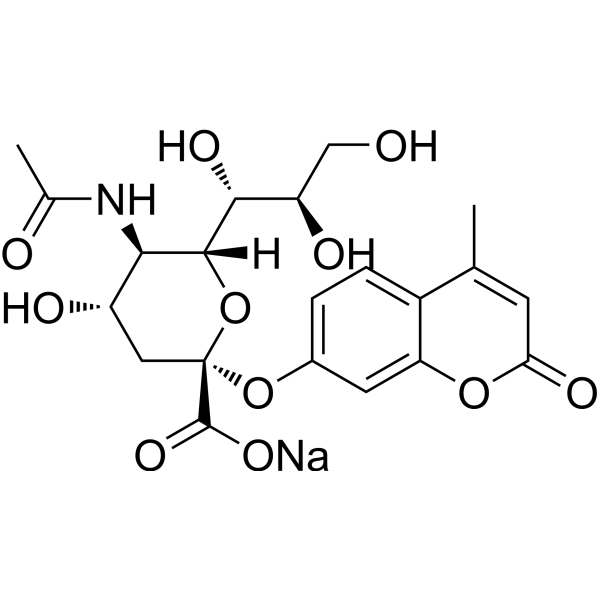
4-MUNANAFluorescent Substrate -

HY-DY1034
4-MUNANA (solution)Fluorescent Substrate -

HY-131944
S-AcetylglutathioneGlutathione Replenisher -

HY-165080
16,16-Dimethyl prostaglandin D2Biochemical Reagent -
HY-116758
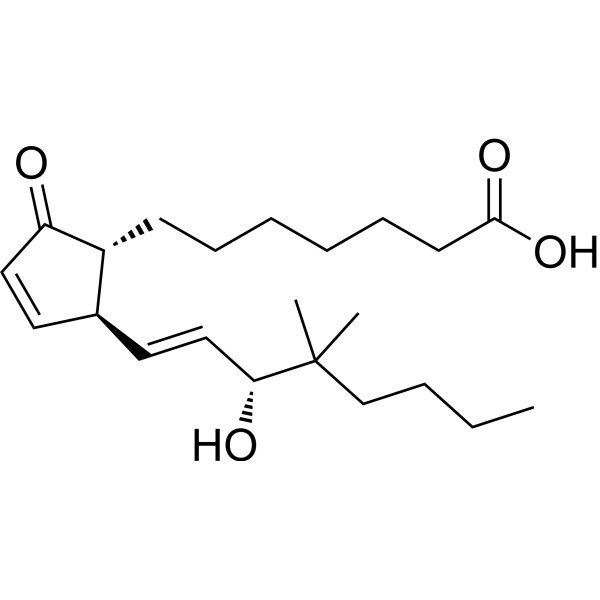
16,16-Dimethyl prostaglandin A1DNA Synthesis/HSV/HIV-1 Inhibitor -
HY-115437
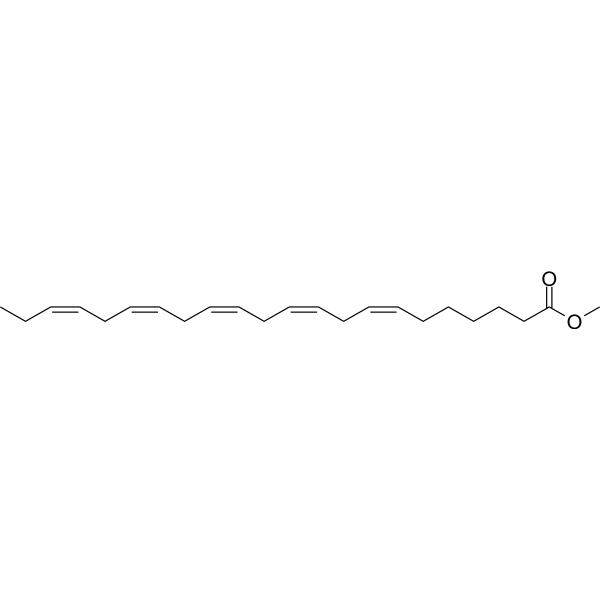
Methyl all-cis-7,10,13,16,19-docosapentaenoateDrug Intermediate -
HY-W011120
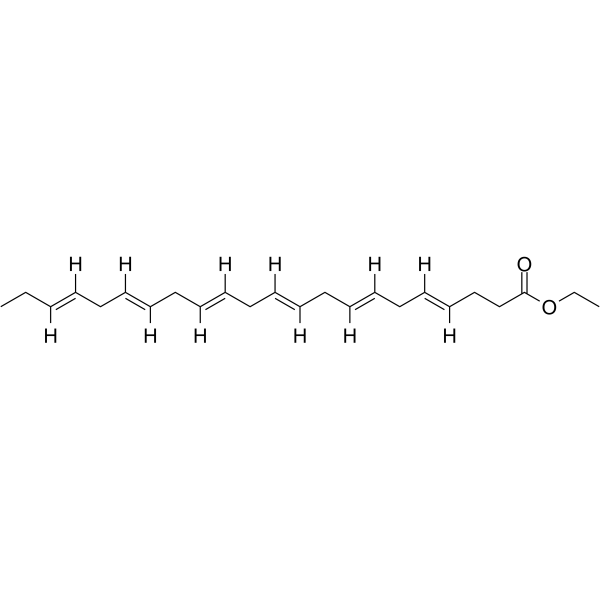
Ethyl docosa-4,7,10,13,16,19-hexaenoateEthyl Ester of Docosahexaenoate (DHA) -

HY-W399940
ActiphenolAntibiotic -

HY-W740572
O-Desmethyl-N-deschlorobenzoyl IndomethacinMetabolite -
HY-137591
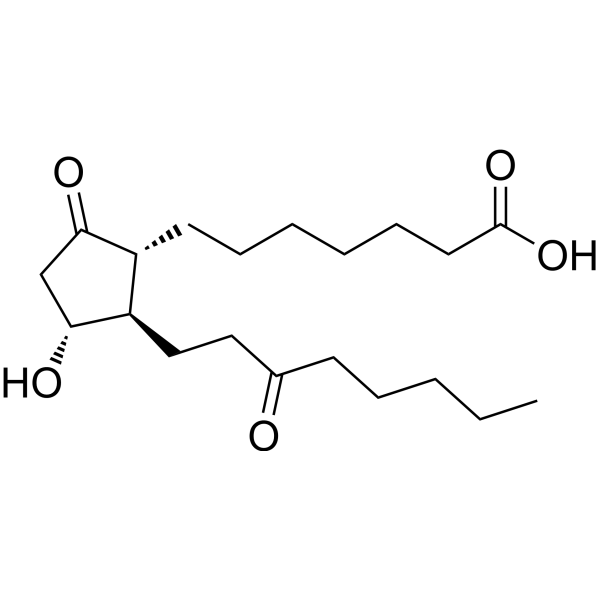
13,14-Dihydro-15-keto-PGE1PGE1 Metabolite -

HY-164263
N-AcetylphytosphingosineAnticancer agent -
HY-116051
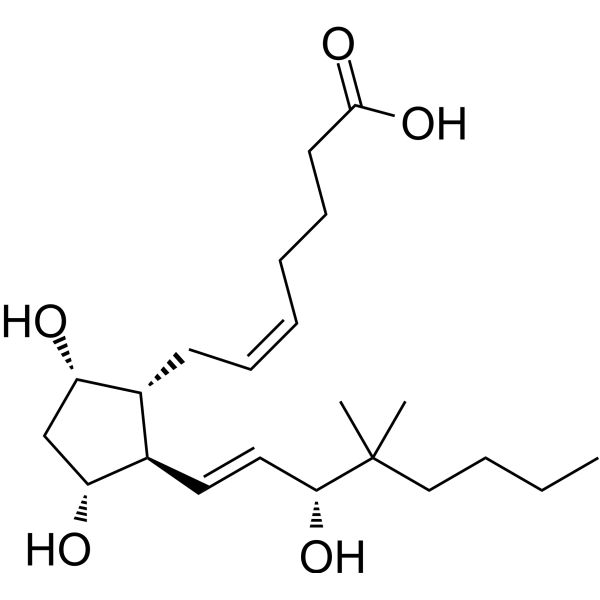
16,16-Dimethylprostaglandin F2αBronchoconstrictor
All Endogenous Metabolite Isoforms
More

Biological Activity
Description


Chemical Information
-
CAS No. 41691-92-3
-
Molecular Weight 362.50
-
Formula C22H34O4
-
SMILES
O[C@@H](C(C)(C)CCCC)/C=C/[C@@H](C=CC1=O)[C@H]1C/C=C\CCCC(O)=O
-
Synonyms
16,16-Dimethyl prostaglandin A2; Di-M-PGA2
-
Shipping
Room temperature in continental US; may vary elsewhere.
-
Storage
Please store the product under the recommended conditions in the Certificate of Analysis.

Protocols
-
Protocol for Pharmacokinetic Study
Pharmacokinetic studies quantify how an organism handles a drug over time through absorption, distribution, metabolism, and excretion, and the core experimental readout is the concentration-time profile of parent drug and, when relevant, metabolites in biological matrices such as plasma, whole blood, urine, bile, or tissue. Pharmacokinetic analysis links dose, route, exposure, clearance, half-life, distribution, bioavailability, and systemic exposure to drug efficacy and toxicity hypotheses rather than measuring a signaling pathway directly. The literature links pharmacokinetics to drug-development phenotypes by showing that drug metabolism and pharmacokinetics influence compound progression, exposure-response interpretation, safety margins, dosing strategy, and failure risk during discovery and development. DMPK science contributes to compound optimization by integrating physicochemical properties, in vitro metabolism, transporter behavior, in vivo exposure, and pharmacodynamic contex
-
Research Protocol for Cardiovascular Diseases
Cardiovascular disease can be modeled as maladaptive cardiac remodeling, where ischemic injury or pressure overload activates inflammatory signaling, fibroblast activation, extracellular-matrix deposition, cardiomyocyte hypertrophy, vascular remodeling, and progressive ventricular dysfunction. The TGF-β/SMAD axis is a central profibrotic pathway after myocardial injury and pressure overload, while innate immune and cytokine pathways regulate leukocyte recruitment, scar formation, and adverse remodeling. Key unresolved questions include which inflammatory signals are reparative versus harmful, when fibrosis is protective versus maladaptive, and whether pathway inhibition improves function without weakening necessary infarct healing or compensatory remodeling.


Purity & Documentation
References

Calculators
Concentration (start) × Volume (start) = Concentration (final) × Volume (final)


16,16-Dimethyl PGA2 Related Classifications
HY-137270 Related Classifications
 Powered by Bioz