



Oxaloacetic acid
Based on 2 publication(s) in Google Scholar
Oxaloacetic acid (2-Oxosuccinic acid) is a metabolic intermediate involved in several ways, such as citric acid cycle, gluconeogenesis, the urea cycle, the glyoxylate cycle, amino acid synthesis, and fatty acid synthesis, whereby Oxaloacetic acid facilitates the clearance of reactive oxygen species (ROS) and improves mitochondrial function.
For research use only. We do not sell to patients.
- Purity : 99.88%
- CAS No.: 328-42-7
- Formula: C4H4O5
- Molecular Weight:132.07
-
Storage:Powder -20°C, 3 years ; In solvent -80°C, 6 months , -20°C, 1 month

To place orders, for customer services and technical support, please contact: MedChemExpress USA
Tel: 609-228-6898 E-mail: [email protected] [email protected]


-
 Biological Activity
-
Chemical Information
-
Solvent & Solubility
- Protocols
- Purity & Documentation
- References
-
 Help & FAQs


-
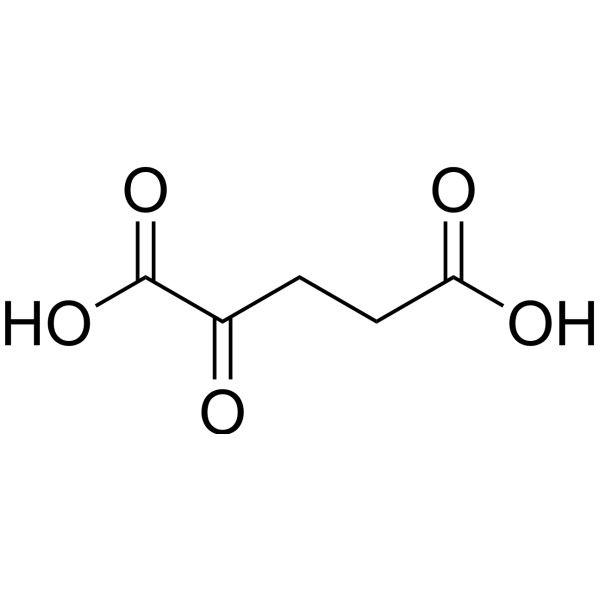
HY-W013636
2-Ketoglutaric acidKrebs Cycle Intermediate -
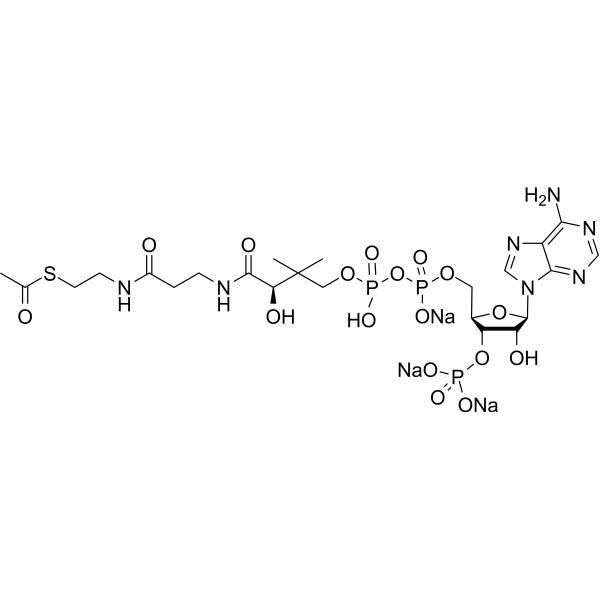
HY-113596
Acetyl Coenzyme A trisodiumCentral Metabolic Intermediate -
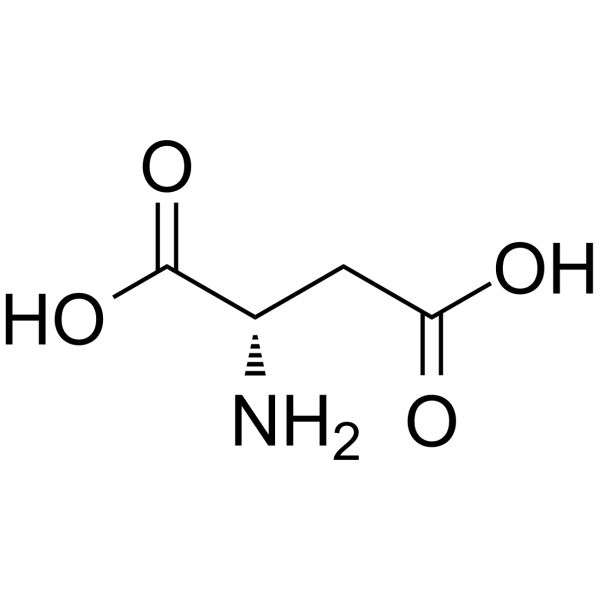
HY-N0666
L-Aspartic acidNMDA Receptor Agonist -
HY-14608
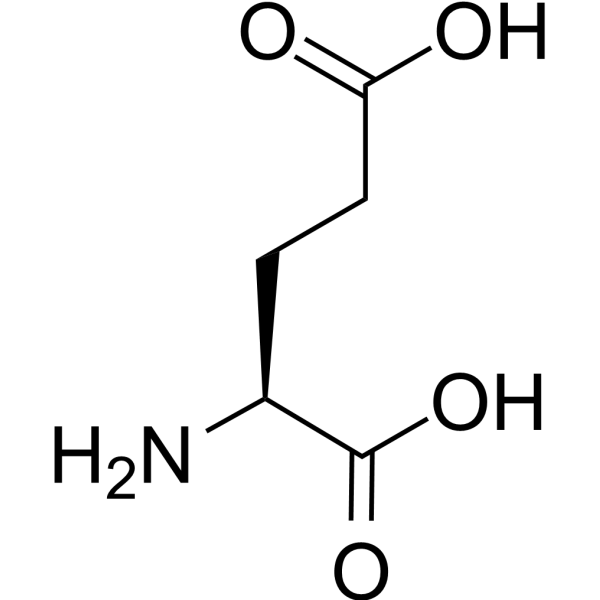
L-Glutamic acidGlutamate Receptors Agonist -
HY-Y1311
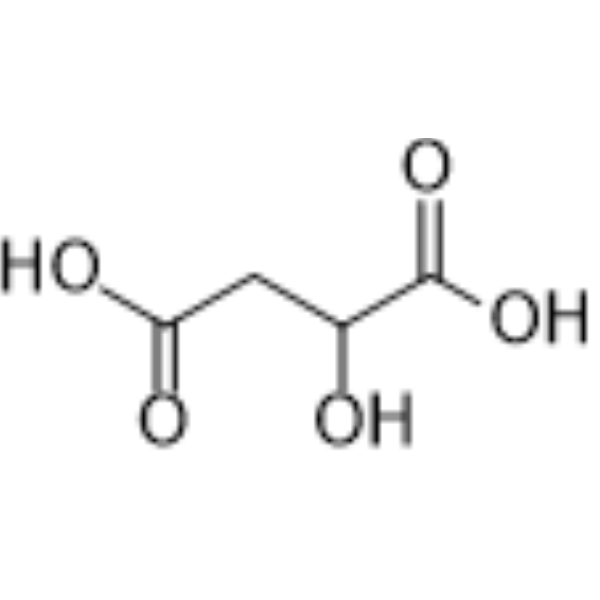
Malic acidDicarboxylic Acid -
HY-N1428
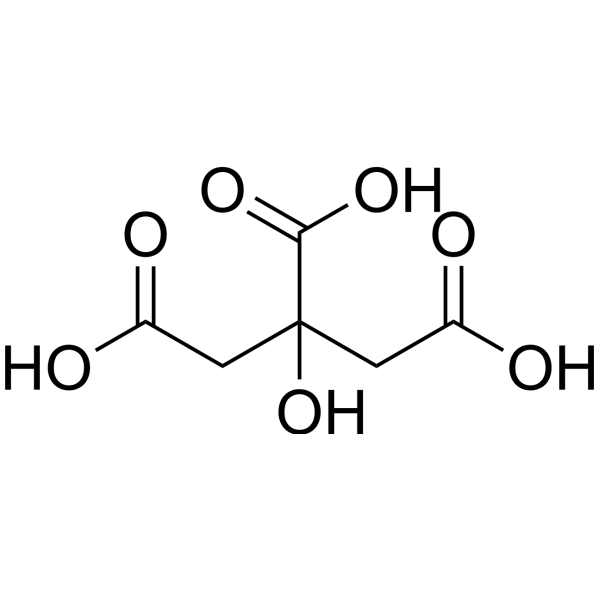
Citric acidOrganic Acid -

HY-W010382R
Oxaloacetic acid (Standard)Endogenous Metabolite -
HY-W015883
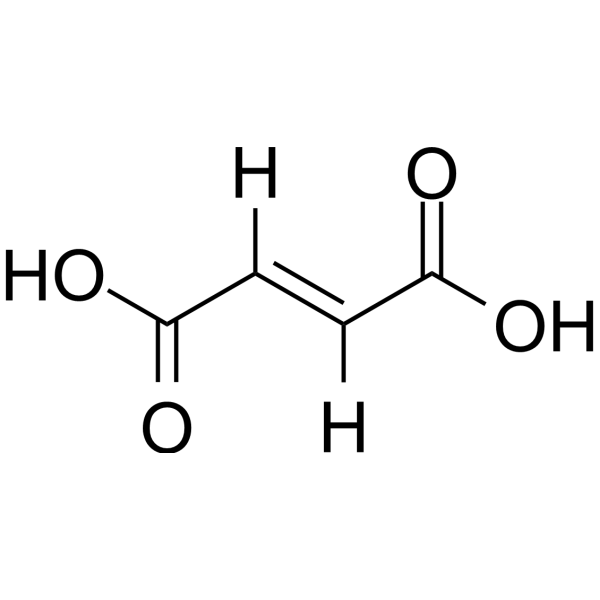
Fumaric acidAnti-inflammatory agent -
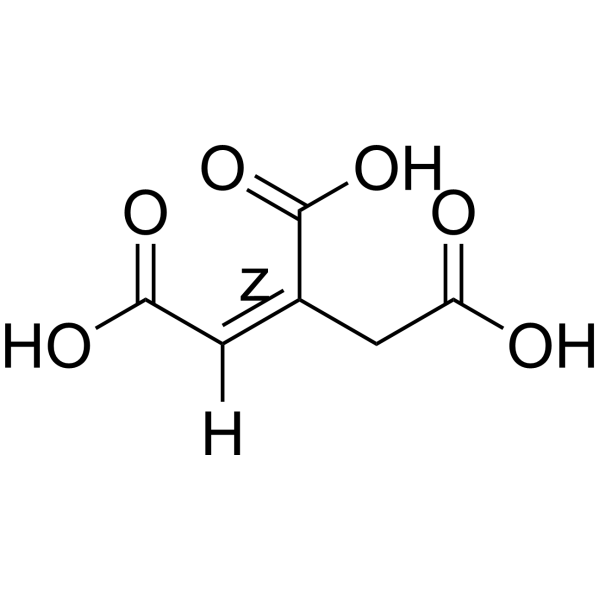
HY-W016814
(Z)-Aconitic acidGlutamate Decarboxylase Inhibitor -
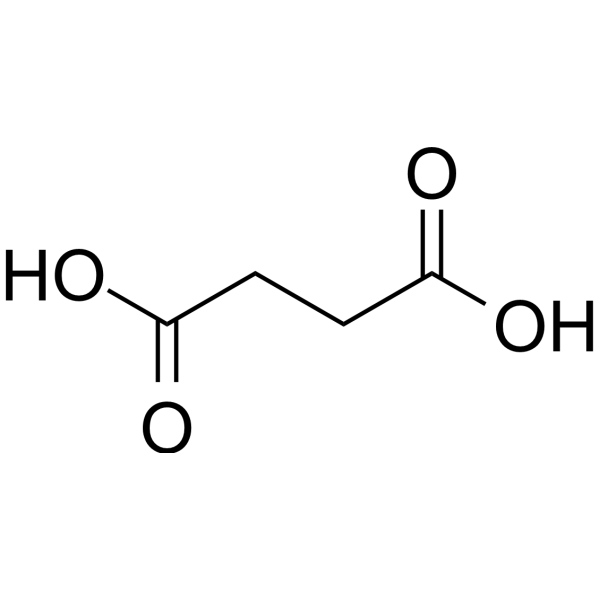
HY-N0420
Succinic acidFood Additive, Platform chemical -
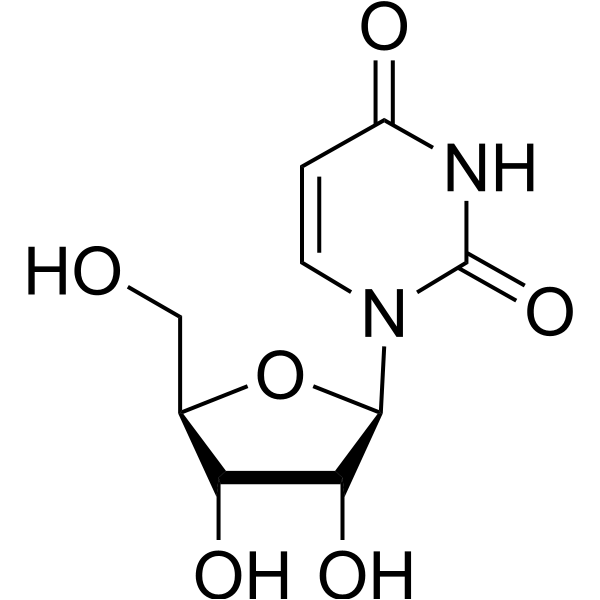
HY-B1449
UridineNucleoside -
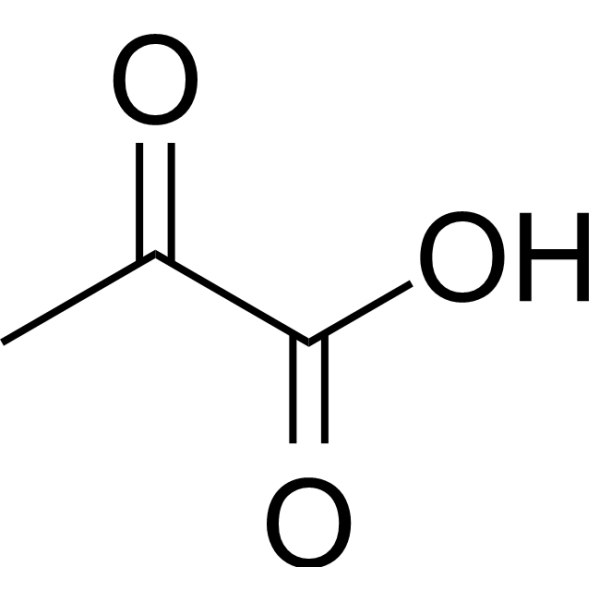
HY-Y0781
Pyruvic acidEndogenous Metabolite
Publications Citing Use of MedChemExpress (MCE) Oxaloacetic acid
MoreAll Endogenous Metabolite Isoforms
More

Biological Activity
Description
IC50 & Target
|
Human Endogenous Metabolite |
In Vivo
MedChemExpress (MCE) has not independently confirmed the accuracy of these methods. They are for reference only.
Clinical Trial
| NCT Number | Sponsor | Condition | Start Date |
Phase

|
|---|---|---|---|---|
| NCT01329991 | Plexxikon| | 2011-05 | PHASE1 |


Chemical Information
-
CAS No. 328-42-7
-
Appearance Solid
-
Molecular Weight 132.07
-
Formula C4H4O5
-
Color White to off-white
-
SMILES
O=C(O)C(CC(O)=O)=O
-
Synonyms
2-Oxosuccinic acid
-
Structure Classification
-
Shipping
Room temperature in continental US; may vary elsewhere.
-
Storage
Powder -20°C 3 years In solvent -80°C 6 months -20°C 1 month


Publications (2)
-
Journal Impact Factor
-
Most Recent
-
Cell Rep Med
Hypothalamic malate dehydrogenase 2 modulates systemic glucose metabolism through oxytocin-mediated thermogenesis. [Abstract]2026 Feb 17;7(2):102616. PMID: 41672064 -


Solvent & Solubility
In Vitro:
DMSO : 125 mg/mL (946.47 mM; Need ultrasonic; Hygroscopic DMSO has a significant impact on the solubility of product, please use newly opened DMSO)
Please refer to the solubility information to select the appropriate solvent. Once prepared, please aliquot and store the solution to prevent product inactivation from repeated freeze-thaw cycles.
Storage method and period of stock solution: -80°C, 6 months; -20°C, 1 month. When stored at -80°C, please use it within 6 months. When stored at -20°C, please use it within 1 month.
Please refer to the solubility information to select the appropriate solvent. Once prepared, please aliquot and store the solution to prevent product inactivation from repeated freeze-thaw cycles.
Storage method and period of stock solution: -80°C, 6 months; -20°C, 1 month. When stored at -80°C, please use it within 6 months. When stored at -20°C, please use it within 1 month.
Concentration (start) × Volume (start) = Concentration (final) × Volume (final)

Protocols
-
Mitochondrial membrane-potential fluorescent assay
Mitochondrial membrane potential fluorescent assays estimate ΔΨm in living cells using lipophilic cationic dyes such as TMRM, TMRE, rhodamine 123, and JC-1, which accumulate in mitochondria according to membrane polarization; loss of signal after FCCP or CCCP treatment is interpreted as mitochondrial depolarization. TMRM/TMRE and rhodamine 123 are commonly used for semi-quantitative live-cell microscopy or flow cytometry, while JC-1 can report a shift from red aggregate fluorescence to green monomer fluorescence during depolarization; interpretation requires controls because dye concentration, quenching mode, cell type, dye efflux, and mitochondrial mass can affect fluorescence independently of ΔΨm.
-
ROS/oxidative-stress fluorescent staining
ROS/oxidative-stress fluorescent staining uses cell-permeant fluorogenic probes that become fluorescent after oxidation inside cells or tissues; commonly used examples include DCFH-DA/DCFDA for broad cellular oxidant detection, DHE for superoxide-related signal detection, MitoSOX for mitochondrial superoxide-related signal detection, and CellROX probes for oxidative-stress-associated fluorescence readouts. The assay detects probe oxidation rather than a single ROS species unless the probe and analysis method have been chemically validated for that species. DCFH-DA enters cells, is deacetylated by intracellular esterases to DCFH, and produces fluorescent DCF after oxidation, so the readout is used as an operational measure of total cellular oxidative stress rather than a species-specific ROS measurement. DHE and MitoSOX can report superoxide-related oxidation, but red fluorescence alone can include non-specific ethidium-like oxidation products; HPLC or optimized spectral approaches are
-
Protocol for Pharmacokinetic Study
Pharmacokinetic studies quantify how an organism handles a drug over time through absorption, distribution, metabolism, and excretion, and the core experimental readout is the concentration-time profile of parent drug and, when relevant, metabolites in biological matrices such as plasma, whole blood, urine, bile, or tissue. Pharmacokinetic analysis links dose, route, exposure, clearance, half-life, distribution, bioavailability, and systemic exposure to drug efficacy and toxicity hypotheses rather than measuring a signaling pathway directly. The literature links pharmacokinetics to drug-development phenotypes by showing that drug metabolism and pharmacokinetics influence compound progression, exposure-response interpretation, safety margins, dosing strategy, and failure risk during discovery and development. DMPK science contributes to compound optimization by integrating physicochemical properties, in vitro metabolism, transporter behavior, in vivo exposure, and pharmacodynamic contex
-
Mitochondrial membrane-potential and mitochondrial mass staining
Mitochondrial membrane potential staining measures the electrochemical polarization across the mitochondrial inner membrane in live cells using lipophilic cationic fluorescent probes; early rhodamine-based work showed that selective mitochondrial dye accumulation is lost when the mitochondrial transmembrane potential is dissipated. JC-1 reports mitochondrial polarization by shifting from green monomer fluorescence to red J-aggregate fluorescence as dye concentration increases within energized mitochondria; therefore, the red/green fluorescence ratio is used as a relative readout of mitochondrial membrane potential. TMRE or TMRM staining provides a single-channel relative readout because these cationic rhodamine esters accumulate in polarized mitochondria, and lower fluorescence indicates reduced mitochondrial polarization when acquisition and dye-loading conditions are controlled. Mitochondrial mass staining is commonly performed with MitoTracker Green FM or related MitoTracker dyes as


Purity & Documentation
-
Data Sheet (272 KB)
-
SDS (393 KB)
- English - EN (393 KB)
- Français - FR (393 KB)
- Deutsch - DE (393 KB)
- Norwegian - NO (393 KB)
- Español - ES (393 KB)
- Swedish - SV (393 KB)
- Italian - IT (393 KB)
- Korean - KR (393 KB)
- Portuguese - PT (393 KB)
-
Handling Instructions (2659 KB)
References
[1]. F. L. Breusch. The fate of oxaloacetic acid in different organs. Biochem J. 1939 Nov; 33(11): 1757-1770. [Content Brief]
[2]. Brian D Fink, et al. Oxaloacetic acid mediates ADP-dependent inhibition of mitochondrial complex II-driven respiration. J Biol Chem. 2018 Dec 21;293(51):19932-19941. [Content Brief]
[3]. Li W, et al. Oxaloacetate acid ameliorates paraquat-induced acute lung injury by alleviating oxidative stress and mitochondrial dysfunction. Front Pharmacol. 2022 Oct 13;13:1029775. [Content Brief]


Complete Stock Solution Preparation Table
Please refer to the solubility information to select the appropriate solvent. Once prepared, please aliquot and store the solution to prevent product inactivation from repeated freeze-thaw cycles.
Storage method and period of stock solution: -80°C, 6 months; -20°C, 1 month. When stored at -80°C, please use it within 6 months. When stored at -20°C, please use it within 1 month.
| Optional Solvent | Concentration Solvent Mass | 1 mg | 5 mg | 10 mg | 25 mg |
|---|---|---|---|---|---|
| DMSO | 1 mM | 7.5717 mL | 37.8587 mL | 75.7174 mL | 189.2935 mL |
| 5 mM | 1.5143 mL | 7.5717 mL | 15.1435 mL | 37.8587 mL | |
| 10 mM | 0.7572 mL | 3.7859 mL | 7.5717 mL | 18.9294 mL | |
| 15 mM | 0.5048 mL | 2.5239 mL | 5.0478 mL | 12.6196 mL | |
| 20 mM | 0.3786 mL | 1.8929 mL | 3.7859 mL | 9.4647 mL | |
| 25 mM | 0.3029 mL | 1.5143 mL | 3.0287 mL | 7.5717 mL | |
| 30 mM | 0.2524 mL | 1.2620 mL | 2.5239 mL | 6.3098 mL | |
| 40 mM | 0.1893 mL | 0.9465 mL | 1.8929 mL | 4.7323 mL | |
| 50 mM | 0.1514 mL | 0.7572 mL | 1.5143 mL | 3.7859 mL | |
| 60 mM | 0.1262 mL | 0.6310 mL | 1.2620 mL | 3.1549 mL | |
| 80 mM | 0.0946 mL | 0.4732 mL | 0.9465 mL | 2.3662 mL | |
| 100 mM | 0.0757 mL | 0.3786 mL | 0.7572 mL | 1.8929 mL |


Oxaloacetic acid Related Classifications
HY-W010382 Related Classifications
 Powered by Bioz