



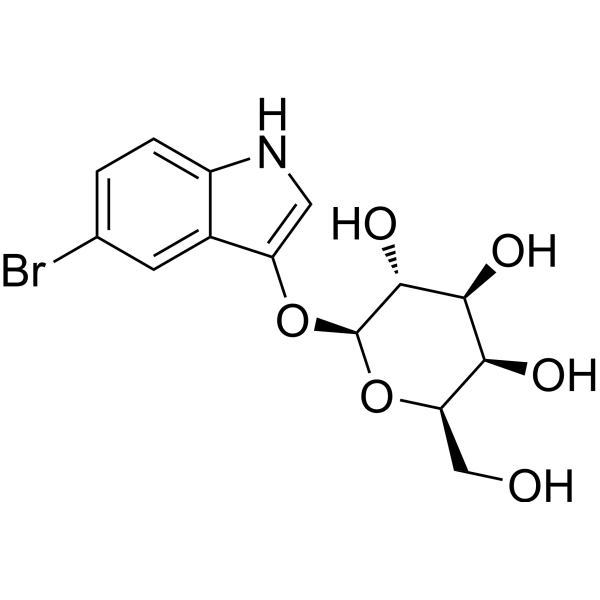
5-Bromo-3-indolyl β-D-galactopyranoside

Based on 1 Customer Validation
5-Bromo-3-indolyl β-D-galactopyranoside (Bluo-Gal) is a chromogenic substrate for β-galactosidase. 5-Bromo-3-indolyl β-D-galactopyranoside is hydrolyzed by the enzyme to generate a 5-bromoindole intermediate, which is further oxidized to form an insoluble blue precipitate. 5-Bromo-3-indolyl β-D-galactopyranoside can specifically recognize bacterial β-galactosidases (such as the product of the Escherichia coli lacZ gene) and reacts at pH 7.4, making it suitable for light and electron microscopic observations. 5-Bromo-3-indolyl β-D-galactopyranoside can be used in histochemical detection of reporter gene expression in transgenic organisms, such as the localization analysis of β-galactosidase activity in mouse embryos or muscle tissues.
For research use only. We do not sell to patients.
- Purity : 99.89%
- CAS No.: 97753-82-7
- Formula: C14H16BrNO6
- Molecular Weight:374.18
-
Storage:
4°C, protect from light
* In solvent : -80°C, 6 months; -20°C, 1 month (protect from light)

To place orders, for customer services and technical support, please contact: MedChemExpress USA
Tel: 609-228-6898 E-mail: [email protected] [email protected]


-
 Biological Activity
-
Chemical Information
-
Solvent & Solubility
- Protocols
- Purity & Documentation
- References
-
 Help & FAQs


-
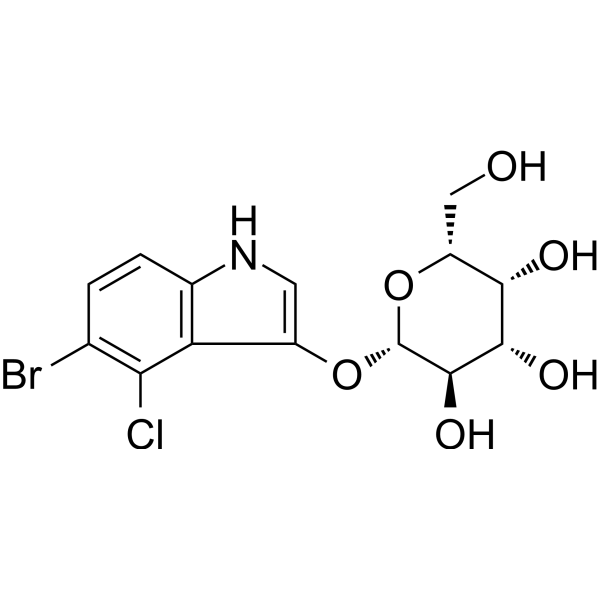
HY-15934
X-GALβ-Galactosidase Substrate -
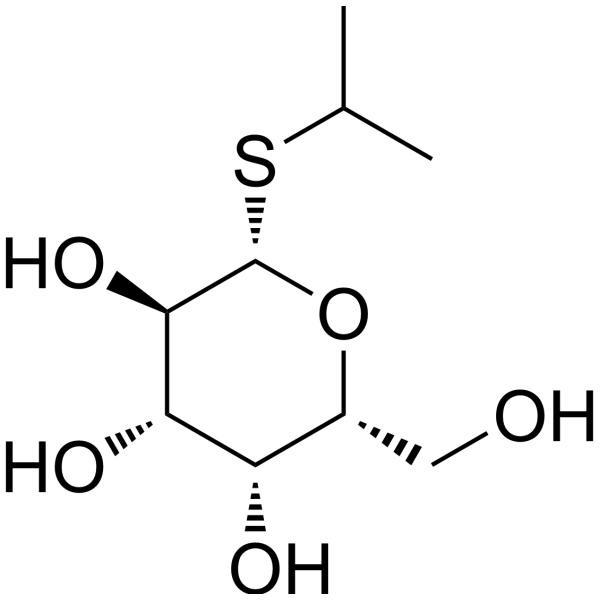
HY-15921
IPTGAllolactose Mimic -
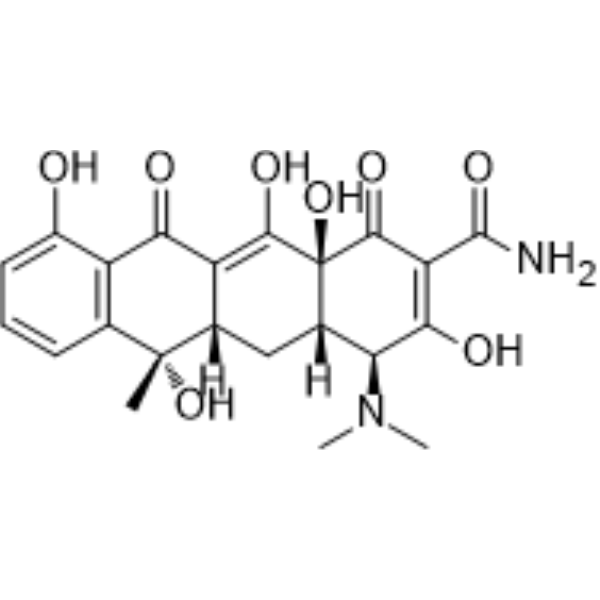
HY-A0107
TetracyclineAntibiotic -

HY-DY2002
X-GAL (solution)β-Galactosidase Substrate -
HY-15926
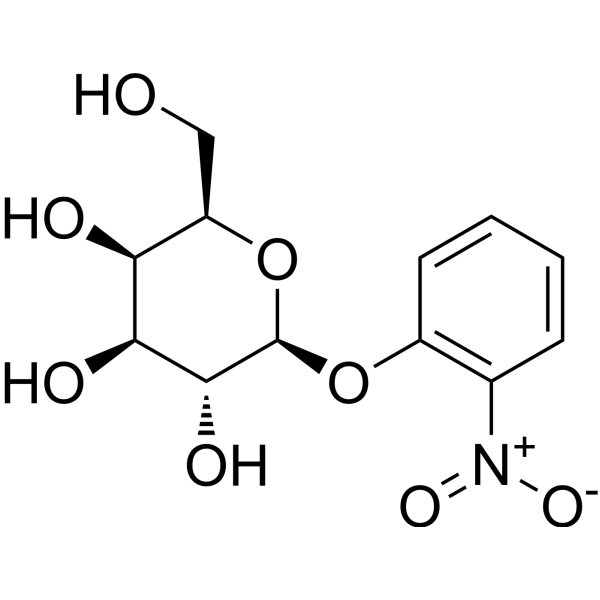
ONPGβ-Galactosidase Substrate -
HY-A0276
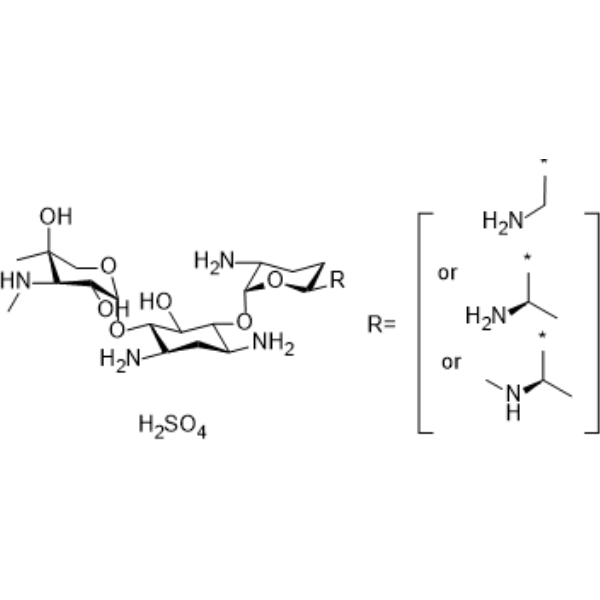
Gentamicin sulfateAminoglycoside Antibiotic -
HY-B0474
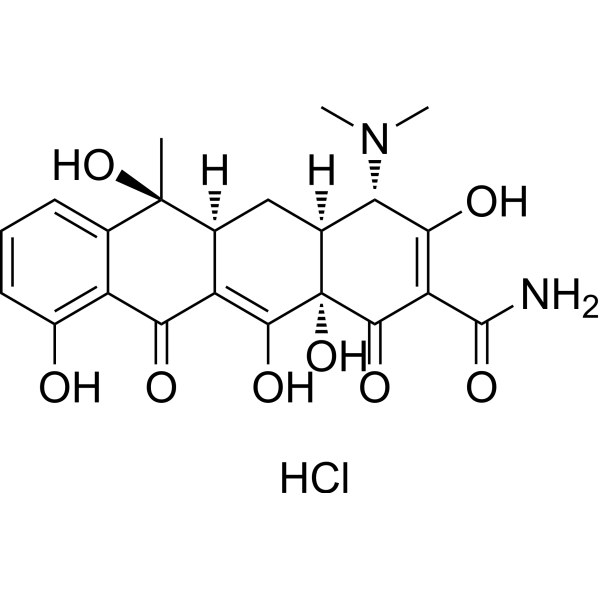
Tetracycline hydrochlorideAntibiotic -
HY-14648
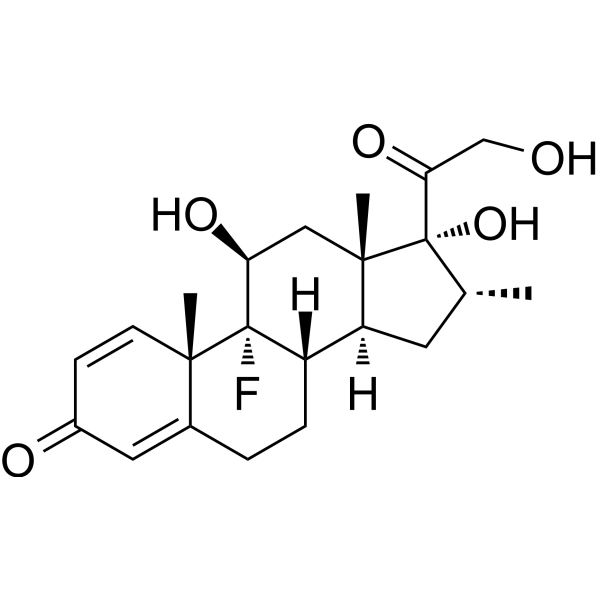
DexamethasoneGR Agonist -
HY-D1224
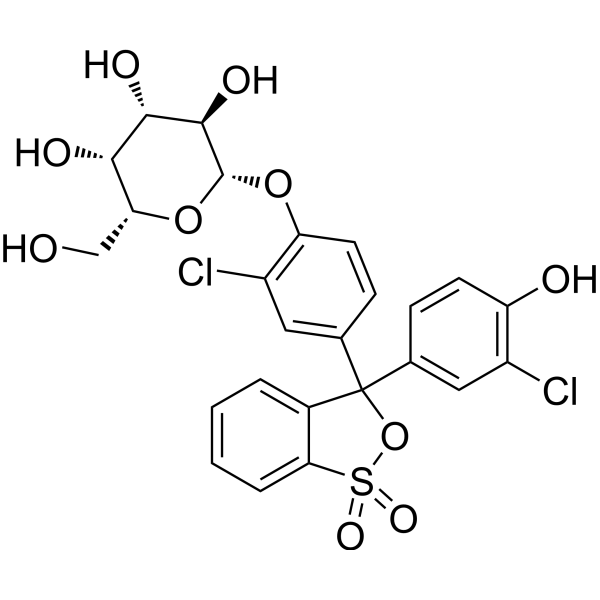
Chlorophenol red-β-D-galactopyranosideβ-Galactosidase Substrate -
HY-W039892
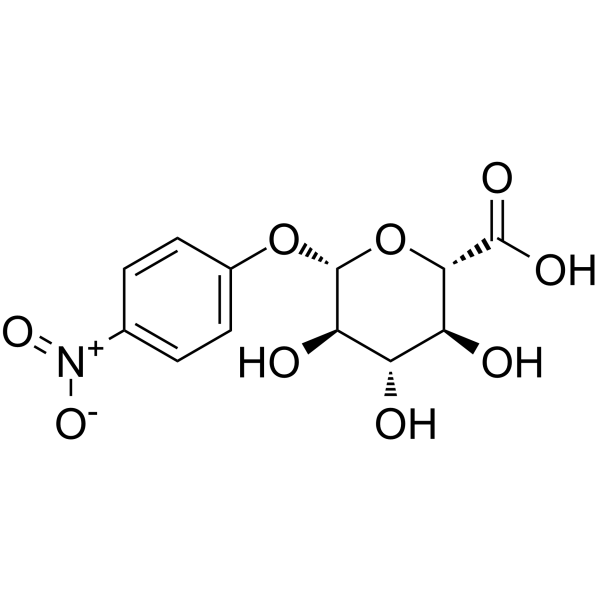
4-Nitrophenyl β-D-glucuronideβ-Glucuronidase Substrate -
HY-W011183
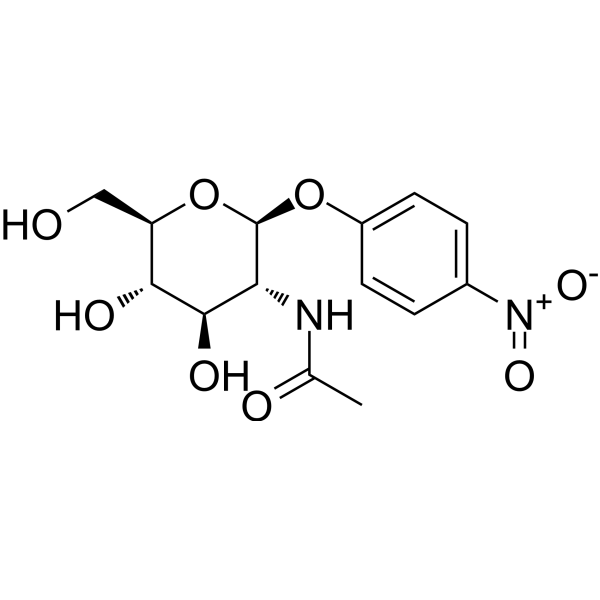
4-Nitrophenyl-N-acetyl-β-D-glucosaminideNAGase Substrate -
HY-123633
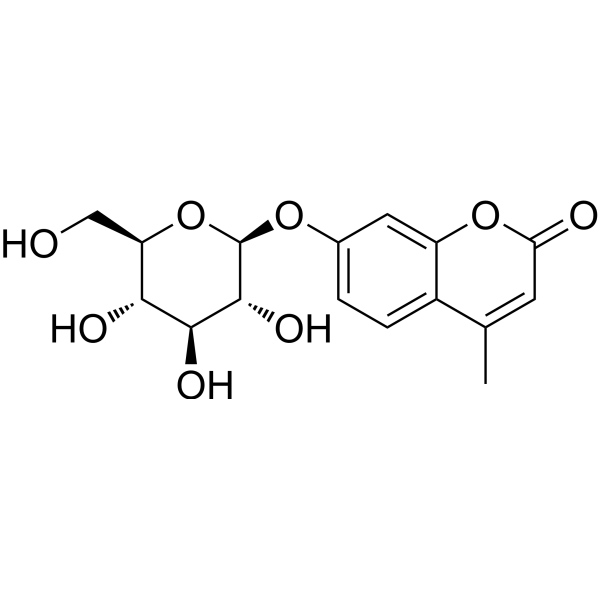
4-Methylumbelliferyl β-D-Glucopyranosideβ-glucosidase fluorogenic substrate


Biological Activity
Description
In Vitro
Guide (Following is our recommended protocol. This protocol only provides a guideline, and should be modified according to your specific needs).
1. Tissue samples: skeletal muscle tissue (e.g. tibialis anterior muscle) from transgenic mice, and control group: tissue from the same part of non-transgenic mice.
2. Fixative:
- Optimal formulation: 2.5% glutaraldehyde + 1% paraformaldehyde, dissolved in 0.1 M phosphate buffered saline (PBS, pH 7.4).
- Other formulations tested: including different concentrations of glutaraldehyde and paraformaldehyde mixtures, or single aldehyde fixatives.
3. Chromogenic substrate solution:
- 1 mg/mL Bluo-Gal (dissolved in dimethyl sulfoxide (DMSO), 40 mg/mL stock solution, stored at -20°C in the dark).
- 10 mM potassium ferrocyanide (K3[Fe(CN)6])
- 10 mM potassium ferrocyanide (K4[Fe(CN)6])
- 2 mM MgCl2
- 0.1 M PBS (pH 7.4)
4. Post-fixative solution: 1% osmium acid (OsO4), dissolved in 0.2 M colloidine buffer, pH 7.4.
5. Dehydration reagent: gradient ethanol (25%, 50%, 75%, 95%, 100%), propylene oxide.
6. Embedding reagent: Epoxy resin.
Experimental steps
1. Tissue fixation
Sample collection: Rapidly sample the mouse tibialis anterior muscle and cut it into small pieces of about 1-2 mm3.
Fixation conditions:
- Immerse tissue blocks in a mixture of 2.5% glutaraldehyde + 1% paraformaldehyde and fix at 4°C for 3 hours (optimal time, avoid too long fixation resulting in decreased enzyme activity).
- The control group (non-transgenic mice) was treated simultaneously to exclude the interference of endogenous β-galactosidase.
2. Rinsing
- After fixation, rinse the tissue with 0.1 M PBS (pH 7.4) for 1 hour to remove residual fixative.
3. Bluo-Gal color incubation
- Substrate preparation: Dilute Bluo-Gal stock solution (40 mg/mL DMSO) to 1 mg/mL before use, add potassium ferrocyanide, potassium ferrocyanide and MgCl2, and mix well (avoid light to prevent substrate decomposition).
- Incubation conditions:
- Immerse tissue in substrate solution and incubate at 30-32°C for 3-4 hours (optimal color development time, overnight incubation does not affect staining intensity, but no need to extend).
- Control group (without substrate) is incubated simultaneously to verify the absence of endogenous activity.
4. Post-fixation (for electron microscopy observation)
- After color development, the tissue is post-fixed with 1% osmium acid solution at 4°C for 1 hour to enhance structural contrast.
5. Dehydration and embedding
- Gradient dehydration: The tissue is dehydrated in 25%, 50%, 75%, and 95% ethanol for 10-20 minutes each, and 100% ethanol twice (20 minutes each time).
- Transparent treatment: Soak in propylene oxide twice, 10-20 minutes each time (avoid dissolving the reaction product due to too long time).
- Embedding: embedding with epoxy resin, polymerizing at 60°C for 24 hours.
6. Sectioning and observation
- Semi-thin sections (light microscopy): cutting 0.5-1 μm sections, differential interference contrast (DIC) microscopy observation, β-galactosidase positive areas appear as blue needle crystals.
- Ultra-thin sections (electron microscopy): cutting 80 nm sections, uranium-lead double staining, transmission electron microscopy observation of subcellular localization of enzyme activity products.
Key parameters and optimization
1. Fixative selection: 2.5% glutaraldehyde + 1% paraformaldehyde mixture balances enzyme activity preservation and tissue morphology, which is better than a single aldehyde fixative (Table 1).
2. Incubation time: 3 hours of fixation + 3-4 hours of color development can obtain a strong blue precipitate, avoiding excessive fixation (6-12 hours) that leads to a significant decrease in enzyme activity.
3. Control experiment: Non-transgenic mouse tissues were incubated without substrate to confirm that there was no background staining.
4. Substrate characteristics: The 5-bromoindigo precipitate generated by Bluo-Gal is a birefringent needle-shaped crystal, which is easier to identify under a low-power microscope than X-Gal and is resistant to elution by organic solvents.
Precautions
- Light-proof operation: Bluo-Gal mother solution and working solution must be stored and used in the dark to prevent photodegradation.
- Temperature control: Both fixation and incubation steps must be performed at low temperature (4°C) or mild temperature (30-32°C) to avoid loss of enzyme activity.
- Dehydration time: The propylene oxide treatment time should not be too long (≤20 minutes) to reduce the dissolution of the reaction product.
MedChemExpress (MCE) has not independently confirmed the accuracy of these methods. They are for reference only. Further protocols information, click here.


Chemical Information
-
CAS No. 97753-82-7
-
Appearance Solid
-
Molecular Weight 374.18
-
Formula C14H16BrNO6
-
Color White to off-white
-
SMILES
BrC1=CC=C2C(C(O[C@@H]([C@@H]([C@H]3O)O)O[C@@H]([C@@H]3O)CO)=CN2)=C1
-
Synonyms
Bluo-Gal
-
Shipping
Room temperature in continental US; may vary elsewhere.
-
Storage
4°C, protect from light
* In solvent : -80°C, 6 months; -20°C, 1 month (protect from light)


Solvent & Solubility
In Vitro:
DMSO : 125 mg/mL (334.06 mM; Need ultrasonic; Hygroscopic DMSO has a significant impact on the solubility of product, please use newly opened DMSO)
Please refer to the solubility information to select the appropriate solvent. Once prepared, please aliquot and store the solution to prevent product inactivation from repeated freeze-thaw cycles.
Storage method and period of stock solution: -80°C, 6 months; -20°C, 1 month (protect from light). When stored at -80°C, please use it within 6 months. When stored at -20°C, please use it within 1 month.
Please refer to the solubility information to select the appropriate solvent. Once prepared, please aliquot and store the solution to prevent product inactivation from repeated freeze-thaw cycles.
Storage method and period of stock solution: -80°C, 6 months; -20°C, 1 month (protect from light). When stored at -80°C, please use it within 6 months. When stored at -20°C, please use it within 1 month.
Concentration (start) × Volume (start) = Concentration (final) × Volume (final)

Protocols
-
RT-PCR
Reverse transcription technology uses RNA as a template to synthesize DNA. RT-PCR is simple, specific and sensitive, and can be used to detect gene expression levels and expression differences in cells; detect RNA virus content; clone cDNA sequences of specific genes.
-
RNA extraction experimental
By lysing cells, releasing RNA, and removing impurities such as proteins and DNA, high-purity RNA products are finally obtained. The commonly used traditional method is the guanidine isothiocyanate/phenol/chloroform method (Trizol), which is suitable for a variety of animal materials including animal tissues, microorganisms, cultured cells, etc., and most plant materials.
-
Real Time qPCR (Q-PCR)
Real-time quantitative PCR (qPCR) quantifies an amplifiable nucleic-acid target by monitoring fluorescence during PCR cycling rather than measuring product only after amplification. The increase in fluorescence tracks accumulation of PCR product, and the quantification cycle (Cq; historically also Ct/CP) is related to the initial amount of target: samples containing more starting target generally reach the defined fluorescence threshold in fewer cycles.


Purity & Documentation
-
Data Sheet (282 KB)
-
SDS (394 KB)
- English - EN (394 KB)
- Français - FR (394 KB)
- Deutsch - DE (394 KB)
- Norwegian - NO (394 KB)
- Español - ES (394 KB)
- Swedish - SV (394 KB)
- Italian - IT (394 KB)
- Korean - KR (394 KB)
- Portuguese - PT (394 KB)
-
Handling Instructions (2659 KB)
References
[1]. Gioglio L, et al. An improved method for beta-galactosidase activity detection on muscle tissue. A light and electron microscopic study. Ann Anat. 2002;184(2):153-157. [Content Brief]
[2]. Blanco MJ, et al. Tracing Gene Expression Through Detection of β-galactosidase Activity in Whole Mouse Embryos. J Vis Exp. 2018 Jun 26;(136):57785. [Content Brief]


Complete Stock Solution Preparation Table
Please refer to the solubility information to select the appropriate solvent. Once prepared, please aliquot and store the solution to prevent product inactivation from repeated freeze-thaw cycles.
Storage method and period of stock solution: -80°C, 6 months; -20°C, 1 month (protect from light). When stored at -80°C, please use it within 6 months. When stored at -20°C, please use it within 1 month.
| Optional Solvent | Concentration Solvent Mass | 1 mg | 5 mg | 10 mg | 25 mg |
|---|---|---|---|---|---|
| DMSO | 1 mM | 2.6725 mL | 13.3626 mL | 26.7251 mL | 66.8128 mL |
| 5 mM | 0.5345 mL | 2.6725 mL | 5.3450 mL | 13.3626 mL | |
| 10 mM | 0.2673 mL | 1.3363 mL | 2.6725 mL | 6.6813 mL | |
| 15 mM | 0.1782 mL | 0.8908 mL | 1.7817 mL | 4.4542 mL | |
| 20 mM | 0.1336 mL | 0.6681 mL | 1.3363 mL | 3.3406 mL | |
| 25 mM | 0.1069 mL | 0.5345 mL | 1.0690 mL | 2.6725 mL | |
| 30 mM | 0.0891 mL | 0.4454 mL | 0.8908 mL | 2.2271 mL | |
| 40 mM | 0.0668 mL | 0.3341 mL | 0.6681 mL | 1.6703 mL | |
| 50 mM | 0.0535 mL | 0.2673 mL | 0.5345 mL | 1.3363 mL | |
| 60 mM | 0.0445 mL | 0.2227 mL | 0.4454 mL | 1.1135 mL | |
| 80 mM | 0.0334 mL | 0.1670 mL | 0.3341 mL | 0.8352 mL | |
| 100 mM | 0.0267 mL | 0.1336 mL | 0.2673 mL | 0.6681 mL |


5-Bromo-3-indolyl β-D-galactopyranoside Related Classifications
HY-137276 Related Classifications
 Powered by Bioz