



5-Methylcytidine 5′-triphosphate
Based on 1 publication(s) in Google Scholar
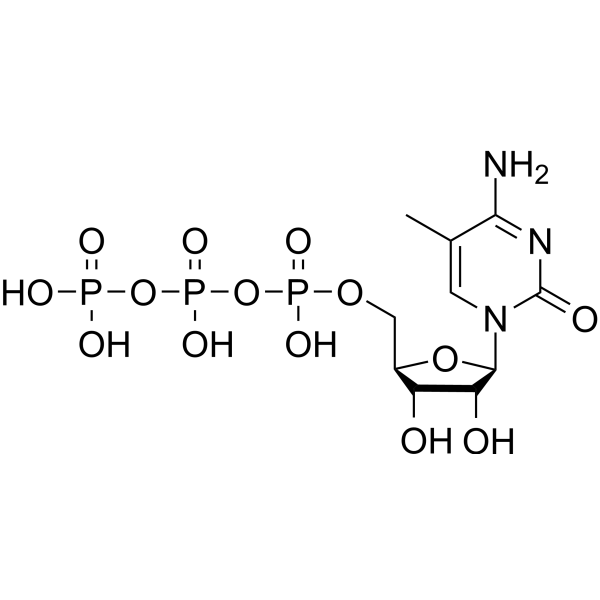
5-Methylcytidine 5′-triphosphate (5-Methyl-CTP) is a modified ribonucleoside 5′-triphosphate. When incorporated into mRNA, 5-Methylcytidine 5′-triphosphate enhances the translation efficiency and stability of the mRNA, and reduces the innate immune response. 5-Methylcytidine 5′-triphosphate can be used in studies related to gene replacement and vaccination applications.
Para uso exclusivo en investigación. No vendemos a pacientes.
- No. CAS: 327174-86-7
- Fòrmula: C10H18N3O14P3
- Peso molecular:497.18
-
Almacenamiento:
Please store the product under the recommended conditions in the Certificate of Analysis.

To place orders, for customer services and technical support, please contact: MedChemExpress USA
Tel: 609-228-6898 E-mail: [email protected] [email protected]


-
 Actividad biológica
-
Chemical Information
- Protocolo
- Pureza y Documentación
- Referencias
-
 Help & FAQs


-
HY-112582A
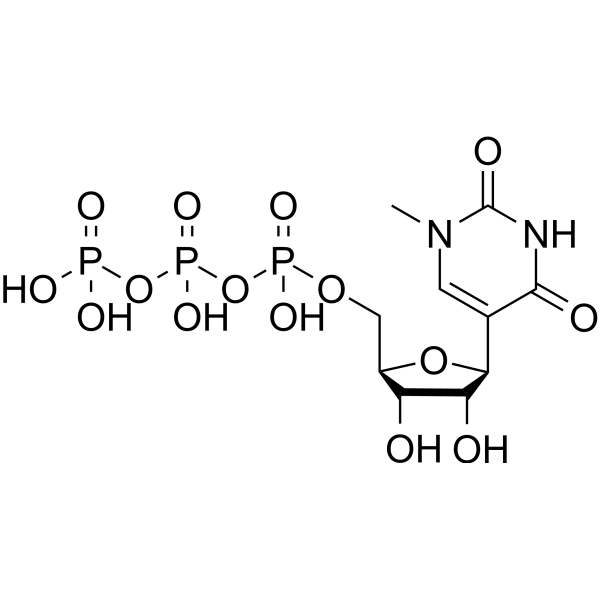
N1-Methylpseudouridine-5′-triphosphate solution (100 mM)Nucleobase-modified Nucleotide -
HY-W013093
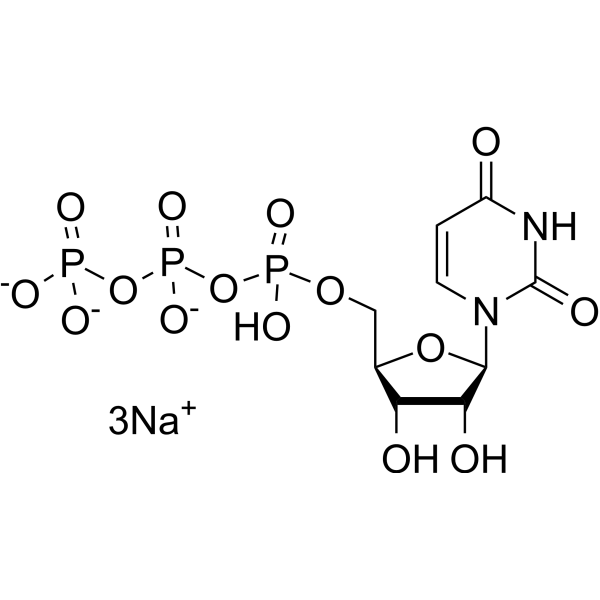
Uridine triphosphate trisodium saltUTP -

HY-107372H
UTP trisodium salt, 100 mM Solution, PCR GradeUTP -

HY-112582AGL
N1-Methylpseudouridine-5′-triphosphate (GMP like)Nucleobase-modified Nucleotide -

HY-W013093R
Uridine triphosphate trisodium salt (Standard)UTP -

HY-N11522
5-Methyluridine 5′-triphosphateUTP Analog -
HY-141567
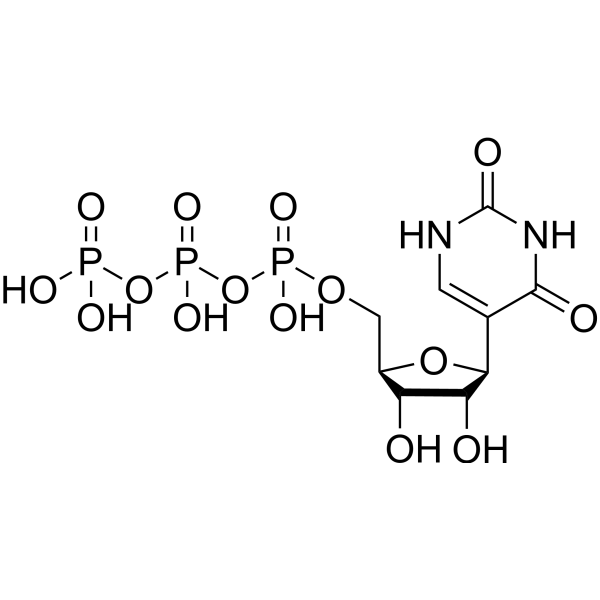
Pseudouridine 5'-triphosphateUTP Derivative
Publications Citing Use of MedChemExpress (MCE) 5-Methylcytidine 5′-triphosphate
MoreVer todos los productos específicos de isoformas DNA/RNA Synthesis
More

Actividad biológica
Descripciòn
In Vitro
5-Methylcytidine 5′-triphosphate (trisodium) is efficiently synthesized via a protection-free one-pot three-step chemical method from 5-methylcytidine via monophosphorylation followed by reaction with pyrophosphate[2].
MedChemExpress (MCE) has not independently confirmed the accuracy of these methods. They are for reference only. Further protocols information, click here.


Chemical Information
-
No. CAS 327174-86-7
-
Peso molecular 497.18
-
Fòrmula C10H18N3O14P3
-
SMILES
O[C@@H]1[C@H](O)[C@@H](COP(OP(OP(O)(O)=O)(O)=O)(O)=O)O[C@H]1N2C(N=C(N)C(C)=C2)=O
-
Synonyms
5-Methyl-CTP
-
Envío
Room temperature in continental US; may vary elsewhere.
-
Almacenamiento
Please store the product under the recommended conditions in the Certificate of Analysis.


Publications (1)
-
Journal Impact Factor
-
Most Recent
-
Cell Rep
Depletion of CUL4B in macrophages ameliorates diabetic kidney disease via miR-194-5p/ITGA9 axis. [Abstract]2023 May 23;42(6):112550. PMID: 37224018

Protocolo
-
RNA extraction experimental
By lysing cells, releasing RNA, and removing impurities such as proteins and DNA, high-purity RNA products are finally obtained. The commonly used traditional method is the guanidine isothiocyanate/phenol/chloroform method (Trizol), which is suitable for a variety of animal materials including animal tissues, microorganisms, cultured cells, etc., and most plant materials.


Pureza y Documentación
Referencias

Calculators
Concentration (start) × Volume (start) = Concentration (final) × Volume (final)


5-Methylcytidine 5′-triphosphate Related Classifications
HY-147338 Related Classifications
 Powered by Bioz
Keywords