



Aviptadil
Based on 2 publication(s) in Google Scholar
Aviptadil is an analog vasoactive intestinal polypeptide (VIP) with potent vasodilatory effects. Aviptadil induces pulmonary vasodilation and inhibits vascular SMCs proliferation, platelet aggregation. Aviptadil can be used for the research of pulmonary fibrosis, pulmonary arterial hypertension (PAH) and SARS-CoV-2 caused respiratory failure, et al.
For research use only. We do not sell to patients.
- Purity : 99.95%
- CAS No.: 40077-57-4
- Formula: C147H238N44O42S
- Molecular Weight:3325.80
-
Storage:
Sealed storage, away from moisture.
Powder -80°C, 2 years , -20°C, 1 year* In solvent : -80°C, 6 months; -20°C, 1 month (sealed storage, away from moisture)


To place orders, for customer services and technical support, please contact: MedChemExpress USA
Tel: 609-228-6898 E-mail: [email protected] [email protected]


-
 Biological Activity
-
Chemical Information
-
Solvent & Solubility
- Protocols
- Purity & Documentation
- References
-
 Help & FAQs


-

HY-P0221
PACAP (1-38), human, ovine, ratPACAP Agonist -
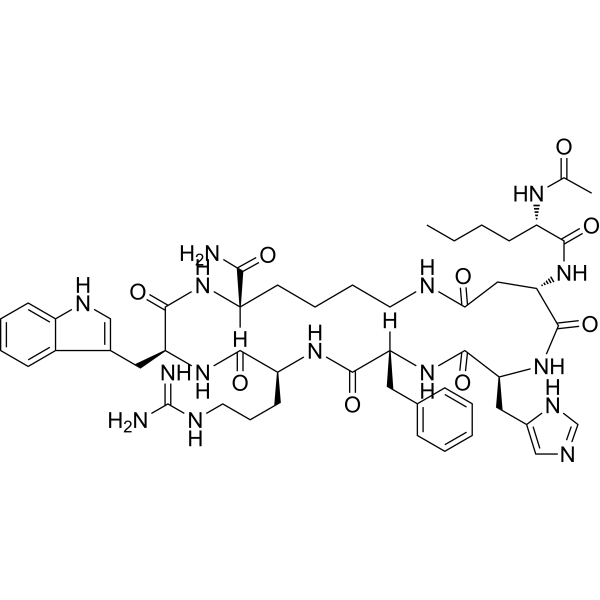
HY-P0267
Melanotan (MT)-IIMelanotropin Receptor Agonist -

HY-P1237
C-Type Natriuretic Peptide (CNP) (1-22), humanNPR-B Aagonist -
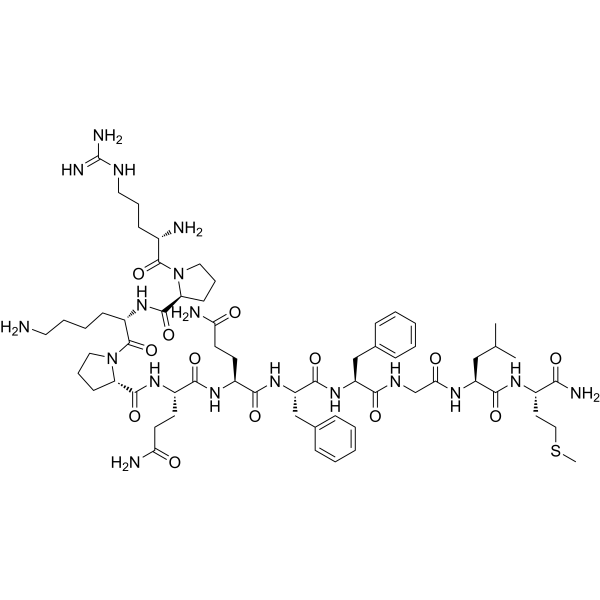
HY-P0201
Substance PNeurotransmitter -

HY-P0198
Neuropeptide Y (human,rat,mouse)Active Compound -

HY-P1071
α-CGRP (human)Vasodilator -
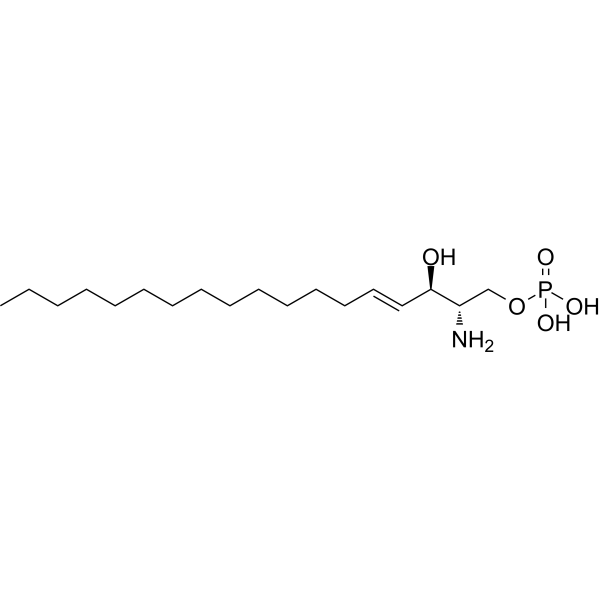
HY-108496
Sphingosine-1-phosphateS1PR Agonist -

HY-114118
SemaglutideGLP-1R Agonist -
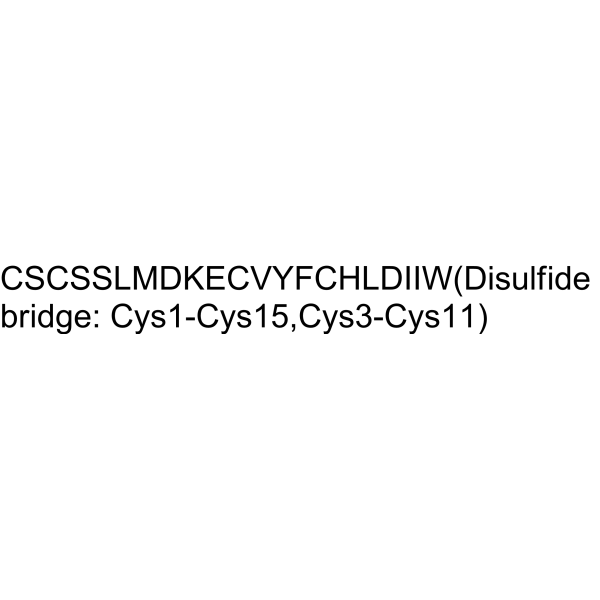
HY-P0202
Endothelin 1 (swine, human)Vasoconstrictor -

HY-P0176
PACAP (1-27), human, ovine, ratPACAP Receptor Agonist -

HY-P1548
β-CGRP, humanCalcitonin Peptide -

HY-P0221C
PACAP (1-38) free acidEndogenous Neuropeptide
Publications Citing Use of MedChemExpress (MCE) Aviptadil
More

Biological Activity
Description
In Vivo
Aviptadil (150 μg/kg/d; Intraperitoneal pump; 2.5 μl/h; 4 weeks) can eliminate bronchial hyperreactivity (BHR) in Sprague-Dawley rats, with a characteristic of bronchiectasis[3].
Aviptadil (0.1, 3 μg/kg; Intravenous injection (i.v.)) can improve reperfusion injury in living rat lung transplantation models[5].
MedChemExpress (MCE) has not independently confirmed the accuracy of these methods. They are for reference only.
-
Animal Model:Sprague Dawley rats
-
Dosage:Bosentan (HY-A0013 ) 300 mg/kg, Aviptadil 500 μg/kg
-
Administration:Bosentan (HY-A0013 ) Oral gavage (p.o); Aviptadil Intraperitoneal injection (i.p)
-
Result:Starting on day 21, the rats treated with Bosentan or Aviptadil alone had a 29% reduction in mortality (P< 0.0001). No death was observed in the rats during the same time period.


Chemical Information
-
CAS No. 40077-57-4
-
Appearance Solid
-
Molecular Weight 3325.80
-
Formula C147H238N44O42S
-
Color White to off-white
-
Synonyms
Vasoactive Intestinal Peptide (human, rat, mouse, rabbit, canine, porcine)
-
Sequence
His-Ser-Asp-Ala-Val-Phe-Thr-Asp-Asn-Tyr-Thr-Arg-Leu-Arg-Lys-Gln-Met-Ala-Val-Lys-Lys-Tyr-Leu-Asn-Ser-Ile-Leu-Asn-NH2
-
Sequence Shortening
HSDAVFTDNYTRLRKQMAVKKYLNSILN-NH2
-
Shipping
Room temperature in continental US; may vary elsewhere.
-
Storage
Sealed storage, away from moisture
Powder -80°C 2 years -20°C 1 year * In solvent : -80°C, 6 months; -20°C, 1 month (sealed storage, away from moisture)


Publications (2)
-
Journal Impact Factor
-
Most Recent
-
Nucleic Acids Res
COVID19 Drug Repository: text-mining the literature in search of putative COVID19 therapeutics. [Abstract]2021 Jan 8;49(D1):D1113-D1121. PMID: 33166390 -


Solvent & Solubility
In Vitro:
H2O : 100 mg/mL (30.07 mM; Need ultrasonic)
DMSO : 50 mg/mL (15.03 mM; Need ultrasonic; Hygroscopic DMSO has a significant impact on the solubility of product, please use newly opened DMSO)
Please refer to the solubility information to select the appropriate solvent. Once prepared, please aliquot and store the solution to prevent product inactivation from repeated freeze-thaw cycles.
Storage method and period of stock solution: -80°C, 6 months; -20°C, 1 month (sealed storage, away from moisture). When stored at -80°C, please use it within 6 months. When stored at -20°C, please use it within 1 month.
* Note: If you choose water as the stock solution, please dilute it to the working solution, then filter and sterilize it with a 0.22 μm filter before use.
Please refer to the solubility information to select the appropriate solvent. Once prepared, please aliquot and store the solution to prevent product inactivation from repeated freeze-thaw cycles.
Storage method and period of stock solution: -80°C, 6 months; -20°C, 1 month (sealed storage, away from moisture). When stored at -80°C, please use it within 6 months. When stored at -20°C, please use it within 1 month.
* Note: If you choose water as the stock solution, please dilute it to the working solution, then filter and sterilize it with a 0.22 μm filter before use.
Concentration (start) × Volume (start) = Concentration (final) × Volume (final)

Protocols
-
Fibrosis/Collagen Morphometry
Fibrosis and collagen morphometry is based on the quantitative visualization of fibrillar collagen deposition in tissue sections using histochemical stains such as Sirius Red (Picrosirius Red) or Masson's trichrome, followed by image-based or polarization-enhanced analysis to estimate collagen proportional area as a surrogate of extracellular matrix accumulation during fibrotic remodeling. Sirius Red combined with polarized light microscopy enhances detection of collagen fibers due to birefringence properties, enabling more specific visualization of collagen type I and III fibrils compared to conventional bright-field histology, while whole-section or region-restricted digital morphometry reduces field-selection bias in fibrosis assessment. Alternative quantitative approaches include second harmonic generation (SHG) and two-photon excited fluorescence microscopy, which enable label-free detection of fibrillar collagen and have been validated against histological staining and biochemica
-
Collagen: Sirius Red Staining
Sirius Red or picrosirius red staining is a histochemical method for visualizing collagen-rich extracellular matrix in tissue sections, and collagen fibers are detected as red-stained structures under bright-field microscopy with enhanced birefringence under polarized light. Picrosirius red is useful for assessing total collagen organization, distribution, and fibrosis burden, but polarized color should not be interpreted as a definitive collagen type I versus type III readout because color is affected by fiber orientation, thickness, and packing.
-
Connective Tissue: Masson's Trichrome/Collagen Trichrome Staining
Masson’s Trichrome (collagen/trichrome staining) is a histological technique that differentially stains tissue compartments using sequential acidic dyes to distinguish collagen from muscle and cytoplasmic components based on dye affinity and tissue permeability differences, enabling visualization of fibrosis and connective tissue architecture in histological sections. The classical formulation typically uses Weigert's iron hematoxylin for nuclear staining, Biebrich scarlet-acid fuchsin for cytoplasm and muscle, and aniline blue (or light green variants) for collagen, producing a characteristic blue/green collagen signal contrasted against red cytoplasm and dark nuclei. The staining principle relies on selective displacement of smaller dye molecules by larger anionic dyes in collagen-rich regions under controlled acidified conditions, which enhances collagen-specific dye retention. This property makes the method widely used for fibrosis assessment in organs such as heart, liver, lung, a
-
Research Protocol for Cardiovascular Diseases
Cardiovascular disease can be modeled as maladaptive cardiac remodeling, where ischemic injury or pressure overload activates inflammatory signaling, fibroblast activation, extracellular-matrix deposition, cardiomyocyte hypertrophy, vascular remodeling, and progressive ventricular dysfunction. The TGF-β/SMAD axis is a central profibrotic pathway after myocardial injury and pressure overload, while innate immune and cytokine pathways regulate leukocyte recruitment, scar formation, and adverse remodeling. Key unresolved questions include which inflammatory signals are reparative versus harmful, when fibrosis is protective versus maladaptive, and whether pathway inhibition improves function without weakening necessary infarct healing or compensatory remodeling.
-
Cell Viability Determination by MTT Colorimetric Assay
The following protocol uses the MTT colorimetric assay as a classic literature-established method for assessing cell viability/metabolic activity in cultured mammalian cells. MTT[3-(4,5-dimethylthiazol-2-yl)-2,5-diphenyltetrazolium bromide] is reduced by metabolically active cells to a colored formazan product; the amount of formazan is quantified spectrophotometrically and provides an indirect measure of metabolically active viable cells. Importantly, MTT reduction reflects cellular oxidoreductase/metabolic activity rather than an absolute direct count of living cells, so changes in cellular metabolism can alter the signal independently of cell number.


Purity & Documentation
-
Data Sheet (282 KB)
-
SDS (252 KB)
- English - EN (252 KB)
- Français - FR (252 KB)
- Deutsch - DE (252 KB)
- Norwegian - NO (252 KB)
- Español - ES (252 KB)
- Swedish - SV (252 KB)
- Italian - IT (252 KB)
- Korean - KR (252 KB)
- Portuguese - PT (252 KB)
-
Handling Instructions (2659 KB)
References
[1]. Intravenous Aviptadil for Critical COVID-19 With Respiratory Failure (COVID-AIV)
[2]. Jian Hu, et al. Novel Targets of Drug Treatment for Pulmonary Hypertension. Am J Cardiovasc Drugs [Content Brief]
[3]. Hamidi SA, et al. VIP and endothelin receptor antagonist: an effective combination against experimental pulmonary arterial hypertension. Respir Res. 2011;12(1):141. Published 2011 Oct 26. [Content Brief]
[5]. Nagahiro I, et al. Vasoactive intestinal peptide ameliorates reperfusion injury in rat lung transplantation. J Heart Lung Transplant. 1998;17(6):617-621. [Content Brief]


Complete Stock Solution Preparation Table
Please refer to the solubility information to select the appropriate solvent. Once prepared, please aliquot and store the solution to prevent product inactivation from repeated freeze-thaw cycles.
Storage method and period of stock solution: -80°C, 6 months; -20°C, 1 month (sealed storage, away from moisture). When stored at -80°C, please use it within 6 months. When stored at -20°C, please use it within 1 month.
| Optional Solvent | Concentration Solvent Mass | 1 mg | 5 mg | 10 mg | 25 mg |
|---|---|---|---|---|---|
| DMSO / H2O | 1 mM | 0.3007 mL | 1.5034 mL | 3.0068 mL | 7.5170 mL |
| 5 mM | 0.0601 mL | 0.3007 mL | 0.6014 mL | 1.5034 mL | |
| 10 mM | 0.0301 mL | 0.1503 mL | 0.3007 mL | 0.7517 mL | |
| 15 mM | 0.0200 mL | 0.1002 mL | 0.2005 mL | 0.5011 mL | |
| H2O | 20 mM | 0.0150 mL | 0.0752 mL | 0.1503 mL | 0.3758 mL |
| 25 mM | 0.0120 mL | 0.0601 mL | 0.1203 mL | 0.3007 mL | |
| 30 mM | 0.0100 mL | 0.0501 mL | 0.1002 mL | 0.2506 mL |
* Note: If you choose water as the stock solution, please dilute it to the working solution, then filter and sterilize it with a 0.22 μm filter before use.


Aviptadil Related Classifications
HY-P0012 Related Classifications
 Powered by Bioz