



Benzydamine hydrochloride

Based on 1 Customer Validation
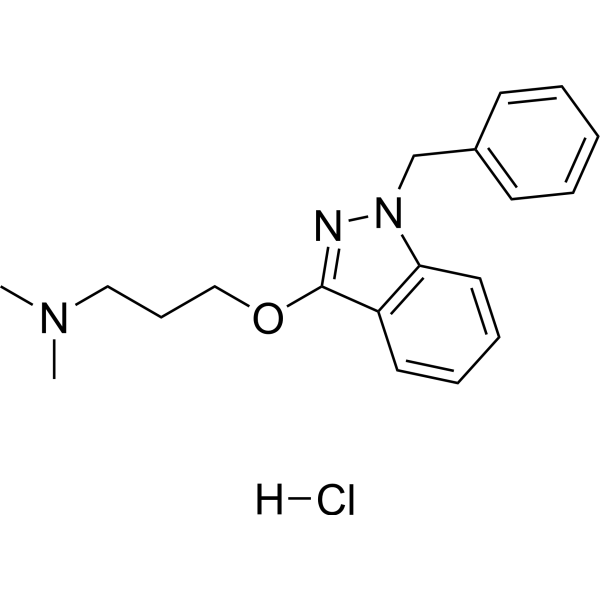
Benzydamine hydrochloride is an orally administered prostaglandin synthesis inhibitor that has anti-inflammatory, analgesic, antipyretic, and antibacterial properties. Benzydamine hydrochloride can inhibit TNF-α, stabilize cell membranes, and reduce oxidative stress within cells.
For research use only. We do not sell to patients.
- Purity : 99.21%
- CAS No.: 132-69-4
- Formula: C19H24ClN3O
- Molecular Weight:345.87
-
Storage:
4°C, sealed storage, away from moisture
* In solvent : -80°C, 6 months; -20°C, 1 month (sealed storage, away from moisture)

To place orders, for customer services and technical support, please contact: MedChemExpress USA
Tel: 609-228-6898 E-mail: [email protected] [email protected]


-
 Biological Activity
-
Chemical Information
-
Solvent & Solubility
- Protocols
- Purity & Documentation
- References
-
 Help & FAQs


-
HY-B1058
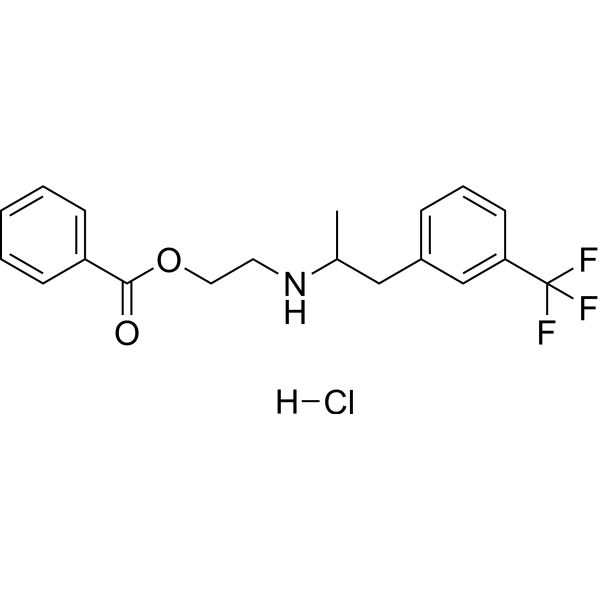
Benfluorex hydrochlorideHNF4α Activator -
HY-N0283
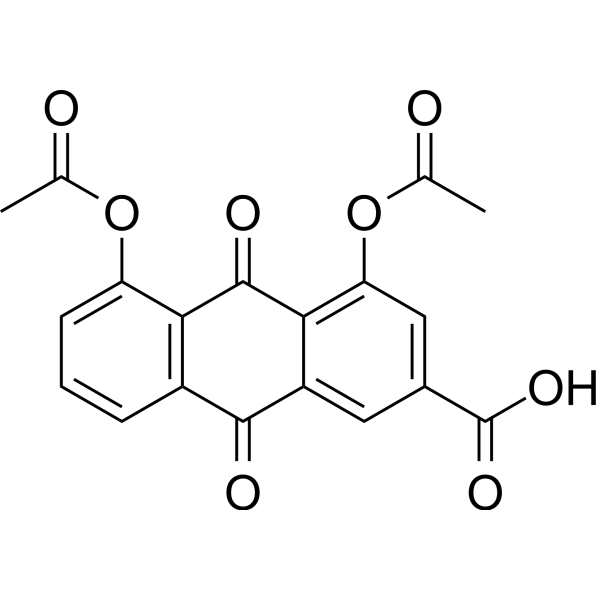
DiacereinIL-1 Inhibitor -
HY-30235AR
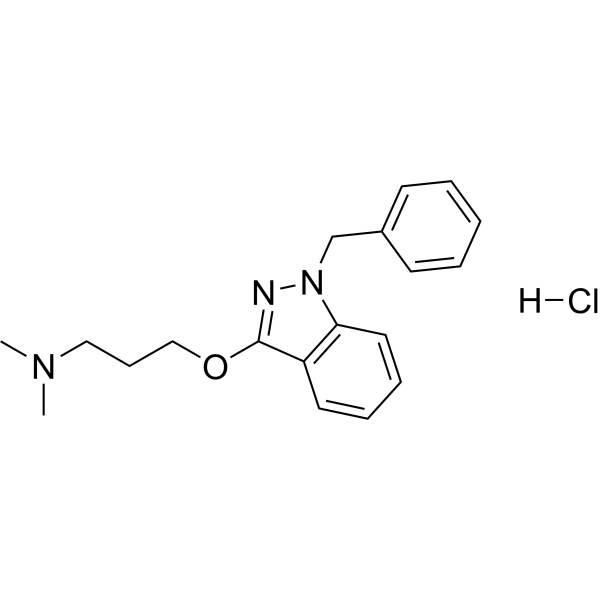
Benzydamine hydrochloride (Standard)Prostaglandin Synthetase Inhibitor -
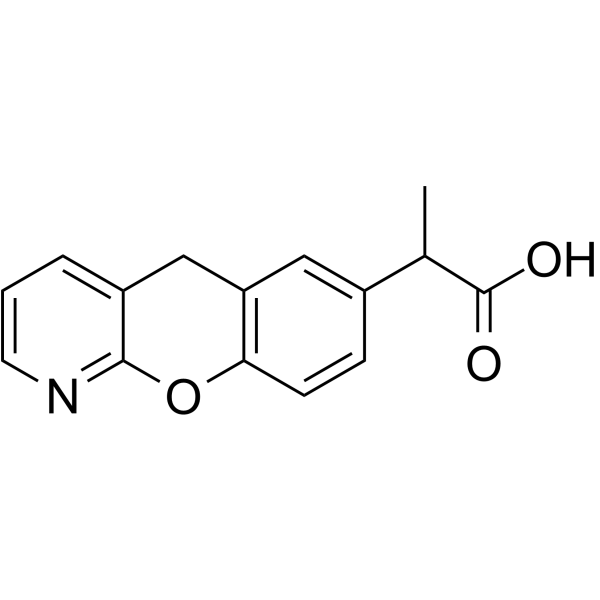
HY-B0336
PranoprofenAnti-Inflammatory Agent -
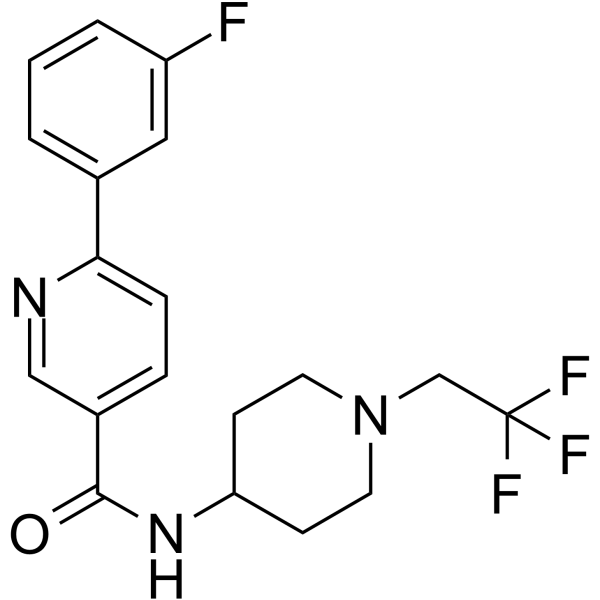
HY-10439
HPGDS inhibitor 1HPGDS Inhibitor -
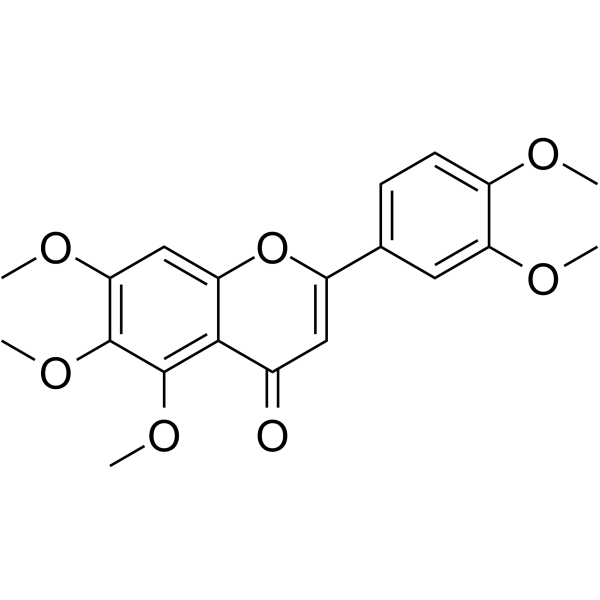
HY-N0297
SinensetinTNF Receptor Inhibitor -
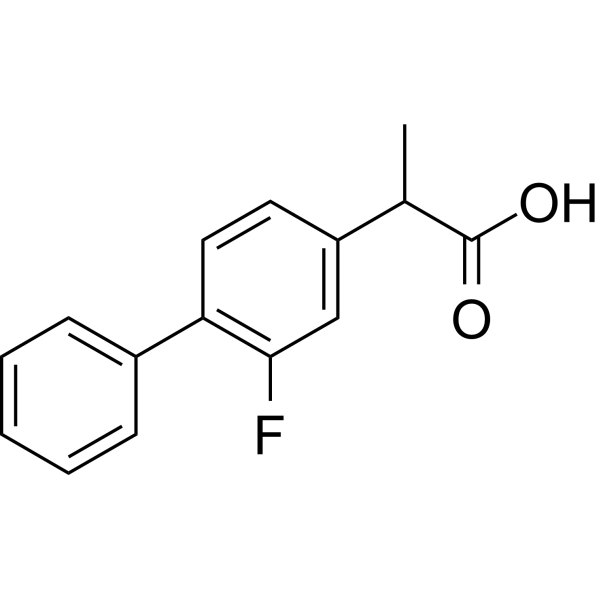
HY-10582
FlurbiprofenCOX Inhibitor -

HY-10582R
Flurbiprofen (Standard)COX Inhibitor -
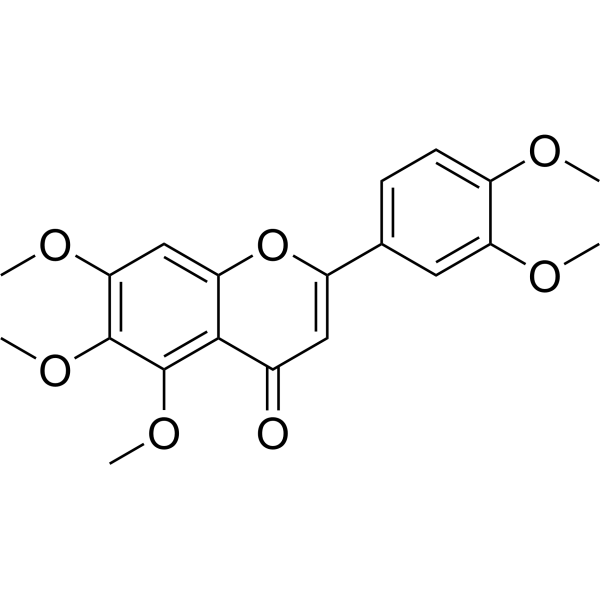
HY-N0297R
Sinensetin (Standard) -
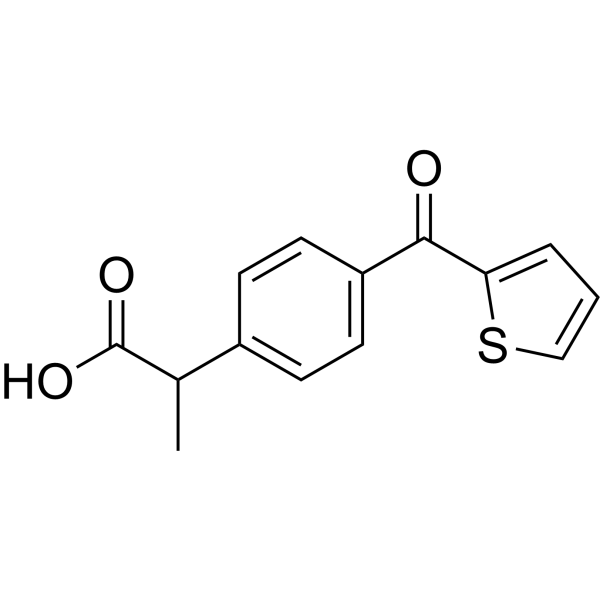
HY-B0270
SuprofenPGE synthase Inhibitor -

HY-B0336R
Pranoprofen (Standard)Anti-Inflammatory Agent -
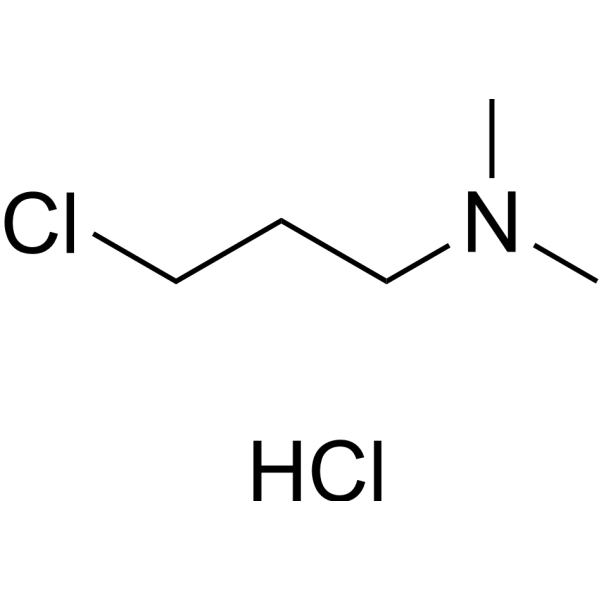
HY-W018789
3-Chloro-N,N-dimethylpropan-1-amine hydrochlorideBiochemical Reagent


Biological Activity
Description
In Vitro
Benzydamine hydrochloride has a MIC of 0.5 mg/mL and a MLC of 1.0 mg/mL against Escherichia coli, ATCC 8739, and a MIC of 1.0 mg/mL and a MLC of 1.0 mg/mL against Proteus vulgaris, ATCC 13315[1].
Benzydamine (1.0 mg/mL, 24 h) hydrochloride inhibits the proliferation of Ps. Aeruginosa[1].
MedChemExpress (MCE) has not independently confirmed the accuracy of these methods. They are for reference only. Further protocols information, click here.
-
Cell Line:Ps. aeruginosa
-
Concentration:1.0 mg/mL
-
Incubation Time:24 h
-
Result:Inhibited the proliferation of Ps. aeruginosa.


Chemical Information
-
CAS No. 132-69-4
-
Appearance Solid
-
Molecular Weight 345.87
-
Formula C19H24ClN3O
-
Color White to off-white
-
SMILES
CN(C)CCCOC1=NN(CC2=CC=CC=C2)C3=C1C=CC=C3.[H]Cl
-
Shipping
Room temperature in continental US; may vary elsewhere.
-
Storage
4°C, sealed storage, away from moisture
* In solvent : -80°C, 6 months; -20°C, 1 month (sealed storage, away from moisture)


Solvent & Solubility
In Vitro:
H2O : ≥ 41 mg/mL (118.54 mM)
* "≥" means soluble, but saturation unknown.
Please refer to the solubility information to select the appropriate solvent. Once prepared, please aliquot and store the solution to prevent product inactivation from repeated freeze-thaw cycles.
Storage method and period of stock solution: -80°C, 6 months; -20°C, 1 month (sealed storage, away from moisture). When stored at -80°C, please use it within 6 months. When stored at -20°C, please use it within 1 month.
* Note: If you choose water as the stock solution, please dilute it to the working solution, then filter and sterilize it with a 0.22 μm filter before use.
Please refer to the solubility information to select the appropriate solvent. Once prepared, please aliquot and store the solution to prevent product inactivation from repeated freeze-thaw cycles.
Storage method and period of stock solution: -80°C, 6 months; -20°C, 1 month (sealed storage, away from moisture). When stored at -80°C, please use it within 6 months. When stored at -20°C, please use it within 1 month.
* Note: If you choose water as the stock solution, please dilute it to the working solution, then filter and sterilize it with a 0.22 μm filter before use.
Concentration (start) × Volume (start) = Concentration (final) × Volume (final)
In Vivo:
For the following dissolution methods, please prepare the working solution directly:
It is recommended to prepare fresh solutions and use them promptly within a short period of time.
The percentages shown for the solvents indicate their volumetric ratio in the final prepared solution. If precipitation or phase separation occurs during preparation, heat and/or sonication can be used to aid dissolution.
Add each solvent one by one: PBS
Solubility: 100 mg/mL (289.13 mM); Clear solution; Need ultrasonic

Protocols
-
Research Protocol for Infectious Diseases
Infectious-disease experiments test how pathogens interact with host barriers, innate immune receptors, inflammatory signaling, pathogen replication, and tissue injury; pattern-recognition receptors such as TLRs, RIG-I-like receptors, NOD-like receptors, and inflammasomes detect microbial molecules and activate NF-κB, interferon, and cytokine responses. The central hypothesis is that infection severity reflects the balance between pathogen burden and host response: protective inflammation restricts pathogen growth, whereas excessive or mislocalized inflammation contributes to tissue damage and disease phenotype. Unresolved questions include which host pathways are protective versus pathogenic, why some infection models fail to translate to human disease, and which combined readouts best predict clinically relevant infection outcomes.
-
ROS/oxidative-stress fluorescent staining
ROS/oxidative-stress fluorescent staining uses cell-permeant fluorogenic probes that become fluorescent after oxidation inside cells or tissues; commonly used examples include DCFH-DA/DCFDA for broad cellular oxidant detection, DHE for superoxide-related signal detection, MitoSOX for mitochondrial superoxide-related signal detection, and CellROX probes for oxidative-stress-associated fluorescence readouts. The assay detects probe oxidation rather than a single ROS species unless the probe and analysis method have been chemically validated for that species. DCFH-DA enters cells, is deacetylated by intracellular esterases to DCFH, and produces fluorescent DCF after oxidation, so the readout is used as an operational measure of total cellular oxidative stress rather than a species-specific ROS measurement. DHE and MitoSOX can report superoxide-related oxidation, but red fluorescence alone can include non-specific ethidium-like oxidation products; HPLC or optimized spectral approaches are
-
Research Protocol for Inflammation-related Diseases
The NLRP3 inflammasome is a cytosolic innate immune signaling platform that integrates priming signals and danger-signal activation to promote caspase-1 activation, maturation of IL-1β and IL-18, and gasdermin D-mediated pyroptotic cell death. The core experimental logic is to determine whether inflammatory disease phenotypes are driven by increased NLRP3 expression, ASC-containing inflammasome assembly, caspase-1 cleavage, GSDMD cleavage, and extracellular release of IL-1β/IL-18 rather than by nonspecific cell injury alone. The pathway is strongly linked to inflammation-related disease phenotypes because monosodium urate crystals activate NALP3/NLRP3 inflammasome signaling in gout-like crystal inflammation, cholesterol crystals activate NLRP3 inflammasomes in atherogenesis models, and DSS-induced intestinal inflammation has been reported to involve NLRP3 inflammasome activity. However, experimental colitis studies also show context-dependent protective effects of NLRP3 inflammasome co


Purity & Documentation
-
Data Sheet (274 KB)
-
SDS (393 KB)
- English - EN (393 KB)
- Français - FR (393 KB)
- Deutsch - DE (393 KB)
- Norwegian - NO (393 KB)
- Español - ES (393 KB)
- Swedish - SV (393 KB)
- Italian - IT (393 KB)
- Korean - KR (393 KB)
- Portuguese - PT (393 KB)
-
Handling Instructions (2659 KB)
References
[1]. Fanaki NH, et al. Antimicrobial activity of benzydamine, a non-steroid anti-inflammatory agent. J Chemother. 1992 Dec;4(6):347-52. [Content Brief]
[2]. Quane PA, Pharmacology of benzydamine. Inflammopharmacology. 1998;6(2):95-107 [Content Brief]
[3]. R S Turnbull, et al. Benzydamine Hydrochloride (Tantum) in the management of oral inflammatory conditions. J Can Dent Assoc. 1995 Feb;61(2):127-34. [Content Brief]


Complete Stock Solution Preparation Table
Please refer to the solubility information to select the appropriate solvent. Once prepared, please aliquot and store the solution to prevent product inactivation from repeated freeze-thaw cycles.
Storage method and period of stock solution: -80°C, 6 months; -20°C, 1 month (sealed storage, away from moisture). When stored at -80°C, please use it within 6 months. When stored at -20°C, please use it within 1 month.
| Optional Solvent | Concentration Solvent Mass | 1 mg | 5 mg | 10 mg | 25 mg |
|---|---|---|---|---|---|
| H2O | 1 mM | 2.8913 mL | 14.4563 mL | 28.9126 mL | 72.2815 mL |
| 5 mM | 0.5783 mL | 2.8913 mL | 5.7825 mL | 14.4563 mL | |
| 10 mM | 0.2891 mL | 1.4456 mL | 2.8913 mL | 7.2281 mL | |
| 15 mM | 0.1928 mL | 0.9638 mL | 1.9275 mL | 4.8188 mL | |
| 20 mM | 0.1446 mL | 0.7228 mL | 1.4456 mL | 3.6141 mL | |
| 25 mM | 0.1157 mL | 0.5783 mL | 1.1565 mL | 2.8913 mL | |
| 30 mM | 0.0964 mL | 0.4819 mL | 0.9638 mL | 2.4094 mL | |
| 40 mM | 0.0723 mL | 0.3614 mL | 0.7228 mL | 1.8070 mL | |
| 50 mM | 0.0578 mL | 0.2891 mL | 0.5783 mL | 1.4456 mL | |
| 60 mM | 0.0482 mL | 0.2409 mL | 0.4819 mL | 1.2047 mL | |
| 80 mM | 0.0361 mL | 0.1807 mL | 0.3614 mL | 0.9035 mL | |
| 100 mM | 0.0289 mL | 0.1446 mL | 0.2891 mL | 0.7228 mL |
* Note: If you choose water as the stock solution, please dilute it to the working solution, then filter and sterilize it with a 0.22 μm filter before use.


Benzydamine hydrochloride Related Classifications
HY-30235A Related Classifications
 Powered by Bioz