



C 87
Based on 2 publication(s) in Google Scholar
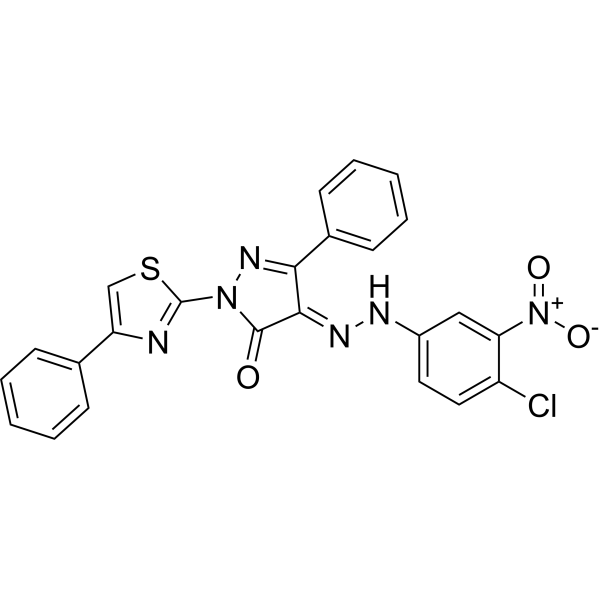
C 87 is a novel small-molecule TNFα inhibitor; potently inhibits TNFα-induced cytotoxicity with an IC50 of 8.73 μM.
For research use only. We do not sell to patients.
- Purity : 98.16%
- CAS No.: 332420-90-3
- Formula: C24H15ClN6O3S
- Molecular Weight:502.93
-
Storage:Powder -20°C, 3 years , 4°C, 2 years ; In solvent -80°C, 2 years , -20°C, 1 year

To place orders, for customer services and technical support, please contact: MedChemExpress USA
Tel: 609-228-6898 E-mail: [email protected] [email protected]


-
 Biological Activity
-
Chemical Information
-
Solvent & Solubility
- Protocols
- Purity & Documentation
- References
-
 Help & FAQs


-
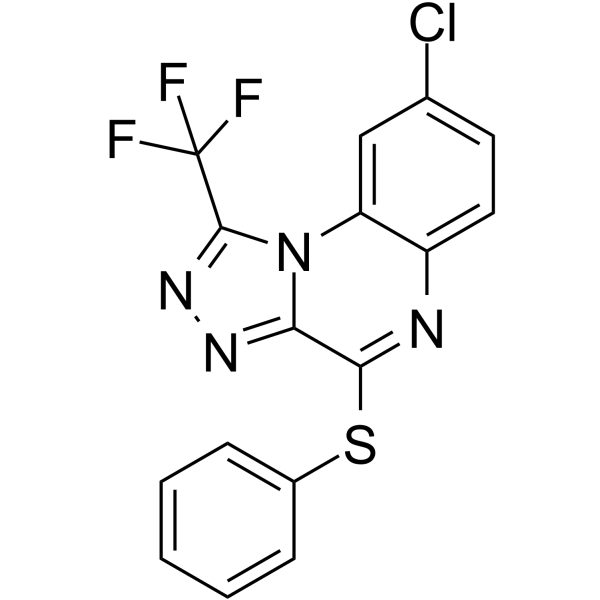
HY-110203
R-7050TNF Receptor Antagonist -
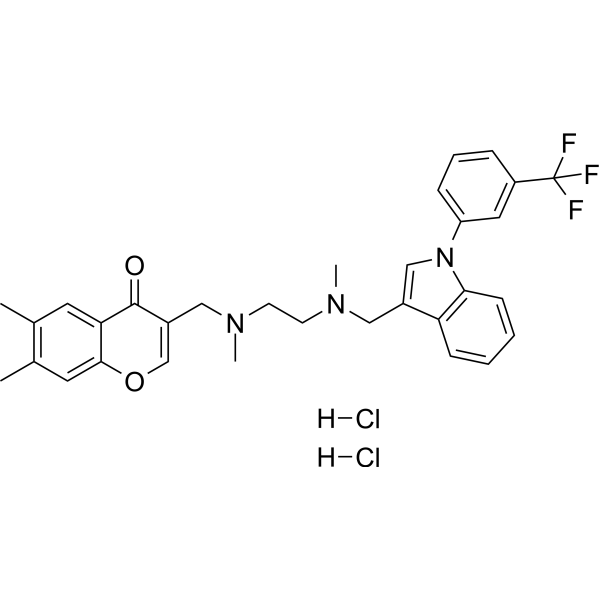
HY-111255A
SPD304 dihydrochlorideTNFα Inhibitor -
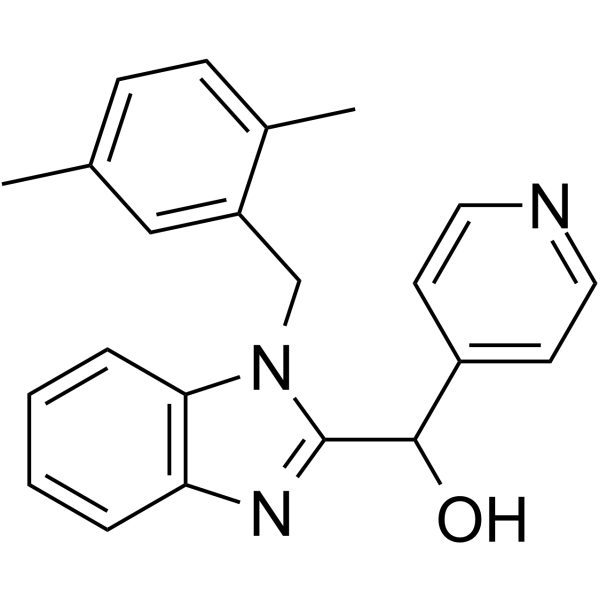
HY-147045
UCB-5307TNF Inhibitor -
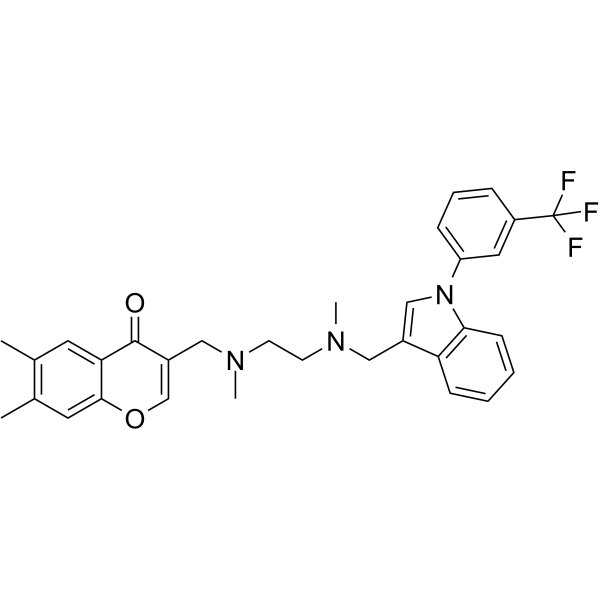
HY-111255
SPD304TNFα Inhibitor -
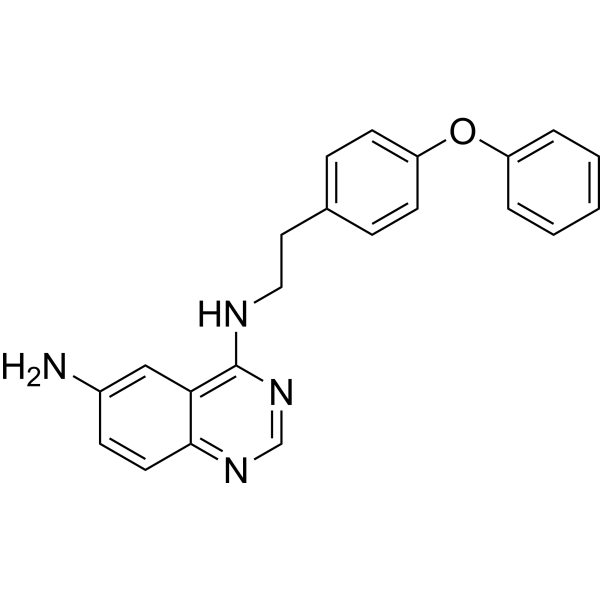
HY-13812
QNZTNF Receptor Inhibitor -

HY-108847
EtanerceptTNF Inhibitor -
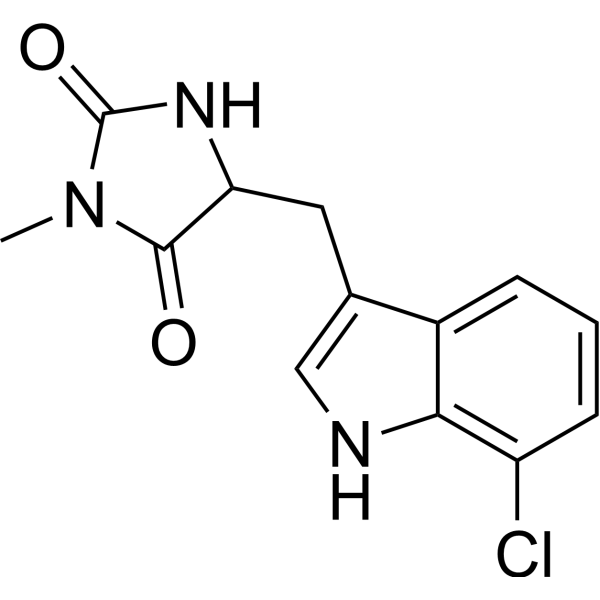
HY-14622A
Necrostatin 2 racemateRIPK1 Inhibitor -
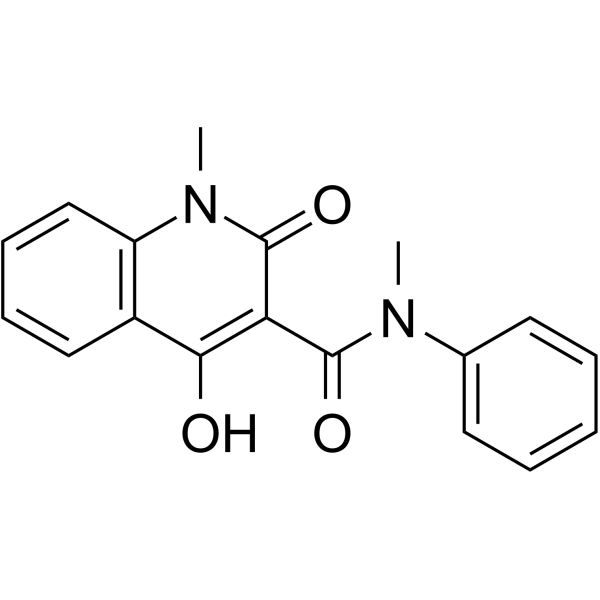
HY-13743
RoquinimexImmunomodulator -
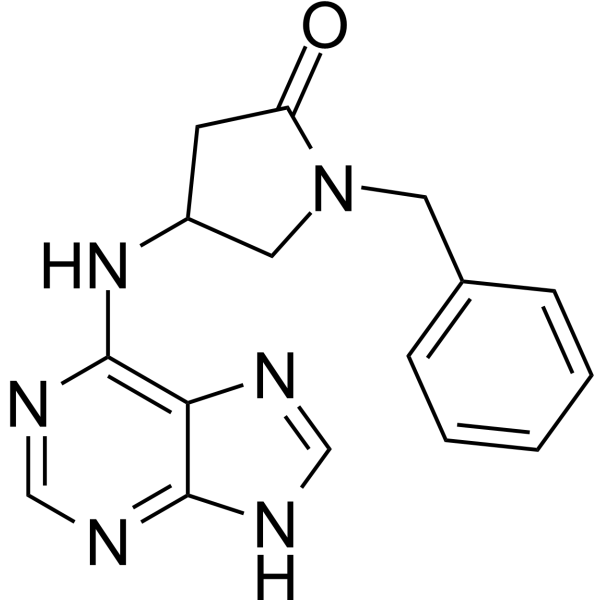
HY-133807A
(Rac)-BenpyrineTNF-α Inhibitor -
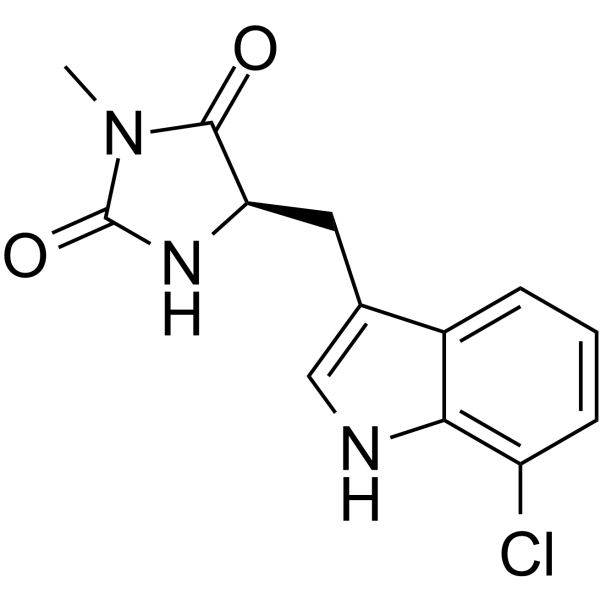
HY-14622
Necrostatin 2RIP kinase Inhibitor -
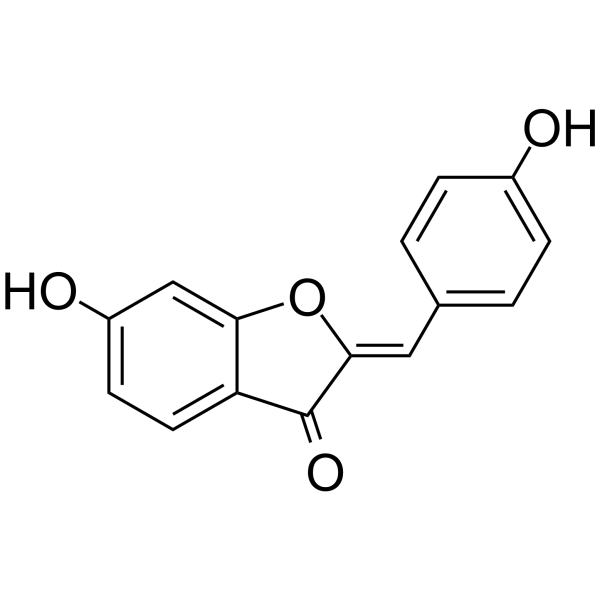
HY-102040
HispidolTNF-α Inhibitor -
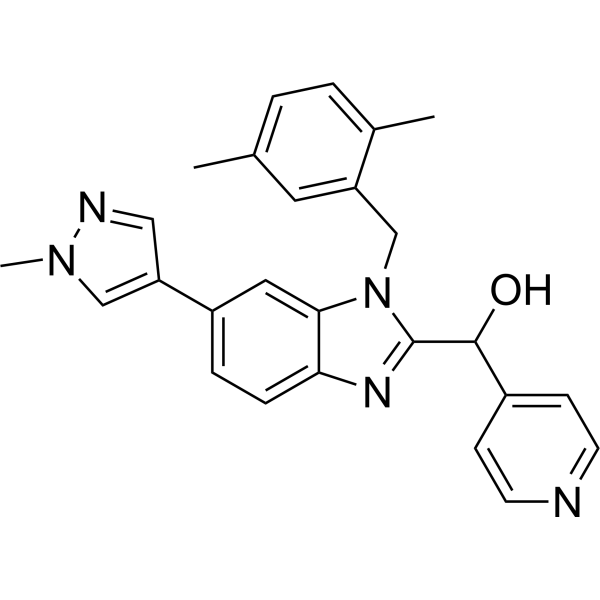
HY-133122
UCB-9260TNF Signaling Inhibitor
Publications Citing Use of MedChemExpress (MCE) C 87
More

Biological Activity
Description
IC50 & Target
IC50: 8.73 μM (TNFα-induced cytotoxicity)[1]
Cellular Effect
|
Cell Line

|
Type | Value | Description | References |
|---|---|---|---|---|
| THP-1 | CC50 |
10.81 μM
Compound: C87
|
Cytotoxicity against human THP-1 cells assessed as reduction in cell viability incubated for 72 hrs by MTT assay
Cytotoxicity against human THP-1 cells assessed as reduction in cell viability incubated for 72 hrs by MTT assay
|
[PMID: 33479624] |
| THP-1 | IC50 |
0.11 μM
Compound: C87
|
Inhibition of LPS-induced TNFalpha production in human THP-1 cells incubated for 2 hrs followed by LPS stimulation and measured after 12 hrs by ELISA
Inhibition of LPS-induced TNFalpha production in human THP-1 cells incubated for 2 hrs followed by LPS stimulation and measured after 12 hrs by ELISA
|
[PMID: 33479624] |
In Vitro
C 87 (C87) directly binds to TNFα, potently inhibits TNFα-induced cytotoxicity (IC50=8.73 μM) and effectively blocks TNFα-triggered signaling activities. C 87 exhibits good solubility and consistent dose-dependent functions in vitro. C 87 completely blocks TNFα-induced activation of caspase-3 and caspase-8. The activity of c-Jun N-terminal kinase (JNK) is significantly reduced by C 87 in L929 cells. C 87 also prevents the degradation of IκBα in cells treated with TNFα. C 87 potently blocks multiple signaling transduction pathways and downstream target gene activation triggered by TNFα[1].
MedChemExpress (MCE) has not independently confirmed the accuracy of these methods. They are for reference only. Further protocols information, click here.
In Vivo
MedChemExpress (MCE) has not independently confirmed the accuracy of these methods. They are for reference only.


Chemical Information
-
CAS No. 332420-90-3
-
Appearance Solid
-
Molecular Weight 502.93
-
Formula C24H15ClN6O3S
-
Color Yellow to orange
-
SMILES
O=C(N(C1=NC(C2=CC=CC=C2)=CS1)N=C/3C4=CC=CC=C4)C3=N\NC5=CC=C(Cl)C([N+]([O-])=O)=C5
-
Shipping
Room temperature in continental US; may vary elsewhere.
-
Storage
Powder -20°C 3 years 4°C 2 years In solvent -80°C 2 years -20°C 1 year


Publications (2)
-
Journal Impact Factor
-
Most Recent
-
Eur J Immunol
Fibroblast transdifferentiation promotes conversion of M1 macrophages and replenishment of cardiac resident macrophages following cardiac injury in mice. [Abstract]2020 Jun;50(6):795-808. PMID: 32068249 -
J Immunol
β-Arrestin 2 Regulates Inflammatory Responses against Mycobacterium tuberculosis Infection through ERK1/2 Signaling. [Abstract]2021 Jun 1;206(11):2623-2637. PMID: 34001657


Solvent & Solubility
In Vitro:
DMSO : 5.05 mg/mL (10.04 mM; Need ultrasonic; Hygroscopic DMSO has a significant impact on the solubility of product, please use newly opened DMSO)
Please refer to the solubility information to select the appropriate solvent. Once prepared, please aliquot and store the solution to prevent product inactivation from repeated freeze-thaw cycles.
Storage method and period of stock solution: -80°C, 2 years; -20°C, 1 year. When stored at -80°C, please use it within 2 years. When stored at -20°C, please use it within 1 year.
Please refer to the solubility information to select the appropriate solvent. Once prepared, please aliquot and store the solution to prevent product inactivation from repeated freeze-thaw cycles.
Storage method and period of stock solution: -80°C, 2 years; -20°C, 1 year. When stored at -80°C, please use it within 2 years. When stored at -20°C, please use it within 1 year.
Concentration (start) × Volume (start) = Concentration (final) × Volume (final)
In Vivo:
For the following dissolution methods, please prepare the working solution directly:
It is recommended to prepare fresh solutions and use them promptly within a short period of time.
The percentages shown for the solvents indicate their volumetric ratio in the final prepared solution. If precipitation or phase separation occurs during preparation, heat and/or sonication can be used to aid dissolution.
Add each solvent one by one: 15% Solutol HS 15 10% Cremophor EL 35% PEG400 40% Water
Solubility: 2 mg/mL (3.98 mM); Suspended solution; Need ultrasonic

Protocols
-
Cell Cytotoxicity Assay
Cytotoxicity assays are usually based on the assessment of cell membrane damage, which can also be indirectly detected by measuring cell viability. Detection methods include MTT assay, CKK-8 assay, LDH assay and ATP assay, etc.
-
Mammalian live/dead viability and cytotoxicity staining
Live/dead viability and cytotoxicity staining assays are based on the simultaneous detection of intracellular esterase activity in metabolically active (viable) cells and membrane integrity loss in non-viable cells. In commonly used dual-staining approaches, membrane-permeant fluorogenic substrates are converted by intracellular esterases into fluorescent products in live cells, while impermeant DNA-binding dyes selectively enter cells with compromised plasma membranes and label nucleic acids in dead or dying cells, enabling discrimination between viable and non-viable populations by fluorescence microscopy or flow cytometry.
-
Cell Viability Determination by MTT Colorimetric Assay
The following protocol uses the MTT colorimetric assay as a classic literature-established method for assessing cell viability/metabolic activity in cultured mammalian cells. MTT[3-(4,5-dimethylthiazol-2-yl)-2,5-diphenyltetrazolium bromide] is reduced by metabolically active cells to a colored formazan product; the amount of formazan is quantified spectrophotometrically and provides an indirect measure of metabolically active viable cells. Importantly, MTT reduction reflects cellular oxidoreductase/metabolic activity rather than an absolute direct count of living cells, so changes in cellular metabolism can alter the signal independently of cell number.


Purity & Documentation
-
Data Sheet (278 KB)
-
SDS (251 KB)
- English - EN (251 KB)
- Français - FR (251 KB)
- Deutsch - DE (251 KB)
- Norwegian - NO (251 KB)
- Español - ES (251 KB)
- Swedish - SV (251 KB)
- Italian - IT (251 KB)
- Korean - KR (251 KB)
- Portuguese - PT (251 KB)
-
Handling Instructions (2659 KB)
References


Complete Stock Solution Preparation Table
Please refer to the solubility information to select the appropriate solvent. Once prepared, please aliquot and store the solution to prevent product inactivation from repeated freeze-thaw cycles.
Storage method and period of stock solution: -80°C, 2 years; -20°C, 1 year. When stored at -80°C, please use it within 2 years. When stored at -20°C, please use it within 1 year.
| Optional Solvent | Concentration Solvent Mass | 1 mg | 5 mg | 10 mg | 25 mg |
|---|---|---|---|---|---|
| DMSO | 1 mM | 1.9883 mL | 9.9417 mL | 19.8835 mL | 49.7087 mL |
| 5 mM | 0.3977 mL | 1.9883 mL | 3.9767 mL | 9.9417 mL | |
| 10 mM | 0.1988 mL | 0.9942 mL | 1.9883 mL | 4.9709 mL |


C 87 Related Classifications
HY-100735 Related Classifications
 Powered by Bioz