



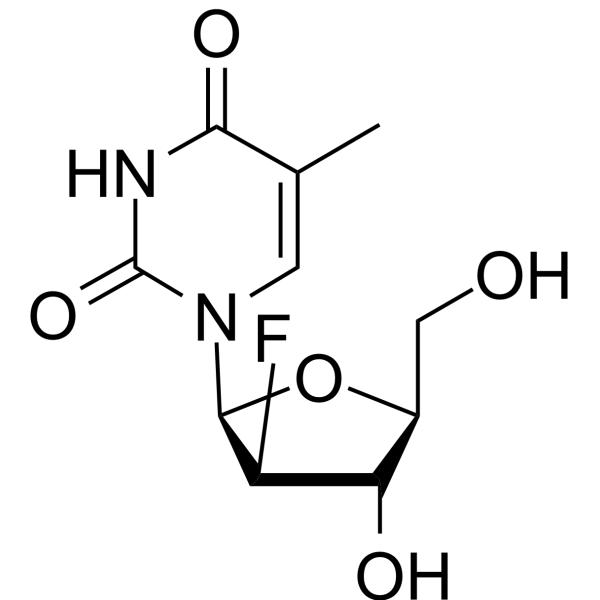
Clevudine
Based on 1 publication(s) in Google Scholar
Clevudine (L-FMAU), a nucleoside analog of the unnatural L-configuration, has potent anti-HBV activity with long half-life, low toxicity. Clevudine is a non-competitive inhibitor that is not incorporated into the viral DNA but rather binds to the polymerase. Clevudine is active against cowpox virus respiratory infection in mice.
For research use only. We do not sell to patients.
- Purity : 99.84%
- CAS No.: 163252-36-6
- Formula: C10H13FN2O5
- Molecular Weight:260.22
-
Storage:Powder -20°C, 3 years , 4°C, 2 years ; In solvent -80°C, 6 months , -20°C, 1 month

To place orders, for customer services and technical support, please contact: MedChemExpress USA
Tel: 609-228-6898 E-mail: [email protected] [email protected]


-
 Biological Activity
-
Chemical Information
-
Solvent & Solubility
- Protocols
- Purity & Documentation
- References
-
 Help & FAQs


-
HY-B0307
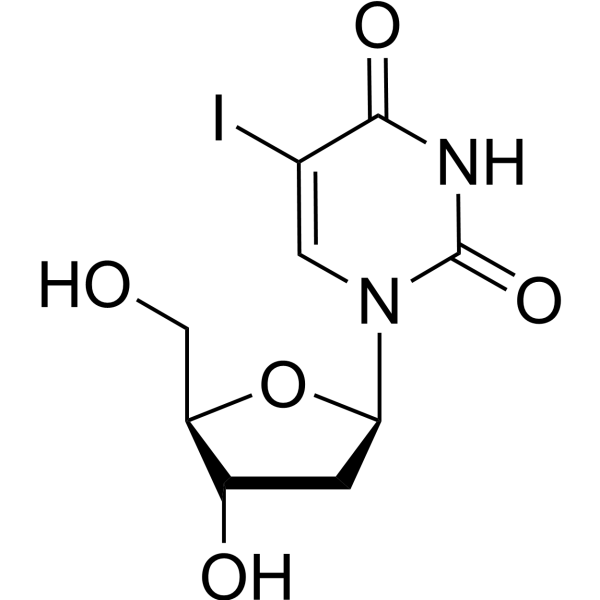
IdoxuridineAntiviral Agent -
HY-B0255
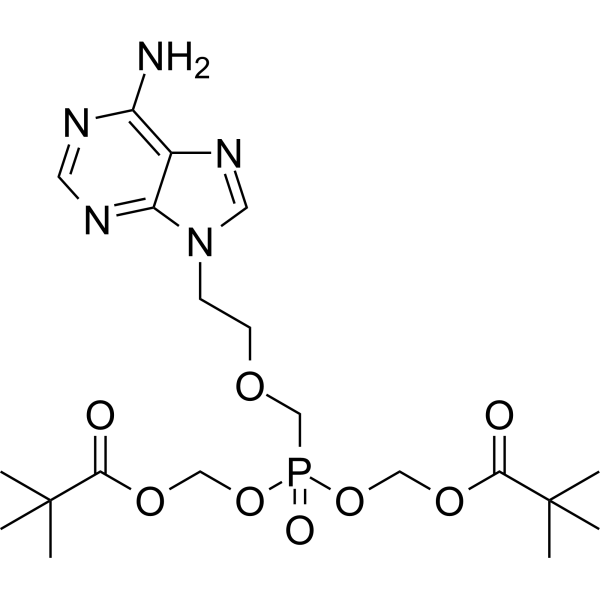
Adefovir dipivoxilAdefovir Prodrug -
HY-B0017
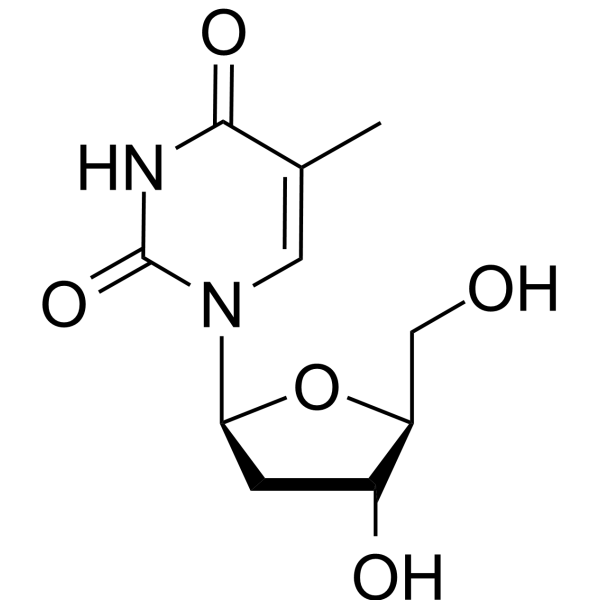
TelbivudineHBV Replication Inhibitor -
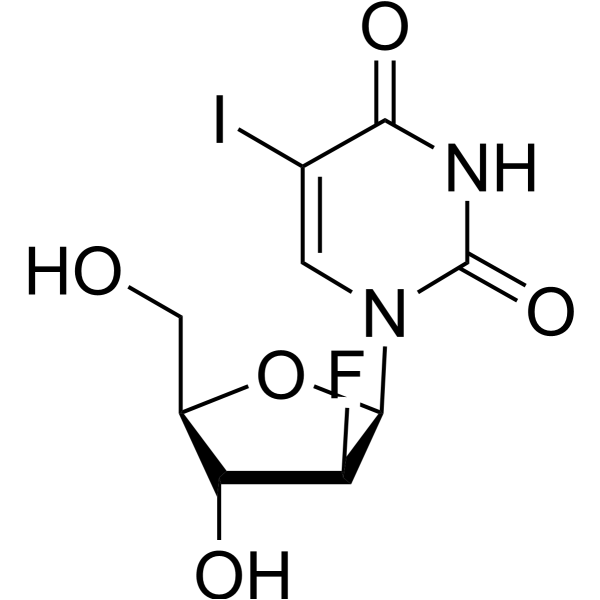
HY-118122
FialuridineAntiviral Agent -
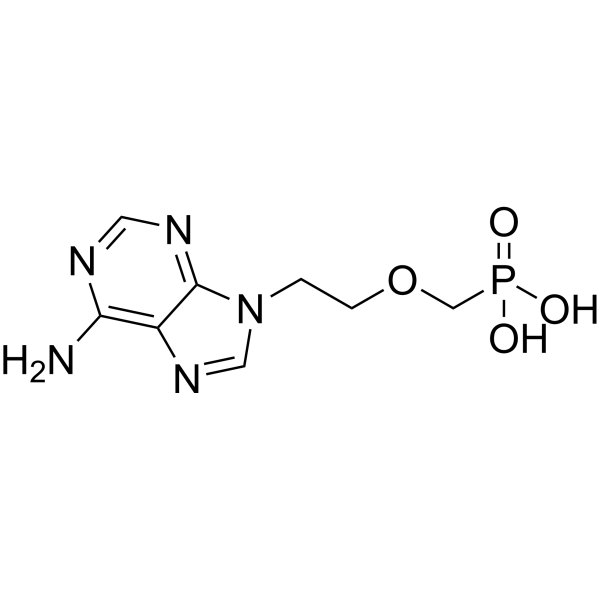
HY-B1826
AdefovirHBV Inhibitor -
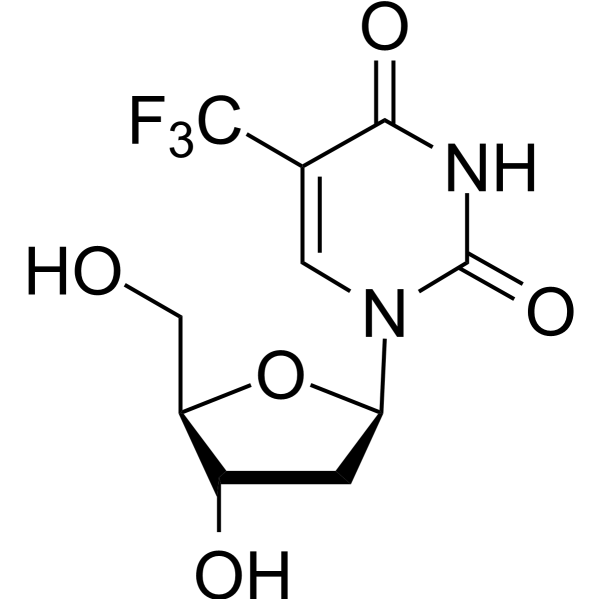
HY-A0061
TrifluridineAnti-Cancer Agent/Anti-Viral Agent -
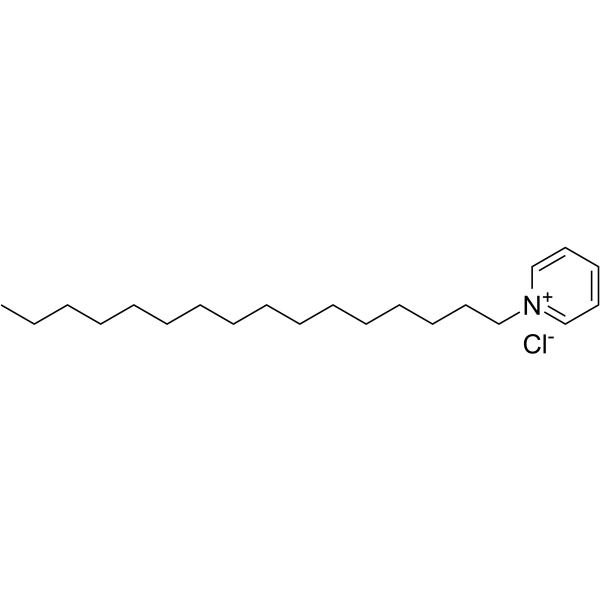
HY-B1464
Cetylpyridinium chlorideAntimicrobial Agent -
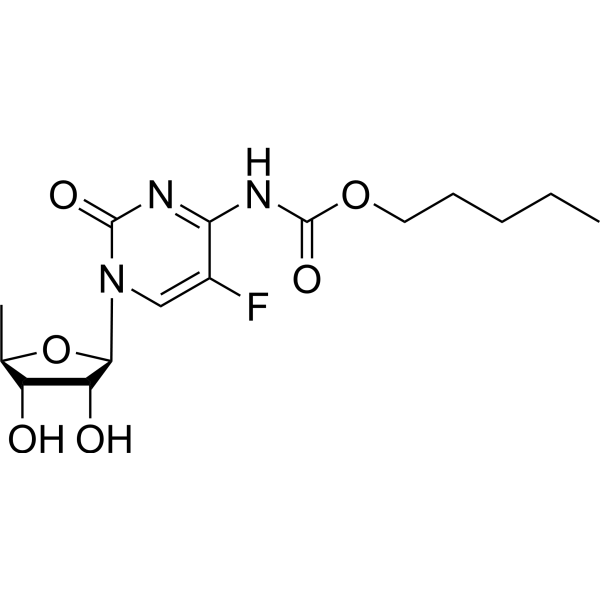
HY-B0016
CapecitabineDNA/RNA Synthesis Inhibitor -

HY-B0307R
Idoxuridine (Standard)Antiviral Agent -
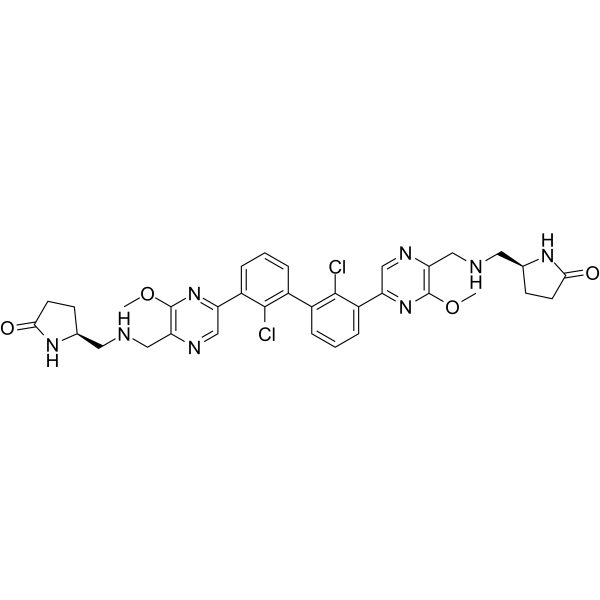
HY-138407
EvixapodlinPD-1/PD-L1 PPI Inhibitor -
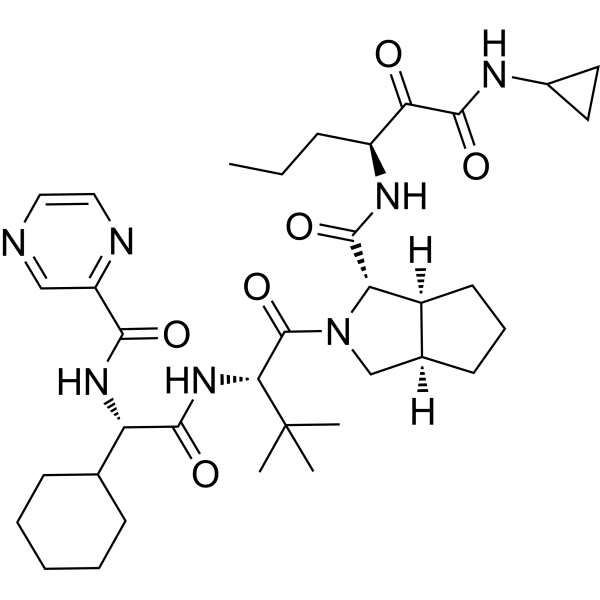
HY-10235
TelaprevirHCV NS3-4A Protease Inhibitor -
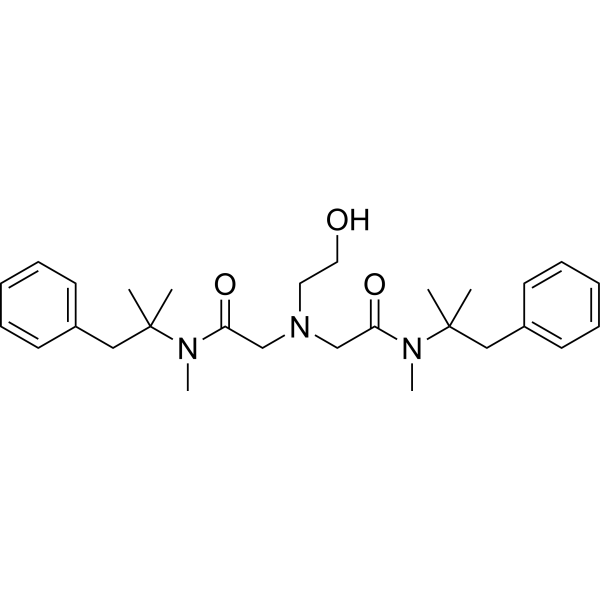
HY-B0955
OxethazaineAnalgesic Agent
Publications Citing Use of MedChemExpress (MCE) Clevudine
MoreAll DNA/RNA Synthesis Isoforms
More

Biological Activity
Description
Cellular Effect
|
Cell Line

|
Type | Value | Description | References |
|---|---|---|---|---|
| HepG2 | EC50 |
100 nM
Compound: 79
|
Antiviral activity against HBV infected in human HepG2 cells assessed as inhibition of viral replication
Antiviral activity against HBV infected in human HepG2 cells assessed as inhibition of viral replication
|
[PMID: 26200936] |
In Vitro
Clevudine (L-FMAU) shows some activity against Epstein-Barr virus[2].
MedChemExpress (MCE) has not independently confirmed the accuracy of these methods. They are for reference only. Further protocols information, click here.
Clinical Trial
| NCT Number | Sponsor | Condition | Start Date |
Phase
|
|---|---|---|---|---|
| NCT01329991 | Plexxikon| | 2011-05 | PHASE1 |


Chemical Information
-
CAS No. 163252-36-6
-
Appearance Solid
-
Molecular Weight 260.22
-
Formula C10H13FN2O5
-
Color White to off-white
-
SMILES
O[C@@H]1[C@@H](F)[C@@H](N2C(NC(C(C)=C2)=O)=O)O[C@H]1CO
-
Synonyms
L-FMAU
-
Shipping
Room temperature in continental US; may vary elsewhere.
-
Storage
Powder -20°C 3 years 4°C 2 years In solvent -80°C 6 months -20°C 1 month


Publications (1)
-
Journal Impact Factor
-
Most Recent
-
PLoS Pathog
Anti-orthopoxvirus drugs inhibit lumpy skin disease virus replication by targeting viral DNA polymerase. [Abstract]2026 Jan 26;22(1):e1013903. PMID: 41587213


Solvent & Solubility
In Vitro:
DMSO : 100 mg/mL (384.29 mM; Need ultrasonic; Hygroscopic DMSO has a significant impact on the solubility of product, please use newly opened DMSO)
H2O : ≥ 50 mg/mL (192.15 mM)
* "≥" means soluble, but saturation unknown.
Please refer to the solubility information to select the appropriate solvent. Once prepared, please aliquot and store the solution to prevent product inactivation from repeated freeze-thaw cycles.
Storage method and period of stock solution: -80°C, 6 months; -20°C, 1 month. When stored at -80°C, please use it within 6 months. When stored at -20°C, please use it within 1 month.
* Note: If you choose water as the stock solution, please dilute it to the working solution, then filter and sterilize it with a 0.22 μm filter before use.
Please refer to the solubility information to select the appropriate solvent. Once prepared, please aliquot and store the solution to prevent product inactivation from repeated freeze-thaw cycles.
Storage method and period of stock solution: -80°C, 6 months; -20°C, 1 month. When stored at -80°C, please use it within 6 months. When stored at -20°C, please use it within 1 month.
* Note: If you choose water as the stock solution, please dilute it to the working solution, then filter and sterilize it with a 0.22 μm filter before use.
Concentration (start) × Volume (start) = Concentration (final) × Volume (final)
In Vivo:
Select the appropriate dissolution method based on your experimental animal and administration route.
- For the following dissolution methods, please ensure to first prepare a clear stock solution using an In Vitro approach and then sequentially add co-solvents:
- To ensure reliable experimental results, the clarified stock solution can be appropriately stored based on storage conditions. As for the working solution for In Vivo experiments, it is recommended to prepare freshly and use it on the same day.
- The percentages shown for the solvents indicate their volumetric ratio in the final prepared solution. If precipitation or phase separation occurs during preparation, heat and/or sonication can be used to aid dissolution.
Add each solvent one by one: 10% DMSO 40% PEG300 5% Tween-80 45% Saline
Solubility: ≥ 2.5 mg/mL (9.61 mM); Clear solution
This protocol yields a clear solution of ≥ 2.5 mg/mL (saturation unknown).
Taking 1 mL working solution as an example, add 100 μL DMSO stock solution (25.0 mg/mL) to 400 μL PEG300, and mix evenly; then add 50 μL Tween-80 and mix evenly; then add 450 μL Saline to adjust the volume to 1 mL.
Preparation of Saline: Dissolve 0.9 g sodium chloride in ddH₂O and dilute to 100 mL to obtain a clear Saline solution.
Add each solvent one by one: 10% DMSO 90% (20% SBE-β-CD in Saline)
Solubility: ≥ 2.5 mg/mL (9.61 mM); Clear solution
This protocol yields a clear solution of ≥ 2.5 mg/mL (saturation unknown).
Taking 1 mL working solution as an example, add 100 μL DMSO stock solution (25.0 mg/mL) to 900 μL 20% SBE-β-CD in Saline, and mix evenly.
Preparation of 20% SBE-β-CD in Saline (4°C, storage for one week): 2 g SBE-β-CD powder is dissolved in 10 mL Saline, completely dissolve until clear.
In Vivo Dissolution Calculator
Please enter the basic information of animal experiments:
-
-
-
-
Recommended: Prepare an additional quantity of animals to account for potential losses during experiments.
Working solution concentration: 0.22 mg/mL
This product has good water solubility, please refer to the measured solubility data in water/PBS/Saline for details.

Protocols
-
Research Protocol for Infectious Diseases
Infectious-disease experiments test how pathogens interact with host barriers, innate immune receptors, inflammatory signaling, pathogen replication, and tissue injury; pattern-recognition receptors such as TLRs, RIG-I-like receptors, NOD-like receptors, and inflammasomes detect microbial molecules and activate NF-κB, interferon, and cytokine responses. The central hypothesis is that infection severity reflects the balance between pathogen burden and host response: protective inflammation restricts pathogen growth, whereas excessive or mislocalized inflammation contributes to tissue damage and disease phenotype. Unresolved questions include which host pathways are protective versus pathogenic, why some infection models fail to translate to human disease, and which combined readouts best predict clinically relevant infection outcomes.
-
Protocol for Pharmacokinetic Study
Pharmacokinetic studies quantify how an organism handles a drug over time through absorption, distribution, metabolism, and excretion, and the core experimental readout is the concentration-time profile of parent drug and, when relevant, metabolites in biological matrices such as plasma, whole blood, urine, bile, or tissue. Pharmacokinetic analysis links dose, route, exposure, clearance, half-life, distribution, bioavailability, and systemic exposure to drug efficacy and toxicity hypotheses rather than measuring a signaling pathway directly. The literature links pharmacokinetics to drug-development phenotypes by showing that drug metabolism and pharmacokinetics influence compound progression, exposure-response interpretation, safety margins, dosing strategy, and failure risk during discovery and development. DMPK science contributes to compound optimization by integrating physicochemical properties, in vitro metabolism, transporter behavior, in vivo exposure, and pharmacodynamic contex


Purity & Documentation
-
Data Sheet (276 KB)
-
SDS (393 KB)
- English - EN (393 KB)
- Français - FR (393 KB)
- Deutsch - DE (393 KB)
- Norwegian - NO (393 KB)
- Español - ES (393 KB)
- Swedish - SV (393 KB)
- Italian - IT (393 KB)
- Korean - KR (393 KB)
- Portuguese - PT (393 KB)
-
Handling Instructions (2659 KB)
References
[1]. Asselah T, et al. Clevudine: a promising therapy for the treatment of chronic hepatitis B. Expert Opin Investig Drugs. 2008;17(12):1963-1974. [Content Brief]
[2]. Yoo BC, et al. Clevudine is highly efficacious in hepatitis B e antigen-negative chronic hepatitis B with durable off-therapy viral suppression. Hepatology. 2007;46(4):1041-1048. [Content Brief]
[3]. Smee DF, et, al. Progress in the discovery of compounds inhibiting orthopoxviruses in animal models. Antivir Chem Chemother. 2008;19(3):115-24. [Content Brief]


Complete Stock Solution Preparation Table
Please refer to the solubility information to select the appropriate solvent. Once prepared, please aliquot and store the solution to prevent product inactivation from repeated freeze-thaw cycles.
Storage method and period of stock solution: -80°C, 6 months; -20°C, 1 month. When stored at -80°C, please use it within 6 months. When stored at -20°C, please use it within 1 month.
| Optional Solvent | Concentration Solvent Mass | 1 mg | 5 mg | 10 mg | 25 mg |
|---|---|---|---|---|---|
| H2O / DMSO | 1 mM | 3.8429 mL | 19.2145 mL | 38.4290 mL | 96.0726 mL |
| 5 mM | 0.7686 mL | 3.8429 mL | 7.6858 mL | 19.2145 mL | |
| 10 mM | 0.3843 mL | 1.9215 mL | 3.8429 mL | 9.6073 mL | |
| 15 mM | 0.2562 mL | 1.2810 mL | 2.5619 mL | 6.4048 mL | |
| 20 mM | 0.1921 mL | 0.9607 mL | 1.9215 mL | 4.8036 mL | |
| 25 mM | 0.1537 mL | 0.7686 mL | 1.5372 mL | 3.8429 mL | |
| 30 mM | 0.1281 mL | 0.6405 mL | 1.2810 mL | 3.2024 mL | |
| 40 mM | 0.0961 mL | 0.4804 mL | 0.9607 mL | 2.4018 mL | |
| 50 mM | 0.0769 mL | 0.3843 mL | 0.7686 mL | 1.9215 mL | |
| 60 mM | 0.0640 mL | 0.3202 mL | 0.6405 mL | 1.6012 mL | |
| 80 mM | 0.0480 mL | 0.2402 mL | 0.4804 mL | 1.2009 mL | |
| 100 mM | 0.0384 mL | 0.1921 mL | 0.3843 mL | 0.9607 mL |
* Note: If you choose water as the stock solution, please dilute it to the working solution, then filter and sterilize it with a 0.22 μm filter before use.


Clevudine Related Classifications
HY-13859 Related Classifications
 Powered by Bioz