



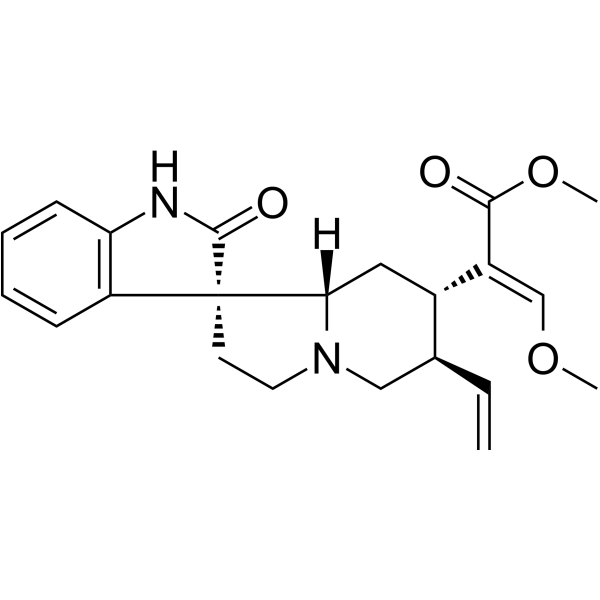
Corynoxeine
Based on 6 publication(s) in Google Scholar
Corynoxeine, isolated from the hook of Uncaria rhynchophylla, is a potent ERK1/ERK2 inhibitor of key PDGF-BB-induced vascular smooth muscle cells (VSMCs) proliferation.
For research use only. We do not sell to patients.
- Purity : 99.97%
- CAS No.: 630-94-4
- Formula: C22H26N2O4
- Molecular Weight:382.45
-
Storage:Powder -20°C, 3 years , 4°C, 2 years ; In solvent -80°C, 2 years , -20°C, 1 year

To place orders, for customer services and technical support, please contact: MedChemExpress USA
Tel: 609-228-6898 E-mail: [email protected] [email protected]


-
 Biological Activity
-
Chemical Information
-
Solvent & Solubility
- Protocols
- Purity & Documentation
- References
-
 Help & FAQs


-
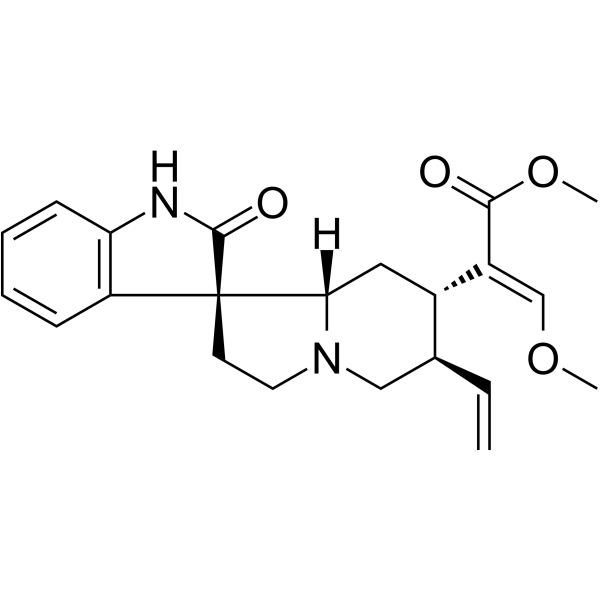
HY-N0775
Isocorynoxeine5-HT Receptor Inhibitor -
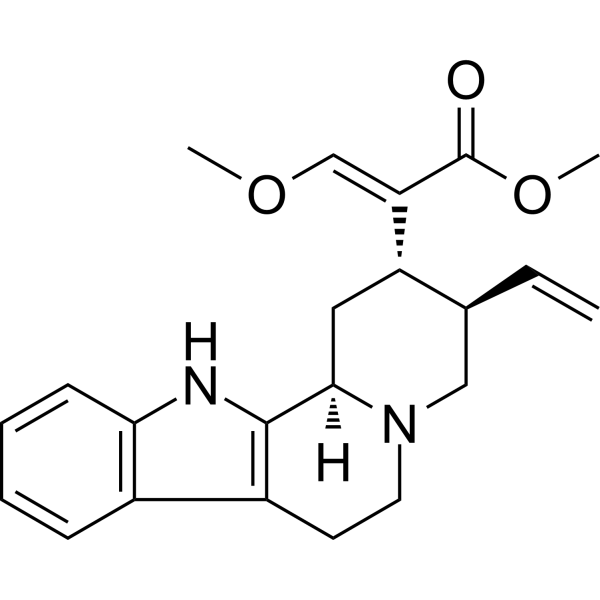
HY-N2197
HirsuteineIndole Alkaloid -
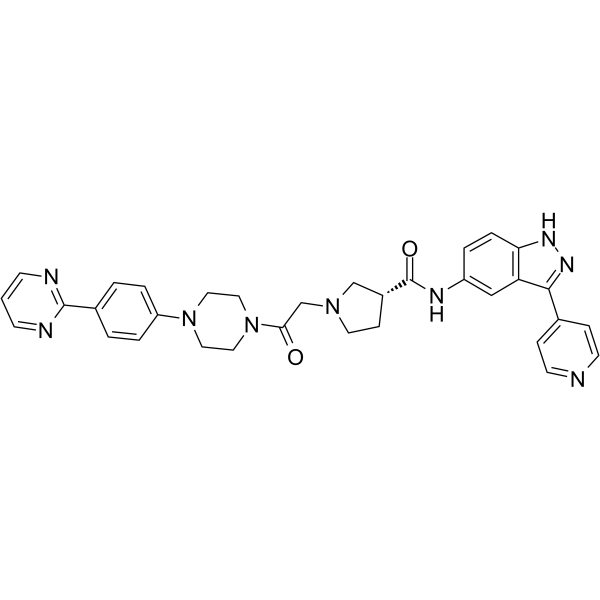
HY-50846
SCH772984ERK1/2 Inhibitor -
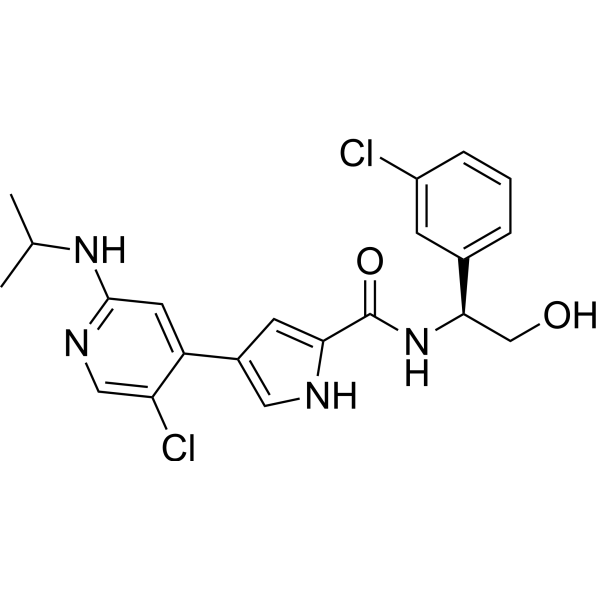
HY-15816
UlixertinibERK1/2 Inhibitor -
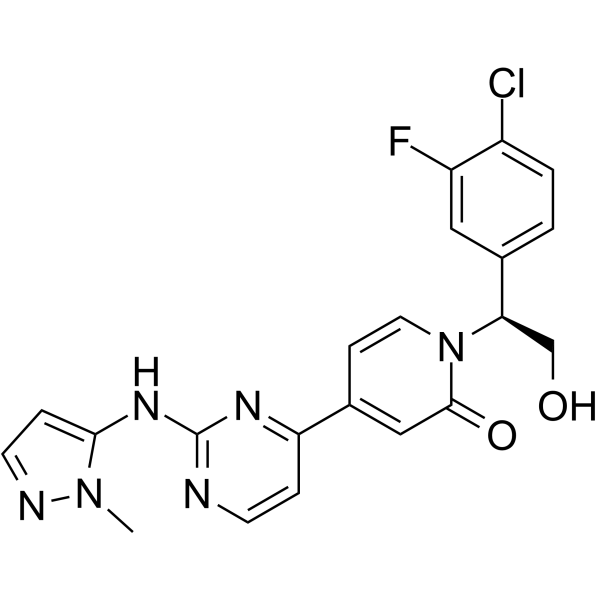
HY-15947
RavoxertinibERK1/2 Inhibitor -
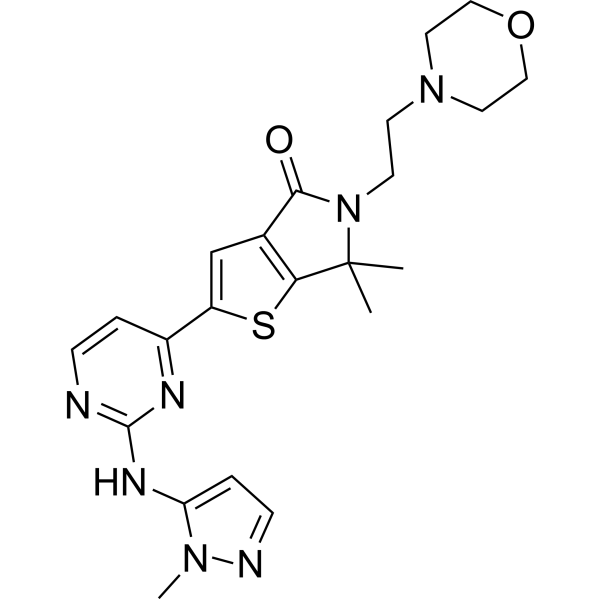
HY-101494
TemuterkibERK1/ERK2 Inhibitor -
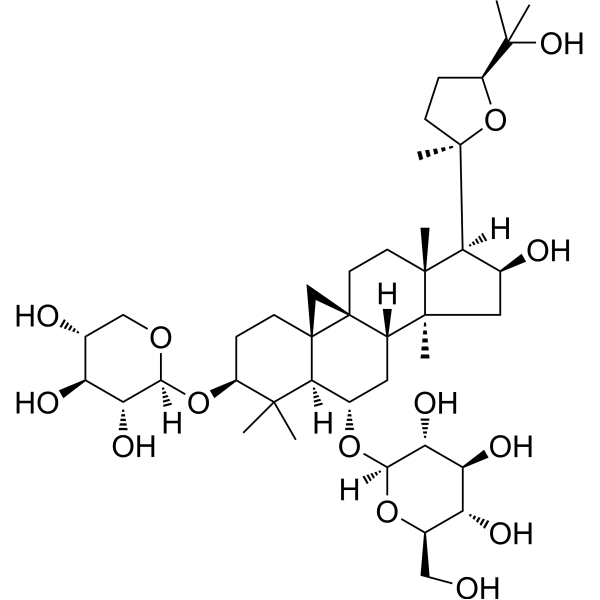
HY-N0431
Astragaloside IVMMP Inhibitor -
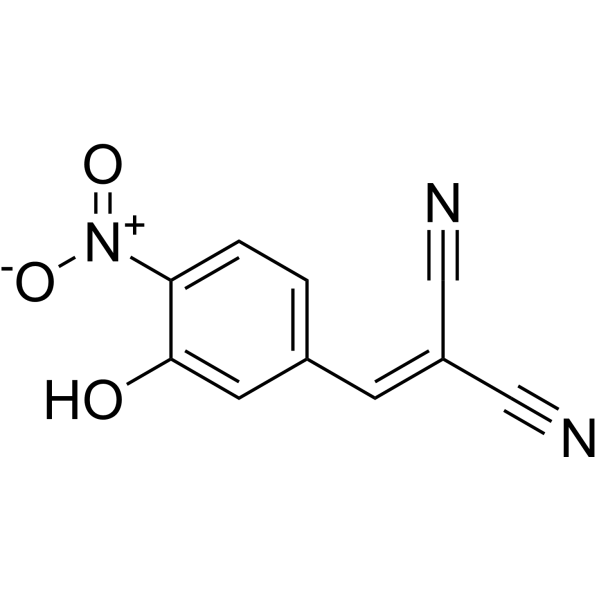
HY-108330
AG126Tyrosine Kinase Inhibitor -
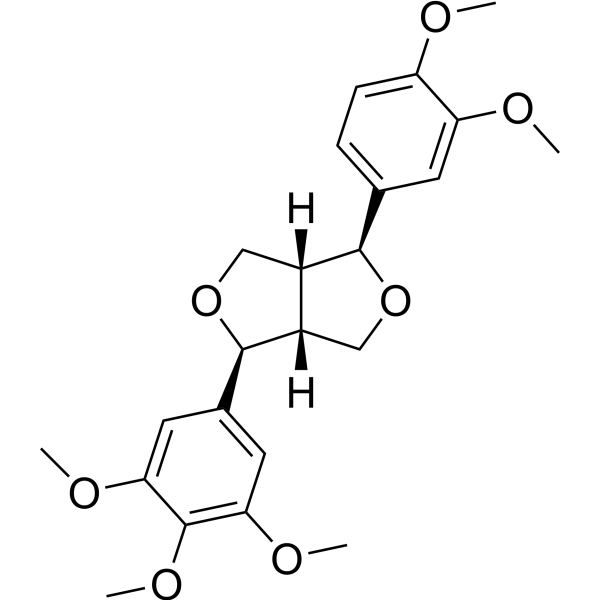
HY-N1374
MagnolinERK Inhibitor -
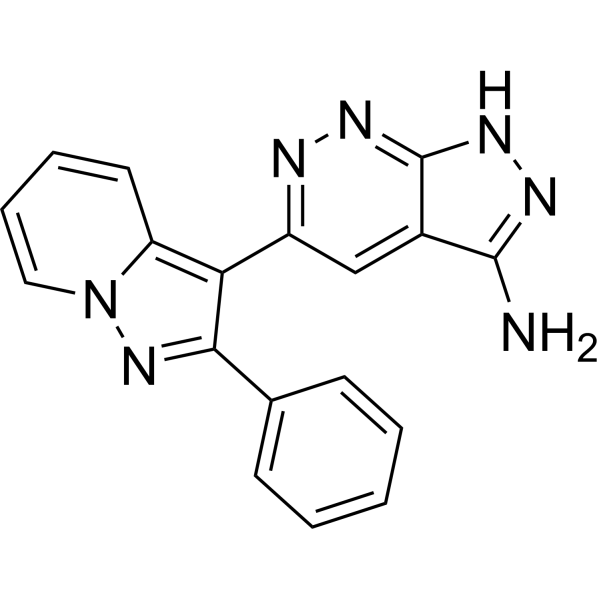
HY-12275
FR 180204ERK Inhibitor -
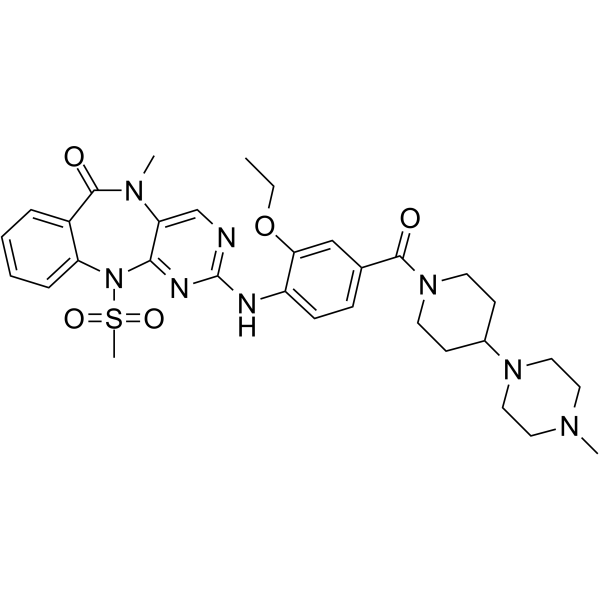
HY-101846
AX-15836ERK5 Inhibitor -
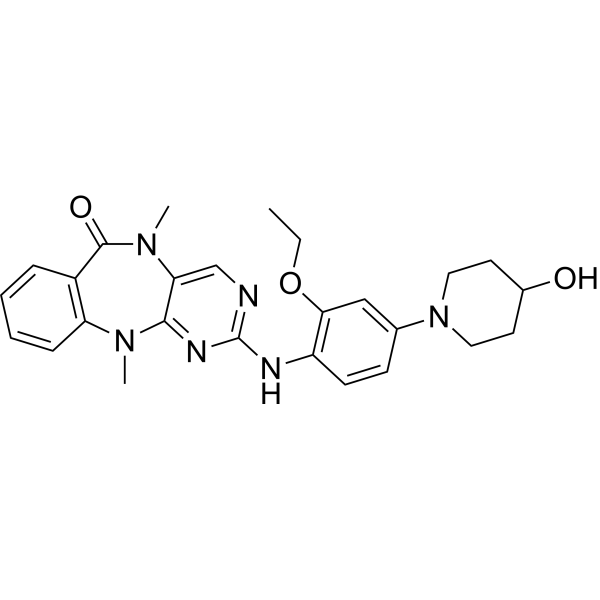
HY-14443
XMD8-92ERK5/BRD4 Inhibitor
Publications Citing Use of MedChemExpress (MCE) Corynoxeine
More

Biological Activity
Description
IC50 & Target
[1]|
ERK1 |
ERK2 |
Cellular Effect
|
Cell Line

|
Type | Value | Description | References |
|---|---|---|---|---|
| Microglia | IC50 |
15.7 μM
Compound: 3
|
Inhibition of LPS-stimulated NO release in rat cortical microglial cells assessed as nitrite accumulation after 48 hrs
Inhibition of LPS-stimulated NO release in rat cortical microglial cells assessed as nitrite accumulation after 48 hrs
|
[PMID: 18588343] |
In Vitro
Corynoxeine is able to inhibit the PDGF-BB-stimulated proliferation of VSMCs through downregulation of PDGF-BB-induced ERK1/2 activation. Pre-incubation of VSMCs with Corynoxeine significantly inhibits PDGF-BB-induced extracellular signal-regulated kinase 1/2 (ERK1/2) activation, whereas Corynoxeine has no effects on mitogen-activated protein kinase (MAPK/ERK)-activating kinase 1 and 2 (MEK1/2), Akt, or phospholipase C (PLC) γ 1 activation or on PDGF receptor beta (PDGF-Rβ) phosphorylation. Corynoxeine inhibits PDGF-BB-induced ERK1/2 activation, in the same concentration range that inhibits VSMC proliferation and DNA synthesis. Corynoxeine inhibits VSMC numbers in response to PDGF-BB with 50% inhibitory concentrations (IC50) of 13.7 μM. Corynoxeine inhibits DNA synthesis in response to PDGF-BB (24 h) with IC50 of 9.2 μM. Pre-treatment of VSMCs with Corynoxeine (5-50 μM) for 24 h results in significant decreases in cell number without any cytotoxicity; the inhibition percentages are 25.0±12.5, 63.0±27.5 and 88.0±12.5% at 5, 20 and 50 μM, respectively. Corynoxeine also significantly inhibits the 50 ng/mL PDGF-BB-induced DNA synthesis of VSMCs in a concentration-dependent manner without any cytotoxicity; the inhibitions are 32.8±11.0, 51.8±8.0 and 76.9±7.4% at concentrations of 5, 20 and 50 μM, respectively[1].
MedChemExpress (MCE) has not independently confirmed the accuracy of these methods. They are for reference only. Further protocols information, click here.


Chemical Information
-
CAS No. 630-94-4
-
Appearance Solid
-
Molecular Weight 382.45
-
Formula C22H26N2O4
-
Color White to off-white
-
SMILES
O=C(NC1=C2C=CC=C1)[C@]32[C@@](C[C@H](/C(C(OC)=O)=C\OC)[C@@H](C=C)C4)([H])N4CC3
-
Structure Classification
-
Initial Source
-
Shipping
Room temperature in continental US; may vary elsewhere.
-
Storage
Powder -20°C 3 years 4°C 2 years In solvent -80°C 2 years -20°C 1 year


Publications (6)
-
Journal Impact Factor
-
Most Recent
-
Cell Oncol (Dordr)
UBE2Q2 promotes tumor progression and glycolysis of hepatocellular carcinoma through NF-κB/HIF1α signal pathway. [Abstract]2025 Jun;48(3):637-654. PMID: 39833608 -
BMC Cancer
Migration of gastric cancer is suppressed by recombinant Newcastle disease virus (rL-RVG) via regulating α7-nicotinic acetylcholine receptors/ERK- EMT. [Abstract]2019 Oct 22;19(1):976. PMID: 31640627 -
Immunobiology
Interleukin-1beta triggers the expansion of circulating granulocytic myeloid-derived suppressor cell subset dependent on Erk1/2 activation. [Abstract]2022 Jan;227(1):152165. PMID: 34936966 -
Plant Biotechnol (Tokyo)
A sterile plant culture system of Uncaria rhynchophylla as a biosynthetic model of monoterpenoid indole alkaloids. [Abstract]2025 Jun 25;42(2):145-154. PMID: 40636431 -
-
Biomed Pharmacother
Dual modulators of aggregation and dissociation of amyloid beta and tau: In vitro, in vivo, and in silico studies of Uncaria rhynchophylla and its bioactive components. [Abstract]2022 Dec:156:113865. PMID: 36242849


Solvent & Solubility
In Vitro:
DMSO : ≥ 3.8 mg/mL (9.94 mM; Hygroscopic DMSO has a significant impact on the solubility of product, please use newly opened DMSO)
* "≥" means soluble, but saturation unknown.
Please refer to the solubility information to select the appropriate solvent. Once prepared, please aliquot and store the solution to prevent product inactivation from repeated freeze-thaw cycles.
Storage method and period of stock solution: -80°C, 2 years; -20°C, 1 year. When stored at -80°C, please use it within 2 years. When stored at -20°C, please use it within 1 year.
Please refer to the solubility information to select the appropriate solvent. Once prepared, please aliquot and store the solution to prevent product inactivation from repeated freeze-thaw cycles.
Storage method and period of stock solution: -80°C, 2 years; -20°C, 1 year. When stored at -80°C, please use it within 2 years. When stored at -20°C, please use it within 1 year.
Concentration (start) × Volume (start) = Concentration (final) × Volume (final)

Protocols
-
Cell Viability Determination by MTT Colorimetric Assay
The following protocol uses the MTT colorimetric assay as a classic literature-established method for assessing cell viability/metabolic activity in cultured mammalian cells. MTT[3-(4,5-dimethylthiazol-2-yl)-2,5-diphenyltetrazolium bromide] is reduced by metabolically active cells to a colored formazan product; the amount of formazan is quantified spectrophotometrically and provides an indirect measure of metabolically active viable cells. Importantly, MTT reduction reflects cellular oxidoreductase/metabolic activity rather than an absolute direct count of living cells, so changes in cellular metabolism can alter the signal independently of cell number.


Purity & Documentation
-
Data Sheet (277 KB)
-
SDS (251 KB)
- English - EN (251 KB)
- Français - FR (251 KB)
- Deutsch - DE (251 KB)
- Norwegian - NO (251 KB)
- Español - ES (251 KB)
- Swedish - SV (251 KB)
- Italian - IT (251 KB)
- Korean - KR (251 KB)
- Portuguese - PT (251 KB)
-
Handling Instructions (2659 KB)
References


Complete Stock Solution Preparation Table
Please refer to the solubility information to select the appropriate solvent. Once prepared, please aliquot and store the solution to prevent product inactivation from repeated freeze-thaw cycles.
Storage method and period of stock solution: -80°C, 2 years; -20°C, 1 year. When stored at -80°C, please use it within 2 years. When stored at -20°C, please use it within 1 year.
| Optional Solvent | Concentration Solvent Mass | 1 mg | 5 mg | 10 mg | 25 mg |
|---|---|---|---|---|---|
| DMSO | 1 mM | 2.6147 mL | 13.0736 mL | 26.1472 mL | 65.3680 mL |
| 5 mM | 0.5229 mL | 2.6147 mL | 5.2294 mL | 13.0736 mL |


Corynoxeine Related Classifications
HY-N0590 Related Classifications
 Powered by Bioz