



FX1
Based on 2 publication(s) in Google Scholar
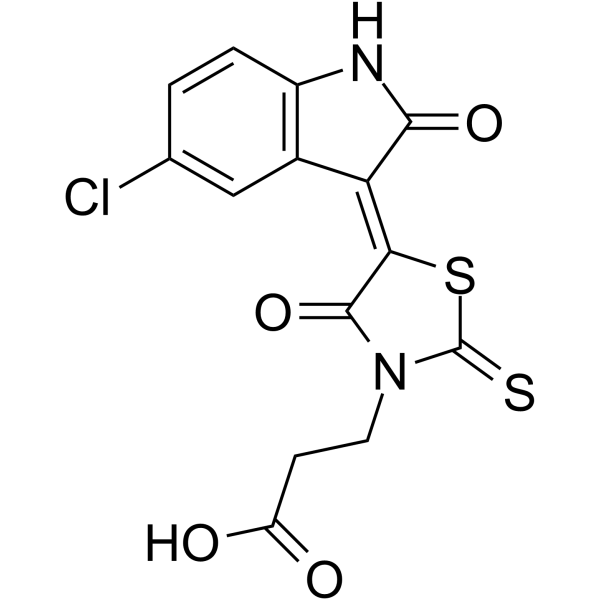
FX1 is a potent and specific BCL6 inhibitor, with an IC50 of around 35 μM.
For research use only. We do not sell to patients.
- Purity : 98.0%
- CAS No.: 1426138-42-2
- Formula: C14H9ClN2O4S2
- Molecular Weight:368.82
-
Storage:Powder -20°C, 3 years , 4°C, 2 years ; In solvent -80°C, 2 years , -20°C, 1 year

To place orders, for customer services and technical support, please contact: MedChemExpress USA
Tel: 609-228-6898 E-mail: [email protected] [email protected]


-
 Biological Activity
-
Chemical Information
-
Solvent & Solubility
- Protocols
- Purity & Documentation
- References
-
 Help & FAQs


-
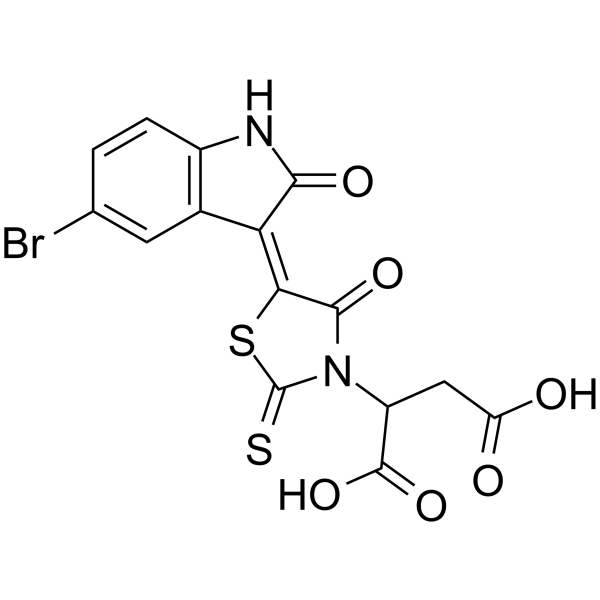
HY-100502
CID5721353BCL6 Inhibitor -
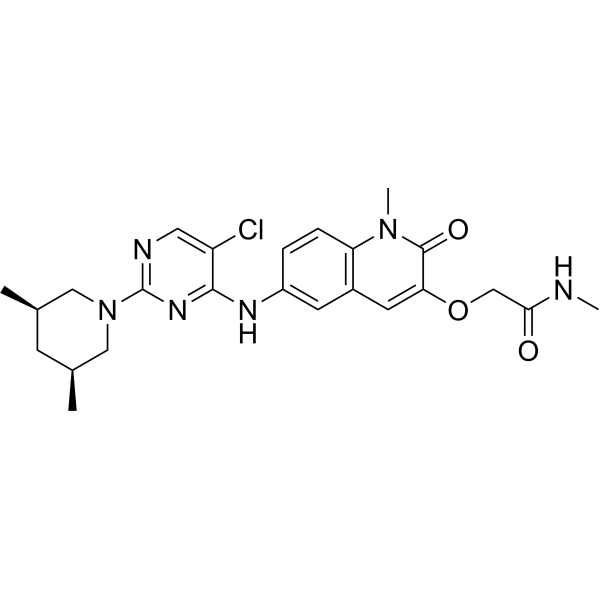
HY-108705
BI-3802BCL6 Degrader -
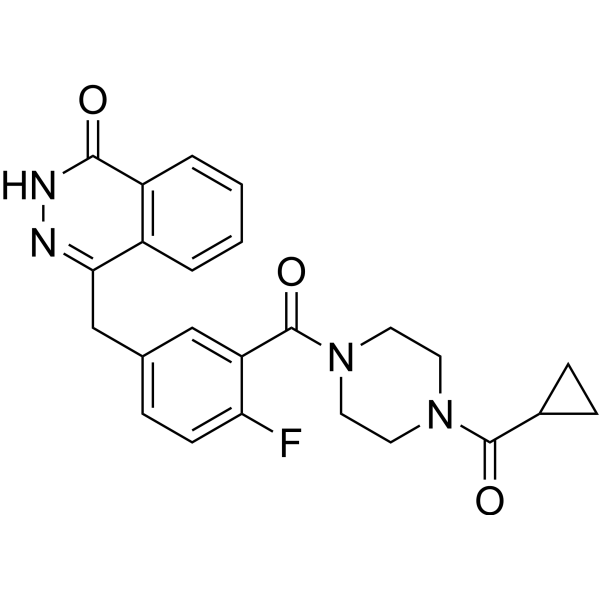
HY-10162
OlaparibPARP Inhibitor -
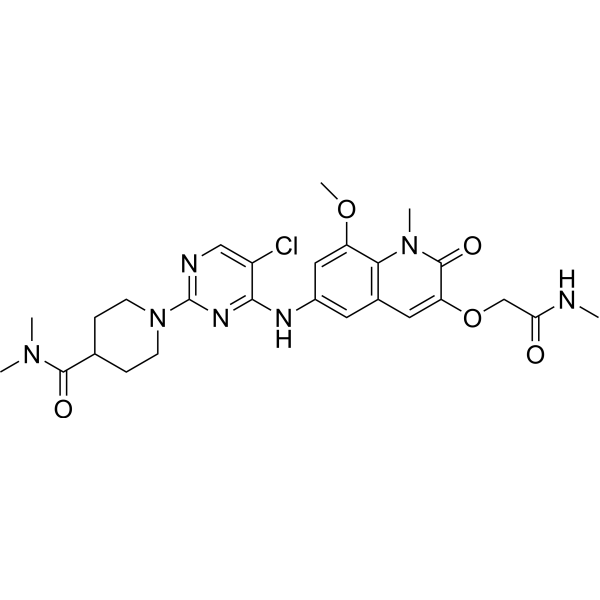
HY-111381
BI-3812Bcl-2 Family Inhibitor -
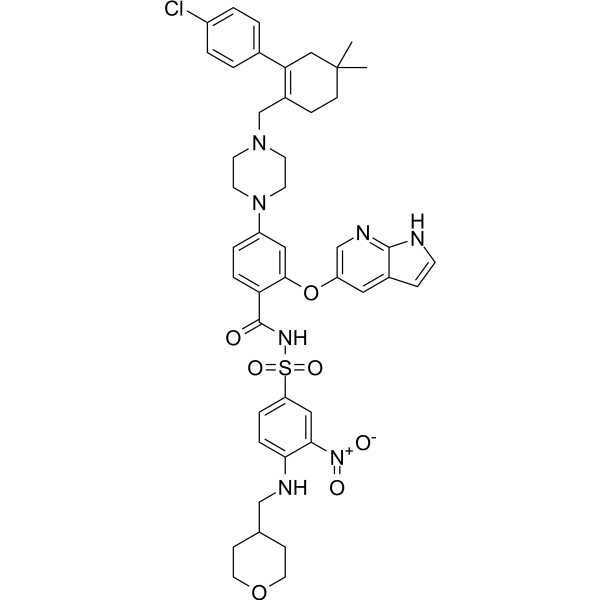
HY-15531
VenetoclaxBCL-2 Inhibitor -
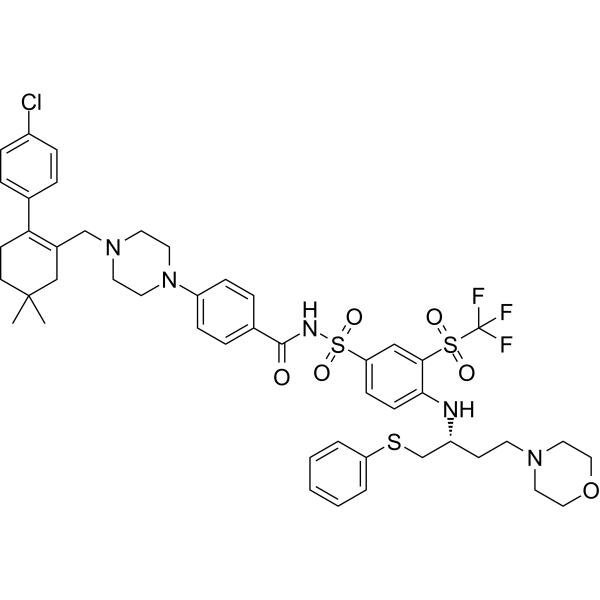
HY-10087
NavitoclaxBcl-2 Inhibitor -
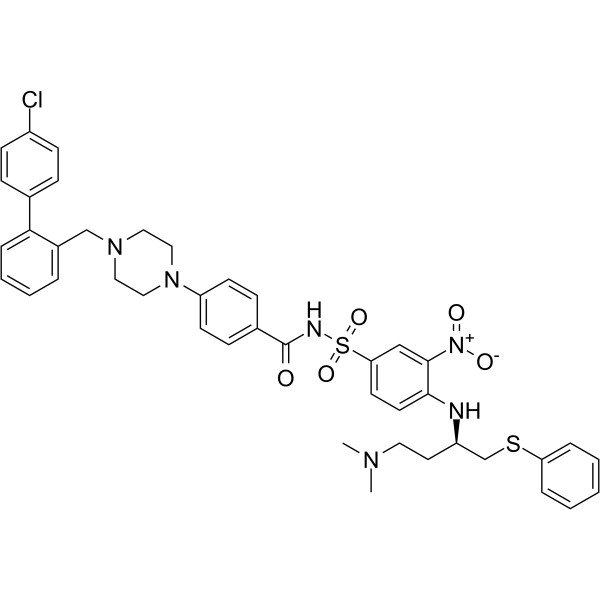
HY-50907
ABT-737Bcl-2 Family Inhibitor/BH3 Mimetic -

HY-102027R
FX1 (Standard)Reference Standard -
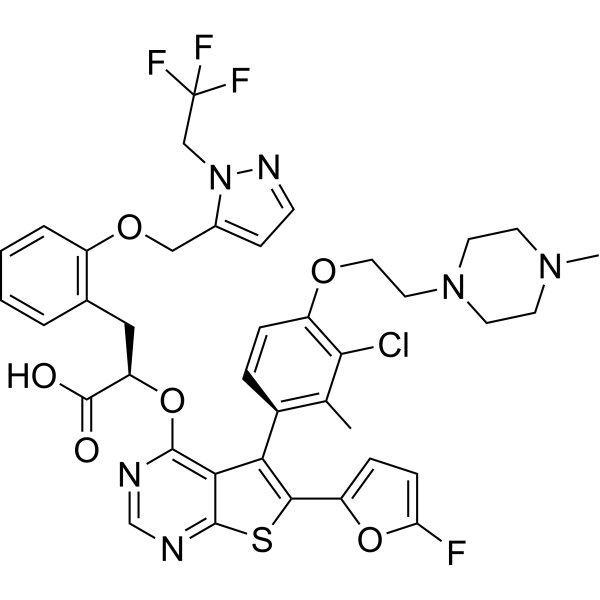
HY-100741
S63845MCL1 Inhibitor -
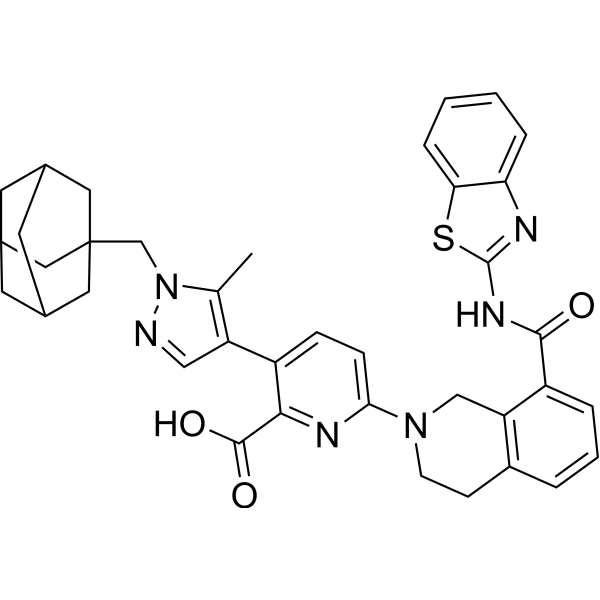
HY-19741
A-1331852Bcl-xL Inhibitor -

HY-15531R
Venetoclax (Standard)BCL-2 Inhibitor -
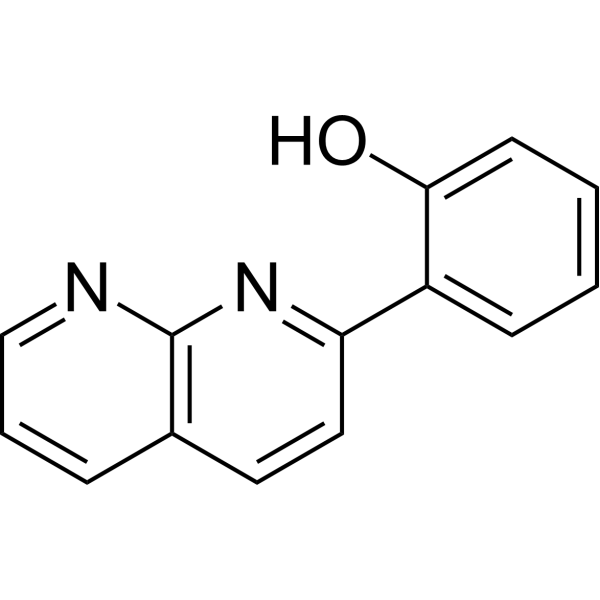
HY-W013523
2-NPSTAT1 Enhancer
Publications Citing Use of MedChemExpress (MCE) FX1
More

Biological Activity
Description
IC50 & Target
IC50: ~35 μM (BCL6)[1]
Cellular Effect
|
Cell Line

|
Type | Value | Description | References |
|---|---|---|---|---|
| DOHH-2 | IC50 |
35.1 μM
Compound: 2; FX1
|
Antiproliferative activity against human DOHH2 cells assessed as reduction in cell viability incubated for 72 hrs by CCK8 assay
Antiproliferative activity against human DOHH2 cells assessed as reduction in cell viability incubated for 72 hrs by CCK8 assay
|
[PMID: 31895575] |
| Farage | IC50 |
33.9 μM
Compound: 2; FX1
|
Antiproliferative activity against human Farage cells assessed as reduction in cell viability incubated for 72 hrs by CCK8 assay
Antiproliferative activity against human Farage cells assessed as reduction in cell viability incubated for 72 hrs by CCK8 assay
|
[PMID: 31895575] |
| L02 | IC50 |
>100 μM
Compound: 2; FX1
|
Cytotoxicity against human LO2 cells assessed as reduction in cell viability incubated for 72 hrs by CCK8 assay
Cytotoxicity against human LO2 cells assessed as reduction in cell viability incubated for 72 hrs by CCK8 assay
|
[PMID: 31895575] |
| NCM460 | IC50 |
>100 μM
Compound: 2; FX1
|
Cytotoxicity against human NCM460 cells assessed as reduction in cell viability incubated for 72 hrs by CCK8 assay
Cytotoxicity against human NCM460 cells assessed as reduction in cell viability incubated for 72 hrs by CCK8 assay
|
[PMID: 31895575] |
| OCI-Ly7 | IC50 |
39 μM
Compound: 2; FX1
|
Antiproliferative activity against human OCI-LY7 cells assessed as reduction in cell viability incubated for 72 hrs by CCK8 assay
Antiproliferative activity against human OCI-LY7 cells assessed as reduction in cell viability incubated for 72 hrs by CCK8 assay
|
[PMID: 31895575] |
| PNT1A | IC50 |
>100 μM
Compound: 2; FX1
|
Cytotoxicity against human PNT1A cells assessed as reduction in cell viability incubated for 72 hrs by CCK8 assay
Cytotoxicity against human PNT1A cells assessed as reduction in cell viability incubated for 72 hrs by CCK8 assay
|
[PMID: 31895575] |
| SUD4 | IC50 |
51.3 μM
Compound: 2; FX1
|
Antiproliferative activity against human SUDHL4 cells assessed as reduction in cell viability incubated for 72 hrs by CCK8 assay
Antiproliferative activity against human SUDHL4 cells assessed as reduction in cell viability incubated for 72 hrs by CCK8 assay
|
[PMID: 31895575] |
| Toledo | IC50 |
65.3 μM
Compound: 2; FX1
|
Antiproliferative activity against BCL6-negative human Toledo cells assessed as reduction in cell viability incubated for 72 hrs by CCK8 assay
Antiproliferative activity against BCL6-negative human Toledo cells assessed as reduction in cell viability incubated for 72 hrs by CCK8 assay
|
[PMID: 31895575] |
In Vitro
DLBCL cells are exposed to 50 μM FX1 for 30 minutes. FX1 profoundly reduces recruitment of BCOR and SMRT to all 3 BCL6 target genes, but not at a negative control locus. There is little presence of SMRT at these loci in the BCL6-negative DLBCL cell line, which is not affected by FX1. The superior potency of FX1 versus 79-6 in disrupting BCL6 binding to SMRT is evident when these small molecules are compared head to head in quantitative ChIP assays in DLBCL cells after treatment with 50 μM FX1 for 6 hours. DLBCL cells are exposed to FX1 and mRNA is collect at 4 serial time points. FX1 almost invariantly induces significant derepression of these genes as compare with vehicle in 2 independent DLBCL cell lines[1].
MedChemExpress (MCE) has not independently confirmed the accuracy of these methods. They are for reference only. Further protocols information, click here.
In Vivo
MedChemExpress (MCE) has not independently confirmed the accuracy of these methods. They are for reference only.


Chemical Information
-
CAS No. 1426138-42-2
-
Appearance Solid
-
Molecular Weight 368.82
-
Formula C14H9ClN2O4S2
-
Color Pink to red
-
SMILES
O=C(O)CCN(C/1=O)C(SC1=C2C(NC3=C/2C=C(Cl)C=C3)=O)=S
-
Shipping
Room temperature in continental US; may vary elsewhere.
-
Storage
Powder -20°C 3 years 4°C 2 years In solvent -80°C 2 years -20°C 1 year


Publications (2)
-
Journal Impact Factor
-
Most Recent
-
Signal Transduct Target Ther
Selective depletion of tumor-associated SAMHD1 enhances chemotherapeutic efficacy and antitumor immune responses. [Abstract]2025 Dec 15;10(1):406. PMID: 41392286 -
Cell Rep
Loss of p53 exacerbates autoimmunity by reprogramming propionyl-CoA metabolism and histone modifications in Treg cells. [Abstract]2026 Mar 15;45(3):117084. PMID: 41838722


Solvent & Solubility
In Vitro:
DMSO : 10 mg/mL (27.11 mM; Need ultrasonic; Hygroscopic DMSO has a significant impact on the solubility of product, please use newly opened DMSO)
Please refer to the solubility information to select the appropriate solvent. Once prepared, please aliquot and store the solution to prevent product inactivation from repeated freeze-thaw cycles.
Storage method and period of stock solution: -80°C, 2 years; -20°C, 1 year. When stored at -80°C, please use it within 2 years. When stored at -20°C, please use it within 1 year.
Please refer to the solubility information to select the appropriate solvent. Once prepared, please aliquot and store the solution to prevent product inactivation from repeated freeze-thaw cycles.
Storage method and period of stock solution: -80°C, 2 years; -20°C, 1 year. When stored at -80°C, please use it within 2 years. When stored at -20°C, please use it within 1 year.
Concentration (start) × Volume (start) = Concentration (final) × Volume (final)
In Vivo:
Select the appropriate dissolution method based on your experimental animal and administration route.
- For the following dissolution methods, please ensure to first prepare a clear stock solution using an In Vitro approach and then sequentially add co-solvents:
- To ensure reliable experimental results, the clarified stock solution can be appropriately stored based on storage conditions. As for the working solution for In Vivo experiments, it is recommended to prepare freshly and use it on the same day.
- The percentages shown for the solvents indicate their volumetric ratio in the final prepared solution. If precipitation or phase separation occurs during preparation, heat and/or sonication can be used to aid dissolution.
Add each solvent one by one: 10% DMSO 40% PEG300 5% Tween-80 45% Saline
Solubility: ≥ 1 mg/mL (2.71 mM); Clear solution
This protocol yields a clear solution of ≥ 1 mg/mL (saturation unknown).
Taking 1 mL working solution as an example, add 100 μL DMSO stock solution (10.0 mg/mL) to 400 μL PEG300, and mix evenly; then add 50 μL Tween-80 and mix evenly; then add 450 μL Saline to adjust the volume to 1 mL.
Preparation of Saline: Dissolve 0.9 g sodium chloride in ddH₂O and dilute to 100 mL to obtain a clear Saline solution.
For the following dissolution methods, please prepare the working solution directly:
It is recommended to prepare fresh solutions and use them promptly within a short period of time.
The percentages shown for the solvents indicate their volumetric ratio in the final prepared solution. If precipitation or phase separation occurs during preparation, heat and/or sonication can be used to aid dissolution.
Add each solvent one by one: 50% PEG300 50% Saline
Solubility: 50 mg/mL (135.57 mM); Suspended solution; Need ultrasonic
In Vivo Dissolution Calculator
Please enter the basic information of animal experiments:
-
-
-
-
Recommended: Prepare an additional quantity of animals to account for potential losses during experiments.
Please enter your animal formula composition:
-
%DMSO +
Recommended: Keep the proportion of DMSO in working solution below 2% if your animal is weak.
-
%+
-
+%Tween-80 + +
-
%Saline +
The co-solvents required include: DMSO, . All of co-solvents are available by MedChemExpress (MCE). , Tween 80. All of co-solvents are available by MedChemExpress (MCE).
Working solution concentration: 0.22 mg/mL
Method for preparing stock solution: mg drug dissolved in μL DMSO. Stock solution concentration: mg/mL.
1. Take μL DMSO stock solution;
2. Add μL .
μL , mix evenly;
3. Then add μL Tween 80, mix evenly;
4. Then add μL
Please ensure that the stock solution in the first step is dissolved to a clear state, and add co-solvents in sequence. You can use ultrasonic heating (ultrasonic cleaner, recommended frequency 20-40 kHz), vortexing, etc. to assist dissolution.

Protocols
-
Cell Cytotoxicity Assay
Cytotoxicity assays are usually based on the assessment of cell membrane damage, which can also be indirectly detected by measuring cell viability. Detection methods include MTT assay, CKK-8 assay, LDH assay and ATP assay, etc.


Purity & Documentation
-
Data Sheet (281 KB)
-
SDS (392 KB)
- English - EN (392 KB)
- Français - FR (392 KB)
- Deutsch - DE (392 KB)
- Norwegian - NO (392 KB)
- Español - ES (392 KB)
- Swedish - SV (392 KB)
- Italian - IT (392 KB)
- Korean - KR (392 KB)
- Portuguese - PT (392 KB)
-
Handling Instructions (2659 KB)
References


Complete Stock Solution Preparation Table
Please refer to the solubility information to select the appropriate solvent. Once prepared, please aliquot and store the solution to prevent product inactivation from repeated freeze-thaw cycles.
Storage method and period of stock solution: -80°C, 2 years; -20°C, 1 year. When stored at -80°C, please use it within 2 years. When stored at -20°C, please use it within 1 year.
| Optional Solvent | Concentration Solvent Mass | 1 mg | 5 mg | 10 mg | 25 mg |
|---|---|---|---|---|---|
| DMSO | 1 mM | 2.7113 mL | 13.5567 mL | 27.1135 mL | 67.7837 mL |
| 5 mM | 0.5423 mL | 2.7113 mL | 5.4227 mL | 13.5567 mL | |
| 10 mM | 0.2711 mL | 1.3557 mL | 2.7113 mL | 6.7784 mL | |
| 15 mM | 0.1808 mL | 0.9038 mL | 1.8076 mL | 4.5189 mL | |
| 20 mM | 0.1356 mL | 0.6778 mL | 1.3557 mL | 3.3892 mL | |
| 25 mM | 0.1085 mL | 0.5423 mL | 1.0845 mL | 2.7113 mL |


FX1 Related Classifications
HY-102027 Related Classifications
 Powered by Bioz