



Lp-PLA2-IN-1

Based on 1 Customer Validation
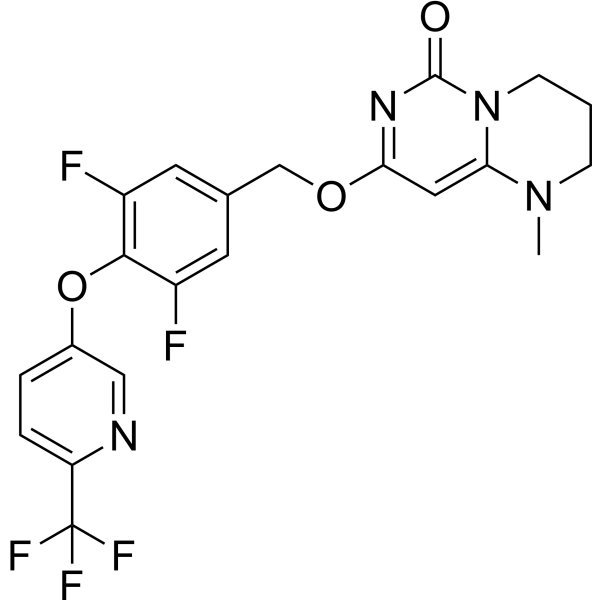
Lp-PLA2-IN-1 is a potent Lipoprotein-associated phospholipase A2 (Lp-PLA2) inhibitor. Lp-PLA2-IN-1 has the potential for atherosclerosis, Alzheimer's disease research.
For research use only. We do not sell to patients.
- Purity : 99.30%
- CAS No.: 1420367-28-7
- Formula: C21H17F5N4O3
- Molecular Weight:468.38
-
Storage:Powder -20°C, 3 years , 4°C, 2 years ; In solvent -80°C, 2 years , -20°C, 1 year

To place orders, for customer services and technical support, please contact: MedChemExpress USA
Tel: 609-228-6898 E-mail: [email protected] [email protected]


-
 Biological Activity
-
Chemical Information
-
Solvent & Solubility
- Protocols
- Purity & Documentation
- References
-
 Help & FAQs


-
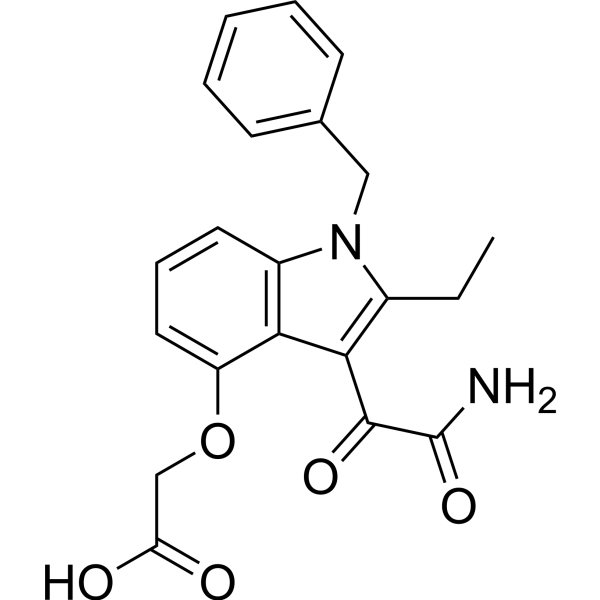
HY-13402
VarespladibsPLA2 Inhibitor -
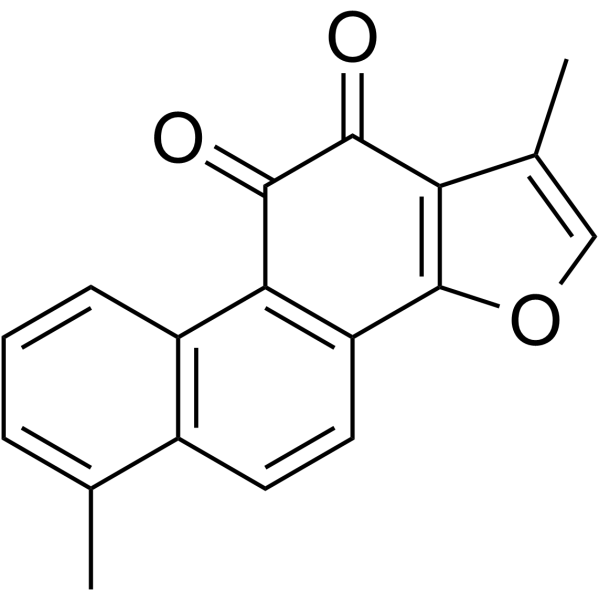
HY-N0134
Tanshinone IPhospholipase Inhibitor -
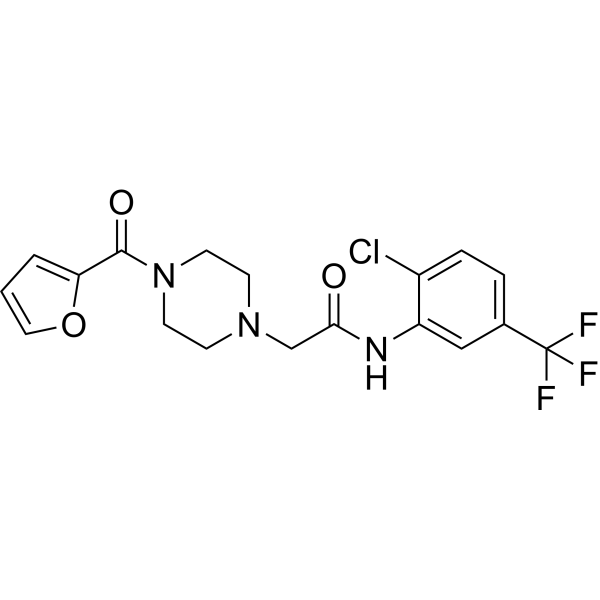
HY-100736
ML348APT1/LYPLA1 Inhibitor -
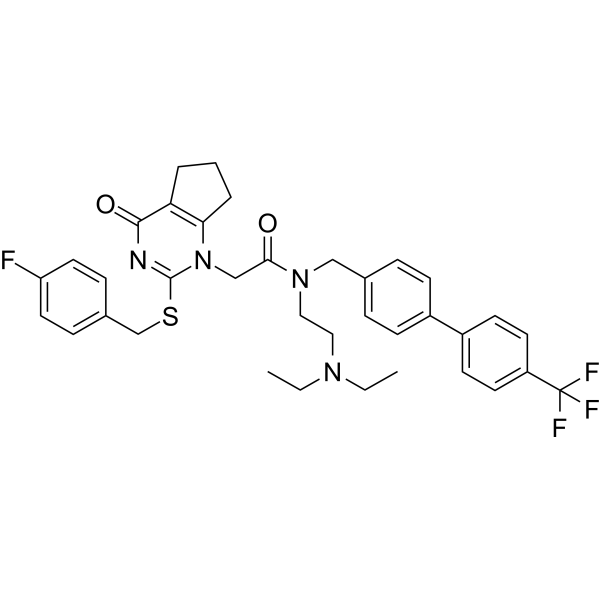
HY-10521
DarapladibLp-PLA2 Inhibitor -
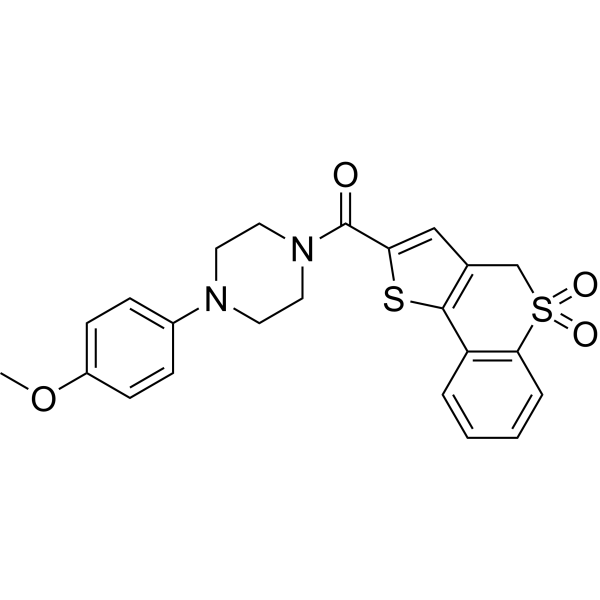
HY-100737
ML349APT2/LYPLA2 Inhibitor -
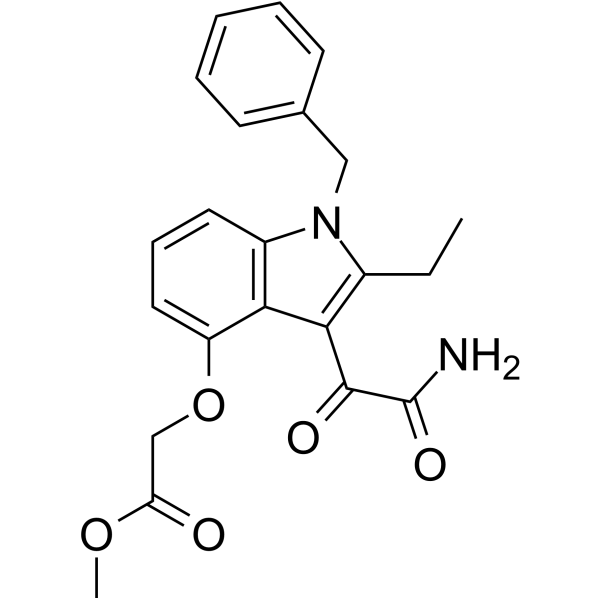
HY-17448
Varespladib methyl -
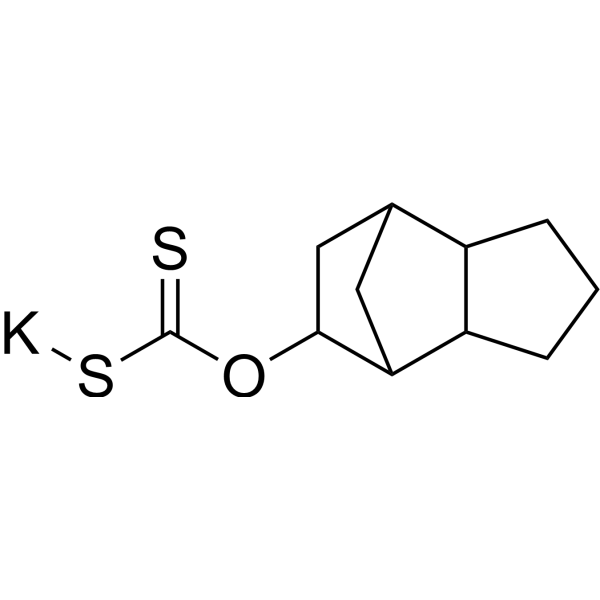
HY-70072
D609PC-PLC Inhibitor -
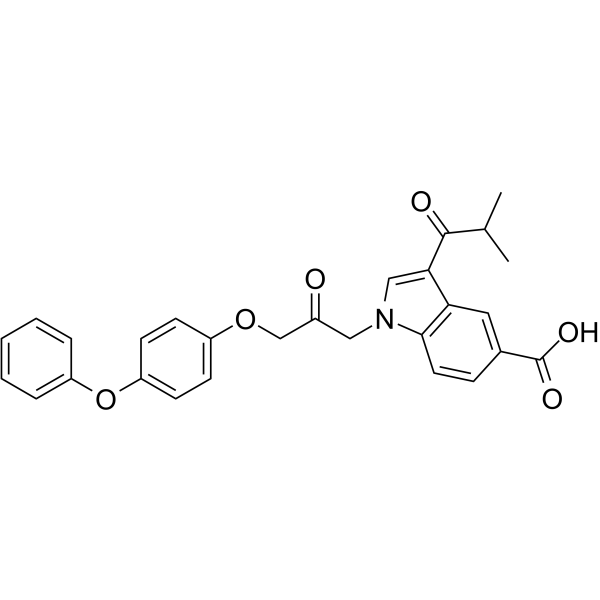
HY-10801
CAY10650cPLA2α Inhibitor -
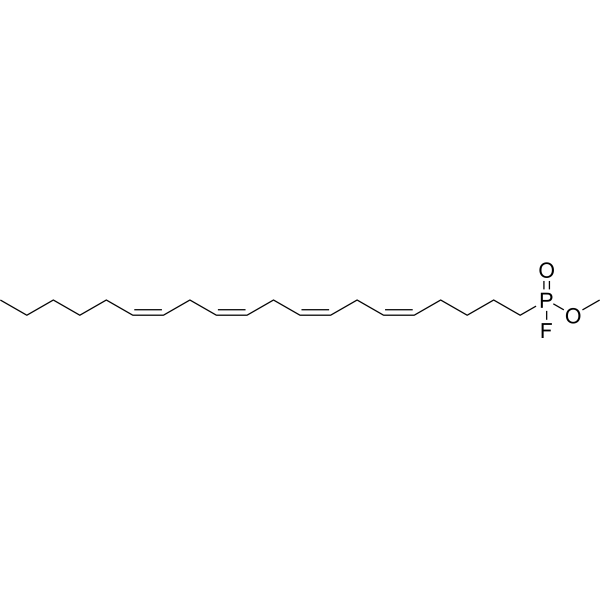
HY-103334
MAFPcPLA2/iPLA2 Inhibitor -
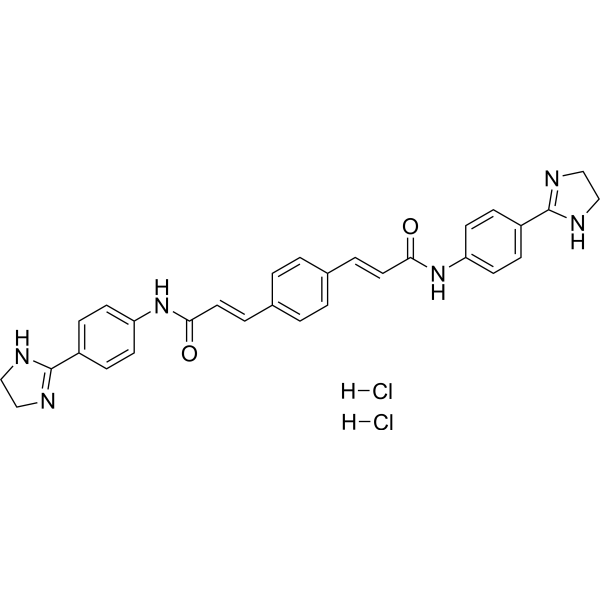
HY-19363
GW4869N-SMase Inhibitor -
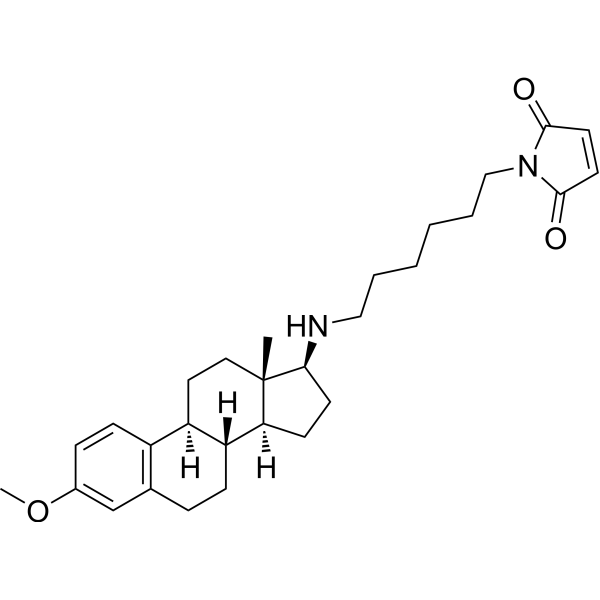
HY-13419
U-73122Phospholipase C Inhibitor -
HY-108630
U-73343U-73122 Negative Control
All Phospholipase Isoforms
More

Biological Activity
Description
IC50 & Target
[1]|
Lp-PLA2 |
In Vitro
Lipoprotein-associated phospholipase A2 (Lp-PLA2) is a phospholipase A2 enzyme involved in hydrolysis of lipoprotein lipids or phospholipids. Lp-PLA2 travels with low-density lipoprotein (LDL) and rapidly cleaves oxidized phosphatidylcholine molecules derived from the oxidation of LDL[1]
MedChemExpress (MCE) has not independently confirmed the accuracy of these methods. They are for reference only. Further protocols information, click here.


Chemical Information
-
CAS No. 1420367-28-7
-
Appearance Solid
-
Molecular Weight 468.38
-
Formula C21H17F5N4O3
-
Color White to off-white
-
SMILES
CN1C(N2CCC1)=CC(OCC3=CC(F)=C(OC4=CC=C(C(F)(F)F)N=C4)C(F)=C3)=NC2=O
-
Shipping
Room temperature in continental US; may vary elsewhere.
-
Storage
Powder -20°C 3 years 4°C 2 years In solvent -80°C 2 years -20°C 1 year


Solvent & Solubility
In Vitro:
Ethanol : 25 mg/mL (53.38 mM; Need ultrasonic)
Please refer to the solubility information to select the appropriate solvent. Once prepared, please aliquot and store the solution to prevent product inactivation from repeated freeze-thaw cycles.
Storage method and period of stock solution: -80°C, 2 years; -20°C, 1 year. When stored at -80°C, please use it within 2 years. When stored at -20°C, please use it within 1 year.
Please refer to the solubility information to select the appropriate solvent. Once prepared, please aliquot and store the solution to prevent product inactivation from repeated freeze-thaw cycles.
Storage method and period of stock solution: -80°C, 2 years; -20°C, 1 year. When stored at -80°C, please use it within 2 years. When stored at -20°C, please use it within 1 year.
Concentration (start) × Volume (start) = Concentration (final) × Volume (final)
In Vivo:
Select the appropriate dissolution method based on your experimental animal and administration route.
- For the following dissolution methods, please ensure to first prepare a clear stock solution using an In Vitro approach and then sequentially add co-solvents:
- To ensure reliable experimental results, the clarified stock solution can be appropriately stored based on storage conditions. As for the working solution for In Vivo experiments, it is recommended to prepare freshly and use it on the same day.
- The percentages shown for the solvents indicate their volumetric ratio in the final prepared solution. If precipitation or phase separation occurs during preparation, heat and/or sonication can be used to aid dissolution.
Add each solvent one by one: 10% EtOH 40% PEG300 5% Tween-80 45% Saline
Solubility: ≥ 2.5 mg/mL (5.34 mM); Clear solution
This protocol yields a clear solution of ≥ 2.5 mg/mL (saturation unknown).
Taking 1 mL working solution as an example, add 100 μL EtOH stock solution (25.0 mg/mL) to 400 μL PEG300, and mix evenly; then add 50 μL Tween-80 and mix evenly; then add 450 μL Saline to adjust the volume to 1 mL.
Preparation of Saline: Dissolve 0.9 g sodium chloride in ddH₂O and dilute to 100 mL to obtain a clear Saline solution.
Add each solvent one by one: 10% EtOH 90% (20% SBE-β-CD in Saline)
Solubility: ≥ 2.5 mg/mL (5.34 mM); Clear solution
This protocol yields a clear solution of ≥ 2.5 mg/mL (saturation unknown).
Taking 1 mL working solution as an example, add 100 μL EtOH stock solution (25.0 mg/mL) to 900 μL 20% SBE-β-CD in Saline, and mix evenly.
Preparation of 20% SBE-β-CD in Saline (4°C, storage for one week): 2 g SBE-β-CD powder is dissolved in 10 mL Saline, completely dissolve until clear.
In Vivo Dissolution Calculator
Please enter the basic information of animal experiments:
-
-
-
-
Recommended: Prepare an additional quantity of animals to account for potential losses during experiments.
Working solution concentration: 0.22 mg/mL

Protocols
-
Research Protocol for Cardiovascular Diseases
Cardiovascular disease can be modeled as maladaptive cardiac remodeling, where ischemic injury or pressure overload activates inflammatory signaling, fibroblast activation, extracellular-matrix deposition, cardiomyocyte hypertrophy, vascular remodeling, and progressive ventricular dysfunction. The TGF-β/SMAD axis is a central profibrotic pathway after myocardial injury and pressure overload, while innate immune and cytokine pathways regulate leukocyte recruitment, scar formation, and adverse remodeling. Key unresolved questions include which inflammatory signals are reparative versus harmful, when fibrosis is protective versus maladaptive, and whether pathway inhibition improves function without weakening necessary infarct healing or compensatory remodeling.
-
Alzheimer’s Disease Modeling
Alzheimer’s Disease (AD) is a neurodegenerative disorder characterized by a progressive decline in cognitive functions and loss of specific types of neurons and synapses. Alzheimer's symptoms can be simulated in mice by injecting drugs (such as Aβ) or genetically modified.


Purity & Documentation
-
Data Sheet (273 KB)
-
SDS (254 KB)
- English - EN (254 KB)
- Français - FR (254 KB)
- Deutsch - DE (254 KB)
- Norwegian - NO (254 KB)
- Español - ES (254 KB)
- Swedish - SV (254 KB)
- Italian - IT (254 KB)
- Korean - KR (254 KB)
- Portuguese - PT (254 KB)
-
Handling Instructions (2659 KB)
References


Complete Stock Solution Preparation Table
Please refer to the solubility information to select the appropriate solvent. Once prepared, please aliquot and store the solution to prevent product inactivation from repeated freeze-thaw cycles.
Storage method and period of stock solution: -80°C, 2 years; -20°C, 1 year. When stored at -80°C, please use it within 2 years. When stored at -20°C, please use it within 1 year.
| Optional Solvent | Concentration Solvent Mass | 1 mg | 5 mg | 10 mg | 25 mg |
|---|---|---|---|---|---|
| Ethanol | 1 mM | 2.1350 mL | 10.6751 mL | 21.3502 mL | 53.3755 mL |
| 5 mM | 0.4270 mL | 2.1350 mL | 4.2700 mL | 10.6751 mL | |
| 10 mM | 0.2135 mL | 1.0675 mL | 2.1350 mL | 5.3375 mL | |
| 15 mM | 0.1423 mL | 0.7117 mL | 1.4233 mL | 3.5584 mL | |
| 20 mM | 0.1068 mL | 0.5338 mL | 1.0675 mL | 2.6688 mL | |
| 25 mM | 0.0854 mL | 0.4270 mL | 0.8540 mL | 2.1350 mL | |
| 30 mM | 0.0712 mL | 0.3558 mL | 0.7117 mL | 1.7792 mL | |
| 40 mM | 0.0534 mL | 0.2669 mL | 0.5338 mL | 1.3344 mL | |
| 50 mM | 0.0427 mL | 0.2135 mL | 0.4270 mL | 1.0675 mL |


Lp-PLA2-IN-1 Related Classifications
HY-19757 Related Classifications
 Powered by Bioz